THRIVE East Africa
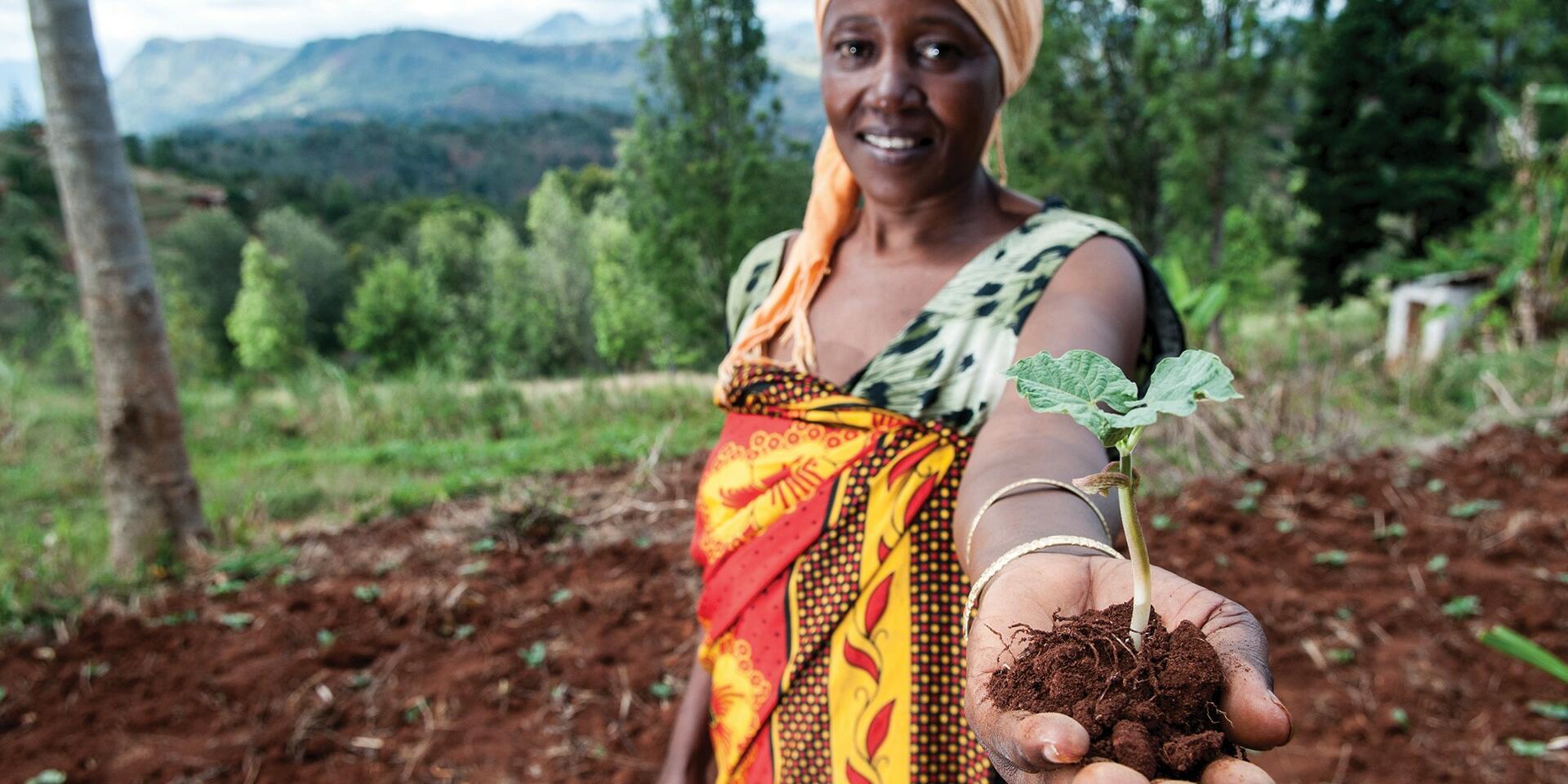
The initiative supports East Africa's food security, farm resilience, and economic growth by strengthening sustainable, inclusive value chains for opportunity crops, African Indigenous Vegetables (AIVs) and coffee through diversified regenerative production with Neglected and Underutilized Species (NUS) and enhanced market systems.
Project Name (full): Transforming soil health, livelihoods and nutrition through regenerative diversification and inclusive value chains in East Africa (THRIVE) – East Africa
Start and end year: 2026 - 2028
Region and Countries: Africa (East Africa): Ethiopia, Kenya, Uganda
Funder: Italian Ministry of Foreign Affairs and International Cooperation
Partners: CIHEAM Bari, ECDPM, UNIDO
Brief description
The project provides a value chain approach to address the decline in agricultural biodiversity and the vulnerabilities of food systems in East Africa.
The region is experiencing challenges such as declining productivity due to soil degradation, biodiversity loss, and climate variability; structural market barriers (fragmentation, volatility, access, and EUDR compliance risks), and weak capacity for aggregation and access to financing, all of which threaten livelihoods, biodiversity, and exports, pushing millions of smallholder farmers toward malnutrition and economic vulnerability.
But at the same time, rich agrobiodiversity offers untapped potential to co-design and scale diverse resilient systems with Neglected and Underutilized Species (NUS), nutrient-dense African Indigenous Vegetable (AIVs)-corridors, and regenerative shade-grown coffee agroforestry systems, boosting soil health, farm resilience and livelihoods.
We aim to reach over 25,000 smallholder farmers through Training of Trainers programs, cooperatives engagement and extension agents, and more than 600 supply chain actors resulting in boosts in yields, incomes, and dietary diversity; rehabilitated soils with enhanced carbon sequestration and water retention; biodiversity corridors via agroecological revival; reliable year-round nutrition for urban poor and school feeding; enhanced market systems and deforestation-free, traceable exports securing premium EU markets. The project hereby seamlessly aligns with continental frameworks like African Union Agenda 2063, Kampala Declaration (CAADP), post-Malabo commitments, Africa's Common Position on Food Systems, Italy's Mattei Plan, and the EU Global Gateway strategy ultimately reimagining nature-positive, equitable livelihoods through revitalized value chains and inclusive, resilient food systems supporting regional economic growth.
Key activities
To achieve this, the project operates at two levels of intervention:
At the regional level
The initiative fosters dissemination of best agricultural practices, supports policy dialogues through the African Seed and Biotechnology Program's (ASBP) opportunity crop working group, promotes linkages with the African Continental Free Trade Area (AfCFTA), and facilitates cross-country knowledge sharing.
In particular, the initiative hosts high-level policy workshops on production diversification and generates evidence and policy briefs to support scaling of diversified and regenerative systems. It also promotes coordination with the private sector. In addition, the expertise of CIHEAM Bari con capacity building on farm diversification is leveraged during cross-learning activities on NUS value chains, diversification and policy/leadership skills.
AT THE NATIONAL LEVEL
The initiative addresses diverse needs:
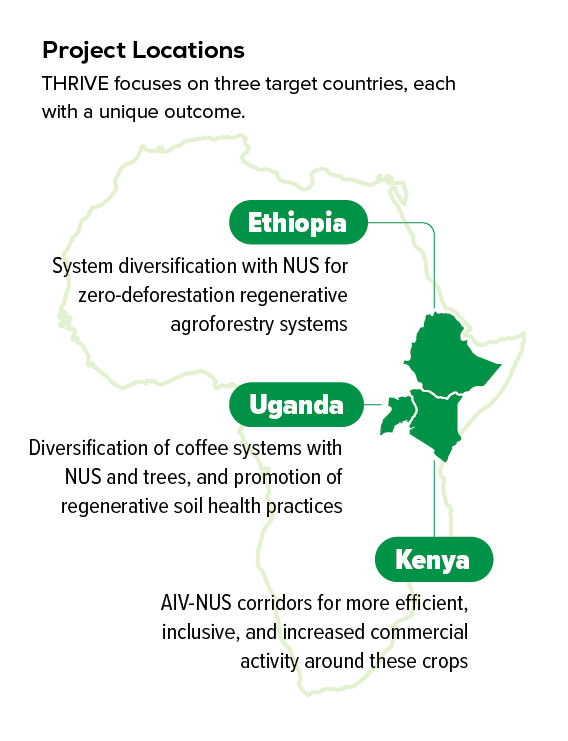
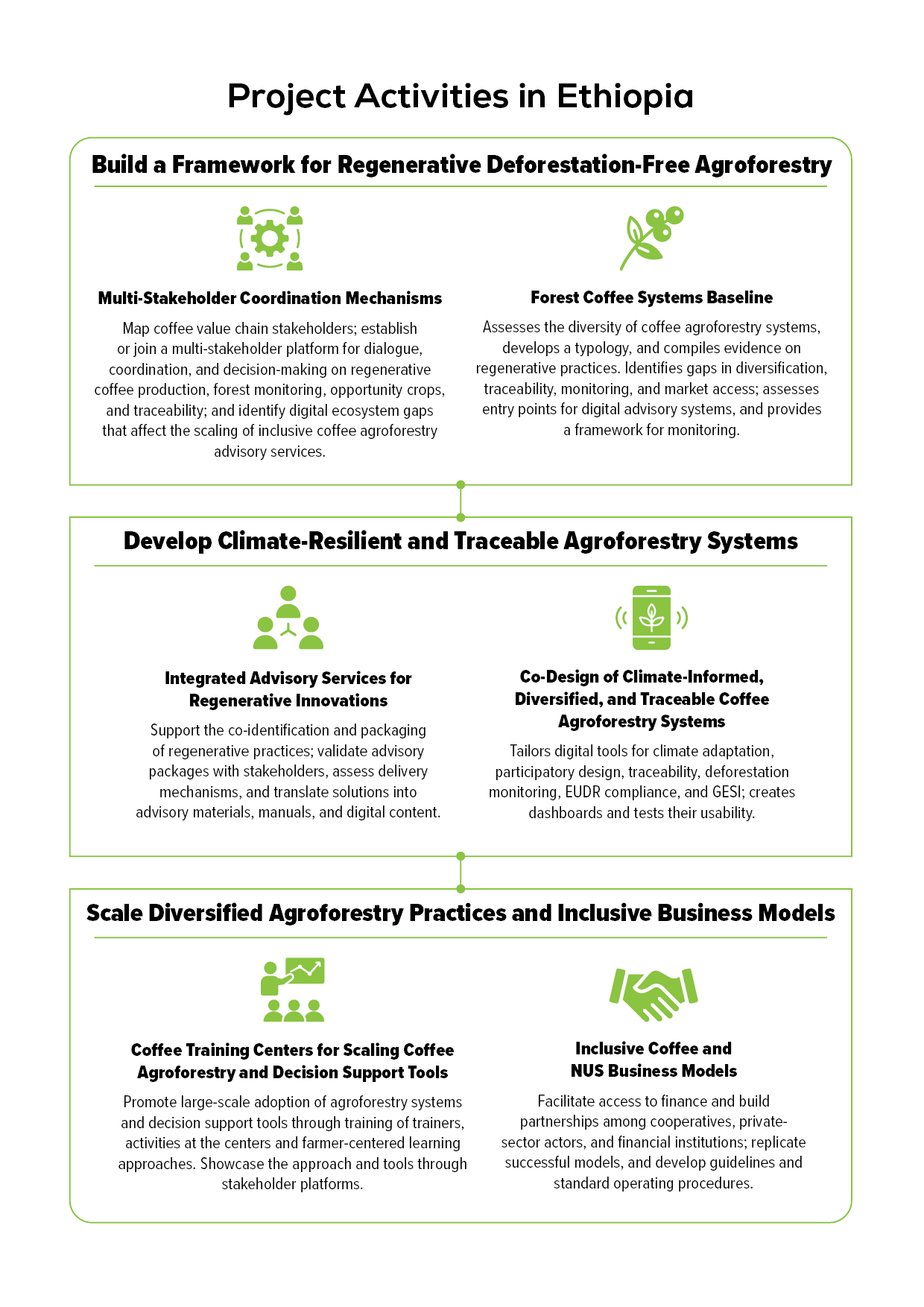
Ethiopia
The goal is to diversify production with NUS in regenerative zero-deforestation coffee agroforestry systems, using digital advisory platforms and monitoring tools, as well as multi-stakeholder platforms and inclusive business models, by co-designing regenerative practices aimed at improving soil health and production.
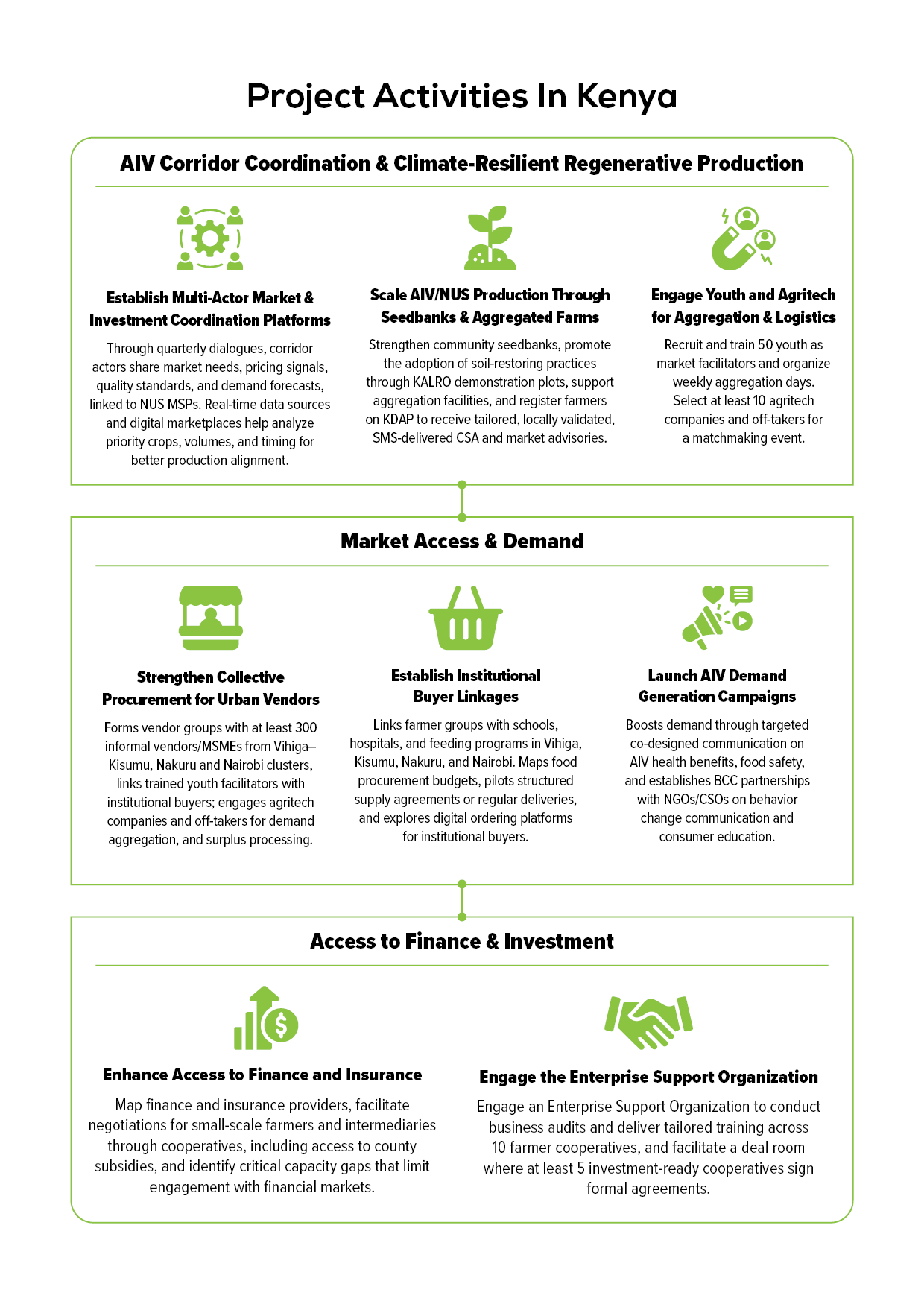
Kenya
It establishes coordination platforms, strengthens community seed banks and AIV farmer cooperatives, as well as supports youth-led aggregation and product logistics, strengthening commercial partnerships, and promoting farmer's financial inclusion.
Uganda
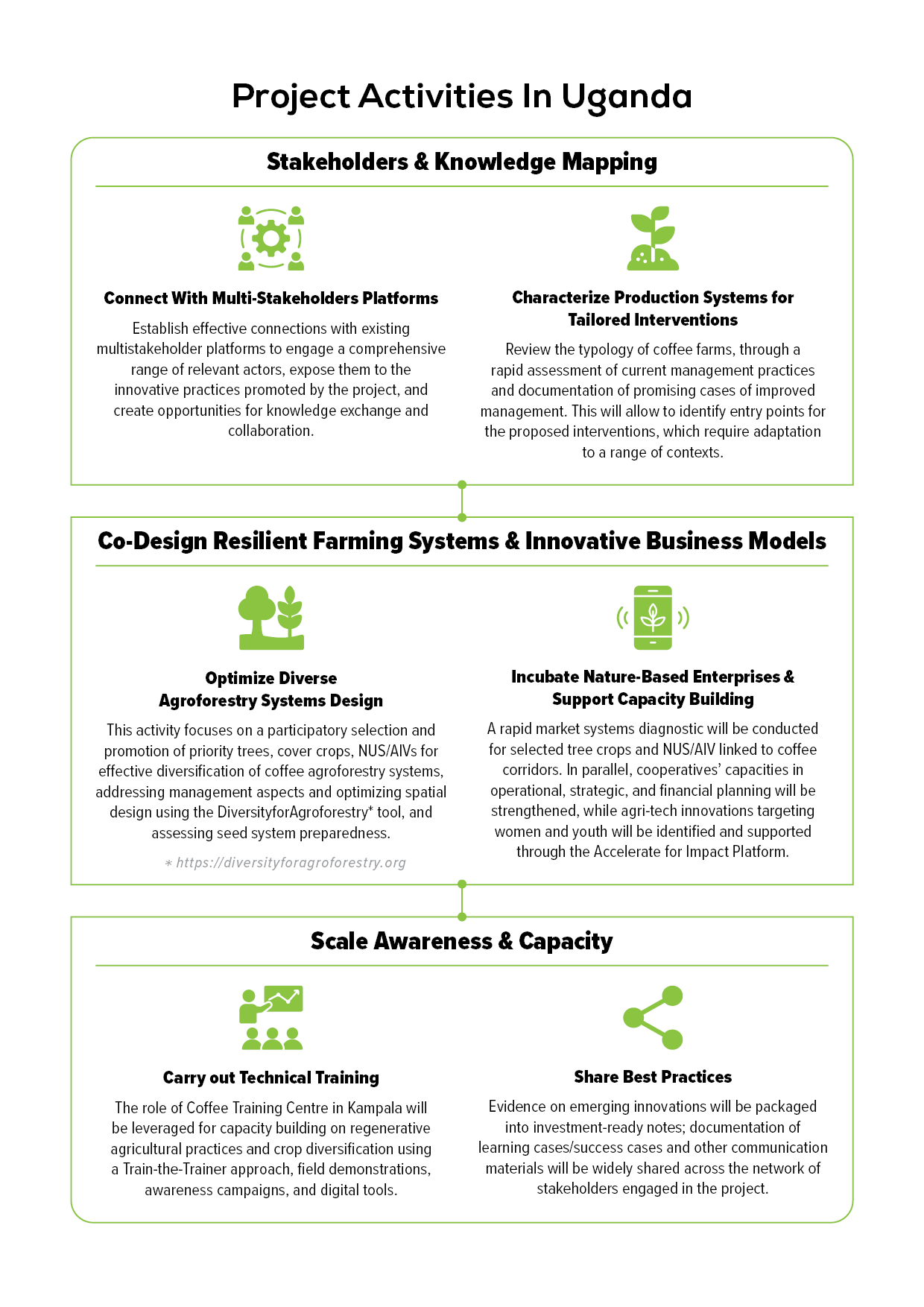
It promotes diversified production with NUS and improves soil health in regenerative agroforestry coffee systems through stakeholder engagement, the co-design of strategies for agricultural system diversification, the dissemination of agricultural business models, and training and capacity-building activities.
THRIVE Impact
Ethiopia
Smallholder coffee farmers
Benefit from the digital advisory tools.
Extension agents
Trained on regenerative systems and digital advisory tools.
Cooperatives
Strengthened in governance, traceability, and business models.
Private sector actors
Benefit from improved traceability and market transparency.
Government staff
Supported in forest monitoring and compliance systems.
Kenya
Smallholder AIV/NUS farmers
Overcome limited market access, high costs and losses, and year-round production risks through scaled aggregation.
Market vendors and intermediaries
Address fragmentation, perishability, and capital shortages.
Youth and local enterprises
Build coordination skills as facilitators.
AgriTech4Kenya start-ups
Benefit from matchmaking events, potentially leading to scaling their innovations.
Uganda
Smallholder farmers reached through awareness campaigns
Reached by cooperatives and buyers through field visits, radio, videos, factsheets, and other information, communication and education (ICE) materials.
Farmers benefiting from demo farms and capacity building
Benefit from the establishment of demo farms, capacity building through ToTs, and adoption of agri-tech innovations.
Farmers participating in co-design activities
Participate in the co-design activities.
Agri-tech start-ups
Participate in the A4IP matchmaking events.
Agri-tech start-ups
Participate in the A4IP matchmaking events.
Project leaders

Céline Termote
Senior Scientist - Africa Regional Team leader Food Environment and Consumer Behavior
Kalkidan Ayele Mulatu
Research Management Coordinator
Francis Odhiambo Oduor
Postdoctoral Fellow, MyFarmTrees project manager, Kenya
Walter Ocimati
Scientist; Healthy and Productive Farms and LandscapesProject members

Andrea Ghione
Project Leader, Market and Value Chain
Barbara Vinceti
Senior Scientist
Boaz S. Waswa
Scientist
Bogale Nigir
Research officer
Christian Bunn
Scientist II
David Slane
Senior Manager and Chief of Party, Business Acceleration for Youth Project, Country Representative for Malawi
Degefie Tibebe
Research Specialist
Eric Rahn
Senior Scientist
Ermias Tesfaye Teferi
Postdoctoral Fellow
Evert Thomas
Senior Scientist
Francesca Grazioli
Scientist I
Getachew Tesfaye Ayehu
Research Project Coordinator - Remote sensing and Geospatial Analyst
Gloria Otieno
Scientist II
Irene Luce Parisi
Technical Specialist
Majambo Gamoyo
Postdoctoral Fellow
Mengistu Dejene Kassahun
Scientist-II
Moses Owori
Senior Research Associate - Nutrition
Nekesah T. Wafullah
Expert, Venture Building
Lillian Aluso
Research Associate