Blog Scaling cocoa agroforestry in Côte d'Ivoire: what needs to be in place?
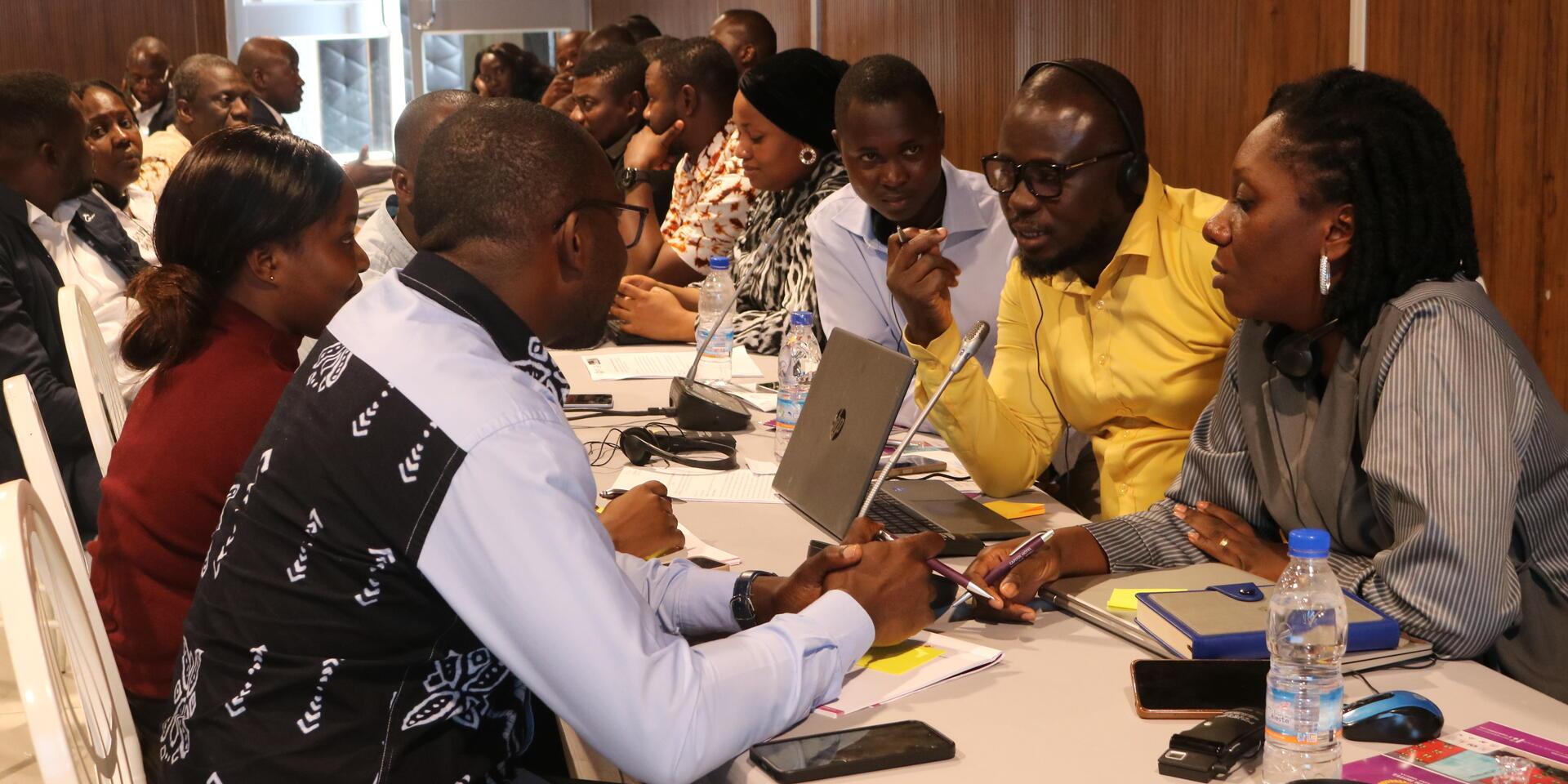

On 16 June 2026 in Abidjan, Côte d'Ivoire, the Alliance of Bioversity International and CIAT convened cocoa sector stakeholders to validate a framework for scaling cocoa agroforestry and identify the policies, finance, markets and support systems needed to advance zero-deforestation cocoa production.
A tree seedling can be produced, distributed, and delivered to a cocoa farmer. But the success of agroforestry depends on much more than planting trees. Does the farmer have the knowledge, incentives, financing, and institutional support to establish and manage the trees? Will markets, policies, and extension services sustain adoption? And, years from now, will the trees generate enough value to justify the investment?
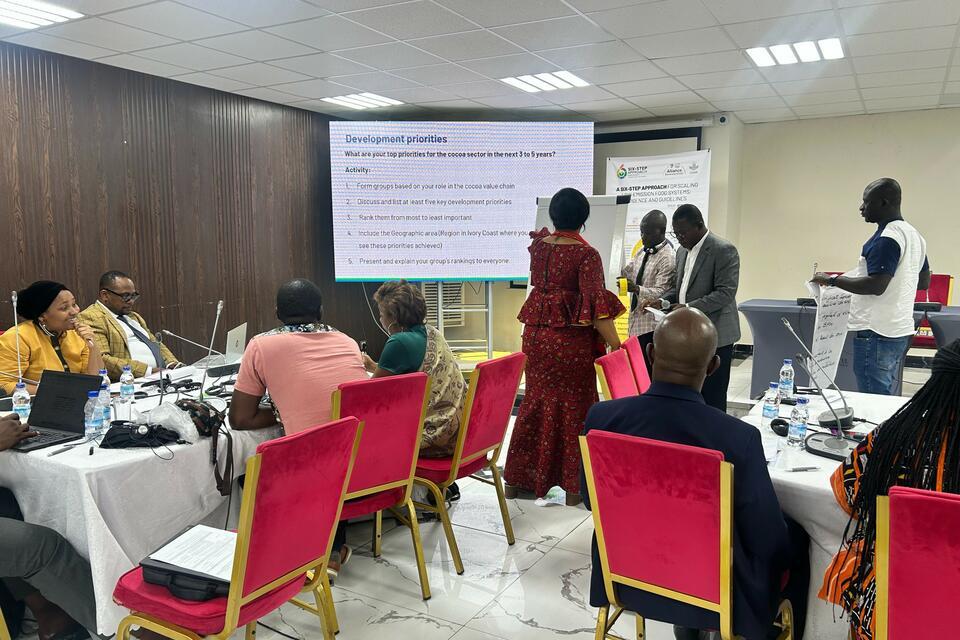
These questions shaped the discussions at the Stakeholder Workshop on Scaling Agroforestry for Zero Deforestation Cocoa, convened by the Alliance of Bioversity International and CIAT in Abidjan on 16 June 2026. Bringing together representatives from government, the Coffee-Cocoa Council, research institutions, cocoa companies, civil society, and development partners, cooperatives and producers.
The workshop underscored a critical message: scaling agroforestry requires far more than distributing tree seedlings. Participants agreed that lasting adoption depends on an enabling environment that aligns policies, strengthens institutions, creates market incentives, builds farmers' capacities, and mobilizes financing to support the long term expansion of agroforestry across Côte d'Ivoire's cocoa landscape.
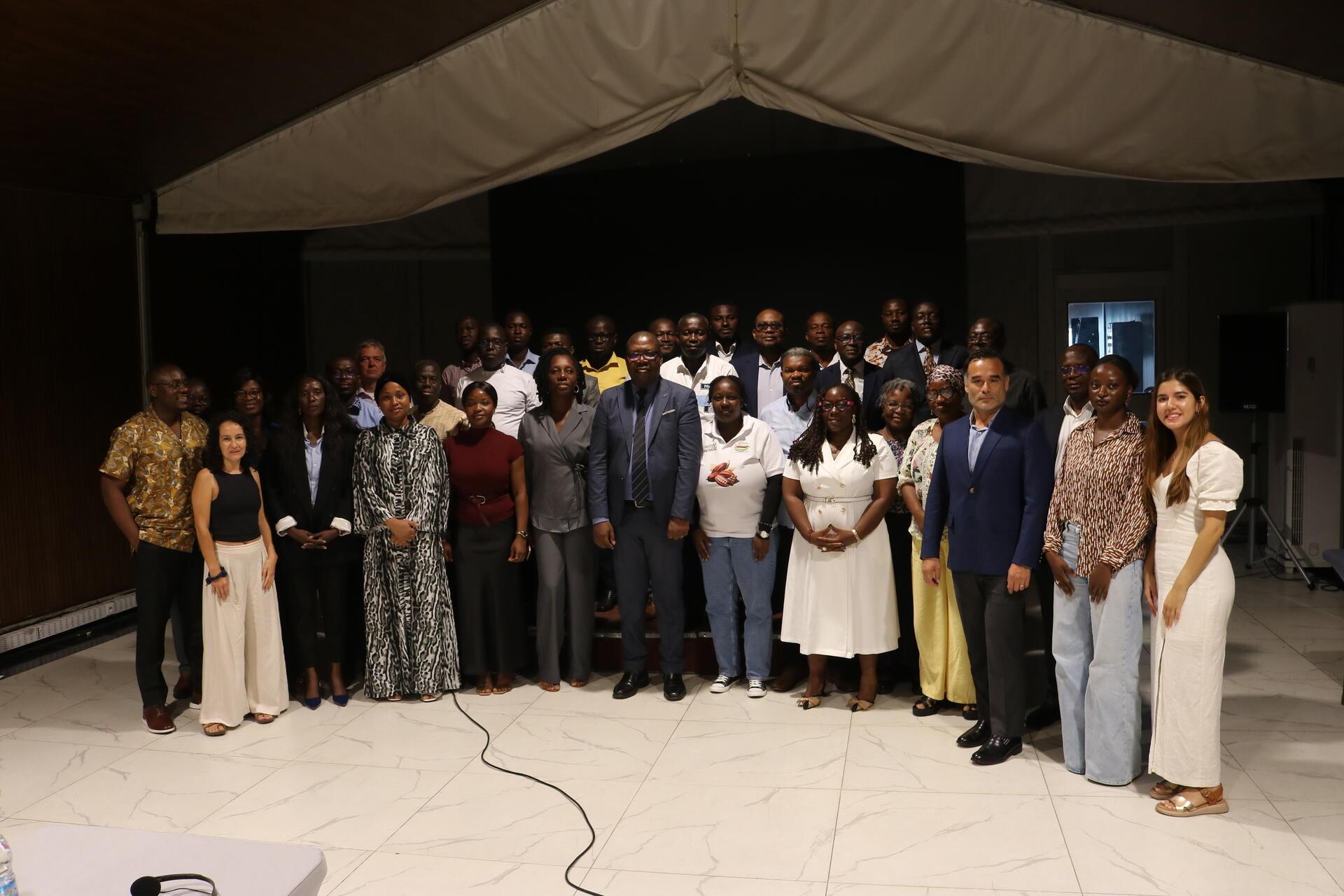
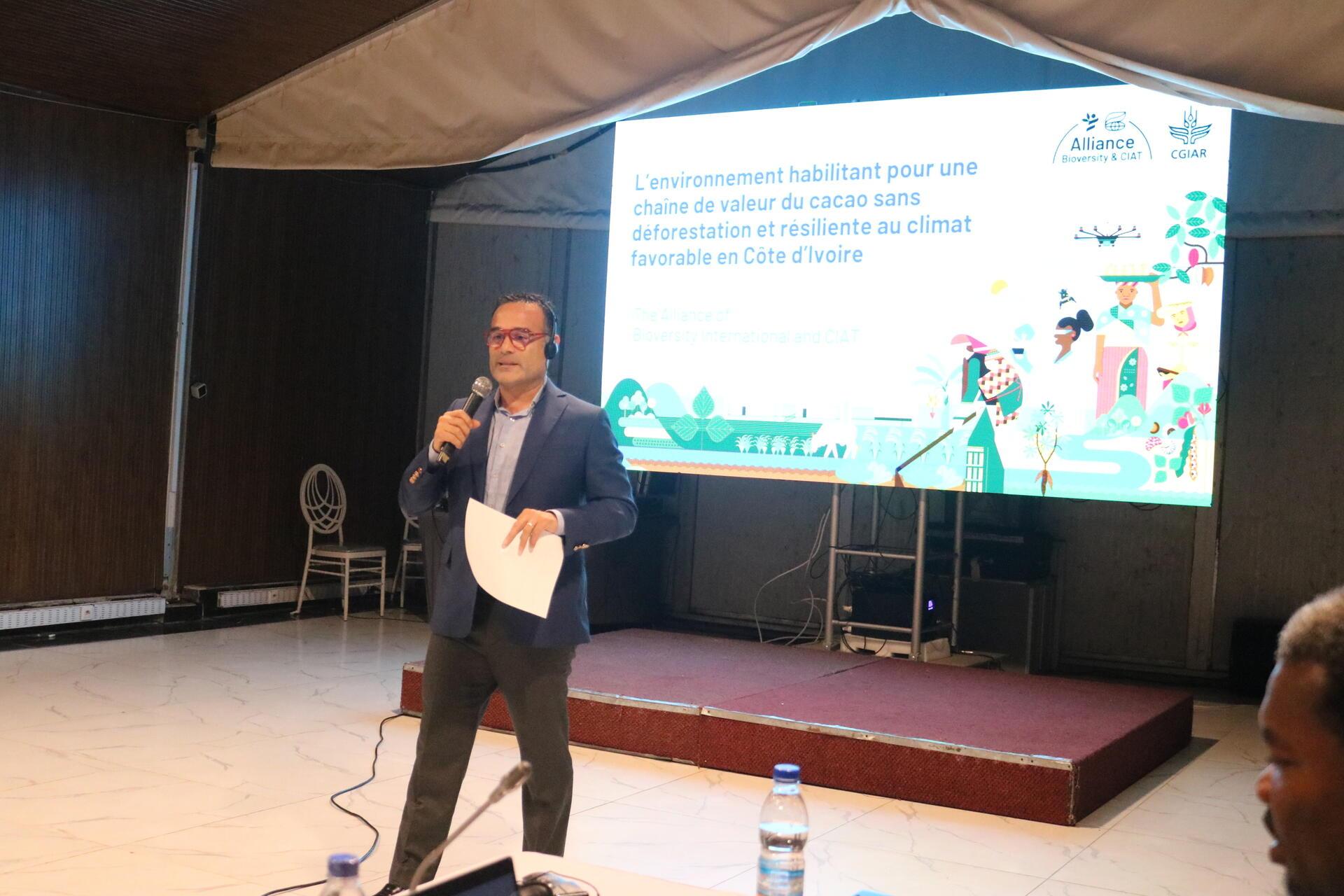
Opening the workshop, Dr. Augusto Castro reflected on the research conducted in Côte d'Ivoire during 2025 and its focus on pathways towards zero-deforestation cocoa markets and sustainable finance. He emphasized the role of scientific evidence in supporting decision-making and informing policies and strategies for scaling cocoa agroforestry in the country.
At its center was a research-based Six-Step Approach applied in Côte d'Ivoire during 2025. The meeting offered an opportunity to share findings, validate and strengthen a proposed framework for scaling agroforestry, and explore carbon market opportunities developed by the Alliance.
Six steps to examine a complex scaling challenge
Presented by Dr. George Amahnui, the Six-Step Approach starts from the premise that scaling agroforestry to reduce deforestation from cocoa production requires looking beyond the practice itself.
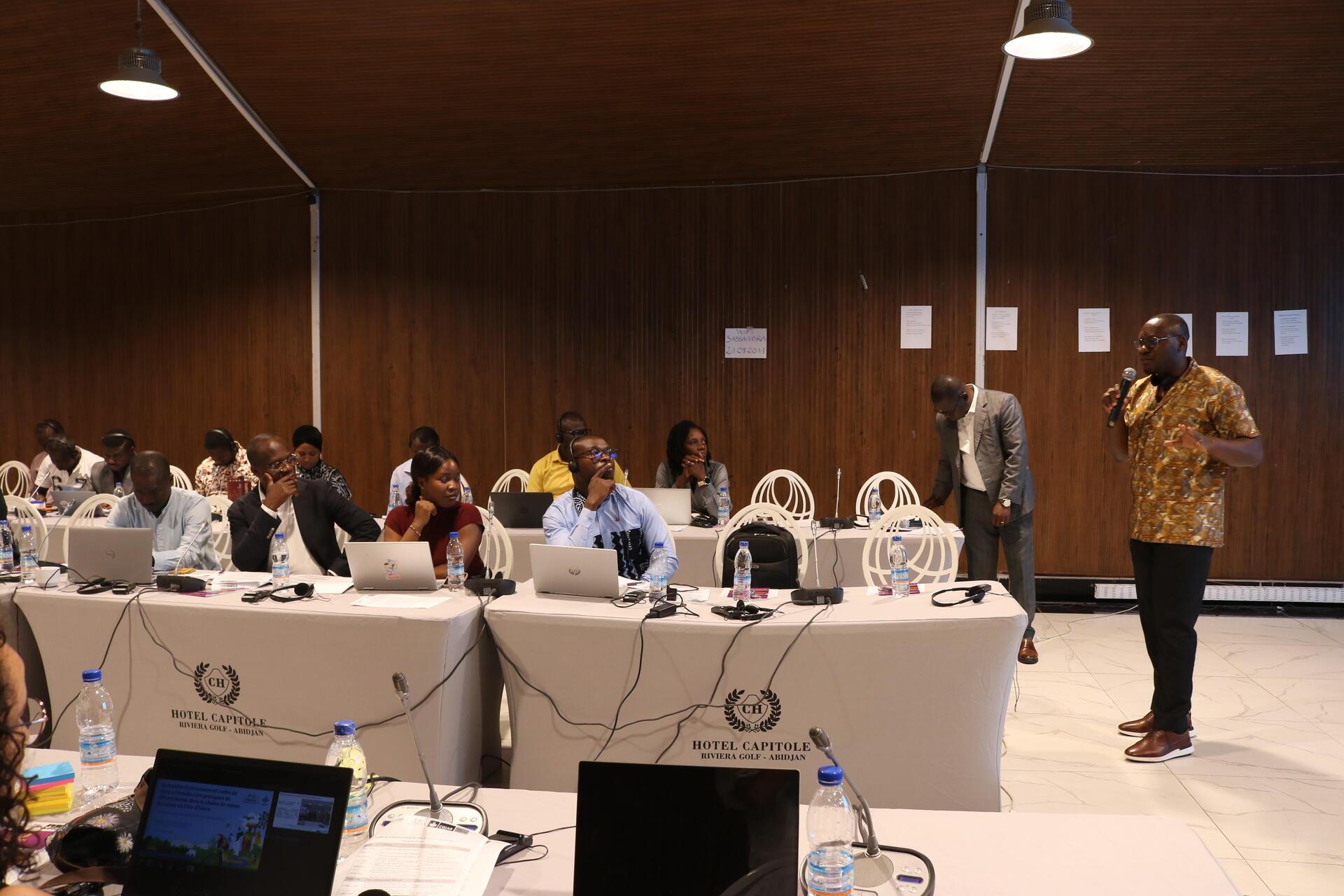
To understand this broader dynamic, the approach is structured around a series of guiding questions:
- Where is deforestation occurring and what is driving it?;
- Which policies and institutions shape sustainable cocoa production?;
- What influences farmers to adopt agroforestry?;
- Where do value chains create barriers or opportunities?;
- Which business and financing models can support wider uptake?; and
- How can environmental, economic and social outcomes be assessed?
By answering these questions, the Six-Step Approach helps to generate evidence-based recommendations for developing an enabling environment to scale agroforestry and support the transition to zero-deforestation cocoa production in Côte d'Ivoire.
Together, the six steps connect topics often addressed separately: deforestation hotspots and drivers; policies and institutions; adoption and incentives; value chains; business and financing models; and impact measurement.
Testing the evidence against local knowledge
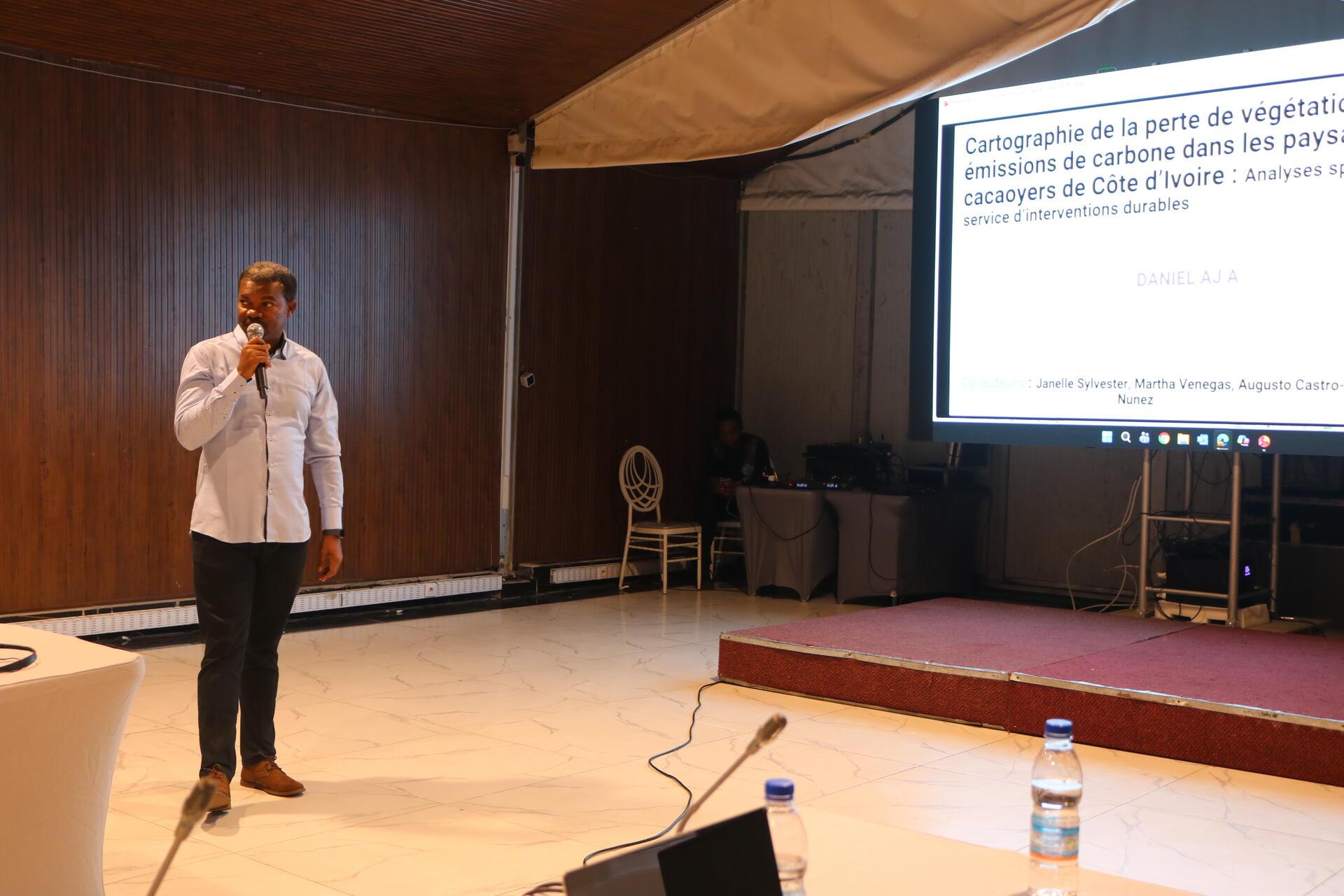
In line with identifying deforestation hotspots in our six step approach, Dr. Daniel Aja presented spatial analysis of vegetation loss and associated carbon emissions in cocoa landscapes. By combining vegetation loss data with mapped cocoa areas, the research examined patterns of vegetation conversion and their implications for sustainable interventions.
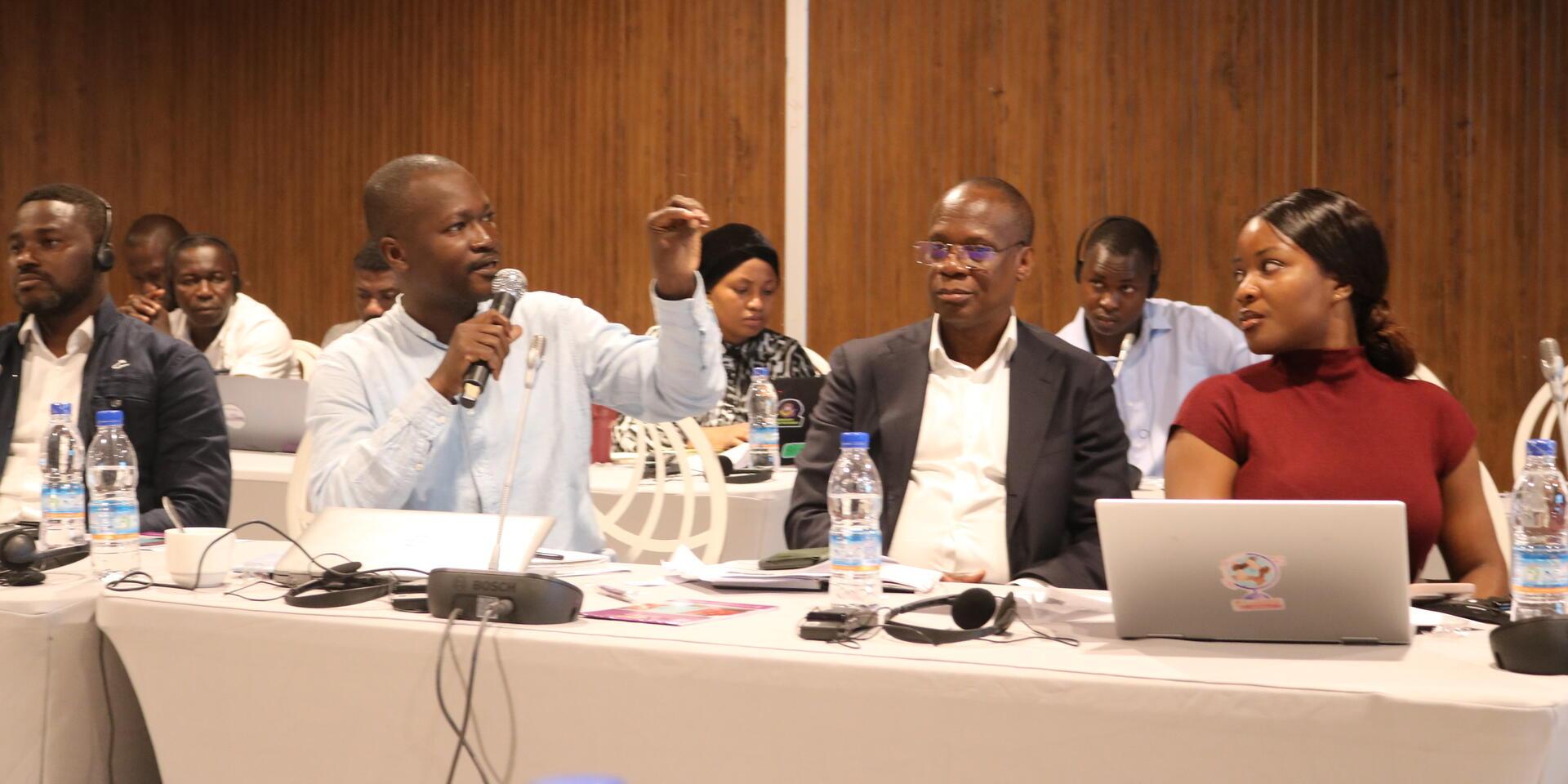
Participants questioned the evidence closely. How accurately can satellite imagery distinguish cocoa agroforestry from other tree-based land uses? How are mixed cropping systems represented? Could demographic pressure help explain vegetation loss?
The research team acknowledged the need for further field verification. Participants recognized the value of spatial analysis while calling for greater integration of national data and collaboration with national local research institutions to improve shared ownership.
The institutions around a cocoa farm matter too
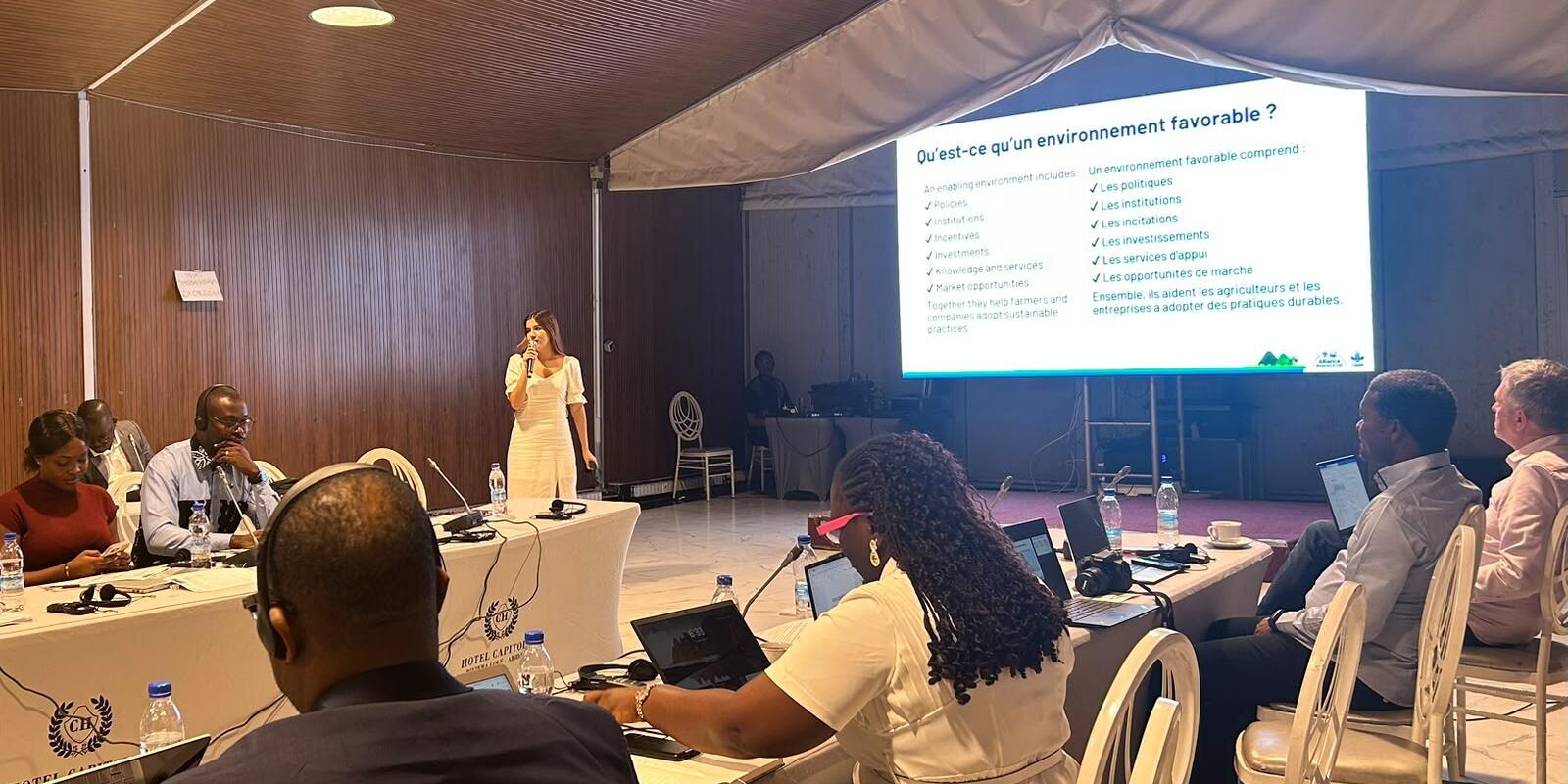
An assessment of Côte d'Ivoire's enabling environment, presented by Angie Sanchez, examined the policies, institutions, incentives and stakeholder priorities surrounding sustainable cocoa and agroforestry.
The policy review found strong recognition of forest conservation, agroforestry and climate resilience across national strategies. At the same time, it identified gaps in monitoring and evaluation. Some policies set ambitious sustainability objectives but have fewer clear indicators or mechanisms to track implementation and outcomes.
Understanding why farmers adopt, or do not
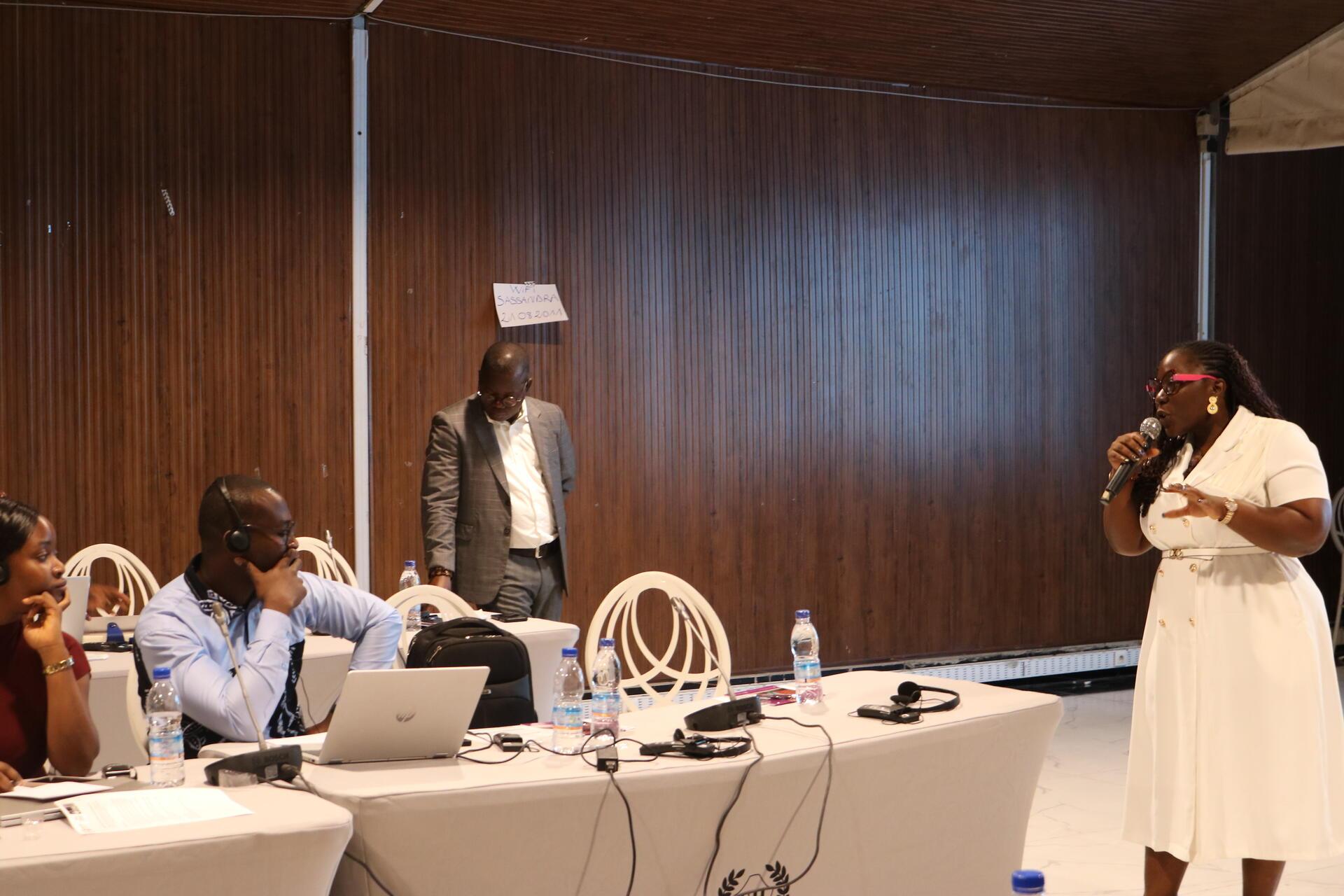
Dr. Mary Ngaiwi presented comparative research from cocoa producing countries, including Côte d'Ivoire, Ghana, Cameroon and Guinea on the factors influencing farmers' adoption of sustainable cocoa practices.
The research identified extension services, cooperative membership and certification systems as factors supporting adoption of cocoa agroforestry systems. At the same time, insecure land and tree tenure, labor constraints and the long period before agroforestry investments generate returns can discourage farmers from making long-term changes.
Participants expanded the analysis. They stressed policy continuity and access to practical information, while also raising cultural and social factors, competition with other land uses, and the additional management requirements associated with trees on cocoa farms.
Enabling pillars for scaling agroforestry systems to reduce deforestation
The workshop then moved from presenting findings to validating the framework required for scaling.
Dr. George Amahnui and Martha Vanegas introduced enabling factors drawn from research and scaling experiences in different contexts, including policies, institutions, finance, markets, capacity building, infrastructure, partnerships and social inclusion.
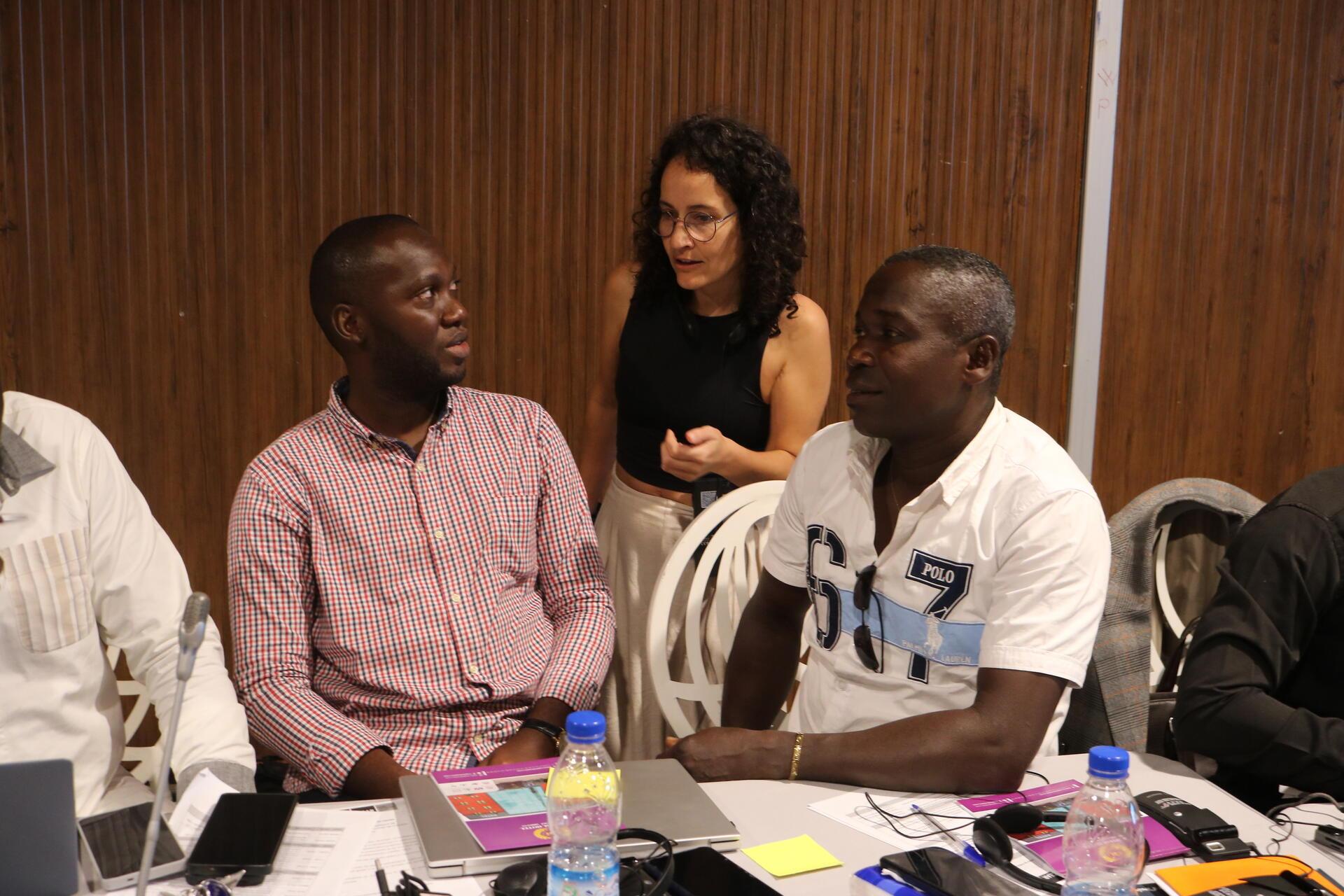
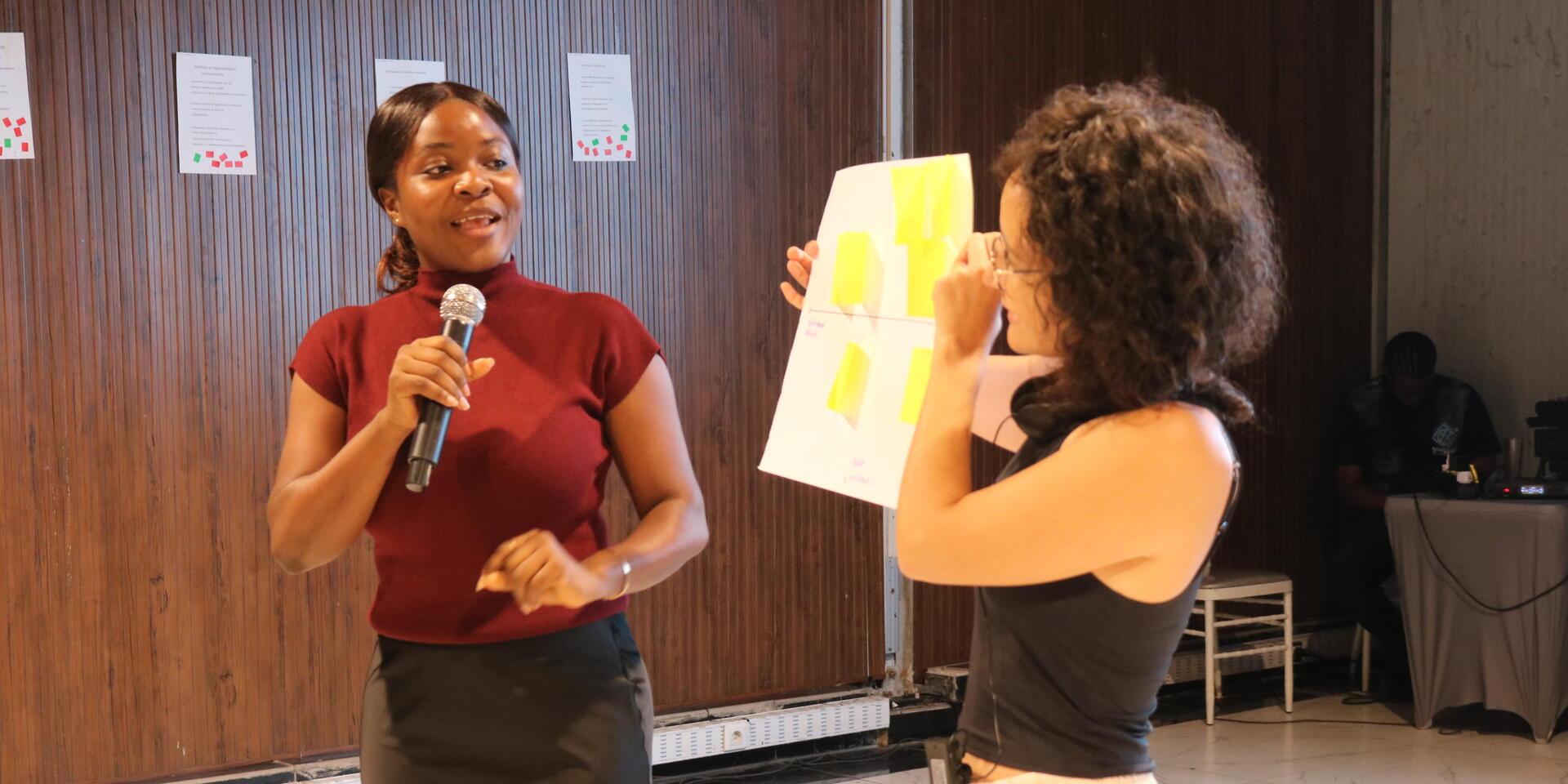
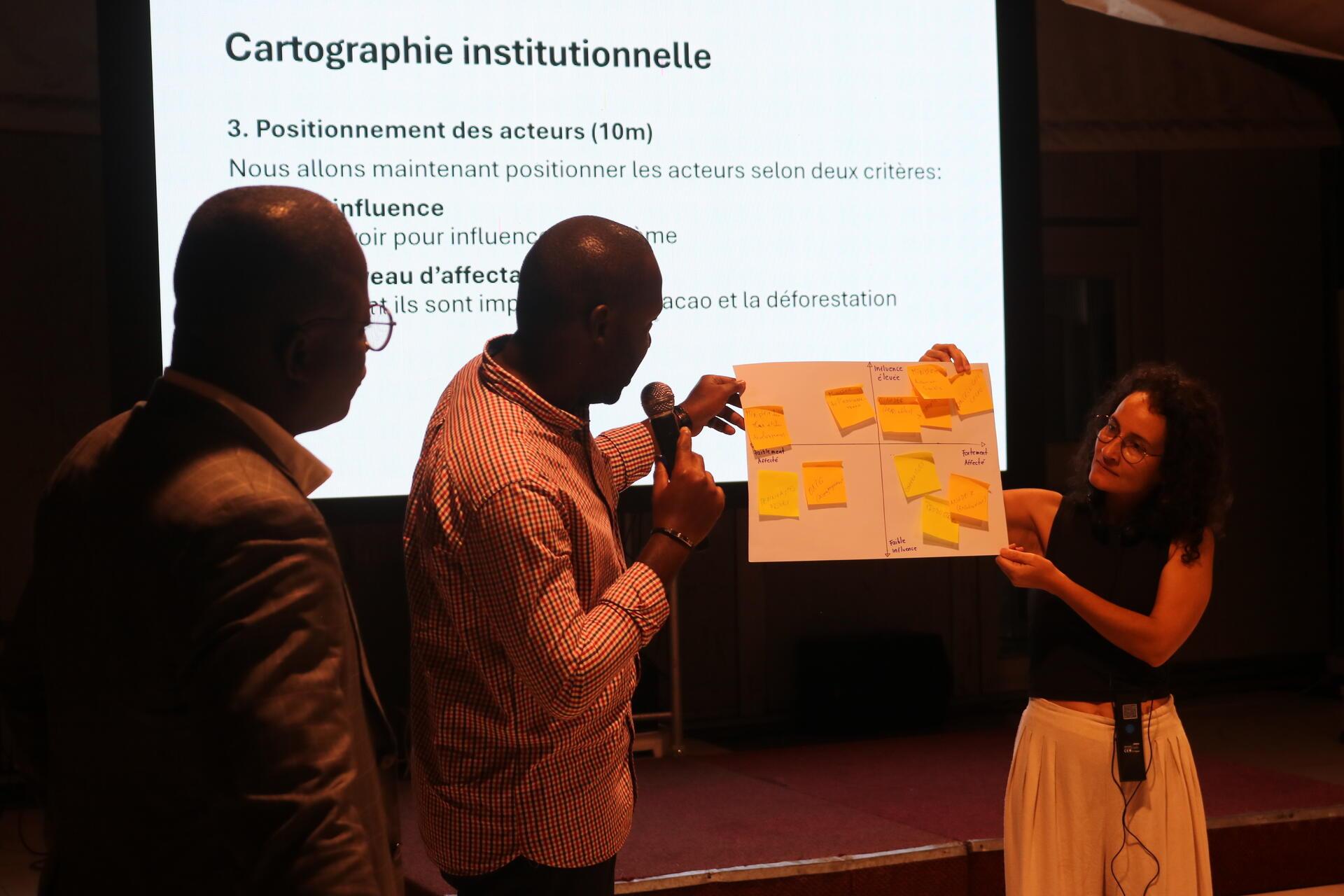
Participants were asked what mattered most in Côte d'Ivoire.
Market access and differentiated markets for agroforestry products ranked first. Participants argued that farmers need clear economic opportunities associated with agroforestry. Cocoa and other products from these systems need markets that provide an economic reason to maintain long-term investments.
Knowledge, technical capacity and extension services ranked second. Participants called for practical agroforestry models adapted to local conditions, stronger training, continued technical support and clearer information on tree ownership and tenure regulations.
Finance and investment mechanisms ranked third. Agricultural credit, insurance adapted to agroforestry, climate finance and carbon finance entered the discussion. Participants also emphasized Monitoring, Reporting and Verification systems to track results and strengthen access to climate and carbon finance.
The earlier seedling example brought these priorities together. Participants noted that considerable resources have gone into producing seedlings, yet many are never planted or fail to survive.
Producing a seedling is not the same as establishing a tree.
Future investments, participants argued, need to consider planting, maintenance and long-term survival, supported by continued technical follow-up for farmers.
A framework refined through dialogue
The Abidjan workshop was one step in an ongoing research process that began with earlier stakeholder consultations and a workshop in December 2025.
This time, the research team returned with findings and a proposed scaling framework. Stakeholders questioned the data, added factors to the adoption analysis, ranked enabling conditions and helped test the framework against Côte d'Ivoire's cocoa sector.
The feedback gathered in Abidjan will now be used to refine the research findings, scaling framework and recommendations. The broader aim is to generate evidence that can inform decision-making, practical guidance for producers, government institutions, development organizations, researchers and private-sector actors, and evidence that can help direct investment towards agroforestry and deforestation-free cocoa.
The seedling question remains a useful reminder: Scaling agroforestry is not only about how many trees are produced or distributed. It is about whether farmers have the conditions to plant them, manage them and see value in keeping them on their farms.
This note was developed as part of the CGIAR Science Programs: Climate Action and Scaling for Impact