Blog A blueprint for low-emission cocoa in West Africa
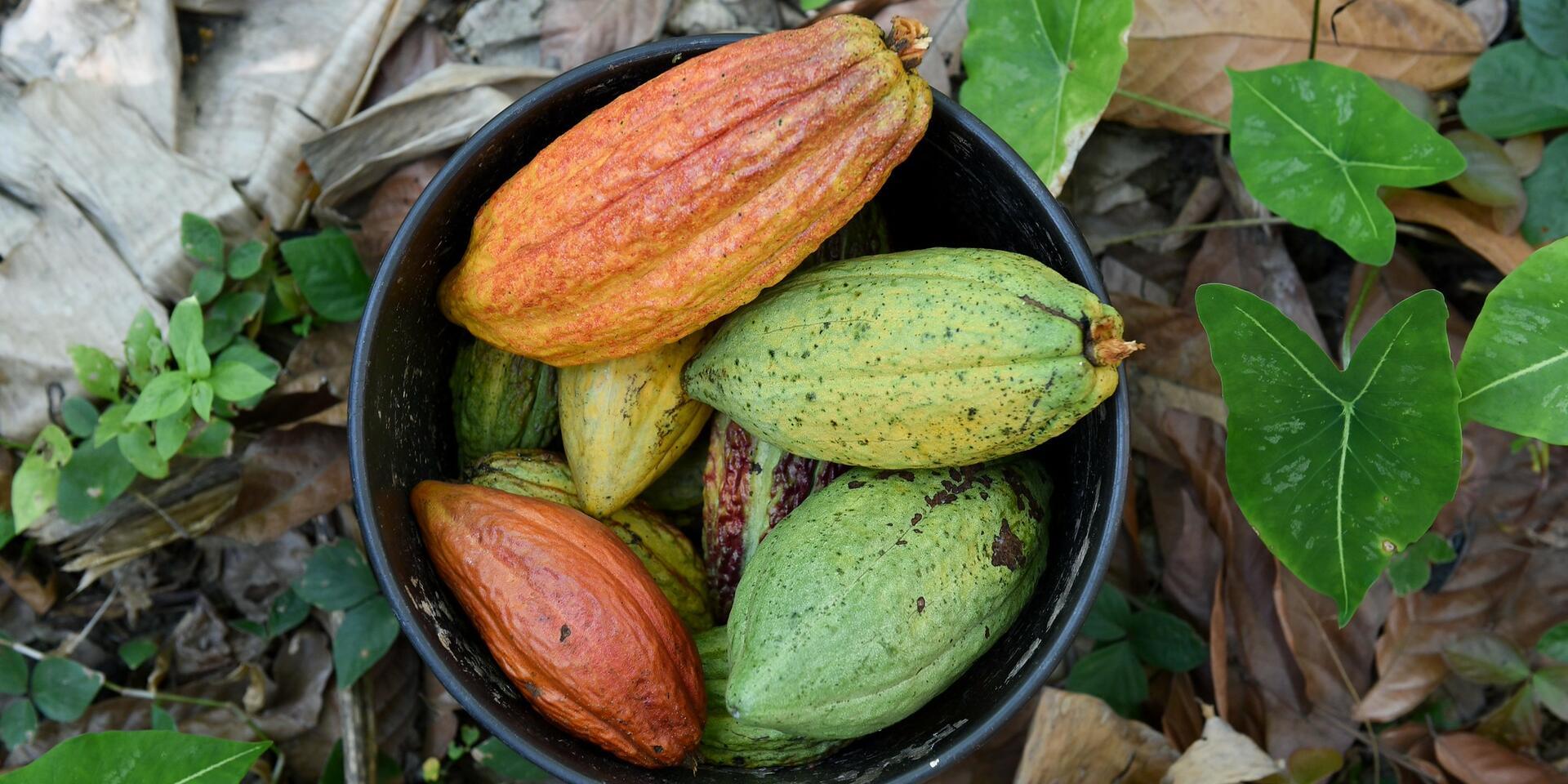

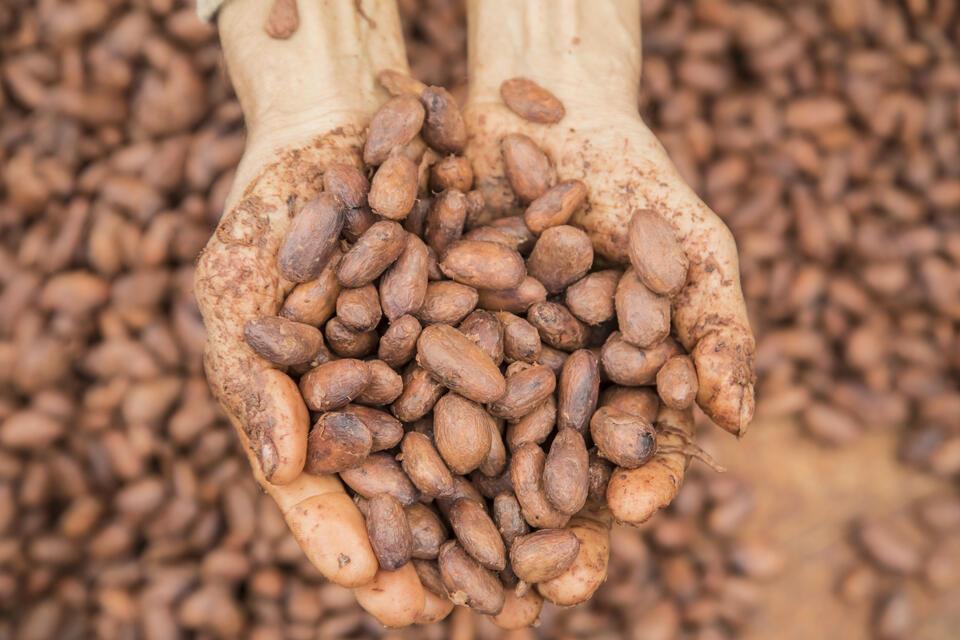
When people think of West Africa, cocoa often comes to mind: a crop that shapes rural livelihoods, national economies, and the global chocolate industry. Across major producing countries such as Côte d'Ivoire, Ghana, Cameroon and Guinea, millions of families depend on the harvest each year. Together, these countries generate over 60% of global cocoa output, making the region the engine of global supply.
But years of forest conversion and growing climate pressures are testing the foundations of this success, just as new environmental regulations begin to reshape access to international markets. This is where the Alliance of Bioversity International and CIAT steps in. Across West Africa, the Alliance is working with farmers, cooperatives, businesses, and policymakers to rethink how cocoa is grown, traded, and supported. At the center of this effort is a six-step approach designed to turn research into real-world innovation.
Cocoa at the intersection of deforestation, climate risk and social challenges
Behind every chocolate bar lies an uncomfortable truth: the industry’s rapid expansion has come at the expense of forests, biodiversity, and the long‑term viability of farming communities. Between 2000 and 2013 alone, deforestation linked to cocoa surged to an alarming 132,376 hectares per year. In Côte d’Ivoire, the recent slowdown in forest loss is not a sign of recovery, but rather the result of forests already being severely depleted, leaving limited areas still at risk.
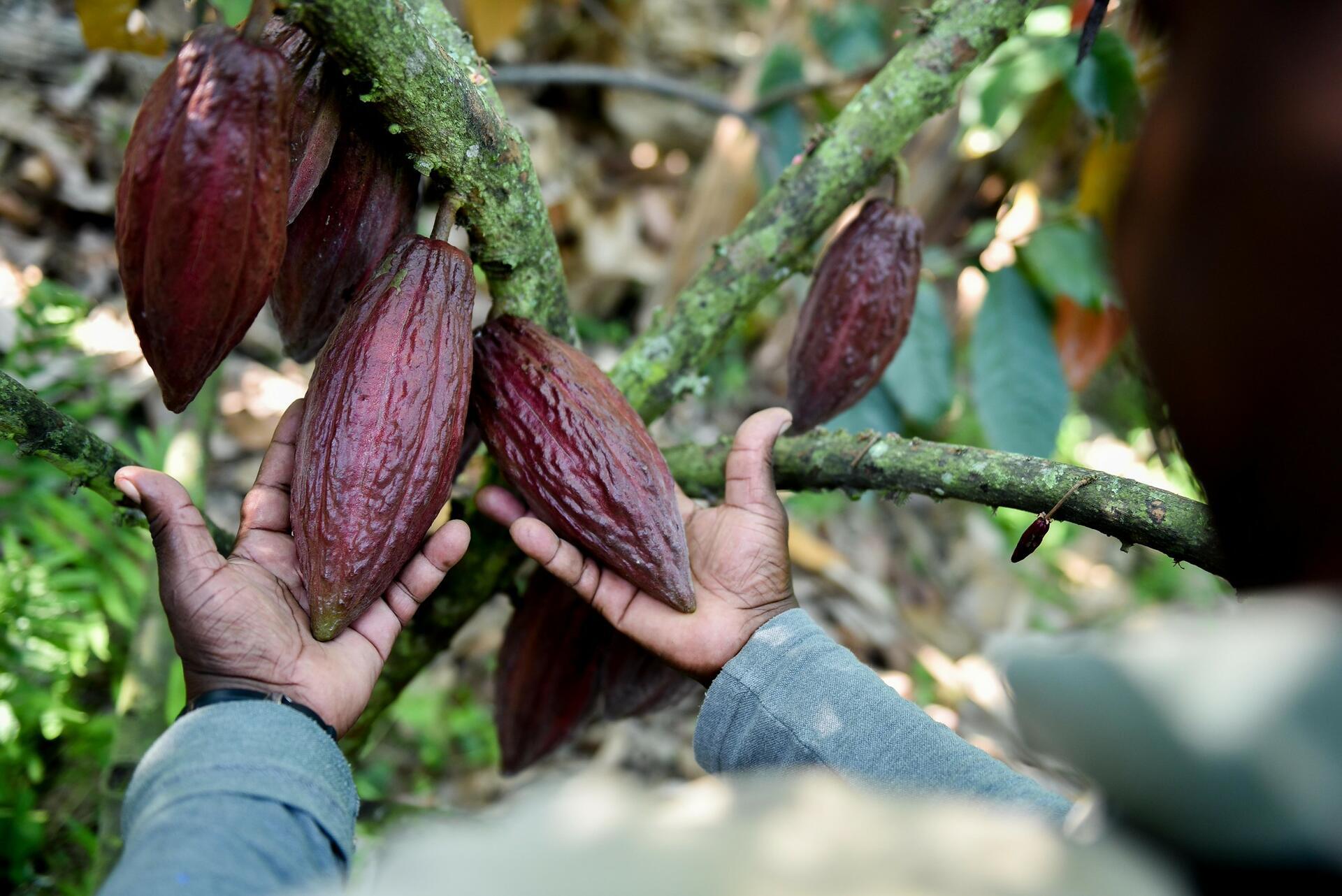
For decades, expanding cocoa farms pushed deep into forested lands. Today, the region faces not only the consequences of deforestation but also the increasing threats of climate change, longer droughts, irregular rains, declining soil fertility, and rising temperatures that put cocoa productivity at risk.
As the IPCC notes: “West Africa is already facing reduced economic growth, water shortages, reduced food production, biodiversity loss, and adverse impacts on human settlements and infrastructure as a result of human-induced climate change.”
Also, the cocoa sector in West Africa faces persistent social challenges, including poverty among smallholder farmers, limited access to education and healthcare, and weak labor protections across rural communities. Child labor remains a critical concern, as economic hardship and inadequate social services often push families to rely on children’s involvement in cocoa production.
The EU Deforestation Regulation: a critical shift for cocoa-producing countries
Compounding this challenge is a new ripple from across the ocean. The European Union, the largest importer of West African cocoa, has introduced strict new regulations. Soon, any cocoa linked to deforestation will be barred from entering the EU market.
While the goal is noble, the burden falls heavily on the shoulders of those least equipped to carry it. Most cocoa is grown by smallholder farmers on less than five hectares of land. These families lack the high-tech mapping tools and financial reserves required to prove their due diligence. Without support, thousands of small-scale producers’ risk being cut out of the global market.
The Alliance’s contribution: Turning evidence into action
This is where the Alliance of Bioversity International and CIAT steps in.
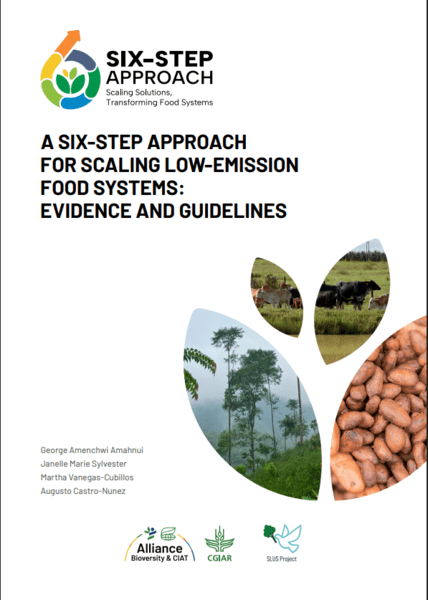
Across Côte d’Ivoire, Ghana, Cameroon and Guinea, the Alliance is working with farmers, cooperatives, businesses, and policymakers to rethink how cocoa is grown, traded, and supported. At the center of this effort is a six-step approach designed to turn research into real-world innovation.
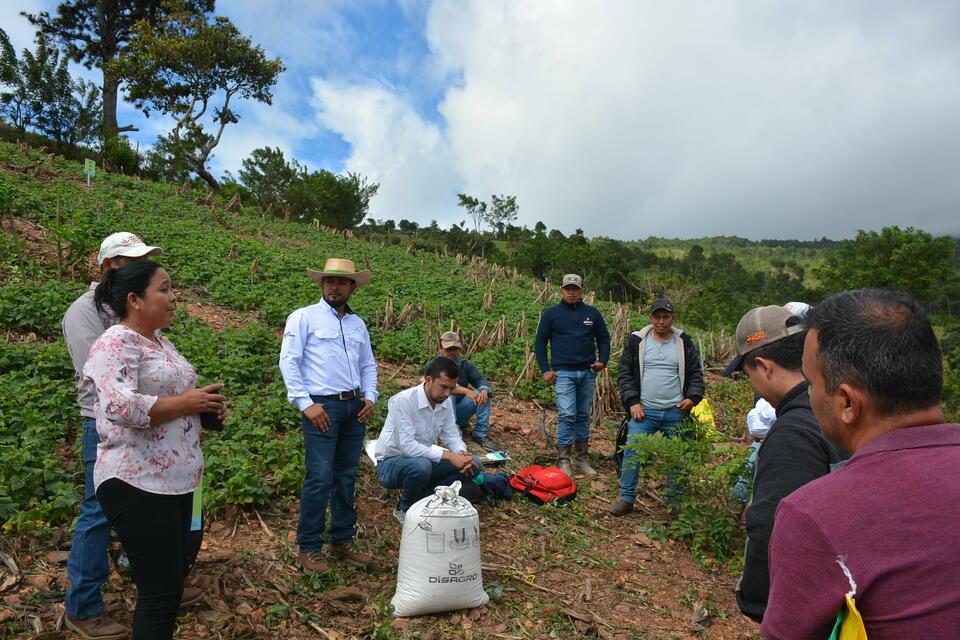
Rather than imposing solutions, the Alliance focuses on co-creation: working with value chain actors to identify what works locally, what can scale, and what truly benefits farmers.
In these leading producer nations, this approach is providing the evidence needed to create a sustainable, low-emission cocoa value chain.
So, how do we drive value chain transformation?
We follow a structured path:
1. Mapping emissions hotspots
Identifying where greenhouse gas emissions are highest and where mitigation can have the greatest impact.
2. Aligning climate action with national development goals and targets
Finding sub-national regions where food system climate action priorities overlap with national development targets strengthens political and social support.
3. Assessing farm-level potential for the adoption of sustainable practices/innovations
Understanding what innovations farmers can realistically adopt, and what support they need to do so.
4. Uncovering value chain barriers
Examining financial, technical, and institutional obstacles that prevent sustainable practices from spreading.
5. Designing inclusive business models
Supporting the development of financial mechanisms that allow innovations to scale while ensuring smallholders are not left behind.
6. Measuring impact beyond emissions
Evaluating not only how much greenhouse gas emissions have been reduced through the scaling of innovations, but also which Sustainable Development Goals (SDGs) have been advanced in the implementation context.
From policy to the plot of land
The ultimate goal is simple but ambitious: to turn evidence into an enabling environment.
By providing policymakers and implementing institutions with reliable data and tested solutions, the Alliance aims to help countries design policies and investments that support sustainable cocoa production, protect forests, and strengthen farmers’ livelihoods.
A vision for the future
George Amahnui, leader of the project and author of the six-step approach, sums it up:
“We’re working in the West Africa cocoa value chain to provide the evidence needed to implement innovations that help these countries reduce deforestation, adapt to climate change, seize their opportunities as leaders in cocoa production, and improve the livelihoods of the most vulnerable actors of the value chain: the farmers”
So, what might be the future of cocoa in West Africa under mounting climate and social pressures and evolving global regulations?
With the right mix of policy, innovation, and partnership, it can become a story not only of sustainability, but of shared prosperity, restored forests, and resilient communities.
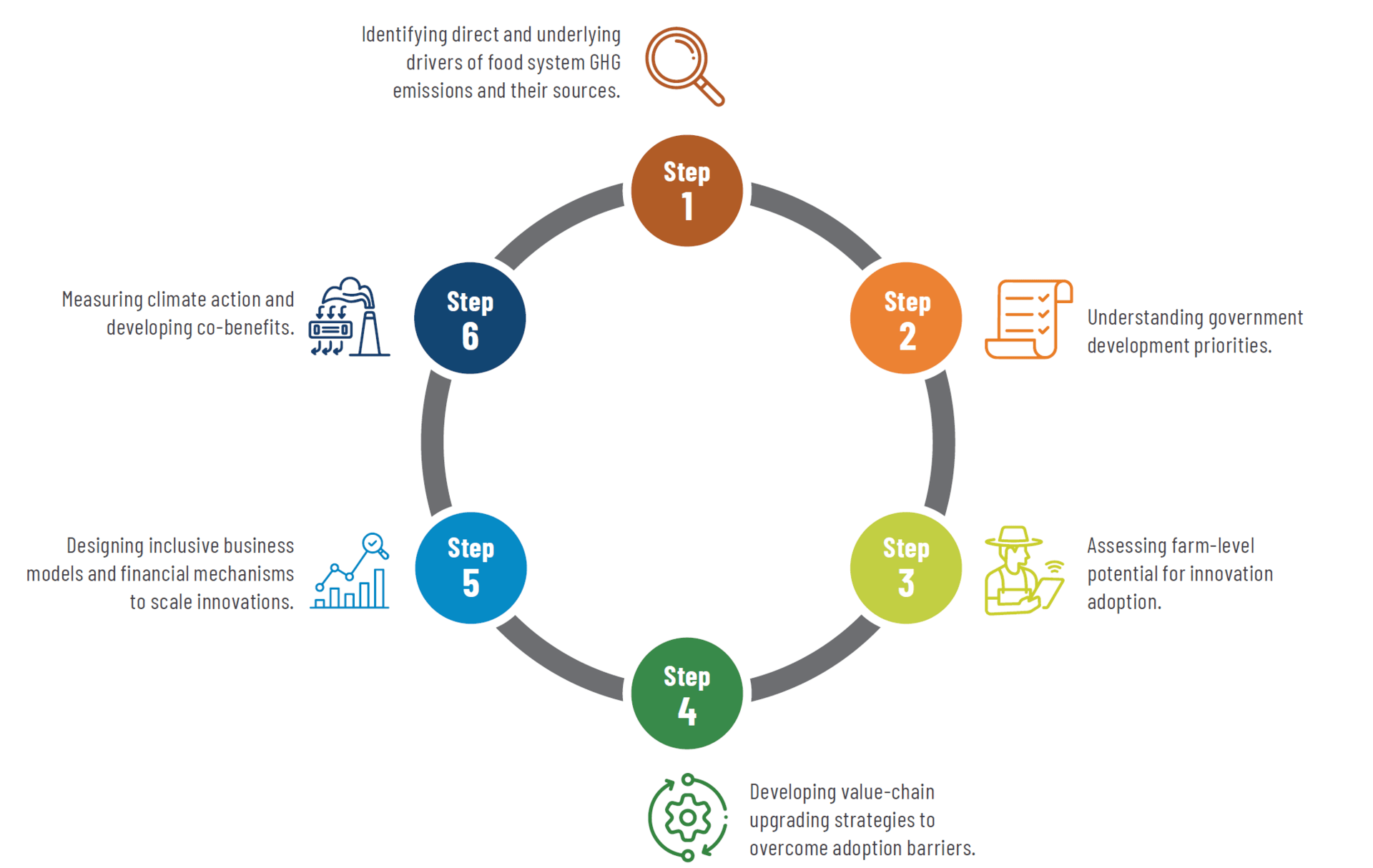
The Six-step Approach for generating the enabling environment for scaling innovations for low-emission food systems. Adapted from Bonatti et al. (2021).

George Amahnui
Postdoctoral FellowFurther reading