Blog Cultivated forages as climate solutions to transform livestock systems in the Global South
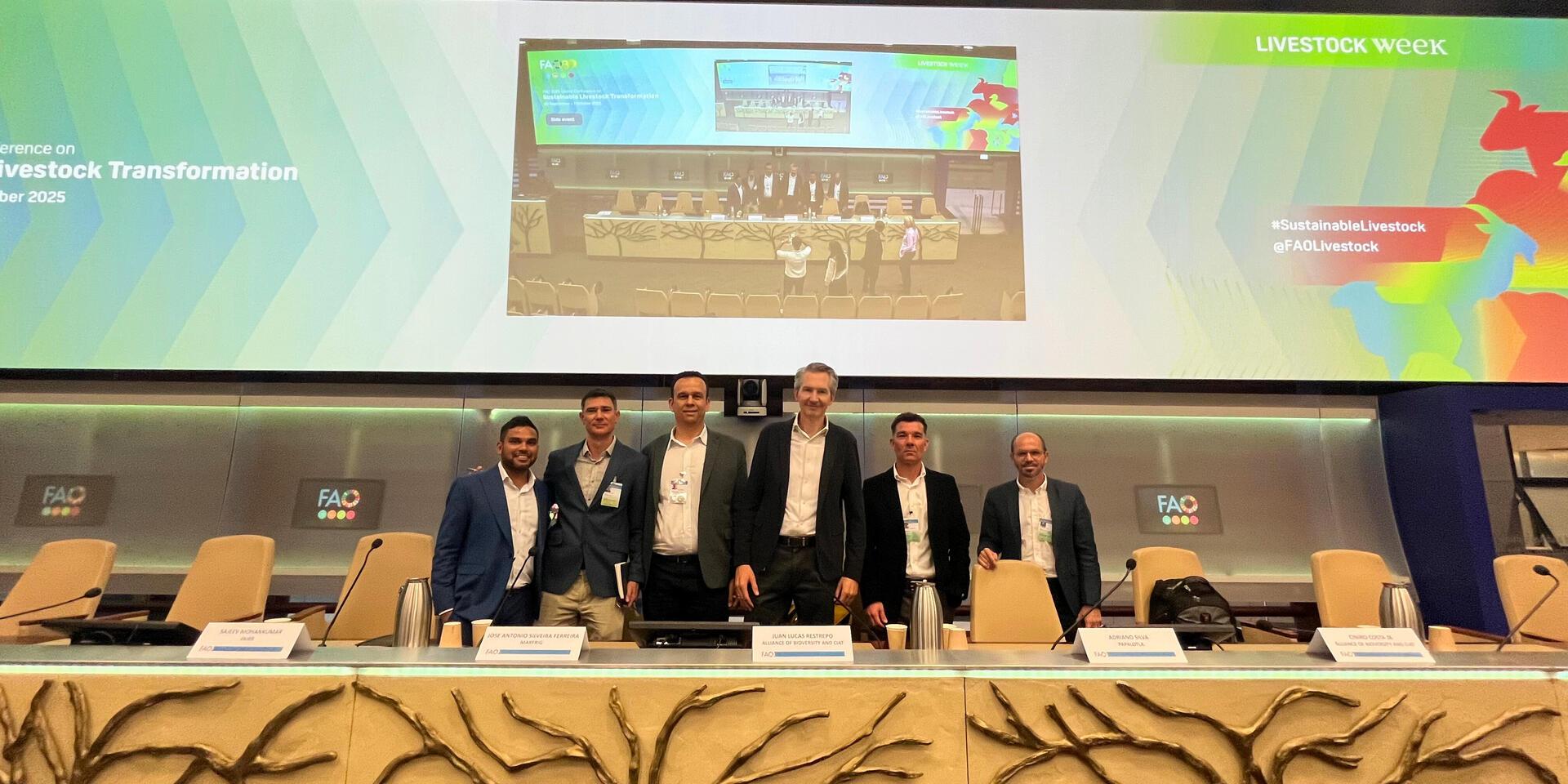

At the FAO Global Conference on Sustainable Livestock Transformation, held in Rome on September 30, 2025, Alliance Scientist Jacobo Arango moderated the side event on 'Cultivated forages as climate solutions to transform livestock systems in the Global South': A session that explored how cultivated forages can serve as practical climate-smart solutions to transform livestock systems by improving productivity, reducing greenhouse gas emissions, enhancing soil health and strengthening resilience.
The session brought together voices from research, industry and finance to discuss innovative pathways for scaling up these solutions: Juan Lucas Restrepo (Alliance Director General), Ciniro Costa Junior (Alliance/CGIAR), Adriano Silva (PAPALOTLA Sementes), Sajeev Mohankumar (FAIRR Initiative), and José Antônio Silveira Ferreira (Marfrig Global Foods) — showcasing how science-based approaches such as optimized forage production can connect farmers, companies and markets to deliver lasting environmental and socioeconomic benefits.
Forages: Nature’s climate technology for sustainable livestock transformation
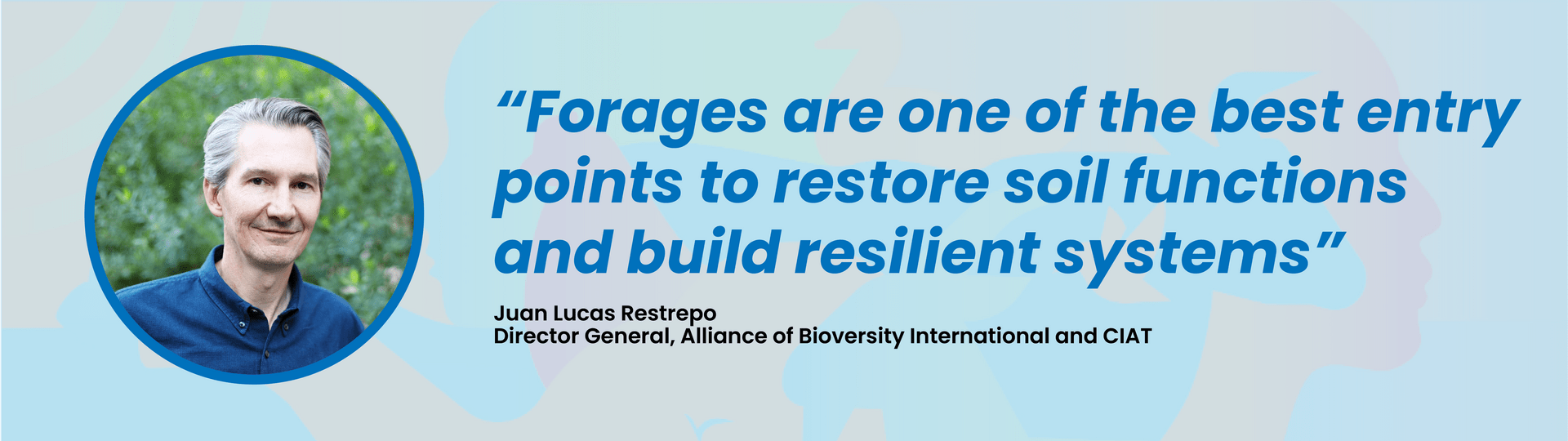
Opening the discussion, Juan Lucas Restrepo highlighted the unique potential of natural forage biodiversity, conserved in CGIAR gene banks for decades, to deliver multiple wins: higher productivity, lower greenhouse gas emissions and improved soil health. He showcased the Hacienda San José in Colombia as a living lab of a carbon-negative livestock system, achieved through the use of improved forages and integrated management.
Juan Lucas stressed that transforming livestock systems requires more than technology — it demands a mindset shift among producers, supported by technical assistance and public-sector engagement. As he pointed out:
Private-sector innovation: Turning research into practice
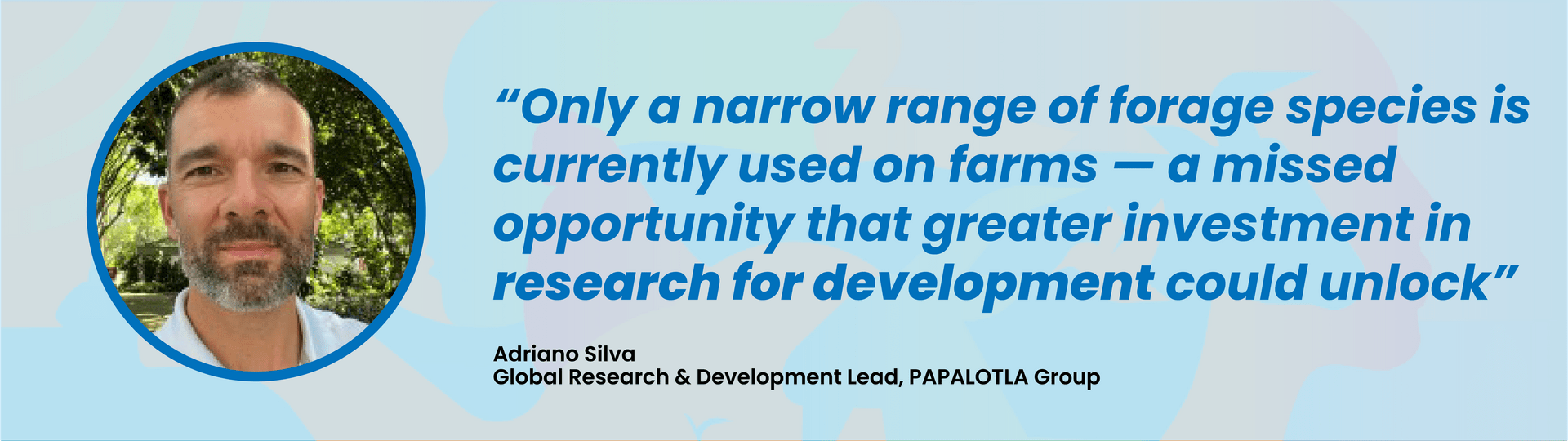
Adriano Silva from PAPALOTLA Sementes spoke from a private-sector perspective, emphasizing the company’s mission of empowering 'satisfied, productive farmers'. He pointed out that low productivity remains a persistent challenge in livestock systems across the Global South, and that forage breeding plays a pivotal role in overcoming it.
Adriano shared examples from Brazil, where PAPALOTLA Sementes’s partnership with Sumitomo Corporation and Nestlé demonstrated how improved forages can significantly boost both productivity and profitability, while also serving as a tool to restore degraded lands. Yet, he reminded us that:
Investor perspective: Financing a fair transition
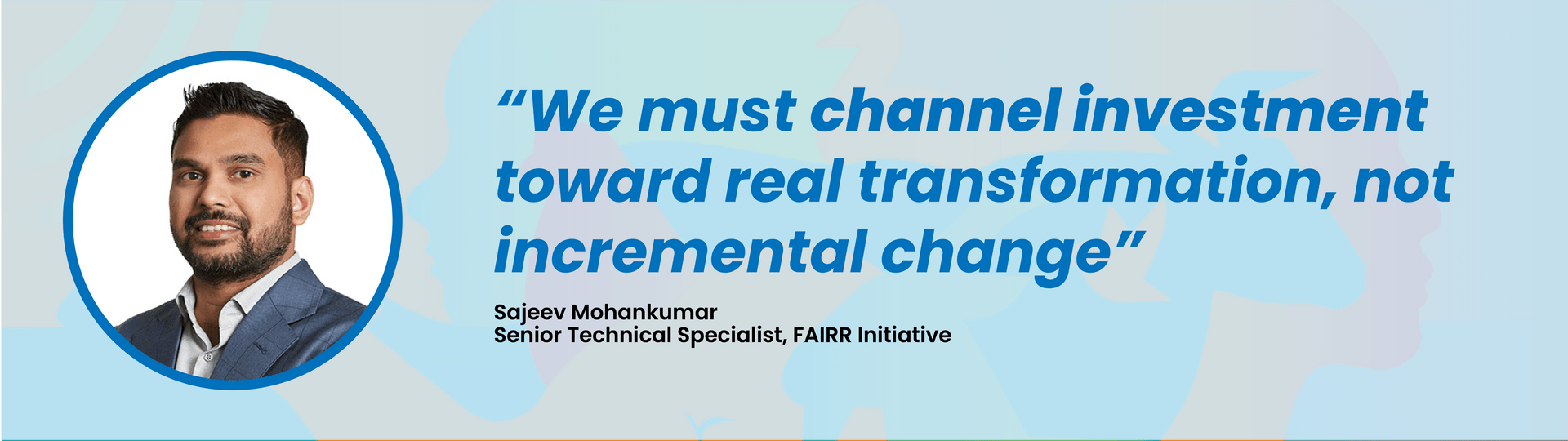
Representing the investor community, Sajeev Mohankumar from the FAIRR Initiative underscored that the livestock sector offers enormous opportunities — but there are knowledge gaps that must be bridged for sustainable transformation. For investors, understanding risk is key, and many still default to the ‘status quo’.
He called for stronger efforts to educate investors and build capacity, ensuring that financial flows support a fair transition.. Sajeev’s message was clear:
Corporate engagement: Scaling solutions responsibly
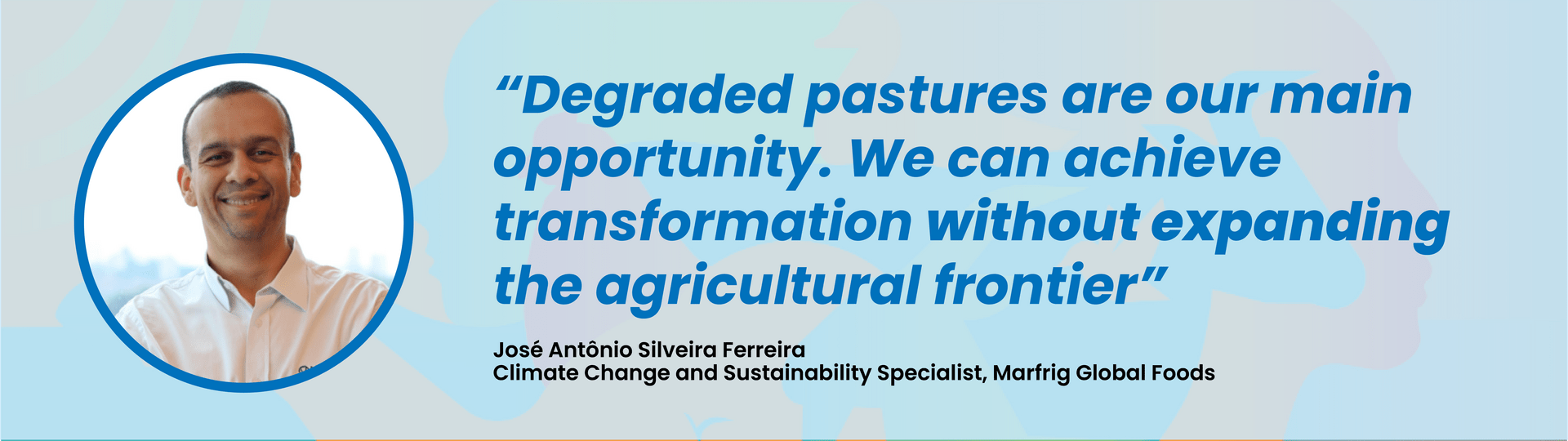
José Antônio Silveira Ferreira from Marfrig Global Foods presented a corporate vision of sustainability rooted in productivity, transparency and partnerships. Operating in over 170 countries, Marfrig is advancing low-carbon beef production by improving pasture quality, reducing emissions, and enhancing soil carbon stocks — all without deforestation.
He emphasized the importance of traceability systems to reward sustainable practices, and the need for public policy and technical assistance to make these transitions viable:
Scientific evidence and the way forward
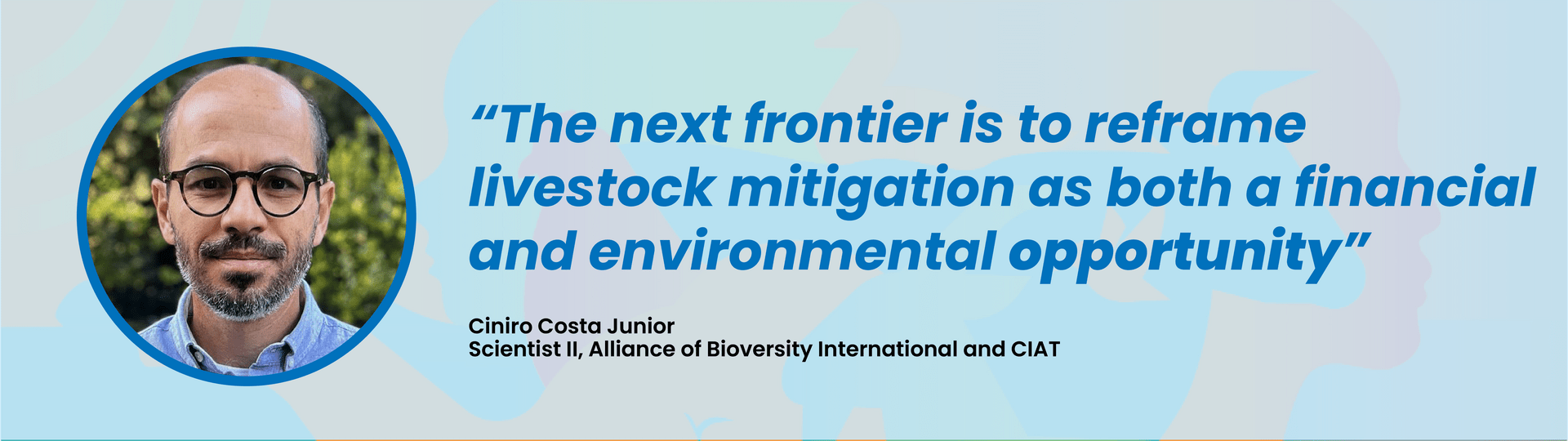
To close the session, speakers presented recent findings from CGIAR research showing that beef systems hold the largest untapped mitigation potential within global food systems. He outlined an integrated transition pathway combining improved forages, better grazing management and feed supplements—anchored in robust MRV systems. Ciniro emphasized that:
By developing blended finance models, results-based incentives, and cost-effective MRV tools, climate action in livestock value chains can generate measurable returns — not only in carbon outcomes but also in productivity, resilience and inclusion.
For farmers, this means accessing new income streams from carbon and sustainability-linked markets while improving efficiency and animal performance. For investors and development partners, it represents a scalable opportunity to channel climate finance into real-economy transformations — where every dollar invested delivers emission reductions, biodiversity gains and rural prosperity. Through this approach of accessing new income streams, Ciniro highlighted, livestock transitions can evolve from being perceived as a challenge to becoming one of the most dynamic vehicles for climate-smart growth in emerging economies.
Closing reflections
Moderating this session reaffirmed Jacobo’s conviction that cultivated forages are at the heart of climate-smart livestock transformation. They provide a tangible bridge between science, practice and policy — restoring soil, enhancing productivity, cutting emissions and increasing carbon stocks.
The panelists' discussion with event participants left one clear message: achieving sustainable livestock transformation will require partnerships across sectors, coordinated investments and long-term commitment to scaling proven solutions. Alliance DG Juan Lucas Restrepo summarized the side event: “Transforming livestock systems is possible when innovation is rooted in nature, powered by science and connected to farmers and markets.”
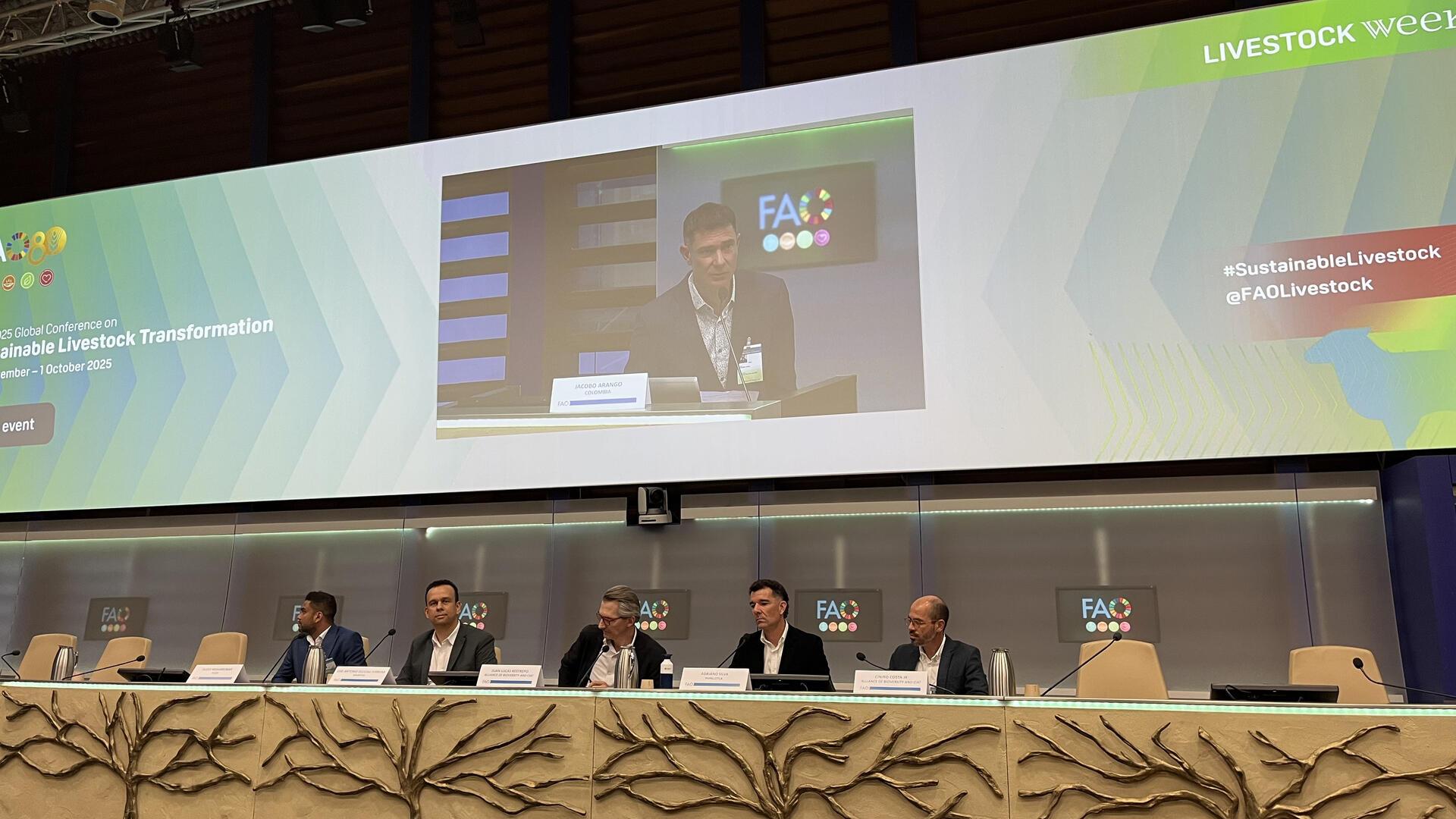
Photo of the group of panelists of the event. From left to right: Sajeev Mohankumar, José Antônio Silveira Ferreira, Juan Lucas Restrepo, Andriano Silva and Ciniro Costa Junior. Jacobo Arango as moderator.
This work was conducted as part of the CGIAR Sustainable Animal and Aquatic Foods (SAAF), Climate Action (CA) and Multifunctional Landscapes (MFL) Science Programs. This work was supported by activities related to the “Low-Methane Forages” project funded by the Gates Foundation and the Bezos Earth Fund.