Research Articles Seeding solutions: How forage innovation can close Southeast Asia’s ruminant feed gap
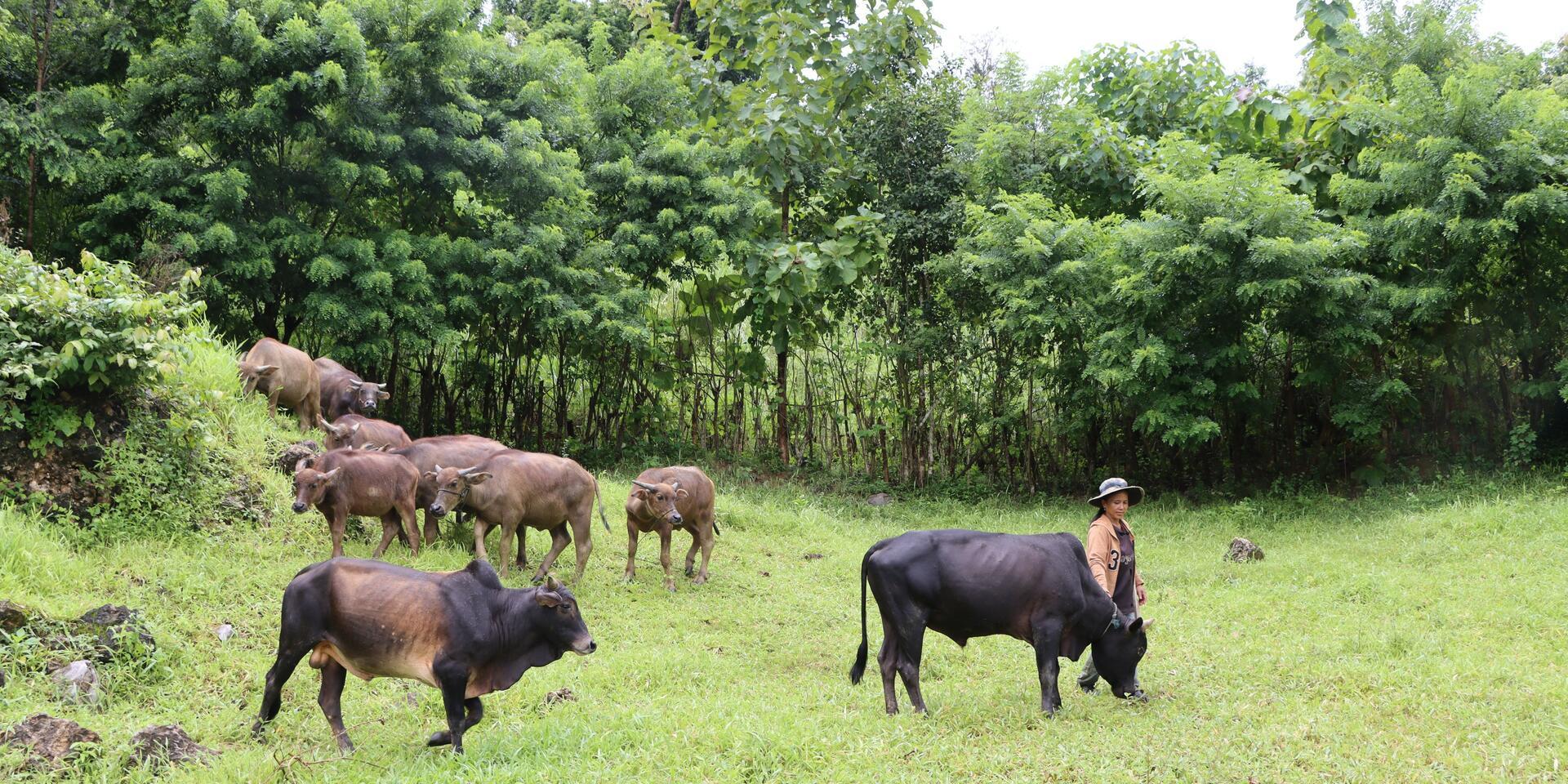

Southeast Asia’s appetite for animal-sourced foods is growing rapidly, but ruminant livestock farmers across the region are hitting a hard limit: there simply isn’t enough quality feed to go around. Without change, this shortage will hold back productivity, rural incomes, and the sustainability of livestock systems.
A recent study covering Vietnam, Cambodia, Timor-Leste, Laos, and Thailand has laid out the scale of the challenge and how improved forage seed systems could turn it into an opportunity.
The feed gap in numbers
Ruminants such as cattle, buffalo and goats are integral to smallholder farming and rural livelihoods. But across the five countries studied, farmers face a combined annual cultivated forage deficit of nearly 5 million metric tons of dry matter.
Closing this gap over the next decade would require:
- ~314,000 hectares of new cultivated forage
- 400,000+ adopting farmers
- A thriving regional forage seed market worth up to $163 million USD over 10 years
Under a gradual adoption scenario, these efforts could also create $1.6 billion USD worth of forage crop value, directly boosting rural economies.
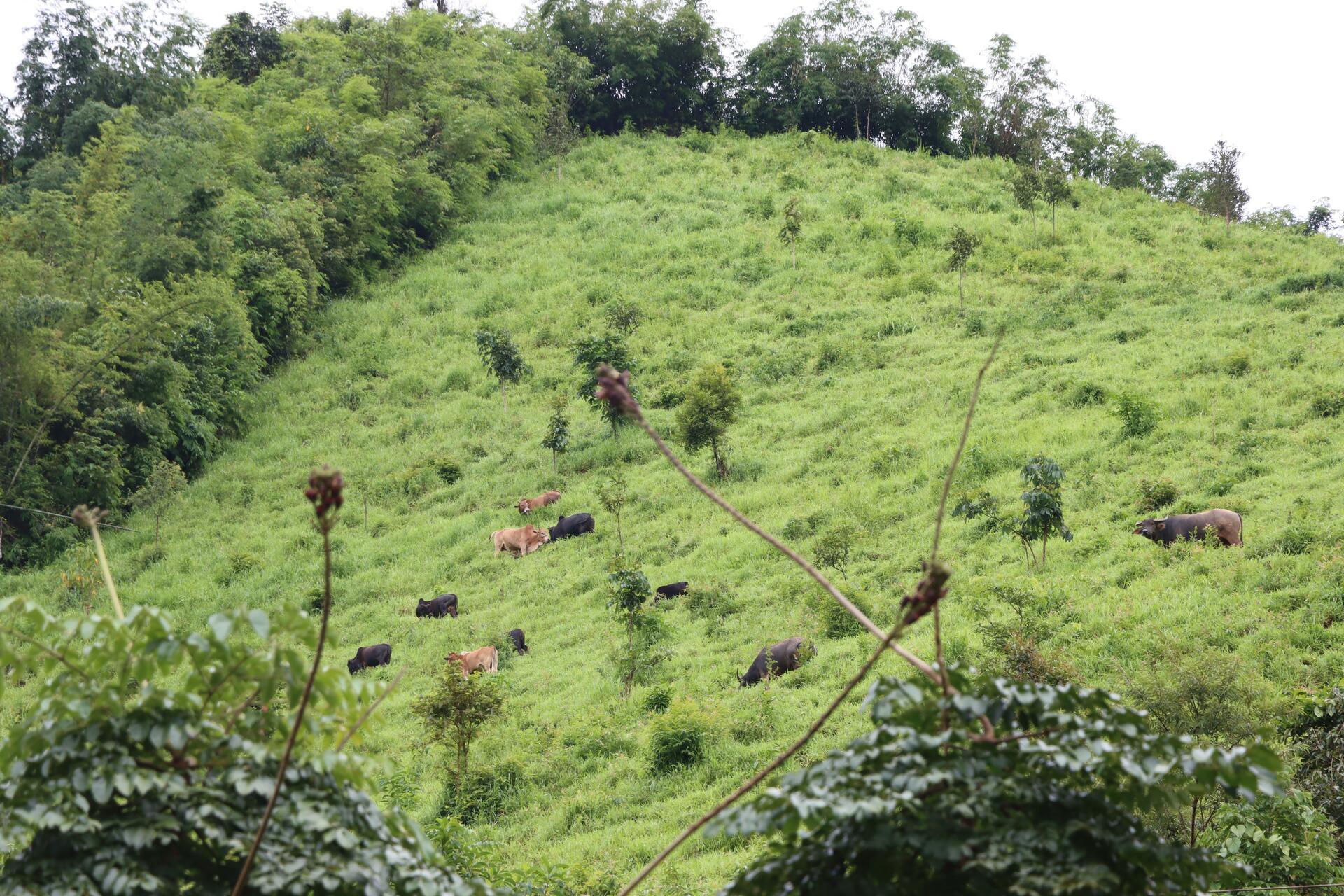
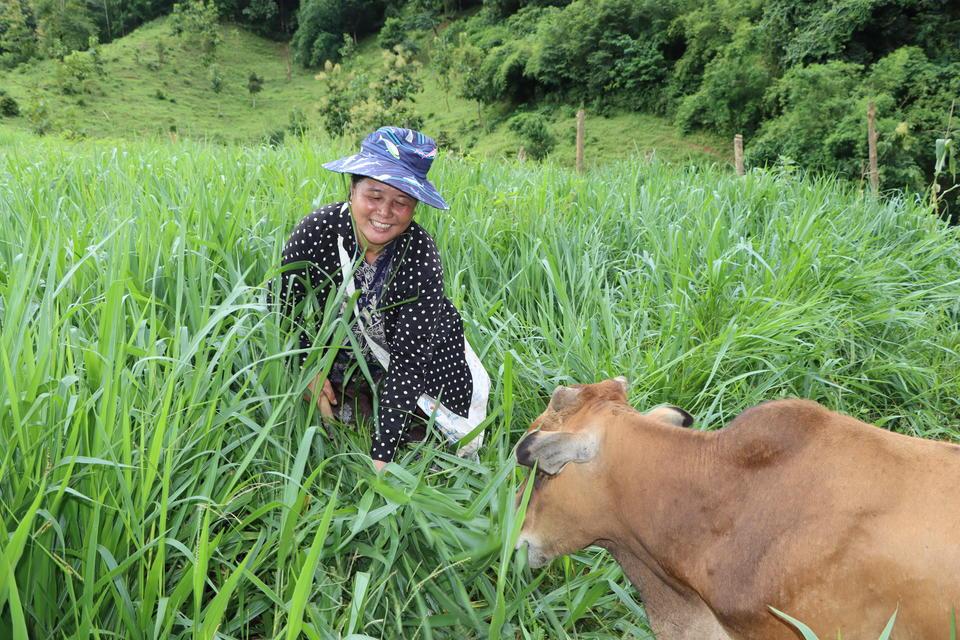
Among farmers who have adopted improved forages, many faces ongoing difficulties in expanding or sustaining their forage plots due to limited access to quality seed or planting material. Credits: Alie Galeon / CIAT
Why progress has been slow
Despite decades of research and pilot projects showing the benefits of improved forages – from higher animal weight gain to lower labor demands – adoption has remained patchy and localized. Key bottlenecks include:
- Weak and fragmented forage seed markets
- Limited private sector involvement
- Cumbersome variety registration and certification processes
- Poor farmer access to quality seeds or planting materials
- Land and labor competition with food and cash crops.
In many areas, vegetative propagation (sharing cuttings) is more common than seed planting, helping spread certain grasses locally but limiting the reach of legumes and other high-value species.
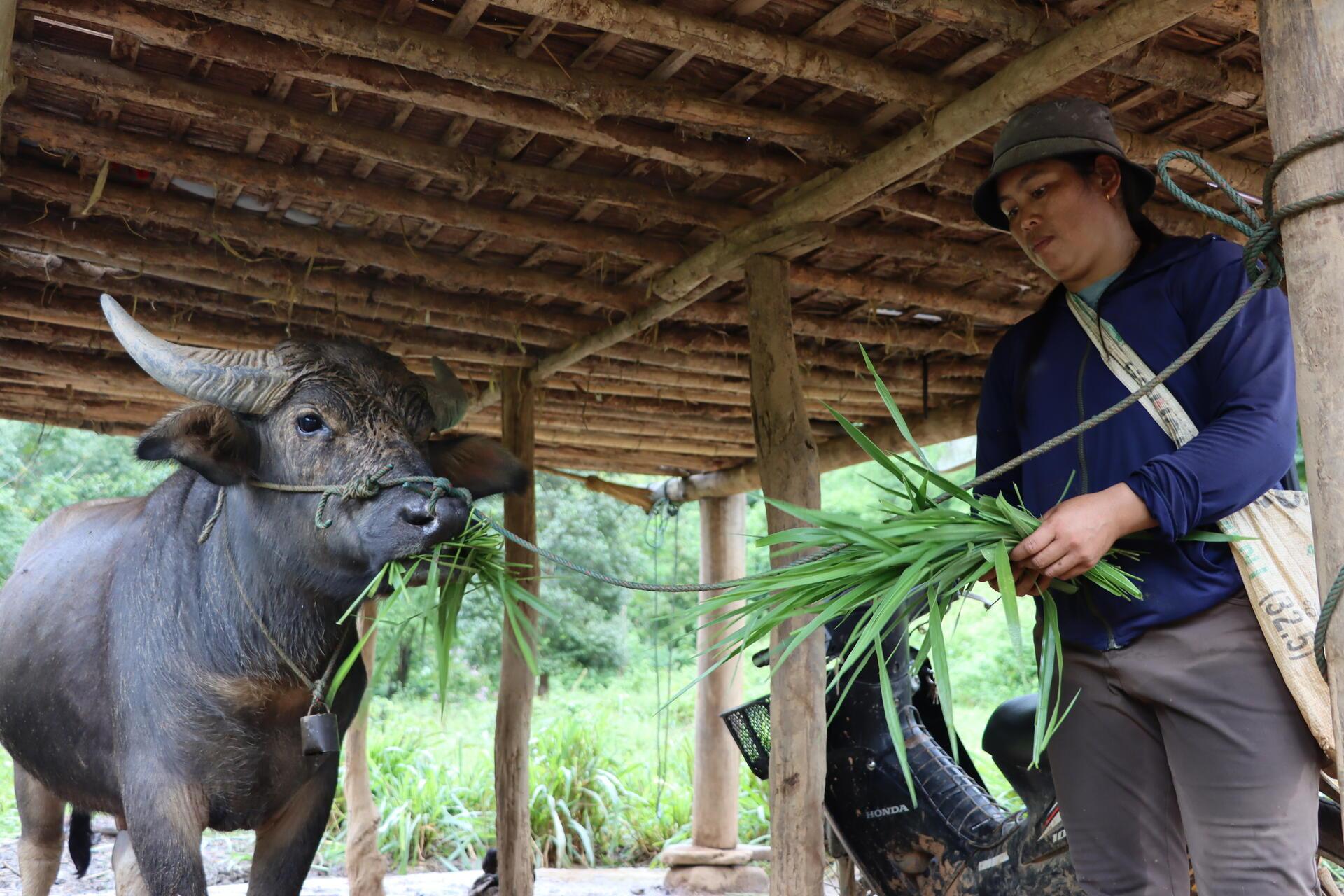
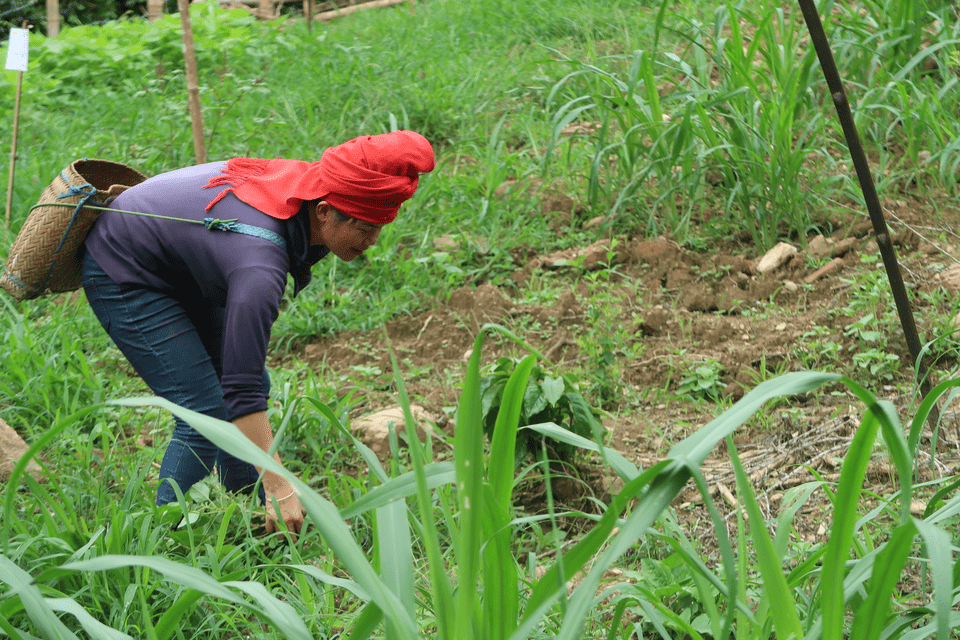
Fodder collection is labor-intensive, often consuming several hours daily, particularly for women and children. Credits: Alie Galeon / CIAT
Seeds, systems, and policy
The research underscores that closing the feed gap is as much an institutional and policy challenge as it is a technical one. Thailand and Laos lead formal forage seed production in the region, but supply remains far below domestic needs, with 95% of it destined for export to Latin America.
Regional trade agreements like the Association of Southeast Asian Nations (ASEAN) and the Regional Comprehensive Economic Partnership (RCEP) could help by harmonizing seed regulations, speeding variety registration, and lowering trade barriers.
National livestock plans increasingly mention forages but often stop short of addressing operational realities – such as farmer training, decentralized seed production, and sustainable financing.
The way forward: Eight key recommendations
1. Integrate forages into national policies: Move from recognition to action, with investment in seed R&D, multiplication, and extension.
2. Build inclusive, decentralized seed systems: Link formal, informal, and farmer-led channels for better access.
3. Harmonize regional seed rules: Mutual recognition of certification to accelerate cross-border trade.
4. Incentivize private sector engagement: Use tax relief, finance options, and gender-inclusive business models.
5. Support vegetative propagation: Establish quality standards and integrate into national seed strategies.
6. Increase farmer knowledge and extension services: Pair technical training with ICT tools and peer learning.
7. Expand credit and finance access: Tailor loans and vouchers to make adoption affordable.
8. Monitor and adapt: Use national seed observatories to track progress and guide policy updates.
A call to action
The potential is clear: Improved forage seed systems can help farmers produce more milk and meat, strengthen rural livelihoods, and build climate resilience. But to unlock these benefits, Southeast Asia needs coordinated investment, supportive policies, and a seed sector that works for smallholders as well as the private sector.
The feed gap is big – but so is the opportunity. With the right mix of seeds, systems, and strategy, the region can turn today’s constraint into tomorrow’s competitive advantage.