Research Articles Strengthening capacities to unlock climate finance for livestock systems in Africa

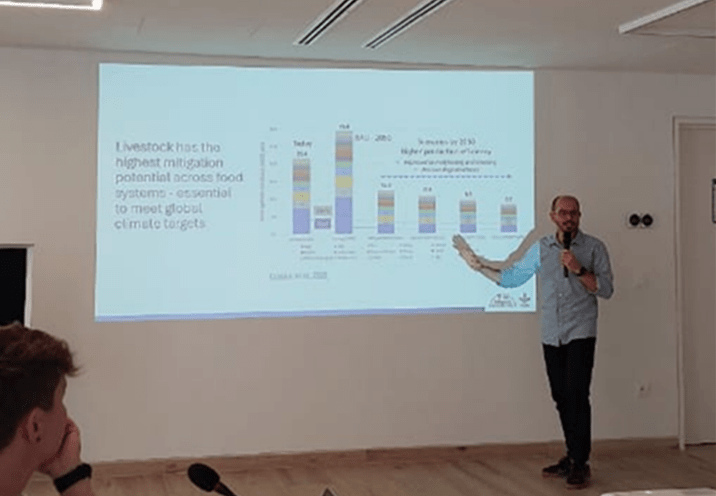
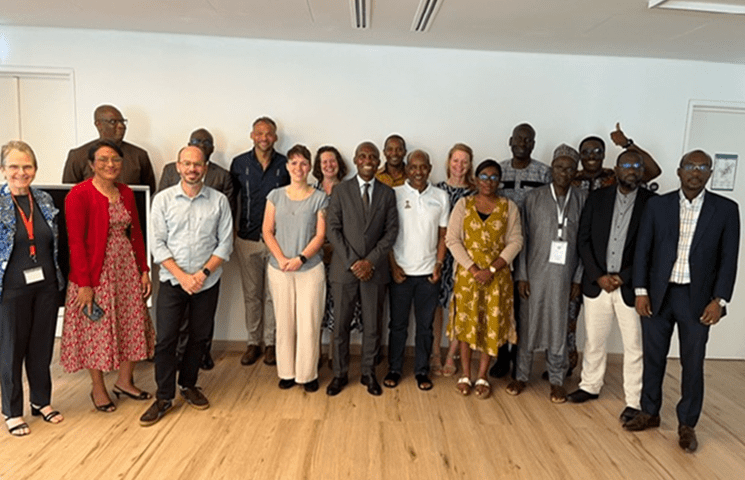
A regional technical training took place in Abidjan, Côte d’Ivoire. The training aimed to strengthen individual and institutional capacities to access, design and implement climate finance mechanisms to support the transformation of livestock systems into low-emission and climate-resilient models.
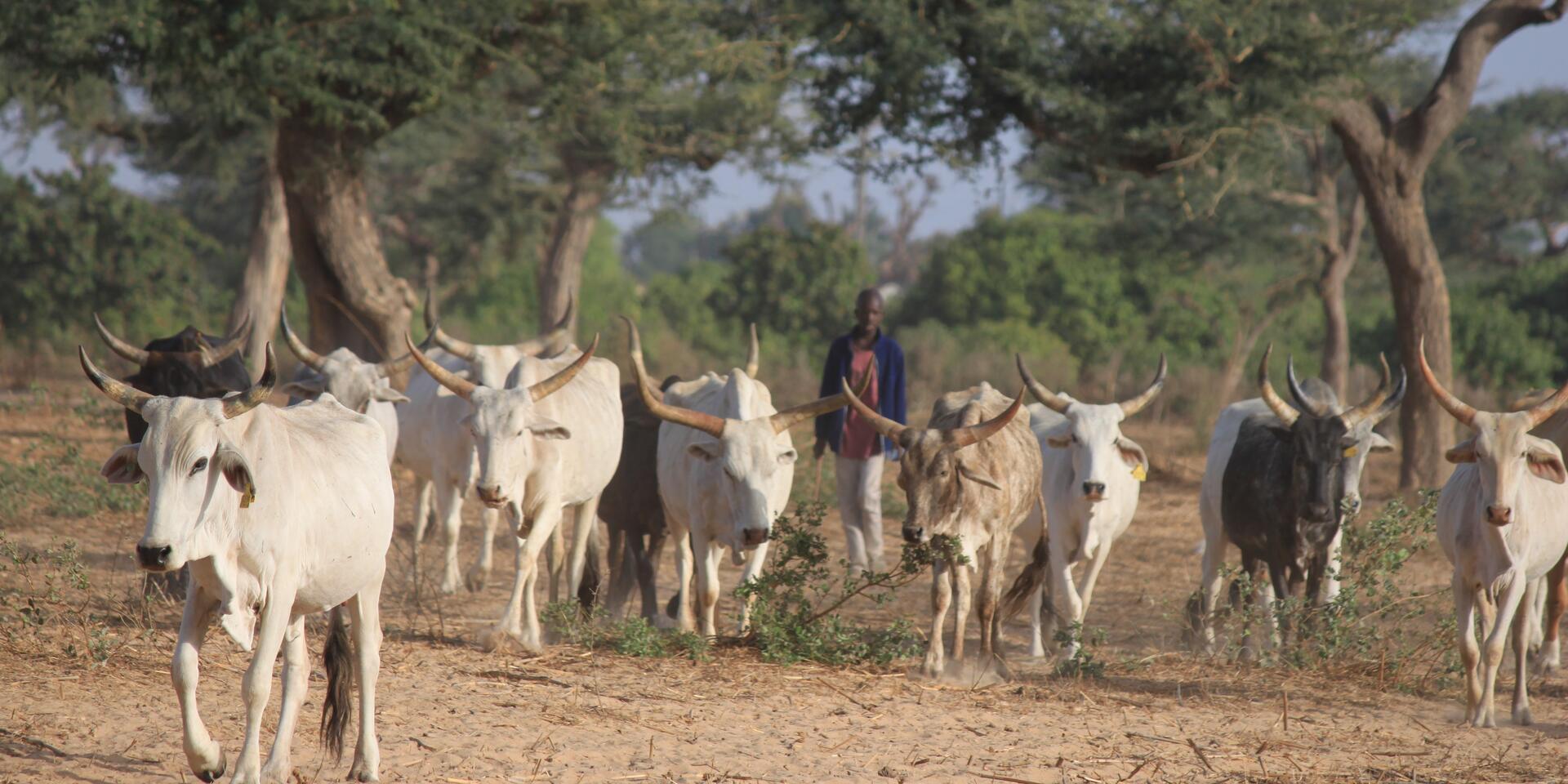
In Africa, livestock plays a vital role in agricultural economies, contributing up to 40% of agricultural Gross Domestic Product (GDP). Livestock is central to climate adaptation in Africa, providing not only food, livelihoods and income but also resilience for millions of rural households facing increasing climate variability.
At the same time, livestock systems contribute between 12% and 20% of total agricultural greenhouse gas emissions. These emissions result mainly from enteric fermentation, manure management, and land use changes. Livestock systems are also highly exposed to climate risks such as prolonged droughts, feed scarcity, and disease outbreaks.
Despite this dual relevance, both as a source of emissions and a cornerstone for adaptation, livestock remains underrepresented in global and regional climate finance flows. To address this gap, a regional technical training took place in Abidjan, Côte d’Ivoire, on the heels of the 2025 African Development Bank Annual meeting. The training, supported by the LIVESys and LMF projects, aimed to strengthen individual and institutional capacities to access, design and implement climate finance mechanisms that support the transformation of livestock systems into low-emission and climate-resilient models.
A cross-cutting effort with strong support
The workshop focused on building capacity to access and design livestock-related climate finance proposals. It was facilitated by Ciniro Costa Jr. with support from Julia Doldt (GIZ), Dr Saliou Gueye Ndoye, Dr Maguette Kaire from the Committee for Drought Control in the Sahel (CILSS) and Dr. Patrick Karani (AU-IBAR). They brought together policy, technical, and regional expertise. Participants included five representatives from Ministries of Agriculture and Livestock from Nigeria, Kenya, Senegal, Madagascar and Côte d’Ivoire, along with the African Union – Interafrican Bureau for Animal Resources (AU-IBAR), ILRI and other institutions.
This mix of stakeholders enabled discussions of real institutional constraints and operational opportunities. It also supported peer learning across countries that are at different stages of integrating livestock into national climate policy frameworks.
From concepts to realities: what the training covered
Participants explored the climate finance landscape, including multilateral sources like the Green Climate Fund, bilateral mechanisms, and emerging instruments such as carbon markets and blended finance. A central part of the training covered what makes a livestock project fundable. Key elements discussed included a clear climate rationale, strong monitoring and reporting systems (MRV), mitigation opportunities from productivity increases, measurable co-benefits, potential for scalability and well-defined roles and responsibilities.
Collaborative learning and country reflections
Country representatives were invited to reflect on past attempts to access climate finance in the livestock sector. Each one shared examples of what worked, what did not and why. Participants also conducted a “bottleneck mapping” exercise, identifying major challenges and opportunities specific to their national contexts. These were clustered and discussed in groups to explore patterns and shared constraints. The session allowed participants to compare approaches, discover common barriers, and exchange strategies for overcoming them.
Linking climate finance into policy commitments
A key input from participants highlighted how livestock systems can be better integrated into national climate frameworks. They emphasized alignment with Nationally Determined Contributions (NDCs), National Adaptation Plans (NAPs) and Long-Term Low Emission Development strategies (LT-LEDS). These frameworks offer important entry points for designing projects that meet both climate and development goals. The training also explored the role of strategic partnerships and technical assistance in turning policy into action.
A step towards a more resilient future
This training marked an important step towards unlocking finance for climate-resilient livestock in Africa. Participants left with better knowledge of funding mechanisms, a clearer understating of how to structure strong proposals. The event closed with participants expressing a shared interest in continuing collaboration, potentially through a technical community of practice.
The next phase will involve a comprehensive review of public and private climate finance mechanisms to support low-emission and climate-resilient livestock systems in Africa and Latin America. This includes country consultations, case studies, and actionable recommendations to improve access to finance, guided by the Alliance of Bioversity International and CIAT in collaboration with ILRI, GIZ, and AU-IBAR.
About LIVEsys
LIVESys (Catalyzing Transformation towards Sustainable Livestock Systems) is a global project (2024–2028) funded by BMZ, supporting sustainable livestock development in Africa and Latin America. Implemented by GIZ with partners including AU-IBAR, ILRI, the Alliance of Bioversity and CIAT, and WWF, the initiative focuses on four areas: (1) shaping global and regional agendas, (2) building capacities for livestock-related policies and finance, (3) fostering South–South knowledge exchange, and (4) mobilizing climate and biodiversity finance. The project aims to strengthen livestock’s role in climate, biodiversity, and land strategies, while promoting gender-responsive policies and investment pathways. LIVESys positions livestock as a key solution to food security, climate resilience, and environmental restoration.
More Information: https://www.giz.de/en/worldwide/207483.html
About the Low Methane Forages initiative
Low-Methane Forages (LMF) is a global initiative led by the Alliance of Bioversity International and CIAT, ILRI, and ICARDA, developing tropical grasses and legumes that naturally reduce enteric methane while sustaining livestock productivity. These forages are a proven strategy to lower emissions in the livestock sector, especially in tropical systems. Beyond research, LMF is actively preparing for large-scale adoption by supporting countries—particularly in Latin America and Africa—to promote and implement low-methane forages as a core climate solution. The project is building enabling conditions through technical validation, seed system development, MRV design, and linkage with climate finance and carbon markets, ensuring these innovations can be deployed at scale to meet both mitigation and development goals.
More information: https://alliancebioversityciat.org/projects/low-methane-forages-lmf
Ciniro Costa Jr. is Scientist II at the Multifunctional Landscapes Research Lever. Angie L. Sánchez is Communications Analyst at the Low Emissions Landscapes Team of the Multifunctional Landscapes Research Lever. Edited by José Luis Urrea-Benítez, Science Communications Specialist.
This note was developed as part of the CGIAR Science Programs: Climate Action; Animal and Aquatic Food System, and the CGIAR Hub for Sustainable Finance – Impact SF.