
Ciniro Costa Junior
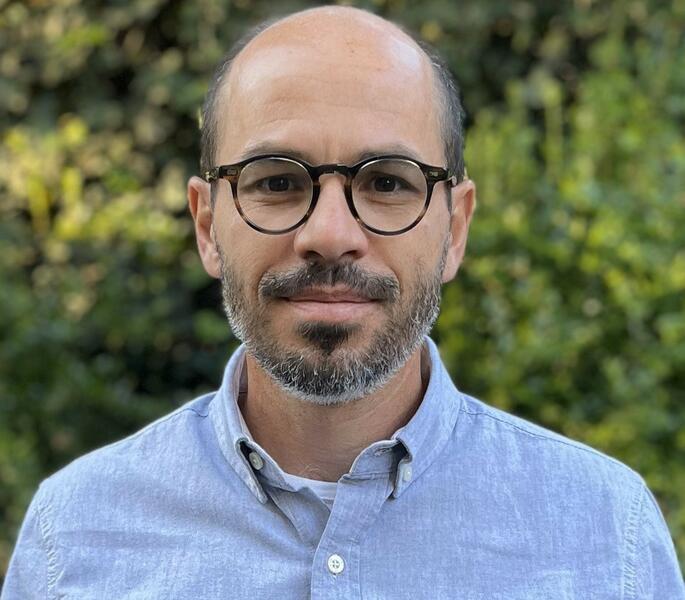
Ciniro Costa Jr is a Scientist at the Alliance of Bioversity International and CIAT (CGIAR), where he leads work on greenhouse gas (GHG) measurement, MRV systems, climate finance, and sustainable food systems. He supervises the CIAT Greenhouse Gas Emissions Laboratory and serves as Impact Lead for Sustainable Finance under the CGIAR Hub for Sustainable Finance (ImpactSF). He is also a Visiting Researcher at Hokkaido University (Japan), supporting science-policy integration in agricultural emissions measurement and climate finance.
With more than 15 years of experience in climate change mitigation for agriculture, his work focuses on GHG emissions measurement and monitoring, net-zero strategies, carbon markets, payments for ecosystem services (PES), and climate finance mechanisms. He currently coordinates the CompensACTION research initiative, which develops and pilots PES schemes for smallholder farmers in partnership with organizations including the World Bank, IFAD, and Incofin.
Ciniro has led and contributed to feasibility studies and MRV frameworks for livestock and agricultural carbon projects across Latin America, Africa, and Asia. He is also part of the implementation team of one of the first livestock carbon projects in Latin America registered under Verra. In addition, he leads a work package within a global CGIAR program on low-methane forages, focusing on how voluntary carbon markets can support the large-scale adoption of improved forage systems.
His work also contributes to international methodological and policy discussions. He is a member of the ad-hoc technical working group supporting Verra’s VM0042 methodology on soil carbon quantification and contributes to broader discussions on sustainable finance and climate metrics for agriculture.
Ciniro is co-author of the FAO Investment Centre report “Agrifood Systems in the Voluntary Carbon Market: Growth with Integrity Can Provide Critical Finance” (2025) and has collaborated with institutions including the World Bank, Asian Development Bank (ADB), Inter-American Development Bank (IDB), GIZ, FCDO, and the Green Climate Fund (GCF). He has also supported the development of climate and net-zero strategies for companies in the global food sector.
Previously, he served as Science Officer for the Low-Emission Development research theme at CCAFS, the CGIAR Research Program on Climate Change, Agriculture and Food Security. He holds a PhD in Sciences from the University of São Paulo and conducted research at the University of New Hampshire and the Woods Hole Research Center. He currently serves as Brazil’s nominated expert to the UNFCCC for Agriculture, Forestry and Other Land Use (AFOLU) and is a member of technical working groups associated with Verra and the Climate Bonds Initiative. He also serves on the editorial boards of PLOS Climate and The Royal Society.
Where to find me
Posts by Ciniro Costa Junior
Featured publications
Links
- Low-Methane Forages (LMF)
- CompensAction
- CGIAR Hub for Sustainable Finance
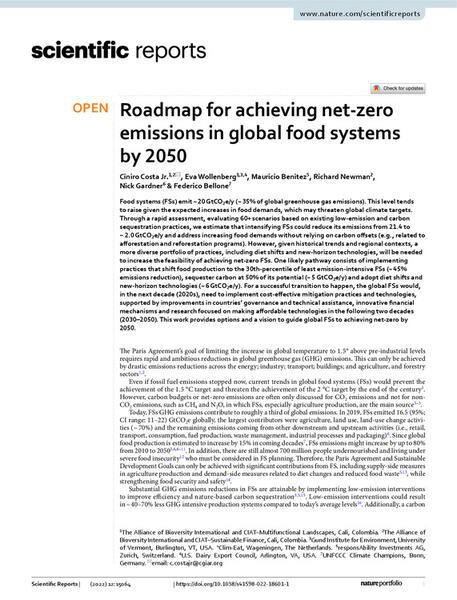
- Roadmap for achieving net-zero emissions in global food systems by 2050
- Soil carbon stocks and nitrous oxide emissions of pasture systems in Orinoquía …
- Greenhouse gas mitigation co-benefits across the global agricultural developmen…
- Roadmap for achieving net-zero emissions in global food systems by 2050
- Soil carbon stocks and nitrous oxide emissions of pasture systems in Orinoquía …
- Why and how to scale up low-emissions beef in Brazil, and the role of carbon ma…