Blog Breaking boundaries, connecting knowledge: Using the data we have to build the agricultural future we want
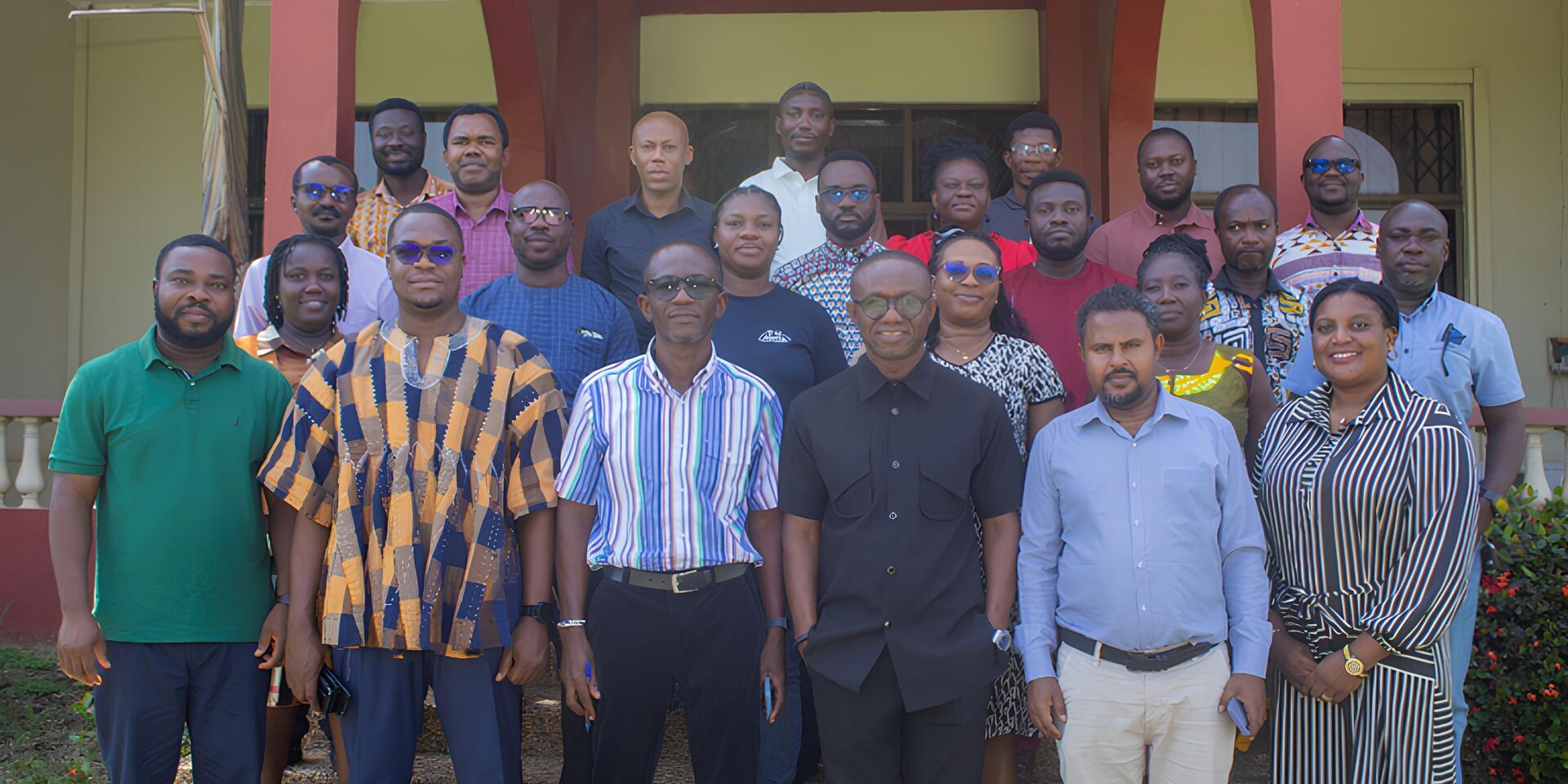

In April 2026, the Alliance of Bioversity International and CIAT and IITA convened stakeholders in Kumasi, Ghana, to strengthen agricultural data sharing and interoperability, laying the groundwork for smarter, data-driven farming and innovation.
Imagine if every agricultural dataset ranging soil, climate, agricultural management, and others are available to empower decision making process of the key actors of agriculture sector (farmers, extension agents, policy makers). Soil information could improve fertiliser recommendations, climate forecasts could strengthen cropping calendars, and crop health, market, and agronomic data could come together to support smarter decisions for farmers, researchers, extension professionals, and policymakers. Connecting these diverse sources of knowledge would unlock insights that no single dataset, or institution, could generate alone. Realising this vision requires more than digital technologies. It calls for collaboration, shared standards, and trusted partnerships that enable knowledge to flow across institutions.
The stakes are significant. Agriculture contributes roughly a fifth to a quarter of Ghana's GDP, 23.5% in the first quarter of 2025 alone, and employs about 35% of the national workforce, the large majority of them smallholder farmers. A sector this central to livelihoods and the economy stands to gain the most from getting data sharing right.
To advance this vision, the Alliance of Bioversity International and CIAT, in partnership with the International Institute of Tropical Agriculture (IITA), convened the Agricultural Data Sharing and Interoperability Workshop under the CGIAR Sustainable Farming Programme's Partnership for Advancing Agricultural Solutions at Scale (PAASS). The workshop was held in April 2026 in Kumasi, Ghana, bringing together key stakeholders from academia, research institutions, and the agricultural sector. The discussions focused on how Ghana can better leverage existing agricultural data to accelerate innovation, strengthen data-driven decision-making, and build a more connected agricultural future.
Turning data into a national asset
Opening the workshop, the Director of the CSIR-Crops Research Institute (CSIR-CRI), Prof Maxwell Darko Asante, challenged participants to view agricultural data not simply as research outputs, but as strategic assets.
"Ghana has invested decades in generating agricultural knowledge, but the next frontier is ensuring that this knowledge is connected, accessible, and translated into solutions at scale. Data is not simply a record of past research; it is an asset that can accelerate innovation, strengthen decision-making, and transform how we respond to emerging agricultural challenges."
Discussions highlighted that Ghana already possesses extensive datasets covering soils, crop improvement, agronomy, climate, water resources, biodiversity, mechanisation, post-harvest systems, markets, and rural livelihoods. These datasets represent decades of scientific investment. The productivity case for connecting them is not hypothetical. Elsewhere on the continent, digital agronomy tools, built on integrated soil, weather, and crop data, have driven yield increases of around 25% for smallholder wheat and rice farmers in countries including Ethiopia, Nigeria, and Mali. It is precisely this kind of gain that fragmented, siloed data currently puts out of reach for Ghanaian farmers.
Building trust before building technology
While digital platforms and artificial intelligence featured prominently in the discussions, participants repeatedly emphasised that technology alone cannot solve the challenge of agricultural transformation. Responsible data sharing requires trust, agreed standards, clear governance arrangements, and recognition of the institutions and researchers who invest in generating high-quality datasets.
Dr. Patricia Amankwaa-Yeboah of the Alliance of Bioversity International and CIAT noted that the objective is not to centralise institutional data, but to create an environment where organisations can confidently collaborate while maintaining ownership of their information.
“No single dataset can solve today’s agricultural challenges. The real breakthroughs come when knowledge and data from different disciplines, institutions, and communities are connected to generate insights that no one could produce alone. Data is not the end product of research; it is the foundation for even greater discoveries. Their greatest legacy is realised when they continue to answer tomorrow's questions, questions we do not yet know to ask today."
Participants agreed that strengthening agricultural data governance, including clear policies on access, ethical use, licensing, attribution, and interoperability, is essential for enabling responsible collaboration while protecting institutional investments and intellectual contributions.
From data to smarter agricultural decisions
The conversations also explored how integrated datasets can strengthen digital agriculture and AI-enabled decision-support systems. Access to reliable and interoperable information can improve climate advisories, soil fertility recommendations, crop suitability assessments, pest and disease surveillance, water management, and many other services that support farmers, researchers, extension professionals, and policymakers.
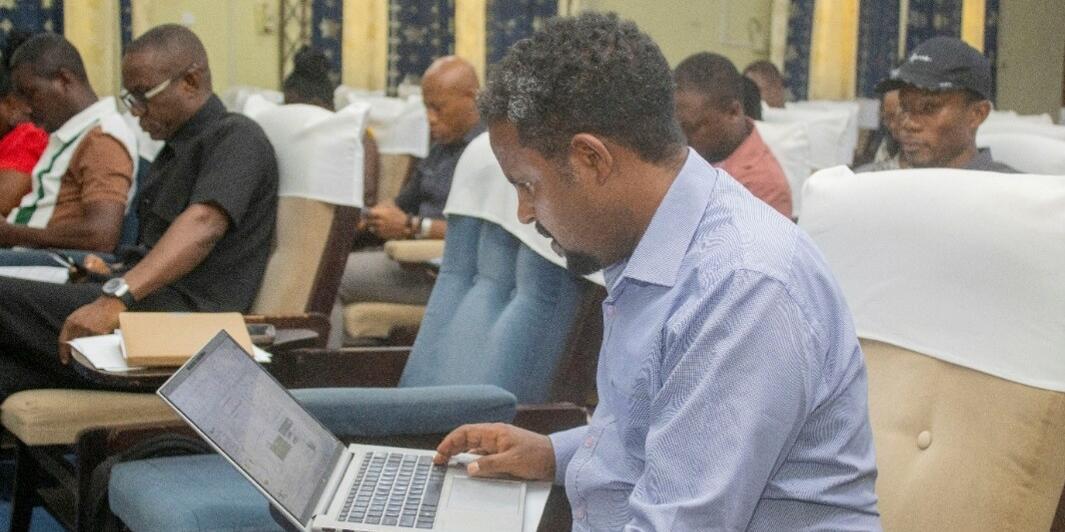
According to Dr. Ofosu-Ampong, that potential is real but not yet evenly realised. Across sub-Saharan Africa, digital agriculture tools, from mobile advisory platforms to AI-powered crop disease detection, are expanding rapidly, but limited rural connectivity and infrastructure gaps still constrain how many farmers can benefit. It is a reminder that data foundations, not just digital tools, determine who ultimately gains from this transformation. An app or advisory platform is only as good as the data behind it: if soil, climate, and market information is incomplete, outdated, or locked away in a single institution's archive, the resulting recommendations will be too. Building the data foundation first is what ensures that the benefits of AI and digital agriculture reach the farmers who need them most, not just the systems sophisticated enough to use them.
Dr. Wuletawu Abera highlighted the importance of building strong data foundations before expecting digital technologies to deliver meaningful impact.
"Artificial intelligence and digital agriculture offer unprecedented opportunities, but their success will depend on the quality, accessibility, and governance of the data that powers them. Our priority must therefore be to build a strong data foundation where research, technology, and partnerships come together to deliver practical solutions for farmers and agricultural systems."
The discussions reinforced that digital transformation is not simply about adopting new technologies. It requires connected institutions, high-quality data, shared standards, and collaborative systems that allow knowledge to flow across disciplines and organisations.
Scaling innovation requires connected systems
Another important message emerging from the workshop was that data sharing is ultimately about scaling impact. Agricultural innovations often demonstrate promising results in research stations and pilot projects, but scaling these solutions requires coordinated evidence, institutional partnerships, and mechanisms that connect research with implementation.
Dr. Thompson Ogunsanmi, a scaling expert from the International Institute of Tropical Agriculture (IITA), emphasised that data and partnerships are essential ingredients for moving innovations beyond isolated successes.
"Scaling agricultural innovations requires more than proven technologies; it requires the systems, partnerships, and evidence that enable those solutions to reach and benefit millions of people. By connecting data, institutions, and innovation pathways, we can move from isolated successes to sustainable impact at scale."
A coalition built on willingness
Perhaps the most significant outcome of the workshop was not a technical recommendation, but a shared commitment to work differently. Participants established the Coalition of the Willing, Ghana Chapter, a voluntary platform that will serve as the data-sharing wing of PAASS. The Coalition brings together organisations that are prepared to collaborate in strengthening agricultural data sharing, promoting interoperability, and supporting the responsible use of data for research and innovation.
Rather than serving as a governance authority or replacing institutional mandates, the Coalition will provide a collaborative space where organisations can exchange experiences and data, identify common challenges, develop shared approaches, and build the trust needed for long-term cooperation. It will champion good data management practices, encourage the adoption of common standards, and support initiatives that demonstrate the value of integrating datasets across institutions. The Coalition reflects a simple but powerful idea: no single organisation can build Ghana's agricultural data ecosystem alone. Progress will depend on institutions choosing to collaborate, share expertise, and contribute to a common vision while respecting their individual mandates and responsibilities.
Building the agricultural future we want
The discussions laid the foundation for strengthening governance frameworks, improving interoperability, advancing digital agriculture, and developing AI-enabled decision-support systems capable of accelerating agricultural innovation. More importantly, they reinforced that lasting transformation depends as much on partnerships and trust as on technology itself. As climate change, evolving market demands, and increasing pressure on natural resources continue to reshape agriculture, the ability to connect knowledge across institutions will become increasingly important.
Ghana already has the scientific expertise, the datasets, and the institutional capacity needed to support this transformation. The challenge now is to connect these strengths through effective collaboration. By breaking boundaries, connecting knowledge, and using the data already available, Ghana is taking an important step towards building an agricultural future where research, innovation, and partnerships work together to deliver impact at scale.
The team
Wuletawu Abera
Senior Scientist, Country Representative for Ghana
Kingsley Ofosu-Ampong
Scientist I
Patricia Amankwaa-Yeboah
Postdoctoral Fellow - Systems Agronomist