From the Field Farming in sync with the seasons: Ghana’s cropping calendar revolution

On July 2, 2025, in Kumasi, Ghana, researchers, farmers, and partners met to refine a digital cropping calendar that delivers timely, tailored advice, helping smallholders adapt to climate change and transform farming decisions.
In an era where weather patterns are no longer predictable and agricultural risks multiply with each season, Ghana is taking a bold leap forward, placing timely, farmer-informed decisions at the heart of food systems transformation.
At the heart of this leap lies the Cropping Calendar and Agro-Advisory System: a game-changing innovation developed through collaboration between CSIR-INSTI, CSIR-CRI, and the Alliance of Bioversity International and CIAT, under CGIAR’s Excellence in Agronomy Initiative, now part of the Sustainable Farming Science Program. The calendar doesn’t just tell farmers what to do: it listens, it learns, and it evolves with them.
On July 2, 2025, at the CSIR-Crops Research Institute in Kumasi, agricultural researchers, digital innovators, extension agents, and development partners gathered for a workshop with one shared purpose: to validate and fine-tune a tool that has the potential to redefine how farming advice reaches the field.
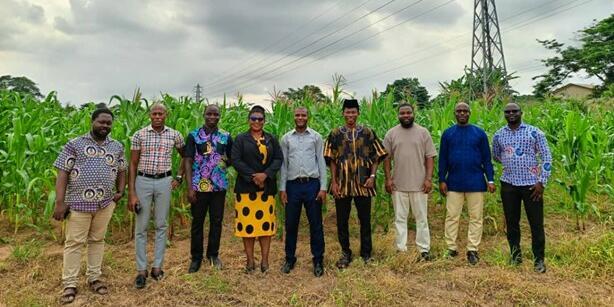
“We’ve had good agricultural practices for years,” said Dr. Stephen Yeboah of CSIR-CRI, “but too often, farmers receive advice that’s either too late, too generic, or just not usable. This system is designed to change that.”
Dr. Kingsley Ofosu-Ampofo from the Alliance opened the workshop by emphasizing the urgency of relevance: “We are not here to build tools for farmers. We’re here to build tools with farmers—tools that reflect how they think, act, and adapt to change.” And that message echoed throughout the day.
Grounded in data, designed for farmers
At the core of the cropping calendar is a dynamic advisory engine that integrates real-time weather forecasts, crop phenology, soil data, and location-specific agronomy. It delivers timely guidance that aligns with each growth stage—from land preparation to harvesting—ensuring that “the right message reaches the right farmer at the right time.”
Michael Wilson of CSIR-INSTI explained, “It’s no longer enough to rely on static planting dates. Farmers need advice that responds to reality—when the first rains fall, when the soil is ready, when pest outbreaks emerge. That’s exactly what this system intends to offer.”
Initially focused on maize and soybean, the calendar has now been expanded to include cowpea, thanks to farmer-led demand voiced during stakeholder consultations.
“Cowpea isn’t just another crop,” said a workshop participant from Northern Ghana. “It’s how we balance income, nutrition, and risk. Including it in the calendar shows this system listens.”
Farmers speak, the system listens
One of the workshop’s major strengths was its participatory design. Through plenary discussions and group reviews, stakeholders called for bold but practical changes.
“Many of the advisory messages still felt too technical,” noted Dr. Eric Owus Danquah from the CSIR-Crops Research Institute. “We need to speak the language of the farmer—literally and figuratively.”
Key feedback included:
- Simplifying language and visualizing content for low-literacy users
- Replacing rigid dates with responsive triggers (like first effective rainfall)
- Allowing farmers to input their activity dates to customize advice
- Expanding coverage to intercropping, rotation, and low-cost inputs
- Delivering content via multiple platforms such as radio, SMS, WhatsApp, and mobile apps
“Advisories should not just be accurate,” one extension officer added, “they must be actionable. A farmer should hear it and know exactly what to do next.”
Going digital the right way
Partners agreed: smart content needs smart delivery. Advisory videos are being developed in for integration into the calendar. Each video will focus on a specific crop stage, be short and engaging (2–5 minutes), and be shared through platforms farmers already trust, like WhatsApp among others.
Audio prompts, IVR messages, and a future cropping calendar app will allow farmers not only to receive but also respond to advisories, creating a two-way feedback loop that strengthens learning and trust.
What comes next
With technical validation completed and user feedback integrated, partners are now racing against the season to:
- Finalize and digitize the advisories
- Roll out multimedia content
- Pilot the system with partners
- Monitor farmer responses
- Convene a national review
And this time, farmers won’t be passive recipients—they’ll be co-designers, testers, and co-owners of the system.
The beginning of a bigger change
“This is more than just a calendar,” said Dr. Kingsley Ofosu-Ampong in his closing remarks. “It’s the start of a new relationship between farmers and science, where knowledge moves in both directions and innovation is rooted in reality.”
Indeed, what began as a tool is fast becoming a farmer-led, climate-smart movement, shaping how Ghana grows food, one decision at a time.
Reference and evidence
Keep exploring