Blog Building the conditions to scale cocoa agroforestry in Guinea
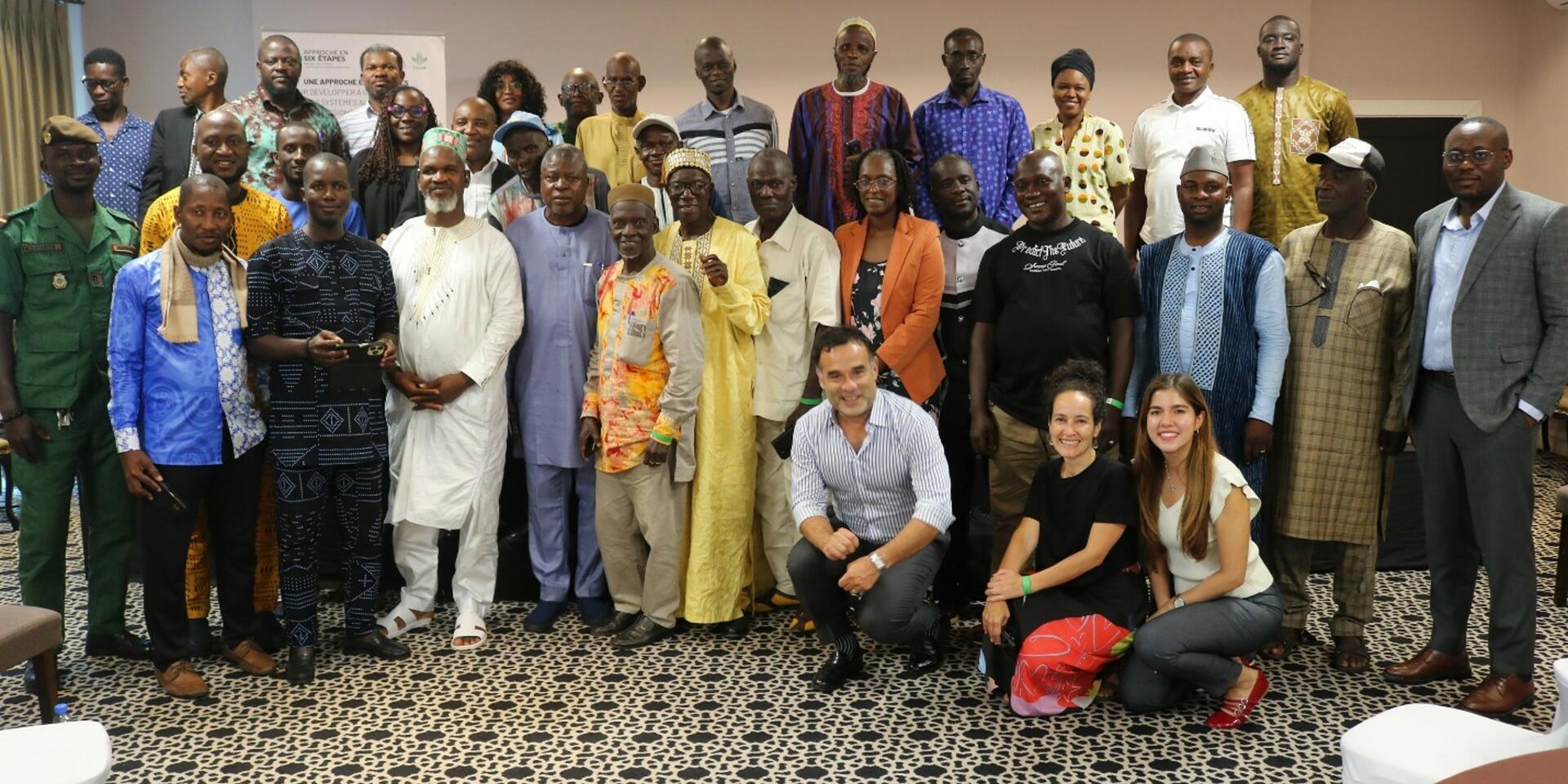

On 12 June 2026, stakeholders from across Guinea's cocoa sector gathered in Conakry around a shared question: how can the country expand cocoa production while protecting its forests and creating lasting economic opportunities?
For Guinea, this question sits at the heart of a rapidly changing cocoa landscape. As demand grows for traceable, deforestation-free cocoa, producers and policymakers face the challenge of increasing productivity while preserving the ecosystems that underpin long-term agricultural resilience.
As an emerging cocoa producer, Guinea has a unique opportunity to build a sustainable cocoa sector from the outset. Under the Simandou 2040 Programme, agriculture is positioned as a key driver of economic transformation, while market requirements, such as the European Union Deforestation Regulation, are reshaping expectations around how commodities are produced, monitored and traded.
Against this backdrop, the Alliance of Bioversity International and CIAT, through the CGIAR Science Program on Climate Action, convened a workshop to share scientific findings, validate a framework for scaling agroforestry innovations and explore carbon market opportunities.
Key takeaways
- Agroforestry is central to Guinea's cocoa ambitions, offering a pathway to increase productivity while protecting forests, improving resilience, and creating new economic opportunities.
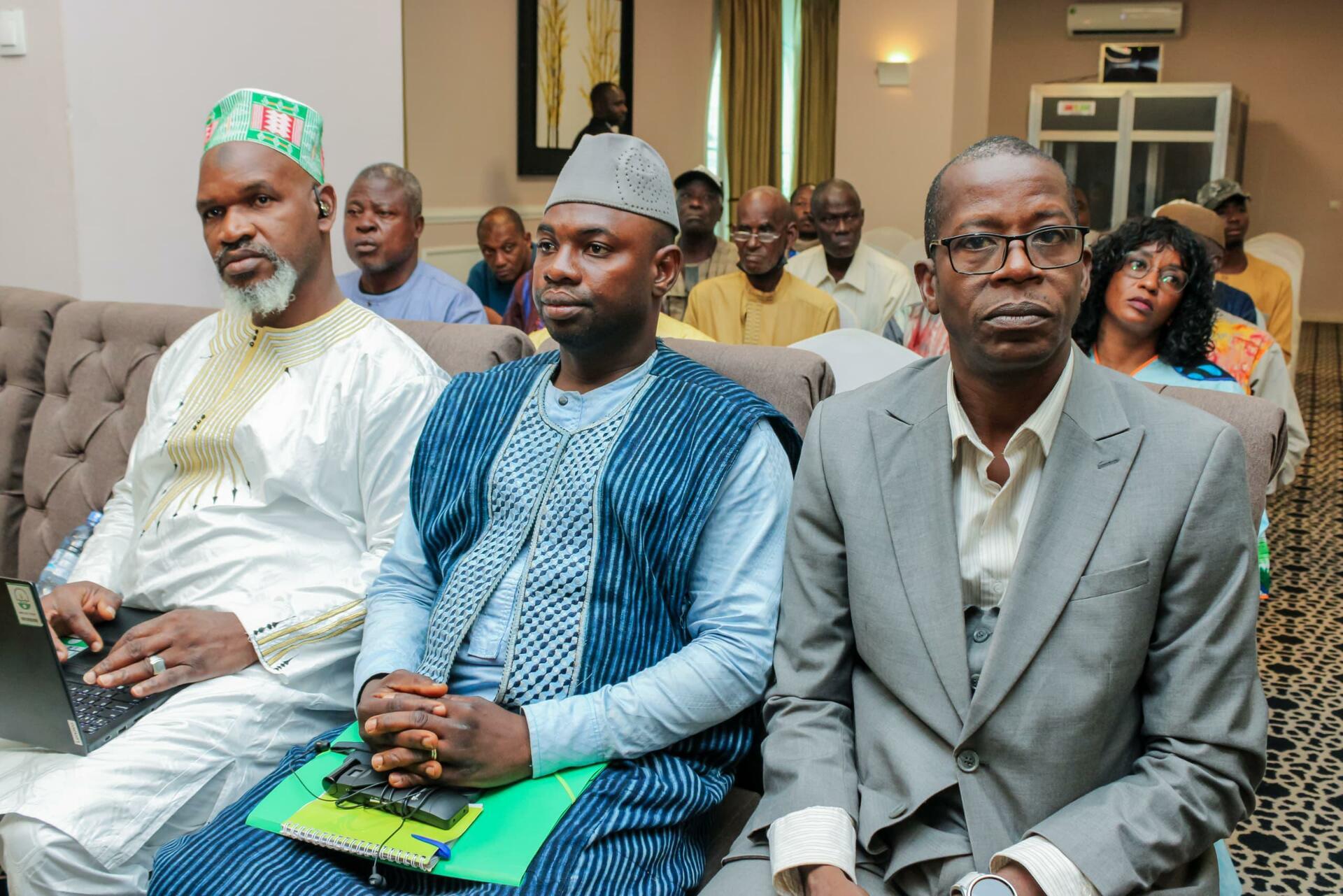
- Scaling agroforestry requires more than technical solutions. Participants agreed that supportive policies, stronger institutions, quality planting material, extension services, and market incentives must work together to enable adoption.
- The workshop validated the Alliance's Six Step Approach, confirming its relevance for identifying the conditions needed to scale agroforestry in Guinea while incorporating stakeholder feedback to strengthen the framework.
- Building stronger producer organizations emerged as a priority, alongside improvements in seed and nursery systems, post-harvest practices, cocoa quality, and local processing.
- Better data and stronger coordination are essential to guide investment, target interventions, and align efforts across government, research institutions, the private sector, and producer organizations.
- Carbon finance offers long term potential, but participants emphasized that realizing this opportunity will depend on robust governance, transparent benefit sharing, and credible monitoring systems.
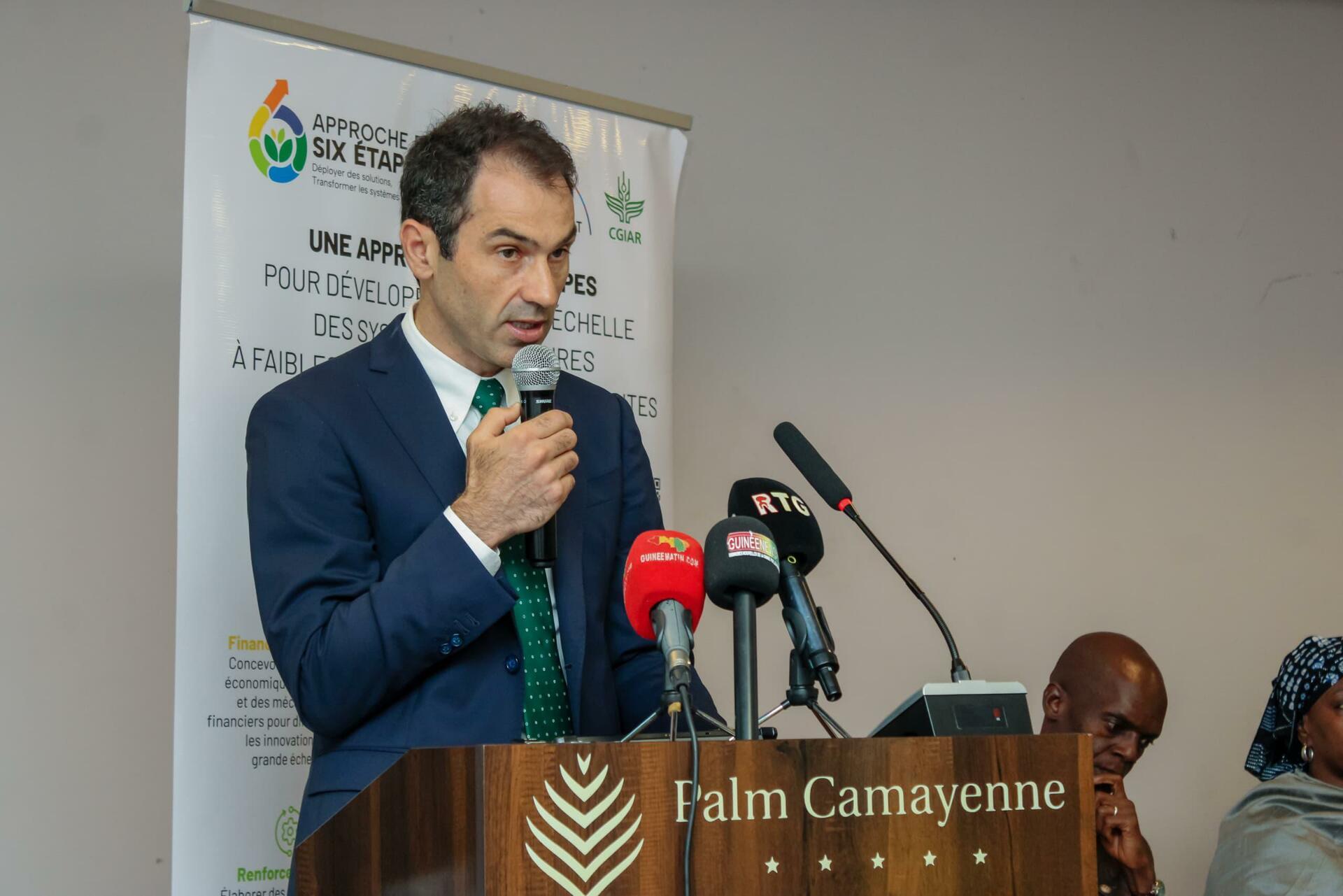
Gianpiero Menza, Senior Manager, Partnerships & Innovative Finance at the Alliance. Photo: IRAG
Connecting cocoa with Guinea's wider development ambitions
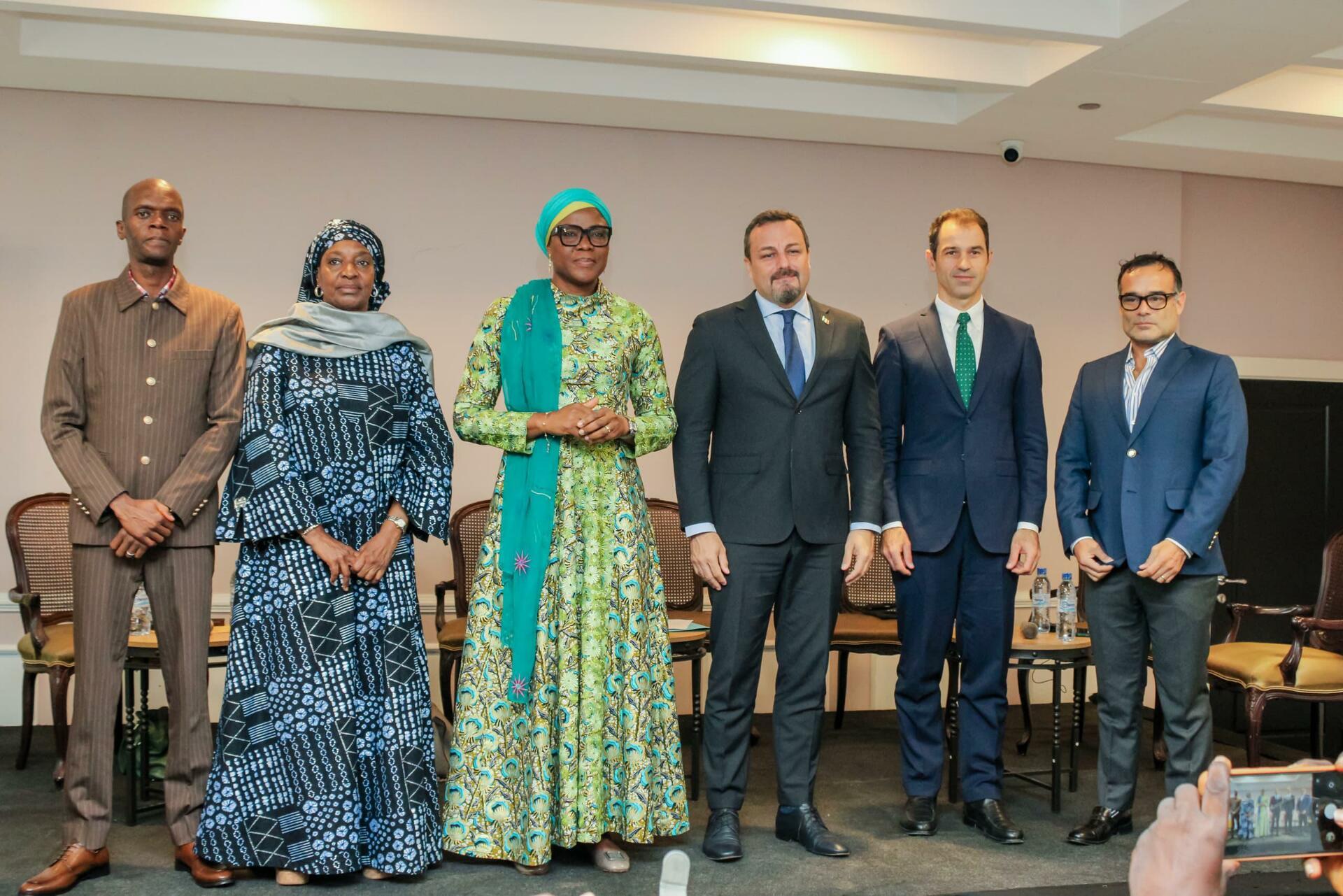
The workshop opened by connecting sustainable cocoa with Guinea's national development priorities. In their opening remarks, Dr. Gianpiero Menza and Dr. Augusto Castro emphasized the value of science-based collaboration in addressing the challenges facing Guinea's cocoa sector. They highlighted the Alliance of Bioversity International and CIAT's partnerships with national institutions and its research on sustainable cocoa systems as contributions to the country's efforts to combine agricultural development, forest conservation, and rural economic growth.
H.E. Tarek Chazli, Ambassador of Italy to Guinea, noted that while Guinea is widely recognized for its mineral wealth, agriculture remains a strategic sector for the country's long-term development. He highlighted the potential of cocoa and coffee to generate employment, strengthen local economies, and create greater value through sustainable production and processing.
Officially opening the workshop, H.E. Aminata Kaba, Minister of Agriculture, situated cocoa within the Simandou 2040 Programme and Guinea's ambitions for economic diversification. Her message went beyond producing more cocoa. Guinea, she explained, is seeking to strengthen agro-industrial value chains, local processing and value creation within the country.
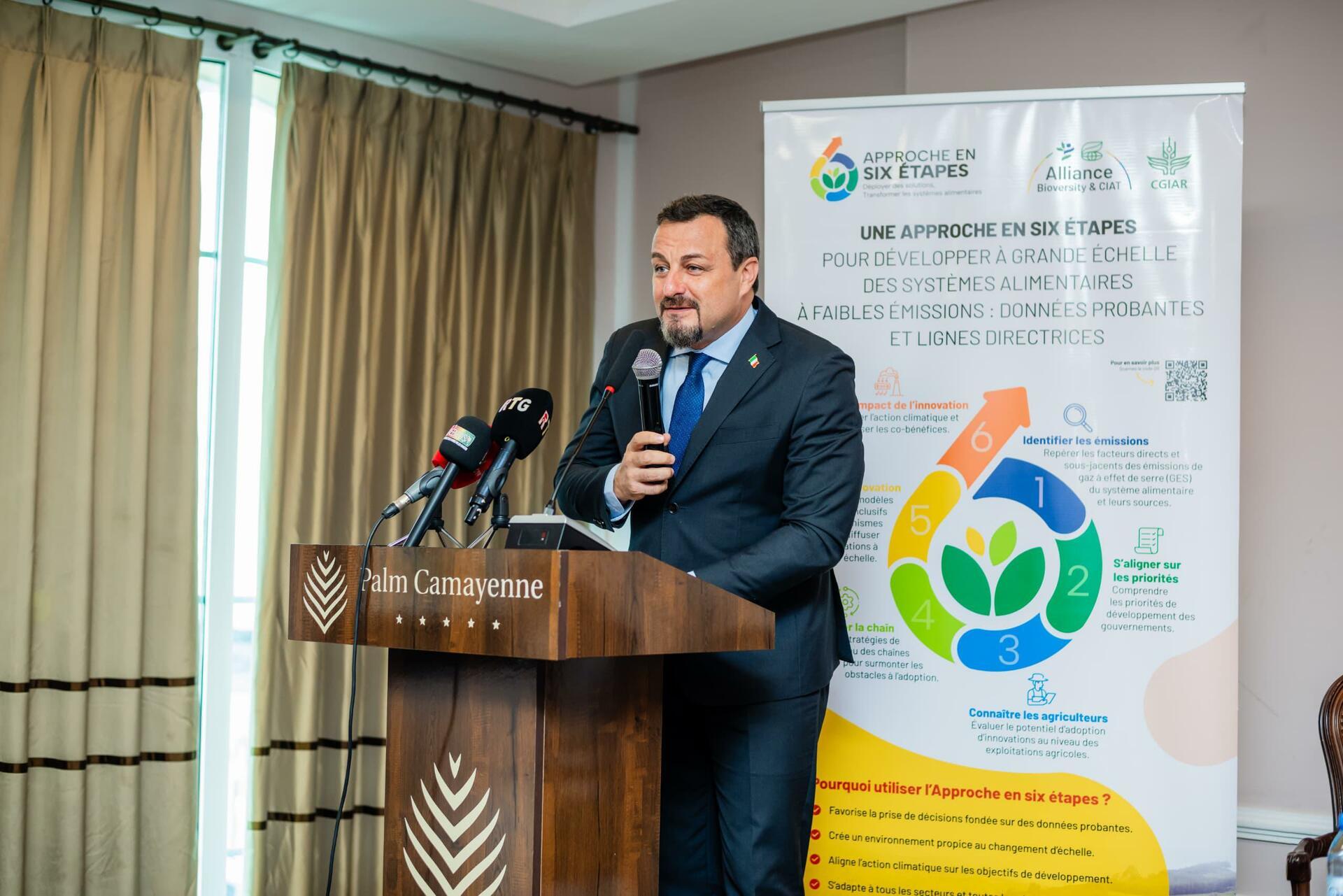
H.E. Tarek Chazli, Ambassador of Italy to Guinea. Photo: IRAG
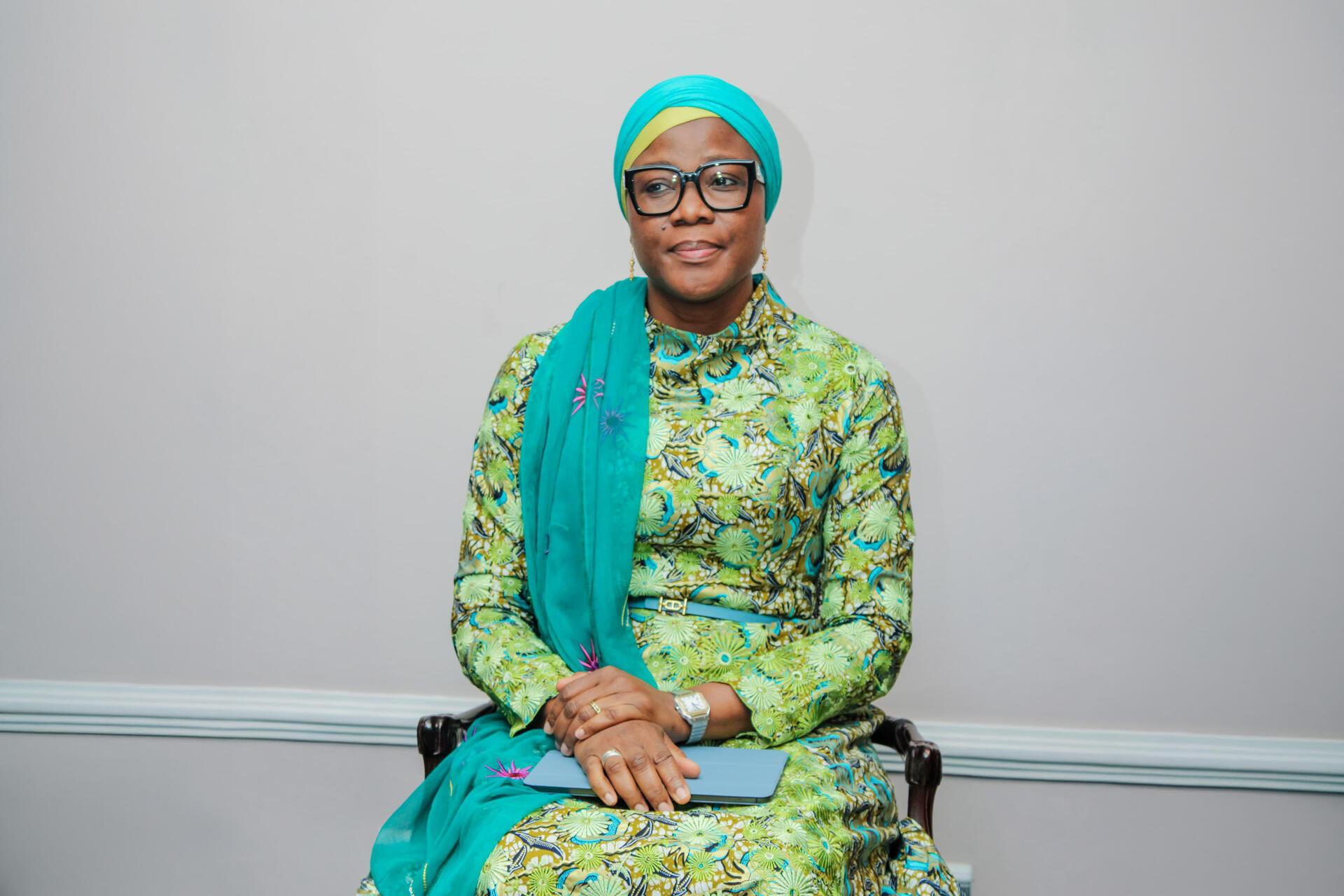
H.E. Aminata Kaba, Minister of Agriculture. Photo: IRAG
Why agroforestry matters
Agroforestry offers a promising pathway for transforming Guinea's cocoa sector into one that is more productive, resilient, and environmentally sustainable. By integrating trees into cocoa farms, agroforestry can improve soil health, enhance resilience to climate variability, conserve biodiversity, and reduce pressure on natural forests. Diversified production systems can also strengthen farmers' livelihoods by creating additional sources of income and increasing the resilience of farming households.
Discussions in Conakry, however, underscored that scaling agroforestry is not simply a matter of planting more trees. Its widespread adoption depends on an enabling environment that combines supportive policies, strong institutions, access to quality planting material and extension services, efficient value chains, and market incentives that reward sustainable cocoa production.
These challenges were examined through the Alliance's Six-Step Approach, presented by Dr. George Amahnui. The approach connects six areas of research: deforestation hotspots and drivers; policies and innovation priorities; adoption and incentives; value chains; business and financing models; and environmental, economic and social impact measurement.
The workshop provided an opportunity to test this research against the realities of Guinea's cocoa sector.
Following the evidence from landscapes to farmers
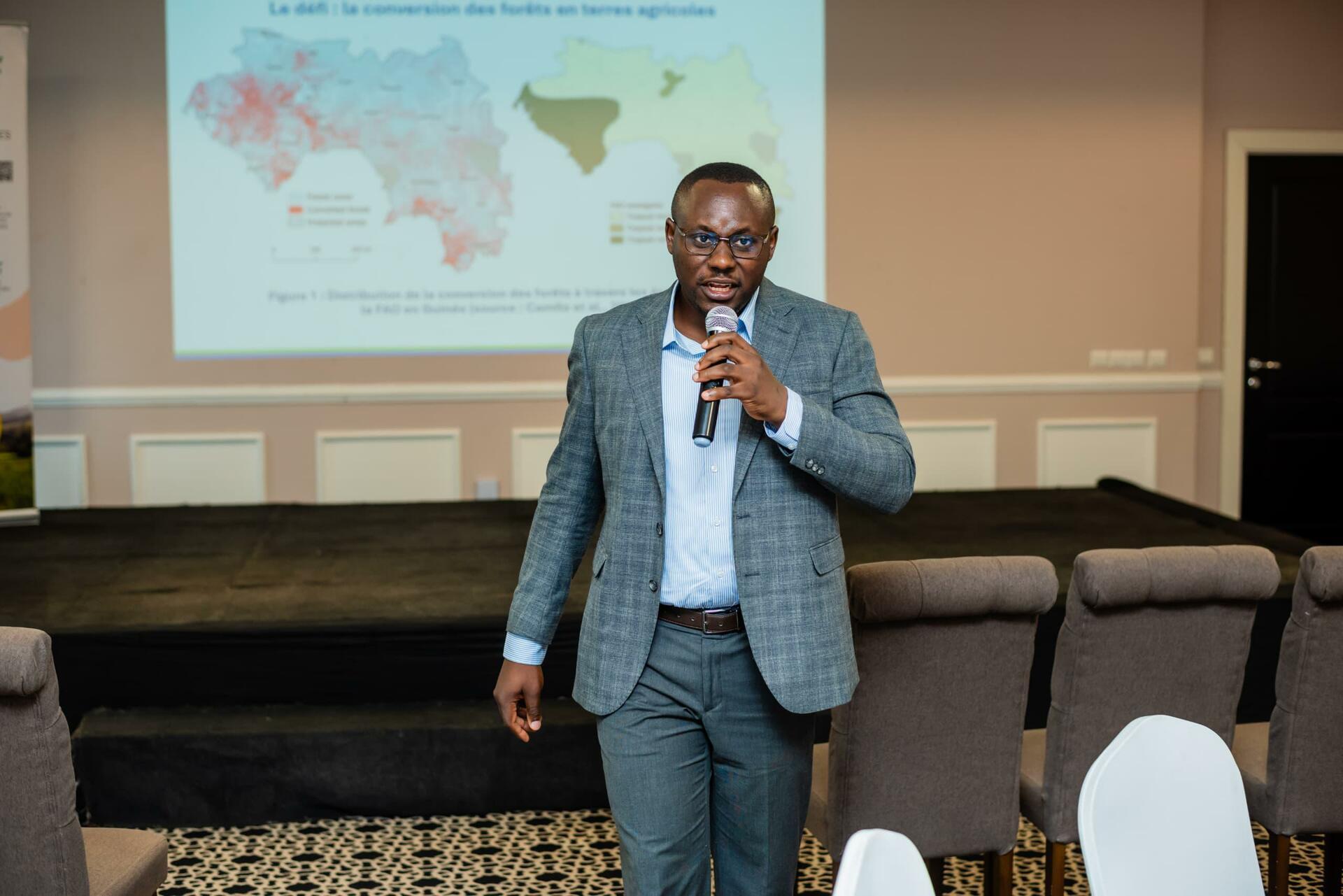
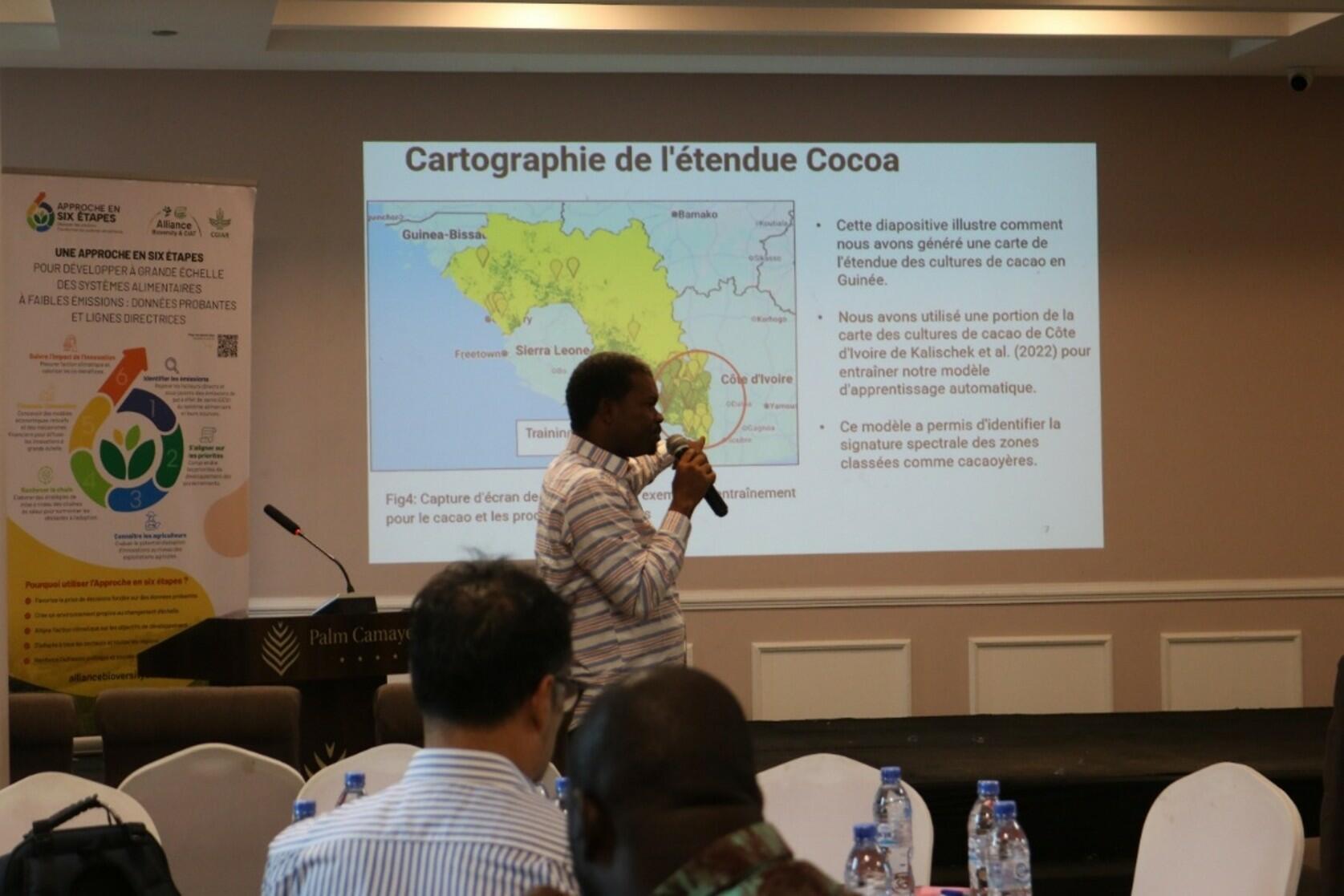
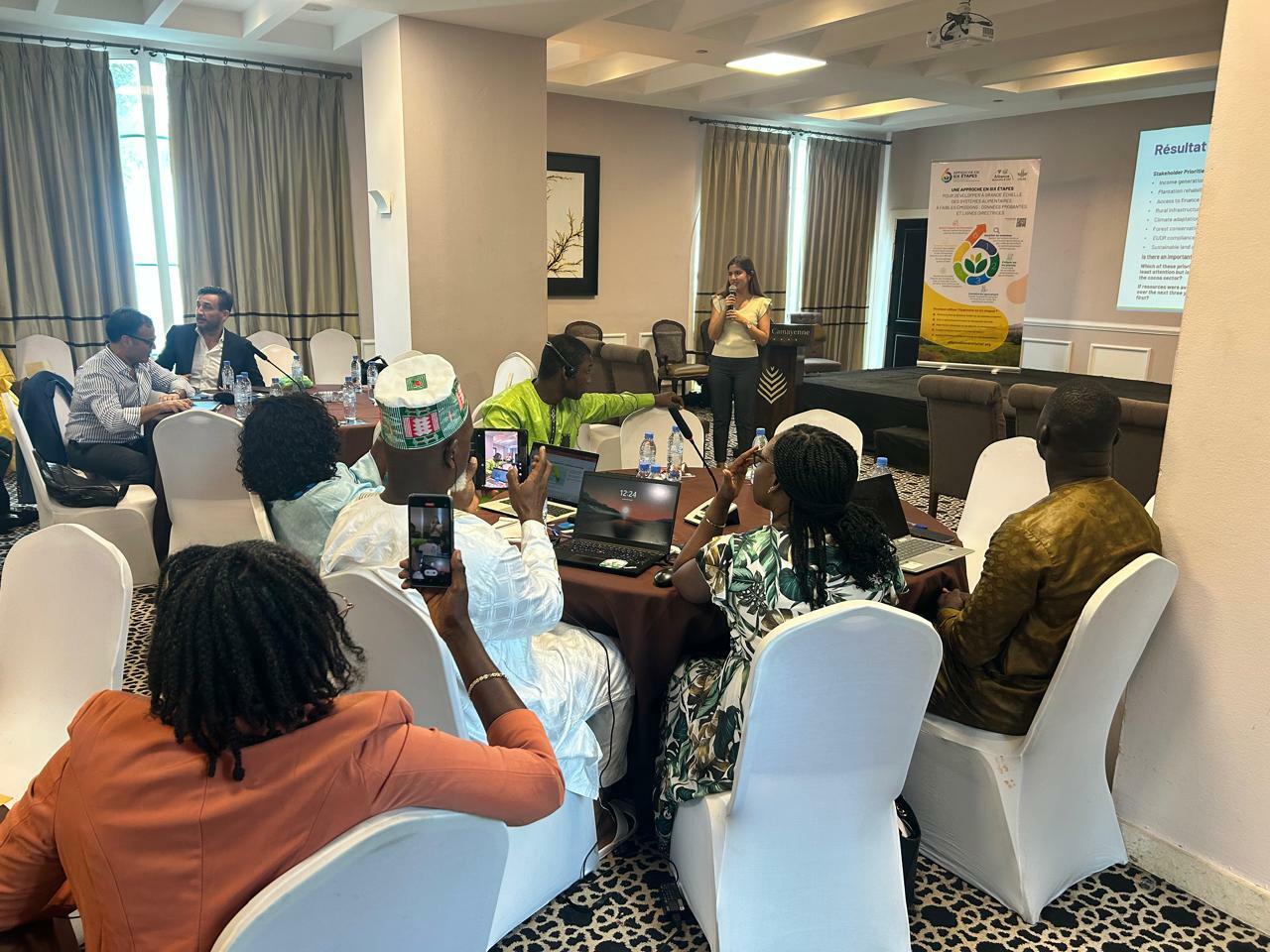
Dr. Daniel Aja presented a spatial analysis examining cocoa production, vegetation loss and forest degradation in Guinea. The research provided an initial picture of where cocoa production and vegetation change may intersect.
Participants gave feedback over the estimates and stressed the need for field validation and more precise national data. As Guinea's cocoa sector develops, better information on where cocoa is produced and how landscapes are changing will be important for targeting interventions and tracking progress.
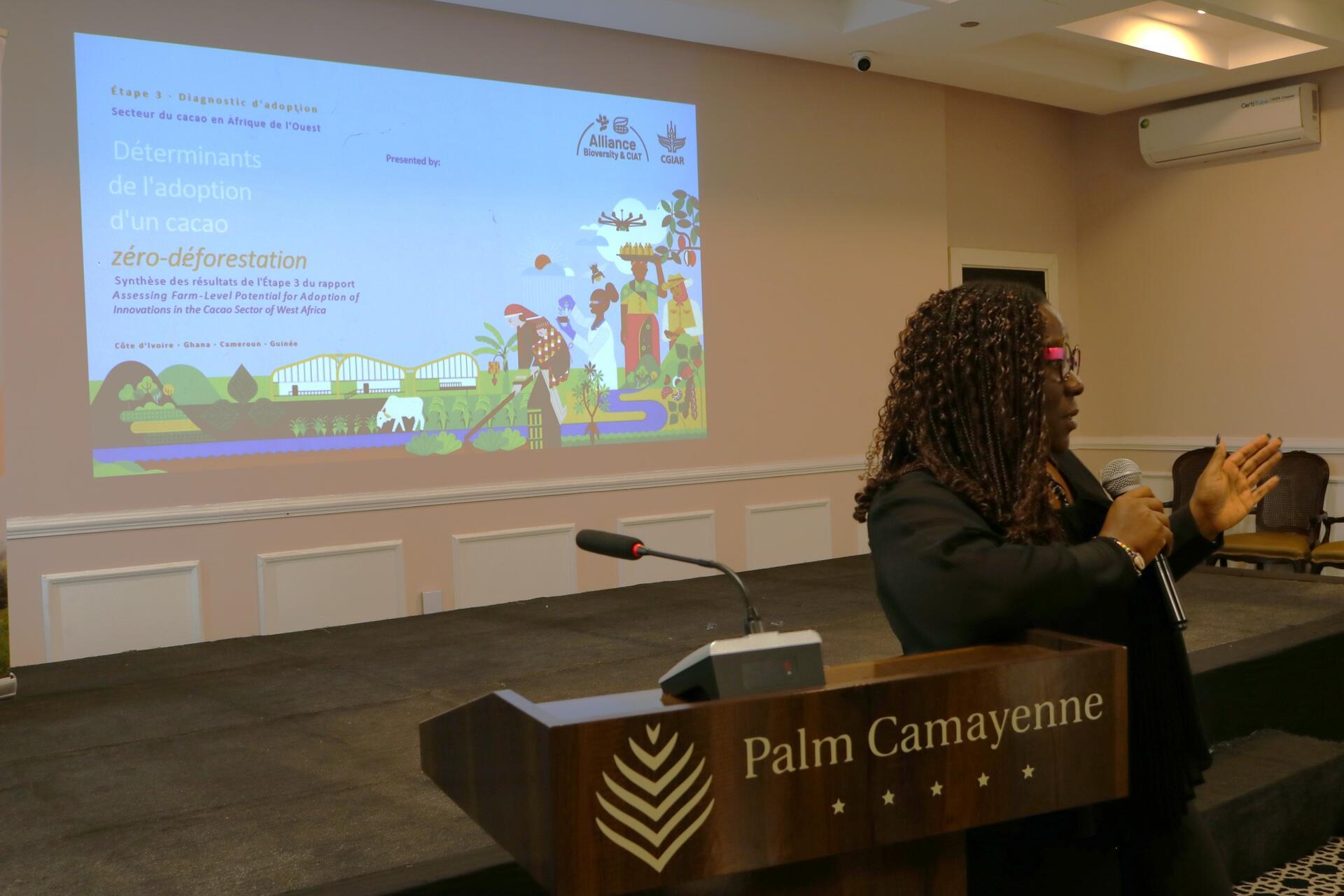
Creating an enabling environment for agroforestry also requires understanding the institutions and policies that shape farmers' decisions. To explore this dimension, Angie Sánchez presented findings from an assessment of Guinea's policy landscape and stakeholder priorities. The analysis identified persistent challenges, including the need to strength producer organizations, limited access to quality planting material and improved cocoa varieties, gaps in extension and technical support, and labor shortages associated with the growth of the mining sector.
Participants also identified priority areas for action across the cocoa value chain. These ranged from improving cocoa pricing, post-harvest practices, and seed and nursery systems to increasing cocoa quality, expanding local processing, and creating clearer pathways to fine flavor markets. The discussions also reinforced the importance of making women's contributions across the cocoa value chain more visible and better supported.
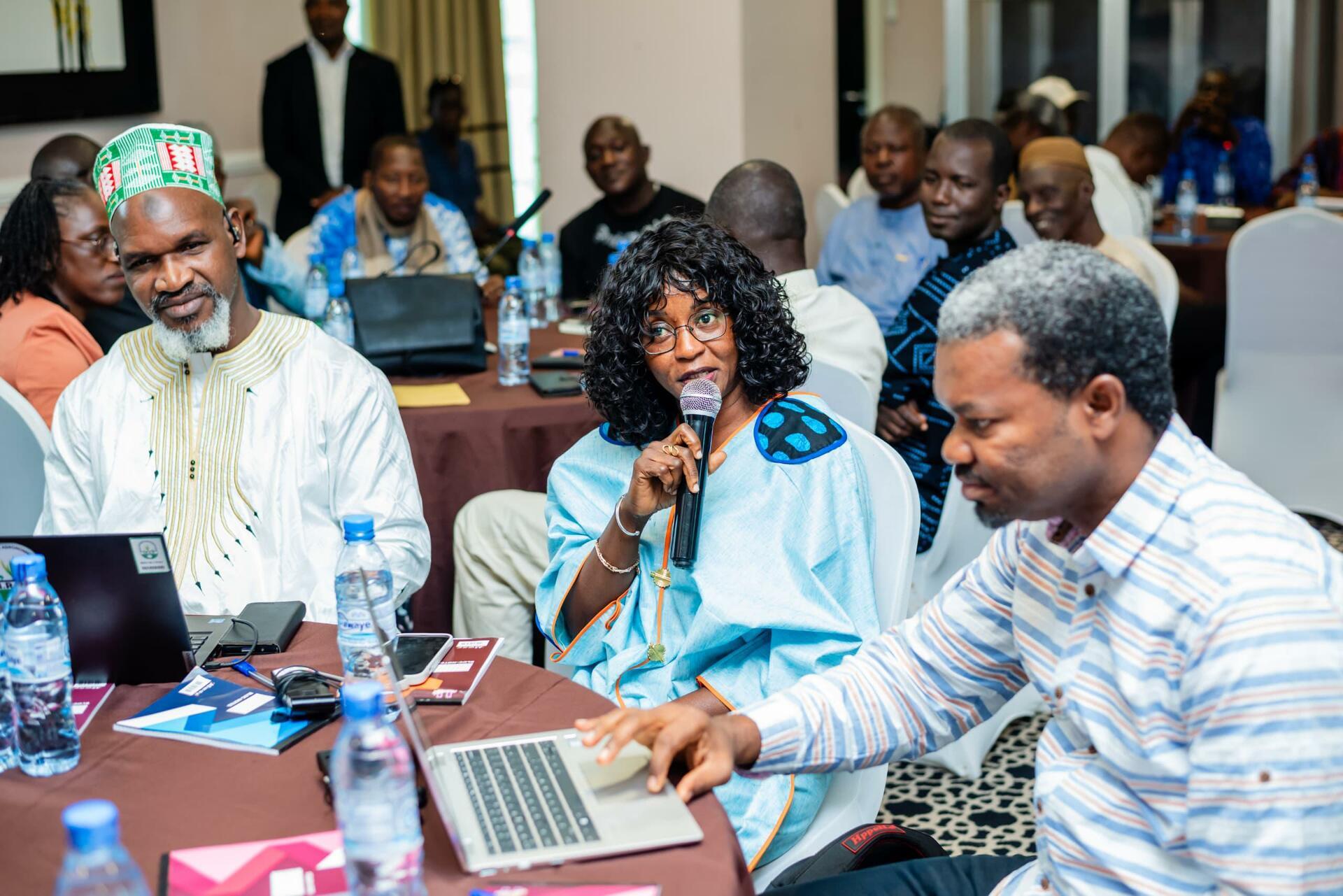
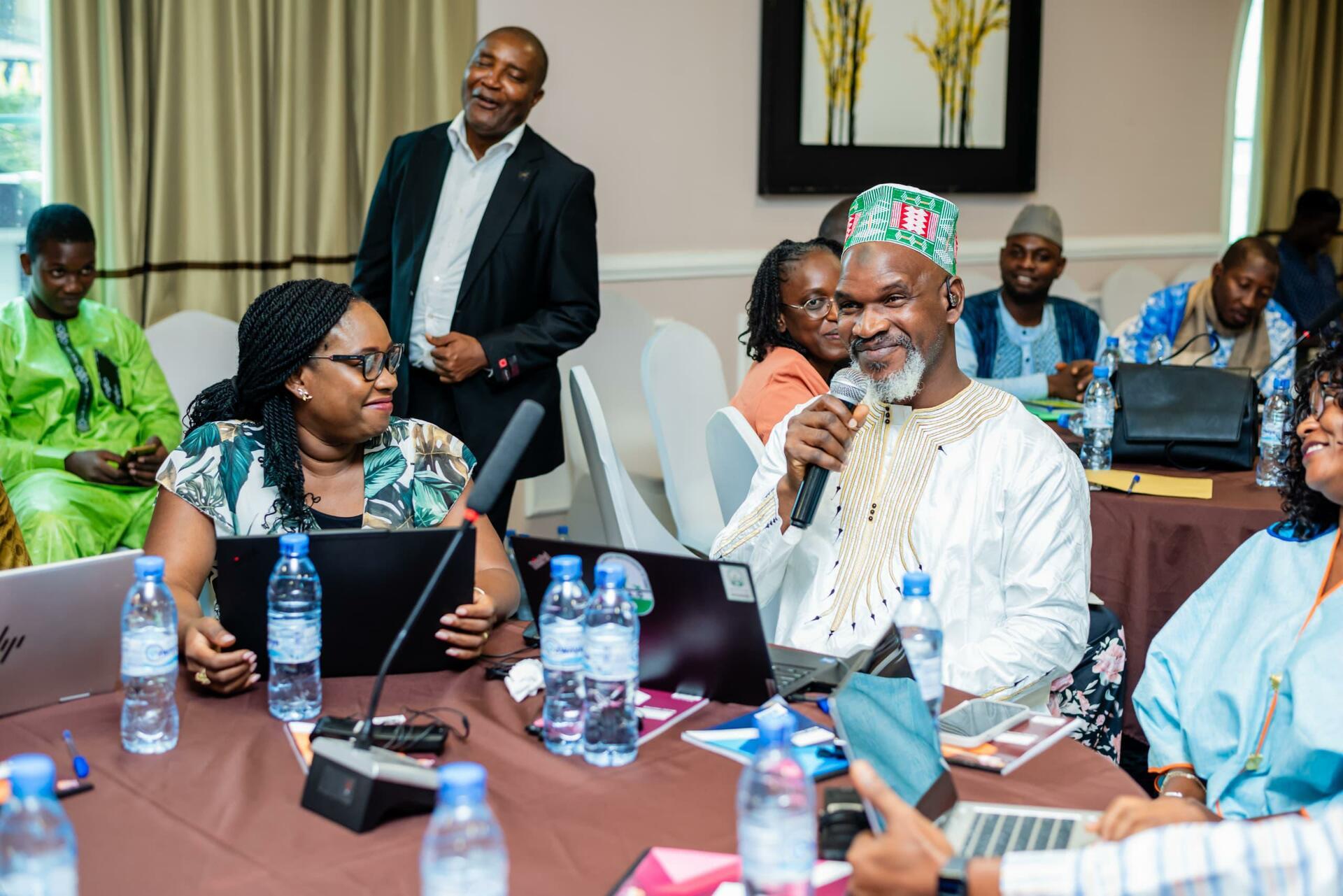
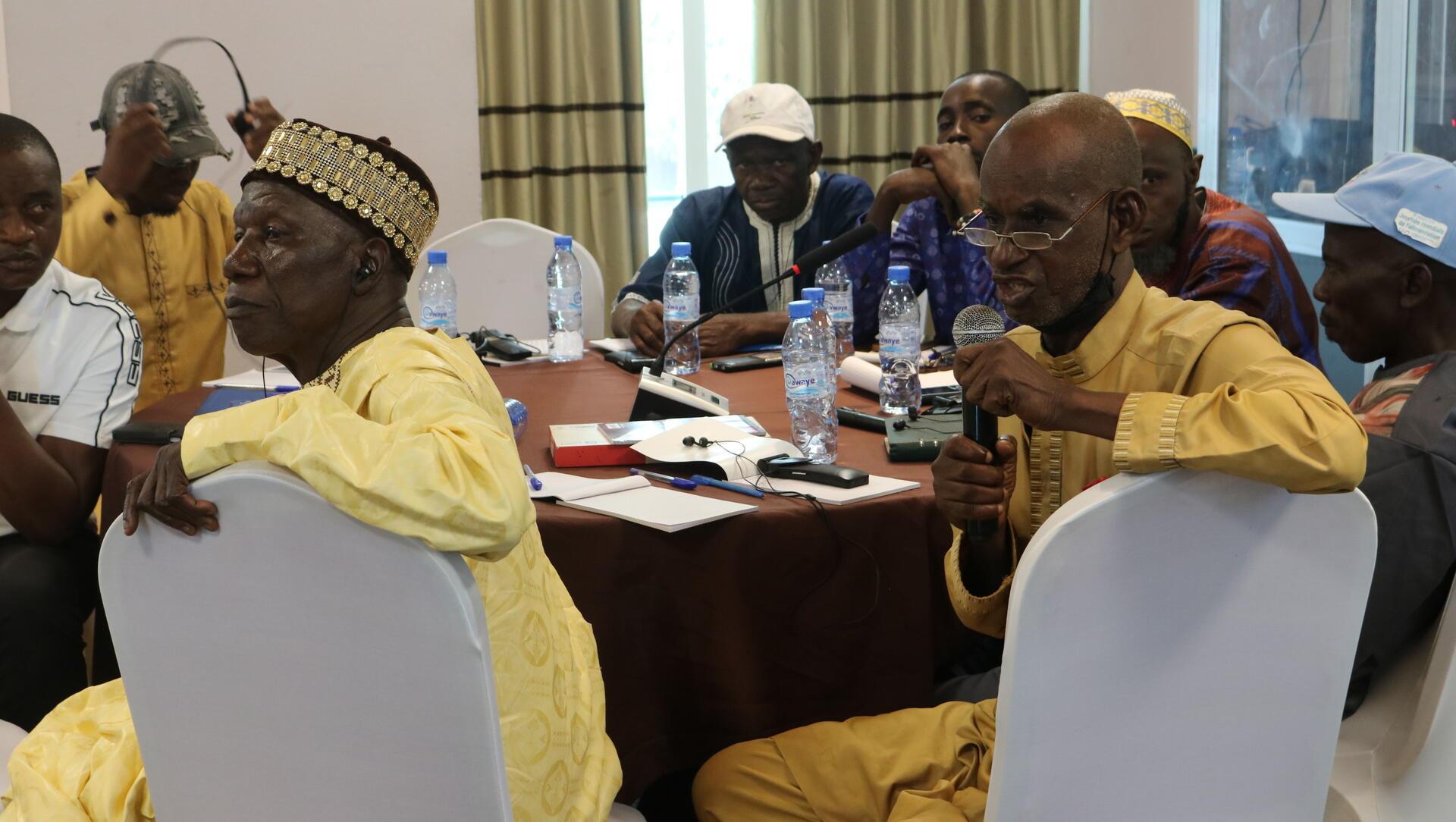
Dr. Mary Ngaiwi then brought the discussion directly to farmer adoption. One finding drew particular attention: farmers connected to cooperatives tend to perform better, although challenges remain. This prompted a direct question: if cooperatives can support farmers, why are there not more of them?
The discussion linked adoption to access to information, technical support, inputs and markets. In Guinea, where producer organization remains limited, strengthening cooperatives and other farmer organizations emerged as an important part of the scaling discussion.
Validating a roadmap for scaling
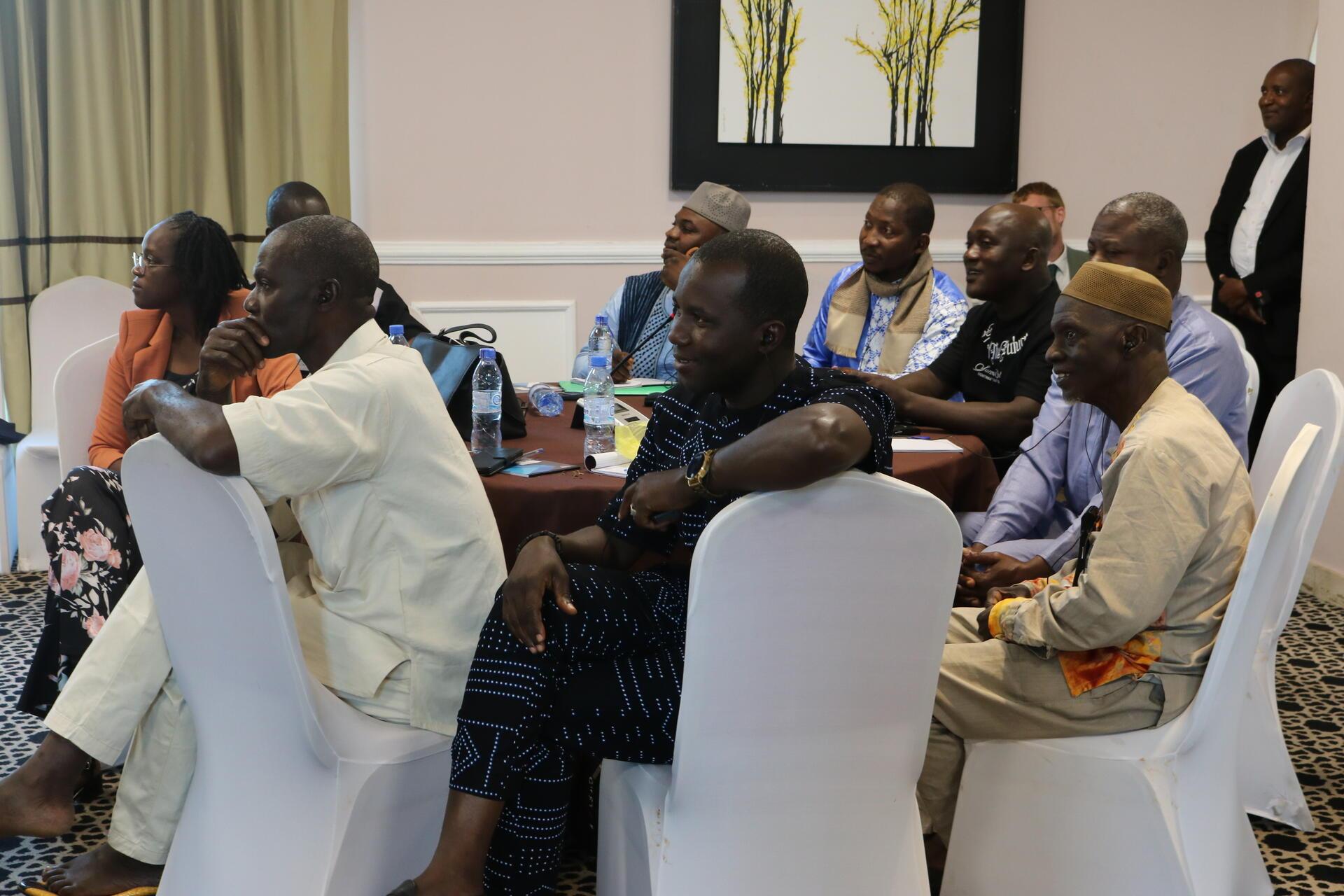
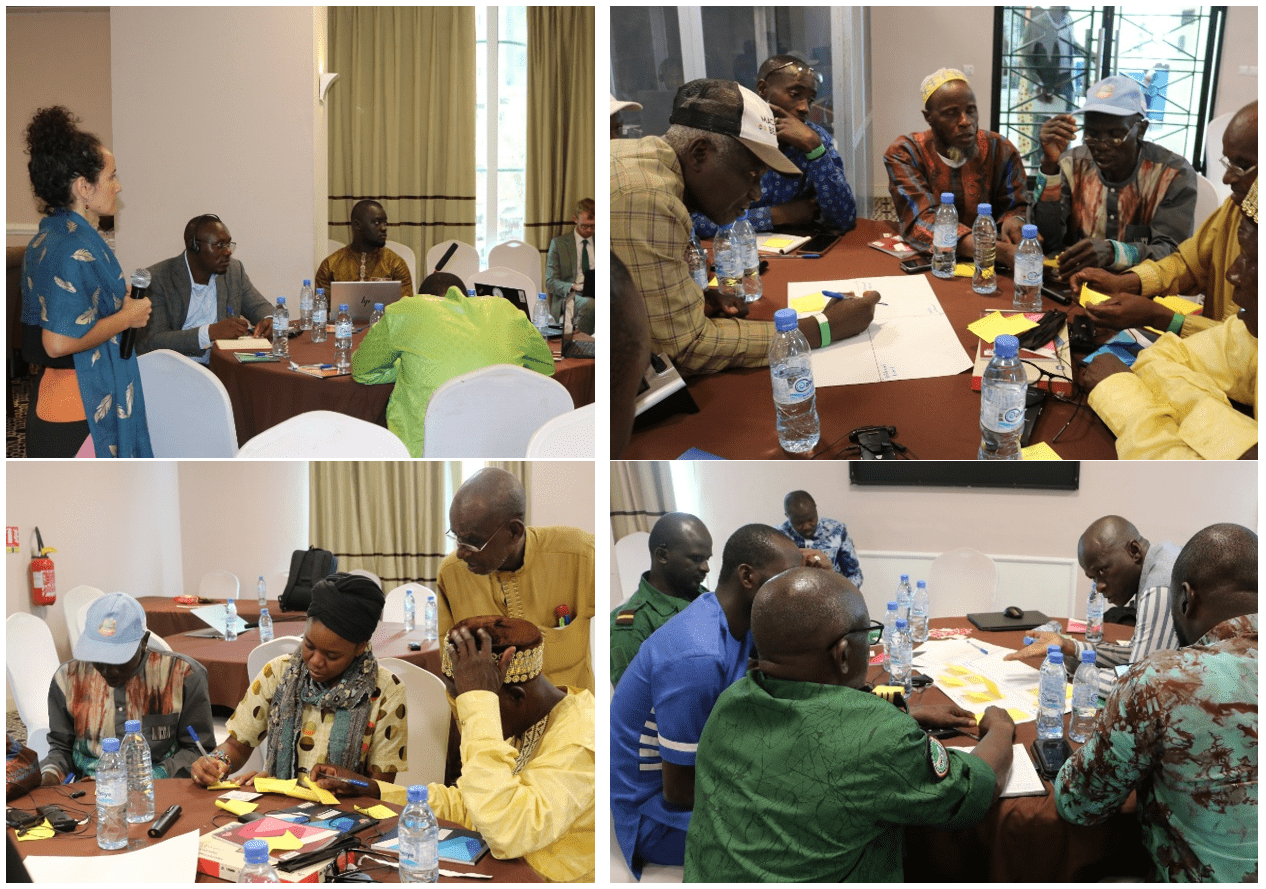
A central objective of the workshop was to validate the framework for scaling agroforestry innovations developed through the Six-Step Approach.
Dr. George Amahnui guided participants through an interactive validation of the framework and the enabling conditions required for scaling. Participants reviewed the proposed conditions, identified gaps and considered whether the framework reflected Guinea's cocoa sector.
The validation confirmed broad agreement on the conditions needed to support agroforestry at scale. Strengthening seed and nursery systems and improving access to quality planting material emerged as foundational priorities, complemented by stronger extension services, farmer training, producer organizations, post-harvest practices, cocoa quality, and market development. Together, these elements define the ecosystem needed for agroforestry to move from isolated initiatives to widespread adoption.
Participants also reflected on regional experience, drawing lessons from Côte d'Ivoire's progress in institutional coordination, cooperative development, plantation registration and geolocation, and farmer support. Rather than proposing a model to replicate, the discussion focused on identifying approaches that could be adapted to Guinea's institutional and production context.
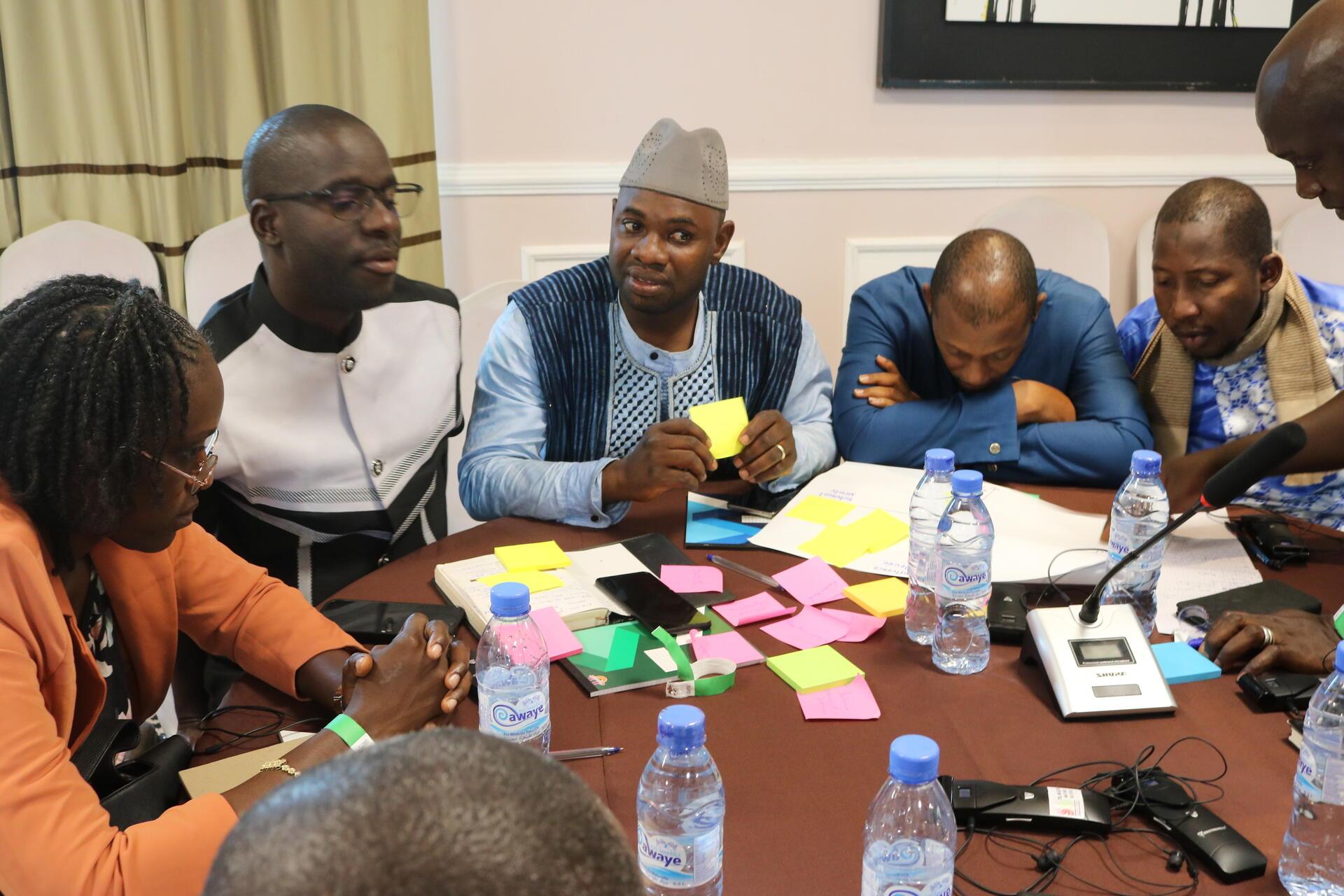
The final session, led by Martha Vanegas, translated these priorities into an institutional perspective. Through a participatory mapping exercise, stakeholders examined the organizations shaping Guinea's cocoa sector, their respective roles, and the capacities required to support agroforestry scaling. The exercise identified opportunities to strengthen coordination across institutions and reinforce the partnerships needed to sustain long term transformation.
Carbon markets: an emerging opportunity
Carbon finance emerged as one of the opportunities discussed for supporting the long-term adoption of agroforestry. While agroforestry systems can increase carbon storage and contribute to climate mitigation, participants recognized that access to carbon markets requires strong governance, credible monitoring systems, transparent benefit sharing mechanisms, and active participation by cocoa producers. As work in Guinea advances, these considerations will inform future research and engagement on the role of carbon finance in supporting sustainable cocoa production.
Looking ahead
The Conakry workshop brought research into direct dialogue with the people shaping Guinea's cocoa sector, strengthening the Alliance's Six-Step Approach through local knowledge and practical experience. The insights generated during the validation process will inform the next phase of work, including field validation of the spatial analyses, continued engagement with producer organizations and national partners, and further refinement of the enabling conditions needed to scale agroforestry.
As Guinea's cocoa sector continues to evolve, it has the opportunity to embed sustainability from the outset. By strengthening the policies, institutions, partnerships, and market conditions that support agroforestry, Guinea can build a cocoa sector that protects forests, improves livelihoods, and is better positioned to meet the demands of sustainable markets.
Photos by Institut de Recherche Agronomique de Guinée (IRAG), and Angie L. Sánchez
This note was developed as part of the CGIAR Science Programs: Climate Action and Scaling for Impact