From the Field Accelerating agroecology from the ground up through ABCD in Kiserian: Leaky bucket and vision to action
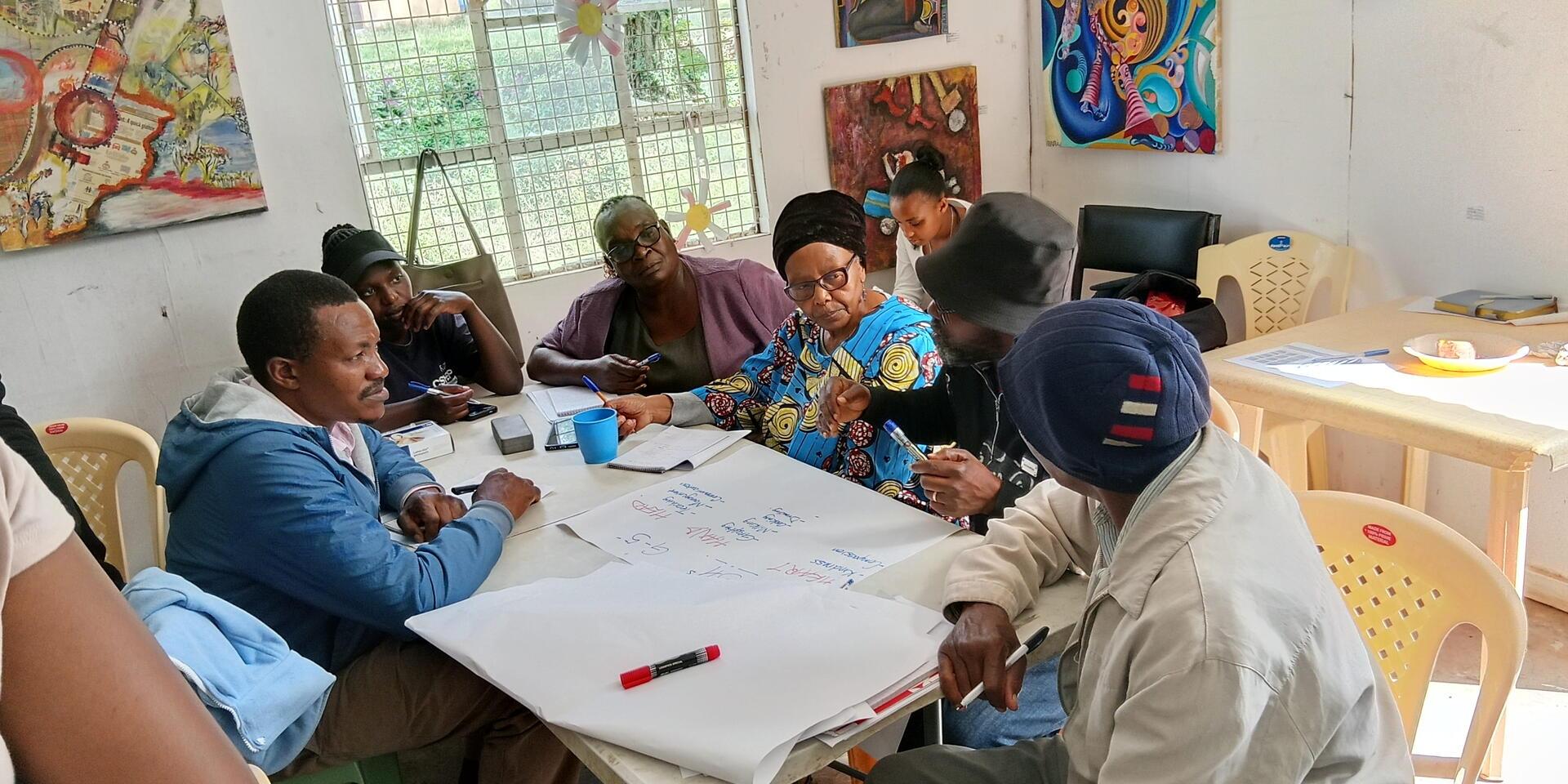

In Kiserian, Kenya, communities used ABCD training to examine local economic flows, identify opportunities to retain value and develop a shared vision and action plan for agroecological development.
In Kiserian, Kenya, communities are exploring how the knowledge, skills, relationships and natural resources they already possess can support agroecological development. Through Asset-Based Community-driven Development (ABCD) training, participants examined the resources available within their communities and how these could contribute to more sustainable livelihoods and food systems. The training also highlighted an important economic consideration: while farming and other local activities generate income, understanding where that money goes, and how more of it can be retained locally, is essential to strengthening community livelihoods.
Building on the initial asset-mapping exercises, participants used the Leaky Bucket tool to examine the movement of money and resources through their households, enterprises and communities. They then drew on these findings, alongside their understanding of local institutions and natural resources, to develop a shared vision and identify priorities for collective action. The training brought together economic analysis, Community Action Planning and participatory learning to support locally driven agroecological development.
Understanding local economic flows
The Leaky Bucket is a participatory tool that helps communities visualize how money, resources and value enter and leave the local economy. It makes economic leakages more visible and provides a basis for identifying opportunities to retain value, strengthen livelihoods and make better use of existing resources. In Kiserian, participants applied the exercise at community, commodity and household levels, allowing them to examine how different economic activities and decisions influence both individual livelihoods and the wider community.
At community level, participants explored how money and resources enter and leave the local economy and where opportunities might exist to retain more value locally. At commodity level, they examined production costs, labour, transport, investment, income, marketing channels, products and by-products, identifying possibilities for value addition, collective marketing and improved market access. The household analysis focused on income from farming and other activities, expenditure patterns, record keeping and financial planning, connecting agroecological practices with the economic realities of farming households.
Examining these economic flows helped participants identify leakages that can undermine profitability and limit opportunities to accumulate value. It also provided a practical basis for informed decision-making, encouraging participants to consider farming as an enterprise and explore opportunities for agribusiness development without compromising ecological integrity. The exercise connected agroecological principles to the financial and market realities that influence farming households and their communities.
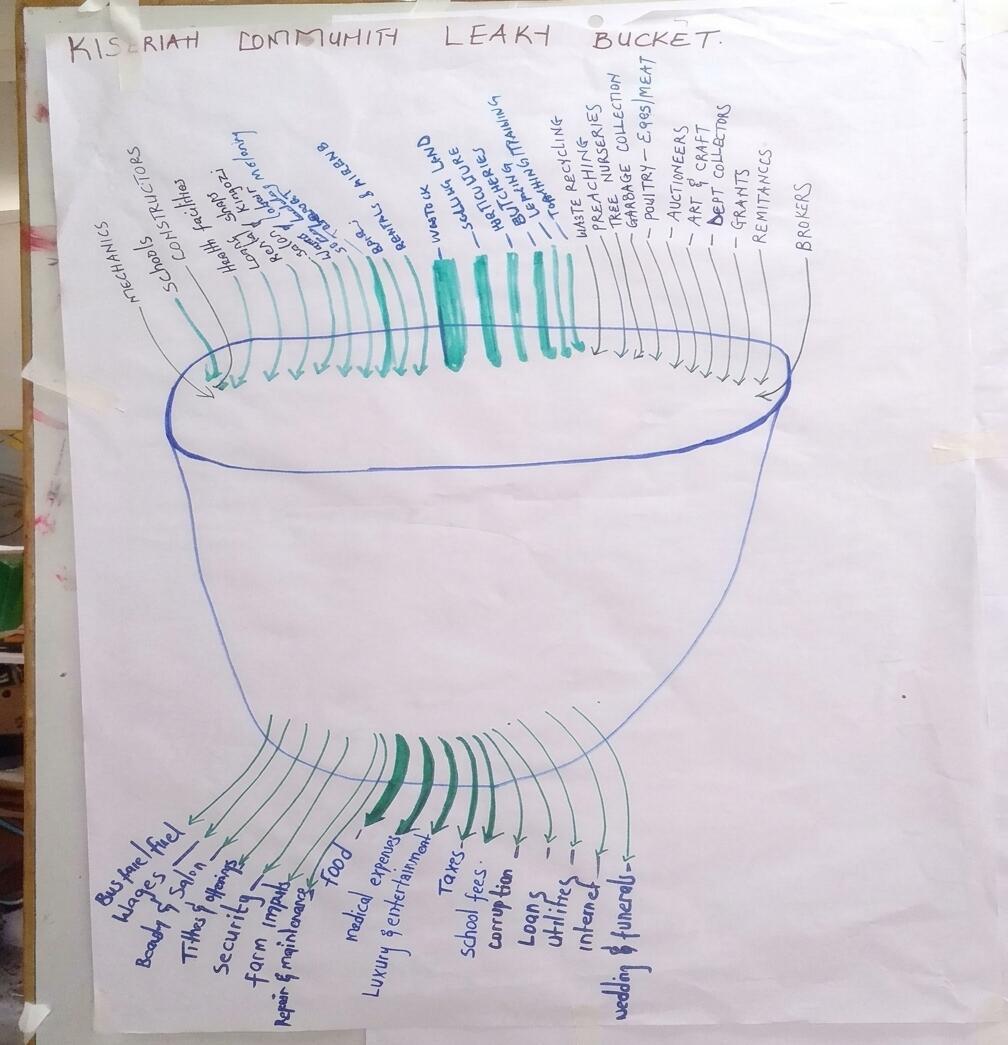
Community Leaky Bucket developed by participants during the workshop. Photo credit: Peter Bolo, Alliance of Bioversity and CIAT
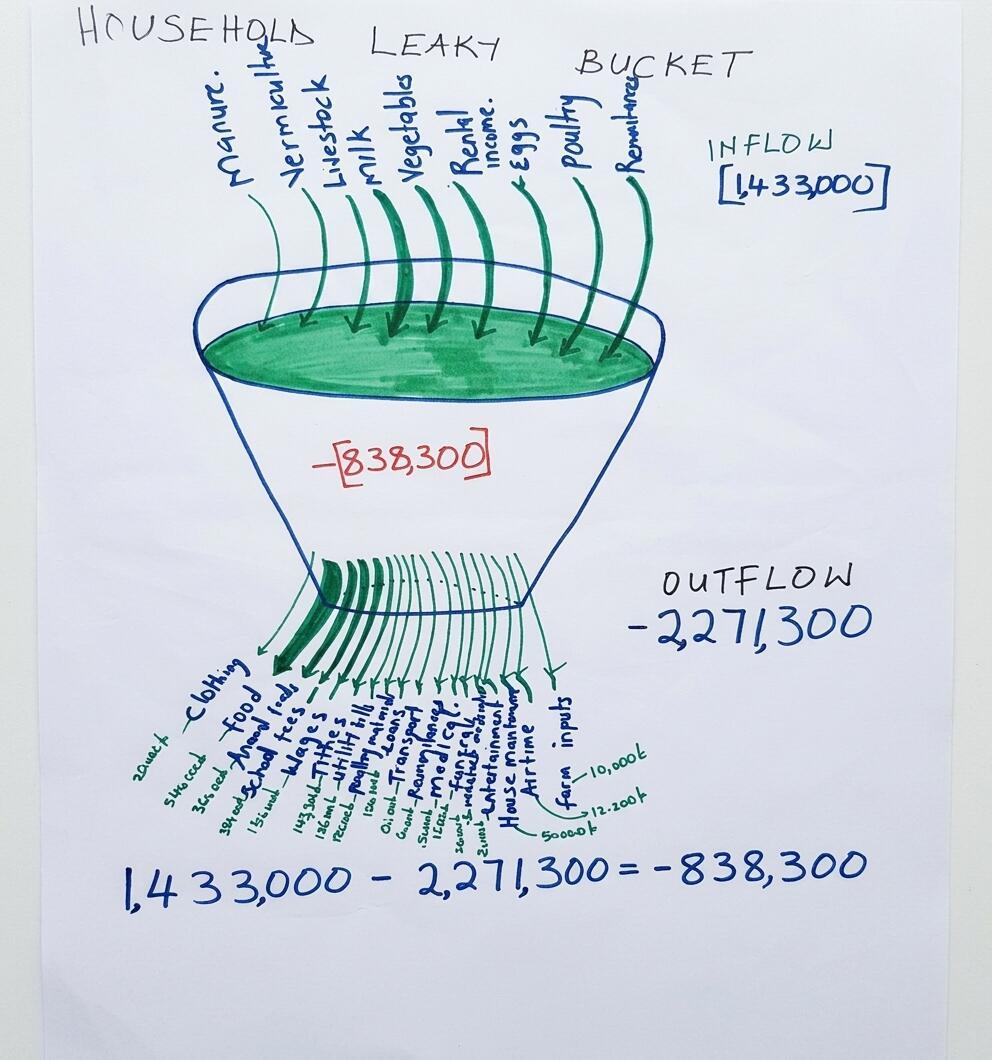
Household Leaky Bucket developed by participants during the workshop. Photo credit: Peter Bolo, Alliance of Bioversity and CIAT
Turning a shared vision into action
The findings from the Leaky Bucket exercise informed Community Action Planning (CAP), which brought together the different elements of the ABCD training and connected them to the Vision to Action approach. Participants drew on their asset maps to identify available knowledge, skills and resources, while mapping associations and institutions helped them recognize potential collaborators. Landscape and natural resource mapping highlighted the resources within their wider environment, and the economic analysis provided insights into opportunities and challenges affecting local livelihoods. Together, these exercises informed discussions about the future participants wanted for their communities and what they could achieve collectively.
Participants adopted a shared vision of “A thriving multifunctional landscape supporting resilient ecosystems, diversified livelihoods, and sustainable food systems.” Their aspirations extended across environmental, agricultural, economic and social priorities, including restored and sustainably managed forests, rangelands, soils and water systems; increased production and consumption of safe, diverse and nutritious food through agroecological practices; inclusive and diversified green economies that strengthen agroecological value chains and livelihoods; and gender-equitable, socially inclusive and resilient communities working towards healthy people and ecosystems.
Through Community Action Planning, participants identified the changes they wanted to achieve, the actions required, the local assets they could mobilize and the individuals or institutions that could contribute. Priorities included safer management and disposal of solid and non-biodegradable waste, soil regeneration, composting, mulching, water harvesting and opportunities for value addition. These priorities reflected the connections between natural resource management, agricultural production and economic opportunities, while providing a basis for identifying where existing community capacities could support implementation and where additional assistance might be needed.
The planning process emphasized the importance of communities taking the initiative rather than waiting for external resources before acting. By identifying what could be achieved using available assets and capacities, participants were able to consider how local knowledge, relationships and resources could contribute to their shared priorities, while recognizing the role of strategic partnerships and external support where necessary. This connection between asset discovery and practical planning is central to the Vision to Action approach, grounding community aspirations in the resources and opportunities available to pursue them.
Learning from change
The training also introduced Most Significant Change (MSC), a participatory monitoring and learning approach that allows communities to document and reflect on changes arising from activities undertaken both on and off the farm. Through stories and reflection, participants can explain what has changed, who has experienced the change and why particular developments are meaningful. MSC can complement conventional quantitative indicators by capturing changes in confidence, agency, collaboration, relationships, use of local assets and livelihood opportunities that may otherwise be difficult to measure.
During the training, participants reflected on changes they had already experienced through the facilitation process, including shifts in mindset, greater awareness of their existing assets and different approaches to economic decision-making. As the Community Action Plan is implemented, MSC can provide a way for communities to continue documenting these experiences, reflecting on emerging outcomes and adapting their actions based on what they learn. Monitoring therefore becomes part of the continuing work of community development, allowing participants to assess progress against the changes they themselves consider important.
The Kiserian training brought together the different elements of ABCD, from challenging deficit-oriented perceptions and identifying individual and community assets to understanding local institutions, landscapes and economic opportunities. Community Action Planning provided a way to translate these insights into a shared vision and practical priorities, while MSC introduced a means of learning from the changes that follow. For agroecological transitions, this places farmers at the centre of development as knowledge holders, asset owners, economic actors and agents of change, rather than simply beneficiaries of technologies, projects or external interventions.
The next challenge in Kiserian is to put the Community Action Plan into practice, strengthen the relationships and partnerships needed to support implementation, and document the changes that communities themselves consider meaningful. The ABCD4AE experience offers a starting point for this work by encouraging communities to look beyond what they lack and ask: “What do we already have, what can we do together, and what change will matter most to us?” By building on existing assets and locally defined priorities, communities can take a more active role in shaping the agroecological transitions that affect their livelihoods and landscapes.
The team

Langat Kipkorir
Research Associate
Kevin Omondi Onyango
Senior Research Associate
Peter Bolo
Postdoctoral Fellow