Blog Beyond organic: How Kenya is reshaping food systems with participatory guarantee system and agroecology


Researchers and partners in Kenya are advancing Participatory Guarantee Systems (PGS) integrated with agroecology to make safe, sustainable food more accessible, lower certification costs for farmers, and strengthen resilient, inclusive food systems.
Where does this food come from? How was it produced? Is it safe? Is it beneficial to my health? These are critical questions Kenyan consumers are increasingly asking. The growing consumer awareness about the origin of food, production methods, farm inputs, safety, and nutritional value is creating a strong push to reshape the local food system - from how food is produced and marketed to how it is consumed and even disposed of.
Historically, food safety and sustainability have been assured through top-down conventional organic certification schemes. While effective, these schemes are often costly and bureaucratic, making them difficult for smallholder farmers to access. For many, the cost of certification makes organic production much more expensive than conventional farming. When farmers obtain licenses, they often raise commodity prices to cover certification and production costs, making organic foods unaffordable to many consumers, particularly the low-income category.
The rise of Participatory Guarantee Systems (PGS)
To overcome the constraints presented by conventional certification, the Participatory Guarantee System (PGS) is emerging as a powerful, viable solution. A PGS is a locally focused, community-driven, and low-cost certification mechanism that allows producers to guarantee their adherence to organic principles1. It is built on five core pillars - shared vision, transparency, trust, participation, and learning and capacity building - bringing together local farmers, consumers, and other key food system actors. For smallholder farmers, the PGS offers numerous advantages including:
- Lower certification costs, allowing greater farmer participation.
- Access to specialized markets through consumer trust and market differentiation.
- Promotion of community ownership via peer-to-peer learning.
In East Africa, the PGS were introduced between the 2000s and 2010 through the International Federation of Organic Agriculture Movements (IFOAM)-led Organic Standards for East Africa (OSEA) Initiative , implemented in collaboration with the national organic agriculture movements in Kenya, Uganda, Tanzania, Rwanda and Burundi. The OSEA project culminated in the adoption of the East Africa Organic Standard (EAOPS) – associated with the Organic Kilimohai Mark. By 2022, Tanzania had had the highest number of PGS-certified farmers (2,320), followed by Kenya (1,078) and Uganda (450)2. While many PGS initiatives are embedded within the broader agroecological programs, the existing PGS certification framework remains specific to organic production. Most PGS-certified production is concentrated in fresh vegetables, fruits, and legumes and grains.
Integrating agroecology: Moving beyond organic
While adherence to organic principles remain foundational, the Alliance of Bioversity International and International Center for Tropical Agriculture (CIAT) through the CGIAR Science Program on Multi-Functional Landscapes (MFL-SP) and the Biovision Foundation Switzerland funded project on Supporting Agroecological Transitions in Vihiga, Kenya is advancing the PGS work by integrating agroecological principles3. Building on the CGIAR’s Initiative on Agroecology , scientists at the Alliance, in collaboration with Community Sustainable Agriculture and Healthy Environment Program (CSHEP) - a community-based organization (CBO) - and other local partners, are training farmers to embed agroecological principles within the organic PGS framework. The goal is to transform PGS into a pathway towards resilient, sustainable, equitable, and nutritious food systems.
The transition to agroecological principles is also financially prudent: previous studies on cost benefit analysis (CBA) of agroecological interventions 4,5 by scientists at the Alliance suggest that agroecological practices are generally cost-effective when compared to conventional technologies. This means that products from agroecological systems do not necessarily need to command premium prices compared to conventional market commodities, making them more affordable to a wider population. Moreover, integrating agroecological principles across the value chain ensures that benefits are distributed fairly among all actors.
Eight steps to PGS formation
The process of PGS certification involves several structural steps. As summarized in the flowchart below, it begins with farmers forming a group (Step 1) and registering members (Step 2), followed by the joint development of PGS standards that incorporate agroecological principles (Step 3). An internal management system is then established to guide compliance and record-keeping (Step 4). Farmers receive training from certified trainers (Step 5) and take part in peer reviews, where they evaluate each other’s practices against agreed standard operating procedures (SOPs)-(Step 6). These reviews feed into the overall PGS assessment (Step 7), leading to collective approval and certification (Step 8). The entire process is participatory, trust-based, and designed to foster learning, accountability, and continuous improvement.
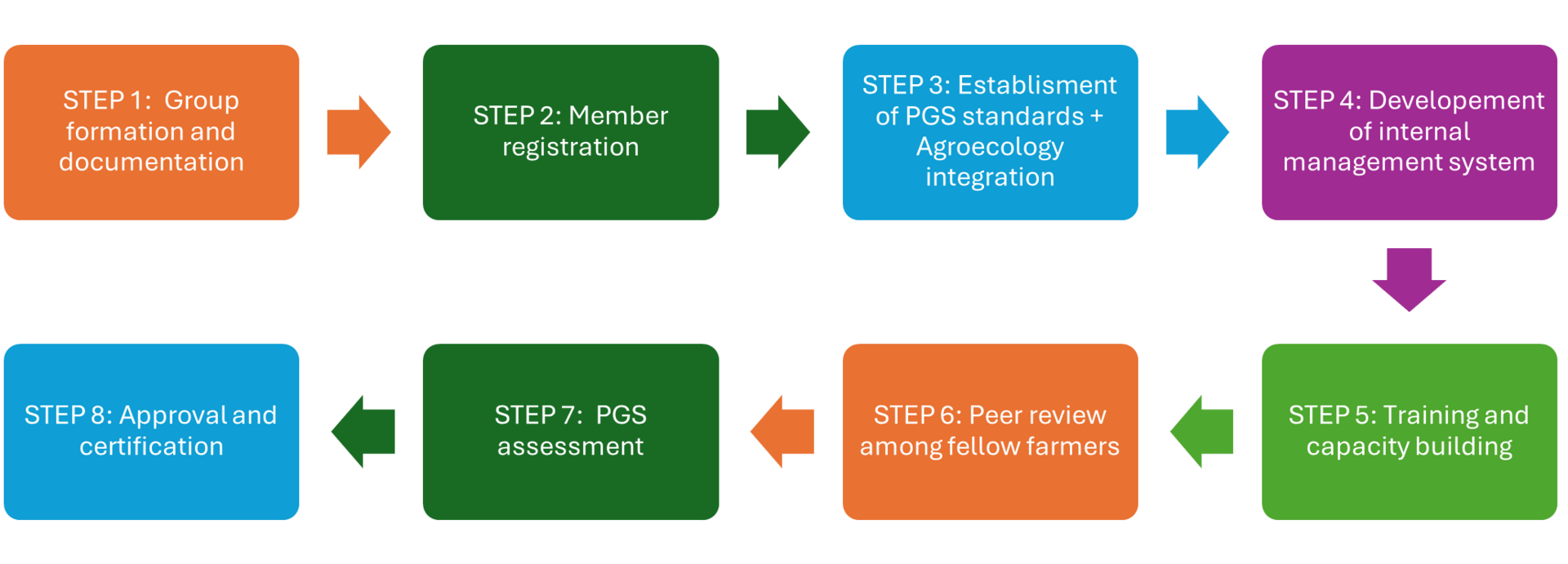
The 8 Key steps in establishing a Participatory Guarantee System (PGS).
Implementation of the agroecology-inclusive PGS in Kenya
Significant work is already underway in Kenya to establish and implement PGS systems that are inclusive of agroecological principles:
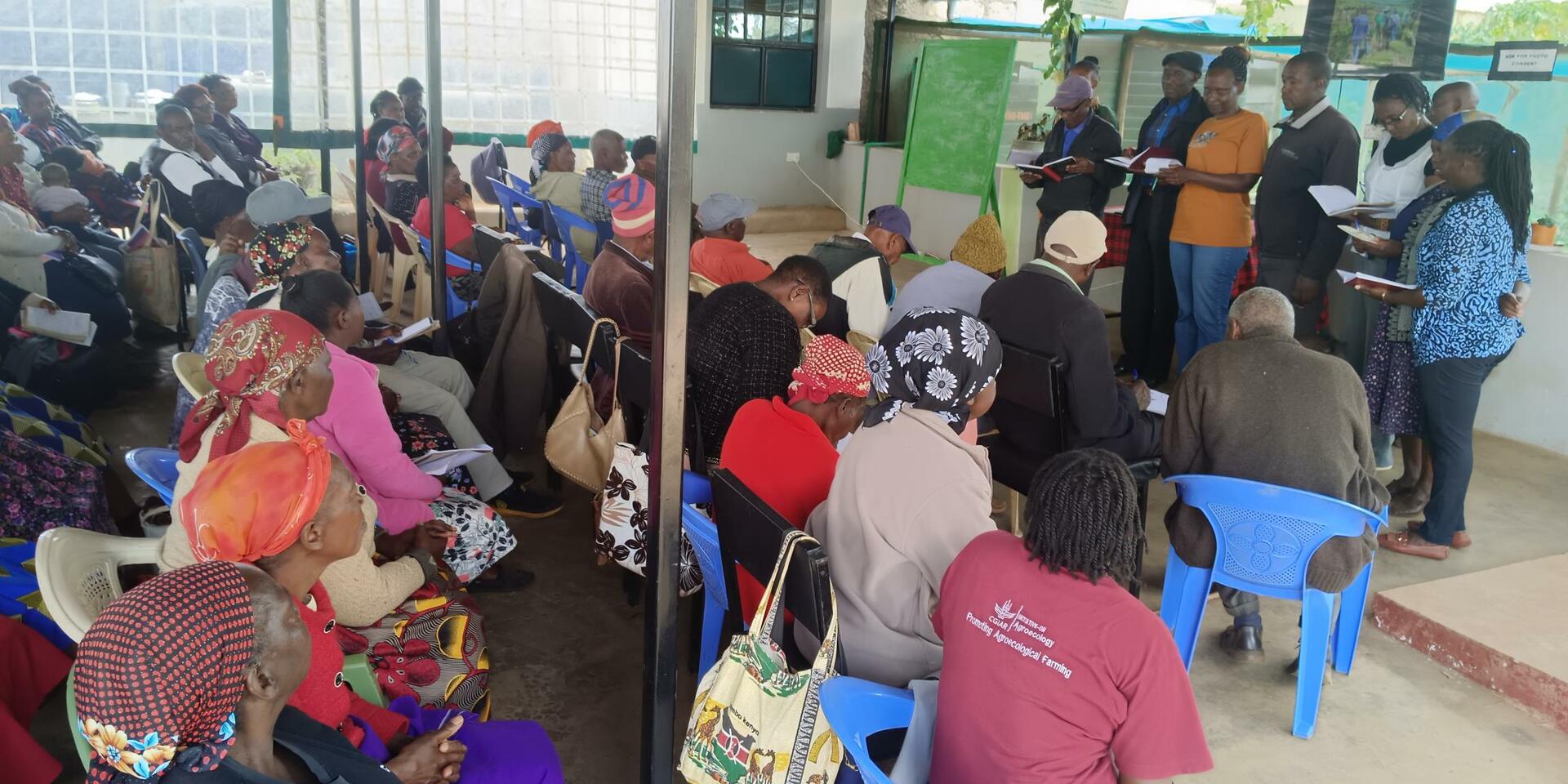
In Kiambu County, trainings were conducted under the MFL-SP, alongside the Biodiversity for Resilient Ecosystems of Agricultural Landscapes (B-REAL) Project . A total of 74 farmers were trained in September 2025. Following the training, a peer review activity was completed, and a report submitted to the Kenya Organic Agriculture Network (KOAN) - the national certification body. In February 2026, KOAN carried out an on-farm assessment on a sample of the trained farmers to determine their eligibility for certification. The group is currently awaiting feedback from KOAN on the outcome of this process before issuing the certification.
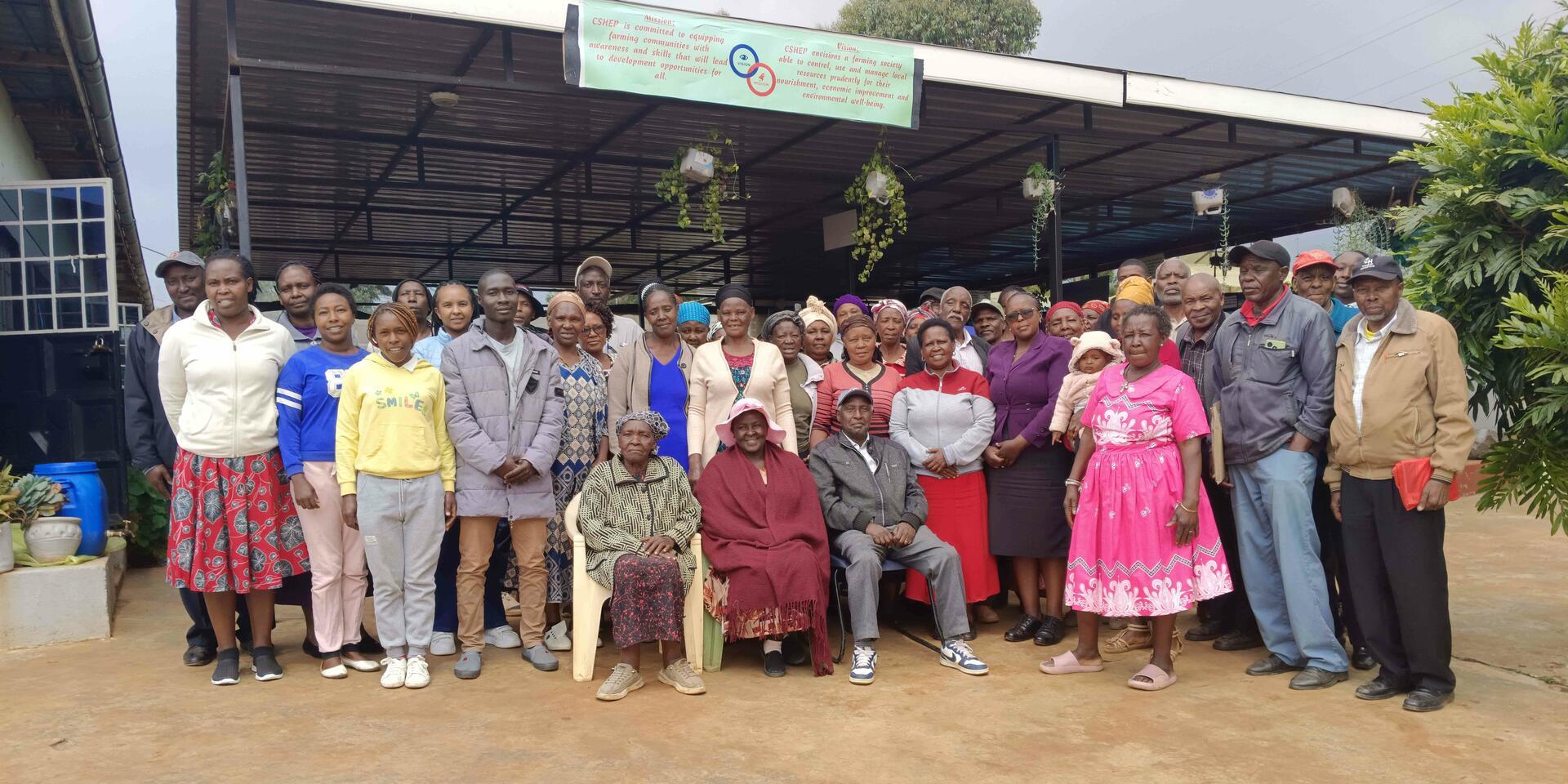
Participants during the agroecology-inclusive PGS trainings in Kiambu (left); PGS peer review reporting session in Kiambu (Right) Photo credit: Rosina Wanyama/Alliance Bioversity International - CIAT
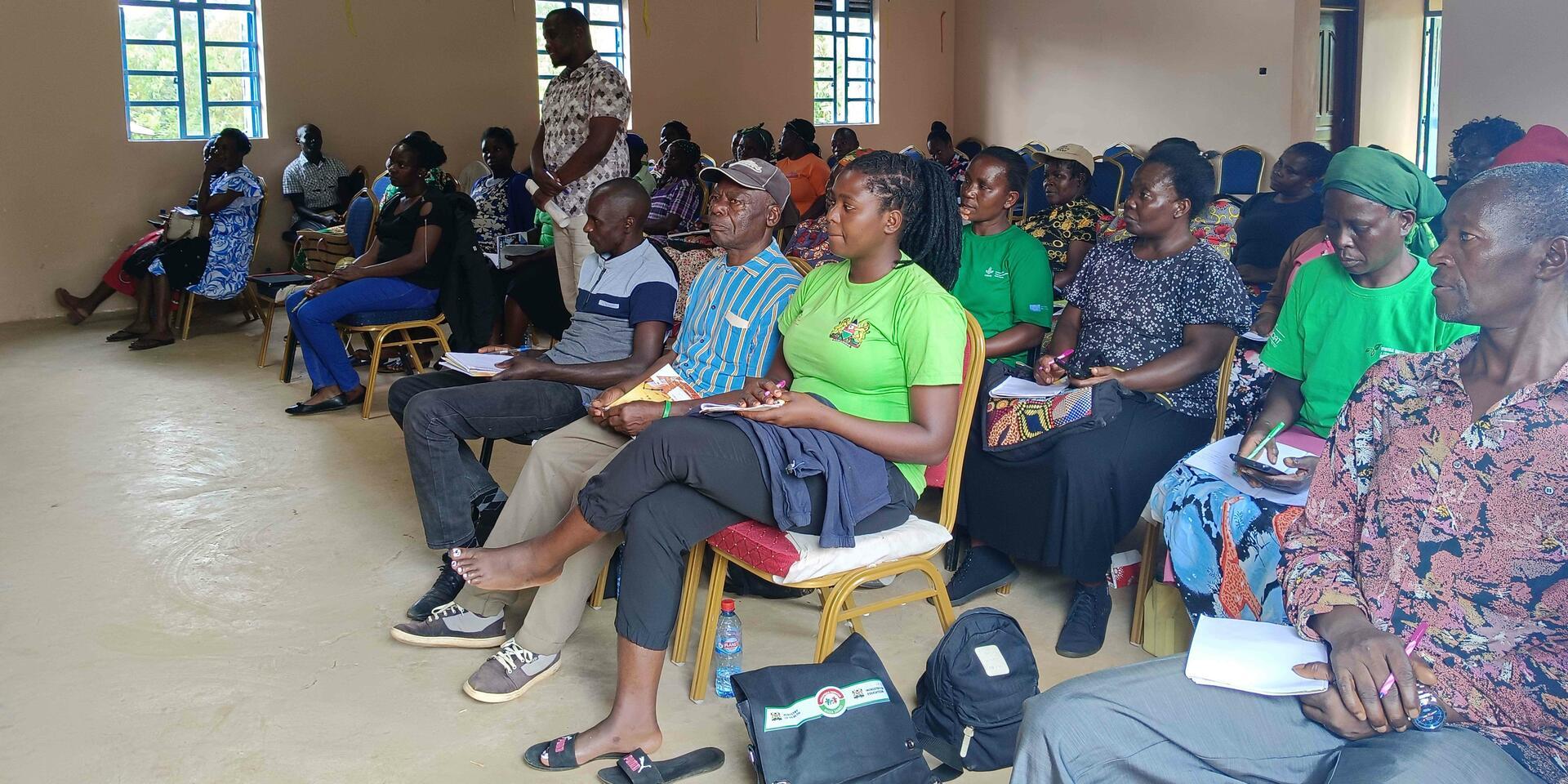
In Vihiga County, similar work is being supported through a Biovision funded project, which focusses on promoting agroecological transitions . Initially, 40 farmers from the Vihiga Nutrition and Community Seed Bank CBO were trained in July 2025, followed by a refresher training in December 2025. In March 2026, an additional 35 farmers were trained, bringing the total number of trained farmers in the area to 75. Ongoing activities include the development of internal management systems and PGS standards to guide an upcoming peer review process.
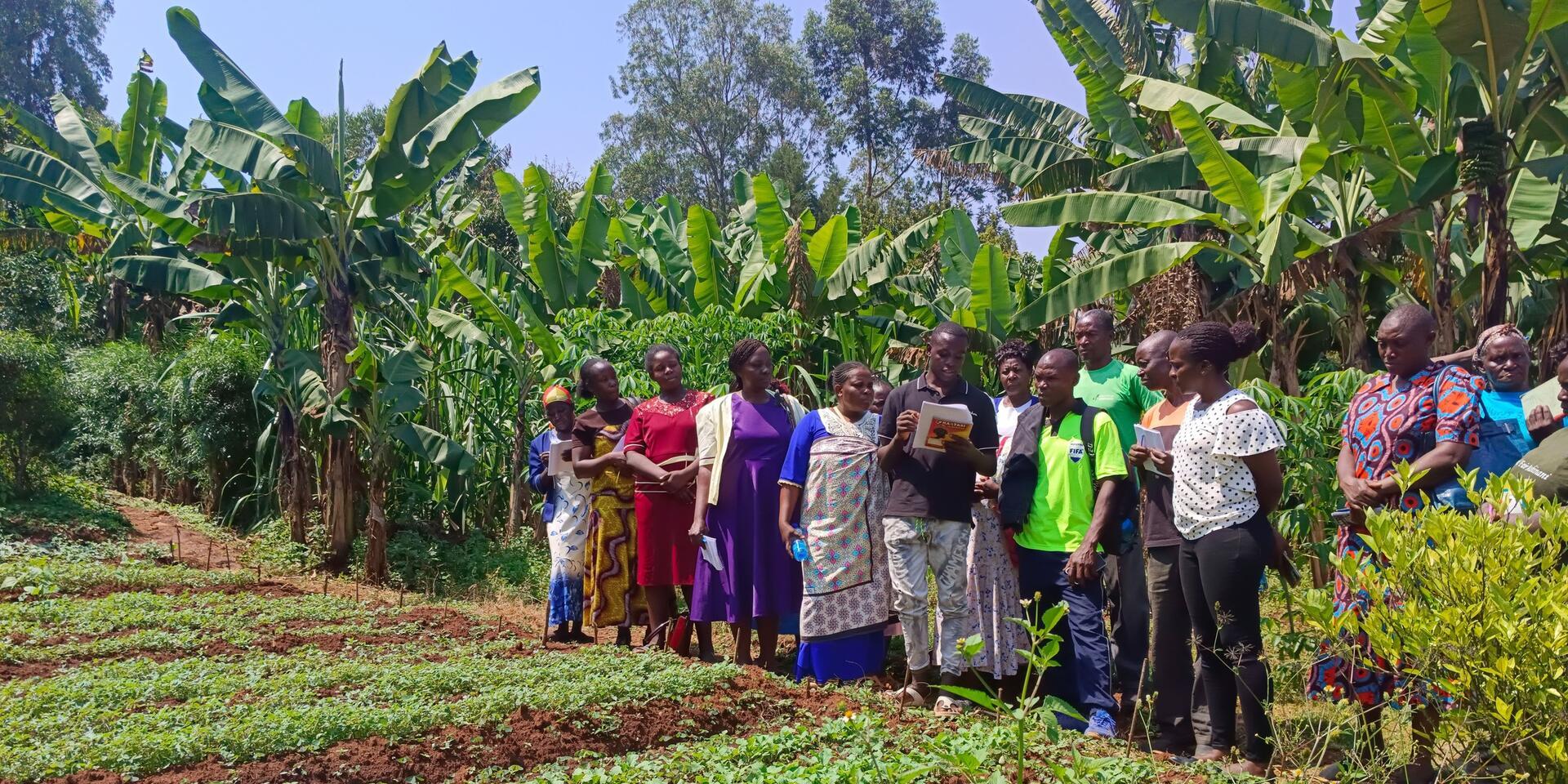
PGS training session in Vihiga (Left); PGS training participants during a mock peer review in Vihiga (Right). Photo credit: Rosina Wanyama/Alliance Bioversity International - CIAT
Looking Forward – Action points for scaling agroecology
While the implementation of PGS and the integration of agroecology in Kenya hold great promise for scaling agroecology, several challenges remain. To overcome these challenges and expand the use of PGS certification within agroecological systems, targeted action points must be prioritized, as summarized in this chart.
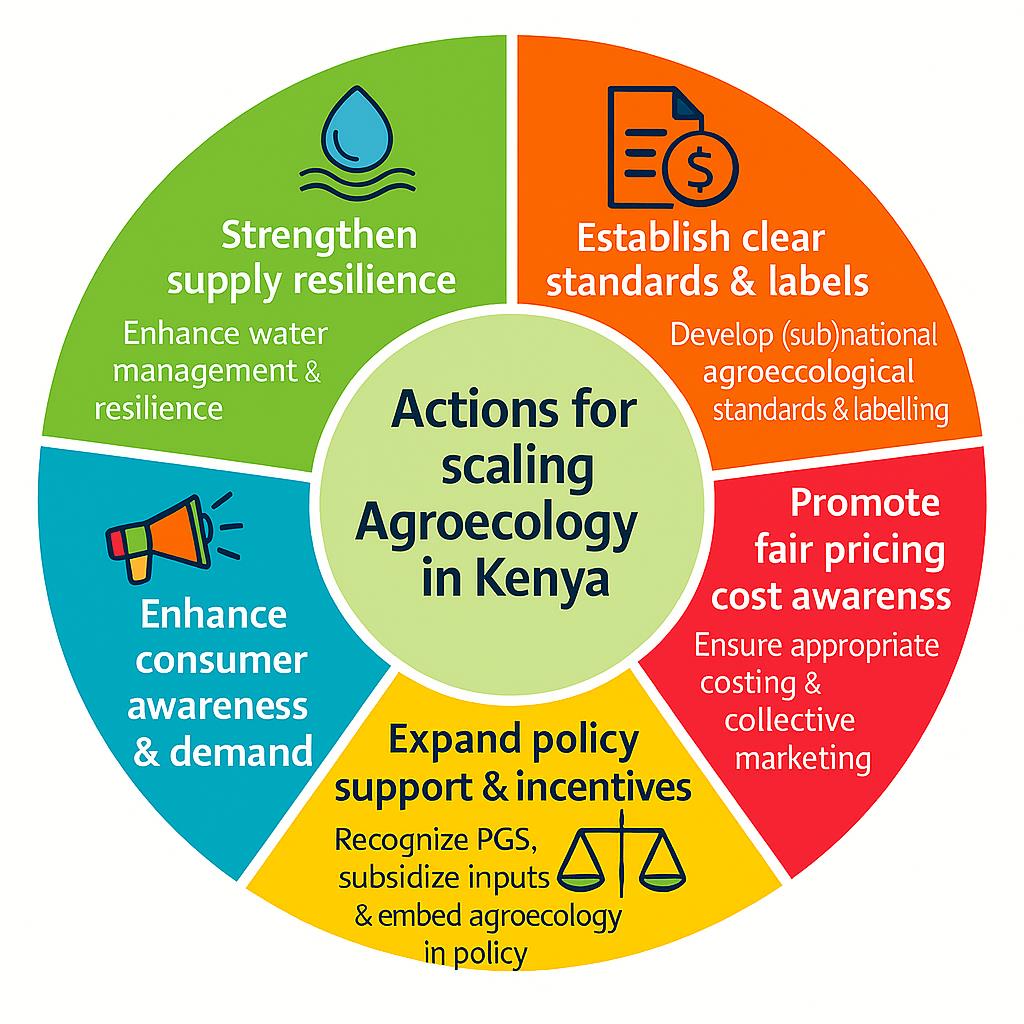
1. Strengthen supply resilience: Most smallholder farmers depend heavily on rainfed farming, which threatens production stability and limits consistent supply. The inconsistent supply affects both production sustainability and consumer access to agroecological commodities. Adoption of agroecological water management practices - such as small-scale irrigation, use of water pans, rainwater harvesting, mulching, and agroforestry - could strengthen production resilience and support PGS programs.
2. Establish clear standards and labels: PGS farmers who integrate agroecological principles into organic farming face difficulties in distinguishing their products in the market. While organic PGS is guided by clear principles, and the Kilimohai mark, there is a need to develop and operationalize clear standards that specifically define and guide agroecological farming and a nationally recognized label that identifies commodities produced under agroecological systems (or “organic-plus-agroecology”). Such a label would help differentiate agroecological PGS products from conventional and organic products in the market.
3. Promote fair pricing and cost awareness: Despite the low certification costs for farmers through the PGS approach, there remains a general perception that organic or agroecologically produced products are more expensive than conventional products. This perception may lead to wrong commodity pricing by producers and other market system actors, and constrain demand, particularly among low-income households that could significantly benefit from the consumption of agroecological products. Research evidence suggests that agroecological production can be cost-effective and that products from such systems do not necessarily require a price premium. Increased awareness among market system actors (including producers and traders) is needed to ensure appropriate pricing of the commodities for wide access by consumers. Improved record-keeping among producers and traders can also inform more accurate pricing of final commodities, as producers become better informed about actual production costs. In addition, collective marketing and aggregation can help reduce transaction costs and, consequently, retail prices.
4. Enhance consumer awareness and demand: Many consumers are not aware of agroecologically produced commodities and the benefits of consuming such commodities compared to those that are conventionally produced. As more agroecologically produced commodities enter the market, there is a pressing need to sensitize consumers on the benefits of choosing such foods over conventionally produced alternatives. Greater awareness of the nutritional, environmental, and social advantages of agroecological products will stimulate stronger demand as production scales up. Awareness campaigns can highlight how these foods contribute to healthier diets, reduced chemical use, and more sustainable farming systems. In addition, educating consumers about the role of agroecology in supporting smallholder livelihoods and protecting ecosystems can foster a sense of shared responsibility. This not only drives demand but also builds trust and loyalty, ensuring that the growth of agroecological production is matched by a supportive and informed consumer base.
5. Expand policy support and incentives: For PGS and agroecology to thrive in Kenya, strong policy backing is essential. National and county governments can play a pivotal role by recognizing PGS as a legitimate certification system, integrating it into agricultural and food safety policies, and providing incentives for farmers to adopt agroecological practices. Supportive policies could include subsidies for agroecological inputs (as is the case for the conventional inputs), investment in water management infrastructure, and funding for farmer training and extension services on agroecological farming, appropriate use of the organic inputs and adoption of PGS. Additionally, establishing clear national standards and labeling for agroecological products would enhance market differentiation and consumer trust. By embedding agroecology and PGS into broader food system strategies, policymakers can help create an enabling environment that ensures sustainability, equity, and affordability across the value chain.
The team

Céline Termote
Senior Scientist - Africa Regional Team leader Food Environment and Consumer Behavior
Rosina Wanyama
Scientist - Food Environment and Consumer Behavior
Christine Chege
Agri-Nutrition and Food Systems Scientist
Peter Bolo
Postdoctoral Fellow
Kevin Omondi Onyango
Senior Research Associate