Blog Micro, small and medium-sized enterprises as an entry point for improving diets of consumers in the informal neighborhoods of Africa
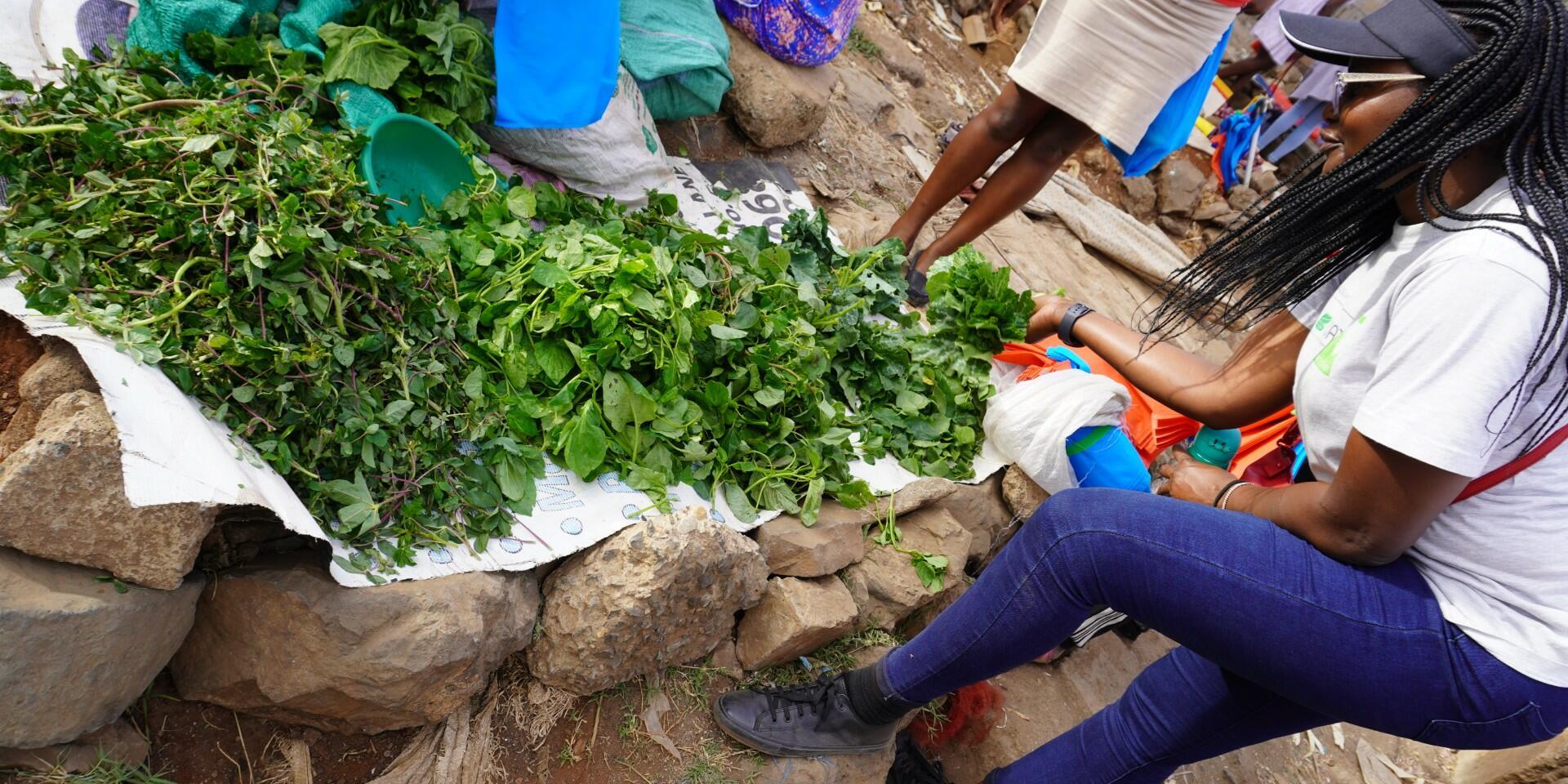

The Alliance of Bioversity International and CIAT is partnering with micro, small and medium-sized enterprises (MSMEs) across Kenya to improve access to safe, nutritious, and affordable food through innovations in markets, processing and waste management, fostering healthier urban diets.
The 2025 World Food Day theme - “Hand in Hand for Better Food and a Better Future” - resonates strongly with the Alliance’s collaborative efforts to drive food systems transformation in low- and middle-income countries. MSMEs play a pivotal role in making nutritious food available, accessible, and affordable—especially for low-income consumers in informal settlements. Working hand in hand with these enterprises fosters an enabling environment for inclusive and sustainable food system change. Below we share insights on some of the Alliance’s work with MSMEs in Africa.
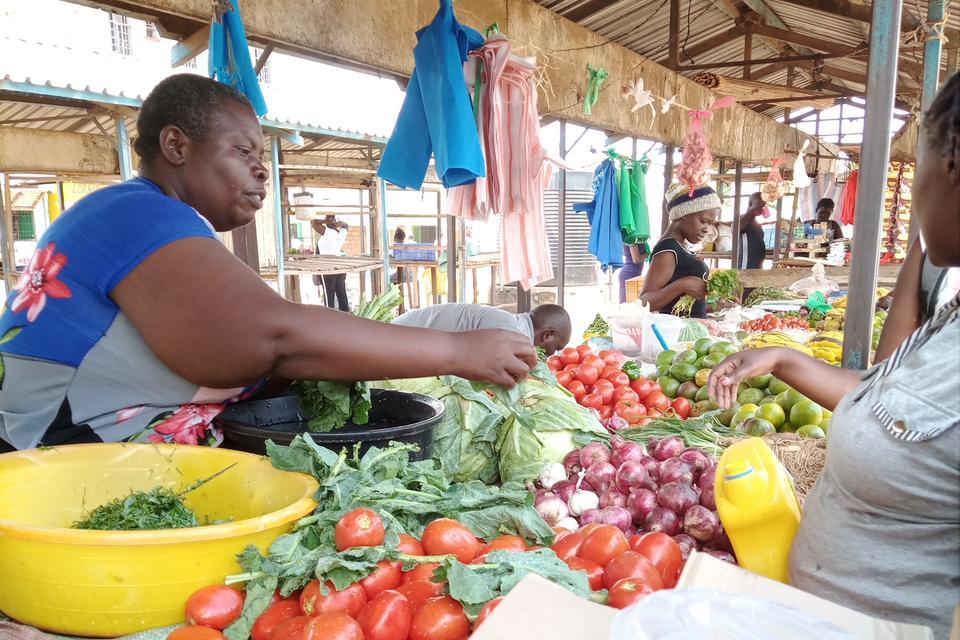
At sunrise in Kisumu’s informal markets, the scent of fresh fish mingles with the earthy aroma of African leafy vegetables and other food products. Here, market vendors carefully arrange their commodities on sacks, papers and other materials that are nicely spread on the ground, or on raised wooden platforms — a small act that tells a big story and signals a quiet revolution in how food is handled, sold, and perceived. These are not just businesswomen or men; they are front-line actors in a broader mission: to make nutritious food safer, affordable, available and accessible for all.
In the sprawling informal settlements and vibrant market corridors of Africa’s urban and peri-urban neighborhoods, MSMEs do more than sell food — they shape diets, support livelihoods, and bridge the gap between farm and fork. These acts form the nervous system of Africa’s food environment, especially for the millions of low-income consumers who rely on them every day.
When equipped with the right support, they improve diets, boost incomes, create jobs, and make nutritious food more accessible for low-income families.
Recognizing this, the Food Environment and Consumer Behavior (FECB) team at the Alliance has spent years working across several African countries to support MSMEs not just as business units, but as transformative agents for healthier diets, safer food systems, and inclusive economic growth. Our work spans diverse regions of Kenya, including bustling informal settlements in Kisumu, smallholder farms and businesses in Makueni, innovation corridors in Nairobi, entrepreneurial kitchens in Embu, and waste management initiatives in Kiambu and Nairobi. Through tailored innovations, partnerships, and capacity building, these interventions are contributing to a more nutrition-sensitive and resilient food environment.
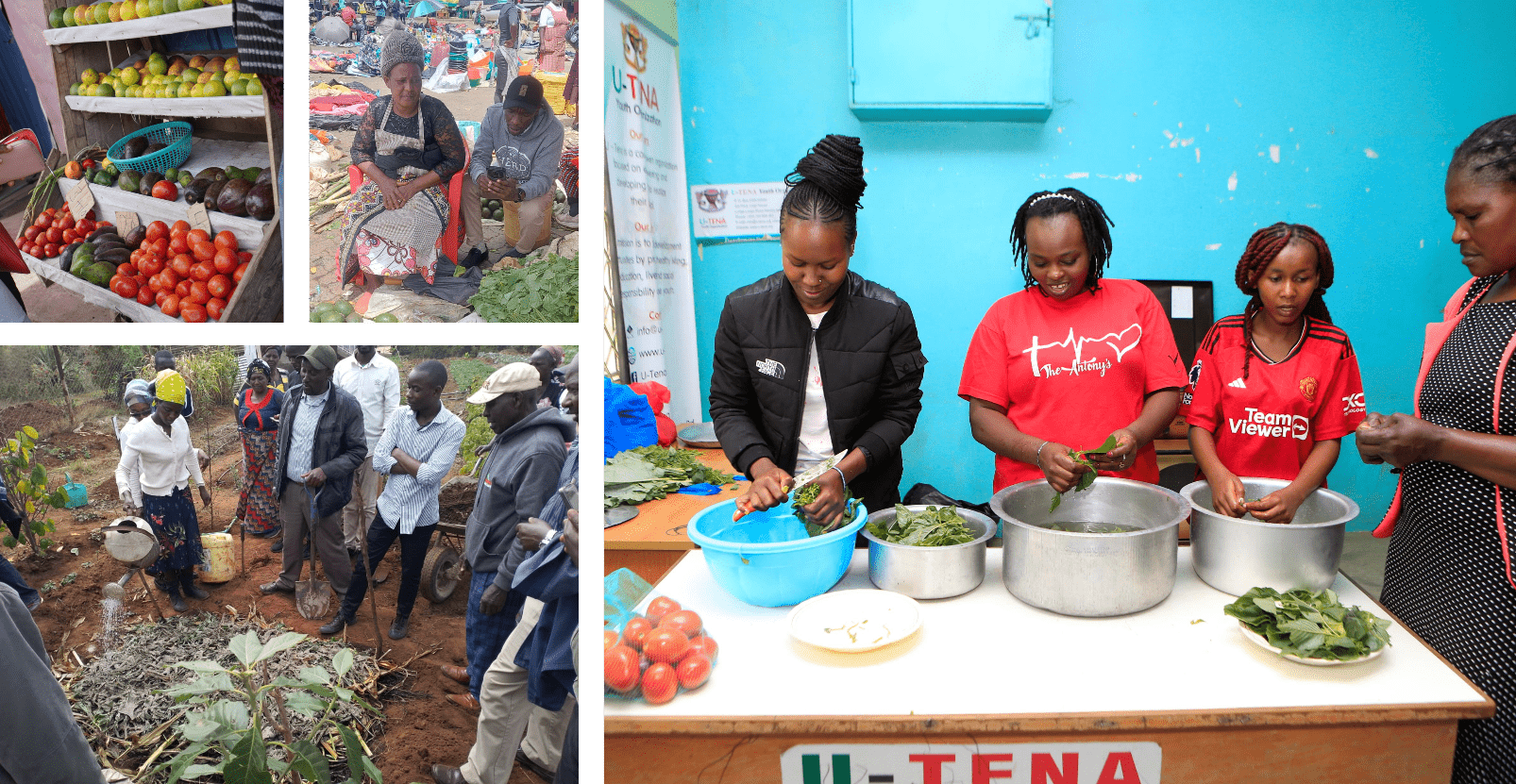
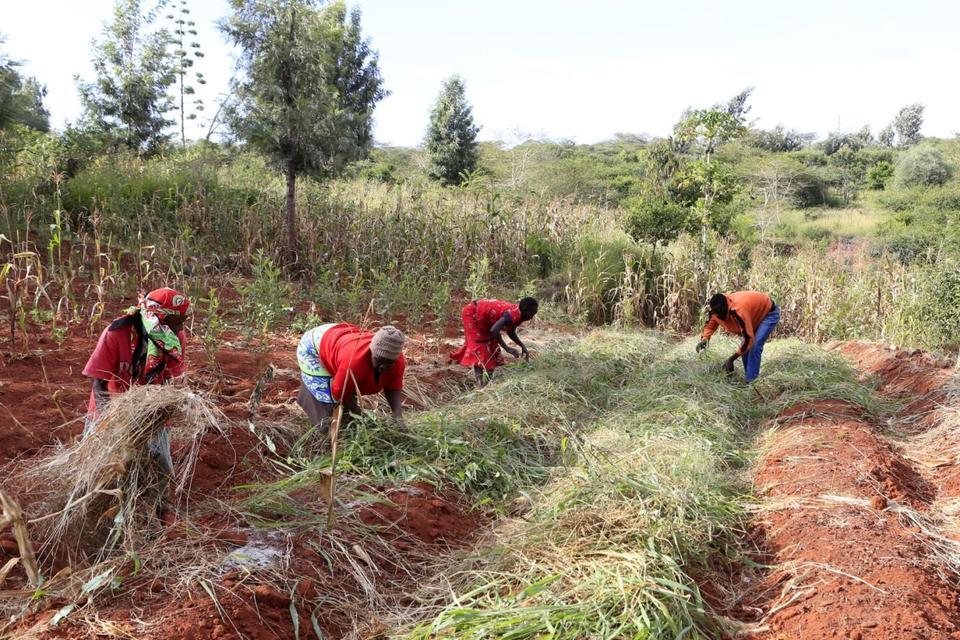
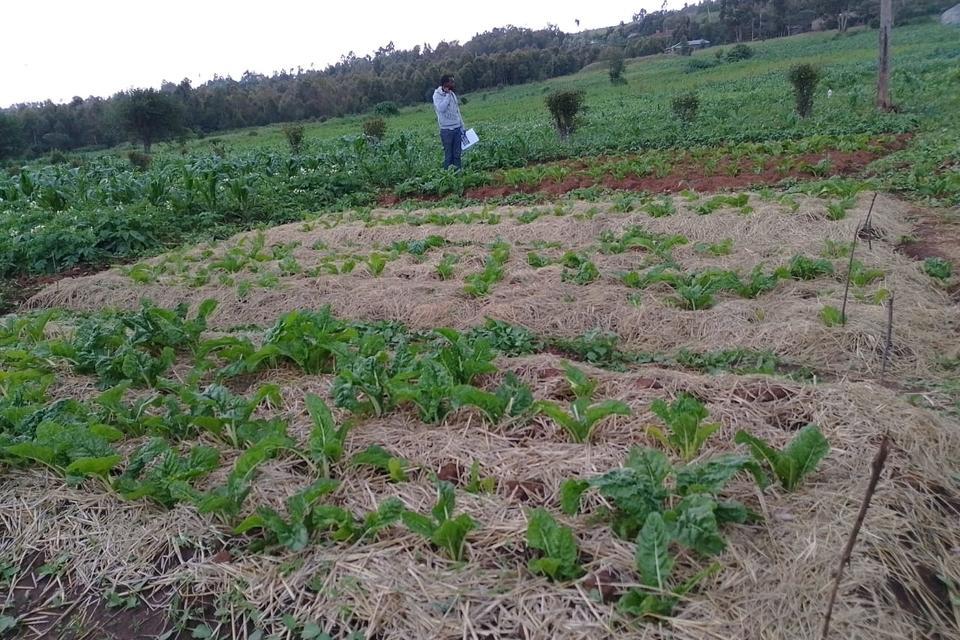
Photo credit: Top left: Nicanor Odongo/CIAT; bottom left: Hezekiah Korir, IITA; right: Noor Khamis/Biovision Foundation. Last two bottom photos: George Muturi/Comfort Worms
This is the story of how the FECB team, through targeted engagement with MSMEs in Kenya, is building a healthier, more inclusive food system — one market, one vendor, one innovation at a time.
Revitalizing African leafy vegetables and fish markets in Kisumu
In Kisumu, western Kenya, the leafy vegetables and freshly caught fish that fill market stalls each morning are more than staples — they are lifelines. Yet, despite their potential, actors in these value chains often operate in unhygienic environments, with little business training and minimal access to markets.
That began to change under the HealthyFoodAfrica Project, where FECB researchers working in the Kisumu Food System Lab (FSL-Ki), collaborated with the County Government of Kisumu, market vendors and processors of African leafy vegetables (ALVs) and fish in urban informal settlements of Kisumu to reimagine these value chains from the ground up. Vendors received training in business operations, financial literacy, and food safety, equipping them to manage their enterprises more efficiently and hygienically. Drying racks for fish were introduced in the fish market to prevent drying fish and fish products directly on the ground. Additionally, raised platforms/stands were introduced, allowing vendors to place their fish and vegetables on clean raised surfaces instead of the dusty market floors or wooden platforms that are hard to clean — a simple yet profound step toward better food safety. The drying racks and raised platforms used are also gender-sensitive since they are easily foldable and light hence catering for the needs of female vendors who can easily move them from one place to another.
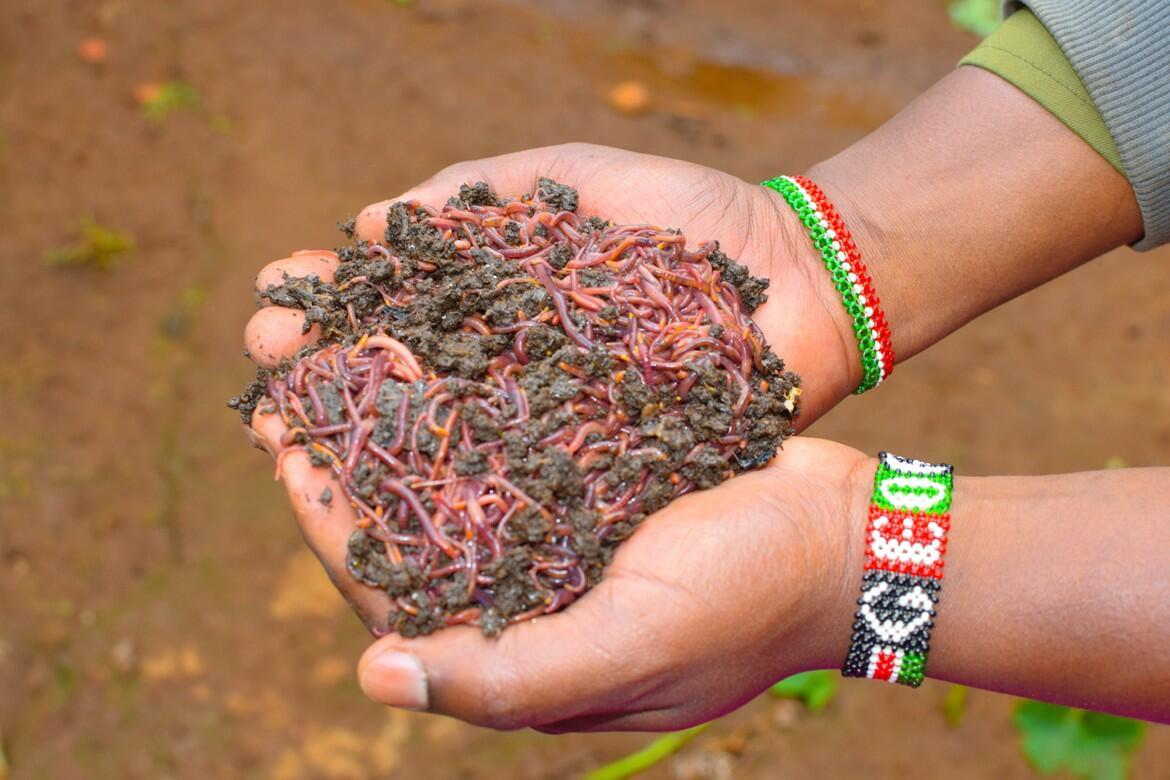
Photo credit: Christine Chege/CIAT (HealthyFoodAfrica project)
Nutrition education was woven into every interaction, ensuring that vendors not only sell healthy food but understand and champion its value. By fostering market linkages and increasing access to safer vending infrastructure, the project is helping ALVs and fish — both nutrient-rich foods — reach more plates in informal settlements, where diet diversity is often lacking. As small-scale actors become stronger players in the market, they are not just feeding families — they are fueling a more inclusive and nutritious urban food system.
These changes may seem simple — but they’re profound. With improved knowledge and better market infrastructure, vendors report better sales, stronger customer relationships, and a growing sense of pride in their work.
Consumers, in turn, are accessing fresher, safer and more diverse food options — right in their neighborhoods.
This isn’t just a market upgrade. It’s a shift in dignity, health, and opportunity.
Connecting organic farmers to urban tables: The Viwandani-Makueni story
A different story was unfolding in the Viwandani–Makueni corridor. On one front, smallholder farmers in Makueni were producing organic fruits and vegetables with insufficient access to stable markets for their produce. On the other side were urban dwellers in Viwandani, a low-income area of Nairobi, who struggled to find affordable, safe fruits and vegetables.
Imagine a tomato harvested just this morning in rural Makueni landing on a plate in urban Nairobi by evening — safe, organic, and affordable. That’s the vision behind our Viwandani–Makueni project, which is closing the gap between farmers and consumers through education, food safety, and better market linkages.
Recognizing the disconnect, the FECB team and its partners stepped in to build the capacity of farmers to produce safe, nutritious and organic produce — and just as crucially, to navigate the market systems that determine whether that food reaches consumers. Our approach begins with the soil. Farmers are trained to grow fruits and vegetables organically and safely, ensuring that what’s harvested is not only nutritious but free from harmful inputs. Meanwhile, community members in urban areas are sensitized on the value of safe, organic produce, driving up demand and creating new market opportunities. Through training and community knowledge-sharing, farmers and vendors alike began to embrace food safety practices and understand the value of organic produce for health and market differentiation.
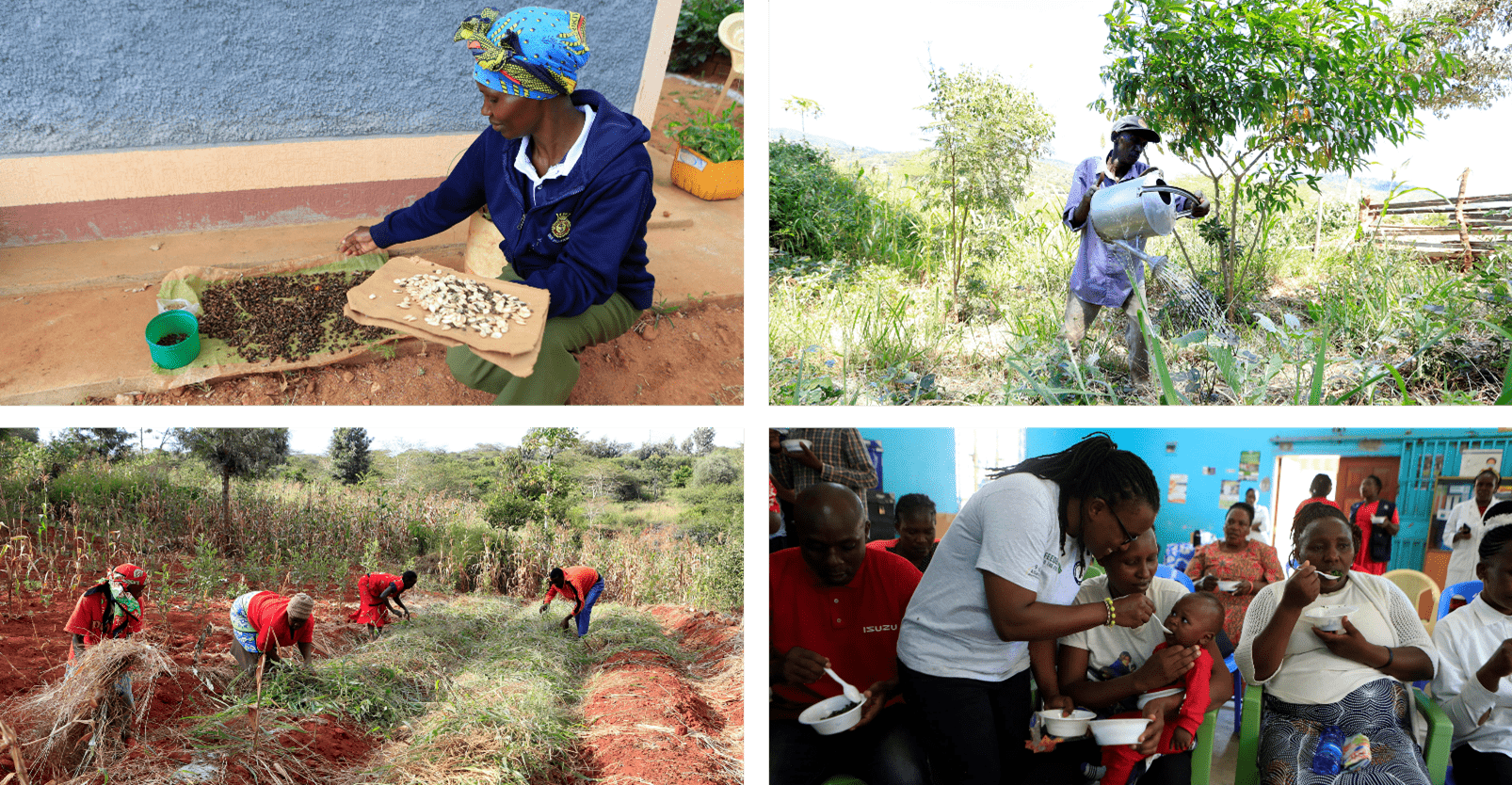
Photo credit: Noor Khamis/Biovision Foundation
By linking the producers in Makueni with markets in Viwandani, the consumers in Viwandani have access to fresh and safe produce. The direct linkage creates efficiencies in the supply chain and reduced transaction costs, therefore making the commodities affordable to the end consumer.
This was more than a farm-to-market intervention. It was a market-shaping effort, encouraging urban consumers to prioritize safe, chemical-free foods while enabling rural farmers to access those new markets without layers of middlemen. Shortening the supply chain meant not only affordable nutritious foods for low-income urban dwellers, but fairer prices and increased income for rural producers. In effect, it created a virtuous cycle — boosting rural livelihoods while nourishing urban populations — and proving that even modest interventions can stitch together fragmented food systems for everyone’s benefit.
Leveraging digital innovation with MSMEs: A new urban food network
With over 35,000 food vendors in its network, Twiga Foods — a Kenyan agri-tech and logistics company — represents one of the most ambitious models for reshaping urban food supply chains. FECB researchers saw an opportunity: what if this network could be harnessed not just for profit, but for nutrition-sensitive, inclusive, and safer urban food systems?
Through the Hungry Cities project and in partnership with Twiga, the team introduced a suite of ICT-based tools to improve vendor coordination, enhance traceability, and streamline distribution logistics. The digital tools enable better communication across the value chain — from farm to kiosk — while helping vendors in informal settlements become integrated into this evolving network.
Importantly, food safety didn’t take a back seat. Vendors received training in proper food handling and awareness of food safety, which helped reduce market-level postharvest losses and ensured that food arrived fresh and uncontaminated.
For consumers, especially those in informal settlements where access to supermarkets is limited, this meant more stable prices and consistent availability of safe, nutritious foods.
But perhaps the most transformative aspect was inclusion. By bringing small, often overlooked vendors into a tech-enabled supply chain, the project unlocked new income opportunities and fortified the informal food sector’s role in feeding cities and sustaining livelihoods — a critical win at a time when urban inequality continues to widen.
In a system where waste is high and profits are low, Twiga’s model — with our research insights — is helping change the narrative. Not only is less food being lost, but more of it is reaching consumers in healthier and safer forms at more affordable prices. The result? Smarter businesses, higher incomes for businesses and producers, and better diets for Kenya’s urban poor.
Pressure-cooked potential: Reinventing snacks and reviving grains in Embu and Nairobi
Snacks are everywhere — in school bags, at roadside stalls, even on supermarket shelves. But in Embu and Nairobi, a quiet revolution is reshaping what snacking means for health, tradition, and opportunity.
The initiative began with the questions: What if a handful of forgotten grains could spark an entire movement? How can we revive traditional, underutilized crops in a way that is exciting, profitable, and nutritious?
That’s the thinking behind our work with pressure popping technology. Born from research insights on the decline of diverse diets and neglect of traditional crops, the pressure cooker initiative reintroduces nutrient-dense grains like sorghum, lablab, green grams, and pearl millet — not as flour or porridge, but as modern, tasty snacks.
The FECB team partnered with DK Engineering Ltd., which developed and locally manufactured the pressure popping machine. This innovation has reached entrepreneurs and community groups, who have received training on how use the equipment for both household nutrition and small-scale business ventures. It wasn’t just about machines; it was about reclaiming food heritage while making it relevant ‒ and delicious ‒ for today’s fast-paced lifestyles.
Entrepreneurs and self-help groups quickly took to the innovation, including Mr. Elizaphan Gichangi from Embu, one of the early adopters. Since acquiring a machine in 2016, Mr. Gighangi has seen increased demand for grains that were once ignored. “Now people are planting what they used to ignore — and buying it too,” he said. By adopting this technology, they began reviving underutilized crops, increasing their cultivation, and creating new income streams by selling healthy, affordable snacks. For women and youth, this became more than a business opportunity — it became a pathway to economic inclusion.
Complementary technologies, such as hand-grill and puff crackers, were also promoted for their affordability and ease of use. This ensured that even the smallest MSMEs could enter the snack-making space without making large upfront investments. With each popped grain, this innovation combats malnutrition, food waste, and rural unemployment, showing how traditional food knowledge and modern technology can fuse to address contemporary food system challenges.
This is not just about snacks. It’s about creating circular local economies, reducing food waste, and turning nutrition challenges into entrepreneurial opportunities – one grain at a time.
Sustainable production and consumption: Transforming fruits value chains in Makueni
In the dry, sun-drenched fields of Makueni County, mangos flourish. Their golden ripeness is a source of pride and income for local farmers — but also, heartbreak. With short harvest windows and limited cold storage, up to 60% of harvested mangoes are lost before reaching market. For a region already grappling with climate unpredictability and slim profit margins, such waste is more than a missed opportunity — it’s a systemic crisis.
Under The CGIAR Initiative on Agroecology, the FECB team, other Alliance researchers, CGIAR centers and partners set out to change that. The focus? Integrating agroecological principles into the mango value chain, strengthening the market linkage between producers and the processing company, and demonstrating how small and medium-sized enterprises (SMEs) can lead the change toward a sustainable food system transformation through sustainable production and consumption, market linkages to reduce loss and waste, and the use of a circular economy to reduce greenhouse gas (GHG) emissions.
At the center of the solution stood an innovative private processor — a small enterprise with big ambitions. This processor sourced mangoes from farmer groups committed to organic and agroecological farming and began transforming fresh fruit into dried mango products destined for both local shelves and international markets. The CGIAR Initiative on Agroecology provided mango producers with training on the adoption of agroecological principles, farm management practices, climate-smart approaches, commodity handling, pricing, and marketing. The SME received training on several topics, including agroecological principles, commodity sourcing, market linkages, and waste recycling.
The impact was immediate: a ready market emerged for farmers, stabilizing their income and slashing losses from delayed sales for both the business and the producers. However, the innovation did not stop at processing.
One persistent challenge for the company was the enormous volume of mango waste left over from processing — peels, pits, and spoiled fruit. This waste not only cost the processor a huge amount of money to dispose of, but it also attracted pests and raised environmental concerns. In collaboration with the Alliance and other partners, the company introduced an ingenious solution: the black soldier fly model for waste recycling.
By feeding mango waste to black soldier fly larvae, the company began producing organic fertilizer from the residue — a rich, sustainable fertilizer that is now sold back to farmers at subsidized rates. The ripple effect was profound: the processor reduced its waste footprint, farmers gained affordable inputs for organic production, and BSF farming became a viable source of income, as the enterprise expanded to absorb even more waste from surrounding farms.
This model highlights the vital role of MSMEs in driving transformation through agroecological practices that enhance productivity and environmental health. It is a story not just about mangoes, but also about building systemic resilience, promoting economic dignity, and fostering sustainability through local innovation.
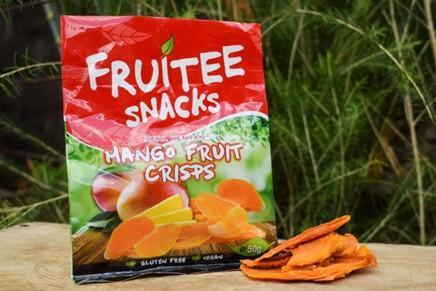
Figures: dried mangos to increase shelf life and reduce loss and waste. Photo credit: Alex Muli/ Goshen exporters ltd
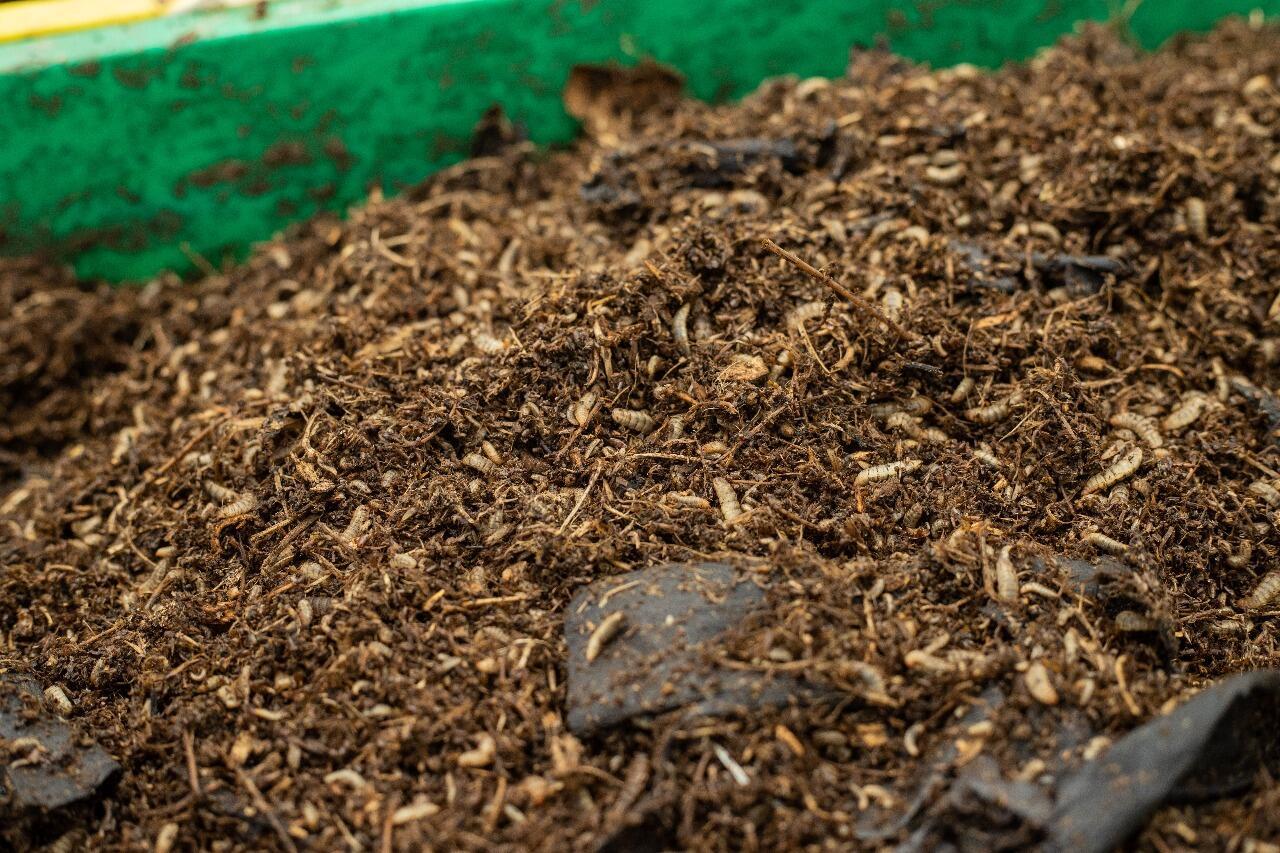
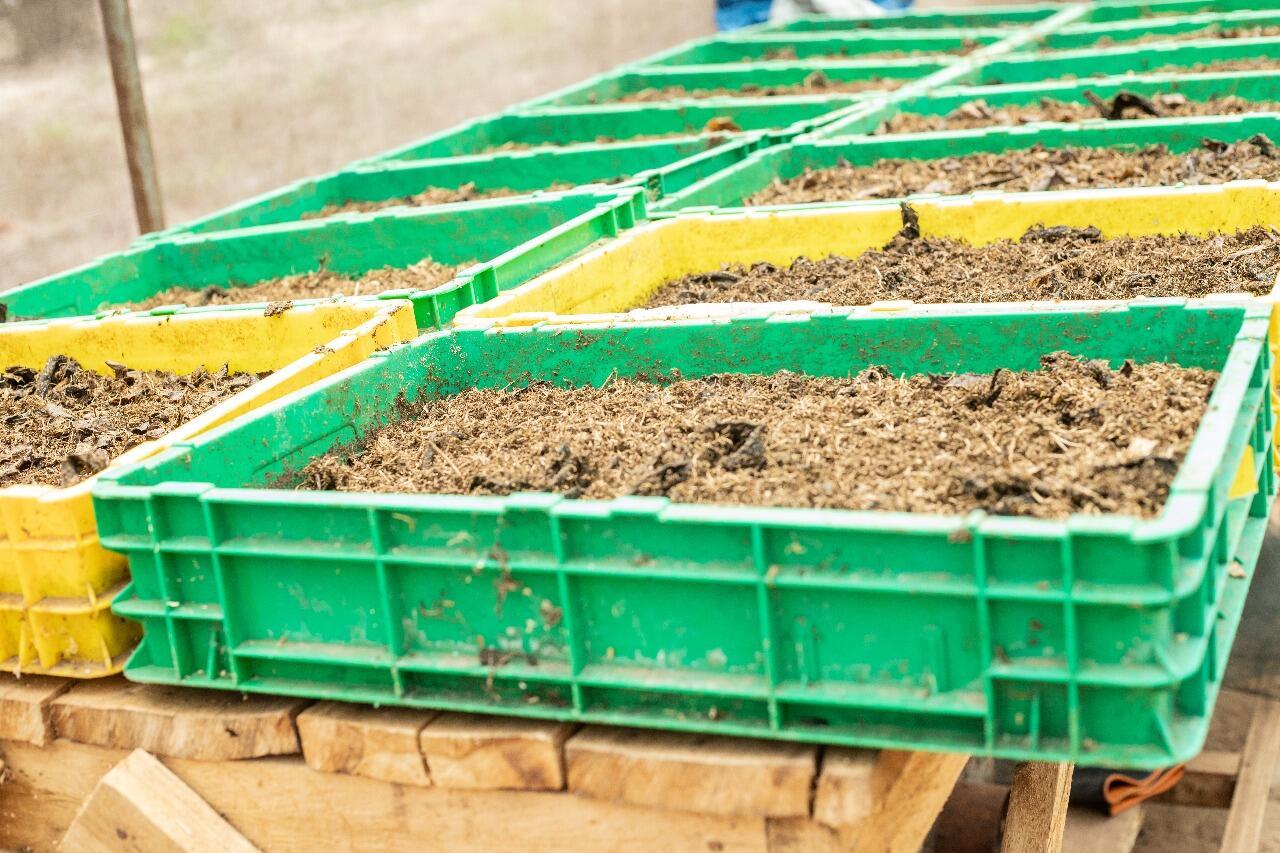
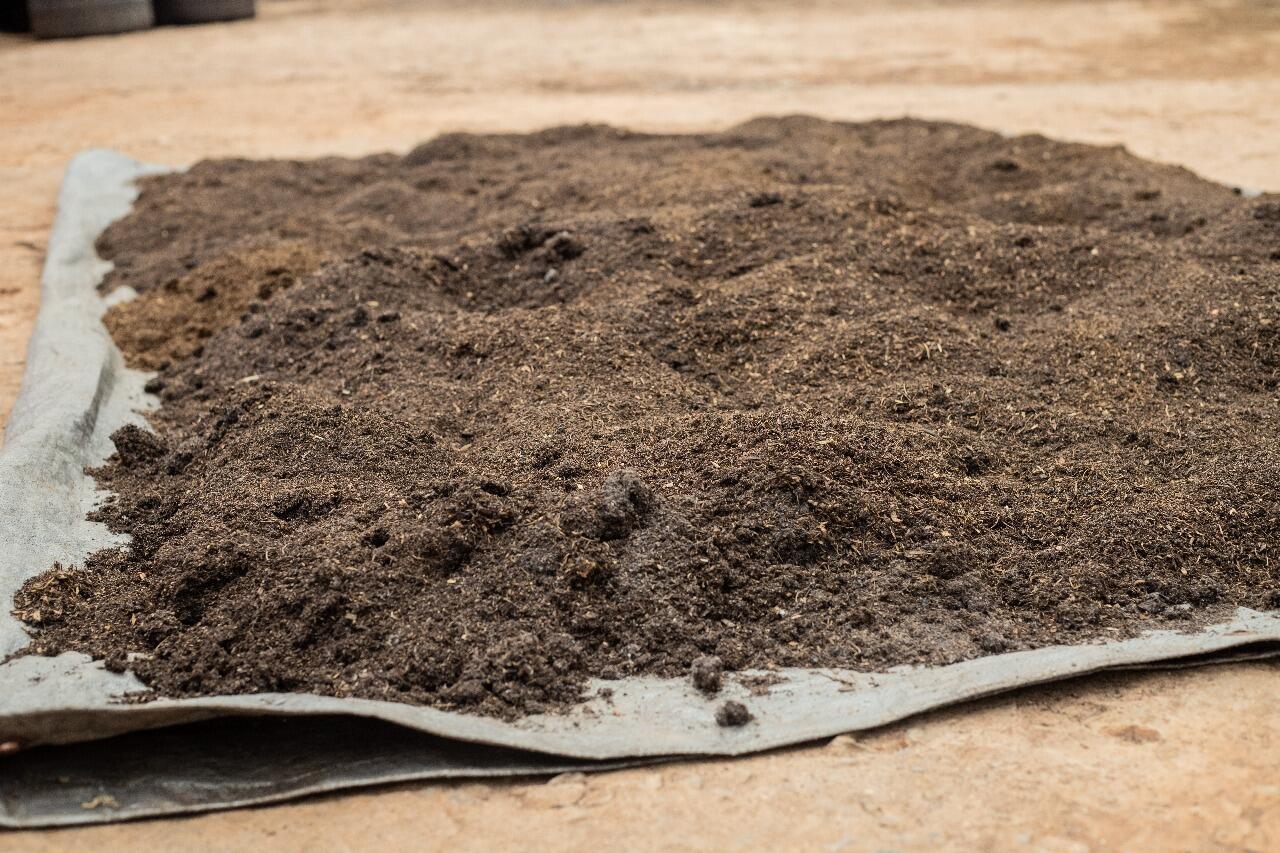
Figures: Waste recycling using black soldier flies (BSF). Photo credit: Alex Muli/Goshen Exporters ltd
Turning market waste into opportunity through SMEs: How clean markets boost business and sustainability in Kiambu
In many local markets, waste is more than just an eyesore—it poses serious challenges to business success, food safety, and the environment. Customers are understandably hesitant to buy food from vendors surrounded by garbage. Beyond deterring buyers, unmanaged organic waste releases methane, a potent greenhouse gas that accelerates climate change. The foul stench contributes to air pollution, while the waste itself becomes a breeding ground for pests and disease. When it leaches into the soil and nearby water sources, it contaminates them with harmful pathogens and excess nutrients, disrupting ecosystems, and threatening public health.
What if that waste could be transformed into something valuable?
That is what The CGIAR Initiative on Agroecology has achieved in Kiambu County. The FECB staff, other Alliance staff, other CGIAR centers and partners worked with SMEs and pioneered a sustainable solution: collecting organic market waste and recycling it into nutrient-rich organic fertilizer using windrow composting and vermicomposting (using redworms).
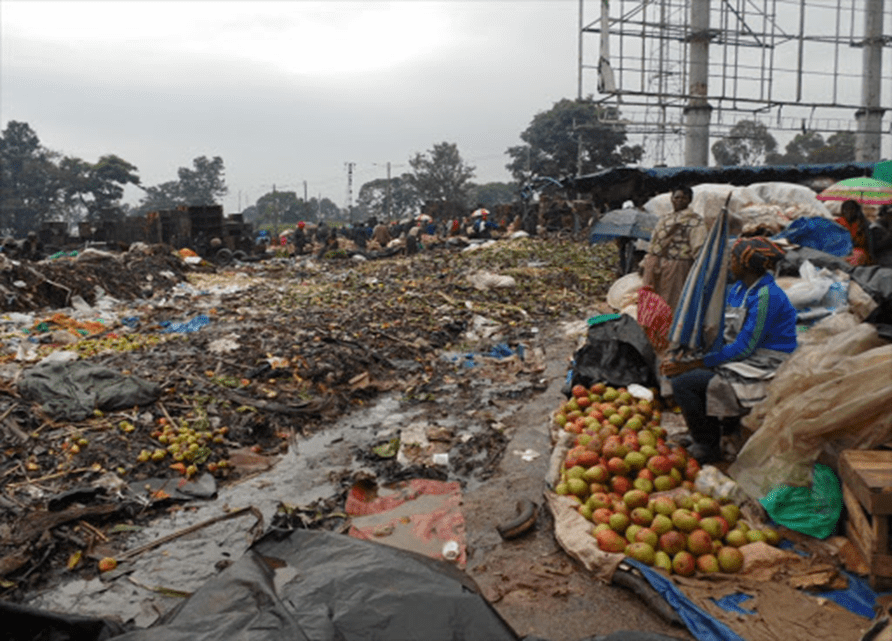
Figure: Market waste. Photo credit: Richard Mwangi/ Organic fields
Cleaning up the markets doesn’t just improve aesthetics - it directly benefits businesses, consumers, producers and the environment. The initiative’s model is simple but powerful:
- Collect organic waste from market vendors
- Compost the waste using redworms (vermicomposting) and windrow composting to accelerate decomposition and enrich the fertilizer
- Sell the resulting organic fertilizer to local farmers, especially those doing organic or agroecological production.
This circular economy approach turns a problem into a solution, creating a ripple effect of benefits, which include: Sustainably produced crops using organic fertilizer; availability of sustainably produced foods to consumers contributing to healthy diets; job creation through waste collection and composting processes; cleaner markets which provide a more pleasant and hygienic working environment for the market vendors and their customers; better business because clean surroundings attract more customers hence boosting sales, and lower emissions because composting reduces methane emissions compared to landfill disposal.
A model for the future
Success in Kiambu shows that sustainable waste management is not just an environmental issue; it is a business opportunity and a contribution to improving diets for consumers. By investing in clean markets and circular solutions, communities can unlock economic, social, health, nutrition, and ecological benefits.
Let us reimagine waste not as a burden, but as a resource waiting to be transformed.
The bigger picture: MSMEs as architects of food systems resilience
When you connect the dots — the vendor in Kisumu, the farmer in Makueni, the pop snack entrepreneur in Embu, the market innovators in Nairobi, Kiambu and Makueni — a clear picture emerges. These are not side actors. These are quiet disruptors in a food system that desperately needs transformation.
From leafy greens and organic fruits to ICT-enabled kiosks, revitalized traditional snacks and mango and market waste recycling models, the FECB team’s work demonstrates that small players can drive big change. The interventions not only improve access and affordability of nutritious food, but also unlocked employment, promoted food safety, improved incomes of market system actors, and uplifted entire communities.
MSMEs may be small, but their potential is massive. When MSMEs are empowered with the right tools, knowledge, and market access, they can be the heartbeat of healthier African diets.
As we continue to scale and share these innovations, our commitment remains strong — to work hand-in-hand with MSMEs to make nutritious, safe, and affordable food accessible for all.
Let’s keep building — one small enterprise, one healthy plate at a time. And as these stories show, when we invest in them, we invest in the health and dignity of our entire continent.
The team

Christine Chege
Agri-Nutrition and Food Systems Scientist
Tosin Harold Akingbemisilu
Research Specialist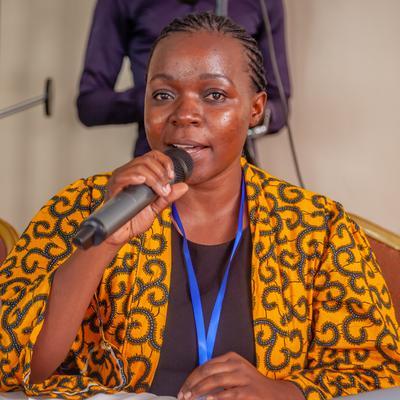
Consolata Nolega Musita
Research Fellow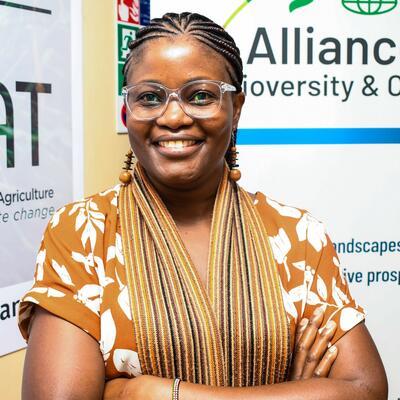
Irene Mudiovo Induli
Research Associate
Kevin Omondi Onyango
Senior Research Associate
Nicanor Odongo
Research Fellow
Rosina Wanyama
Scientist - Food Environment and Consumer Behavior
Yasuyuki Morimoto
Scientist
Irmgard Jordan
Senior Researcher Consultant
Céline Termote
Senior Scientist - Africa Regional Team leader Food Environment and Consumer Behavior