Blog Organic farmers market opens new opportunities for smallholder farmers in Kiambu

With support from the Alliance of Bioversity International and CIAT in partnership with PELUM Kenya, the launch of the Ki-Smart Organic Farmers Market in Mboroti, Ndeiya, Kiambu County, is creating a direct link between organic farmers and consumers seeking safe, healthy, and sustainably produced food.
Access to reliable markets remains one of the greatest challenges facing smallholder farmers in Kenya. Even when farmers adopt sustainable production practices, limited market opportunities often prevent them from earning fair returns on their investments. The launch of the Ki-Smart Organic Farmers Market in Mboroti, Ndeiya, Kiambu County, is helping to change that narrative by creating a direct link between organic farmers and consumers seeking safe, healthy, and sustainably produced food.
The official launch of the market marks a significant milestone towards strengthening agroecological enterprises through improved market access, strategic partnerships, and farmer-led networks.
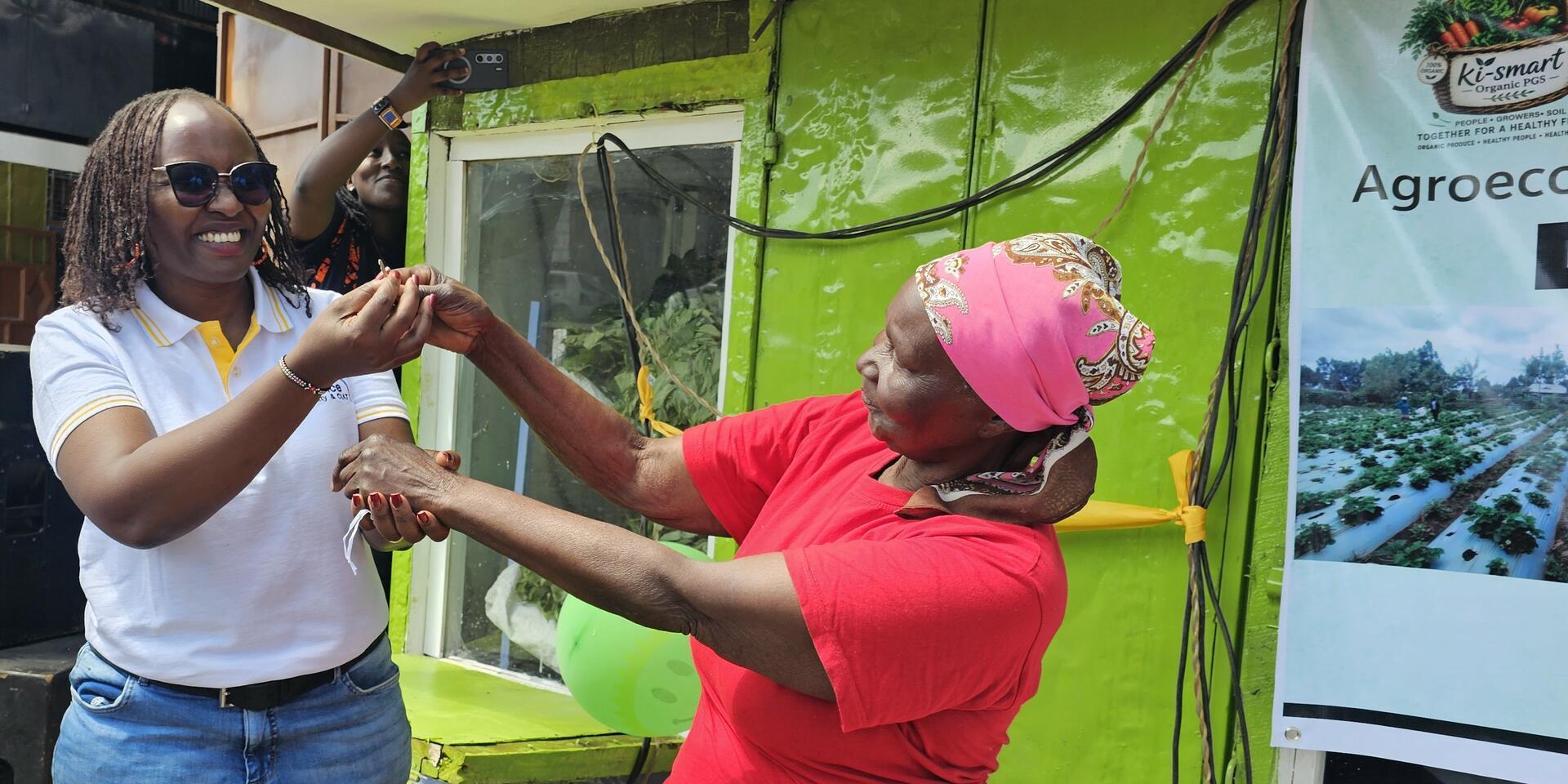
Dr. Christine Chege, Senior Scientist at The Alliance of Bioversity International and CIAT (left), receives the symbolic key from a farmer during the official opening ceremony of the Ki-Smart Organic Farmers Market in Mboroti, Ndeiya, Kiambu County.
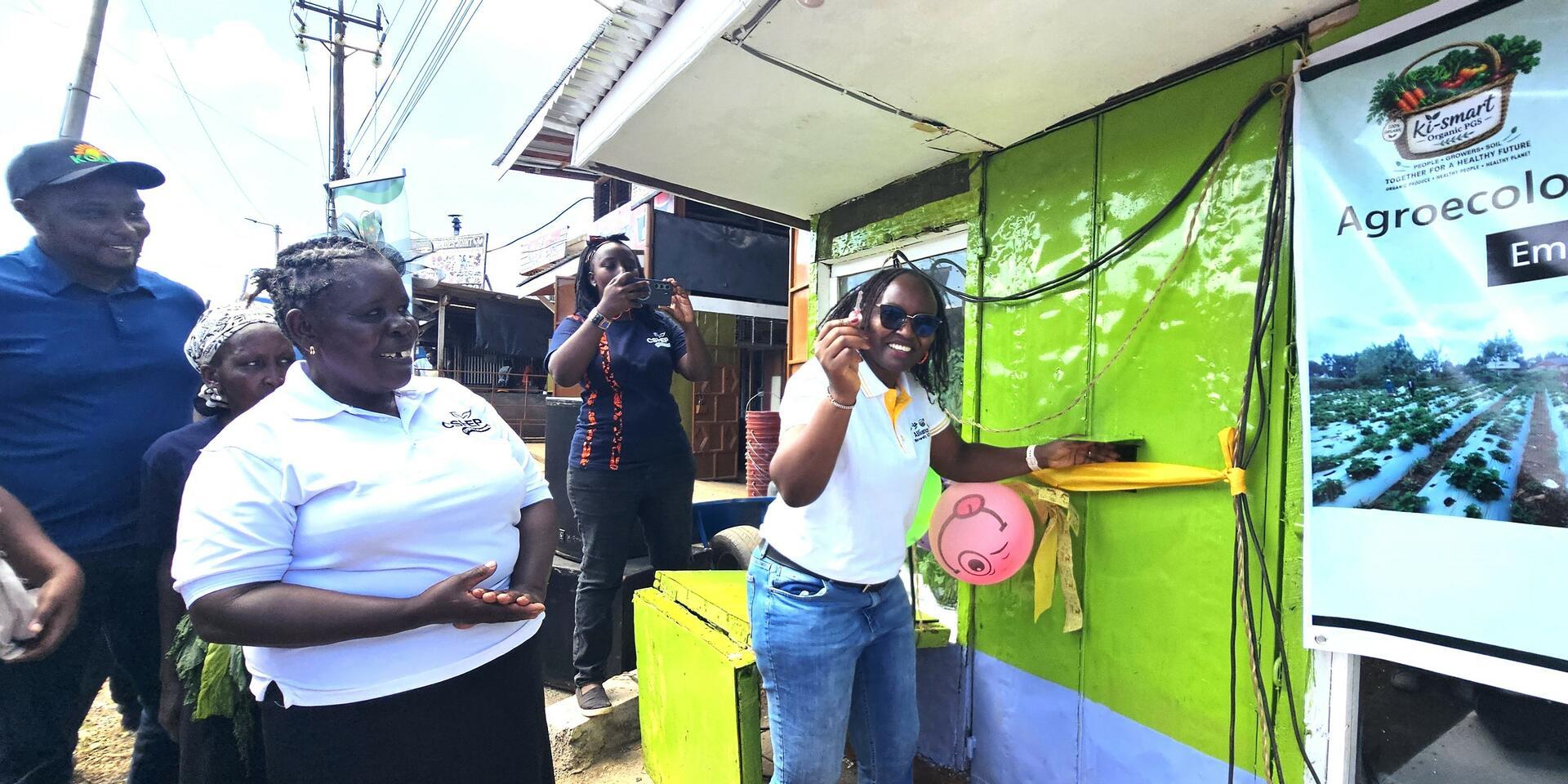
Dr. Christine Chege, Senior Scientist at The Alliance of Bioversity International and CIAT, holds up the symbolic key before officially opening the Ki-Smart Organic Farmers Market.
Building farmer capacity through agroecology and PGS
Working with CSHEP Kenya, the Alliance of Bioversity International and CIAT has been supporting farmers by strengthening their capacity in sustainable healthy diets, sustainable agricultural practices, and Participatory Guarantee Systems (PGS). These interventions have equipped farmers with the knowledge and skills needed to meet organic production standards while positioning them to compete in the growing market for sustainably produced food.
“The market provides a dedicated platform where PGS-certified organic farmers can sell their fresh produce and value-added products directly to consumers. It is inspiring to witness the active participation of women, men, and youth, not only in production but also in the marketing of sustainably produced food and value-added products.” – Rosina Wanyama, Scientist, The Alliance of Bioversity International and CIAT. Of the 75 farmers under this initiative, 45 are women, according to Cshep Kenya.
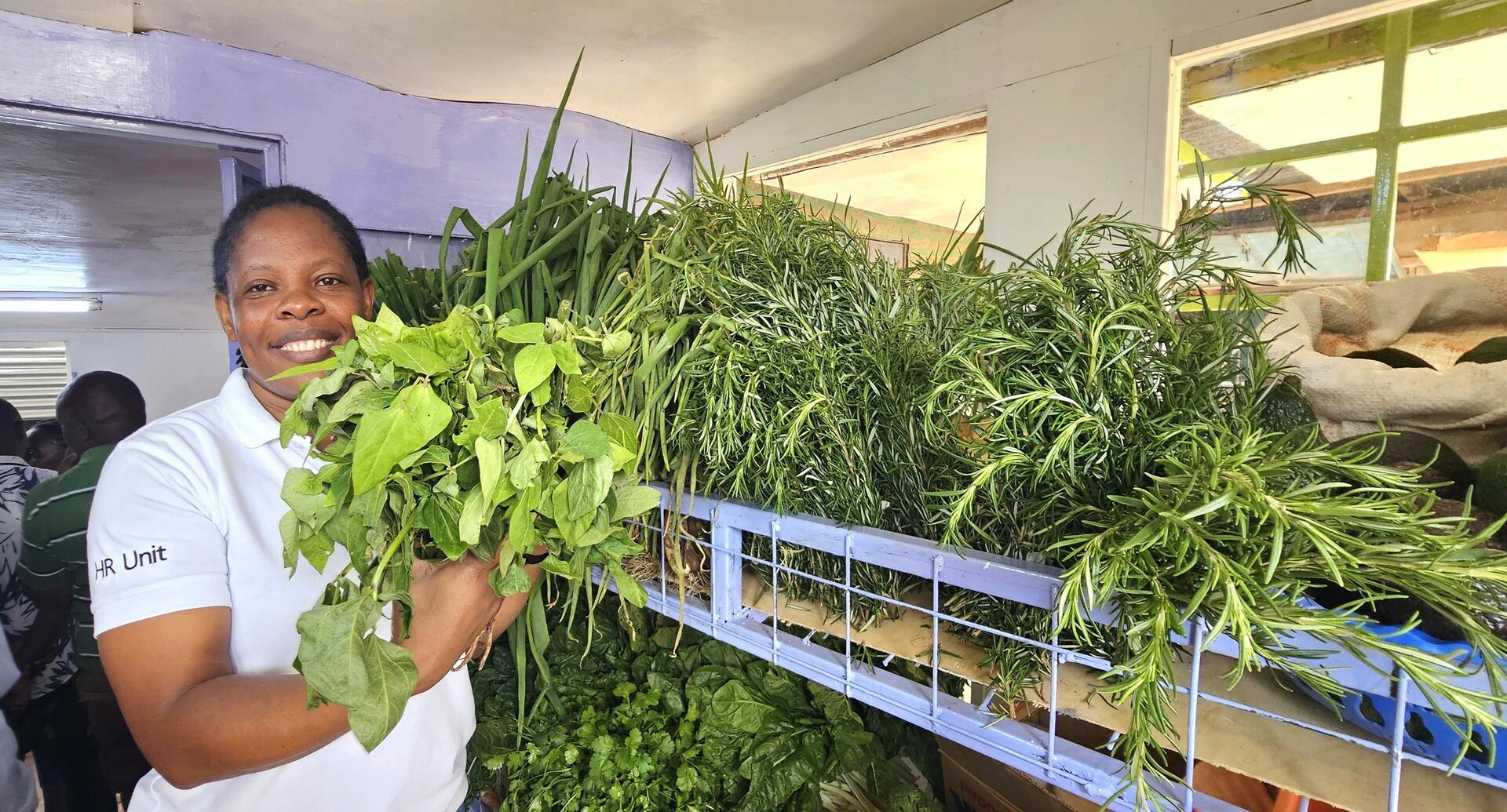
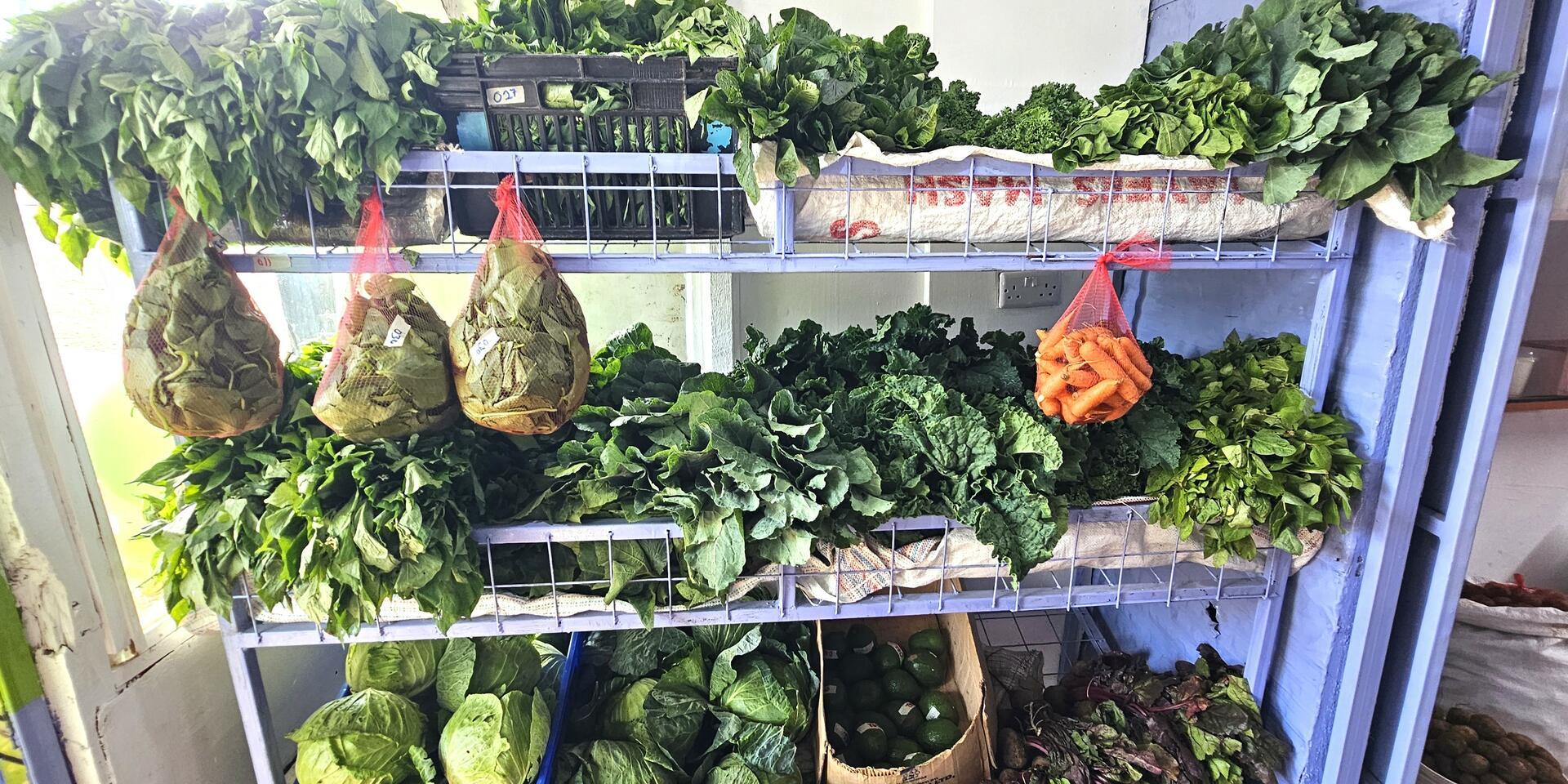
Rosina Wanyama, scientist at the Alliance of Bioversity International and CIAT, admires organically grown vegetables displayed at the newly launched Ki-Smart Organic Farmers Market.
Strengthening local food systems through organic markets
Beyond creating a marketplace, the initiative is building a vibrant local food system that rewards farmers for producing healthy food while giving consumers easier access to fresh, nutritious, and synthetic input-free products. It also encourages community members to support local producers, strengthening local economies and creating incentives for more farmers to embrace sustainable agriculture.
“The market is already attracting orders from neighboring areas such as Tilisi while continuing to serve the local community. This growing demand is a strong affirmation of the quality of our produce and a great source of encouragement not only for the farmers but also for our partners, The Alliance of Bioversity International and CIAT and PELUM Kenya, whose collaboration and support have been instrumental in achieving this milestone.” – Esther Kiruthi, CEO, C-SHEP Kenya
Digital platforms expanding market access for organic farmers
Through digital platforms, including a dedicated WhatsApp group, farmers and vendors can seamlessly connect with buyers, making it easier to market available produce and respond to customer demand in real time. Buyers can conveniently share their requirements, preferred delivery locations, and other order details, enabling efficient communication and transactions. This digital approach not only enhances convenience but also expands market access, strengthens linkages between producers and consumers, and creates new business opportunities for farmers.
For many smallholder farmers, the market represents an important business opportunity. It enables them to move beyond production and actively participate in profitable organic value chains. Through direct marketing, farmers can earn better prices, reduce dependence on intermediaries, build stronger customer relationships, and increase household incomes.
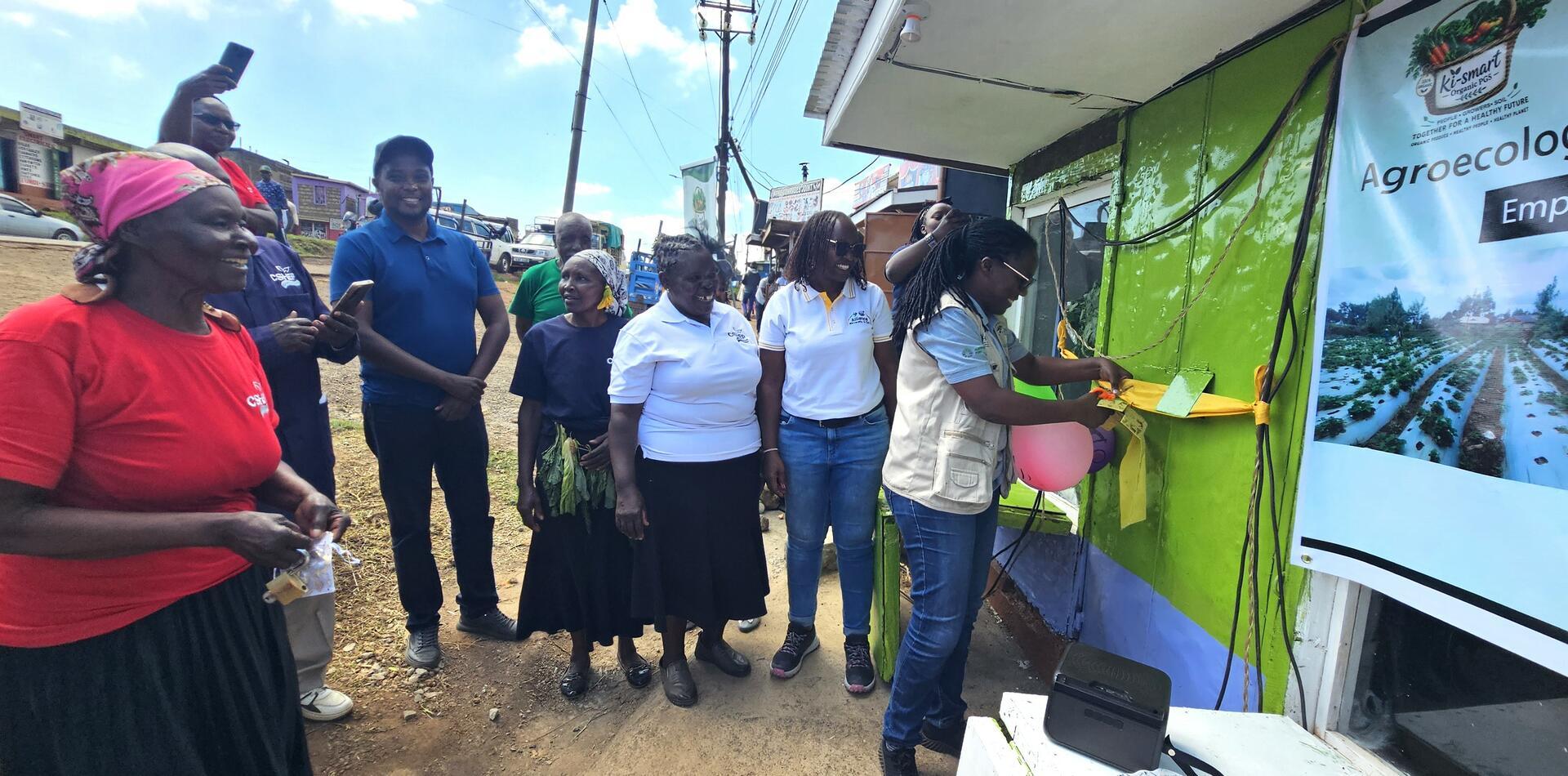
PELUM Kenya’s Bathseba Ratemo cuts the ceremonial ribbon to officially launch the Ki-Smart Organic Farmers Market, celebrating a new chapter for organic farming and local market development.
Rising consumer demand for safe and organic food
As awareness of food safety grows and cases of non-communicable diseases continue to rise, consumers are increasingly turning to organically produced food, driving demand for safe, nutritious, and sustainably grown produce and value-added products. This shift presents significant market opportunities for organic farmers while promoting healthier diets and more resilient food systems.
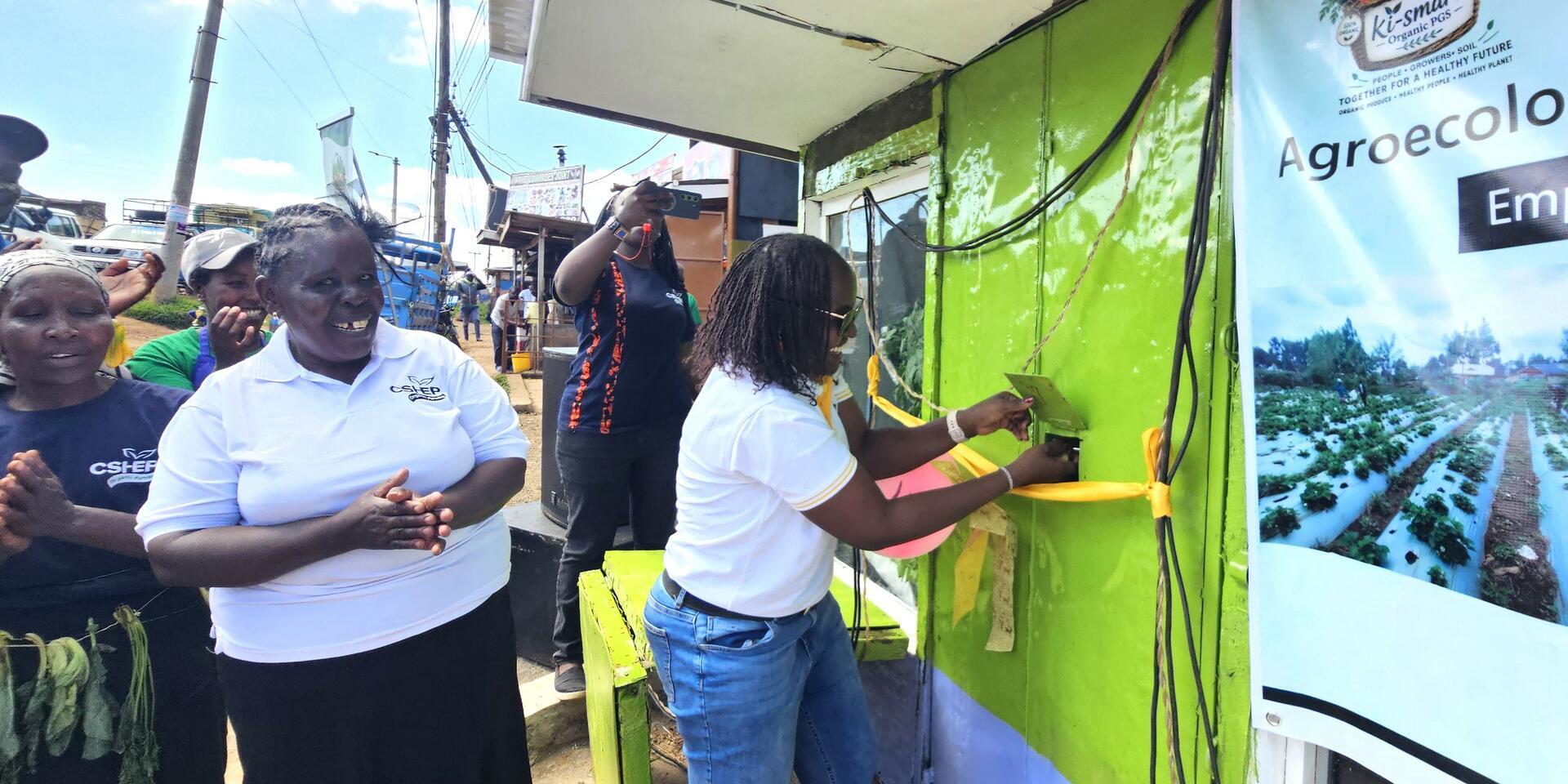
Dr. Christine Chege, Senior Scientist at The Alliance of Bioversity International and CIAT, officially opens the Ki-Smart Organic Farmers Market, marking a significant milestone in expanding market access for organic farmers in Kiambu County.
Partnerships driving the growth of organic agriculture in Kenya
By bringing together producers, consumers, trainers, agroecology practitioners, market actors, and development partners, the initiative is creating stronger linkages across the organic agriculture value chain. These partnerships foster knowledge exchange, innovation, and collaboration, ensuring that farmers continue to learn, grow, and respond to evolving market demands.
Supporting local organic farmers creates a healthier future
Every purchase made at the market supports smallholder farmers, strengthens local businesses, promotes environmentally sustainable farming practices, and contributes to healthier diets for families. Choosing locally produced organic food is an investment in resilient food systems, thriving rural communities, and a healthier citizenry.