Lisa Elena Fuchs
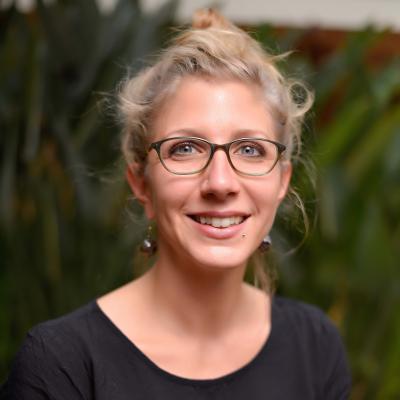
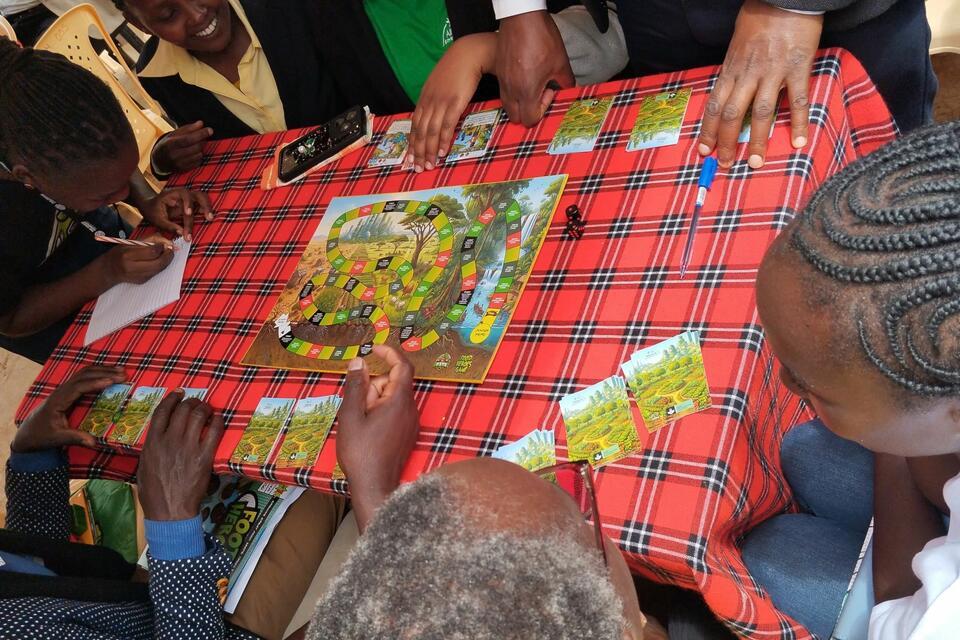
Lisa Elena Fuchs is a scientist specializing in sustainable and multi-functional landscape transitions at the Alliance of Bioversity International and CIAT. Her core research interests lie in political ecology, environmental justice, and agroecology. Lisa’s research-in-development work currently focuses mostly on designing, implementing and conducting research on processes to (1) enhance equity, agency, and empowerment among farming families, communities, and other food systems actors (FSAs), (2) foster meaningful and strategic collaborations and partnerships between different stakeholders for development efficiency and sustainable impact, and (3) promote diversified pathways of knowledge co-creation and co-design to support sustainable behaviour change and agroecological transitions. Some of the key innovations she contributed to shaping include the Landscape Vision-to-Action (LV2A) approach, the Food System Heroes comic and game series, and the Leaky Bucket app.
Lisa is currently involved in the CGIAR Science Program on Multifunctional Landscapes, both as country coordinator in Kenya and as global focal point for transdisciplinary approaches, as well as bilateral projects such as the Coady-funded Accelerating Agroecology through ABCD (ABCD4AE) project, the EU-funded and icipe-led Regional Multi-Actor Research Network on Agroecology in East Africa (RMRN-EA) project, and the Rockefeller-funded Shaping the Future with Sustainable School Gardens project. Previously, she coordinated the CGIAR Initiative on Agroecology (AE-I) in Kenya, and was involved in the Biovision-funded and icipe-led Vegetable-Integrated Push-Pull Technology (VIPPT) project implemented in several countries including Kenya, Zimbabwe, Peru, Burkina Faso, India, Tunisia and Senegal. Before Lisa’s current position at the Alliance of Bioversity International and CIAT, she worked at ICRAF (now CIFOR-ICRAF) from 2013 to 2024 where she led and in other cases contributed to numerous research and research-in-development projects on agroecology, asset-based community development (ABCD), and broader sustainable land/ natural resource management and governance.
Lisa earned a PhD in Political Ecology from a.r.t.e.s. Graduate School for the Humanities from the University of Cologne, and MA and BA degrees in Social and Political Sciences with focus on International Relations, Sub-Saharan Africa, and political ecology from the Institut d’Etudes Politiques (Sciences Po) Bordeaux and University of Stuttgart.