Blog When weather forecasts and local knowledge meet in Uganda

How frontline workers are learning to bridge scientific climate information and community experience to support farmers' decisions.
When a weather forecast predicts rain but a respected community elder expects dry conditions, what should a farmer do?
For many smallholder farmers, decisions about when to plant, harvest or protect crops are informed by years of observing their environment, drawing on personal experience and knowledge passed down through generations. Today, scientific weather forecasts and climate advisories offer another source of information to guide these decisions. But what happens when the two do not agree?
This was among the practical questions that emerged during Climate Information Services (CIS) training workshops held in Masindi and Iganga, Uganda, between 31 August and 4 September 2026. The discussions highlighted an important consideration in delivering climate information to farming communities: making forecasts available is only part of the challenge. Helping people understand, trust and use that information is equally important.
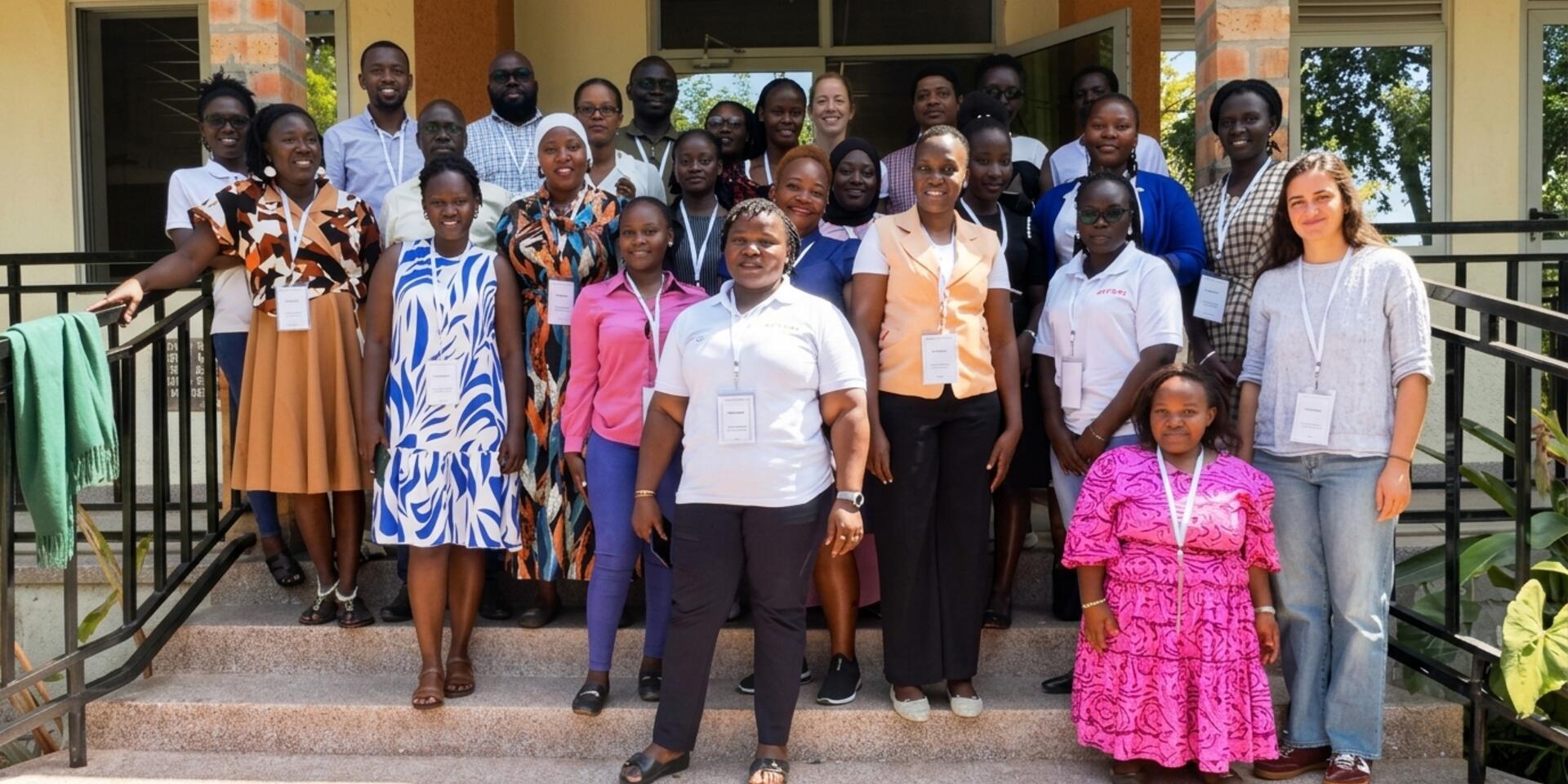
The workshops which were facilitated by the Alliance of Bioversity International and CIAT, brought together 68 frontline and supervisory personnel from BRAC Uganda, as part of an initiative to integrate climate information into existing development programmes. The training focused on strengthening their ability to interpret climate advisories, communicating them in locally relevant ways and supporting farmers in making informed decisions.
For generations, farming communities have relied on observations of their surroundings to anticipate changes in weather and seasonal conditions. Scientific forecasts complement this experience by drawing on meteorological observations and forecasting methods to anticipate weather conditions and associated risks. However, communicating the uncertainty inherent in forecasts remains essential to their effective use.
During the workshops, participants discussed situations in which forecasts might differ from the expectations of local elders or fail to reflect the weather farmers subsequently experienced. Rather than encouraging frontline workers to dismiss local knowledge or defend forecasts unconditionally, the training emphasized respectful communication, acknowledgement of uncertainty and the identification of safer, practical responses.
A central message reinforced throughout the sessions was that "a forecast is a guide, not a promise."
This distinction is important because forecasts support decision-making without eliminating uncertainty. Recognizing their limitations allows frontline workers to communicate advisories responsibly while respecting farmers' experiences and perspectives. The objective is not to determine whose knowledge should prevail, but to help farmers consider available information and identify actions suited to their circumstances.
Through the CIS pilot, farmers receive weather and agricultural advisories via SMS, which BRAC frontline workers reinforce during routine group meetings and household visits. The approach recognizes that receiving information does not necessarily mean understanding its implications or knowing how to respond.
The pilot is integrated into BRAC's Accelerating Impact for Young Women (AIM) programme in Masindi and Ultra-Poor Graduation (UPG) programme in Iganga. By working through established community networks, the initiative seeks to make climate information more accessible and relevant without creating a separate delivery structure. For frontline workers, this requires more than reading a forecast aloud. A message indicating an increased likelihood of rainfall, for example, needs to be interpreted in relation to the crops a farmer grows, the activities planned and the options available.
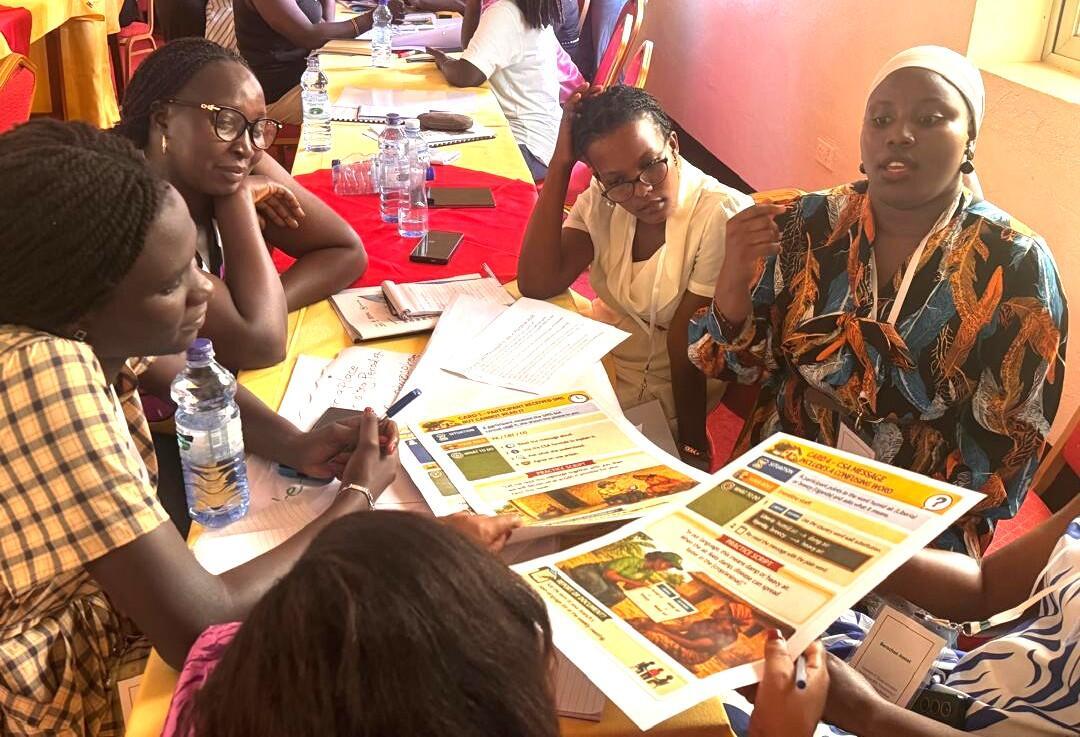
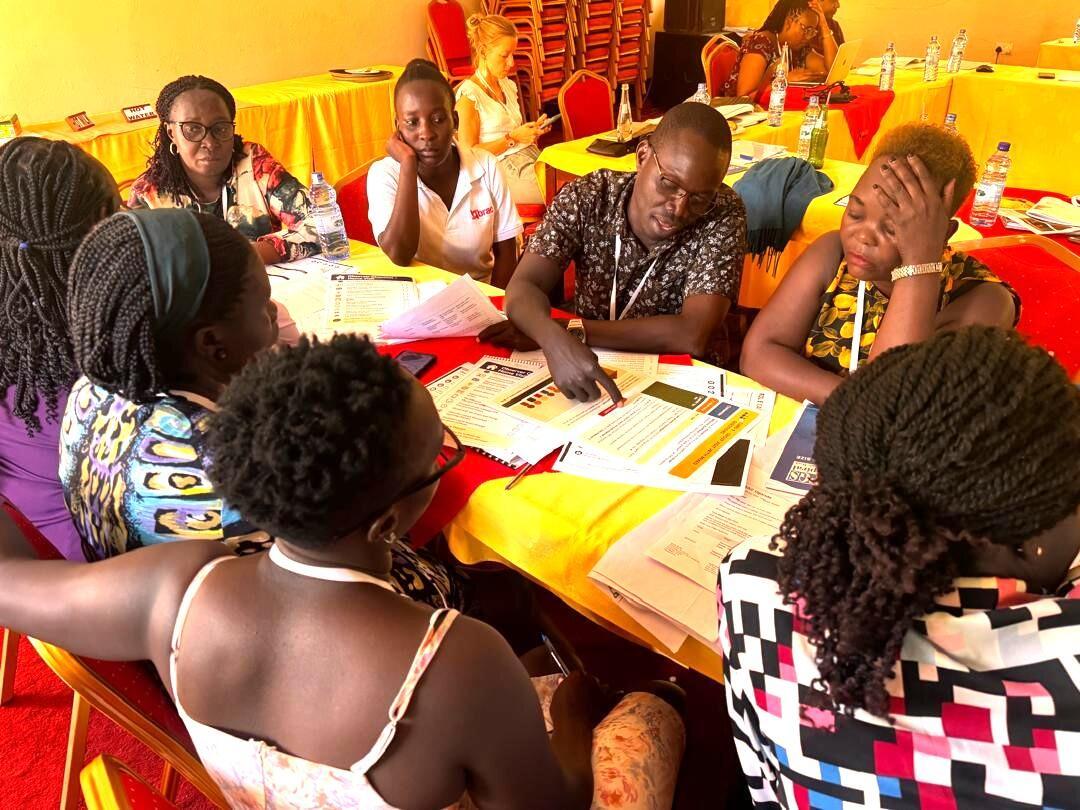
During the training, participants practiced a simple sequence: listen first, explain the advisory in plain language and agree with the farmer on one feasible action based on the advisory. Through climate-risk mapping exercises and realistic scenarios, they explored how weather information could be connected to local agricultural risks and practical responses.
This approach places the farmer's circumstances at the centre of the conversation. Rather than prescribing a uniform response, frontline workers are encouraged to understand the situation, explain the advisory and support farmers in identifying feasible actions. What works for one household may not necessarily be appropriate for another. If a question is unclear or falls outside the frontline worker's knowledge, they should not guess. Instead, they should acknowledge the question, explain that they will seek clarification, and escalate it to the appropriate technical contact through the established communication channel. The issue should be recorded and followed up, and the correct answer communicated to the farmer once available.
Trust emerged as a recurring concern during the workshops. In Masindi, 10 of the 24 respondents to an initial assessment raised questions about the accuracy and reliability of weather information, while five of the 34 respondents in Iganga expressed similar concerns.
Participants wanted to understand how to respond when forecasts did not match actual conditions and who was responsible for the accuracy of the advisories. These questions underscored the importance of communicating not only what a forecast predicts but also its source and limitations.
The training encouraged frontline workers to acknowledge uncertainty rather than improvise answers when faced with unfamiliar technical questions or unclear messages. One of the responses practiced during the sessions was, "I do not want to guess; I will check and come back with the correct answer."
Although simple, this response reflects an important principle in climate communication: being transparent about uncertainty can help maintain credibility and create opportunities for clarification.Effective communication also depends on whether information is presented in language that farmers understand.
The pilot provides advisories in languages commonly spoken in the implementation areas, including Lusoga and Lusamia in Iganga, Lunyoro and Luo in Masindi.
During the workshops, participants practiced replacing technical weather terminology with familiar local expressions.
The discussions also revealed differences in the challenges anticipated across the two locations. In Iganga, some trainees identified literacy, traditional beliefs, distance and transport as potential barriers to reinforcing advisories. In Masindi, concerns centred more on forecast reliability and language. These observations highlighted the importance of adapting communication approaches to local circumstances.
Encouragingly, the final knowledge assessments showed strong understanding of how to handle uncertainty. All respondents who answered questions about disagreements between elders and SMS forecasts and about responding to an inaccurate forecast selected the appropriate responses in both locations.
While these findings indicate that participants understood the principles emphasized during training, their consistent application in real farming situations will need to be assessed as the pilot progresses.
Connecting science, experience and action
The training forms part of the broader Integration of Climate Information Services into BRAC Programming in Sub-Saharan Africa initiative, implemented through collaboration between the Alliance of Bioversity International and CIAT, BRAC and Tetra Tech, with support from the Gates Foundation.
The partnership combines expertise in climate services, capacity strengthening and community-based programme delivery. Climate information providers generate advisories, the Alliance contributes technical expertise and practical training approaches, while BRAC's established frontline networks provide opportunities to integrate climate information into routine interactions with farming communities. This model recognizes that the effectiveness of climate services depends not only on the quality of forecasts but also on the people, institutions and relationships through which information is communicated.
As implementation progresses, continued technical support, supervision and monitoring will help establish how frontline workers apply the skills developed during training and whether the advisories are helping farmers make informed decisions.
Ultimately, the question is not whether scientific forecasts should replace traditional knowledge, but how both can contribute to better decision-making in the face of uncertainty.
The value of a forecast lies not simply in reaching a farmer, but in helping that farmer understand the information, consider available options and make a decision that works for their circumstances.
The team

Aniruddha Ghosh
Senior Scientist
Desire Kagabo
Project Leader
Anastasia Wahome
Research Team Leader
Majambo Gamoyo
Postdoctoral Fellow
Jemal S. Ahmed
Research Specialist
Amanda Sue Grossi
Research Team Leader, Climate Action and Resilient Food Systems
Hanna Ewell
Research Specialist
Mvuyibwami Patrick
Senior Research Associate