Blog Integrating climate information into development programmes for community action in Liberia
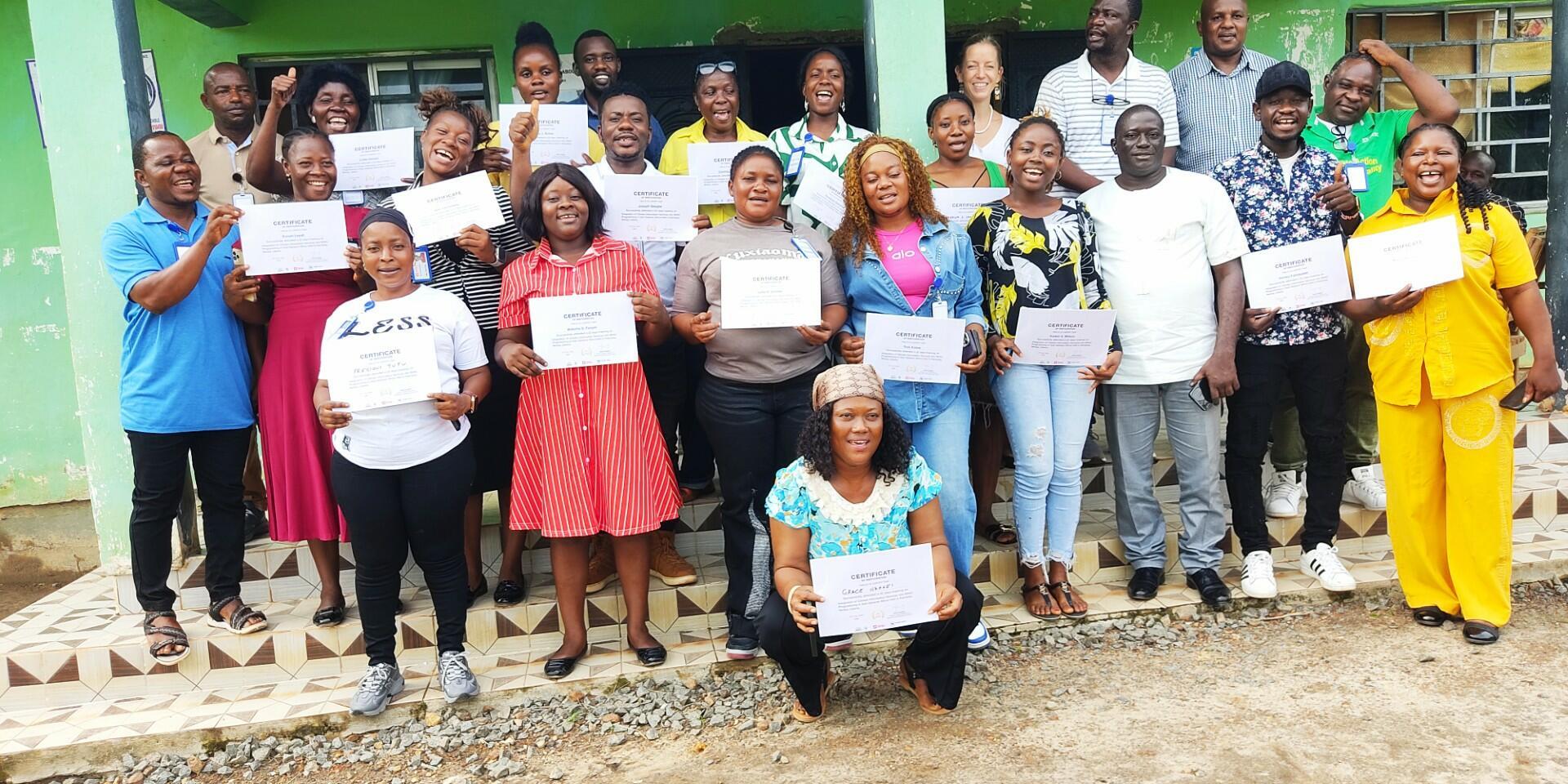

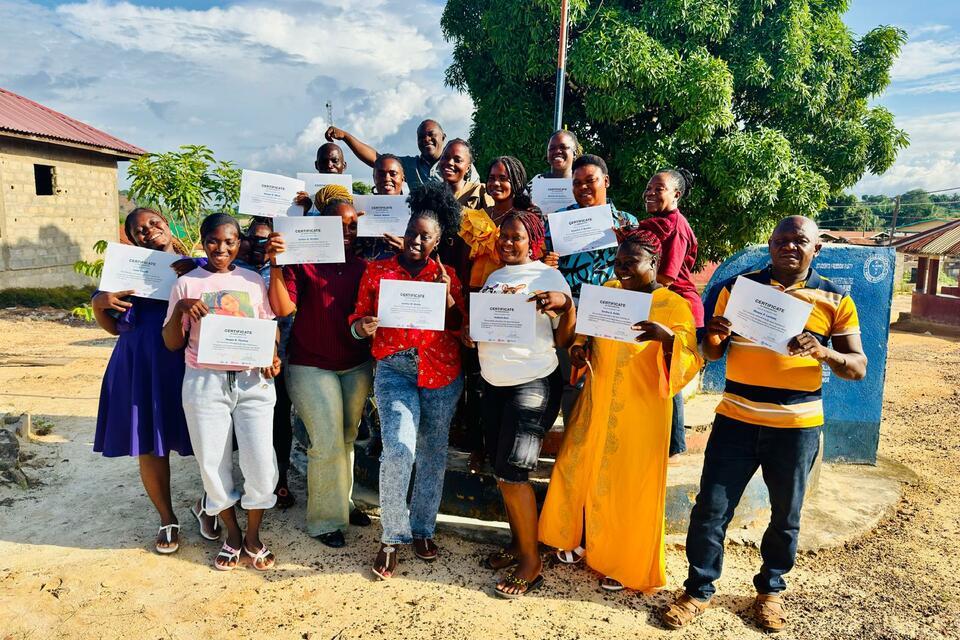
BRAC International and the Alliance of Bioversity International and CIAT trained frontline staff in Kolahun and Karnplay, Liberia, in July 2026, equipping them to integrate climate information into programmes that help farming communities build resilience.
Climate information has enormous potential to help farmers make informed decisions and build resilience to a changing climate. However, its value depends not only on the accuracy of weather forecasts but also on how effectively that information is translated into practical action.
To help bridge the gap between climate science and practical action, BRAC International is partnering with the Alliance of Bioversity International and CIAT to implement the Climate Information Services Pilot across Liberia, Uganda, and Tanzania. The project is taking a multi-pronged approach to strengthening climate resilience by building the capacity of BRAC frontline staff in Liberia and Uganda to communicate and apply climate information within existing programmes, while strengthening institutional capacity in Tanzania through collaboration with the Tanzania Meteorological Authority to improve the interpretation, contextualization and co-production of climate information.
The training workshops held in Kolahun, Lofa County, and Karnplay, Nimba County, in July 2026 marked an important milestone in the Liberia component of the pilot. They introduced an innovative, people-centred approach to Climate Information Services training that emphasized practical learning, collaboration and continuous adaptation to participants' needs.
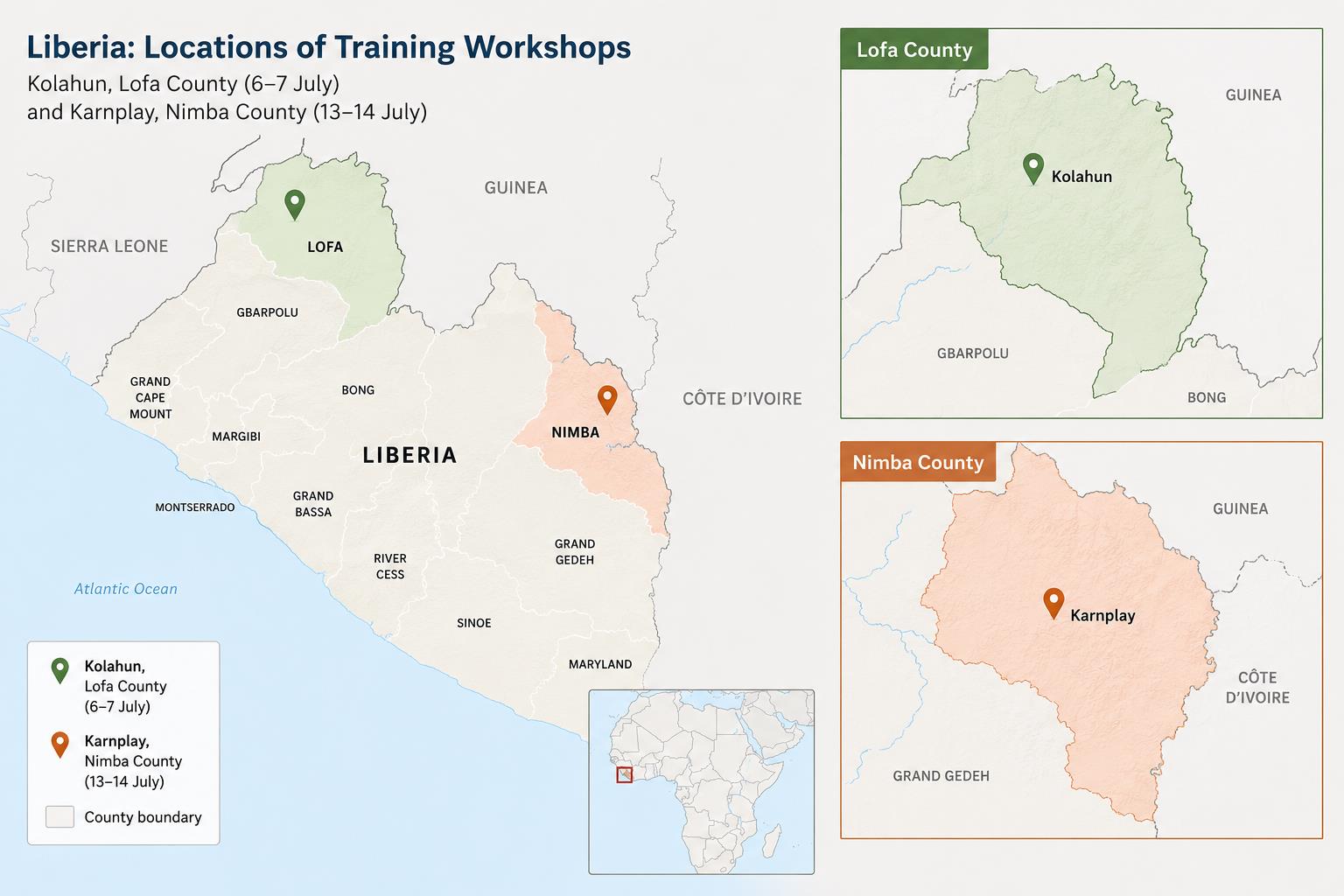
Project locations in Liberia: The Climate Information Services training took place in Kolahun District in Lofa County and Karnplay District in Nimba County
The objective extended well beyond introducing weather forecasts. The goal was to equip frontline staff who work directly with BRAC programme participants with the knowledge, confidence, and practical skills to help farming households understand climate information and translate it into informed agricultural decisions.
Designing training from the field up
What made these workshops distinctive was not only the content but also the way the training itself was designed and delivered.
The training was built around the realities of everyday field work rather than an abstract technical curriculum. The development process brought together climate scientists, programme specialists, technical experts and implementation teams from BRAC, the Alliance of Bioversity International and CIAT. Together, they developed operating procedures, mapped communication pathways and identified how climate information would move from weather forecasts to programme participants through trusted community relationships. The training materials were then designed to support that real world process rather than an abstract curriculum.
This collaborative approach ensured that every part of the training reflected how Climate Information Services would actually be delivered in communities.
Learning by doing
The workshops themselves looked very different from conventional classroom training.
Instead of long technical lectures, participants learned through practical exercises, group discussions, role play and realistic field scenarios based on situations they regularly encounter. They practiced explaining climate advisories in plain language, explored how to respond to common questions from programme participants and worked through examples of weather-related decisions affecting crops and livestock.
The emphasis was not on memorising climate science but on building confidence through practice. The training also recognised that people learn differently. Materials were deliberately designed to be highly visual and accessible, ensuring that participants with diverse educational backgrounds could fully engage with the content. Technical terminology was replaced with locally meaningful language and exercises encouraged participants to connect climate information with their own farming experiences and community knowledge.
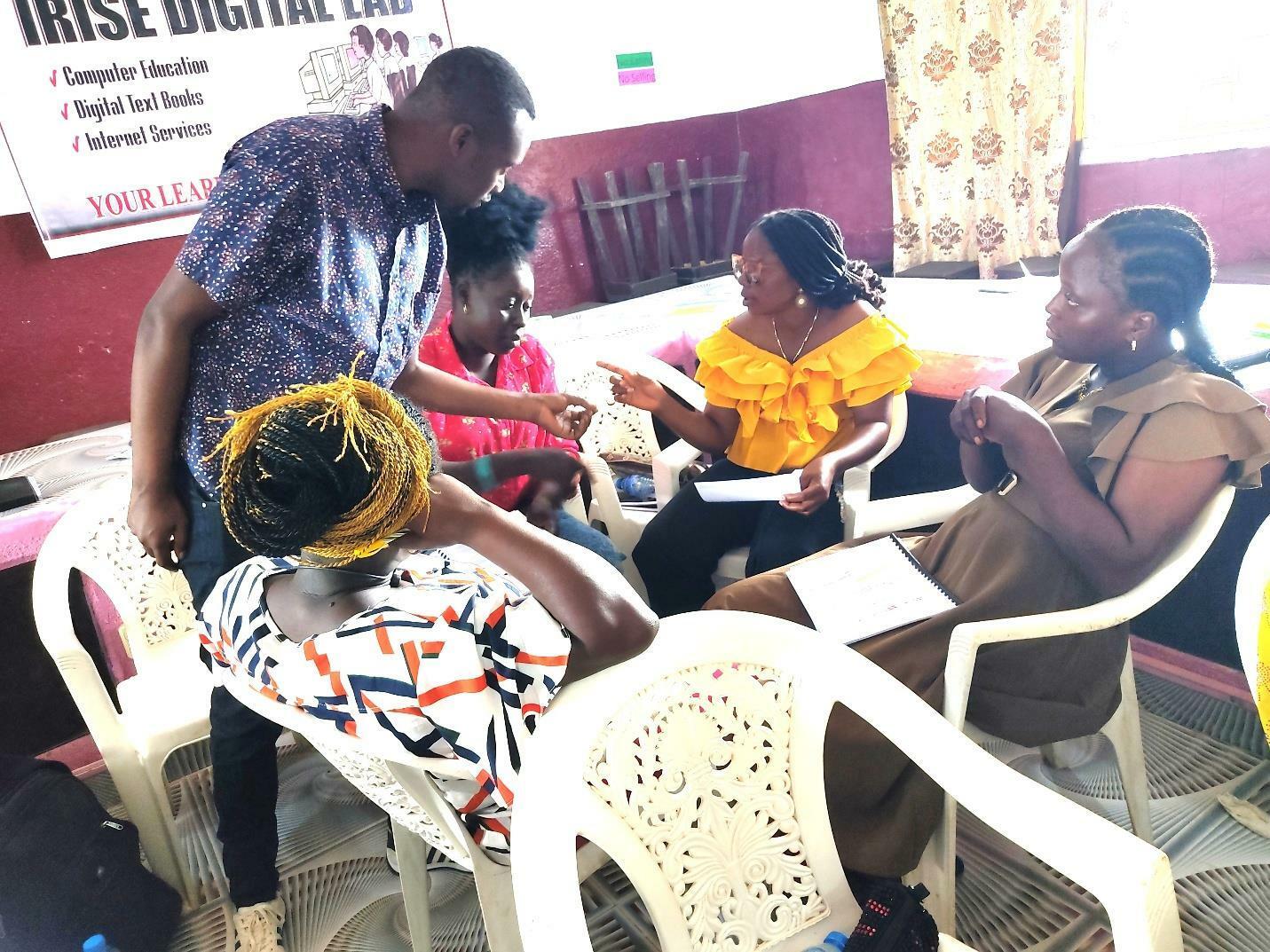
BRAC frontline staff work together in a facilitated group exercise, applying climate information to real-world scenarios through discussion and peer learning.
Listening as much as teaching
Perhaps the most distinctive feature of the workshops was that learning flowed in both directions.
At the end of each training day, BRAC frontline staff reflected on what worked, what remained unclear, and what could be improved. Trainers used this feedback to adapt the following day's sessions, creating a learning experience that responded to participants' needs rather than following a rigid agenda.
This iterative approach fostered open discussion, encouraged questions and created an environment where BRAC frontline staff could build confidence by practicing, making mistakes and learning together.
"This training has given me the knowledge and confidence to use climate information in my work and help farmers make decisions that build their resilience to climate change." — Jestina Warity, Agrifinance Officer
Jestina's reflection illustrates the value of a learner-centred approach. By listening as much as teaching, the workshops not only strengthened participants' understanding of climate information but also built their confidence to apply it in ways that support programme participants to make informed agricultural decisions.
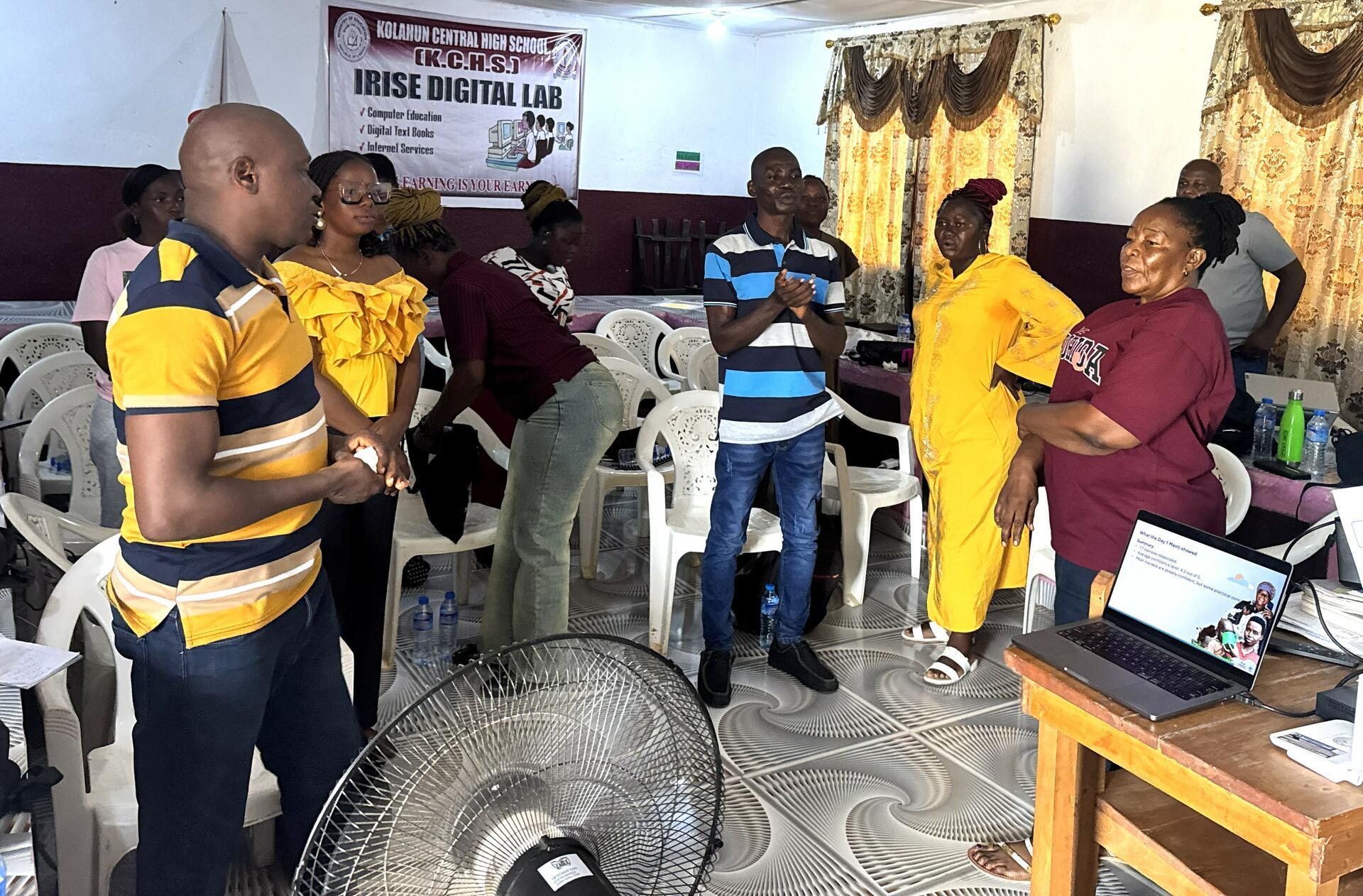
Feedback from BRAC frontline staff helped keep the training practical, relevant and responsive.
The World Bank's Liberia Country Climate and Development Report highlights that Liberia's agriculture sector is increasingly vulnerable to climate variability. Unpredictable rainfall, changing seasonal patterns, flooding, heavy rainfall events and localized dry spells are making it more difficult for smallholder farmers to plan agricultural activities. Timely climate information can help reduce this uncertainty, but only when it is communicated in ways that farmers can understand and apply to their day-to-day decisions.
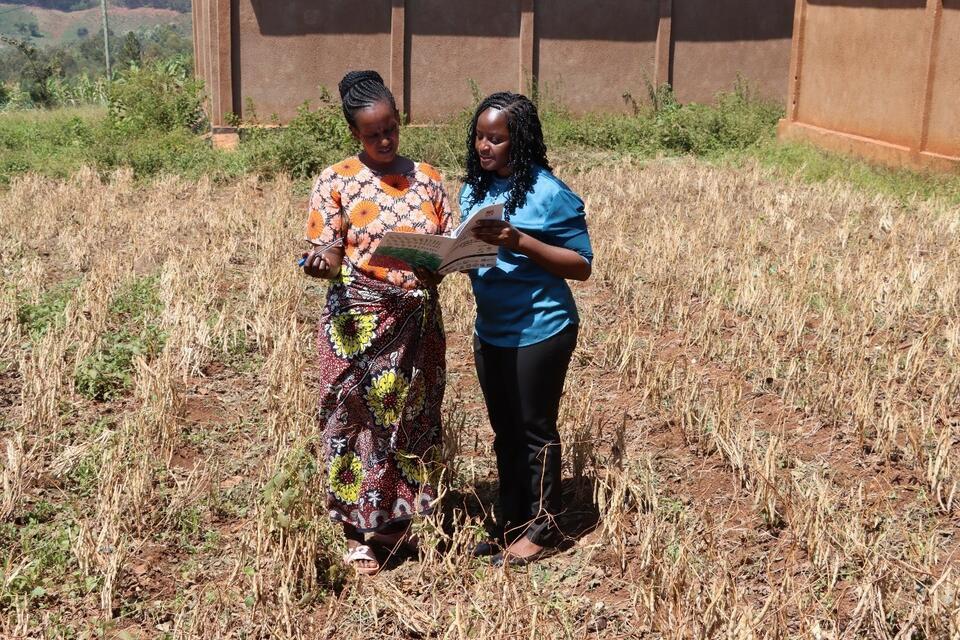
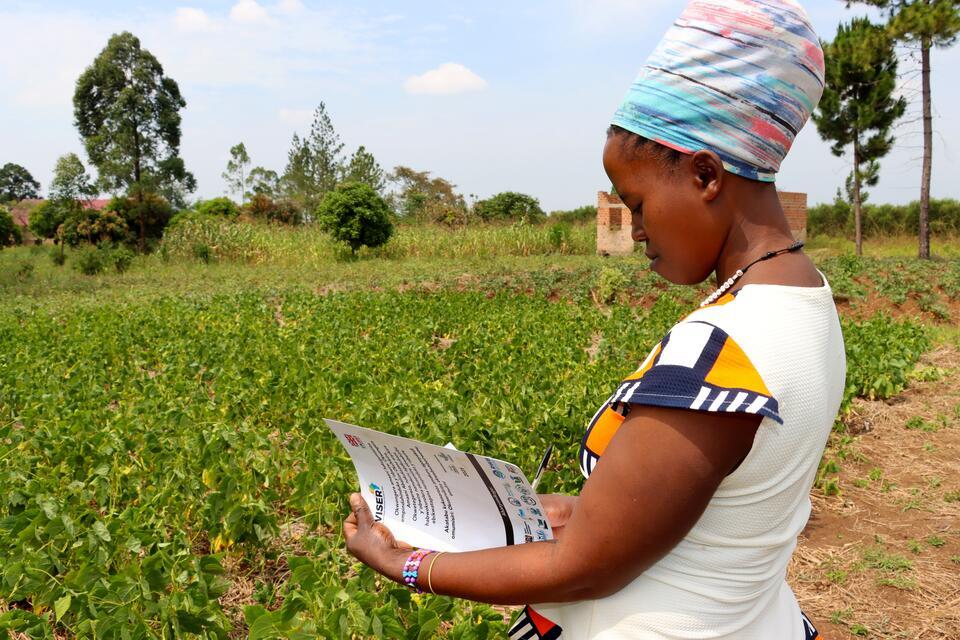
Throughout the workshops, BRAC frontline staff explored how climate advisories can support decisions such as adjusting planting dates, protecting livestock during periods of extreme weather, safeguarding harvested produce or preparing fields ahead of forecast rainfall. The focus remained firmly on equipping them to help programme participants make informed, locally appropriate decisions that strengthen resilience over time.
For Cecilia, a Programme Assistant (AIM), the training provided practical skills that she will apply directly in her work with programme participants.
"This training has equipped me with the knowledge and confidence to interpret climate information, guide programme participants in preparing for the season and provide feedback that will help strengthen the services we deliver."— Cecilia Kormah, Programme Assistant (AIM)
Cecilia's reflection captures the broader purpose of the training. Beyond building knowledge, the workshops equipped BRAC frontline staff with the confidence to interpret climate information, communicate it in ways that programme participants can understand and create a valuable feedback loop that will continue to strengthen climate services.
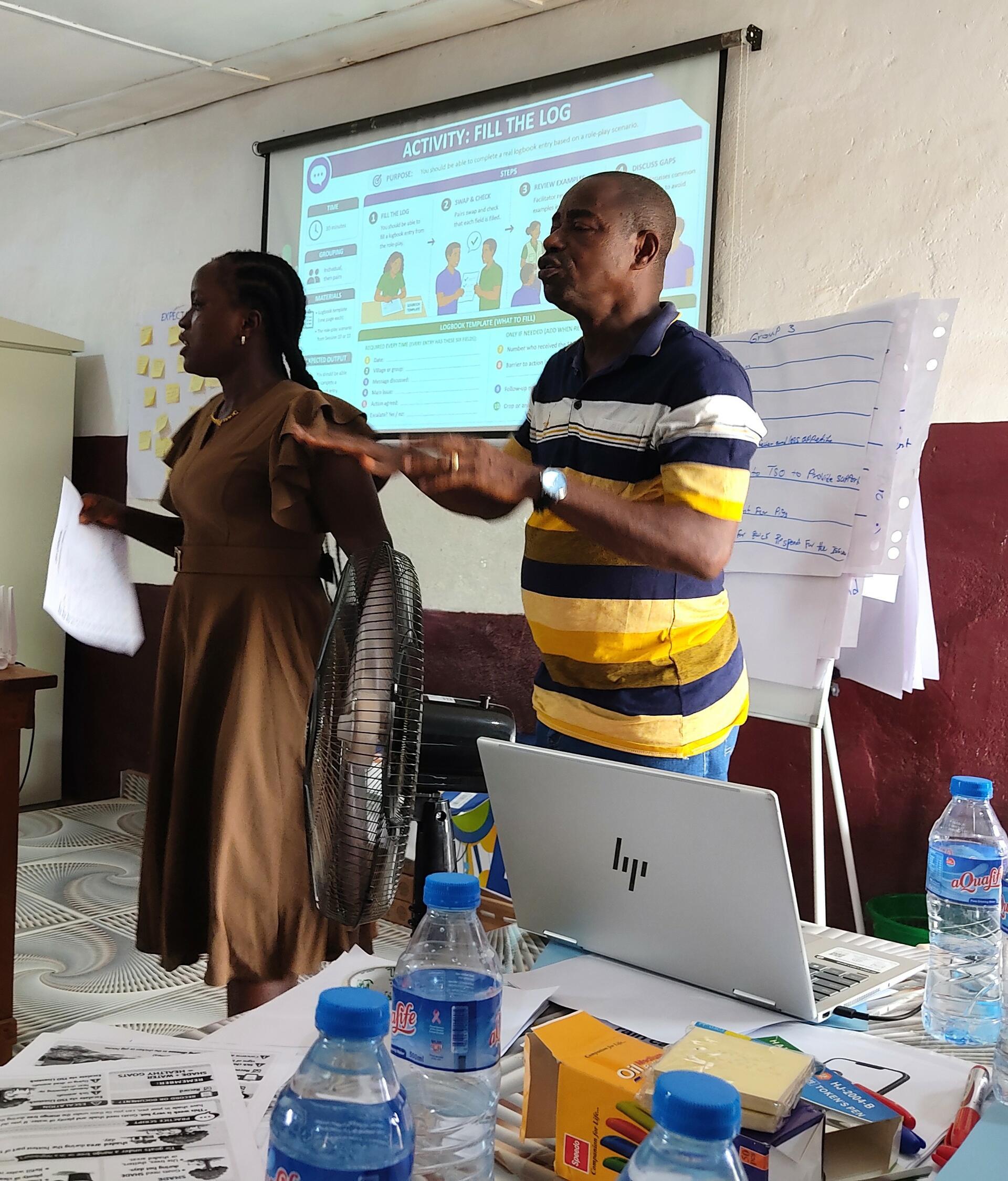
Group discussions ended with presentations that turned learning into practical solutions.
The success of the Liberia trainings reflects the strength of collaboration between organizations with complementary expertise. BRAC's Climate Initiative, the Alliance of Bioversity International and CIAT, and Tetra Tech International Development combined expertise in climate science, agricultural development, adult learning and programme delivery to create more than a training programme. Together, they developed a practical model for integrating Climate Information Services into existing development programmes in ways that are relevant, accessible and sustainable.
Ultimately, bridging climate science and community action requires more than accurate forecasts. It requires trusted people, strong partnerships and practical systems that help communities understand, interpret and act on climate information. That is the model the Climate Information Services Pilot is building, one that has the potential to strengthen resilience far beyond the communities reached through this pilot.
The team

Desire Kagabo
Project Leader
Aniruddha Ghosh
Senior Scientist
Anastasia Wahome
Research Team Leader
Mvuyibwami Patrick
Senior Research Associate
Jemal S. Ahmed
Research Specialist