Blog From transformation to sustainability: Scaling inclusive climate services in East Africa
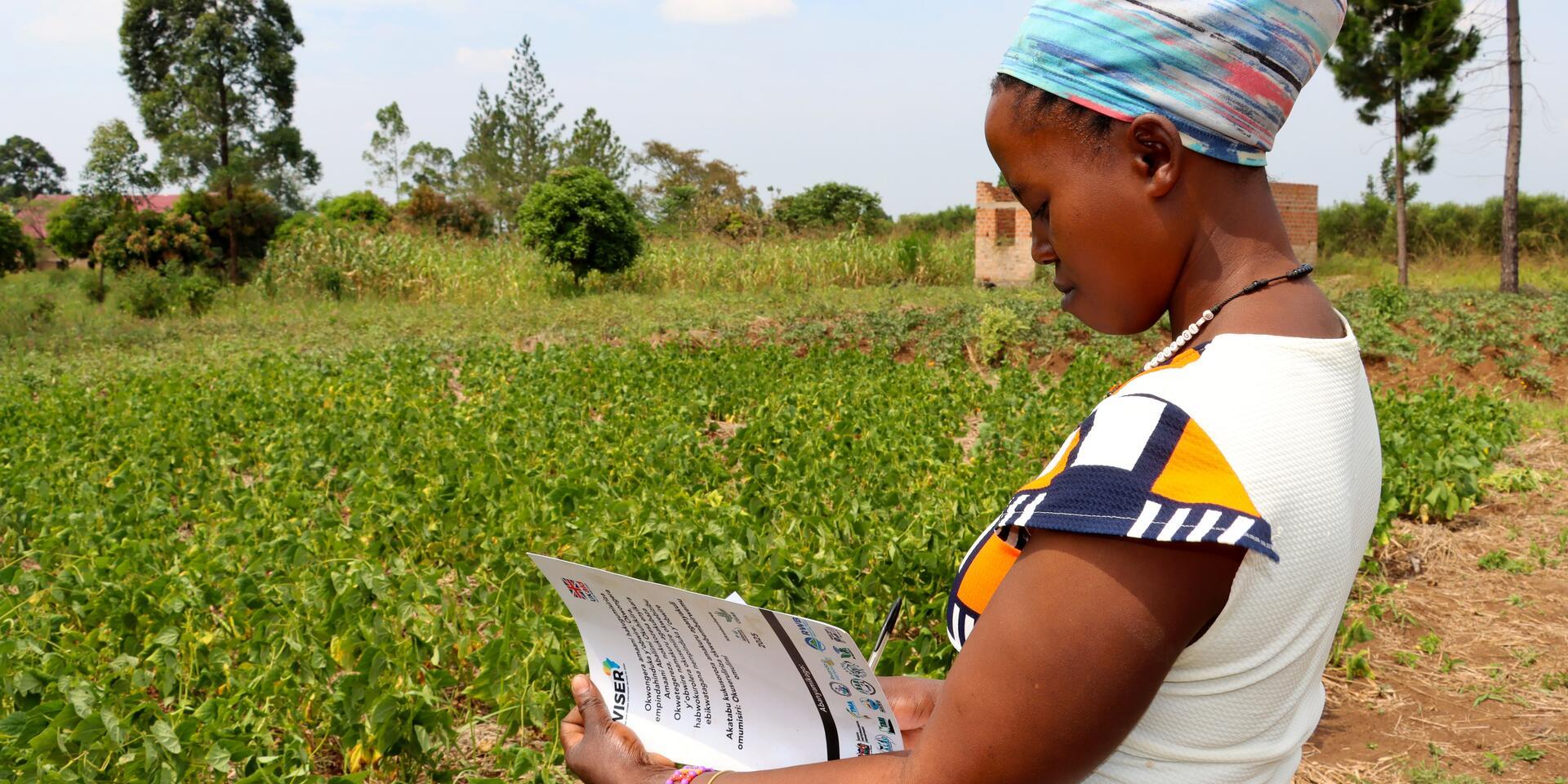

Farmers, researchers, and institutions under the ECREA project are strengthening inclusive climate services in Uganda’s bean sector, improving access to weather information, addressing gaps, and building sustainable systems for resilient farming.
Across East Africa’s bean growing regions, climate services are beginning to change how farmers access and use weather and climate information. Stronger partnerships, more localized advisories, and growing farmer demand are reshaping the system. In Uganda’s bean sector, this transformation is particularly visible. Trust has increased. Institutional coordination has strengthened. Local advisory systems are functioning. Yet resilience is not complete. As climate information becomes more embedded in decision making, new questions about inclusion, sustainability, and scale emerge.
Access remains uneven. While WhatsApp groups have proven highly effective, not all farmers own smartphones. Wieng Leonard, a community based facilitator and Chairperson of the AgroClimate Advisory Committee in Hoima District’s Bujimba Town Council, acknowledges this challenge:
“Some farmers are still facing challenges of lacking smartphones.”
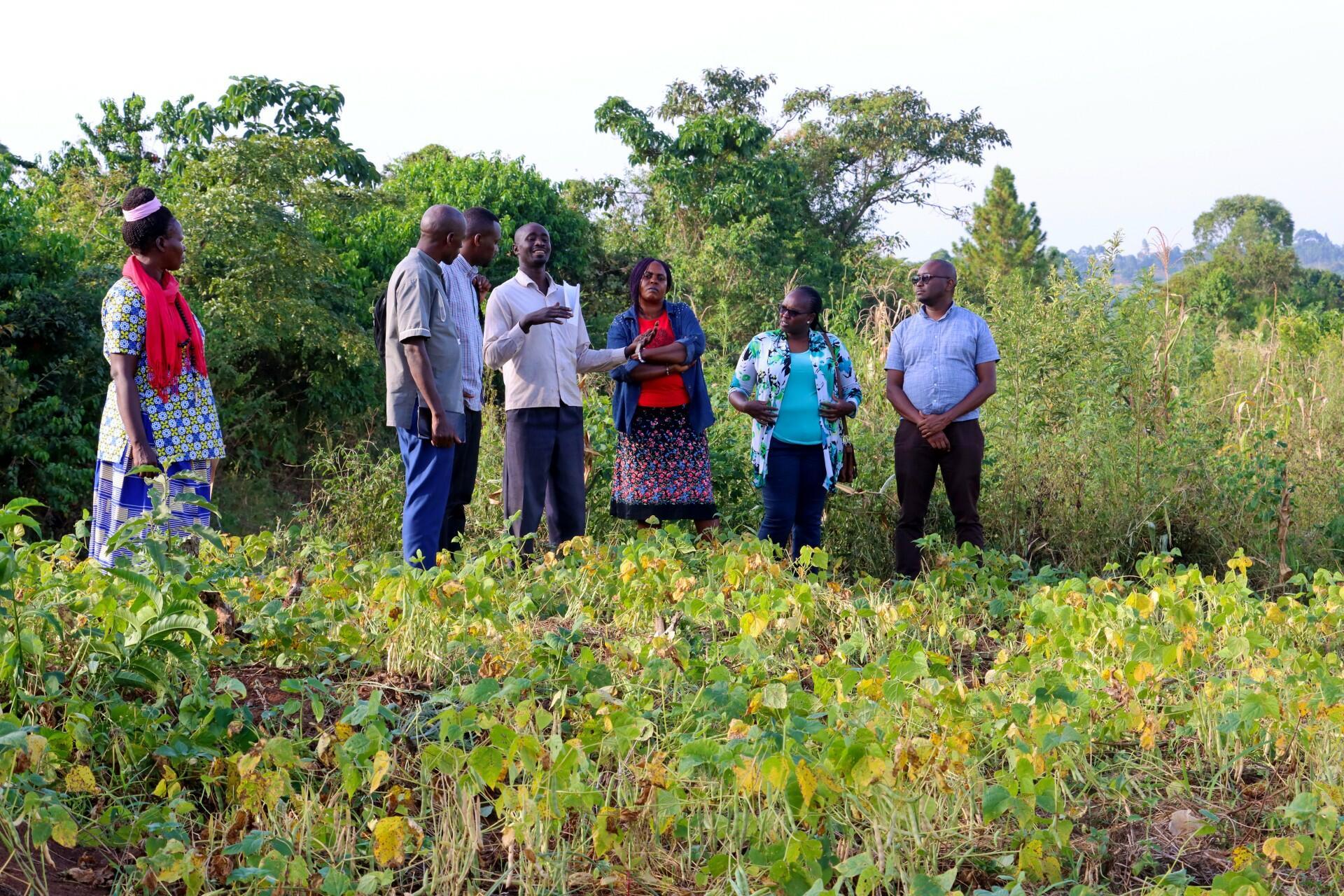
Wieng Leonard, a community-based facilitator and Chairperson of the AgroClimate Advisory Committee in Bujimba Town Council, Hoima District in Uganda, explains the challenges smallholder farmers face and how climate advisories help guide farming decisions during a project team visit to his experimental plot.
Others receive information but require repeated reminders to act on it. Digital channels accelerate dissemination, but they also risk excluding those without access.
Gender dynamics also shape access to climate information. In some households, women do not control radios or mobile phones, limiting their ability to receive timely advisories. Persons with disabilities have also faced barriers where climate information is not delivered in accessible formats.
Recognizing these challenges, the Enhancing Climate Change Resilience in East Africa (ECREA) project deliberately promoted more inclusive access to weather and climate information services (WCIS). Women were intentionally encouraged to participate in advisory processes and leadership roles within AgroClimate Advisory Committees (AACs), community meetings, and farmer training platforms. Targeted registration ensured that women could directly receive climate advisories and access digital climate tools. Community meetings and Radio Listening Clubs (RLCs) further created shared spaces where women could collectively access forecasts, discuss advisories, and contribute their perspectives to local decision making.
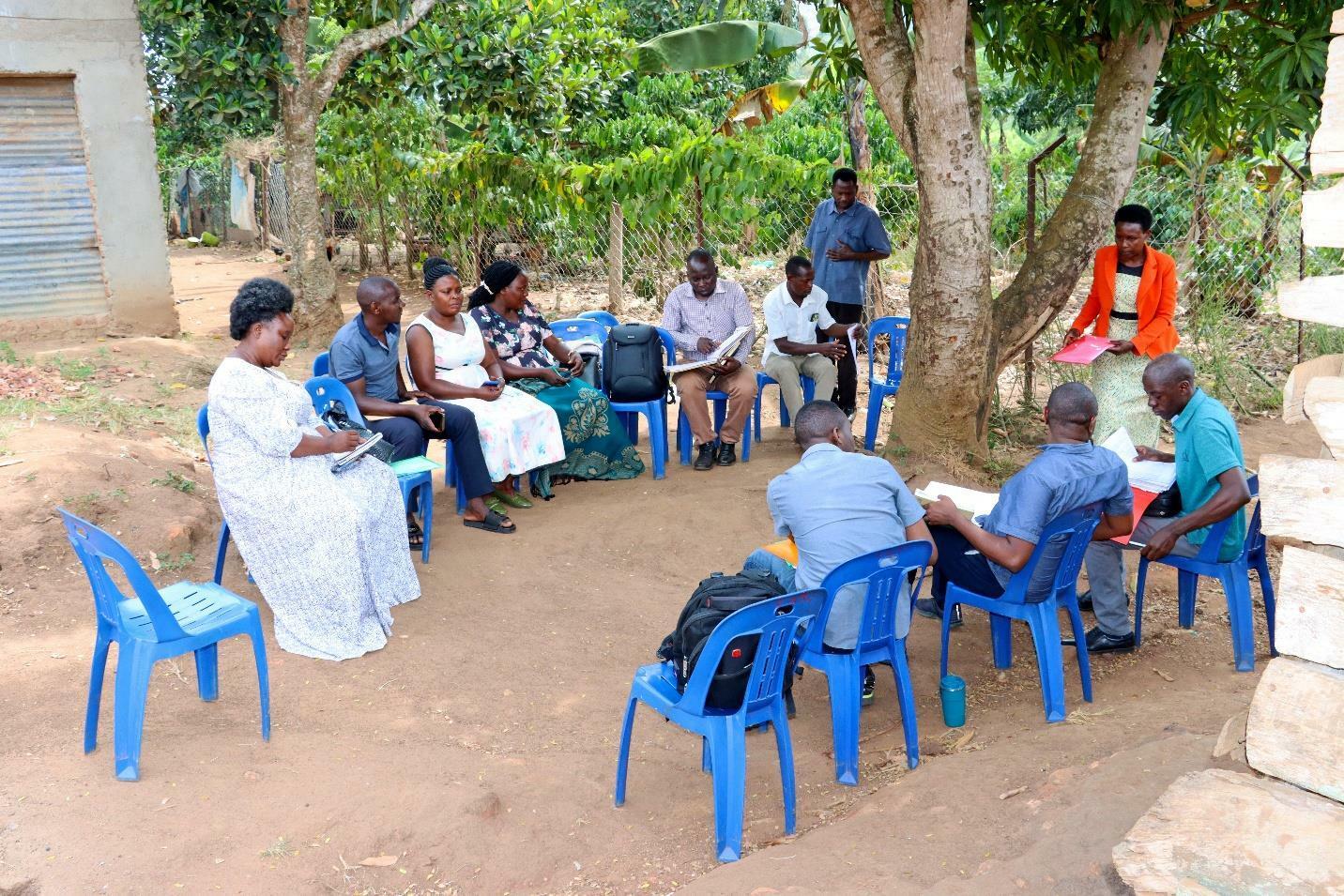
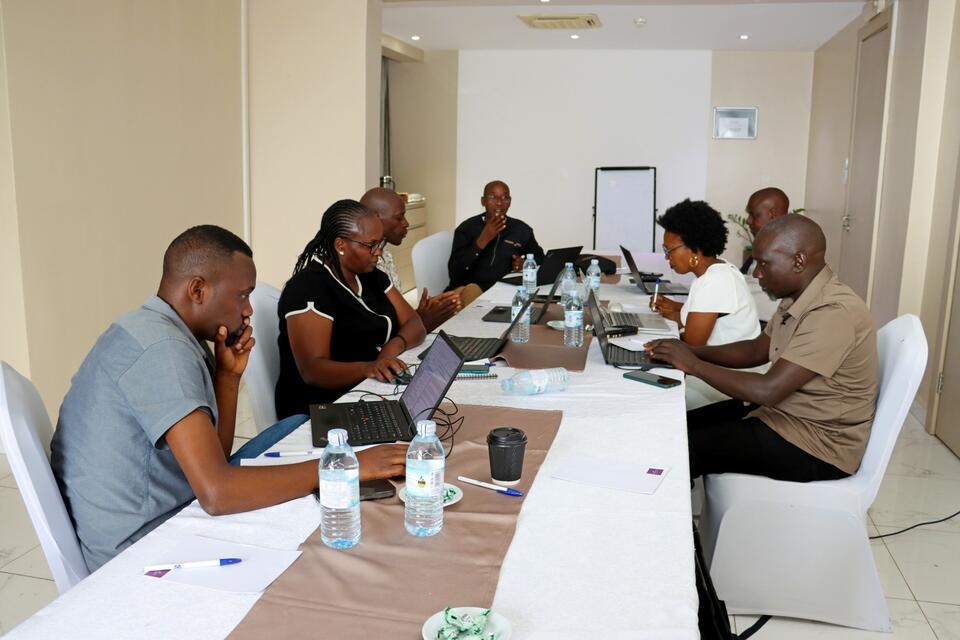
The project team visited a woman led AAC in Kikuube, Buhimba Council to witness the coproduction of climate services
At the institutional level, the project also worked with meteorological services, extension actors, and media partners to strengthen awareness of Gender Equality and Social Inclusion (GESI) in climate service delivery. Partners were encouraged to adopt more inclusive communication approaches, including the use of local languages, voice-based messaging, and flexible broadcast scheduling to reach farmers with limited access to digital technologies. These efforts helped shift climate services from simply delivering information to ensuring that diverse groups of farmers can access, understand, and use it.
Together, these experiences underscore an important lesson: effective climate services depend not only on accurate forecasts but on inclusive delivery systems. Aligning Uganda’s climate services with the principles of Early Warning for All requires ensuring that climate information reaches every farmer in forms that are usable, accessible, and equitable.
As Hellen Nnassuna, a woman farmer in Nakaseke District, reflected during field discussions:
“Sometimes the radio is there, but it is not mine to control. When the program comes on, someone else may change the station.”
Her reflection illustrates how access to climate information is shaped not only by availability, but by control within households. Building on this, Eunice Kyasiimire, a farmer from Nakasongola, highlighted timing as another practical barrier. She noted that some climate programs are aired during hours when many women are engaged in unpaid household labour, limiting their ability to listen consistently. Together, their experiences underscore a broader lesson: effective climate services depend not only on producing accurate forecasts, but on delivering them at the right time, through accessible formats, and in ways that account for household realities. If Uganda’s climate services are to align fully with Early Warning for All principles, they must reach every farmer in forms that are usable, accessible, and inclusive.
Strengthening feedback loops is equally important. One of the quiet but significant shifts emerging from the project has been the practice of reporting back. Leonard further explains:
“When we receive a forecast, we assess how it performs on the ground and share feedback with the relevant authorities.”
This bottom-up communication reinforces accountability and improves learning. It transforms climate services from one-way communication into an adaptive system.
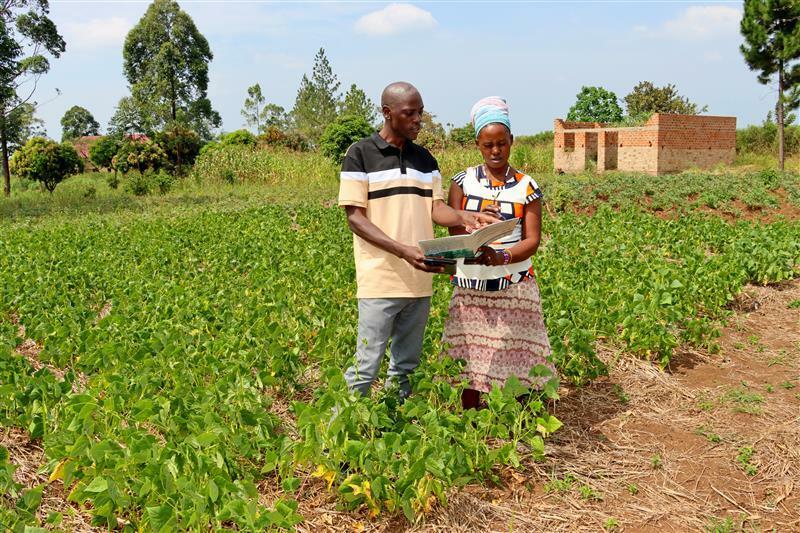
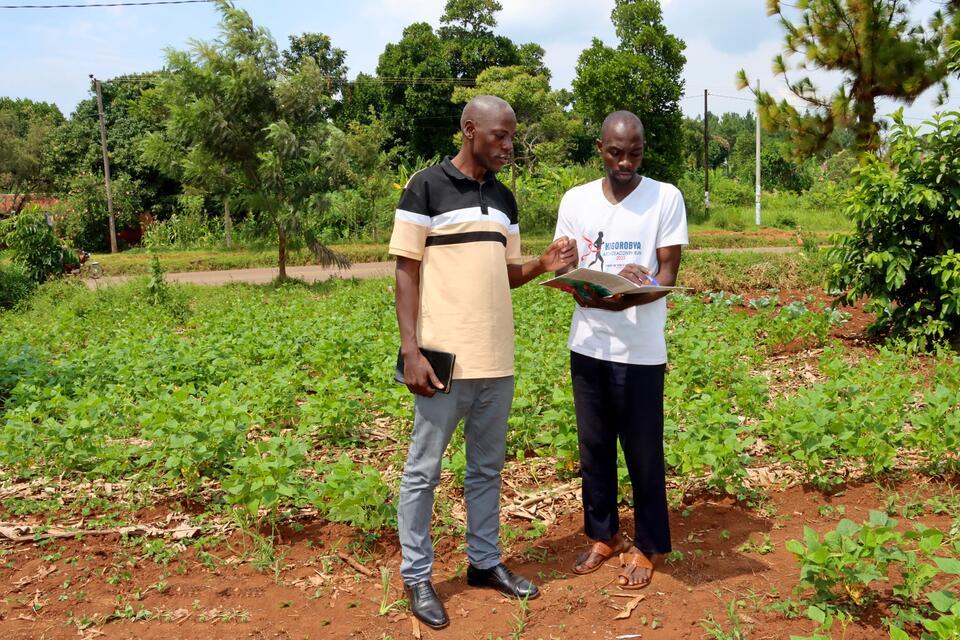
Wilber Ssekandi of the National Agricultural Research Organization (NARO), Uganda, gathers feedback from a farmer hosting an experimental plot showcasing climate-informed farming practices in Hoima District.
Operational sustainability is the next frontier. While the ECREA project strengthened coordination and built institutional linkages, long term continuity depends on routine government ownership. Encouragingly, communication channels are established. Advisory processes are institutionalized within district structures. Technical collaboration between the Department of Meteorological Services and NARO is active.
Importantly, farmer demand continues to drive performance. When communities expect timely forecasts, institutions respond. That demand has elevated climate information from optional advisory to essential public service.
In Uganda, the Department of Meteorological Services under the Ministry of Water and Environment holds the national mandate for climate information provision. The integration of advisory development with district extension systems reflects alignment with broader national resilience and agricultural transformation priorities. It also supports the country’s commitment to strengthening early warning systems under global frameworks such as Early Warning for All.
Through the ECREA project, supported by the UK Met Office and the UK’s Foreign, Commonwealth & Development Office (FCDO), targeted investments were made in institutional alignment, technical capacity, and collaborative platforms. These investments helped move climate service delivery from fragmented communication toward coordinated, accountable systems.
The next phase will require continued strengthening of inclusive communication strategies, localized data capacity, and minimal operational support for district advisory structures. Sustainability will depend not only on funding, but on maintaining institutional commitment and public expectation.
The transformation from forecast to field has begun. The task ahead is to ensure that climate services remain inclusive, responsive, and embedded within Uganda’s public service architecture.
If farmers continue to call for the forecast and institutions continue to respond then climate information will not merely be delivered. It will be owned.
The team

Desire Kagabo
Project Leader
Livingstone Byandaga
Research Specialist
Mvuyibwami Patrick
Senior Research Associate