Blog When farmers start calling for the weather forecast: Rebuilding trust in climate information in Uganda

In Uganda’s bean-growing districts, the ECREA project is strengthening climate services by improving access, understanding, and use of weather forecasts, enabling farmers to make timely decisions and increasing trust in climate information.
Not long ago, weather forecasts were seen as distant announcements that were technical, abstract, and at times unreliable, a perception highlighted in global climate services assessments (World Meteorological Organization & CGIAR, 2020). Today, in Uganda’s bean growing districts, farmers call their extension officers, radio presenters and even district meteorological officials when a forecast is delayed. That shift tells the real story of transformation.
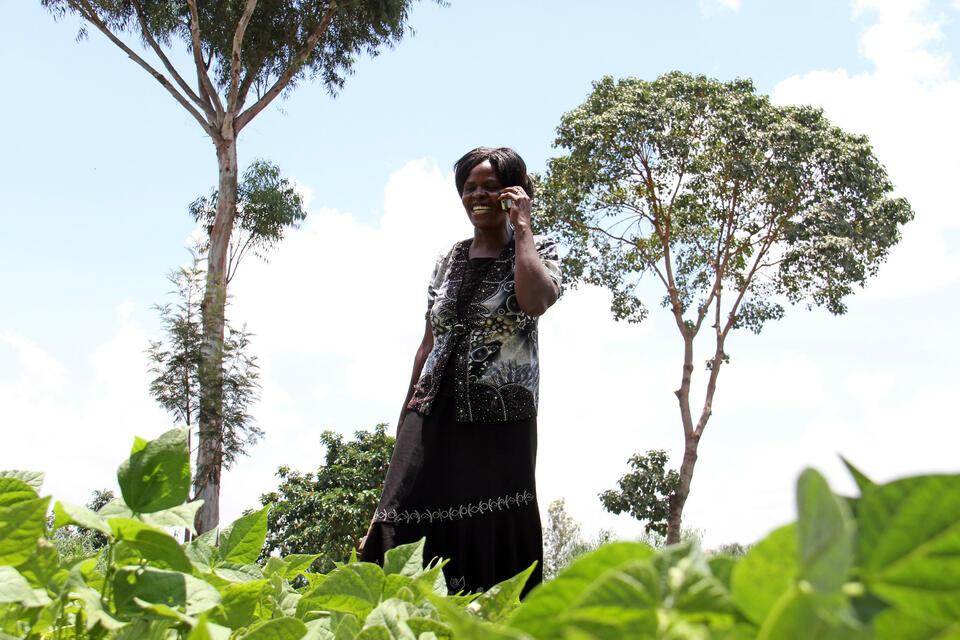
Trust in climate information did not change overnight. It evolved as access improved, understanding deepened, and forecasts began to consistently reflect local realities. In Hoima, Sandy Sam, a farmer and community leader, remembers how farming decisions were previously made.
“Before I started getting weather and climate information, I was just digging anyhowly, planting anytime but without getting the yields that I could expect.”
Drought would arrive unexpectedly. Harvests were uncertain. Post-harvest losses were common. Decisions were guided largely by experience and routine rather than predictive information.
Today, Sandy Sam produces nearly 100 kilograms of beans from his 40 by 40 metre plot, compared to 50–60 kilograms previously. The difference, he explains, lies in timing. “These days I know when to plant and when even to harvest.”
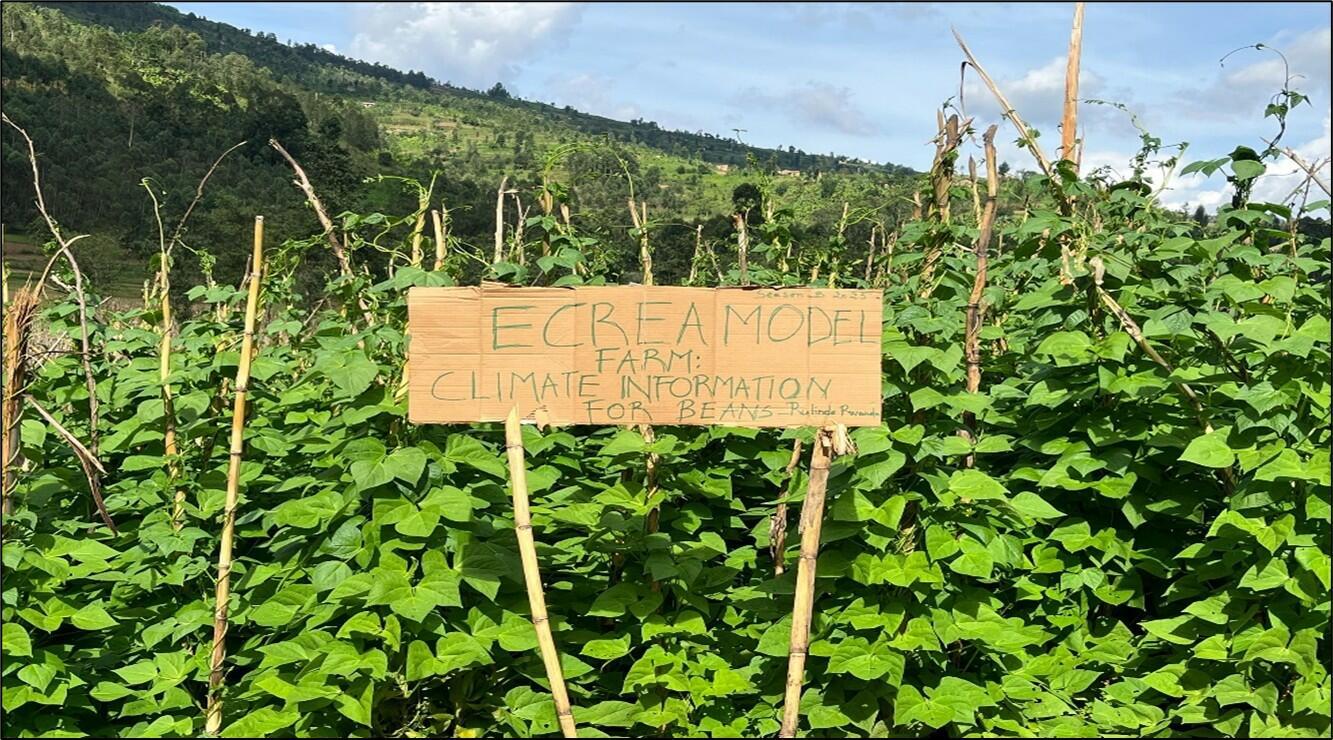
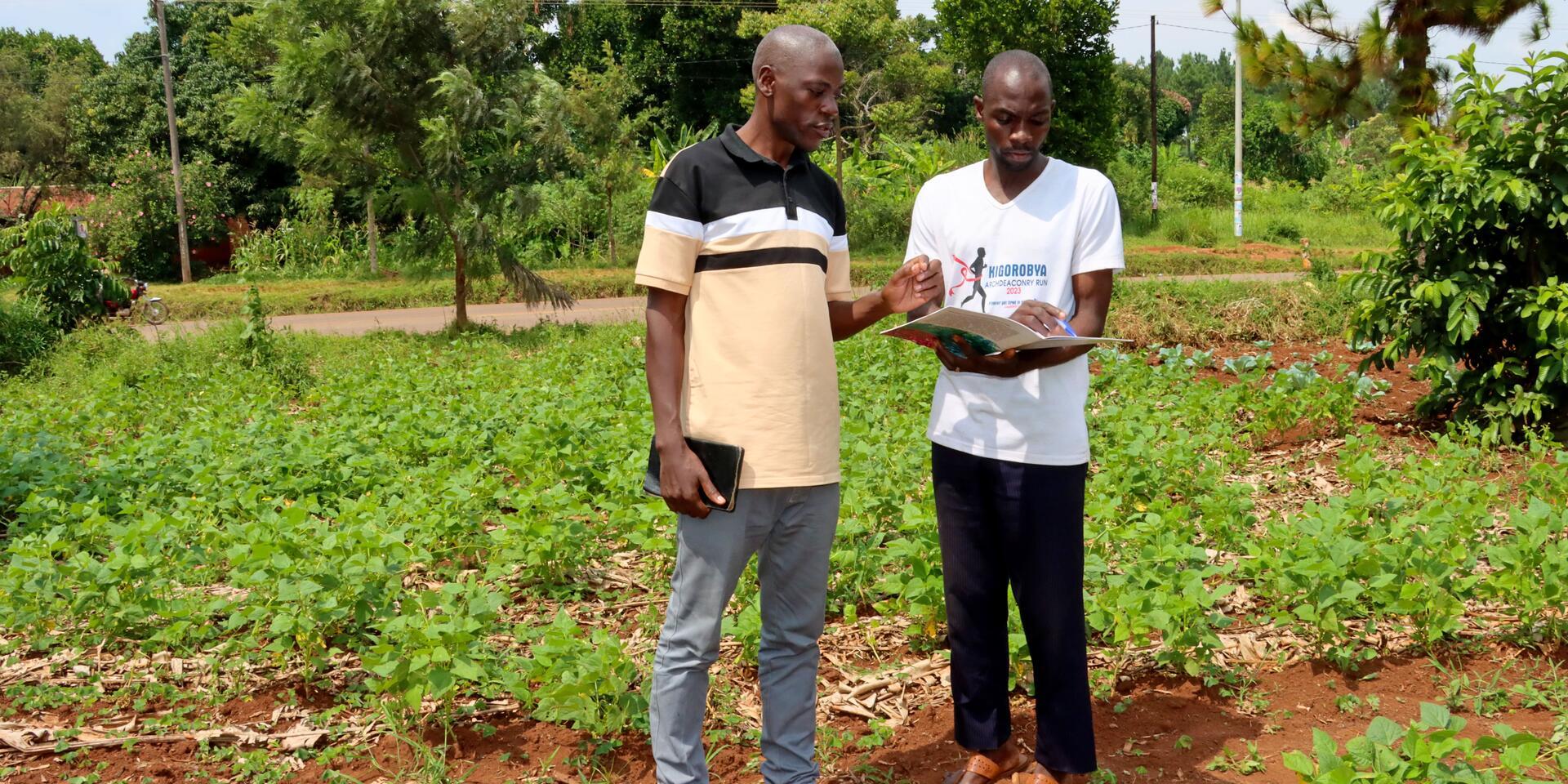
ECREA model farms established in Rurindo district in Rwanda.
Through localized advisories delivered via WhatsApp and radio, Sandy now times planting according to forecasted rainfall onset. He has even begun planting beans during the October–November–December season, a period his community traditionally avoided. Climate information has shifted from rumor to a planning tool.
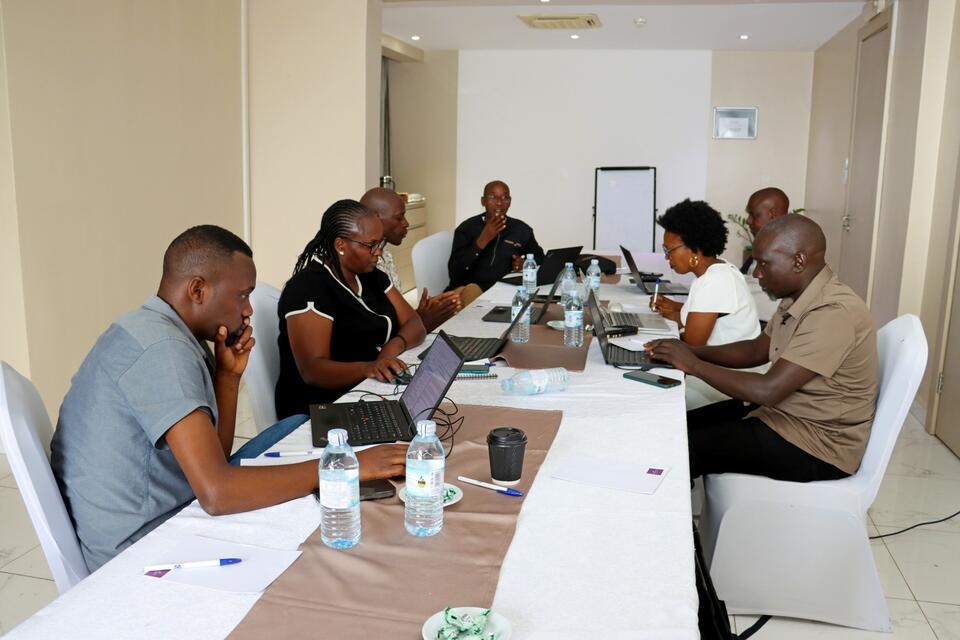
This transformation did not occur simply because forecasts became available. It happened because farmers learned how to interpret them. This shift was deliberately supported through the ECREA project. By strengthening collaboration between meteorological services, agricultural researchers, extension agents, and local facilitators, ECREA expanded access to timely information and built the capacity of communities to understand and apply it.
Beyond improving institutional coordination, the project invested heavily in face to face capacity building. Using a cascading training model grounded in the Participatory Integrated Climate Services for Agriculture (PICSA) approach, lead farmers and extension officers were first trained to interpret climate information and translate it into farm level decisions. Each trained facilitator then trained additional farmers within their communities. Through this structured cascade, weather and climate information literacy expanded rapidly, eventually reaching more than 300,000 farmers through direct, in-person engagement.
Before this intervention, climate information was often difficult to access. When it was available, it was hard to understand. Seasonal forecasts sometimes arrive late or not at all. Even when accessed, many farmers lacked the confidence to translate technical terminology into practical farming decisions.
Leonard, a community based facilitator and Chairperson of the AgroClimate Advisory Committee in Hoima District’s bean growing hub, reflects on this gap:
“Even those who could access it, they didn’t know how to interpret it.”
Training changed that dynamic. Trainers were equipped not only to receive forecasts but to interpret them, simplify the language, and cascade the information within their communities. Leonard alone has trained more than 400 farmers and continues to expand that reach.
“Whenever I receive the information, I simplify it and interpret it for them.”
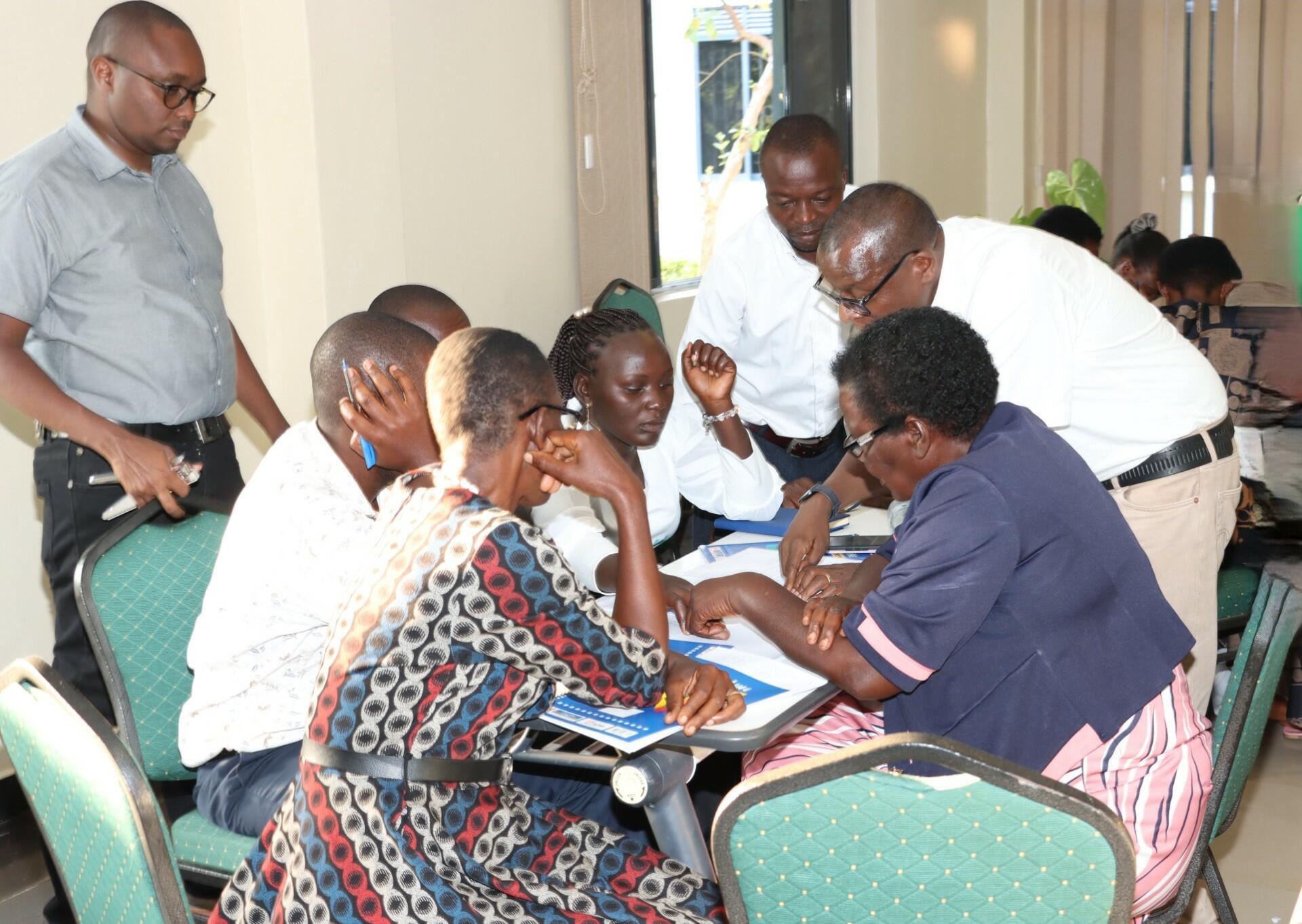
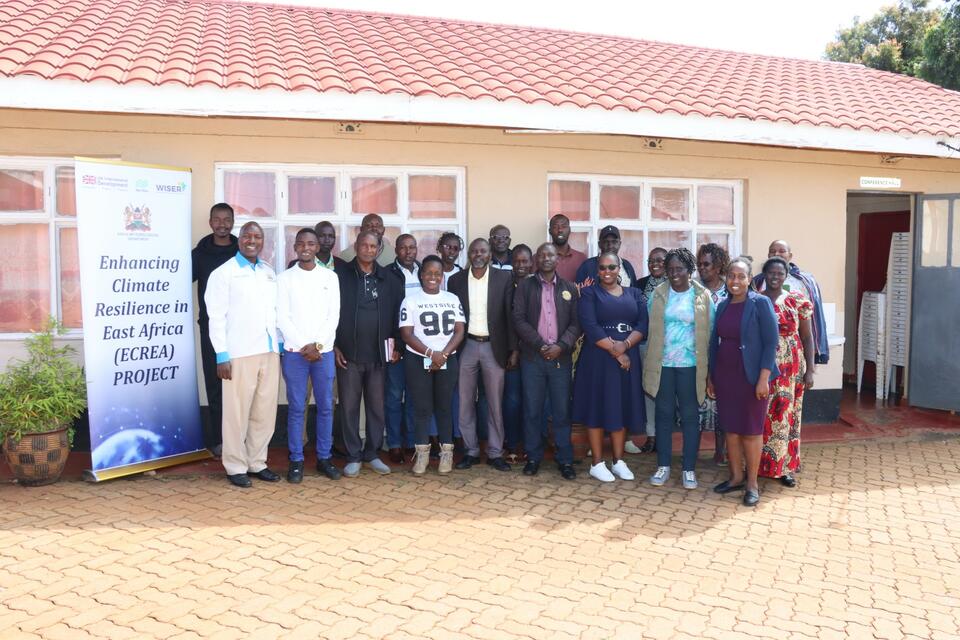
PICSA training for extension officers and lead farmers in Namulonge, Uganda.
That interpretation layer became the bridge between climate science and farm-level action. Farmers are now making more precise and risk informed decisions. When rainfall is predicted to be below normal, they select early maturing varieties. When short dry spells are expected, they adjust seed density. Six hour forecasts guide spraying schedules. Post-harvest losses are reduced because farmers check forecasts before drying beans in open spaces. Sandy describes the change clearly:
“Unlike before, I used just to put out my beans and dry and then eventually the rain came and spoiled them. But now I know when to put them out.”
He notes that forecast accuracy, in their experience, has been high and farmers respond to that consistency.
“People want to experience what you told them. When it happens, they start to rely on it.”
Trust has moved from fragile to growing built not through persuasion, but through performance and relevance. In Uganda’s bean production hubs, farmers are no longer waiting passively for weather to happen. They are planning for it, questioning it, and demanding it on time. Weather and Climate information is no longer viewed as distant or abstract. It has become embedded in daily decision making. And when farmers begin calling for the forecast, it signals more than improved communication. It signals that climate services are becoming valued public goods.
This growing trust reflects more than local behavior change. It demonstrates what can happen when investments in meteorological science, institutional coordination, and community capacity converge. Through the ECREA project, supported by the UK Met Office and the UK’s Foreign, Commonwealth & Development Office (FCDO), climate information has moved closer to the people who depend on it most.
For the UK Met Office, as custodians of global meteorological expertise, this partnership has helped strengthen the integrity and usability of climate information at the national level. For FCDO, it represents an investment in resilience that translates directly into improved agricultural productivity, reduced risk, and stronger public service delivery.
In Uganda’s bean growing districts, trust is no longer abstract. It is measurable in terms of higher yields, timely decisions and in the simple act of farmers calling to ask when the forecast will arrive. That trust is perhaps the clearest indication that climate services are not only being delivered but being valued.
The team

Desire Kagabo
Project Leader
Livingstone Byandaga
Research Specialist
Mvuyibwami Patrick
Senior Research Associate