Blog Revolutionizing co-production: How the ECREA project has strengthened institutional collaboration in Uganda

In Uganda’s bean-growing districts, the ECREA project is strengthening climate services by connecting meteorologists, researchers, extension agents and media to deliver localized advisories that help farmers make informed decisions.
Climate resilience does not begin in the field. It begins with how institutions work together. In Uganda, one of the most significant transformations has occurred not only among farmers, but within the public institutions responsible for delivering climate and agricultural services. What was once a system characterized by fragmented communication has evolved into a coordinated model of co-production linking the Department of Meteorological Services (DMS), the National Agricultural Research Organization (NARO), district extension systems, and media partners.
Before this strengthened collaboration, climate information often reached farmers indirectly and inconsistently. Barong Vincent, Vice Chairperson of the Hoima AgroClimate Advisory Committee and an extension officer, recalls the situation clearly:
“Farmers used to get almost fourth-hand information.”
Seasonal forecasts sometimes did not reach district extension agents on time. Ten day and daily updates were irregular. In many cases, climate information was circulated informally. Some relied on internet sources.
These forecasts were broad and generalized. They were not specific to local bean growing conditions. Johnson Kanyesige, a media personality with Spice FM Hoima who hosts a weekly farmers’ program, reflects:
“Long ago, we relied on the internet… and you know everything is on the internet.”
Forecasts were national in scope and often detached from district realities. Without localization or joint interpretation, their usefulness for decision making remained limited. That began to change as institutional linkages were deliberately strengthened. Today, extension agents receive direct updates through structured communication channels, including dedicated WhatsApp groups that connect them to meteorological officers and researchers in real time. Seasonal forecasts are no longer passively transmitted; they are jointly interpreted. Advisories are developed with district-level specificity. Experts regularly appear on radio platforms to explain not only what is expected, but what it means for farmers’ immediate decisions.

A weather and climate information program underway at Uganda Broadcasting Corporation (UBC), a key partner in disseminating climate advisories to farming communities under the ECREA project.
This progress did not happen organically. The ECREA project deliberately brought these partners together, strengthening coordination between the Department of Meteorological Services, NARO, district extension systems, and media actors. By creating platforms for joint interpretation and regular communication, the project improved working relationships across institutions. As a result, weather and climate information now moves more efficiently, more accurately, and with clearer roles and responsibilities across the system.
Barong Vincent describes the shift succinctly:
“Now we get firsthand information, and it comes in a timely manner.”
Johnson adds:
“The ECREA project created direct linkages between us, the meteorological authorities, and NARO experts. As a result, we are now able to bundle weather and climate information with location-specific agricultural advisories. This has significantly enriched the accuracy, relevance, and credibility of the information we deliver to farmers through radio.”
The shift from broad national forecasts to district level advisories fundamentally changed how climate information is used. Once contextualized, the information became actionable. Farmers could see what it meant for their crops, their planting schedules, and their specific locations.
Today, co-production operates as a structured system rather than an informal exchange. When a forecast is issued, meteorologists generate and share the data. NARO researchers interpret what it means for crops and farming practices. AgroClimate Advisory Committees convert those insights into localized guidance. Extension agents and media partners then disseminate advisories through meetings, radio programs, and digital platforms.
As Vincent emphasizes:
“It’s very important to merge climate information together with farming advisories. When it’s not merged, it is just hearsay.”
This practical alignment of climate science, agricultural expertise, and local communication gives co-production its strength
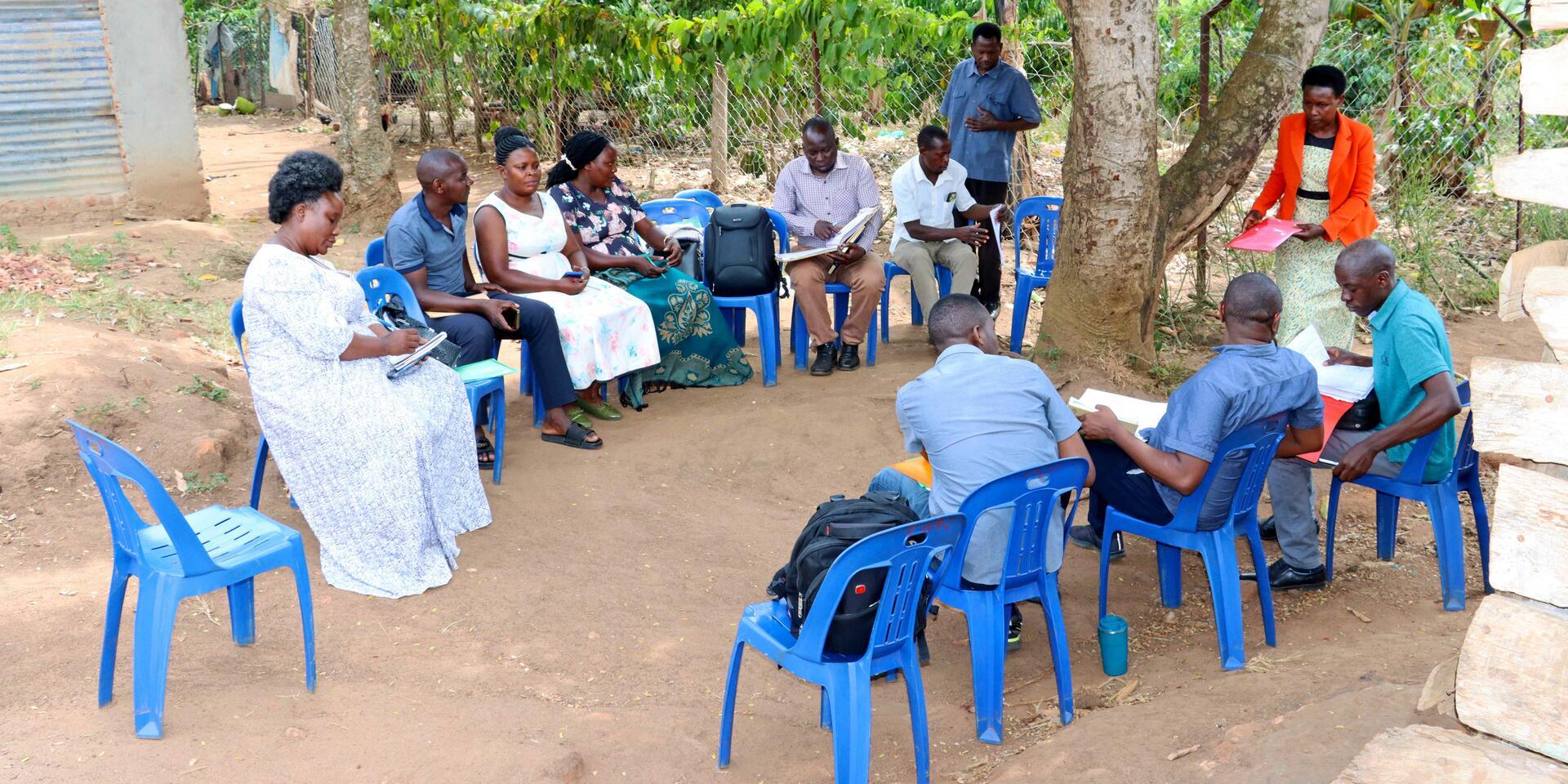
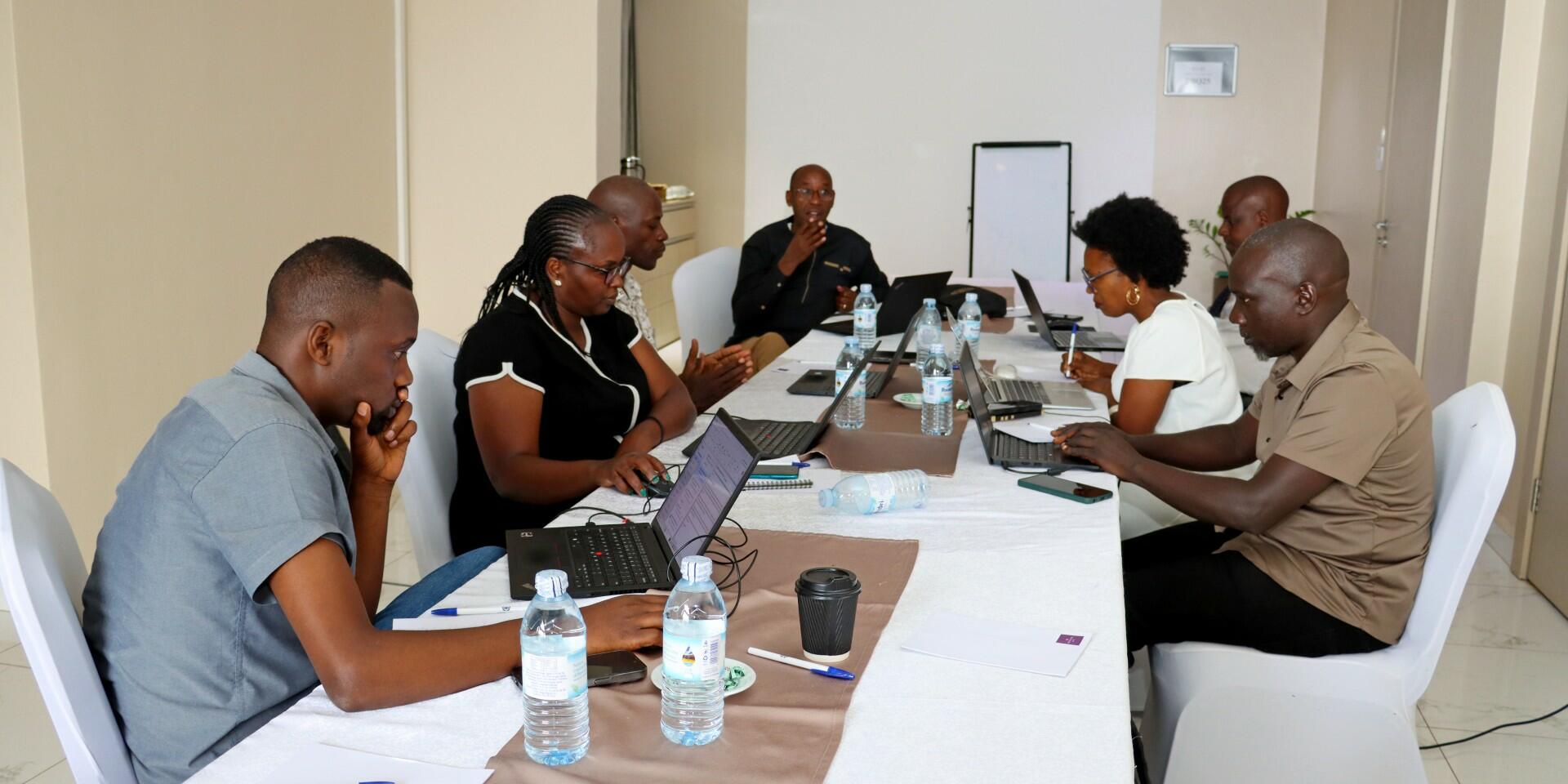
AAC meeting underway where members discuss the interpretation of climate forecasts and the development of localized agricultural advisories for farmers.
Strengthening the institutional backbone of climate services
The transformation has also been visible within the institutions responsible for generating and delivering climate information. For the Department of Meteorological Services under Uganda’s Ministry of Water and Environment, the project strengthened how climate information is produced, interpreted, and shared with agricultural stakeholders. As Dr. Isaac Mugume, Assistant Commissioner for Weather Forecasting Services, explains, the collaboration addressed long-standing barriers around trust and understanding of climate information.
“Before the ECREA project, our assessments indicated that the main barriers were trust related issues and limited understanding of climate information. Through the project, we strengthened co-production in the bean growing hubs and tailored climate information services for those areas. This helped address trust concerns and improved uptake.”
The shift has been significant. Farmers who once viewed forecasts as abstract are now actively seeking them. In some cases, meteorological officers receive calls from farmers when forecast updates are delayed.
“We now see farmers calling through WhatsApp groups or by telephone when a forecast delays. This demand is a testament that the products we are providing are needed and valued by the community” added Dr. Mugume.
According to Mable Najuma of Met services Uganda, Meteorologists have also strengthened the technical processes behind climate information production. Forecasts are generated using multiple data sources, including satellite imagery, radar observations, and ground-based weather stations, ensuring that the information meets international standards set by the World Meteorological Organization. The collaboration has also strengthened linkages between meteorological services and agricultural research institutions. Wilber Sekandi, a research officer with the National Agricultural Research Organization (NARO), notes that the project helped establish stronger coordination between research, extension, and climate information providers.
“Previously we were not working closely with the Department of Meteorology, yet their information is critical for our research. Through the ECREA project, we built that connection. They provide the forecasts, and together we translate them into advisories that farmers can use.”
This coordination has made it possible to tailor agricultural recommendations based on forecasted seasonal conditions. For example, researchers can now advise farmers on which bean varieties are most suitable depending on expected rainfall patterns.
“Because we now receive seasonal forecasts and shorter-term predictions, we are able to recommend which varieties will perform best in each production hub and guide farmers on how to plan their activities within the season.” Wilber adds.
For meteorologists themselves, the collaboration has expanded their engagement with farming communities. Jasper, a weather presenter with the Department of Meteorological Services, explains that farmers now regularly provide feedback after receiving forecasts.
“Our farmers now receive six-hourly forecasts and seasonal outlooks. They give feedback through radio programs and phone calls, asking what actions they should take based on the weather conditions.”
Together, these shifts illustrate how climate services have moved beyond one way information delivery. Instead, they now operate as interactive systems where meteorologists, researchers, extension agents, and farmers collaborate to interpret and apply climate information.
As farmers’ demand for climate information has increased, institutional accountability has become more visible and deliberate. The timely delivery of forecasts is no longer viewed merely as a technical output. It is increasingly understood as a core public service responsibility. When farmers actively seek updates, question delays, and rely on advisories to guide their investments, it reinforces the obligation of government institutions to deliver accurate, localized, and timely information.
In Uganda, where the Department of Meteorological Services under the Ministry of Water and Environment holds the national mandate for climate information provision, this responsiveness aligns closely with the country’s broader commitment to strengthening early warning systems.
The global Early Warning for All initiative emphasizes that climate information must reach every person, in time, and in a form they can use. What is unfolding within Uganda’s bean growing districts reflects movement toward that goal, not only in outreach, but in institutional behavior.
The growing visibility of forecast accuracy has strengthened inter-agency coordination. Meteorological services, NARO, district local governments, and extension systems are no longer operating within parallel mandates.
Instead, they are functioning within an integrated resilience framework where they are jointly interpreting data, generating location specific advisories, and responding collectively to community feedback.
Importantly, this collaboration is shifting from being project facilitated to being embedded in routine government practice. Communication channels are established. Technical linkages are active. Advisory development processes are institutionalized within district structures. This reflects a maturing system that is progressively aligning climate services with Uganda’s national resilience agenda and agricultural transformation priorities.
That systemic integration which is grounded in accountability, coordination, and public mandate may ultimately prove to be the most enduring institutional outcome. Through the ECREA project, supported by the UK Met Office and the UK’s Foreign, Commonwealth & Development Office (FCDO), targeted investments were made in institutional alignment, technical capacity, and collaborative platforms. These investments have strengthened Uganda’s national climate service architecture and contributed to broader resilience and early warning for all ambitions.
The team
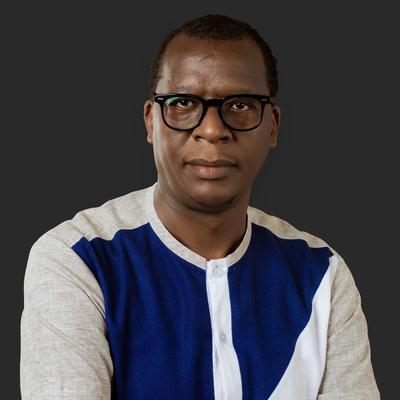
Desire Kagabo
Project Leader
Livingstone Byandaga
Research Specialist
Mvuyibwami Patrick
Senior Research Associate