Blog Where science meets service: The ECREA model is transforming research and learning

Young student researcher from Taita Taveta University - supported by the project led by the Alliance of Bioversity International and CIAT- AICCRA - are applying science to serve farmers in Machakos County through the ECREA project, linking research, learning, and community resilience against climate change. This is the experience in the student's own words.
When I enrolled in the MSc in Climate-Smart Agriculture (CSA) at Taita Taveta University in 2024, my goal was to help smallholder farmers adapt to the impacts of climate change through sustainable solutions. With the support of the Alliance of Bioversity International and CIAT, that vision is steadily becoming a reality.
The Accelerating Impacts of CGIAR Climate Research for Africa (AICCRA ) and the Enhancing Climate Change Resilience in East Africa (ECREA) projects came at a defining moment in my academic path, when theory was seeking purpose, and passion was seeking a platform. Getting a thesis project that is related to the ECREA field experiment has been a great way for me to put what I've learned to use. My research focuses on “Assessment of climate-informed practices effects on bean productivity and farmer climate risk management in Machakos County. A topic deeply anchored in Kenya’s national adaptation agenda and the broader vision of resilient food systems for Africa.
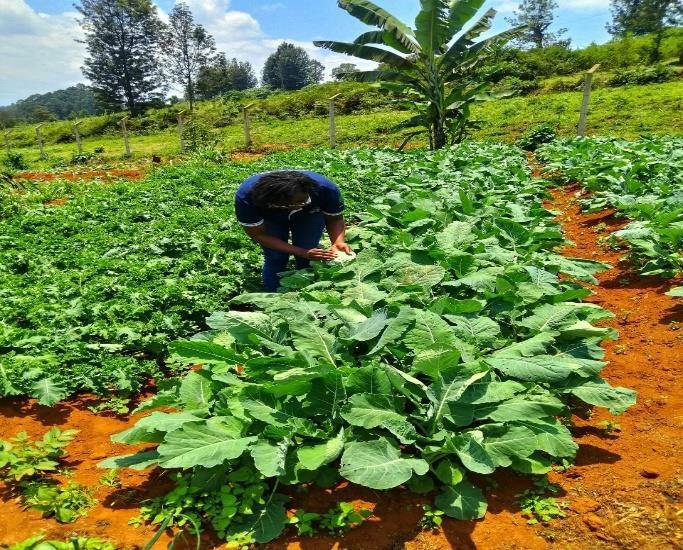
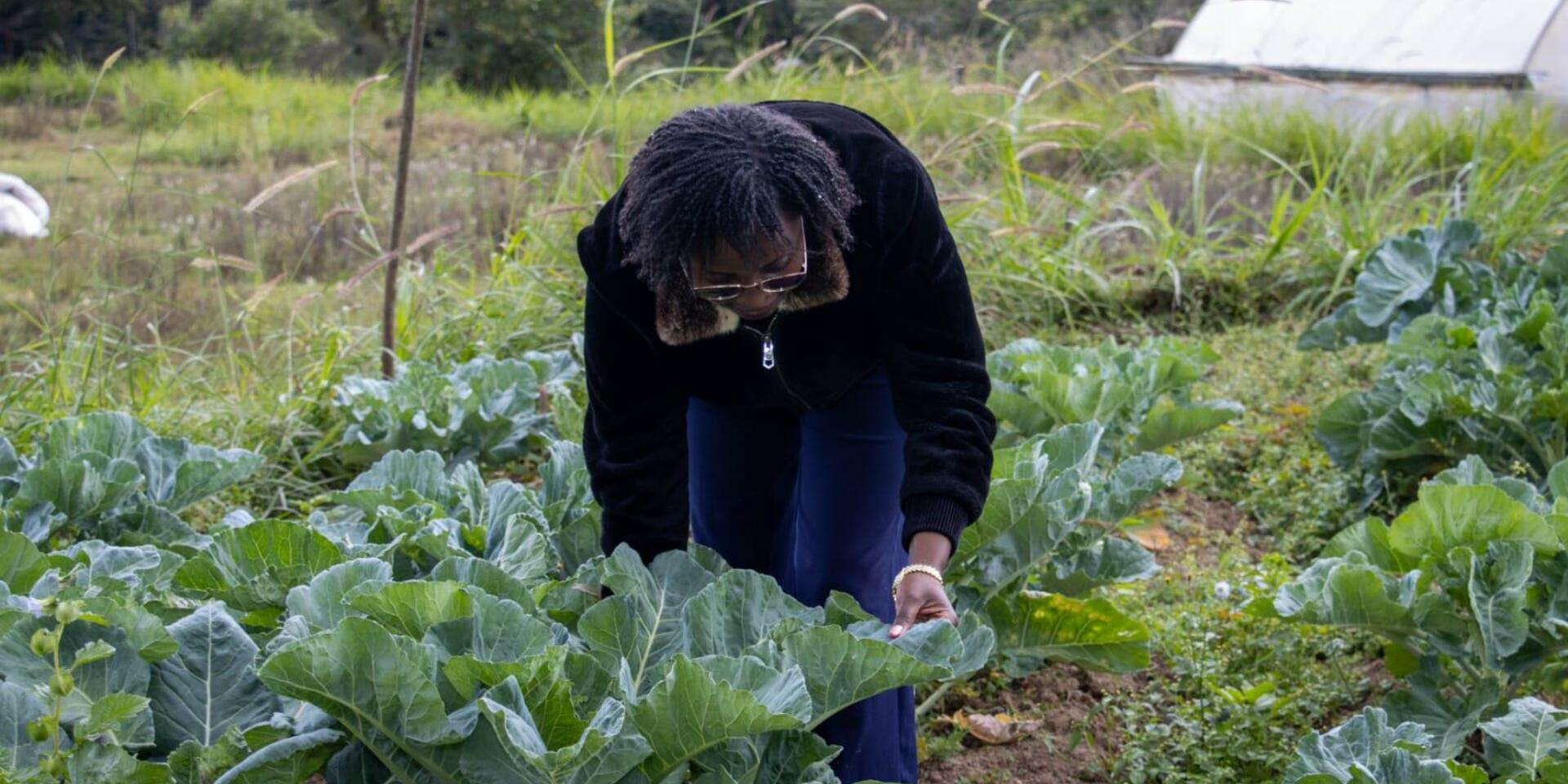
Scouting in the field to assess crop performance.
Through interactive sessions with researchers, university professionals, meteorologists, and extension specialists, I have gained a deeper appreciation for how multi-disciplinary collaboration drives meaningful innovation in agriculture. Not only have I learned to design an experiment, but also to listen to farmers, translate climate forecasts into action, and uphold scientific integrity at every stage of data collection.
Every dataset, every photograph, and every observation we collect represents a story of resilience, a farmer’s hope, and a researcher’s responsibility to generate knowledge that transforms lives. The greatest transformation was internal: a renewed sense of purpose to ensure that every piece of data collected translates into knowledge that empowers farmers, policymakers, and communities. Working with the Alliance has been a masterclass in seeing how collaboration can transform agricultural research from theory into tangible impact. What strikes me most is how clearly each stakeholder’s role matters and how they interlock. I’ve seen firsthand how the Alliance’s coordination and rigorous standards provide the entire endeavor with its scientific backbone, ensuring that our work here in the field meets a global standard.
I have understood that it is one thing to study climate-smart practices, and another to choose which seeds to plant or treatments to apply based on hyper-local, actionable weather advisories. Helping students learn to interpret this data for farmers is incredibly rewarding. They are the ones getting their hands in the soil, collecting data, and having the dialogues that bring the research to life. These projects have taught me that climate resilience isn’t built by any single entity, but by a dedicated ecosystem where institutions, science, practical knowledge, and community trust all work in concert for a common goal.
This chain of linked information shows what CSA really means: everyone is responsible for the future. Through joint planning, co-creation, and participatory research, we are not just generating data; we are building a legacy of empowered farmers, informed students, and resilient agricultural systems.
Through ECREA, as we prepare to begin fieldwork, experimental plots funded by farmers will become real-world labs for climate change research. These plots are more than research sites; they also show how well students are performing and how well they are working together. Each one demonstrates that farmers, researchers, and groups are committed to collaborating to test, learn, and improve. Selecting seeds, applying fertilizers, tracking growth stages, and photographing the field are all part of a larger story about resilience, learning, and adaptation.
We will monitor crop progress over the next few months, gather data, report any issues, and continue learning. We aim to deliver completed field manuals, cleaned datasets, student theses, and at least two peer-reviewed scientific publications, clear evidence that young scientists are empowered.
So, what is the impact of this journey?
- We are not only writing a thesis; we are becoming boundary-spanning researchers who can translate between data, research protocols, and a farmer's field.
- Science must solve problems, and climate information is power.
- A climate-smart curriculum is a strategic imperative. It is the foundational investment for national climate adaptation. Without it, policies and technologies risk failing because the human capacity to implement them is missing.
The ECREA field experiment is more than just a project; it's a way to make farming better and smarter for a sustainable future. Adapting to climate change calls for widening the options for farmers.