Blog County-level engagement in Homa Bay, Kenya to improve farmers' access to climate information


The Enhancing Climate Resilience in East Africa (ECREA) project continues to deepen its engagement with county partners in Kenya, following a recent call to the Director of Climate Change in Homa Bay County. The meeting provided a valuable platform to assess the project’s progress in the county and explore opportunities to strengthen the delivery of climate information to smallholder farmers.
ECREA is currently implementing activities in Homa Bay that support bean farmers with timely, location-specific climate information. The project works closely with the Kenya Meteorological Department (KMD) and the Kenya Agricultural and Livestock Research Organization (KALRO) to ensure that farmers receive localized forecasts and advisories that guide decisions throughout the cropping season. A core part of this work is a cascading training approach, where Trainers of Trainers (ToTs) equip farmer groups with practical skills to interpret and apply agroclimatic information. To date, this model has helped build the capacity of more than 46,000 farmers across Kenya, strengthening communication and improving decision-making in bean production. These efforts build on years of investment by the Pan-Africa Bean Research Alliance (PABRA) and the BRAINS initiative, whose leadership in bean research, seed systems, and farmer engagement has created a strong foundation for scaling climate services. Building on this platform enables ECREA to deliver more integrated, farmer-centered advisories that respond directly to the needs of bean farmers in Homa Bay and beyond.
In addition, ECREA is leveraging existing Climate Change Units (CCUs) as key channels for reaching farmers with climate information. Through a partnership with KMD, which provides counties with localized forecasts and advisories, the CCU within the Department of Water, Sanitation, Environment, Energy, Forestry and Climate Change plays a central role in disseminating this information across communities. While the project relies on Agricultural Advisory Committees (AACs) in other countries, in the Kenyan context the CCU serves a similar function by connecting climate information providers with farming communities.
During the engagement, the Director of Climate Change, Mr. Roy Odongo, emphasized the critical role of climate information in safeguarding farmer livelihoods in the county:
“Climate information is no longer a luxury for our farmers; it is a lifeline. Here in Homa Bay, timely and accurate forecasts empower farmers to plan better, reduce losses and build resilience in the face of an unpredictable climate. Strengthening these information pathways is essential for safeguarding livelihoods across our county.”

A highlight of the engagement was the county’s climate call center, an emerging resource for real-time, two-way communication with farmers. Through the call center, farmers can receive immediate climate updates, ask questions, and seek clarification on advisories. This interactive model not only improves access to information but also encourages farmer confidence in applying climate insights to their day-to-day agricultural production decisions.
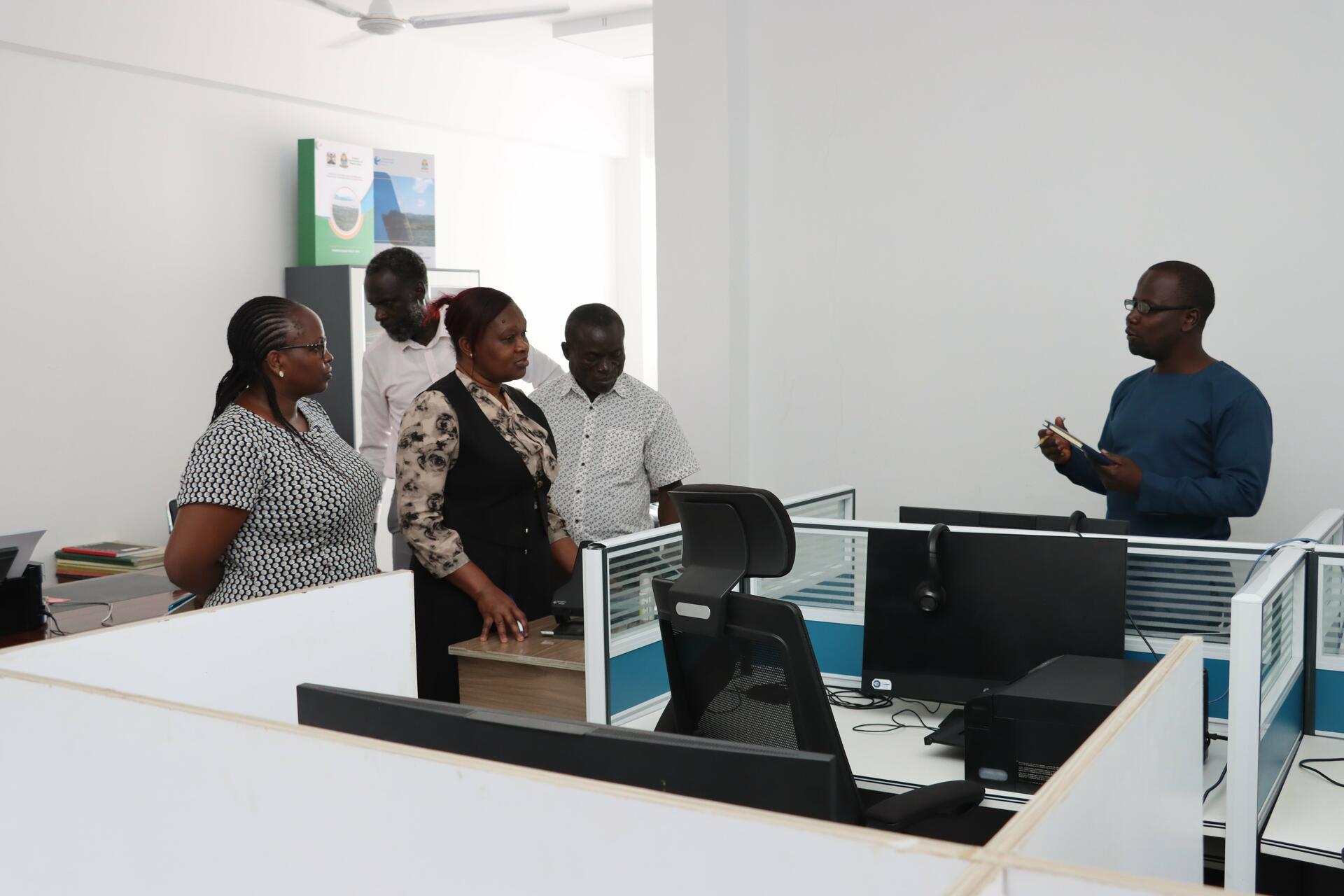
Victor Orina, Deputy Director of Climate Change, demonstrating how the climate call center supports real-time farmer engagement.
Discussions during the call highlighted shared priorities such as improving coordination between climate information providers and agricultural departments, ensuring information is tailored to the needs of farmers and expanding the channels through which advisories reach rural communities. Both teams agreed that strengthening the county’s existing systems, instead of creating parallel ones, is crucial for sustainability and broader uptake.
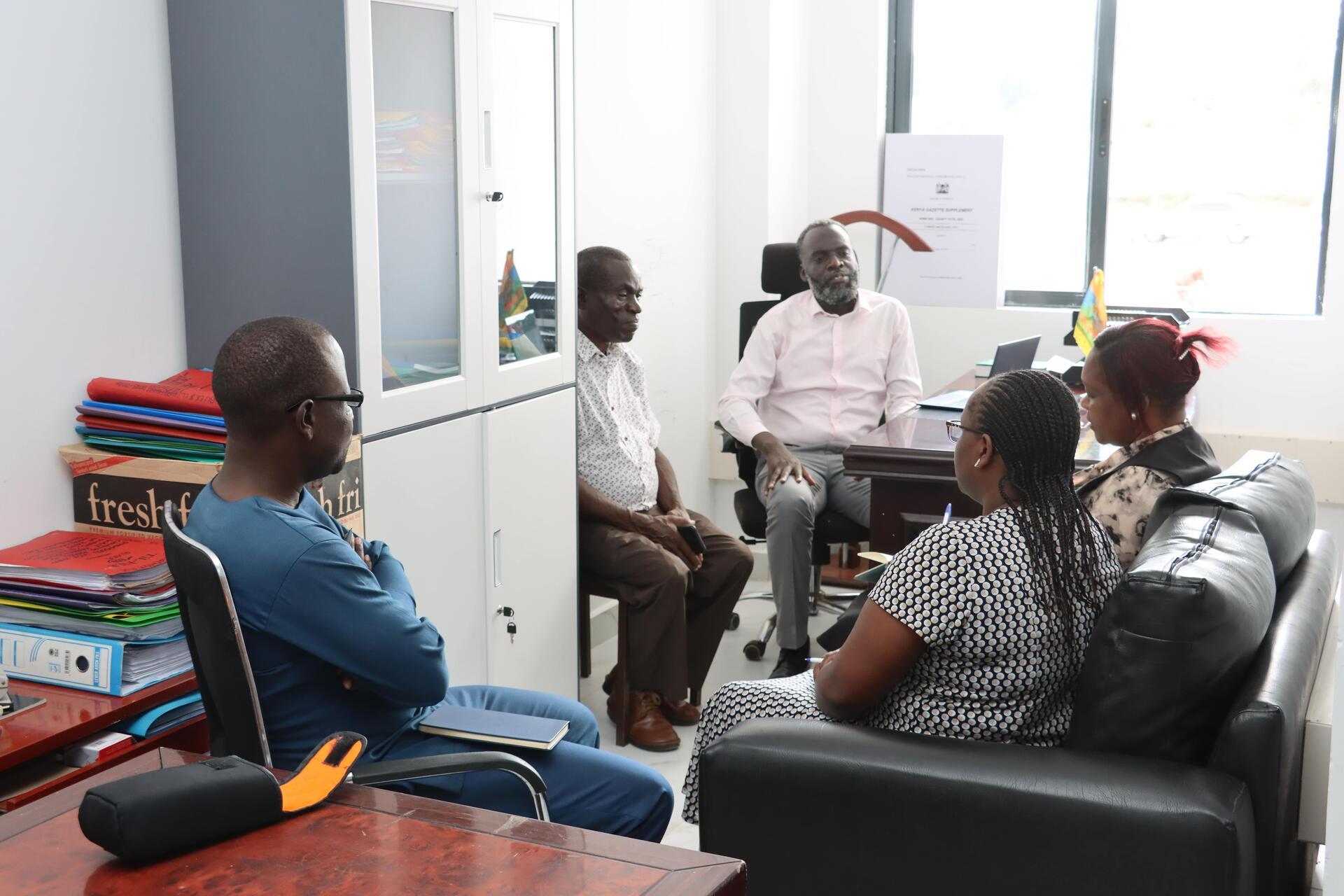
Collaborative discussions between ECREA, KMD and Homa Bay County officials on strengthening climate services for farmers.
The visit also underscored the value of continued collaboration with KMD - a key technical partner in delivering localized climate information under ECREA. Through this partnership, county teams are better equipped to provide forecasts that farmers can interpret and act upon, ultimately contributing to improved planning and resilience at farm level.
As the season progresses, ECREA will continue working closely with Homa Bay’s climate and agricultural units to identify practical, ongoing ways of supporting the county’s efforts. The call reaffirmed an existing partnership and strengthened alignment between project activities and county priorities, reinforcing a shared commitment to ensuring that farmers especially those in the bean value chain consistently receive the climate information they need to navigate a changing climate.
The Alliance team

Desire Kagabo
Project Leader