Blog How ECREA is bridging science and practice to turn climate insights into farmer resilience


The ECREA project is engaging farmers, researchers and institutions across East Africa in on-farm experiments launched in 2024 to test climate-informed practices that boost resilience and productivity in real farming conditions.
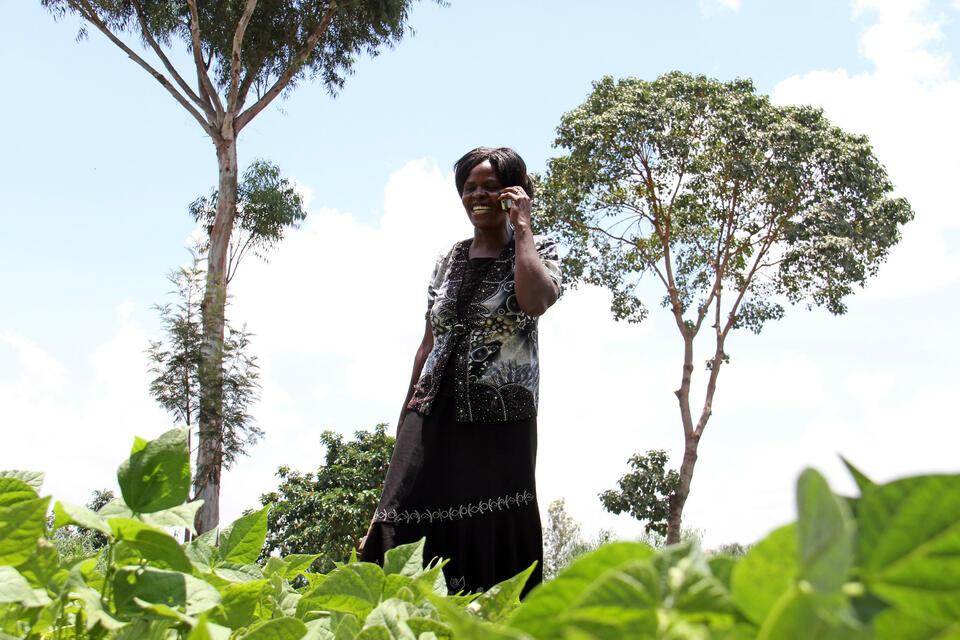
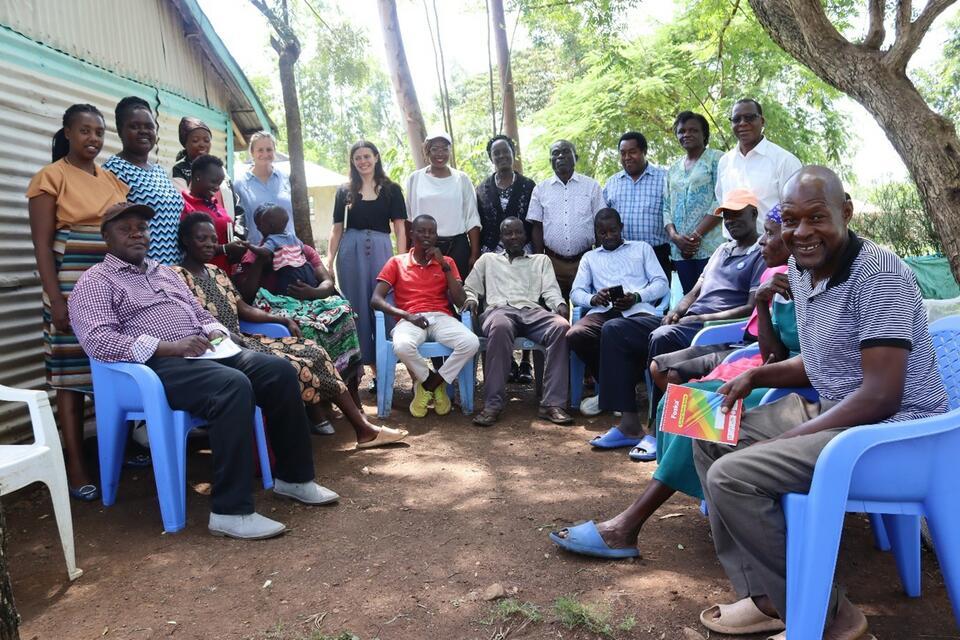
Over the past two years, the project titled 'Enhancing Climate Resilience in East Africa (ECREA)' has worked with farmers, extension officers and local partners across Kenya, Rwanda, Tanzania, and Uganda to make climate information more accessible and actionable. Through face-to-face trainings, seasonal forums, and media partnerships with community radio stations, the project has helped thousands of smallholder farmers understand and apply Weather and Climate Information Services (WCIS) to guide on-farm decisions. This collaborative approach has strengthened trust between information providers, researchers and farmers, demonstrating that when climate data is translated into local context, it can directly shape how people plan, plant, and harvest.
Building on this foundation, the project has entered a new phase focused on participatory on-farm experiments across the four implementing countries: Kenya, Rwanda, Tanzania, and Uganda. Through these experiments, farmers will apply and compare climate-informed practices in real field conditions and generate evidence on how such decisions can boost resilience and productivity. A core principle of this approach is that adoption is not one-size-fits-all. Farmers will select specific climate-smart agriculture (CSA) practices based on a combination of seasonal forecasts, Weather and Climate Information (WCI), and co-produced advisories, while also considering their individual capacity to implement them. This ensures the chosen practices are both contextually appropriate and feasible for each farmer's unique resources and constraints.
Each participating farmer will establish a paired-plot design, managing one plot according to conventional practices and a second, climate-informed plot. For the climate-informed plot, the farmer serves as the primary decision-maker, selecting and adapting CSA practices from a validated portfolio.
This selection process is guided by seasonal forecasts and co-produced agro-advisories, yet critically mediated by the farmer's assessment of their own operational capacity, including resource endowment, labor constraints, and financial feasibility. This approach ensures that the implemented practices are not only agro-climatically appropriate but also socio-economically viable and adoptable at the individual farm level.
By comparing outcomes between the two plots, the project will collect data on yields, input use, and labor to understand the real-world benefits of climate-informed practices. This evidence will directly inform project learning, policy dialogue, and scaling of CSA interventions across East Africa.
In Kenya, the experiments will take place in Elgeyo Marakwet, Nakuru, Machakos, and Homabay counties: areas already engaged through ECREA’s earlier work on WCIS and agro-advisories.
These sites represent diverse agro-ecological and socio-economic conditions, providing an ideal opportunity to assess how different communities apply and benefit from climate information.
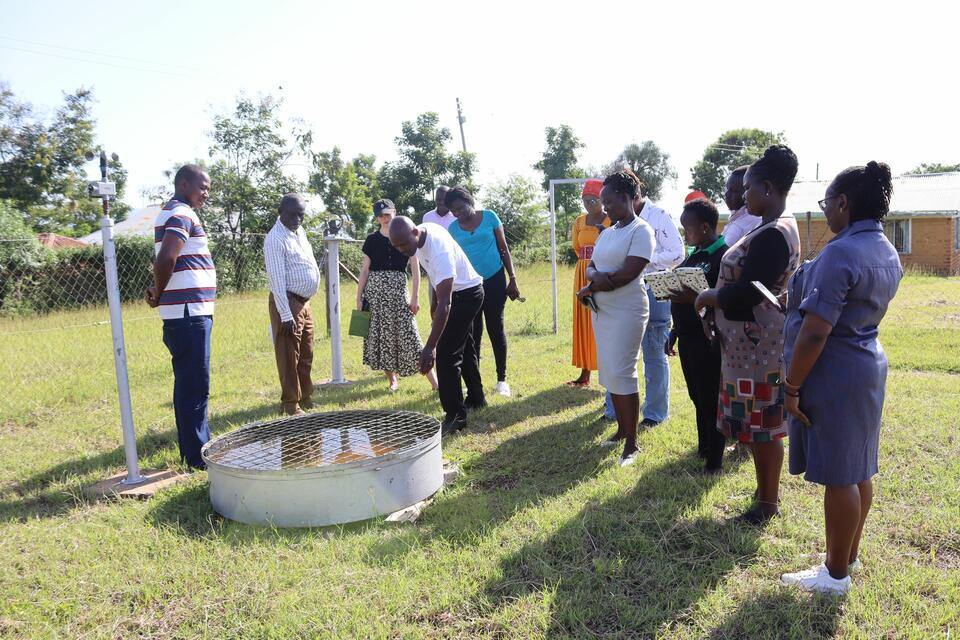
Each 10x10 meter plot becomes a living laboratory where farmers test, observe, and document how rainfall patterns, planting dates, and fertilizer applications guided by forecasts impact productivity.
Through this approach, ECREA reinforces trust in scientific data and demonstrates how localized climate information can transform everyday decisions on the farm.
Students at the heart of climate-smart innovation
A distinctive innovation of the project is the involvement of graduate students from partner universities — Murang’a University of Technology, Taita Taveta University, Laikipia University, and Chuka University — who are conducting their thesis research through the field experiments. Having completed their coursework and developed research concepts aligned with ECREA’s objectives, the students will lead the experiments with farmers, bridging academic inquiry and practical application. This approach builds on the strong existing partnership between the AICCRA program and Kenyan universities to mainstream climate-smart knowledge, research, and innovations into higher education and local development systems.
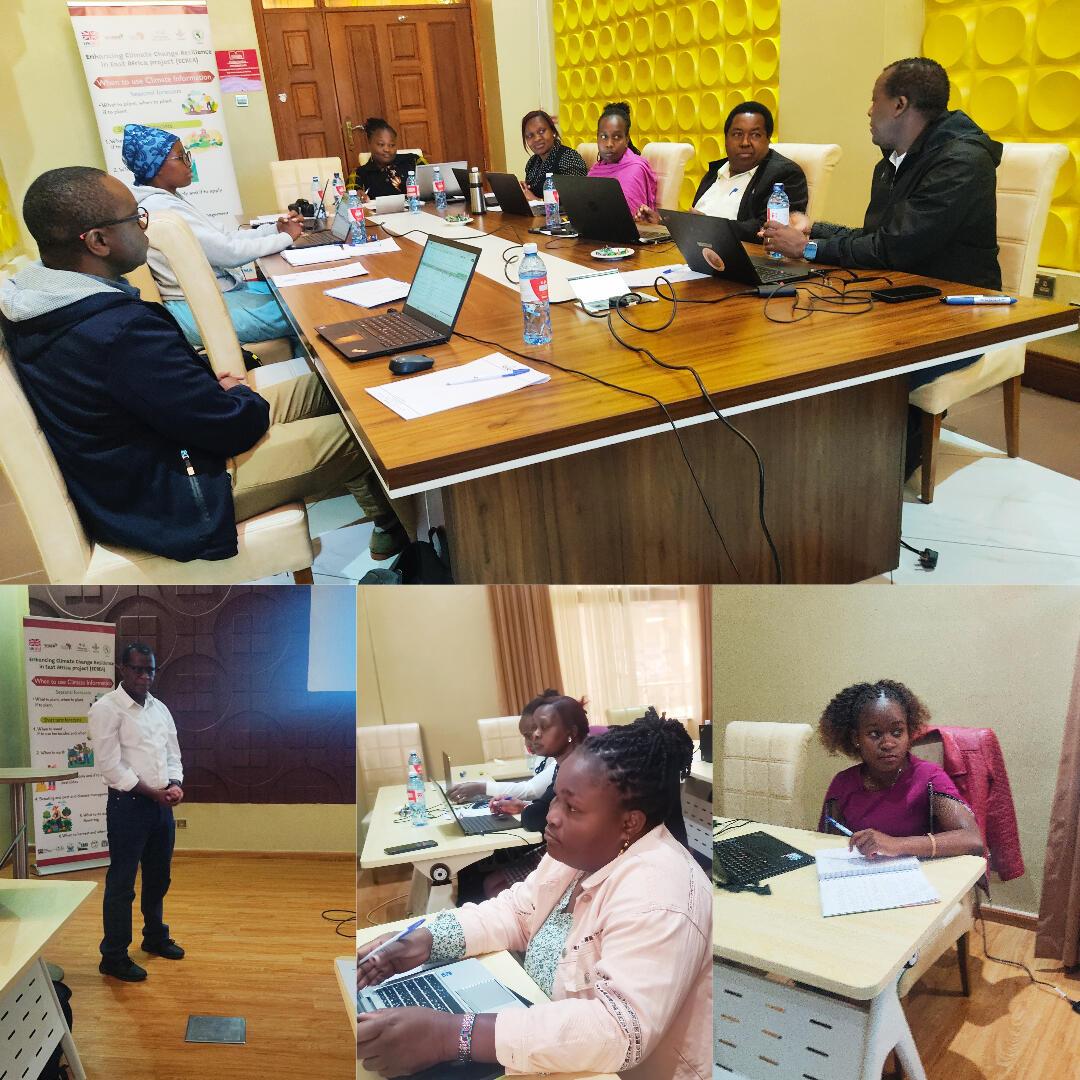
Project partners during a training workshop in Naivasha on implementing on-farm experiments.
Reflecting after the Naivasha training workshop, Karen Gichunge from Taita Taveta University noted:
‘’The ECREA project came at a defining moment in my academic path when theory was seeking purpose, and passion was seeking a platform. My research on the effects of climate-informed practices on bean productivity has shown me that science works best when rooted in the soil of reality and watered by collaboration.”
Through collaboration with the Alliance of Bioversity International and CIAT, national research systems, meteorological departments, and universities, the model ensures that science, education, and community development move in step. While the Alliance provides technical backstopping and data quality assurance, institutions such as KALRO facilitate farmer engagement, and meteorological agencies supply localized forecasts.
Universities, meanwhile, supervise students to ensure research rigor and alignment with academic standards together forming a 'whole-system' approach to climate-smart learning and implementation.
From field to policy: Evidence that drives change
The participatory experiments will run until January 2026, culminating in analyzed datasets, graduate theses, and peer-reviewed publications that capture how weather-informed practices contribute to both resilience and productivity.
Beyond academic outputs, the results will provide policy-relevant evidence to support the integration of WCIS and impact-based early warnings (IBEWs) into agricultural planning frameworks at local and national levels.
By linking farmer experience, student research, and institutional collaboration, ECREA is creating a replicable model for evidence-based climate adaptation, one that strengthens the science-policy interface and ensures research directly benefits the communities it serves.
The ECREA model demonstrates that when science, service, and society converge, transformation follows.
Farmers become co-researchers, students become champions of innovation, and institutions co-create solutions that are not only sustainable but scalable across regions and value chains.
As the experiments begin across Kenya, Uganda, Tanzania, and Rwanda, they stand as a testament to collective action proof that resilience is cultivated in the field, where knowledge meets need.