Blog Breaking barriers: Making climate information accessible to every farmer

Climate services across Uganda, Tanzania, and Rwanda are being scaled through the ECREA project by strengthening local advisory institutions, training extension officers and farmers, and expanding communication channels like radio, SMS platforms, and community groups.
Through linking meteorological services with agricultural experts, media partners, and farmer organizations, the project delivers localized, inclusive climate advisories that help smallholder farmers adapt to increasing climate variability and make informed agricultural decisions.
Climate variability is increasingly disrupting agricultural production across East Africa. Delayed rainfall, shifting planting seasons, and prolonged dry spells are making traditional farming calendars less reliable. For smallholder farmers, the difference between a successful harvest and crop failure increasingly depends on timely access to reliable weather and climate information.
But providing climate information at scale requires more than producing accurate forecasts. It requires systems that can interpret climate data, translate it into practical agricultural advice, and deliver that information through communication channels that farmers trust.
Scaling climate services, therefore, depends on strengthening the institutional and communication systems that connect national climate forecasts with farmers’ day-to-day decision-making.
A key factor in expanding climate services across the region has been strengthening local advisory systems that connect national climate forecasts with farmer decision-making.
Across Uganda, Rwanda, and Tanzania, Agro-Climate Advisory Committees bring together meteorological experts, agricultural researchers, extension officers, environmental officers, media partners, and farmer representatives to jointly interpret seasonal climate forecasts and develop localized agricultural advisories.
In Kenya, similar coordination takes place through Climate Change Units embedded within county governments. These units link meteorological services, agricultural extension systems, and communication platforms to ensure that climate information is translated into actionable guidance for farmers.
Through these institutional platforms, climate forecasts are interpreted, translated into agricultural advisories, and disseminated through multiple communication channels, including extension networks, community radio programs, farmer organizations, and Radio Listener Clubs. Capacity development has also played a critical role in expanding climate services across the region.
The project adopted Participatory Integrated Climate Services for Agriculture (PICSA) training approaches to strengthen the ability of extension officers, local government officials, and farmer organizations to interpret and apply climate forecasts in agricultural decision-making. Through PICSA-lite training and related farmer engagement activities, the project has supported face-to-face training for more than 300,000 farmers, extension officers, and local stakeholders across Uganda, Kenya, Tanzania, and Rwanda.
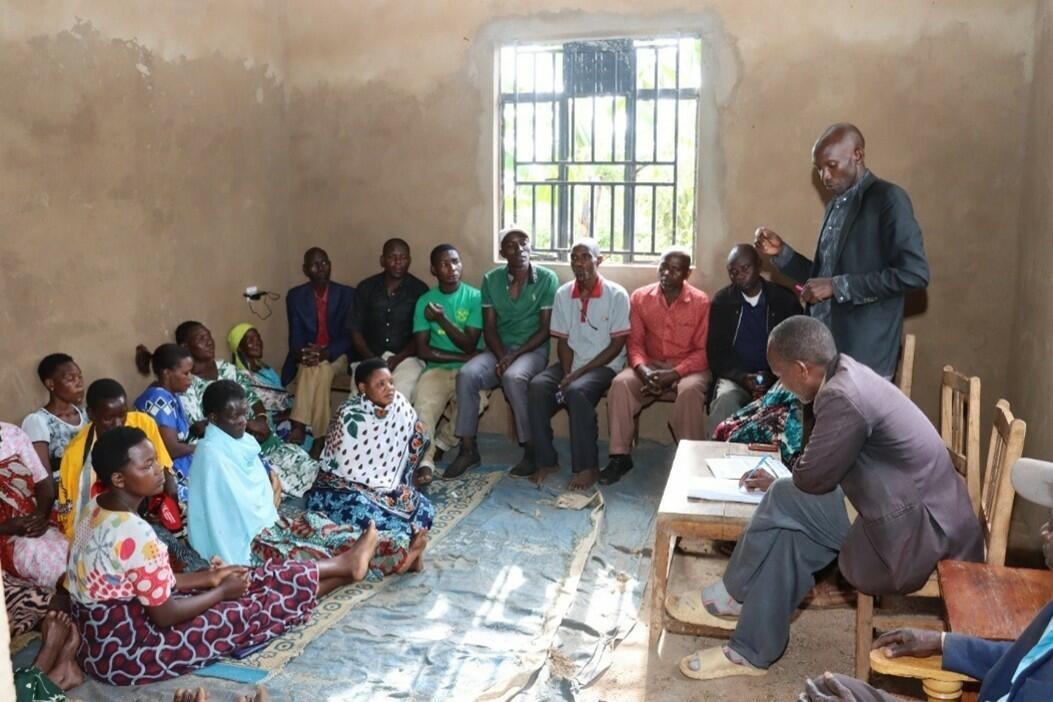
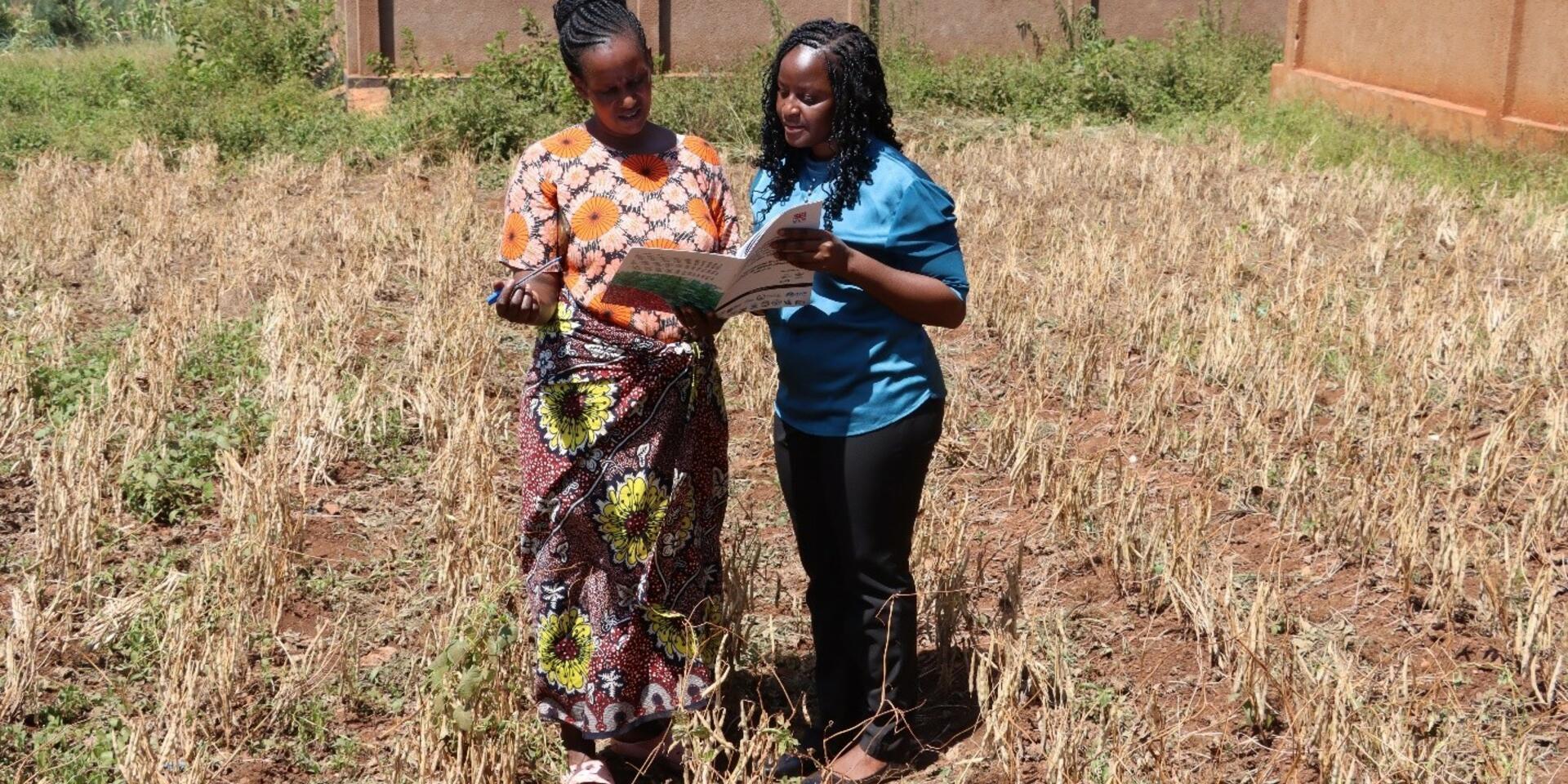
PICSA training session equipping farmers with skills to interpret climate information and make informed farming decisions.
These trainings equip participants with the skills to analyze historical climate data, interpret seasonal forecasts, and use participatory decision-making tools to adapt their farming practices. By strengthening the capacity of extension systems and local institutions, the project has helped ensure that climate information can be interpreted and communicated far beyond the immediate reach of project activities.
Scaling climate services has also required strengthening communication channels that allow climate advisories to reach large numbers of farmers quickly and effectively.
Community radio programs, Radio Listener Clubs, and farmer group meetings have proven particularly effective in disseminating climate information in local languages. These platforms allow farmers to listen to forecasts collectively, discuss advisories, and share experiences about how changing weather patterns affect their crops.
Chacha Mang’ache, a researcher at the Tanzania Agricultural Research Institute (TARI) in Maruku, Bukoba, explains how this collaboration between researchers, meteorological services, and the media
“Through the ECREA project, we now work closely with the Tanzania Meteorological Authority to interpret weather forecasts and translate them into guidance that farmers can use. We have also established Radio Listener Clubs that allow farmers to listen to forecasts together, discuss what the information means for their crops, and prepare early by selecting appropriate seed varieties and farming practices. By sharing this information through media platforms such as FADECO Radio, we are able to reach many farmers more quickly and support their decision-making.”
Digital and media partnerships have further expanded the reach of climate services. Through collaborations with widely used agricultural media platforms such as Shamba Shape Up and iShamba, climate-smart agriculture and weather advisories are disseminated through television, SMS messaging, and radio programs, reaching diverse audiences including farmers, extension agents, and agribusiness stakeholders.
By leveraging these institutional partnerships and communication platforms, the project has delivered co-produced agroclimatic advisories and early warnings to more than 557,000 users across the four countries.
Importantly, scaling climate services has also required ensuring that access to climate information is inclusive. In many rural communities, women farmers may have limited control over radios or mobile phones, which can affect their ability to receive climate advisories. Recognizing these challenges, the project promoted more inclusive climate information delivery systems.
Recognizing that climate impacts are not experienced equally, the project deliberately integrated Gender Equality and Social Inclusion (GESI) into its design and implementation. Efforts were made to ensure that women, youth, and other underrepresented groups were actively involved in climate advisory processes, including participation and leadership in Agro-Climate Advisory Committees and community communication platforms. Women were intentionally encouraged to participate in advisory committees, farmer training platforms, and community meetings, creating opportunities for their voices and experiences to shape climate advisories.
Radio Listener Clubs also created shared spaces where women could access forecasts collectively, discuss climate advisories, and contribute to conversations about climate risks and farming decisions. Communication partners were encouraged to adopt inclusive dissemination approaches such as local language broadcasts, voice-based messaging, and flexible broadcast scheduling to reach farmers with limited access to digital technologies. These efforts helped ensure that women were not only recipients of climate information but active participants in climate advisory systems and local decision-making processes.

Desire Kagabo
Project Leader“From the outset, the project deliberately created space for women to participate and lead within Agro-Climate Advisory Committees and other climate advisory platforms. Women farmers are often among the most affected by climate variability, yet their voices are frequently underrepresented in decision-making. By strengthening their leadership and participation, we are ensuring that climate information services reflect the realities of all farmers and support more inclusive and effective adaptation.”
The experience of the ECREA project demonstrates that climate services can be successfully scaled when they are embedded within institutional partnerships, strengthened through capacity development, and delivered through communication systems that farmers trust.
Across Uganda, Kenya, Tanzania, and Rwanda, climate services are increasingly moving from isolated pilot initiatives toward coordinated systems capable of reaching large numbers of farmers.
As Musana Bernard, Head of Forecasting at the Rwanda Water Resources Board, highlights the importance of strengthened collaboration:
“Through the ECREA project, collaboration with district disaster management committees has strengthened the social capital needed for effective early warning. These relationships have also improved coordination between meteorological services and the ministries responsible for overseeing early warning systems.”
As climate variability continues to affect farming systems across East Africa, these expanding climate service systems will play an increasingly important role in helping farmers anticipate risks, adapt agricultural practices, and strengthen the resilience of their livelihoods.
The team
Desire Kagabo
Project Leader
Livingstone Byandaga
Research Specialist
Mvuyibwami Patrick
Senior Research Associate