Blog Smart farming with weather and climate information: Empowering Rwandan farmers to beat the climate crisis
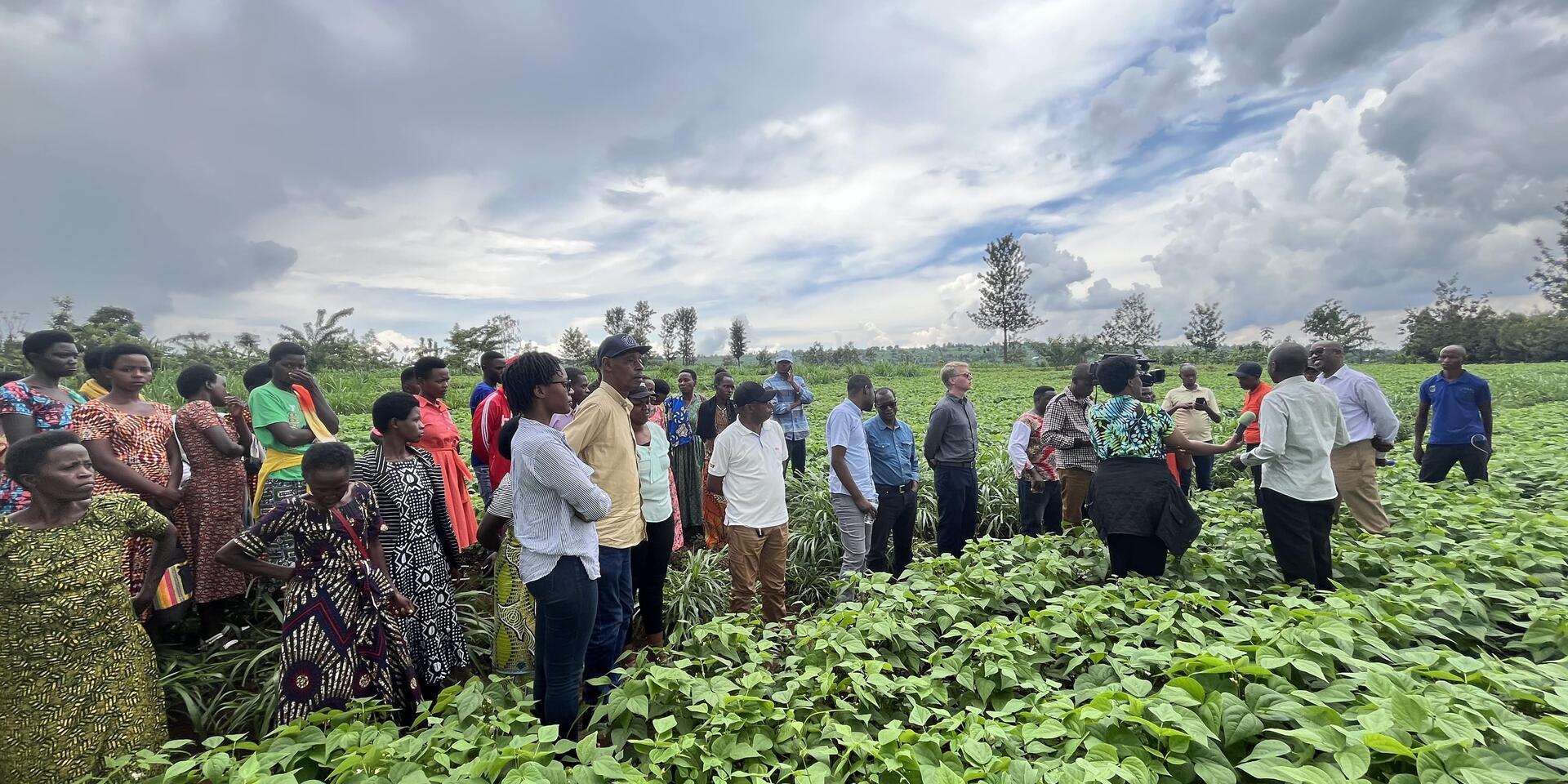

In November 2024, the ECREA project hosted a high-level donor review visit, providing a crucial platform to showcase progress, impact and future aspirations. The visit included a detailed presentation highlighting key achievements, challenges and opportunities for scaling climate adaptation interventions. Stakeholders shared compelling narratives of transformation, emphasizing how the initiative has directly empowered farming communities. A field visit to farmers farms was also conducted.
In Rwanda, where agriculture is the backbone of the economy, farmers face increasing challenges from climate change. Unpredictable weather patterns and extreme climate events threaten crop yields, livelihoods, and food security. To help farmers adapt and thrive, innovative projects like the East Africa Climate Resilience Enhancement (ECREA) are stepping in with transformative solutions.
The ECREA project is funded by the UK Foreign, Commonwealth, and Development Office (FCDO) through the UK Met Office and is implemented by the Alliance of Bioversity International and CIAT. The project is focusing on four East African countries— Kenya, Rwanda, Tanzania, and Uganda. It sets out to improve coping and adaptive capacities of the farming communities by strengthening both the supply and demand sides of the WCIS equation. With a keen emphasis on partnership and collaboration, the project leverages the expertise of National Agricultural Research Systems (NARS), National Meteorological and Hydrological Services (NMHS) and strategic alliances with organizations—IGAD Climate Prediction Applications Center (ICPAC), Shamba Shapeup and iShamba and community radios such as Radio Huguka in Rwanda and FADECO Radio in Tanzania—to foster inclusive and accessible climate resilience strategies.
The ECREA project in Rwanda is transforming the agricultural landscape for bean farmers by leveraging innovative strategies such as PICSA-lite (a modified version of PICSA), Radio Listeners Clubs, Duterimbere Muhinzi, and Agro-Climate Advisory Committees. Through these initiatives, over 100,000 Rwandan farmers, predominantly youth and women—among the most vulnerable to climate change—have gained access to accurate and context-specific Climate Information Services and Impact-Based Early Warnings. A key component of the project is training farmers in the Light Participatory Integrated Climate Services for Agriculture (Lite-PICSA) approach. In Rwamagana District, including the Karembo sector, farmers have been equipped with knowledge on using weather forecasts to guide their decisions, empowering them to adapt to changing conditions and improve productivity.
“Farming in our region is seasonal, so we need to use this weather information to make informed decisions,” noted Dr. Desire Kagabo, ECREA project lead. “We are here to help farmers adapt to climate change by providing them with accurate and timely weather information.”
During a recent field visit to Karembo, stakeholders witnessed first-hand the impact of WCIS on bean farming. Farmers receive weather forecasts and climate information through radio broadcasts, SMS alerts, and peer farmers. These forecasts guide them on field preparation, planting schedules, and crop variety choices.
One of the success stories is that of Nzeyimana Alexis, who, on behalf of his fellow bean farmers, explained how they have leveraged WCIS support to improve their bean production. Their healthy bean crops stand as living proof of the potential for WCIS to positively impact rain-fed agriculture.
“Using weather information has transformed how my fellow farmers and I and we farm,” Alexis shared. “We’ve been able to avoid losses and improve productivity by planting at the right time.”
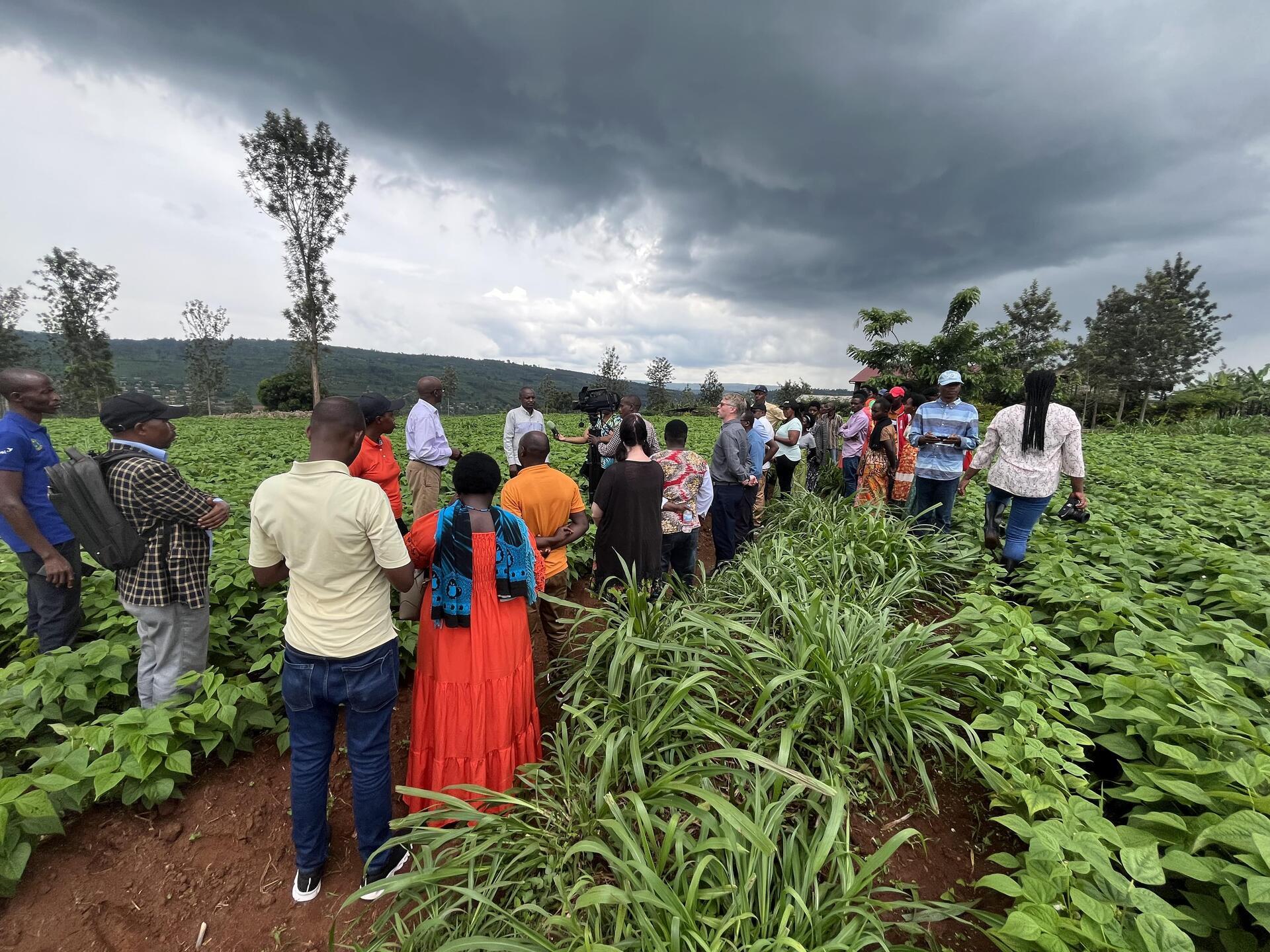
Field visit to bean farmers in Rwamagana District, Rwanda who benefited from training under the ECREA project, showcasing the positive outcomes of capacity-building initiatives.
Harnessing Digital Innovation for Climate Adaptation
The November 2024 high-level donor engagement event provided a crucial platform to showcase progress, outcomes, and future aspirations. The meeting featured a detailed presentation on key achievements, challenges and opportunities for scaling climate adaptation interventions. It concluded with a field visit, where stakeholders shared compelling stories of transformation, highlighting the initiative's direct impact on farming communities.
The WISER team participating in the field visit event underscored how the project's activities in the Karembo sector, Rwamagana district, align with the FDCO's goals, including fostering resilient food systems and advancing gender-inclusive agricultural practices. Meaningful exchanges during the review set a strong foundation for continued partnership and strategic growth, reinforcing a shared vision for a climate-adaptive agricultural future.
As part of the technical review activities, demonstration plots at a PABRA-managed bean production hub showcased how digital tools are being integrated into climate-smart agriculture.
These included real-time weather monitoring applications, early warning systems, and decision-support tools designed to help farmers adapt to climate variability. The site, operating under the BRAINS project, provided a platform to illustrate practical applications of these innovations. Farmers and extension officers shared testimonials on how these tools have improved productivity and reduced climate-related losses. One participant shared how the early warning system saved their farm from potential losses during an unexpected drought spell, underscoring the practical value of these interventions.
The project emphasized capacity building through hands-on training for both farmers and technical stakeholders. These training sessions equip participants with the skills needed to interpret digital data and apply them for informed agricultural decisions. By combining technical expertise and indigenous knowledge, the initiative aims to strengthen community-led climate resilience strategies.
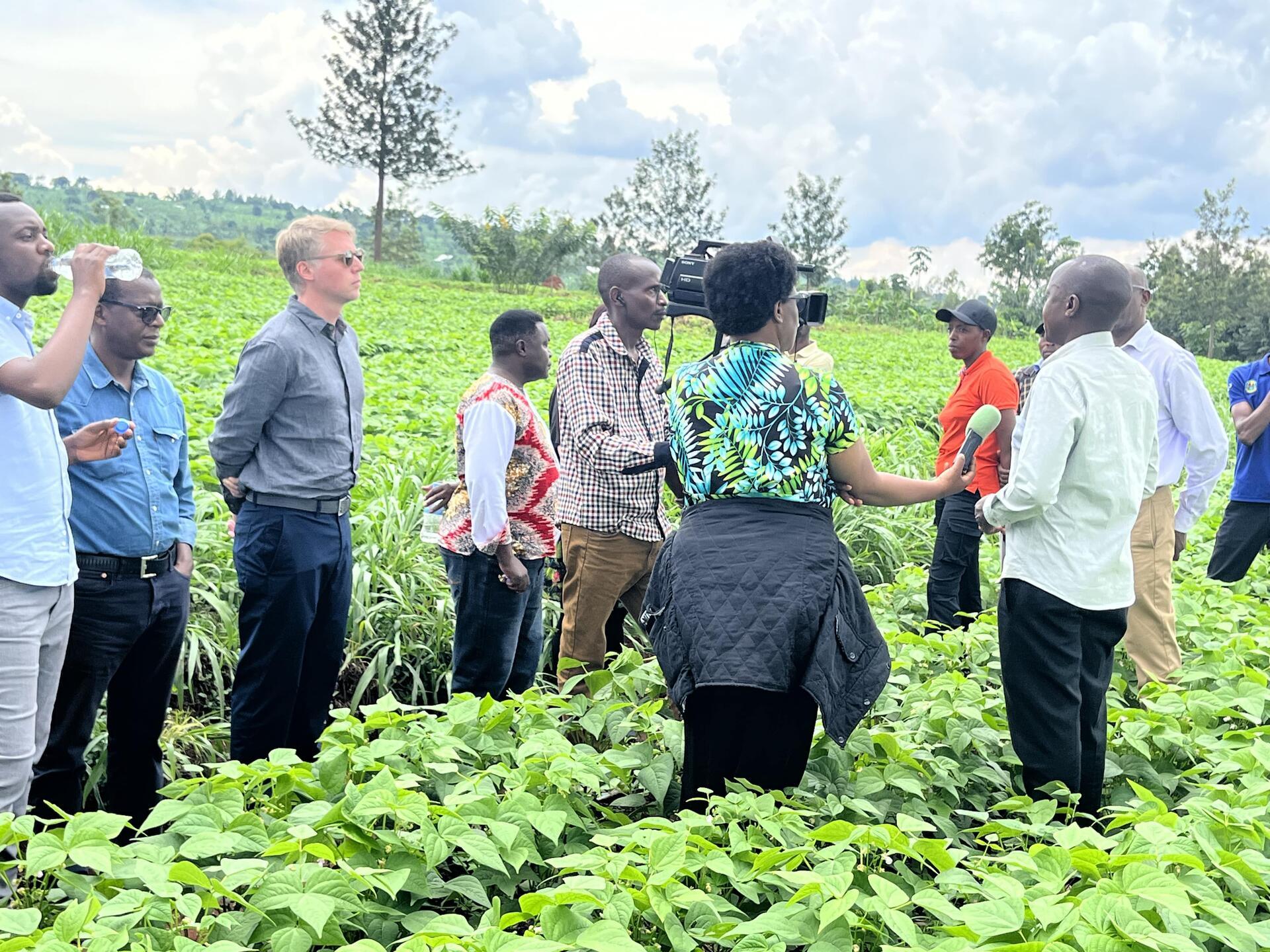
Representatives from FCDO engage with farmers during a donor visit, observing thriving bean crops improved through informed farming decisions guided by climate advisory services.
Building Resilience for the Future
The ECREA project recognizes the challenges faced by farmers and is committed to pushing the boundaries of weather forecast and weather early warning advisories. Efforts are underway to build farmers' capacity to properly interpret Meteo Rwanda's space-time-specific rainfall forecasts to enhance their resilience. Through innovative strategies like PICSA-lite, Radio Listeners Clubs, and Agro-Climate Advisory Committees, the project aims to ensure that Rwandan farmers, especially youth and women, have access to reliable and tailored climate information services.
The recent visit to Karembo provided valuable insights into the needs and aspirations of farmers. As the project continues, partners, including the Alliance of Bioversity and CIAT, UK Met Office, and Rwanda Water Board, remain committed to addressing WCIS-related gaps and building a robust, diversified weather and climate information rollout strategy that empowers farmers to thrive in an unpredictable climate landscape.
The path forward is clear: more localized weather forecasts, community-based training, and enhanced communication channels will be critical in helping farmers build resilience and secure their livelihoods amid the climate crisis. Through continued donor engagement and collaborative partnerships, the vision of a climate-adaptive agricultural future is becoming a reality in Rwanda and beyond.
The Team

Desire Kagabo
Project Leader
Livingstone Byandaga
Research Specialist
Mvuyibwami Patrick
Senior Research Associate