Blog Bundling climate information and finance to strengthen smallholder resilience in Uganda


On 30 June 2026, partners met in Kampala, Uganda, to launch a GEF-funded pilot testing bundled climate advisories, credit, insurance and inputs for 7,000 coffee and tea farmers to strengthen climate resilience and guide future scale
On 30 June 2026, representatives of the Government of Uganda, including the Ministry of Agriculture, Animal Industry and Fisheries (MAAIF), the Ministry of Water and Environment (MWE), and the Ministry of Finance (MoF), joined farmer organisations, local government officials from Masaka and Kyenjojo, financial and insurance service providers, development partners, and the project implementation partners, the Alliance of Bioversity International and CIAT, Solidaridad, the International Food Policy Research Institute (IFPRI) and the Food and Agriculture Organization (FAO), at Hotel Africana in Kampala for the Uganda project inception workshop on Scaling Information and Financial Services for Smallholder Adaptation. The project is funded by the Global Environment Facility (GEF) and managed on its behalf by FAO as the supervising entity.
The workshop focused on how climate information, insurance, credit and inputs can be combined to help smallholder coffee and tea farmers manage climate risk and invest with greater confidence. It marked the transition from project design to implementation of the GEF-funded Bundled Services Pilot for Smallholder Climate Adaptation in Uganda. The pilot will reach 7,000 farmers: 3,000 tea farmers linked to Mabale Tea Growers Factory in Greater Rwenzori and 4,000 coffee farmers working with Ndugu Farmers in Greater Masaka.
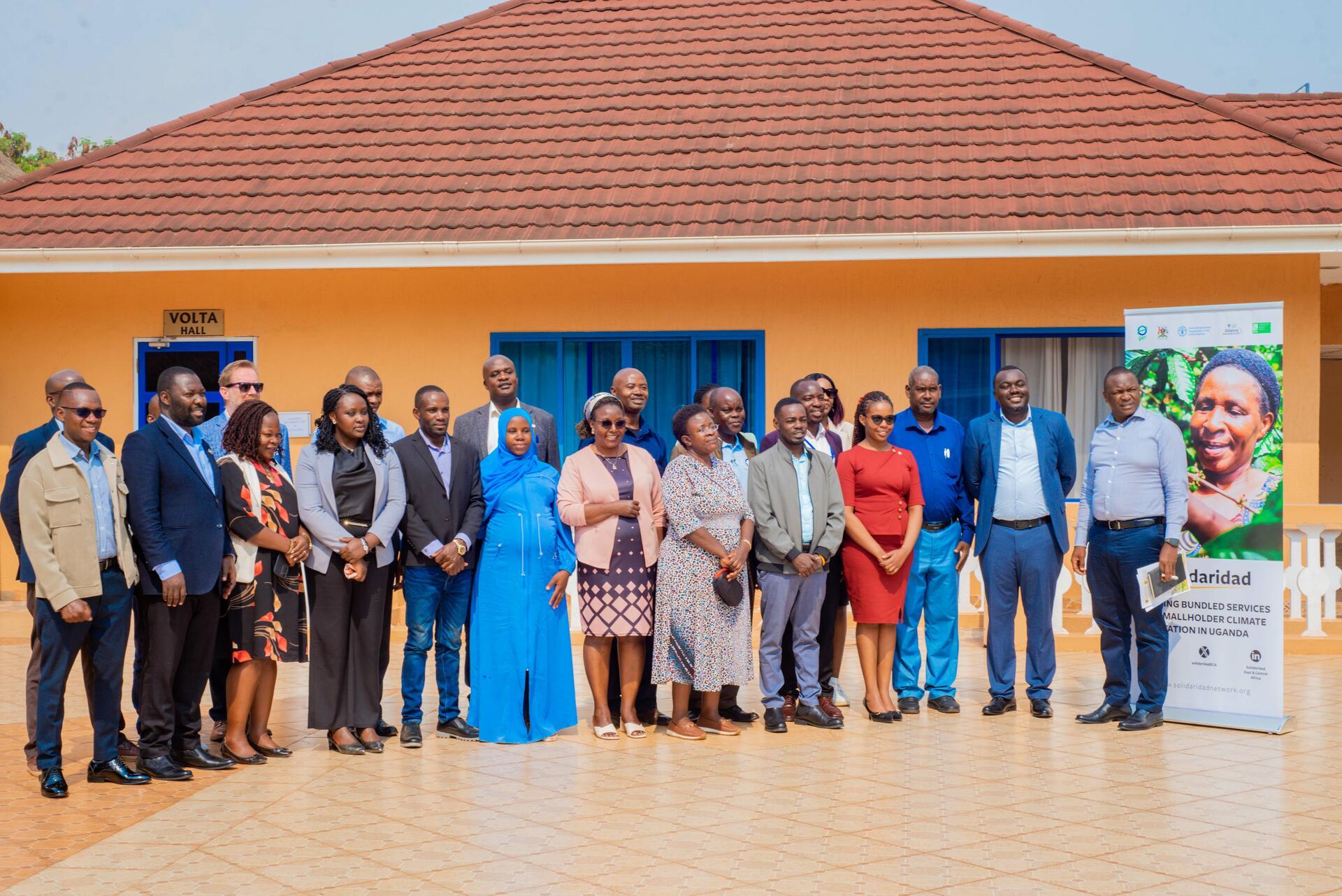
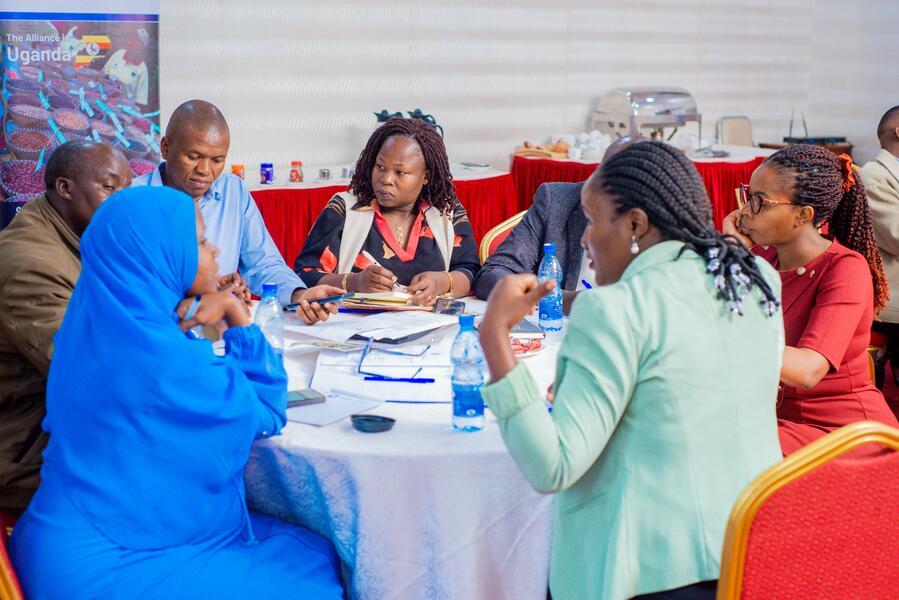
Participants at the Uganda inception workshop for the Bundled Services Pilot for Smallholder Climate Adaptation, held in Kampala on 30 June 2026.
From climate information to the ability to act
Smallholder farmers are increasingly navigating unpredictable rainfall, drought, pests, diseases and other climate-related risks. While timely climate and agricultural advisories can help farmers make better decisions about what to plant, when to plant and how to manage their crops, information alone is often not enough. Without access to affordable finance, quality inputs or appropriate risk protection, many farmers are often unable to act on the advice they receive.
Access to agricultural credit and insurance also remains out of reach for many smallholders. Financial institutions frequently perceive agriculture as a high-risk sector, while available financial products can be expensive, difficult to understand or poorly aligned with farmers' production cycles and investment needs. As a result, many farmers continue to make production decisions under financial constraints that limit their ability to invest in climate-smart practices.
Recognizing that these challenges are closely linked, this GEF-funded project, implemented by the Alliance of Bioversity International and CIAT in partnership with Solidaridad, IFPRI, FAO, government institutions, farmer organizations and financial service providers, is testing integrated service packages through a one-year pilot. The pilot combines climate and agricultural advisories with credit, insurance and agricultural inputs to assess whether addressing these constraints together can improve service uptake, strengthen farmers' capacity to act on climate information, and ultimately improve resilience and livelihoods.
Testing which combination creates the greatest value
The pilot will use a randomized controlled trial (RCT) to compare three service bundles with a comparison group. Eligible participants will be randomly assigned to one of four study arms, following the final research protocol.
The first intervention group (B1) will receive localized climate and agricultural advisories. The second group (B2) will receive advisories combined with index-based insurance. The third group (B3) will receive the full package of advisories, insurance, credit and agricultural inputs. The comparison group (B0) will not receive any of the bundled interventions and will provide the basis for estimating their effects.
By comparing outcomes across the four groups, the study will assess the incremental value of each additional service layer on farmers' use of climate information, insurance uptake, access to credit and investment in agricultural inputs. Where uptake is sufficient, it will also examine effects on productivity, profitability, household consumption and resilience. A cost-effectiveness analysis will compare the benefits generated by each bundle against its delivery costs, helping partners identify the approach that offers the greatest value for wider application.
The evaluation will combine farmer-generated data, programme records and end-of-season monitoring. Before the service bundles are introduced, researchers will also use a tablet-based farm simulation game with a sample of participants to better understand farmers' risk preferences, investment decisions and perceptions of agricultural insurance.
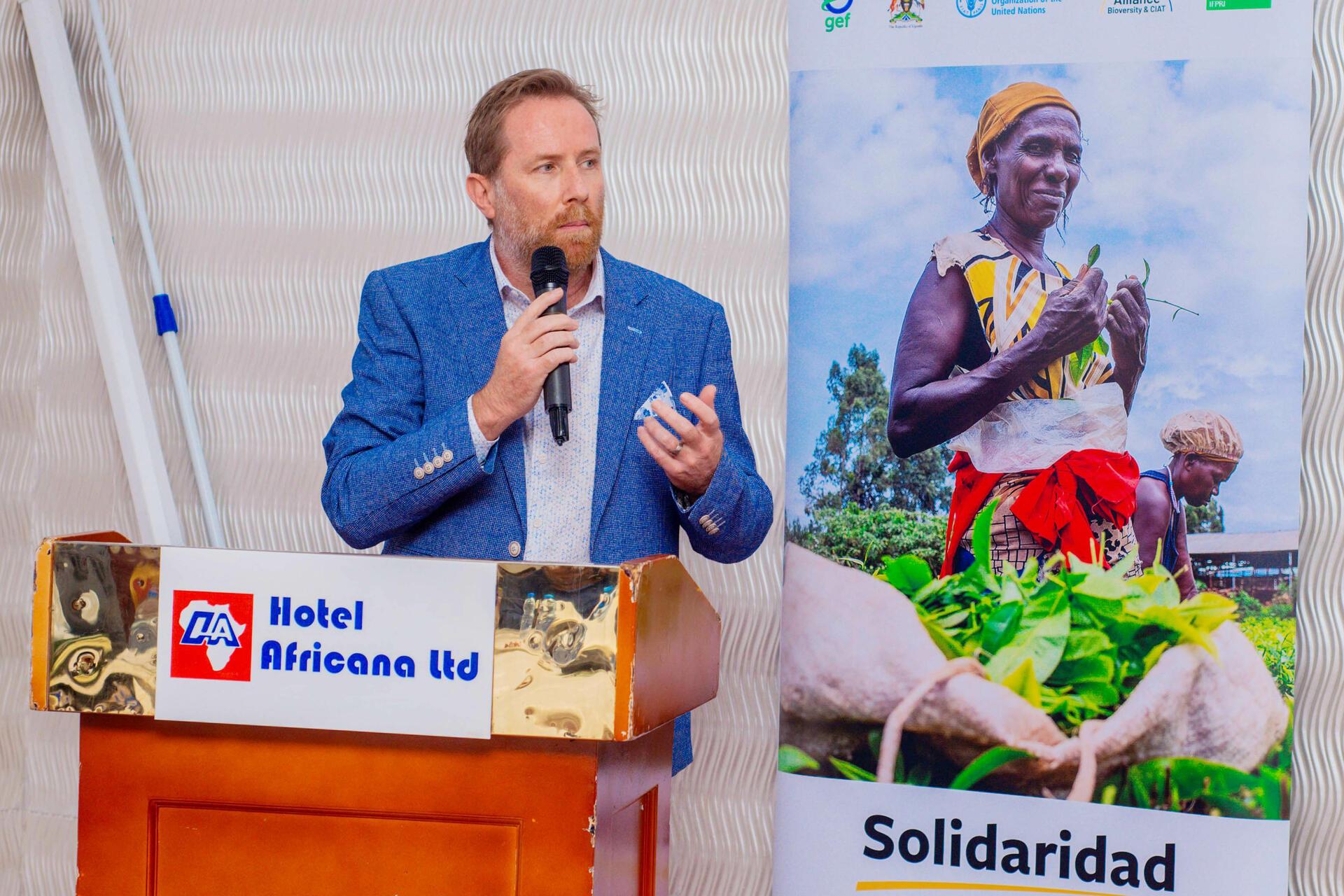
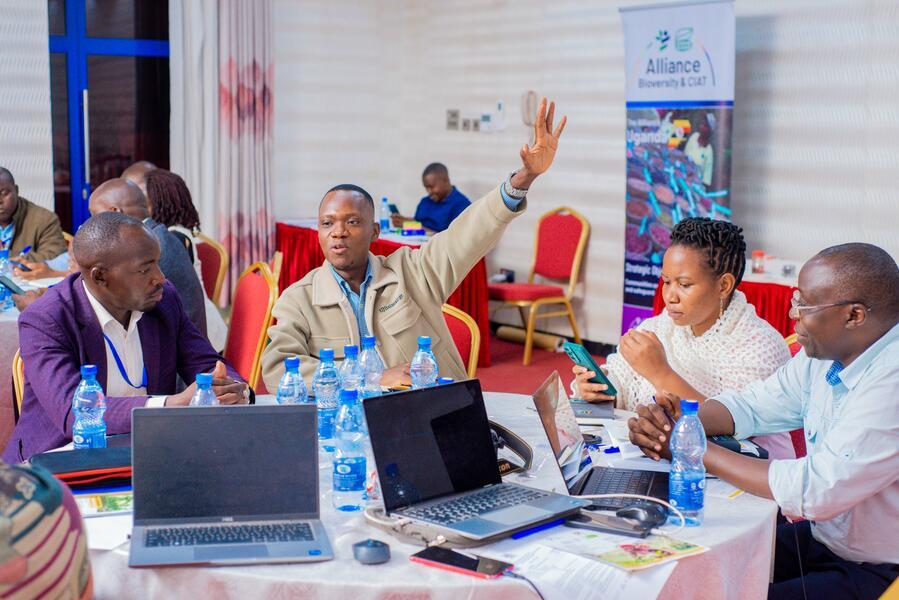
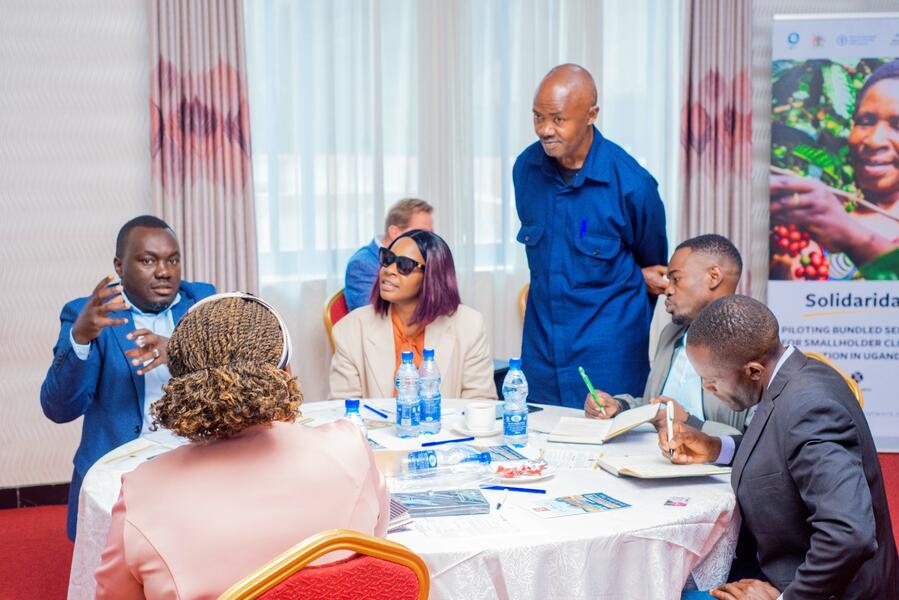
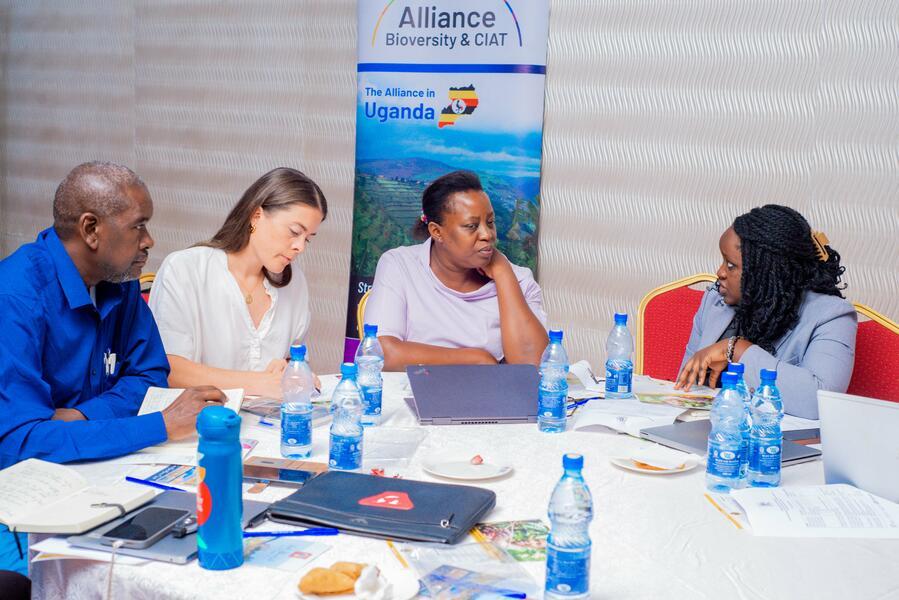
The inception meeting introduced the project’s approach to combining climate advisories, insurance, credit and inputs for coffee and tea farmers.
Designing inclusive services that farmers can understand, afford and trust
The discussions confirmed that coffee and tea require distinct service packages. The two value chains differ in their production cycles, market relationships, institutional arrangements, climate conditions and vulnerabilities.
Separate co-design processes in the Greater Masaka and Greater Rwenzori regions will therefore define the content, cost and delivery of each package, with deliberate attention to the needs and circumstances of women and young people.
Participants identified several advantages of bundling services. Coordinated delivery can reduce transaction costs, connect farmers to multiple services through a single channel, ease liquidity constraints and share risk between farmers and lenders. At the same time, participants highlighted several design challenges. Farmers may enroll primarily to access inputs or credit without fully understanding the insurance component. Insurance premiums may increase the cost of loans or input packages, affecting demand. Women and young people may also face barriers related to land ownership, collateral, phone access, literacy, time, leadership opportunities and control over productive resources, limiting both their eligibility for financial services and their ability to benefit from the packages.
Clear and inclusive communication will be critical to addressing these challenges. Farmers need accessible information on the purpose and cost of each service, the risks covered by insurance, the conditions for payouts and the obligations associated with credit. Delivery should combine digital, community-based and interpersonal channels, using languages and formats appropriate to farmers' circumstances.
Training schedules, recorded content and locally accessible support should also accommodate differences in literacy, phone access and time availability.
Building trust will require both effective communication and reliable service delivery. Advisory information must be relevant, financial terms transparent, and valid insurance claims settled fairly and promptly. Farmer organizations are well positioned to strengthen implementation through their established relationships with members, supporting farmer identification, communication, service delivery and repayment arrangements. They can also create opportunities for women and young people to participate as local agents, advisory providers, input distributors, aggregators and other service providers. Their participation should be assessed not only by their involvement but also by their decision-making roles, control over assets and income, and the economic benefits they derive.
The service packages must also align financial products with the production cycles of coffee and tea. Because investments in perennial crops may take more than one season to generate returns, insurance coverage, loan duration and repayment schedules should reflect the risks, investment periods and income patterns of each value chain. Disaggregated evidence on service uptake, use and outcomes will help identify which approaches expand meaningful participation and which require adaptation during implementation.
Generating evidence for sustainable scale
The pilot will produce evidence that governments, farmer organisations, financial institutions and development partners can use to identify which service models warrant wider investment.
This evidence will help public and private actors determine how effective models could be incorporated into larger agricultural, financial-inclusion and climate-adaptation programmes.
Alex Amanya, the Country Manager of Solidaridad, linked the pilot to a forthcoming large-scale coffee project under the Green Climate Fund (GCF). He explained that the project includes bundled services for coffee farmers and will draw on evidence from the pilot to determine how those services should be structured and delivered at scale.
“We are looking at the outcomes of this pilot to inform what we will do in the coffee project so that we don’t get into a research phase for that project but just scale the bundles.”
The Alliance of Bioversity International and CIAT, Solidaridad, IFPRI, FAO, Government institutions, farmer organisations, and financial service providers bring complementary roles to this process.
The inception meeting established a shared commitment to connect research with implementation and to generate evidence that responds directly to programme design, investment and policy decisions.
From inception to local co-design
The inception meeting concluded with a shared commitment to move from planning to implementation through an inclusive co-design process. The next phase will bring the design process closer to farmers and service providers through separate workshops in the coffee- and tea-producing regions. These workshops will refine the service packages, delivery channels, costs, farmer selection arrangements and partner responsibilities to ensure the interventions reflect the realities of each value chain.
The team

David Slane
Senior Manager and Chief of Party, Business Acceleration for Youth Project, Country Representative for Malawi
Susan Ajambo
Country Representative for Uganda, Associate Scientist
Majambo Gamoyo
Postdoctoral Fellow