Blog Scaling financial and information services for smallholder adaptation: Project launch in Zambia
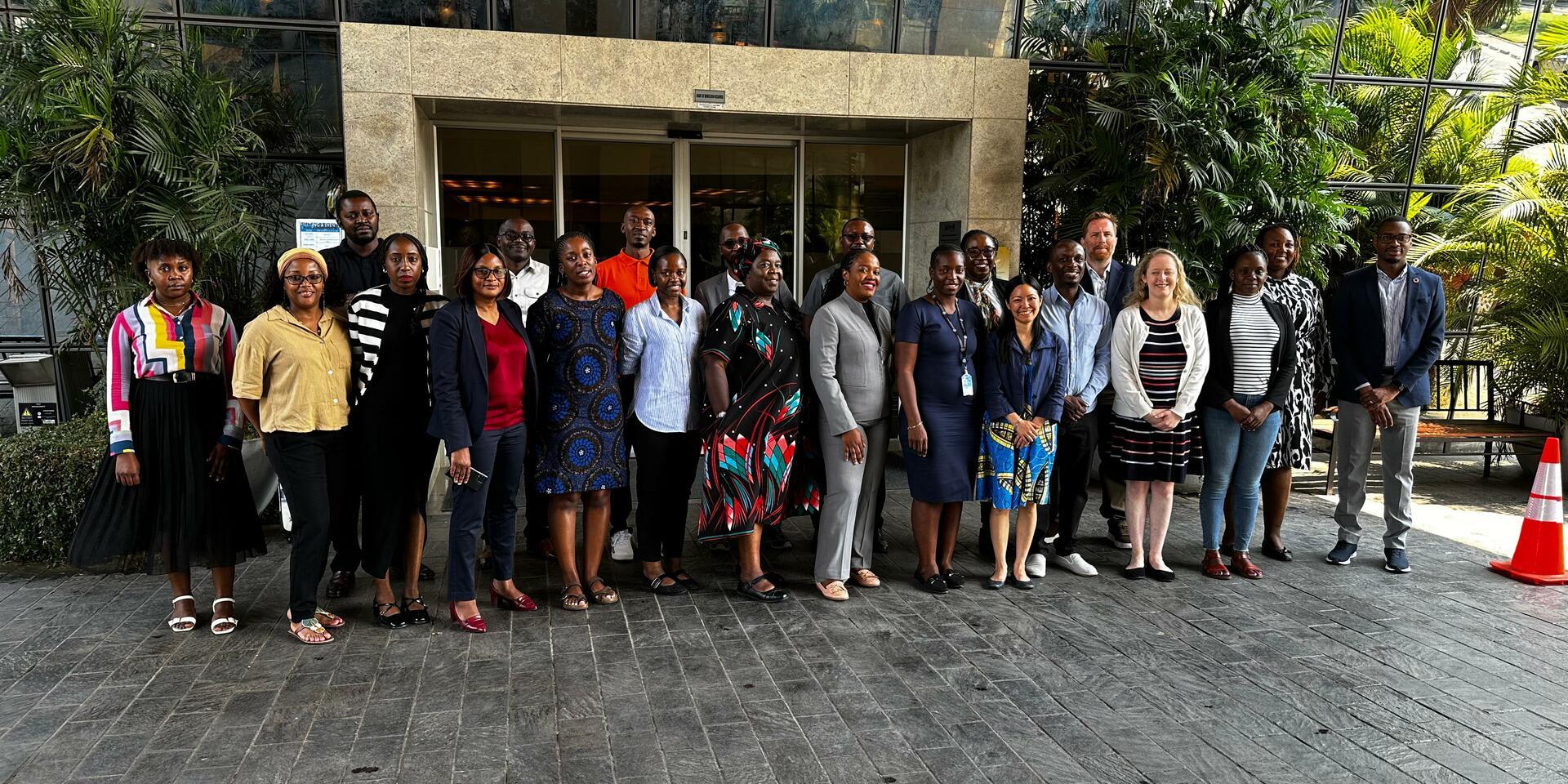

On 13–14 October 2025, partners and stakeholders met in Lusaka, Zambia, for the inception workshop of the Scaling Financial and Information Services for Smallholder Adaptation Project. The event marked the launch of a two-year initiative to strengthen smallholder farmers’ resilience to climate shocks by improving their access to financial and information services.
Building partnerships for climate-resilient agriculture
Funded by the Global Environment Facility (GEF) through the Least Developed Countries Fund (LDCF), the project is implemented under the leadership of the Alliance of Bioversity International and CIAT, with coordination and technical oversight from the Food and Agriculture Organization (FAO). Working through a strong consortium of research, private sector, and government partners, the project brings together organizations with complementary expertise to ensure that science translates into action and that solutions reach farmers at scale.
The International Food Policy Research Institute (IFPRI) leads the project’s 'monitoring, evaluation, learning, and impact assessment' (MELIA), generating evidence to guide scaling. One Acre Fund (1AF) and Solidaridad design and deliver bundled financial and advisory services in partnership with farmer groups, cooperatives, and financial institutions to expand inclusion and reach. Mediae Company leads communication and farmer engagement, using its popular Munda Makeover and Shamba Shape-Up programs to translate technical information into actionable content. The Zambia Meteorological Department (ZMD) and the Ministry of Agriculture (MoA) support the localization of agro-climate information services and ensure the project aligns with national policy frameworks and institutional priorities.
Why this project matters
Across Zambia, smallholder farmers face increasing challenges from climate variability erratic rainfall, prolonged droughts, and shifting seasons that threaten yields and livelihoods. The 2023/24 drought, one of the most severe in recent decades, devastated harvests across Zambia’s Southern and Eastern Provinces, underscoring the urgent need for climate-informed agricultural and financial solutions. This 24-month GEF Challenge Project responds directly to these challenges. Building on the Alliance’s experience in digital agriculture, climate services, and risk management and through collaboration with national and international partners the project will co-design gender-responsive financial and advisory products tailored to diverse farmer needs.
The project is structured around four interconnected pillars:
- Inform – Using farmer-generated data to improve the dissemination of climate, weather, and market intelligence
- Bundle – Delivering integrated financial and agro-advisory services, including gender-responsive insurance and risk-contingent credit
- Stimulate – Expanding the supply and adoption of risk management tools by working with financial institutions and insurers
- Learn – Capturing and sharing lessons to inform similar efforts and strengthen policy frameworks for scaling.
The project aligns with GEF’s Climate Change focal area and supports Zambia’s National Agriculture Policy, along with key government programs such as the Farmer Input Support Programme (FISP) and the Sustainable Agricultural and Agroforestry Programme (SAAF). These initiatives promote inclusive access to finance and the adoption of climate-smart farming practices.
Highlights from the inception workshop
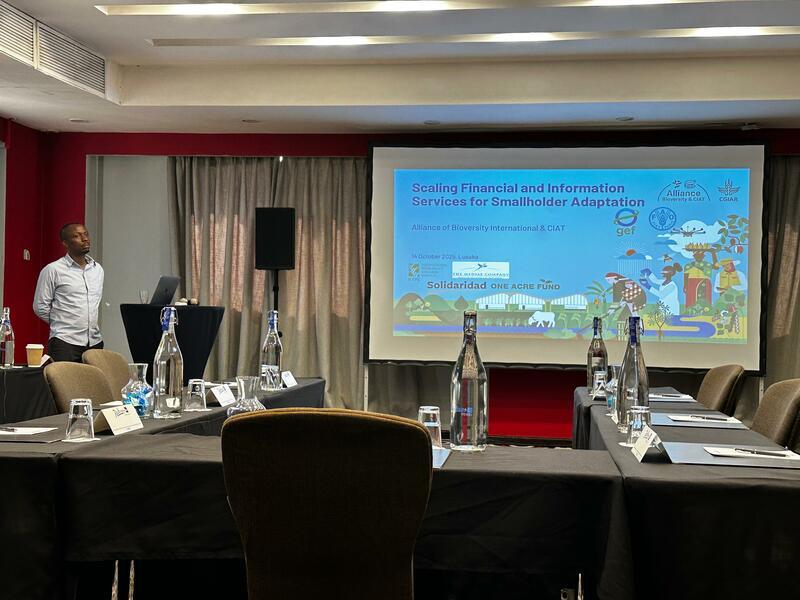
At the launch, Majambo Gamoyo from the Alliance of Bioversity International and CIAT presented the project’s theory of change, emphasizing that “co-designed financial and advisory bundles can transform how risk management services are delivered.” He outlined how the project aims to reach 100,000 smallholder farmers in Zambia and a similar number in Uganda by integrating financial innovation, climate information, and digital advisory systems into a single, farmer-centered delivery model. Over its two-year implementation period, the project will pilot these bundled services through participatory co-design and gamified engagement tools, empowering farmers to shape the solutions that work best for them. These interventions are expected to enhance farmers’ decision-making, reduce their vulnerability to climate shocks, and build an evidence base for scaling climate-smart financial systems.
Ms. Yuka Irie, representing the Food and Agriculture Organization (FAO), reaffirmed FAO’s commitment to the project and to the GEF’s goal of driving innovation in delivering bundled climate information services, agricultural inputs, and financial products. She noted that these efforts will focus on female smallholder farmers, helping close gender gaps in access to climate services and finance, and positioning women at the center of community adaptation efforts.
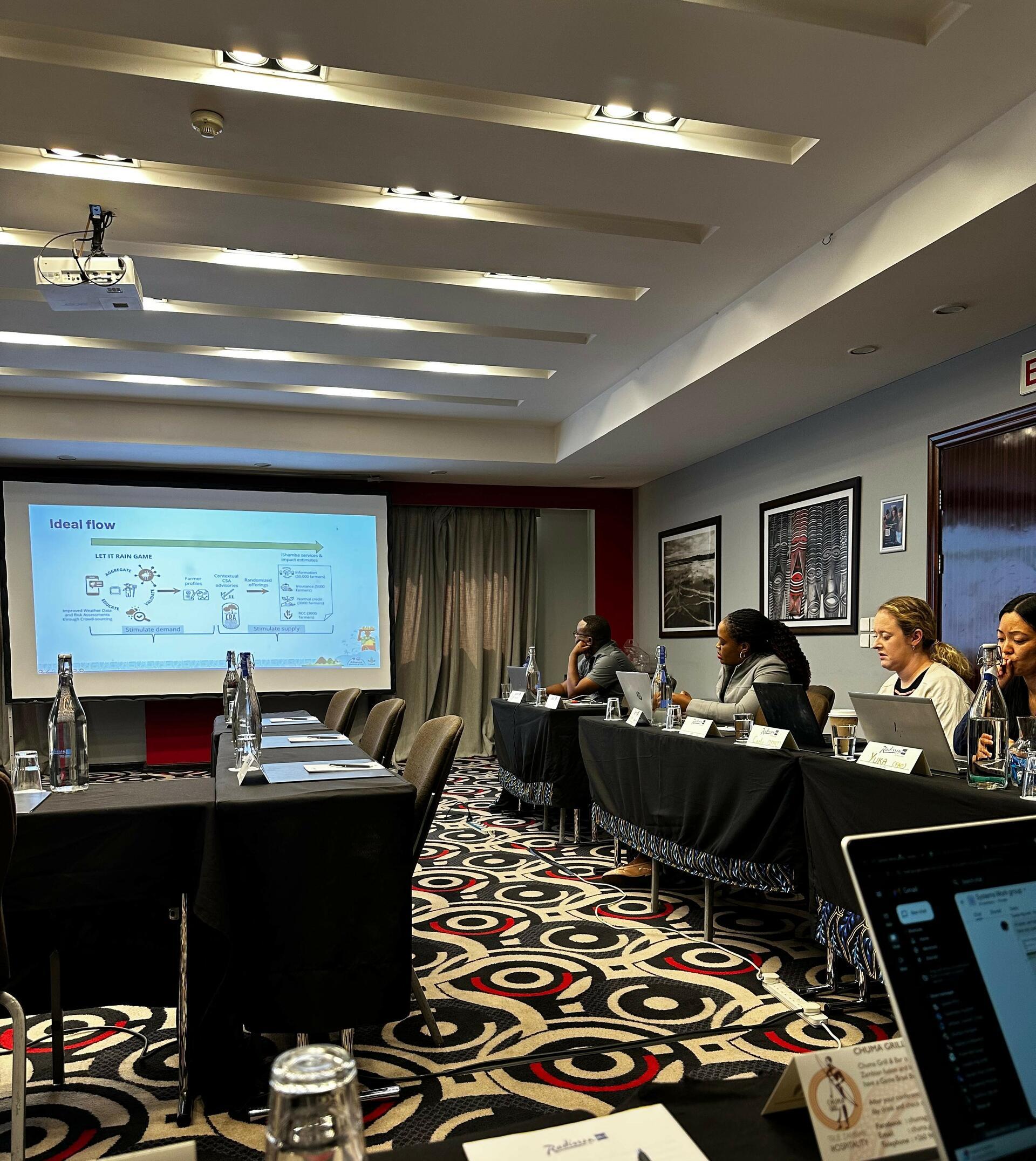
During the stakeholder engagement, each partner shared their experience and opportunities to align their work with the project’s ambition of expanding access to bundled financial and information services for smallholders.
The Ministry of Agriculture shared a candid view of the challenges and opportunities in advancing financial inclusion and climate resilience. Mr. Pondamali noted that, although insurance products are vital for managing agricultural risks, farmer uptake remains low due to limited awareness, affordability, and accessibility. He pointed to opportunities to design tailored financial and insurance products for farmers not covered by the Farmer Input Support Programme (FISP).
“The Zambia Integrated Agriculture Management Information System (ZIAMIS) now has over 4.3 million farmers registered, with 1.3 million currently under FISP,” he explained. “This gap presents a major opportunity to extend climate-smart finance and insurance services to farmers not yet benefiting from traditional support systems.” He reaffirmed the Ministry’s commitment to partnering with stakeholders to close inclusion gaps and advance the National Agriculture Policy, emphasizing that “building financial and informational resilience among farmers is key to transforming Zambia’s agricultural sector.”
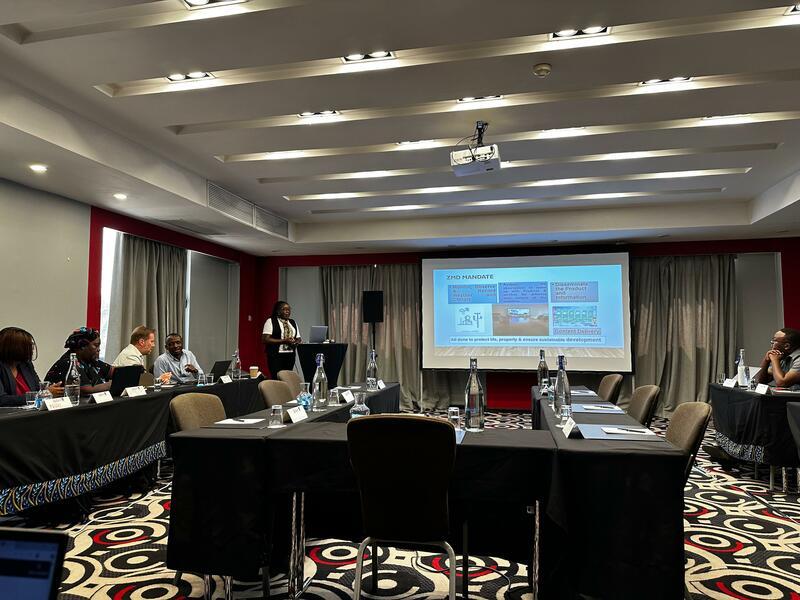
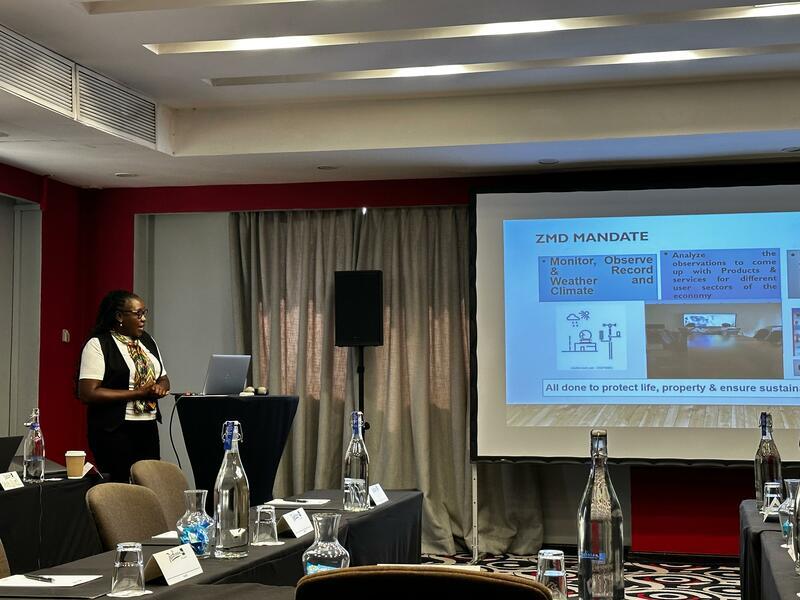
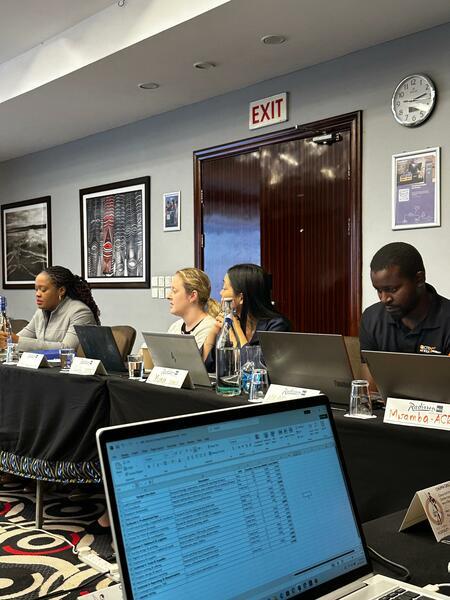
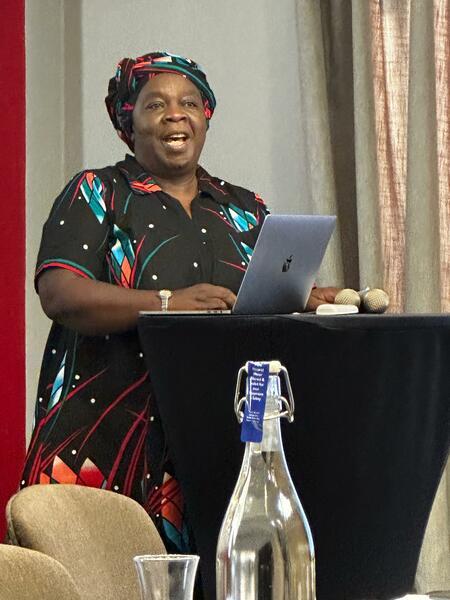
Representing the Zambia Meteorological Department (ZMD) Ms Peggy Thole emphasized the importance of localized climate services, outlining its role in producing seasonal forecasts, early warnings, and co-developed agro-advisories for farmers. In addition, participants learnt about ZMD’s work to communicate weather information to farmers through radio and digital services such as WhatsApp.
Enabling real-time farmer engagement and access to climate and market information for 44,000 register farmers in Zambia, Ms. Nonsi Nkomo from Solidaridad showcased its digital tools such as the Kvuno platform and WADI virtual assistant. Guided by its principle of 'Change That Matters', Solidaridad’s approach aligns seamlessly with the project’s goal of integrating information, finance, and innovation to strengthen resilience among smallholder farmers.
On the other hand, the One Acre Fund highlighted its multi-touchpoint model, which Mr. Enock Phiri explained combines field officers, farmer groups, and digital communication channels to deliver continuous support.
Through its ‘50/50,’ flexible financing model (50% down payment for inputs and 50% paid after harvest), farmers access affordable inputs and benefit from automatic weather index insurance to mitigate drought risks.
Mediae Company demonstrated the power of mass media and edutainment through its flagship program Munda Make Over (MMO). Adapted from Kenya’s Shamba Shape Up, the series uses storytelling and reality-based learning to improve farmer decision-making. Ms. Chileya Kasuba highlighted in Zambia, Series II of MMO reached over 2.3 million viewers on television and 186,000 farmers online, making it an essential platform for delivering climate advisories, financial literacy, and gamified learning as part of the project’s outreach strategy.
Other partners, including ACRE Africa, shared expertise in index-based and weather-triggered insurance, while NatSave reaffirmed its commitment to advancing financial inclusion through digital lending. Together, these presentations underscored the strength of collaboration among implementing national partners and highlighted the shared commitment to farmer-centered innovation.
The team
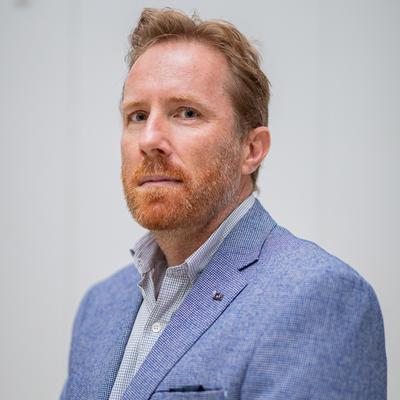
David Slane
Senior Manager and Chief of Party, Business Acceleration for Youth Project, Country Representative for Malawi
Aniruddha Ghosh
Senior Scientist