Blog Seeds beneath the Cumbal mist: Chronicle of a house of life

The municipality of Cumbal, in southern Colombia, is witnessing a powerful community transformation centered on the safeguarding of native seeds, supported by researchers from the Alliance of Bioversity & CIAT.
At dawn, the Cumbal volcano stands as a silent colossus. A cold breath descends from its slopes, and the mist, an old guardian of the páramo, settles over the crops like a curtain that rises and falls with the rhythm of the day. In the courtyard of an agricultural technical school in the municipality of Cumbal, Nariño (southern Colombia), a key turns, a door opens, and the most powerful scene in any agricultural landscape is revealed: wooden shelves, labeled jars, and seeds that have traveled across generations and now, at last, rest in their seed house.
They call it Yar Pue Cumbe, "seed house" in Pasto language. It is not just a beautiful name; it is a precise definition of the role it plays in the territory. Here, agricultural diversity breathes again, as if rescued from oblivion. Phureja potatoes (Solanum phureja) with yellow, red, and purple skins; beans that smell like freshly baked bread when they sprout; quinoa glistening in the sun; ullucos clinging to the rhythms of the rainy calendar; mountain papaya, wheat, maize, plantain, and tamarillo. Everything belongs in this house that organizes, preserves, and shares.
In charge of the community seed bank, at the Instituto Educativo Técnico Agropecuario Indígena Cumbe, there is a deeply committed team. Professor Esteban Gangotena, coordinator of the seed bank, scans the shelves with the gaze of someone reading a living library. Each jar holds a story; each label is a thread that leads to a family, a plot of land, and a farming practice passed down like advice from grandparents. Alongside him, Principal Jorge Humberto Chirán has supported the consolidation of this space, which not only stores seeds but also maintains a living collection of potatoes inside the school: students planting, measuring, and learning from the crop; teachers showing that science is also done with hands in the soil.
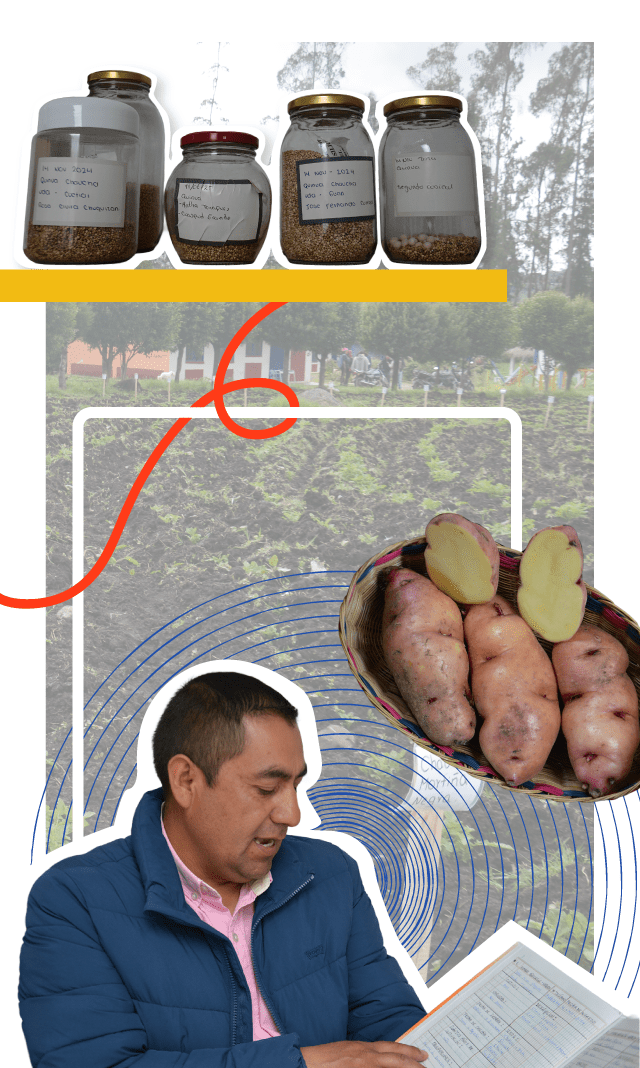
Professor Esteban Gangotena at the "Yar Pue Cumbe" Community Seed Bank. Photo: CIAT / JL Urrea.
Today, this process is flourishing with the support of the Alliance of Bioversity & CIAT’s project Biodiversity for Resilient Ecosystems in Agricultural Landscapes (B-REAL), which promotes the conservation of native seeds through a network of community seed banks. The main bank at the educational institution integrates a network of nine nodal banks that extends throughout the Indigenous reserve and embraces, like a necklace of life, the contour of the volcano. These are hubs of knowledge, meeting points for the exchange of varieties, the custody of traditional knowledge, and the future of the community’s food systems.
Looking back to the land
The story did not begin here. It goes back further, to the day the community reclaimed its lands from those who had seized them and altered the landscape. Hillsides once filled with pastures and fences were gradually transformed into a mosaic of shagras (family gardens) with a productive purpose and an agroecological approach, rich in crop associations and useful biodiversity. Returning to the planting of potatoes, maize, Andean cereals, vegetables, and fruit trees implied redefining traditions and, above all, understanding that nourishment is not just about counting calories, but about sustaining a cultural memory.
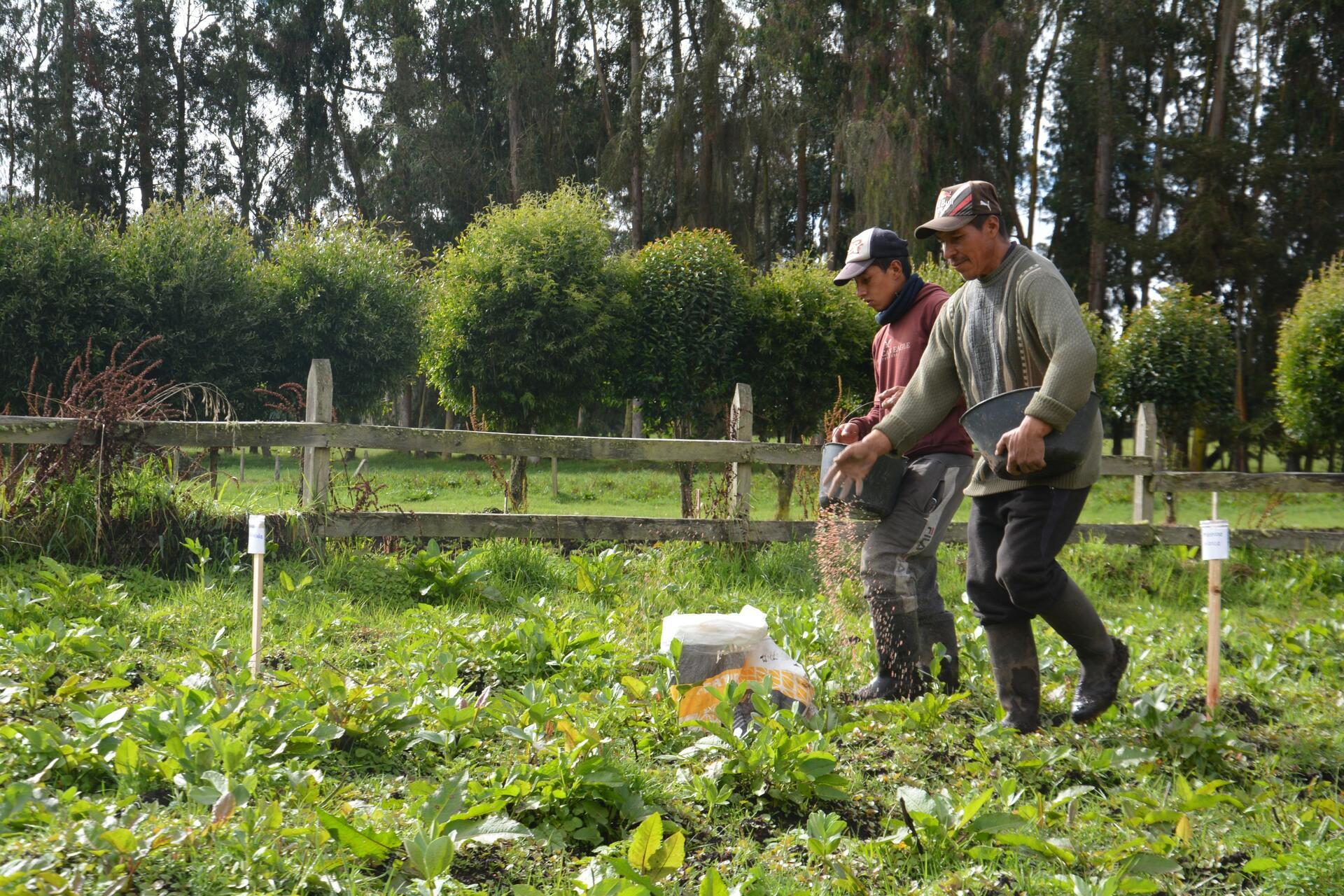
Students and teachers working in the living potato collection within the educational institution. Photo: CIAT / JL Urrea.
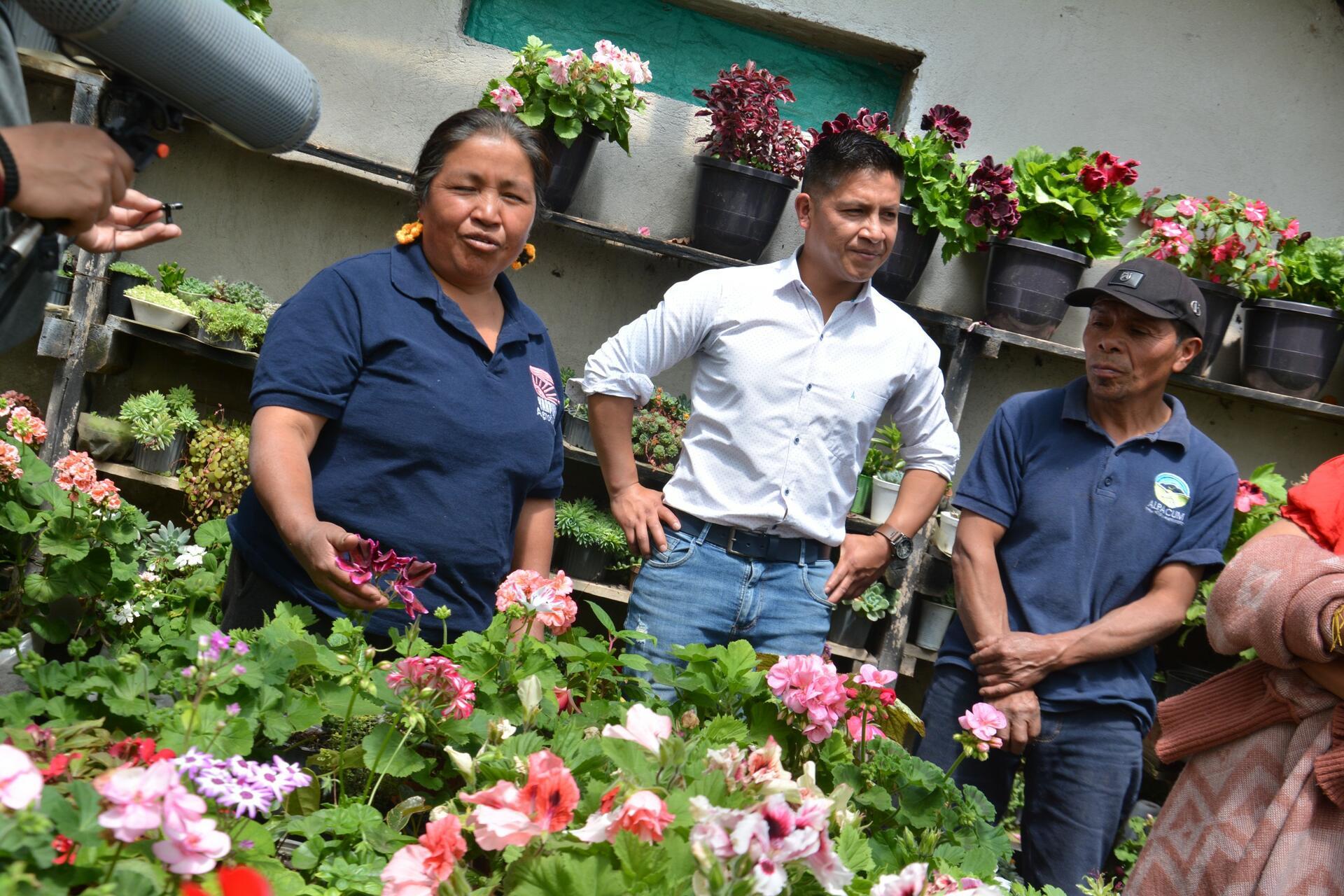
The Alapa-Cumbalza family proudly showcases their nursery, where they conserve and propagate a wide variety of floral and aromatic species. Photo: CIAT / JL Urrea.
When you walk through a well-made shagra, your eyes never rest. Flowers draw in pollinators; aromatic plants repel pests; furrows of tubers nourish soils and families. Beneath this apparent stillness, the ecological web is vibrant: roots intertwining, beneficial fungi bridging nutrients, useful insects patrolling in the morning and resting in the afternoon. And it all works because the seeds were born in this climate and have learned to withstand its harshness.
The species the market forgot
One of B-REAL’s most valuable outcomes is the rescue of forgotten and underutilized species: traditional crops displaced by commercial agriculture but essential for food, health, culture and climate resilience. "Underutilized" is not synonymous with lower value; often, it means the opposite. In cold and high-altitude environments, Phureja potatoes and ullucos preserve soils and feed families with a diversity of flavors and micronutrients. Quinoa and barley provide vegetable protein, fiber, and adaptability in a changing climate. Tamarillos offer vitamin C, vibrant colors at the local market, and culinary uses that are passed on in every home. Each crop brings with it management practices, recipes, and stories. Recovering them is not romantic nostalgia: it is an adaptation strategy.
"Many of these are crops forgotten by research, government, and extensionists; and underutilized because they are only used by people in the countryside, and they don't know them in the city. There are about 150 types of plants, for example, many of them wild that people harvest them in the forest, by the side of the road, or anywhere, and many of them have medicinal properties or high nutritional value."
Ronnie Vernooy
Senior Scientist, Genetic Resources and Seed PoliciesAt the seed bank, conservation is not an end in itself. It is the bridge to planting and consumption. Seeds are multiplied in learning plots; evaluated for vigor, health, flavor, and yield; and exchanged at seed fairs, where they circulate as trusted currency. The science that supports this process (from cataloging to field trials) works best when it is woven into the decisions of those who plant and cook. That is why the bank is also a classroom: notebooks with cycle records, plot maps, simple tables comparing varieties, and posters with names spoken aloud to remember them.
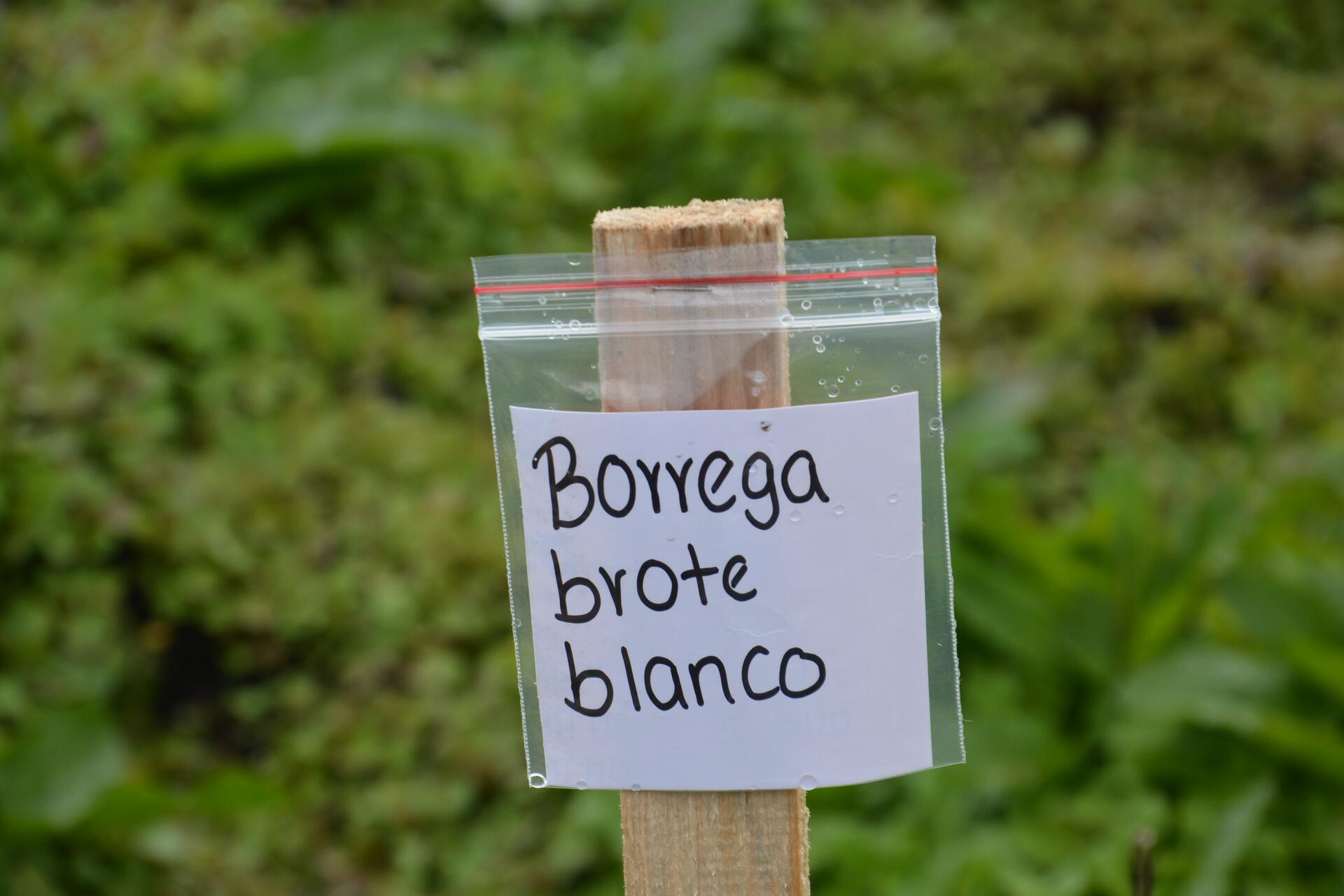
Plot of potato varieties labeled by students, with names drawn from their appearance, color, and texture as experienced by the community itself. Photo: CIAT / MA López.
Yarpuram: A house of life and territorial pride
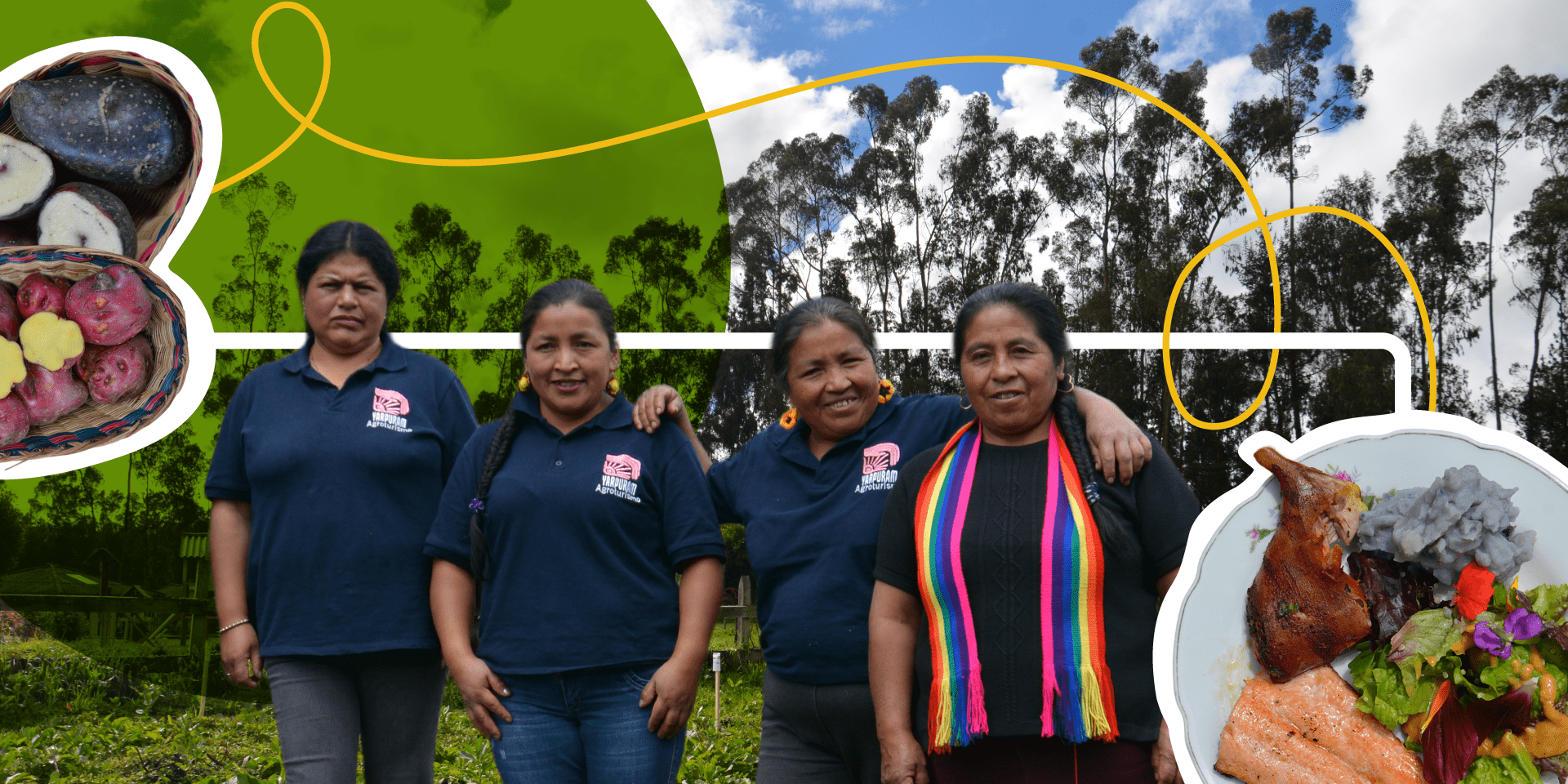
To ensure that conservation efforts do not remain confined to storage rooms, the project promotes value chains and alternative sources of income. Yarpuram, a rural tourism initiative focused on agrobiodiversity, was born from this impulse. Its name means "house of life" and is a declaration of principles: this is not a house to be merely observed, but lived – walked through, tasted, listened to, and learned from.
Along one of Yarpuram’s routes, visitors arrive at the rural lodge “Yarilla” (house of light), where Luz Marina Cuaical opens the door with the warmth that only someone truly proud of her place can offer. Here tourism is an act of immersion. It is getting up early to harvest in the shagras, feeling the weight of damp soil in one’s hand, preparing and cooking with local ingredients, and being dazzled by a diversity that cannot be contained in a standard menu. Quinoa soup is not simply served, it is told; each grain holds a story of planting.
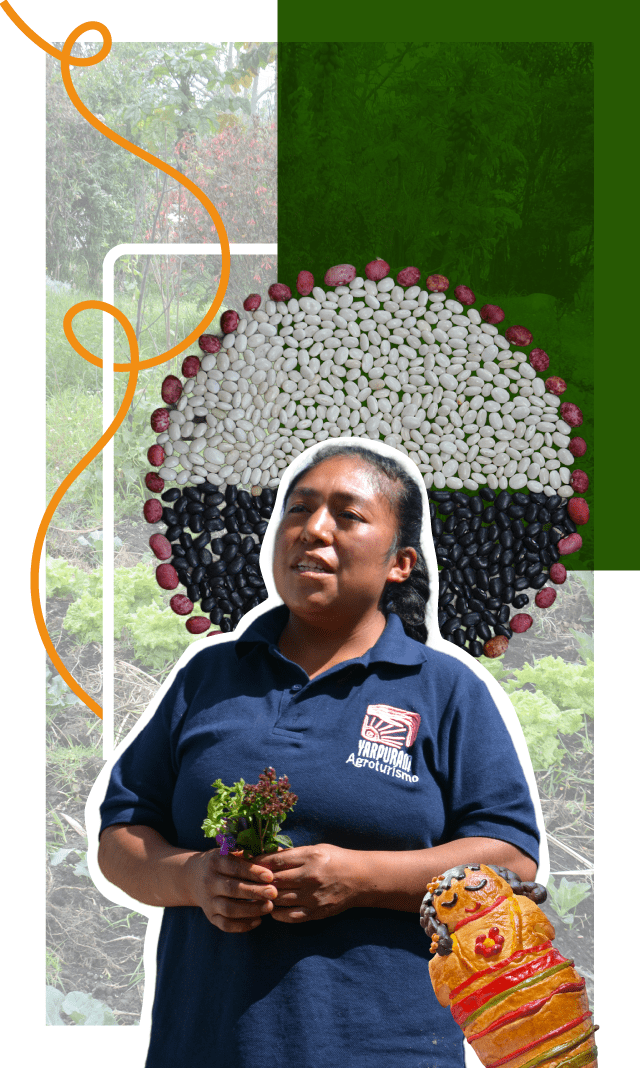
Luz Marina showcases the harvest diversity of her shagra. Photo: CIAT / JL Urrea.
Further on, the route passes through the "AlpaCum" shagra, where spouses Rosalba Cumbalza and Guillermo Alapa have built a small world of biodiversity: a nursery that propagates ornamental and aromatic plants along with an extraordinary variety of crops. The shagra is a map of colors: soft greens of new leaves, deep purples of native potatoes, flowers that attract insects that facilitate pollination. Everything seems arranged for a conversation between science and tradition: How do plants associate? What makes a soil healthier? Why does polyculture reduce the risk of frost? In Rosalba and Guillermo's story, every answer is in the daily doing.
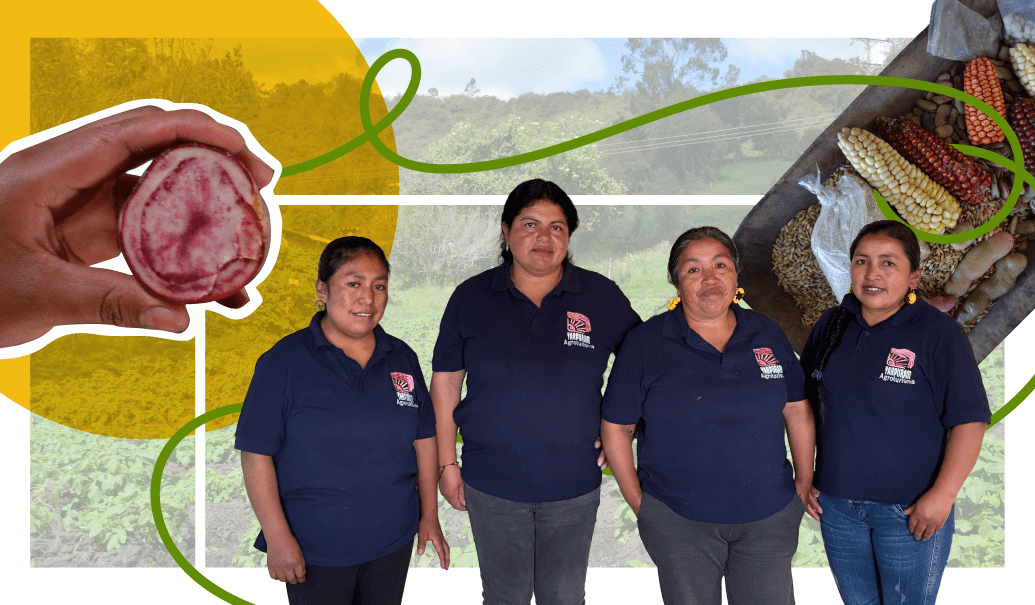
Women leaders of Yarpuram, the agroecotourism project in Cumbal. Photo: CIAT / JL Urrea.
Yarpuram extends beyond guided routes. It grows with gastronomy, handicrafts (hand-woven bags and textiles), samples of biodiversity, and the production of the guinea pig (Cavia porcellus), that emblematic Andean rodent, domesticated for centuries and a protein base in many high-altitude cuisines. Here, raising guinea pigs is not a tourist exoticism; it is an organized food practice, with clean corrals, responsible management, and a logic of circularity: waste is composted, soils are enriched, and plants respond better.
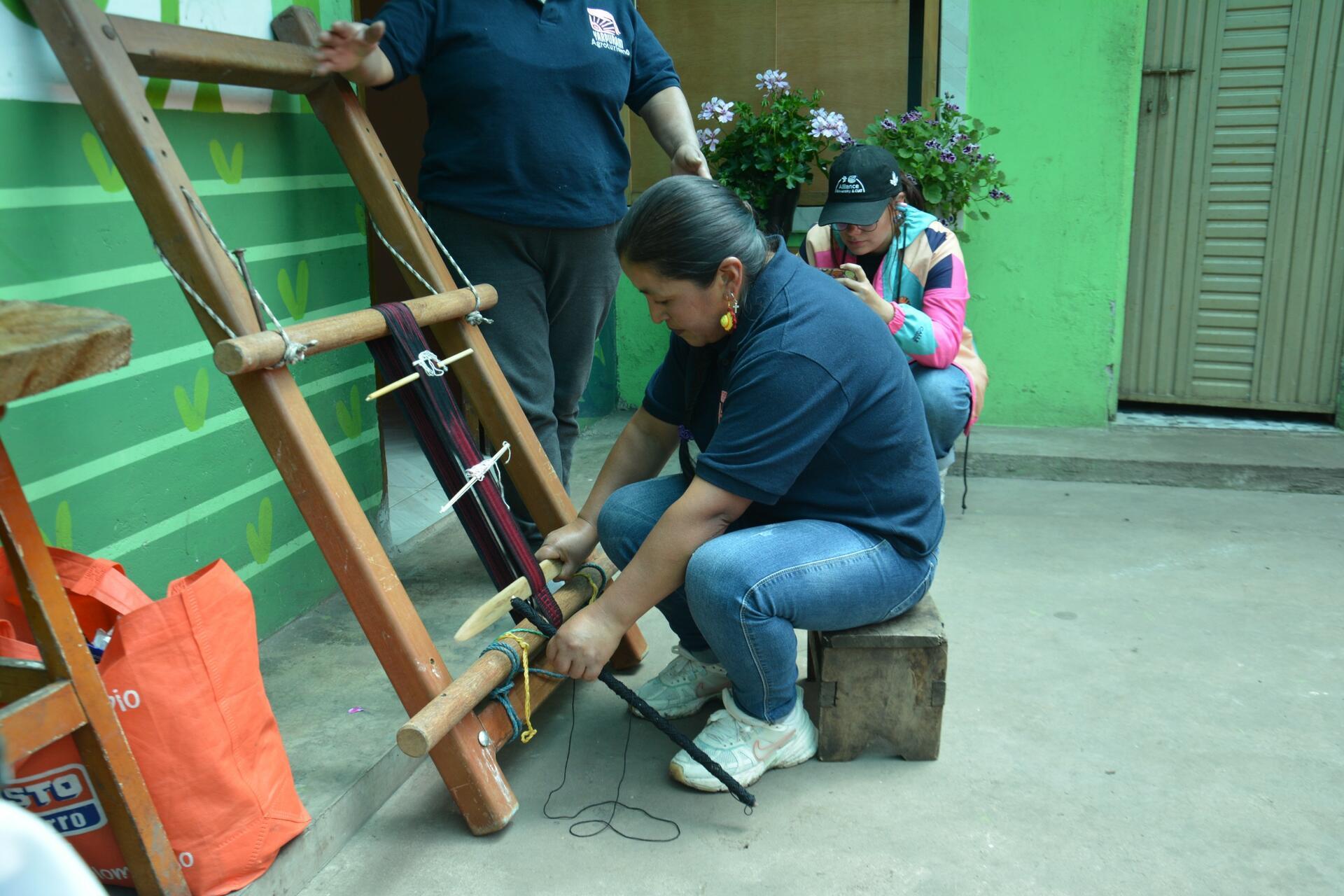
Demonstration of loom use for handweaving bags and other textiles. Photo: CIAT / JL Urrea.
The network that sustains resilience
The strength of this initiative does not lie in a single, isolated site, but in its network. Nine nodal seed banks, linked to the main bank, form a robust system of in situ conservation. The logic is simple and powerful: what is conserved is planted; what is planted is eaten.
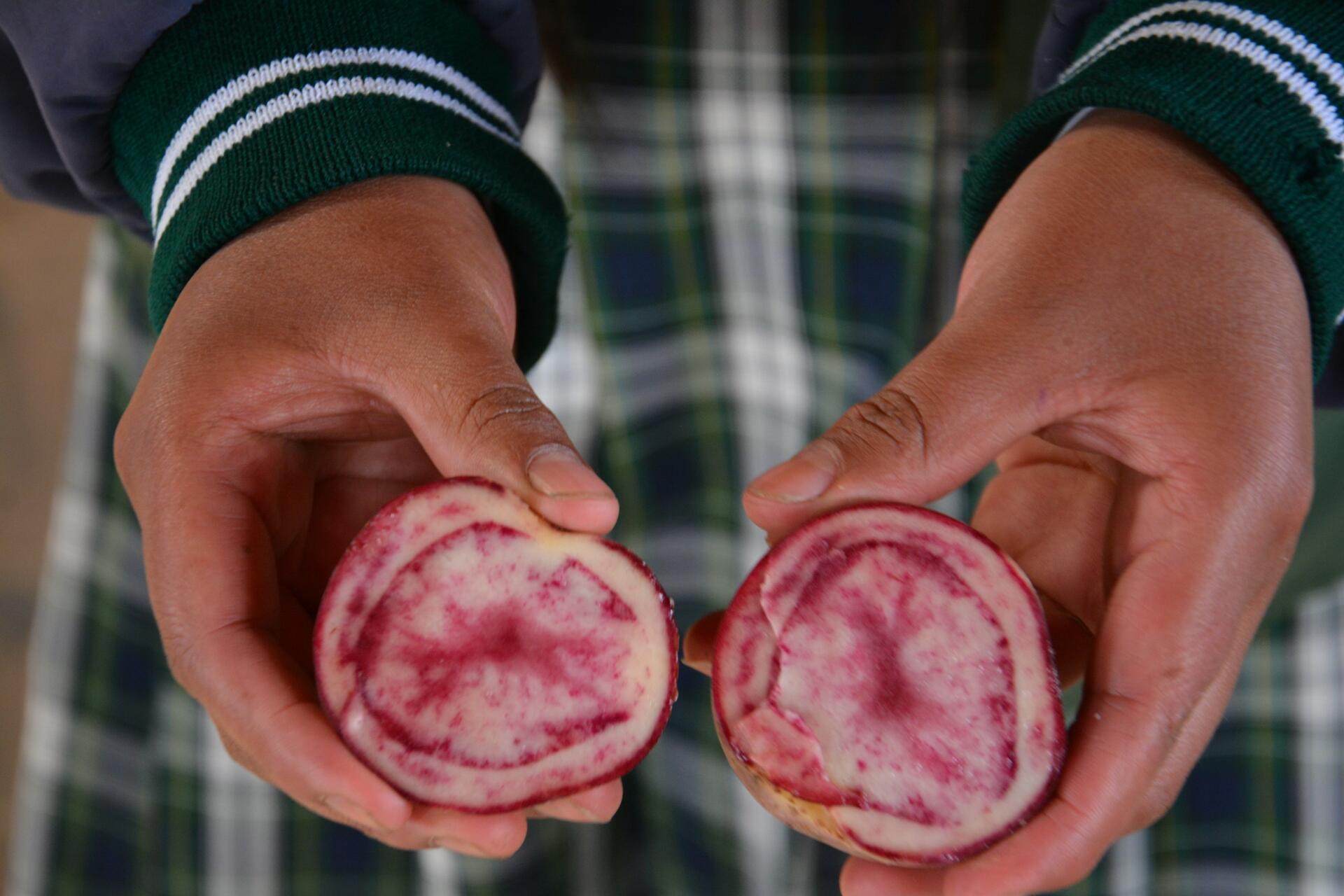
A student of the educational institution holds in their hands one of the more than 80 potato varieties safeguarded in the seed bank. Photo: CIAT / JL Urrea.
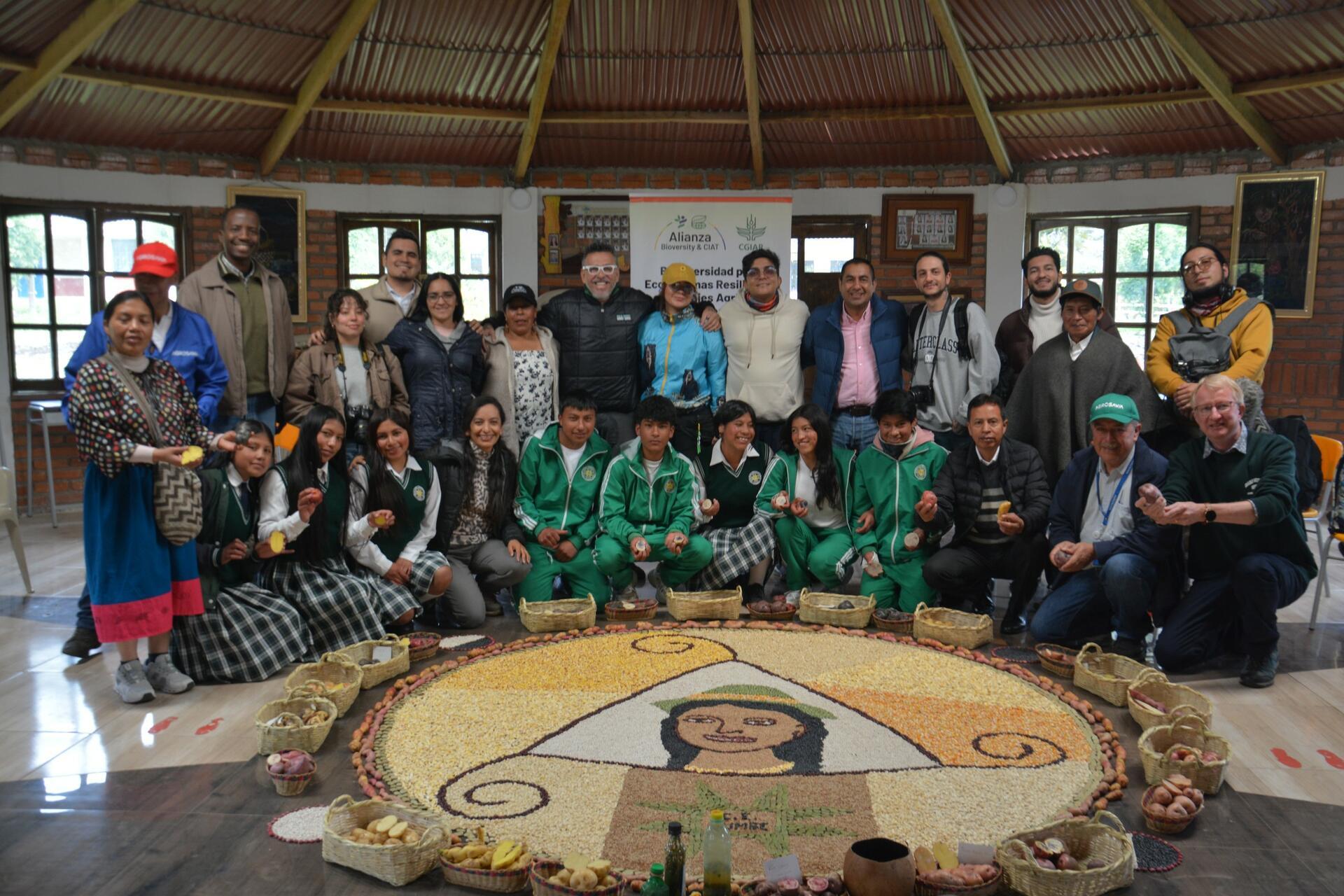
Students, researchers, visitors, and community members gathered in front of a celebratory offering made entirely of local seeds. Photo: CIAT / MA López.
The maturity of a process like this is felt in small gestures: a student who can recognize a potato by its skin alone; an artisan who dyes fibers with plants from the nursery; a farmer who chooses to maintain three varieties instead of one, having learned that climate risk is better managed through diversity. That same afternoon, a group of visitors tastes a local recipe and learns how guinea pig protein complements the energy of tubers.
Food sovereignty: Choosing, growing, and sharing
Food security answers an urgent question: is there enough food? Food sovereignty dares to ask a more difficult question: who decides what to plant and what to eat? Here, that answer does not come from a supermarket or a commercial seed catalog; it comes from the seed house, from the shagras, and from the conversation among families. Choosing to grow Phureja potatoes instead of a uniform variety, planting ulluco alongside quinoa, and preferring local tamarillos over imported ones, is an act of sovereignty that reorders the economy, shortens chains, gives value to the local, and turns biodiversity into the axis of sustainable territorial development.
In the end, this story is not only about seeds, landscapes, or projects. It is about a way of being in the world in which farming is a life choice, and in which science takes a seat at the table to do the accounting clearly: what remains, what we plant, what we have learned, and what we choose to care for.
And if someone asks what a house of life is, perhaps a simple answer will suffice: it is the place where what we safeguard becomes who we are – and where who we are gives us the strength to keep sowing.
We dedicate this story to our dear colleague Marleni Ramírez, who passed away recently. Marleni worked closely for years with the community of Gran Cumbal, where she is remembered with gratitude and affection. She contributed passionately to the design, coordination, and logistics of the journey that made this story possible. Her vision, commitment, and humility will continue to inspire us.
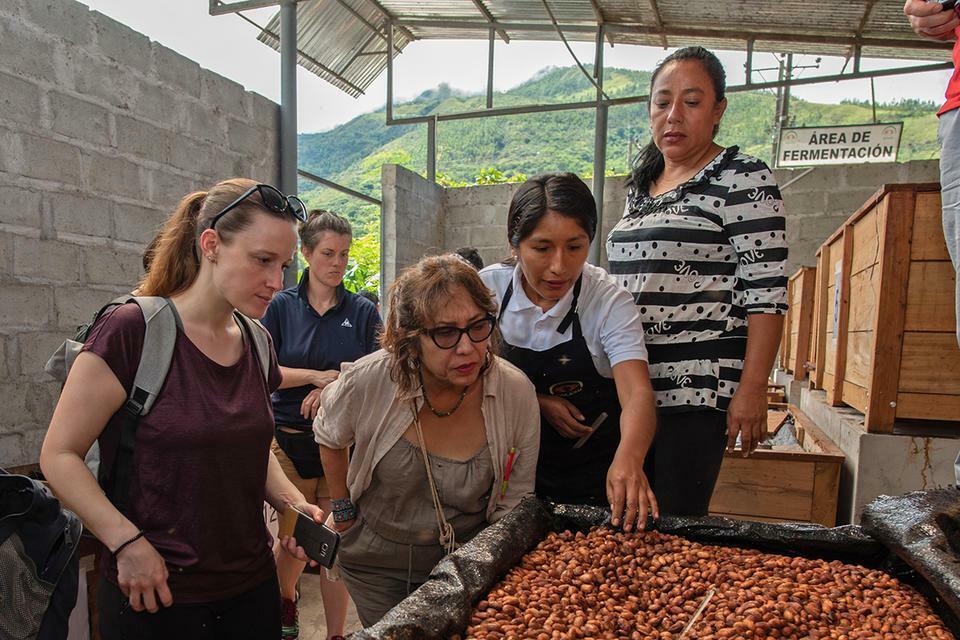
About the project
"Biodiversity for Resilient Ecosystems in Agricultural Landscapes" (B-REAL) is a project that promotes the conservation of native seeds through a network of community seed banks and participatory actions in education, production, and rural agrotourism. In this way, students, women, and Indigenous authorities assume the role of guardians of their biodiversity. This project, financed by the Government of Canada and led by the Alliance of Bioversity International and CIAT, in collaboration with local authorities and schools, promotes the creation of a network of community seed banks in Latin America, Africa and Asia. At the global level, it is supported by the CGIAR Science Program on Multifunctional Landscapes. In Colombia, B-REAL is supported by Agrosavia, the International Potato Center (CIP), Fundación Impulso Verde, Fundación Pumamakes and the Institución Educativa Técnica Agropecuaria Indígena Cumbe.