From the Field Rice that sows hope in Bolivar, Colombia
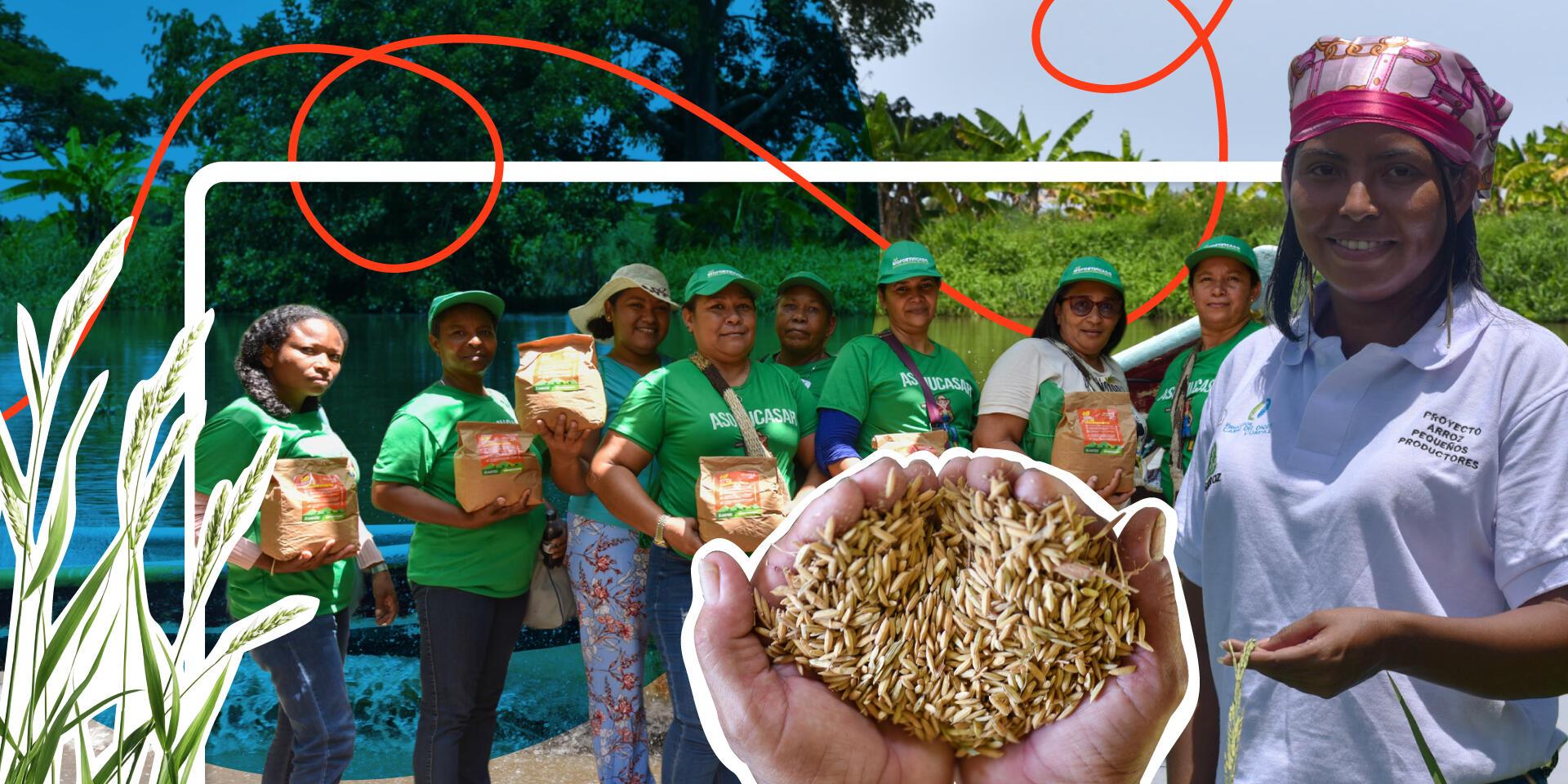

In the rural community of Zapatero, near Cartagena, a group of thirteen women has taken the lead in combating malnutrition and feeding their families by planting biofortified rice. From this effort, Agrozapatero was born, a brand that, while still consolidating its place in the market, is already ensuring more nutritious food for its community.
In the department of Bolivar, malnutrition is not a cold figure in official reports, it is a reality that strikes thousands of families on a daily basis. According to the DANE, one in three households in the department (35.8%) lives in moderate or severe food insecurity. In other words, the food on the table of many households is insufficient or not nutritious enough.
In Cartagena and its surrounding areas, the situation is even tougher: communities must walk several kilometers to find drinking water, pay high prices for fresh food, and rarely manage to sell what they produce at fair prices. This reality places Bolívar among the territories facing the most urgent challenges in food security, a problem that most severely affects children.
Better rice, better nutrition
In response to this situation, in October 2021—after five years of research by the Alliance of Bioversity International and CIAT, with support from the Canal del Dique COMPAS Foundation, the University of Córdoba, SENA Regional Bolívar, and Fedearroz—the Fedearroz BIOZn035 variety was released in Colombia. This is the first zinc-biofortified rice, developed to support child growth and strengthen the immune system.
At first glance it looks like a common grain, but the difference is in the nutritional value:
- For an adult woman, a plate of conventional rice covers just 16% of her daily zinc needs. With Fedearroz BIOZn035, that figure rises to 24 %, an increase of 50 %.
- In children, the contrast is even greater: just one 60-gram serving of biofortified rice (equivalent to two tablespoons) covers 27% of their daily zinc requirements, compared to 18% for regular rice.
Since 2016, the Alliance Bioversity & CIAT and the Canal del Dique COMPAS Foundation have been working in the region, through the Biofortified program (formerly HarvestPlus), to evaluate and share seeds with higher micronutrient content. That effort was consolidated in 2022 through the CGIAR AgriLAC Resilient AgriLAC initiative, with a project to support small rice producers that included field trials, trainings, and community dialogues on planting, processing, and marketing biofortified rice.


Women who nourish with dedication
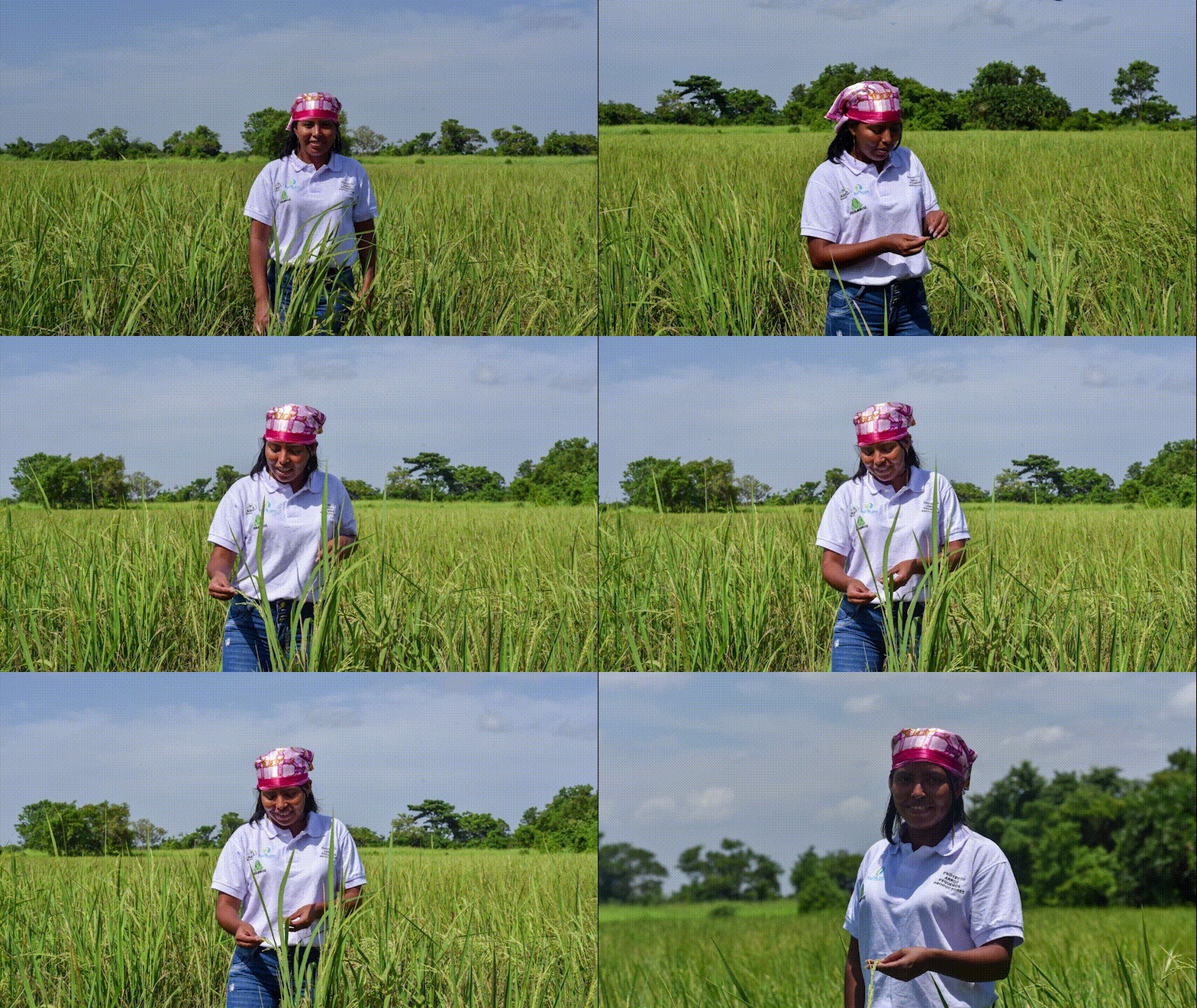
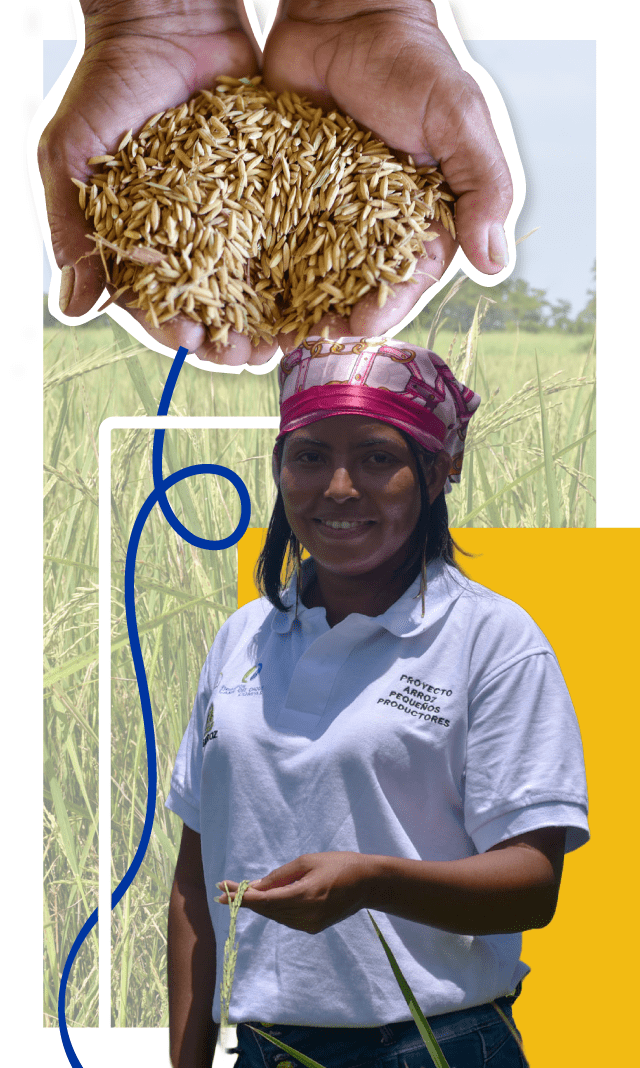
When Amparo Nisperuso joined the small rice producers project promoted by the Biofortified Crops Program, there were 40 farmers: 35 men and only five women. Over time, many of them left their plots, and those who stayed were the women—13 of them—who, with discipline and patience, proved that biofortified rice was worth the effort.
“We were used to growing rice a different way; the change was hard for many,” Amparo recalls. At first, the fields inspired more fear than pride: “I have four brothers, and of all of us, I was the one most afraid of working in the fields… the ants would bite my hands.” Today, her perception is different. “Now we know that what we put on our plates has no chemicals and that it’s a rice high in zinc, which benefits our children,” she says proudly.
Agrozapatero, the new brand of more nutritious rice
Today, Fedearroz BIOZn035 is no longer just an experimental seed—it’s coconut rice served on family tables. This is how the project gave birth to Agrozapatero, a brand of rice grown, harvested, and processed in the same rural community, now on its way to being marketed in well-known restaurants in Cartagena.
"Agrozapatero is a brand that gathers the synthesis of our territory, created together with women farmers of the community. This brand has allowed us to be recognized as a community and to show the value of our collective work," highlights Nilson Ospino, legal representative of the Zapatero Community Council.

These data correspond to half a cup of biofortified rice.
Multiplying seeds
The process in Zapatero has grown like the seeds planted there—with patience, care, and the joint work of the community and the supporting institutions. The Canal del Dique COMPAS Foundation, the Alliance of Bioversity International and CIAT, Fedearroz, SENA Regional Bolívar, and the Cartagena Umata have contributed seeds, technical assistance, and training for the farmers.
"It has not been easy, but the most satisfying thing is that farmers have believed in this process and have understood the importance of the training. As a Foundation we have had the role of articulators and implementers: together with the Alliance we delivered biofortified seeds and accompanied the producers in each stage. It has been very gratifying to see how this work shows that the key lies in the sum of entities that unite for the same purpose," says María Eugenia Rolón, executive director of the Canal del Dique COMPAS Foundation.
During the pandemic, the Foundation traveled by boat through the communities along the Canal del Dique to deliver more than ten tons of biofortified rice and maize seeds provided by the Alliance. At the same time, trials were carried out in Puerto Badel, San Joaquín, Lomas de Matunilla, and Leticia, which made it possible to validate the variety’s adaptation to different soils in Bolívar.
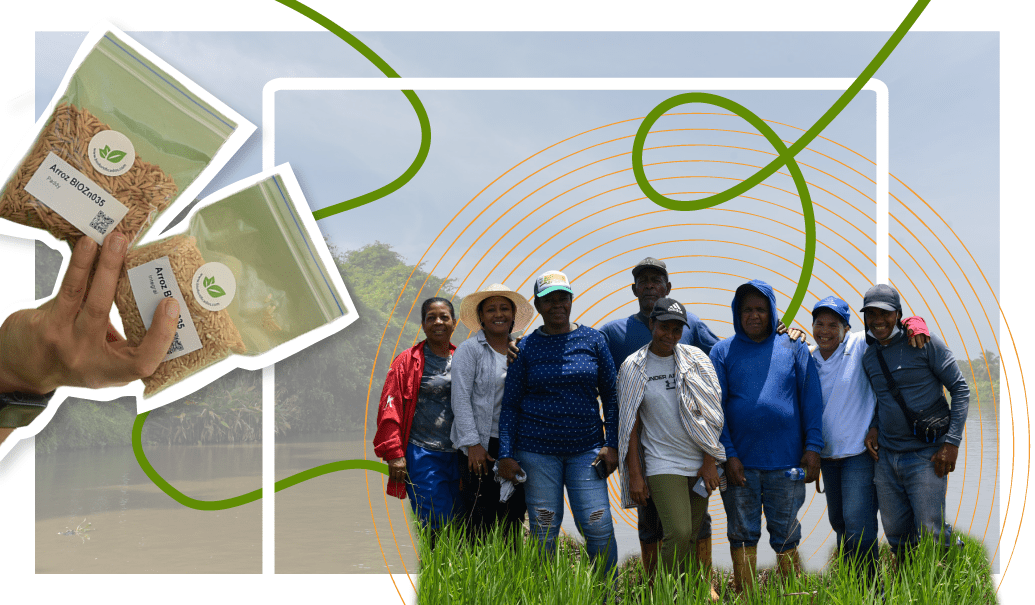
"For us, it has been very gratifying that these communities and others around them have opted to include biofortified rice in their diets. We know that reaching a territory is not easy, but thanks to the support of different institutions, it has been possible. Fedearroz BioZn035 rice seed is already being planted by farmers, and it adapts very well to the climatic conditions," says Natali Rendón, research associate of the Alliance.
The impact goes beyond Zapatero. On the banks of the Canal del Dique, in Puerto Badel, 16 farmers are planting biofortified rice seeds. What began as a local trial has become a growing strategy driven by the joint efforts of institutions and the commitment of small-scale farmers in Colombia’s Caribbean region.
Team

Luz Adriana Jimenez R.
Senior Coordinator