From the Field In Tumaco, two sisters cook future with shrimp shells
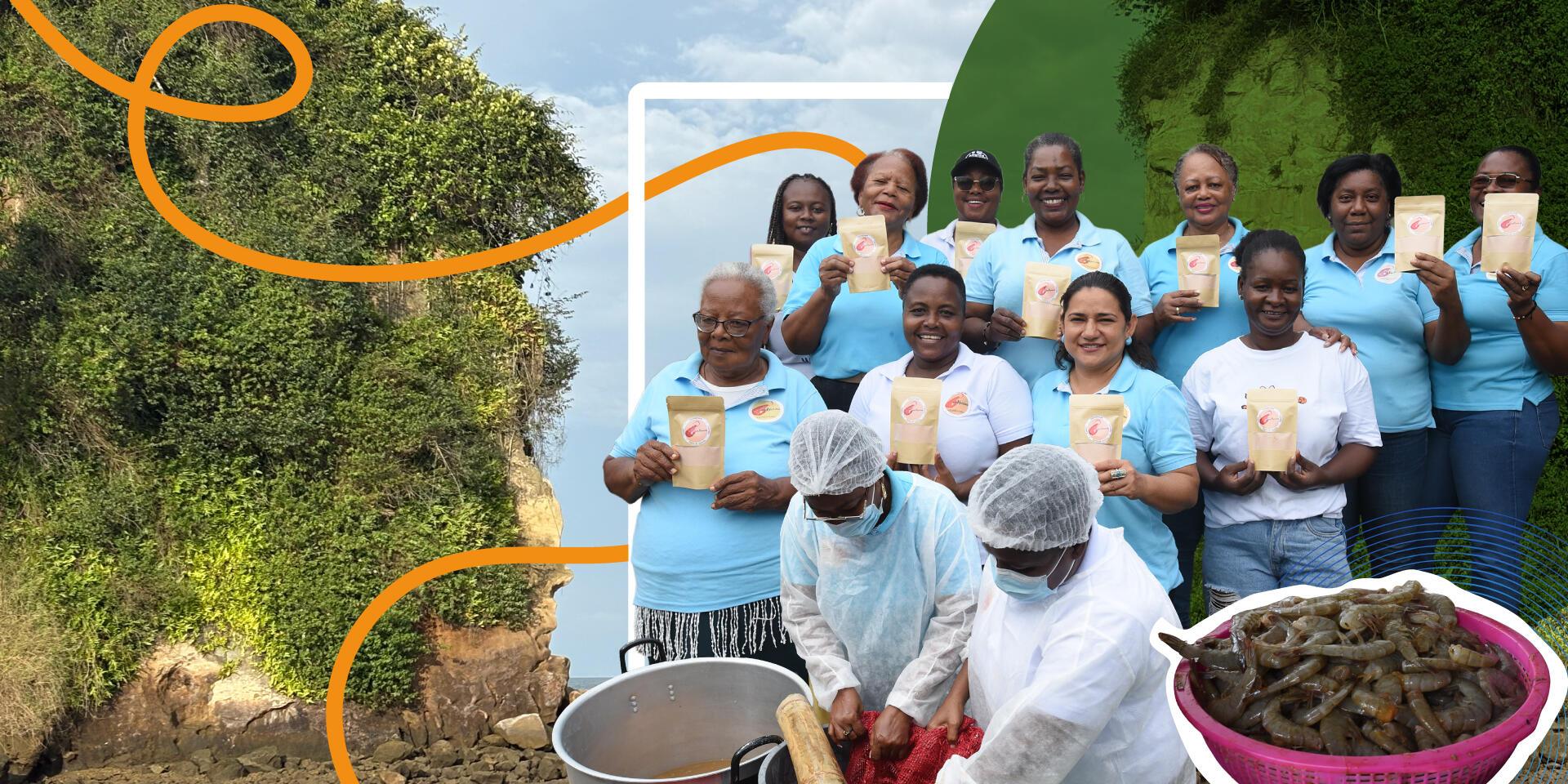

In Tumaco, Nariño, sisters Jaqueline and Yesi Sevillano found an opportunity in shrimp shells, which used to return to the sea as waste. Today they turn it into Camharina, a flour that fills the kitchens of Cali, Tumaco and Bogotá with the flavor of the Pacific, and transforms waste into an environmentally conscious future.
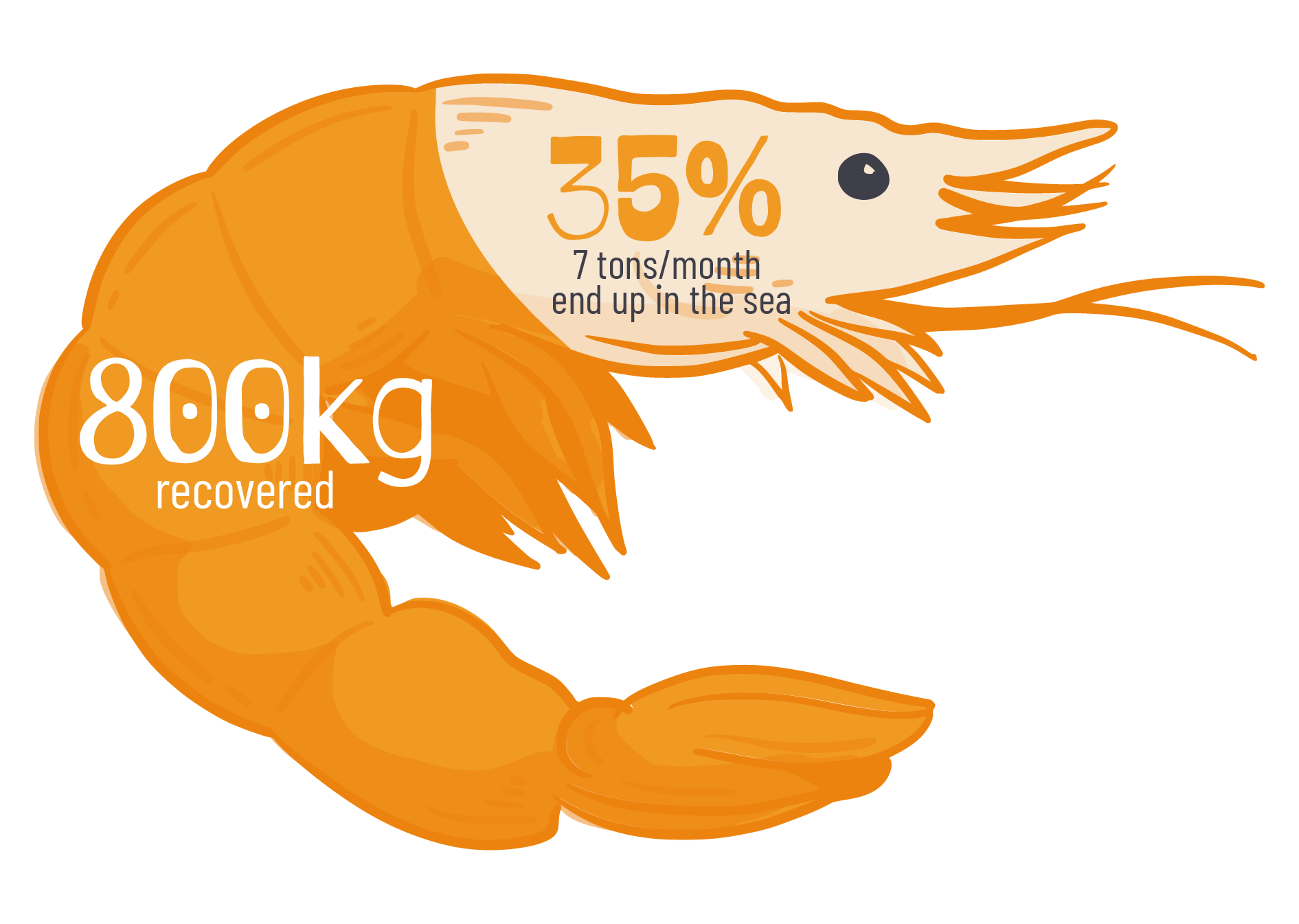
Daily, about 150 canoes arrive loaded with fresh shrimp at Tumaco's fisheries. On land, the nimble hands of women peelers separate the edible part from the rough shell and head of the shrimp. On the table two piles are formed: on one side, the food consumed by hundreds of families; on the other, the waste that no one claims and that, added together, reach seven tons a month and return to the sea, not as food, but as the footprint left by this activity in the Colombian Pacific.
"We received five and a half tons and about 35% of them are discarded. The remaining 65% goes to marketing," explains Miguel Roserro, assistant manager of Pesqueras Ocean Blue.
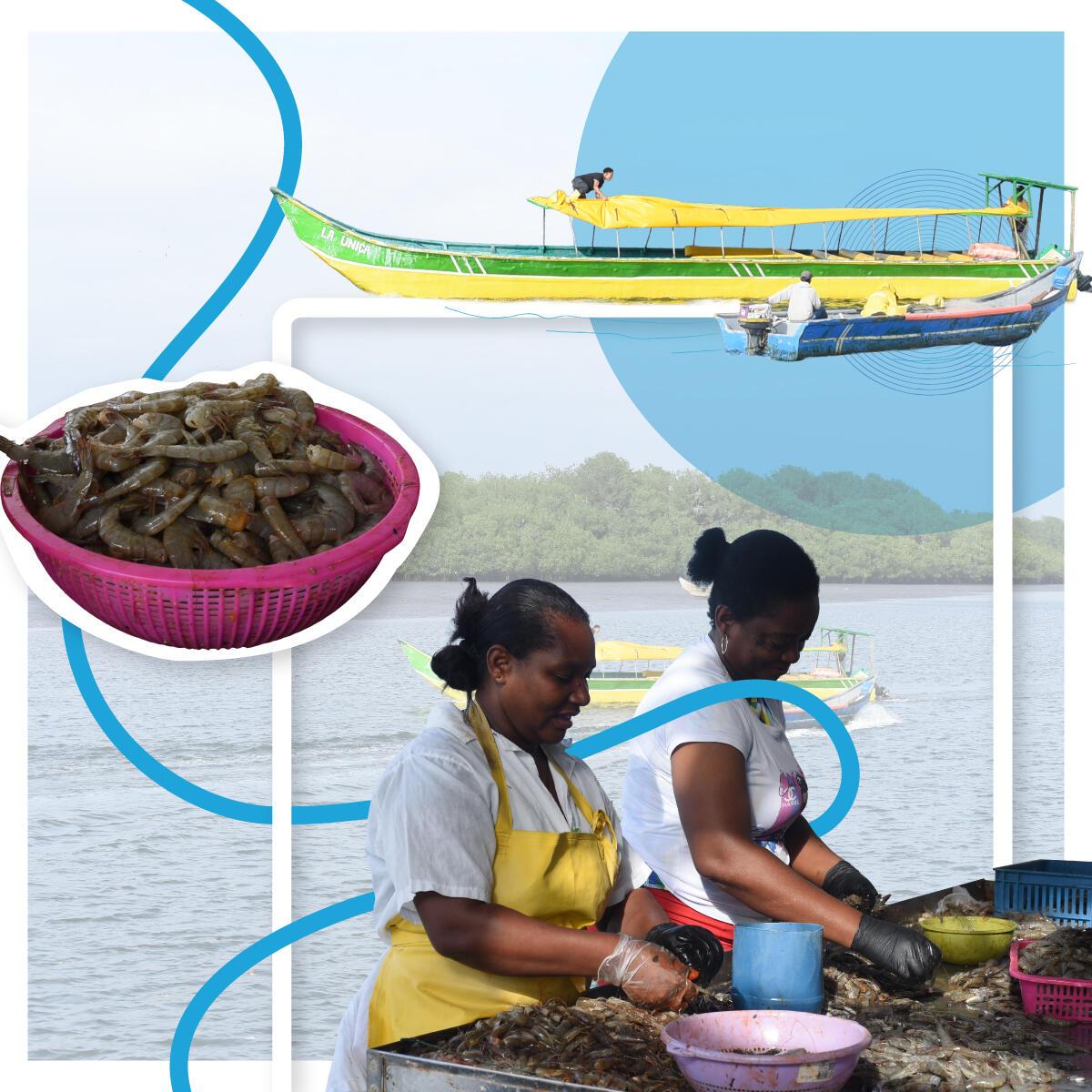
Jaqueline and Yesi Sevillano saw in that mountain of shells an opportunity. Five years ago, in the middle of the pandemic, they became unemployed and began to look for alternatives in the midst of uncertainty. "The husbands left, the children left and the job went, we had to do something," Jaqueline laughingly recalls. The situation, far from discouraging her, pushed her to move forward and create her enterprise: Camharina, which today transforms shrimp shells into flour and enhances the flavor of traditional Pacific cuisine.
"What for many is waste, for us is raw material," says Jaqueline. Her interest in making use of what many consider garbage goes back a long way: she studied a technical program in comprehensive solid waste management at SENA, and since then she wanted to start projects related to sustainability. "I have always been interested in the social aspect," she says. Before arriving at shrimp flour, she dreamed of making paper from banana stems.
Together with her sister, she founded Asomefama, an association made up of twelve women heads of household and one man who work for a more environmentally friendly future. Several members are close relatives: aunts, cousins, and even her mother. Each month, they manage to transform around 800 kilograms of shells that would have otherwise ended up in the sea. “We have a very rich territory, but the lack of awareness has led us to pollute it. With Camharina we contribute our grain of sand: it’s almost a ton of waste that no longer returns to the sea,” says Jaqueline.
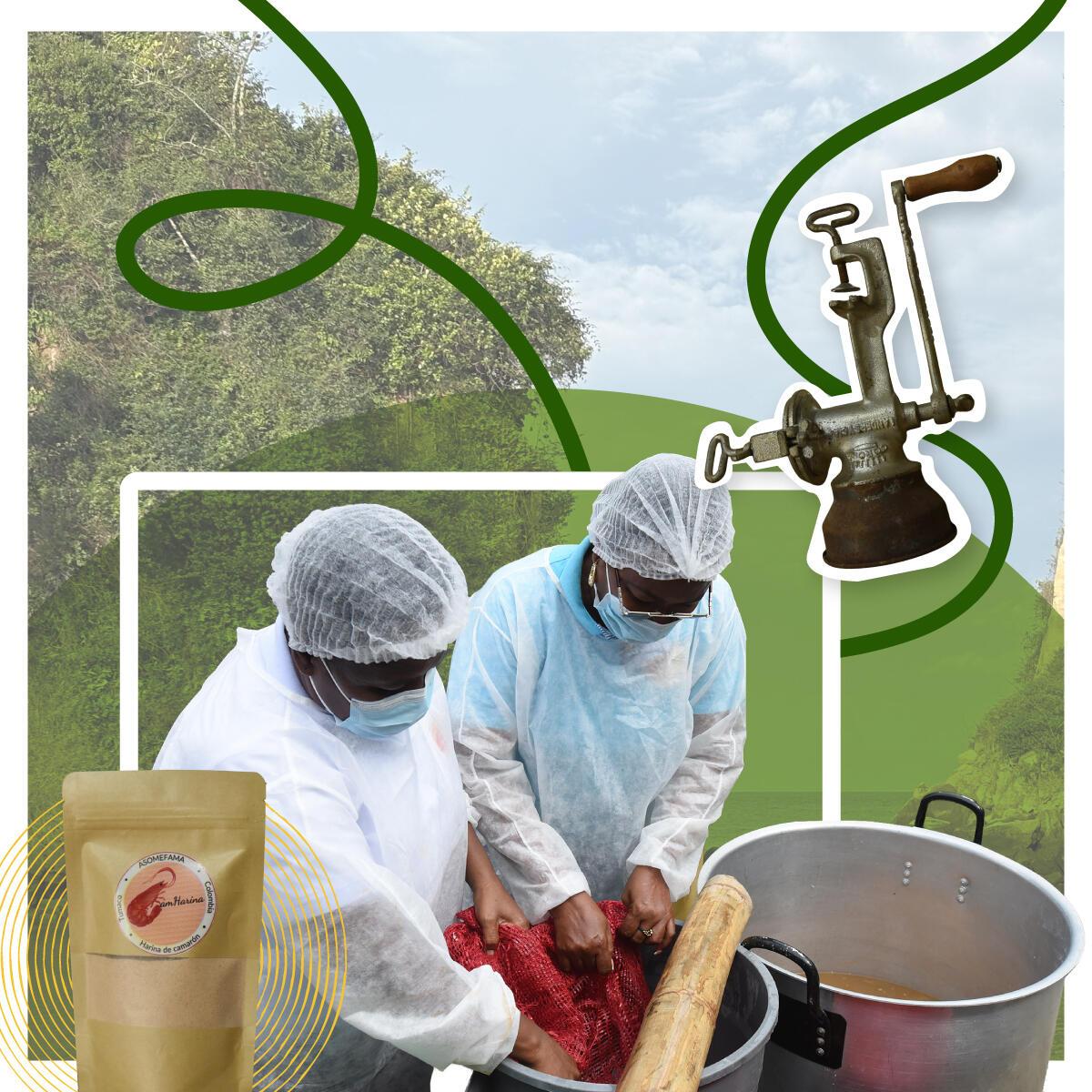
Wash, dry and grind. That is the Camharina's formula. Twice a week they collect the shells in the fishing grounds of Tumaco and carry them to the association's headquarters, which is also Jaqueline's home. There, they wash them several times, carefully select what is useful, and dehydrate them for seven hours at high temperatures. Finally, they put them in a blender that reduces the shells into a fine salmon-colored powder, resulting in the product. "When we're in the process, we all come out past shrimp," Yesi says with a chuckle.
"At the beginning, we used to grind the shell in grandma's mill, the same one used to grind corn, and we dried it in the sun in the backyard of the house. When the rain came, we had to run to bring them in, and we had problems with the neighbors because of the smell," recalls Jaqueline. Today, thanks to the support received by several institutions, they have a blender and an industrial oven that facilitate the process.
From 200 kg of husks, 10 kg of flour are produced. In addition to preventing the waste from returning to the sea, Camharina offers nutritional value: it is rich in nutrients and does not contain chemicals. In each bag of 50, 100 or 200 grams that they commercialize is condensed a collective work, an environmental bet and a taste of the Pacific that begins to open space in the traditional kitchens of the country.

Sea and land
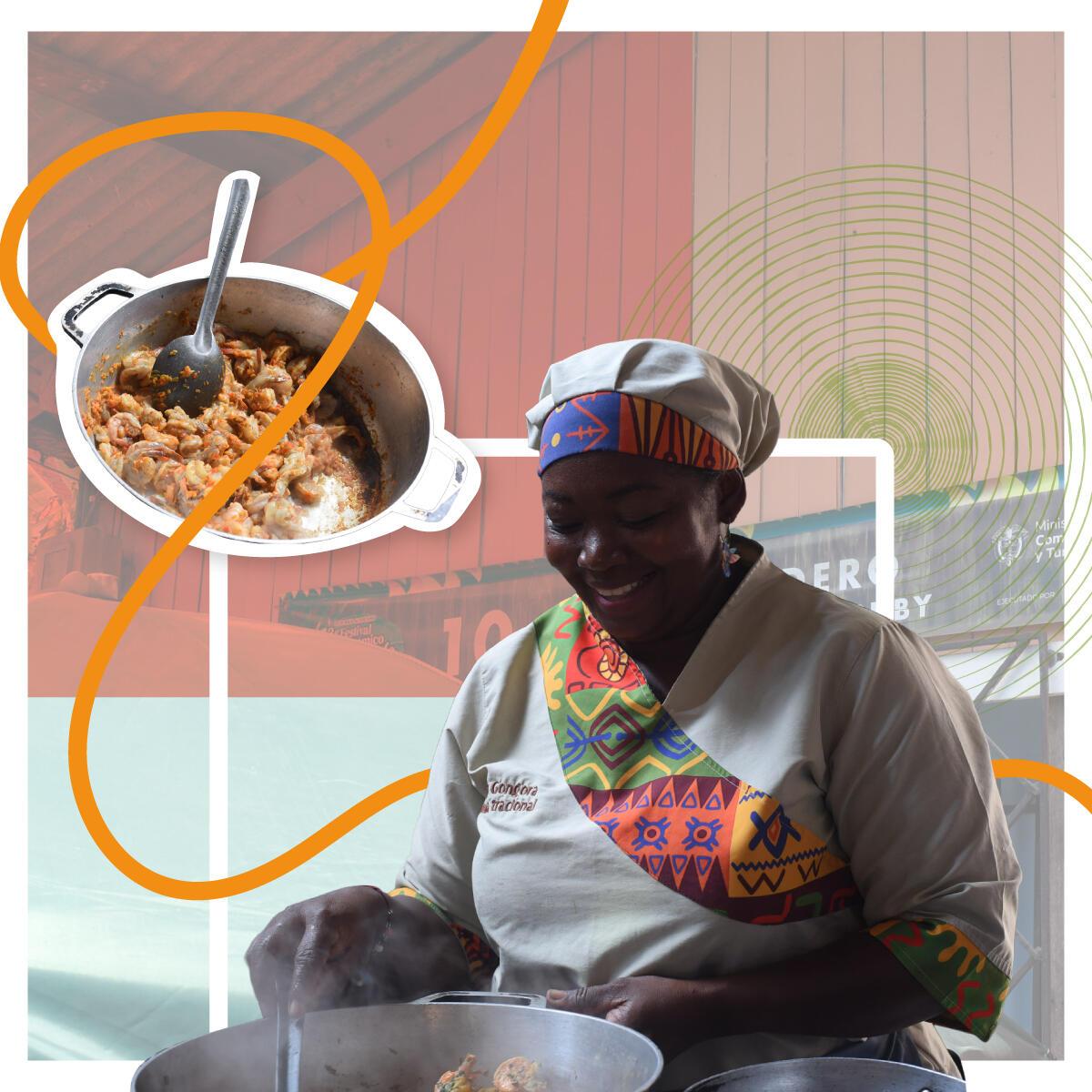
In Ruby Góngora’s kitchen, oil splatters aggressively inside and outside the frying pan. Ruby grabs the metal ladle and stirs the herbs and stew with the shrimp and beef; the metal scrapes the bottom of the pan, producing a harsh echo. The shrimp, still half raw, disappear into a sofrito that smells of sea and earth. Then Ruby takes a teaspoon of Camharina and sprinkles it over the pan. In the pot next to it, bubbles of oil surround pieces of ripe plantain that are already starting to turn golden.
This kitchen, however, is not in a restaurant; it’s in her home. Ruby’s real business, El Buen Sazón de Ruby, is about a hundred meters away, right on the road that leads to Morro beach. From the place, you can hear the noise of passing motorcycles and feel the humid sea breeze. But it is here, in this everyday kitchen, where her most authentic flavor is born: the same one with which she feeds her daughters and wins over diners who travel from different corners of the country in search of the taste of the Pacific.
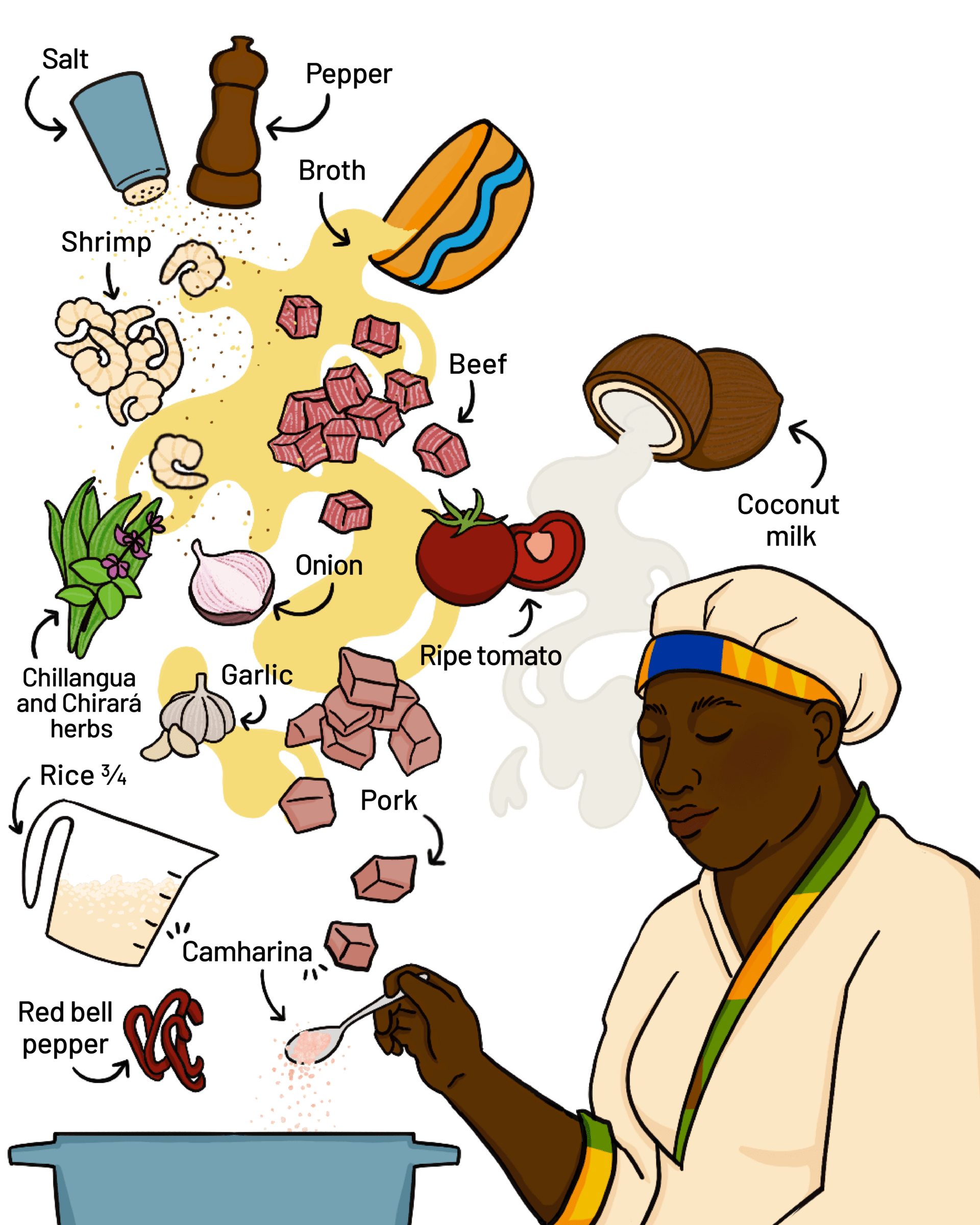
Ruby is one of the women who decided to include shrimp flour in their preparations. She has been cooking for 18 years and, according to her experience, Pacific food must include two essential elements: coconut and chirará, a traditional herb used in the region's cuisine. More than six months ago, a third ingredient was added to his cuisine.
"The preparations are much richer, with a stronger flavor," says Ruby, "apart from highlighting and helping us with our cooking, it is also a helper to the environment, because the shell no longer goes to the sea," she adds.
“We created the sea-and-land rice dish precisely because of the flour,” she explains. It’s a rice dish that combines beef and shrimp, coconut, and rooftop herbs like chirará and chilangua, and that today also includes shrimp flour. Like Ruby, other cooks from Tumaco have also incorporated Camharina into their recipes. Today, this flour enhances the flavor of fish encocados, aphrodisiac ceviches, and even traditional plantain dishes. The flour has already gone beyond Tumaco and is now served in restaurants in Cali, Medellín, and Bogotá, where each chef adapts it to their own cuisine.
Research to support the circular economy
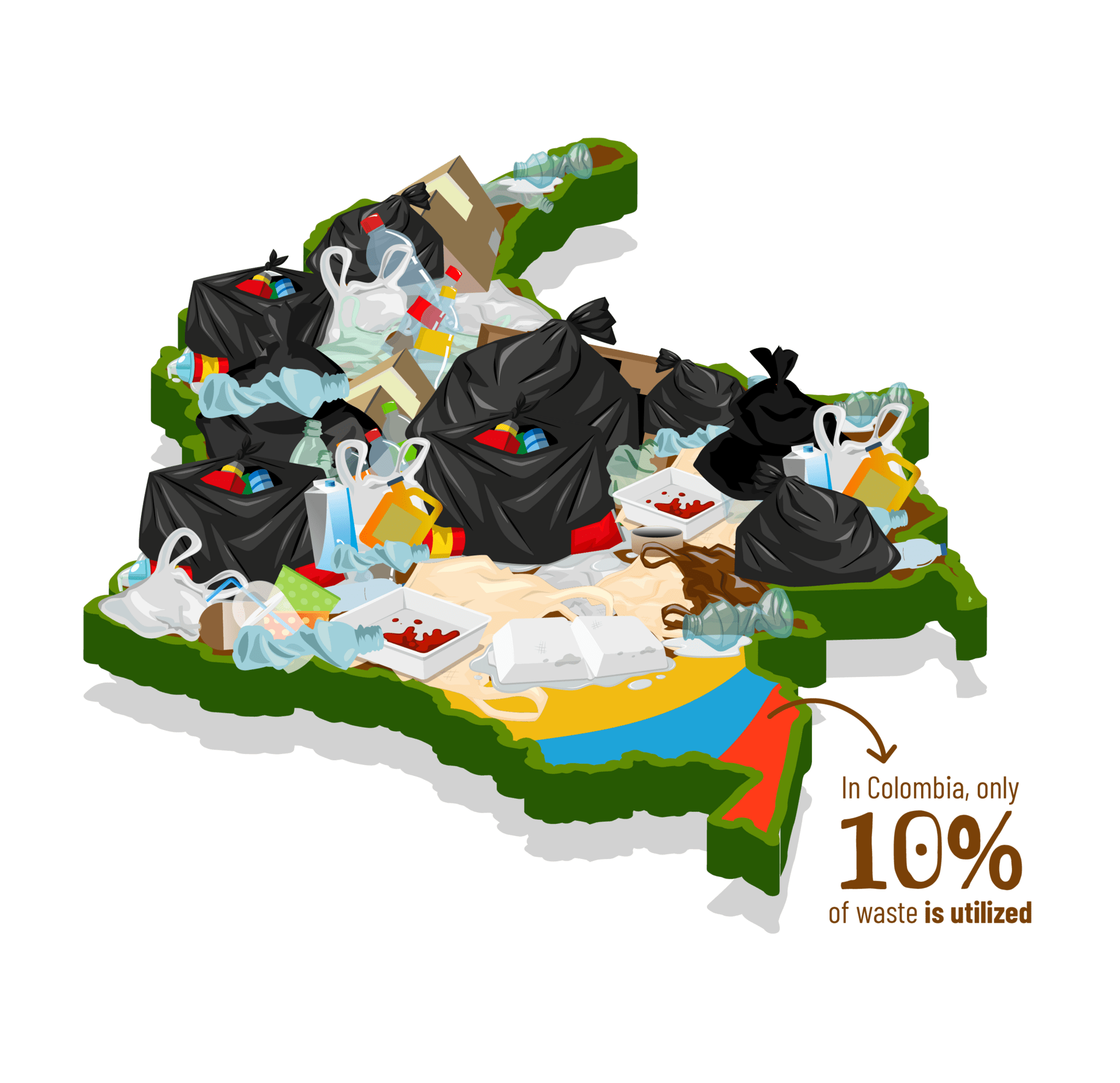
In Colombia, only 10% of waste is used; the remaining 90% ends up in landfills or, like shrimp shells, in the sea. To change that reality, the Sevillano sisters' venture has had technical and business support from SENA, the Tumaco Chamber of Commerce, and the CircularEconomy4Colombia (CE4C) Program, promoted by the Alliance of Bioversity International and CIAT.
"Supporting and positioning these initiatives, such as Camharina, is to boost the local economy of a population where 78% of women are entrepreneurs. How nice that private enterprise would sponsor and help market this product and all the good enterprises that come out of Tumaco for Colombia," says Horacio Ortiz, coordinator of projects and development center of the Chamber of Commerce of Tumaco.
Within the framework of this initiative, over the last two years, the sisters have participated in a training program and a three-month acceleration process, which has enabled them to strengthen their business model. The experience culminated in May, with the Demo Day CircularEconomy4Colombia, where Camharina was one of the ten projects selected to present their pitch in front of a panel of investors.
“The Alliance has provided technical support and specialized mentoring, creating opportunities for coordination with strategic partners. The results speak for themselves: some ventures managed to increase their sales by more than 30%, open new distribution channels, and establish partnerships with renowned companies in the sector,” says Guillermo Peña, senior researcher at the Alliance Bioversity and CIAT.
Guillermo Peña Chipatecua
Research AssociateThis venture reflects the transformative power of the circular economy: it rescues a residue from the sea and turns it into sustenance, but it also transforms lives and opens up the future through women who are betting on innovation from Tumaco. “Those who choose to support Camharina become conscious consumers, because they not only support a group of women heads of household, but also contribute to the environment,” says Jaqueline Sevillano. “We dream of having our own processing plant, we dream of placing these products in supermarkets and hotels—of filling this country with Camharina,” she adds with hope.
The CircularEconomy4Colombia initiative aims to strengthen innovative circular economy solutions in the Colombian agri-food sector, promoting collaboration between national and international stakeholders. It is led by the Accelerate for Impact Platform (A4IP) of the Alliance of Bioversity International and CIAT (CGIAR), in co-organization with the International Water Management Institute (IWMI). It has the support of the EAN University, the GIZ - Deutsche Gesellschaft für Internationale Zusammenarbeit, the Green Business Office of the Ministry of Environment and Sustainable Development of Colombia, and the business accelerator Rockstart.

Designs created by: Andrea Ramirez and Paulina Montoya
Related content