Blog Enhancing the use of decision-support tools to strengthen NAP design, implementation, and evaluation
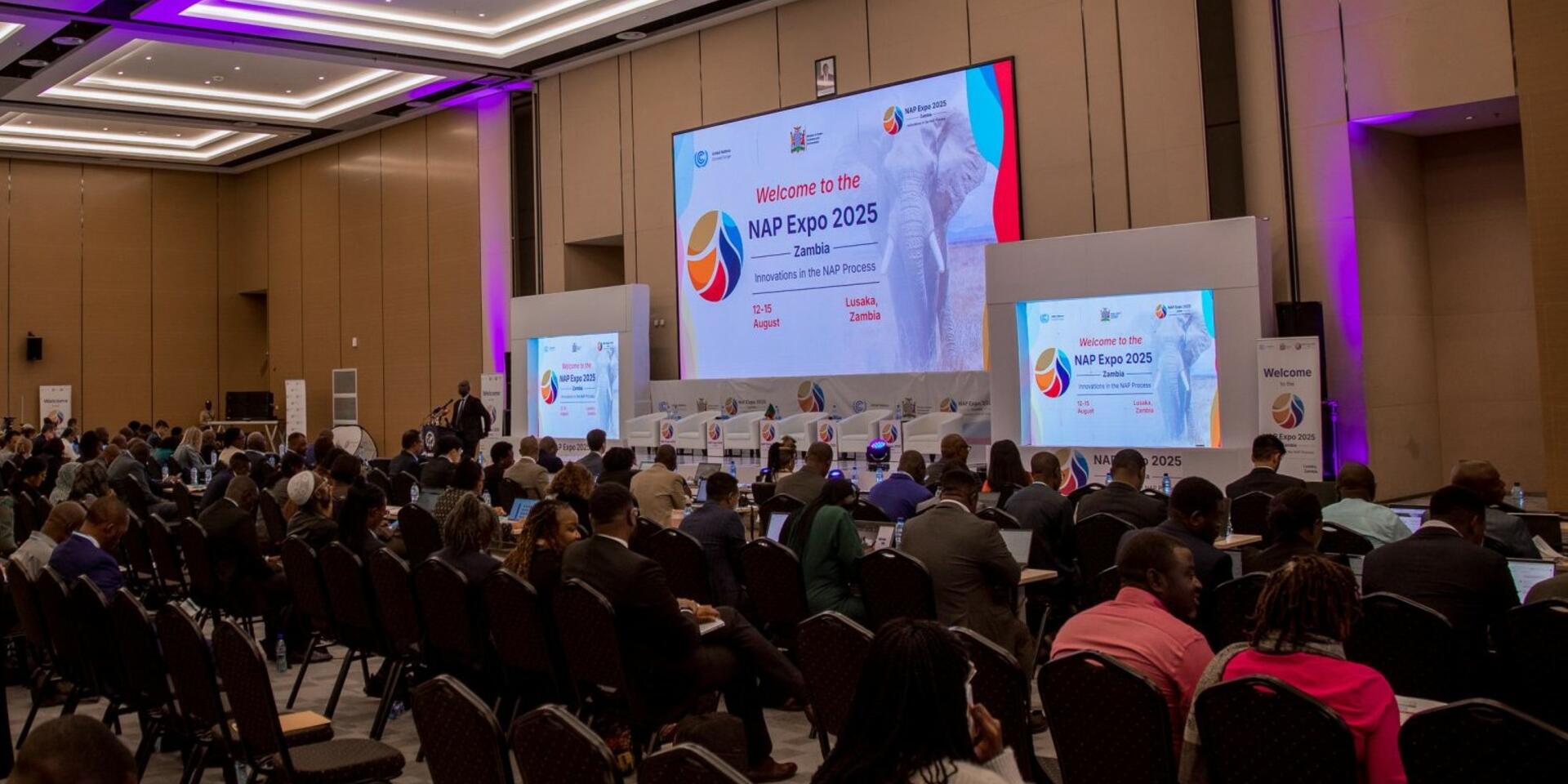

The 10th anniversary of the NAP Expo, held in Lusaka, Zambia, from August 12–15, 2025, marked a significant milestone in global climate policy.
The NAP Expo is an annual outreach event organized by the Least Developed Countries Expert Group (LEG) under the UNFCCC, in collaboration with various bodies and organizations, to promote exchange of experiences and foster partnerships between a wide range of actors and stakeholders on how to advance National Adaptation Plans (NAPs). The theme for the 2025 NAP expo focused on innovations in the NAP process.
Significant progress has been made in advancing NAPs, with nearly three-quarters of countries having initiated the process and about one-third having formally submitted a completed plan. This reflects growing recognition of the importance of planned adaptation.
However, progress in formulation has not always translated into quality or readiness for implementation. Many NAPs face data and analytical gaps, including the use of climate scenarios that are not sufficiently robust, limited consideration of uncertainty, and adaptation options that are not fully feasible, costed, or aligned with institutional capacities.
Despite advances in NAP design, implementation and tracking remain significant challenges. Inadequate integration of NAP priorities into investment planning, alongside financing constraints and weak monitoring systems, continues to limit effective implementation and learning.
At the same time, a significant number of countries have yet to develop NAPs at all, largely due to technical and financial constraints. Strengthening the generation and use of high-quality data across the full NAP cycle from risk assessment to implementation and evaluation is therefore critical to improving NAP quality, closing implementation gaps, and supporting countries that are still struggling to initiate the process.
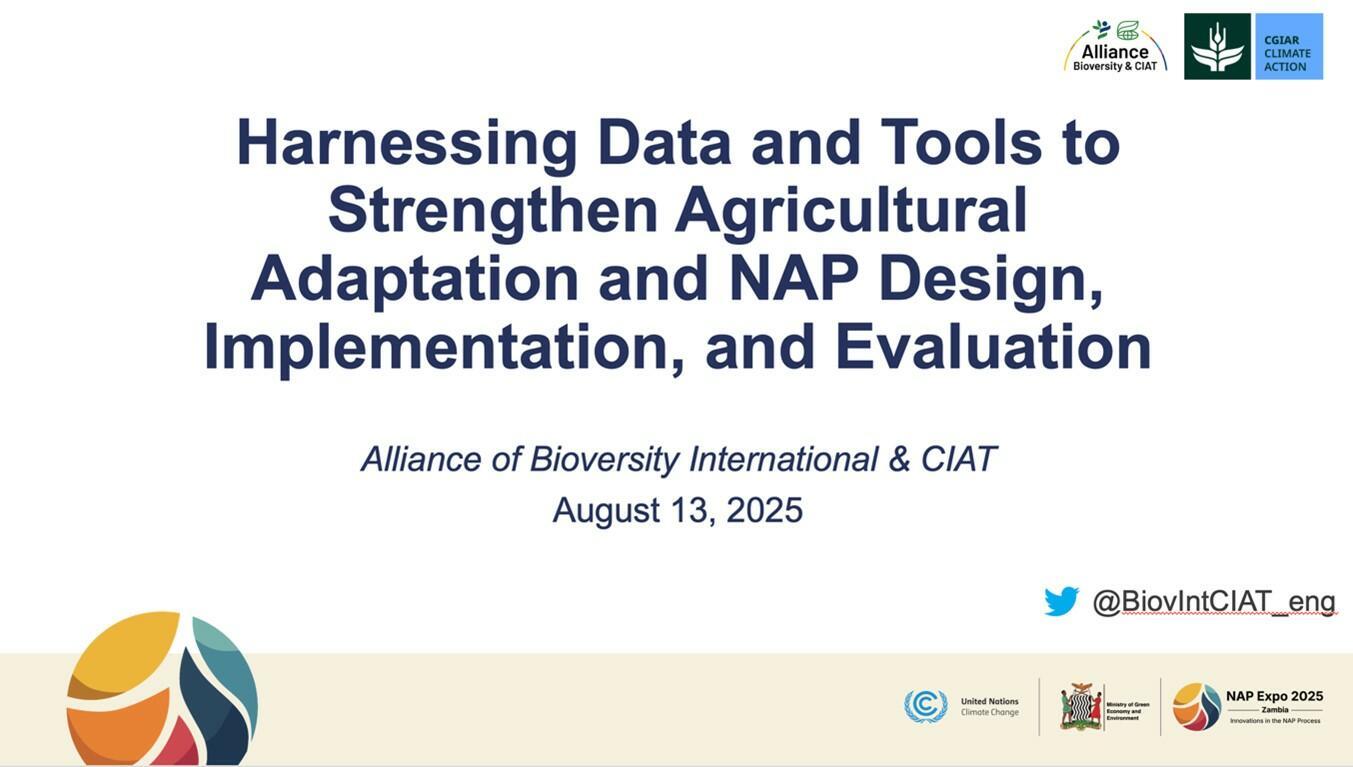
During the Expo, the Alliance Bioversity and CIAT convened a technical session titled 'Harnessing Data and Tools to Strengthen Agricultural Adaptation and NAP Design, Implementation, and Evaluation'. The objective of the session was to showcase available data and tools that can support the NAP process. In addition to demonstrating particular tools such as the Adaptation Atlas, the session also provided an opportunity for participants to discuss country-specific challenges and opportunities for enhancing NAP processes. The consensus was clear: to move from paper to the field, we need tools that bridge raw data and actionable insights.
The Adaptation Atlas: A blueprint for investment
Central to this evolution is the Adaptation Atlas: a data-rich platform designed to guide climate adaptation investments and policies. Unlike traditional static maps, the Atlas uses interactive "Observable Notebooks" to allow stakeholders to visualize and query datasets in real-time.
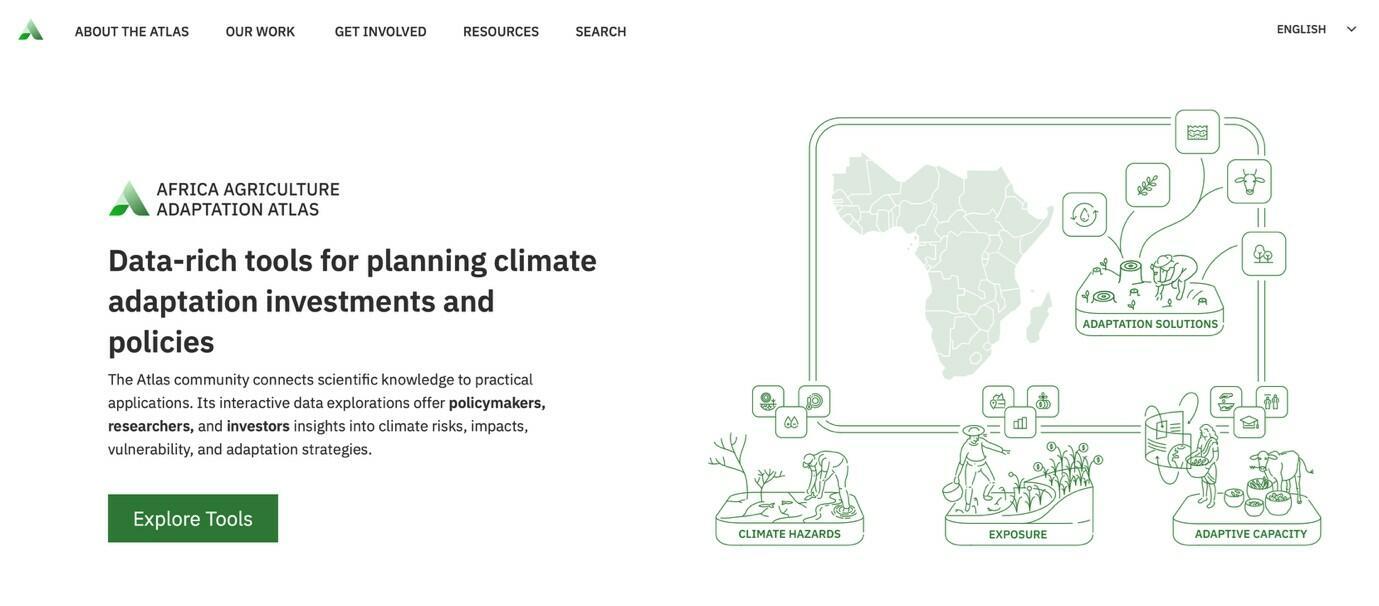
From a policy perspective, the Atlas serves three critical functions:
- Risk identification and prioritization, which allows for the evaluation of climate risks and the identification of viable adaptation practices for implementation;
- Specific modules to explore gender-inclusive investments and sustainable, climate-resilient livestock systems;
- it helps technical teams select solutions for specific projects and strengthen funding applications by providing a robust evidence base.
Real-world validation: The Ethiopia experience
The utility of the Adaptation Atlas is already being proven. In Ethiopia, the tool has been integrated into the design of the Climate-Smart Agriculture Investment Plan (CSAIP). Through the use of the Atlas, Ethiopia achieved several high-level policy objectives:
- Precisely identified high-risk zones and vulnerable communities,
- Prioritized resilience practices that helped tap into private sector finance,
- Used Atlas-derived data to strengthen project concept notes and unlock critical adaptation funding.
Embedding tools into national policy cycles
Data tools only succeed if they are embedded into the institutional fabric of a country. A major focus of the session was the work of AGNES in rolling out training programs for technical experts and engaging policymakers, including the Zambian Parliament.
The goal is to move beyond one-off training and instead:
- Explicitly link data tools like the Atlas with NAPs, Nationally Determined Contributions (NDCs), and Long-Term Low Emission Development Strategies (LT-LEDs);
- Embed these tools into national budget cycles to ensure adaptation is financed, not just planned;
- Integrate tool usage into university curricula to build a permanent pipeline of technical experts.
The path forward
As we look toward 2030, the 'next steps' identified in Lusaka provide a roadmap for the global community to move beyond planning and into high-impact implementation. The focus is now on ensuring that tools like the Adaptation Atlas are not just showcased, but are deeply integrated into the institutional and technical fabric of national governments. To achieve this, the Alliance will work closely with partners like AGNES to build and scale institutional technical capacities to ensure the sustained use of data tools across different sectors.
The team

Majambo Gamoyo
Postdoctoral Fellow
Lucy Njuguna
Postdoctoral Fellow
Dorcas Jalang'o Anyango
Research Team Leader