Research Articles Adaptation in focus: Kenya’s efforts in climate reporting and resilience

Kenya is taking significant strides in climate reporting and resilience-building by successfully submitting its first Biennial Transparency Report (BTR) under the Paris Agreement. Developed in collaboration with key stakeholders, the report outlines the country’s progress in reducing greenhouse gas emissions, adapting to climate change, and identifying areas where additional support is needed. It also highlights Kenya’s proactive efforts to address climate challenges, particularly in the face of natural disasters that annually cost the country 3–5% of its GDP. This milestone showcases Kenya’s commitment to global climate action and emphasizes the need for robust adaptation strategies to secure a sustainable future.
Background
The urgency to take stock of climate action under the United Nations Framework Convention on Climate Change (UNFCCC) stems from the escalating impacts of climate change and the need for coordinated global responses. Regular stocktaking is vital for assessing progress toward climate action goals and informing enhanced ambition.
The Biennial Transparency Reports (BTRs) introduced under the Paris Agreement (PA) represent a critical component of this effort, aiming to provide a standardized and robust mechanism for reporting.
Under the PA, the BTRs are to be submitted every two years. The first BTRs were due on December 31, 2024, and the second by end of 2026. These reports serve as a comprehensive tool for tracking climate action, encompassing key areas such as adaptation, mitigation, and capacity-building, finance, and technology transfer. To ensure consistency and comparability, the Modalities, Procedures, and Guidelines (MPGs),
adopted at COP24 in Katowice, provide the most recent and detailed guidance for compiling these reports.
BTRs build on other reporting mechanisms under the UNFCCC, including National Communications and Biennial (Updated) Reports (B(U)Rs). While these instruments provide valuable insights into climate action over the years, BTRs introduce a more structured approach, aligned with the enhanced transparency framework requirements of the Paris Agreement. Furthermore, both developed and developing countries are required to submit BTRs on consistent timelines, thus positioning itself to become the most comprehensive and regular source of evidence of climate action globally.
As of January 2025, just over half of the countries that are party to the UNFCCC had submitted BTRs to the UNFCCC. Kenya is among the few developing countries that managed to submit first BTRs before the December deadline.
The BTR development Process
Kenya’s first BTR, developed using established methodologies like the IPCC greenhouse gas inventory and MPGs, consists of six chapters. These chapters detail Kenya's efforts to reduce greenhouse gas emissions, adapt to climate change, and outline the financial, technological, and capacity-building support received and needed from developed countries.
Among the elements covered in BTRs, reporting on adaptation presents unique challenges. Adaptation efforts are highly context-specific, requiring the integration of qualitative and quantitative data. Additionally, gaps in data availability, capacity constraints, and the need for localized indicators often hinder comprehensive reporting. Despite these obstacles, BTRs offer an opportunity to showcase progress in climate resilience and identify areas requiring additional support.
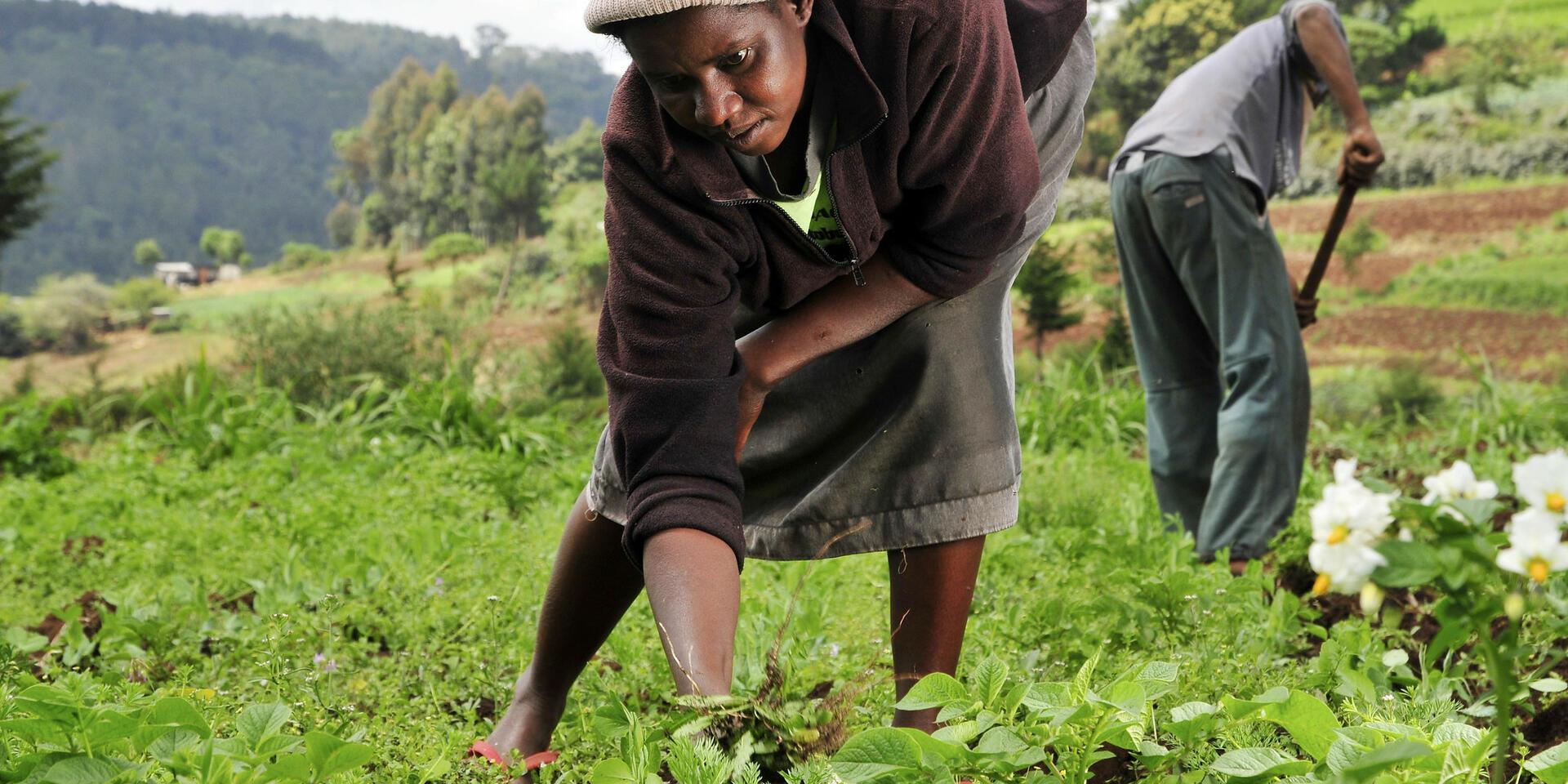
Kenya’s BTR highlights the growing impact of climate change, with natural disasters now costing Kenya 3–5% of its GDP annually. For instance, droughts from 2020 to 2023 caused high livestock mortality rates, severely affecting livelihoods and food security, particularly in the country’s Arid and Semi-Arid regions.
In response, both the government and non-state actors are actively implementing adaptation and resilience-building measures. The government has adopted strategies like the Climate Smart Agriculture Strategy and Implementation Framework to guide these efforts. Together with non-state actors, it has promoted adaptive approaches such as social protection programs, irrigation systems, climate information services, early warning systems, and livestock insurance. These initiatives have significantly boosted the resilience and adaptive capacity of communities and households.
CGIAR’s contribution to adaptation and reporting
CGIAR played a pivotal role in supporting Kenya’s BTR by providing financial and technical support through its Livestock and Climate Initiative, the initiative on climate resilience, and the Accelerating Impacts of CGIAR Climate Research for Africa (AICCRA) project. Collaborating with the Ministry of Environment, Climate Change and Forestry (MECCF) and other stakeholders, CGIAR contributed to key discussions on adaptation progress, achieved results, and implementation needs. Notable contributions of the CGIAR to the country’s adaptation agenda included improving coordination in climate actions through the Climate-Smart Agriculture Multistakeholder Platform (CSA-MSP), reaching 6.2 million farmers with climate-informed agro-advisories via KALRO's messaging system and the Kenya Agriculture Observatory Platform (KAOP), developing climate risk profiles and CSA investment plans, promoting farmer-led peer learning of adaptation practices, and establishing community seedbanks to enhance food and nutrition security.
CGIAR's contributions highlight the importance of evidence-based research, multi-stakeholder collaboration, and innovative solutions in driving climate adaptation and disaster risk management. Despite these efforts, challenges remain. The report identifies key barriers to adaptation, such as weak institutional coordination, limited access to financial resources, and inadequate technical capacity. Strengthening these areas, along with improving systems for tracking and reporting adaptation progress, remains a priority for future support.
Enhancing Kenya’s BTR preparation processes: challenges and opportunities
Kenya’s experience in preparing the BTR highlight opportunities for improvement, particularly in addressing the fragmented nature of data on adaptation projects and activities. A major challenge lies in accessing comprehensive data on adaptation actions and outcomes. Many activities, especially those by non-state stakeholders such as private sector entities, UN Agencies, International Organizations, Public Benefit Organizations (PBOs), and both local and international NGOs, remain unreported due to the absence of a clear reporting pathway.
While tools like the Climate Smart Agriculture Monitoring and Evaluation (CSA M&E) tool and the Tracking Adaptation in Livestock Systems (TAiLS) tool have been developed to aid adaptation tracking, more work is needed to improve access to the data required to operationalize these tools. Additionally, the development of similar tools for other sectors is essential for a holistic approach to adaptation tracking.
Simplifying reporting mechanisms, increasing resources, and expanding data collection efforts can significantly enhance future BTRs. A user-friendly reporting framework would encourage more stakeholders to contribute data, leading to more robust and accurate reporting.
Stakeholder engagement is a cornerstone of the BTR preparation process. To improve future reports, Kenya could prioritize targeted consultations at the subnational level. Engaging county governments and non-state actors in localized meetings would provide valuable insights and capture a broader range of adaptation activities. Improving existing and national reporting workflow from the subnational level to the national level, would enhance data availability from the point of implementation. However, these approaches require additional time and resources.
Standardized reporting tools, guided by the Monitoring, Evaluation, and Learning (MEL) framework from Kenya’s National Climate Change Action Plan, would further streamline data collection and reporting processes, making it easier for stakeholders to contribute meaningful information.

Way forward
As CGIAR transitions to its 2025 - 2030 business cycle, it remains dedicated to supporting governments in building capacity for adaptation reporting. This includes through strengthening systems for tracking adaptation actions and achievements, helping consolidate data and increasing access to tested methods for evaluating adaptation efforts. In addition to CGIAR’s Science Programs which are designed to transform and enhance the resilience of the agriculture sector, the Adaptation Insights project specifically focuses on enhancing access and use of data on adaptation.
The Kenyan experience, particularly in fostering the inclusion of a diversity of development partners and non-state actors, and capturing detailed project-level activities, offers valuable insights that can inform and improve adaptation reporting processes globally.
By leveraging these lessons, these processes will be more effective, and inclusive, leading to more comprehensive adaptation reporting frameworks, further improving adaptation planning and decision making.
See Also