Blog Building the systems to scale integrated Digital Climate Advisory Services

The Alliance of Bioversity International and CIAT, convened government, researchers and private sector partners in Nairobi to scale Kenya's digital climate advisory services using the CGIAR Innovation Package and Scaling Readiness (IPSR), aiming to sustainably reach 6 million farmers by 2028 through integrated climate advisory systems.
Countries are increasingly recognizing the critical role of climate information and early warning systems in their national climate plans and strategies, putting climate information to good use, strengthening early warning systems, providing sectoral services, planning for future risks and helping communities adapt to the impacts of climate change.
Kenya has made significant progress in generating weather and climate information. Forecasts are becoming more accurate, digital platforms are expanding and investments in climate services continue to grow. Yet one question remains: what will it take for these innovations to reach millions of farmers in ways that are coordinated, trusted and sustainable?
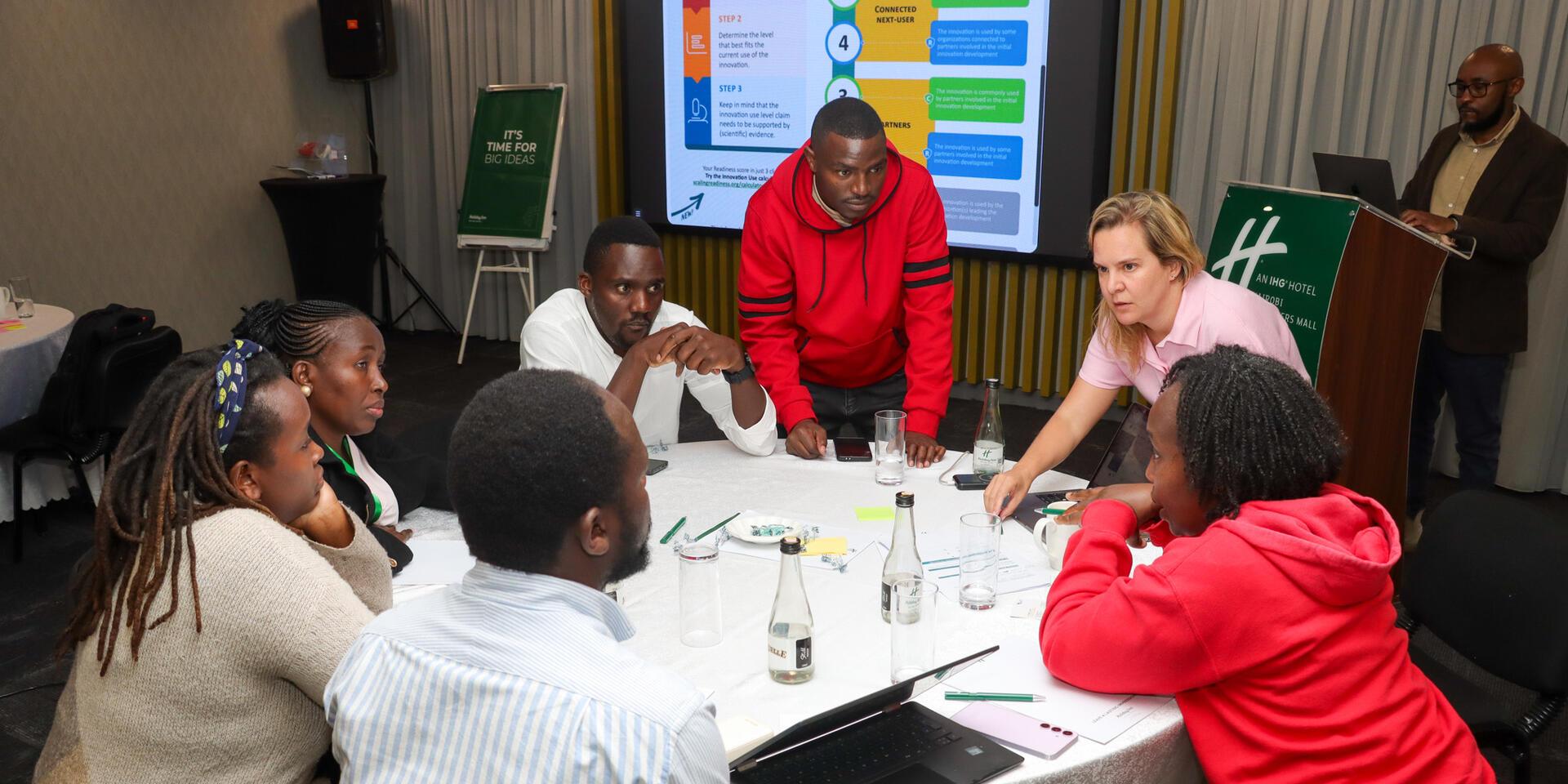
That question brought together researchers, government agencies, development partners, private sector actors and digital innovation specialists in Nairobi for a two-day Innovation Package and Scaling Readiness (IPSR) Workshop convened by the Alliance of Bioversity International and CIAT through the CGIAR Scaling for Impact Science Program.
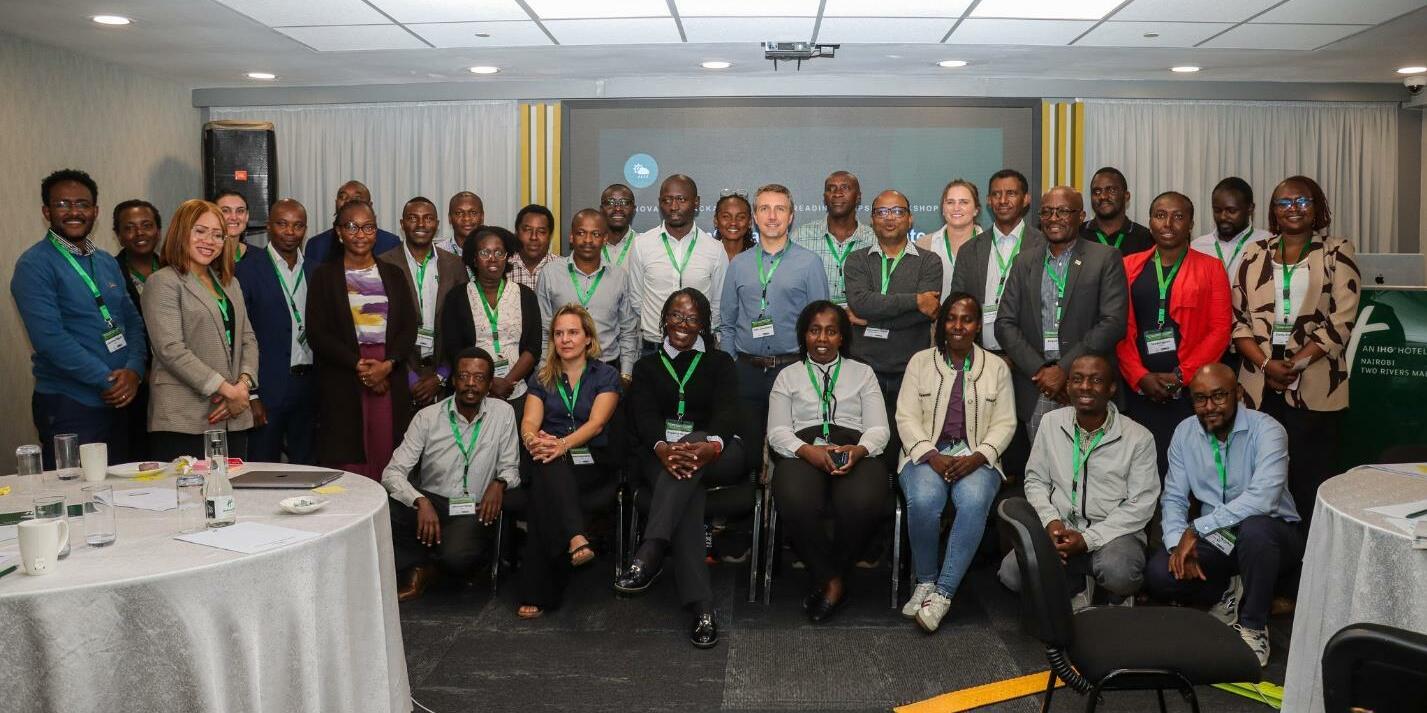
Unlike many workshops that focus on showcasing technologies, the IPSR workshop challenged participants to look beyond individual digital tools and examine what it takes to scale innovation sustainably. Rather than searching for new technologies, participants focused on identifying the institutional, technical, and social conditions required for existing innovations to move from successful pilots to national systems. Central to IPSR’s approach is the concept of context-specific innovation packages, which combine a core innovation with the enabling conditions necessary for scaling. To support this process, participants applied the “Scaling Readiness” tool, a methodology designed to identify and assess bottlenecks that constrain scaling. Using the tool, they examined barriers limiting the reach of Integrated Digital Climate Advisory Services (DCAS) and collaboratively identified the actions and enabling conditions needed to overcome them and support sustainable, large-scale adoption.

"The challenge is no longer generating climate information; it is ensuring that the right information reaches the right farmer in the right format and at the right time." observed Pascaline Chemaiyo of the Kenya Meteorological Service Authority (KMSA)
Her observation captured the central challenge driving the workshop. While progress in generating climate information has been significant, ensuring that it is translated into timely, actionable advice that consistently reaches farmers remains a complex systems challenge.
The workshop was guided by an ambitious scaling vision. By 2028, the integrated DCAS package aims to support approximately 3,000 extension agents and agripreneurs in delivering climate advisory services while reaching around six million smallholder farmers across Kenya through an ecosystem that combines weather information, agricultural intelligence, farmer data and multiple delivery channels.
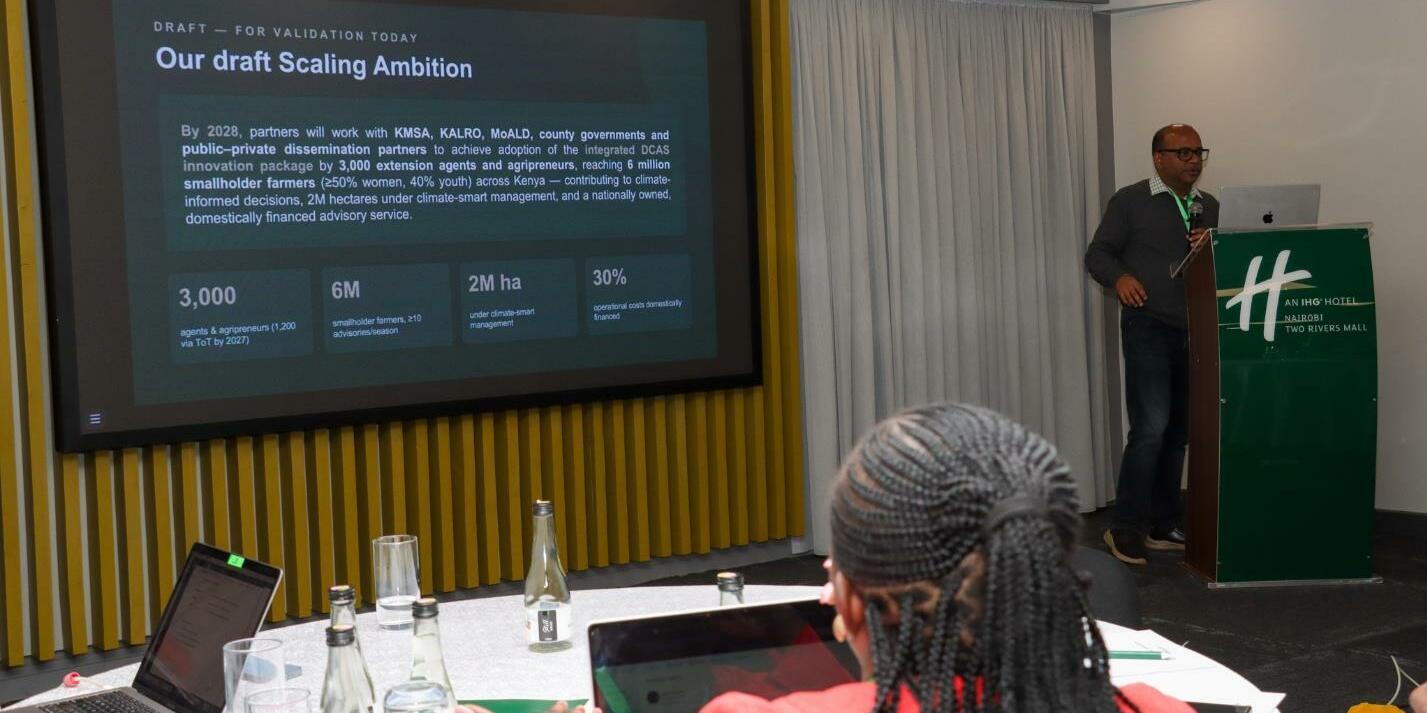
Aniruddha Ghosh, Senior Scientist and DCAS Track solution lead, sharing the draft scaling ambition.
Edwin Kangethe of the International Livestock Research Institute (ILRI) challenged participants to rethink one of the most common assumptions about innovation:
"Scaling is not about numbers. An innovation has scaled when it is working with the intended user with no input from those who developed the solution," said Edwin Kangethe, Innovation and Scaling Advisor with the Impact at Scale team at ILRI and the CGIAR Systems Organization.

His observation fundamentally reframed the conversation. The challenge was no longer how to reach more farmers, but how to ensure climate advisory services continue delivering value long after projects have ended. True scale happens when farmers, institutions and delivery systems continue adopting and applying a solution because it has become embedded within existing systems and continues delivering value long after project support ends. Emphasing on the need of moving beyond mere reach of numbers to focusing on actual adoption, impact, and economic value for farmers.
The value of climate services extends well beyond immediate alerts. Over the long term, it underpins risk-informed development and adaptation planning, by providing countries with the evidence they need to set priorities and strengthen their capacity to respond to climate change impacts.
This shift in thinking shaped every session. Rather than asking how another platform could be developed, participants identified the conditions that must exist before any platform, advisory service or digital solution could succeed. As Edwin later explained:
"It's not like an exam where you want to score 100. You're not forcing a certain score. You want the actual readiness so that we know what action is necessary."
Rather than rewarding high scores, the IPSR process encouraged participants to identify gaps, understand why they exist and agree on the actions needed before scaling further.
From there, the discussion naturally turned to trust. Participants noted that farmers often receive conflicting advisories from multiple sources, reducing confidence in climate information. Building trust, they argued, requires more than accurate forecasts. It depends on harmonized and standardized weather advisories, supported by stronger collaboration among climate service providers, so farmers receive consistent, localized and actionable information regardless of where they access it.
Data governance emerged as another priority. Kenya already has considerable expertise and valuable datasets spread across institutions. However, fragmented systems, varying standards and limited interoperability continue to constrain coordinated service delivery. Participants emphasized the need for open but well-governed data sharing, common standards, application programming interfaces (APIs) and multi-stakeholder governance structures that enable institutions to exchange information seamlessly while respecting institutional mandates and responsibilities.
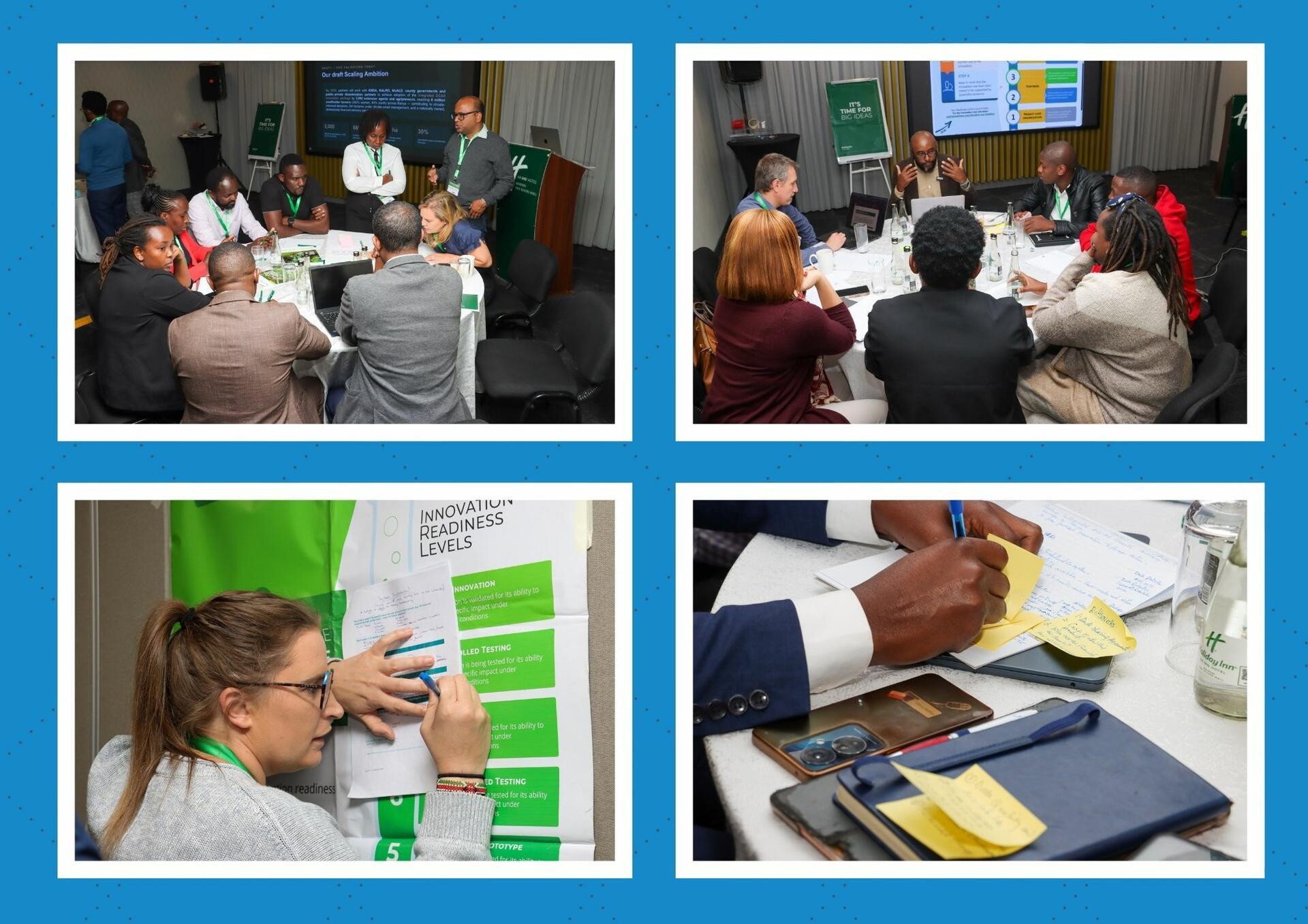
Participants were able to establish the bottlenecks and identified the enablers of scaling the DCAS solution using the IPSR methodology. Photo: CIAT/Esther Nzuki
Participants also challenged themselves to think differently about capacity development. Rather than relying on project-by-project training, they envisioned an approach that embeds climate advisory competencies within universities, agricultural training institutions, extension systems, cooperatives and community organizations. Such an approach would leave lasting capacity long after individual projects conclude.
For Emma Davies of Precision Development, the starting point was the farmer. She reminded participants that meaningful digital innovation begins with the people it is intended to serve.
"If we're going out and creating advice without incorporating the farmer voices, then it's probably not going to be meeting their needs."
Her remarks reinforced the need for advisory services that are co-created inclusively with farmers, grounded in local realities and responsive to the diverse contexts in which they operate.
Taken together, these discussions underscored that preparing DCAS for scale requires strengthening the entire ecosystem that supports them. By the close of the workshop, participants had transformed dozens of identified bottlenecks into priority scaling enablers. These ranged from harmonized advisory systems and stakeholder coordination platforms to inclusive capacity development models, governance frameworks, awareness strategies and farmer-centred design approaches. The next step will be assessing their readiness and implementing a shared roadmap that assigns responsibilities, milestones and actions.
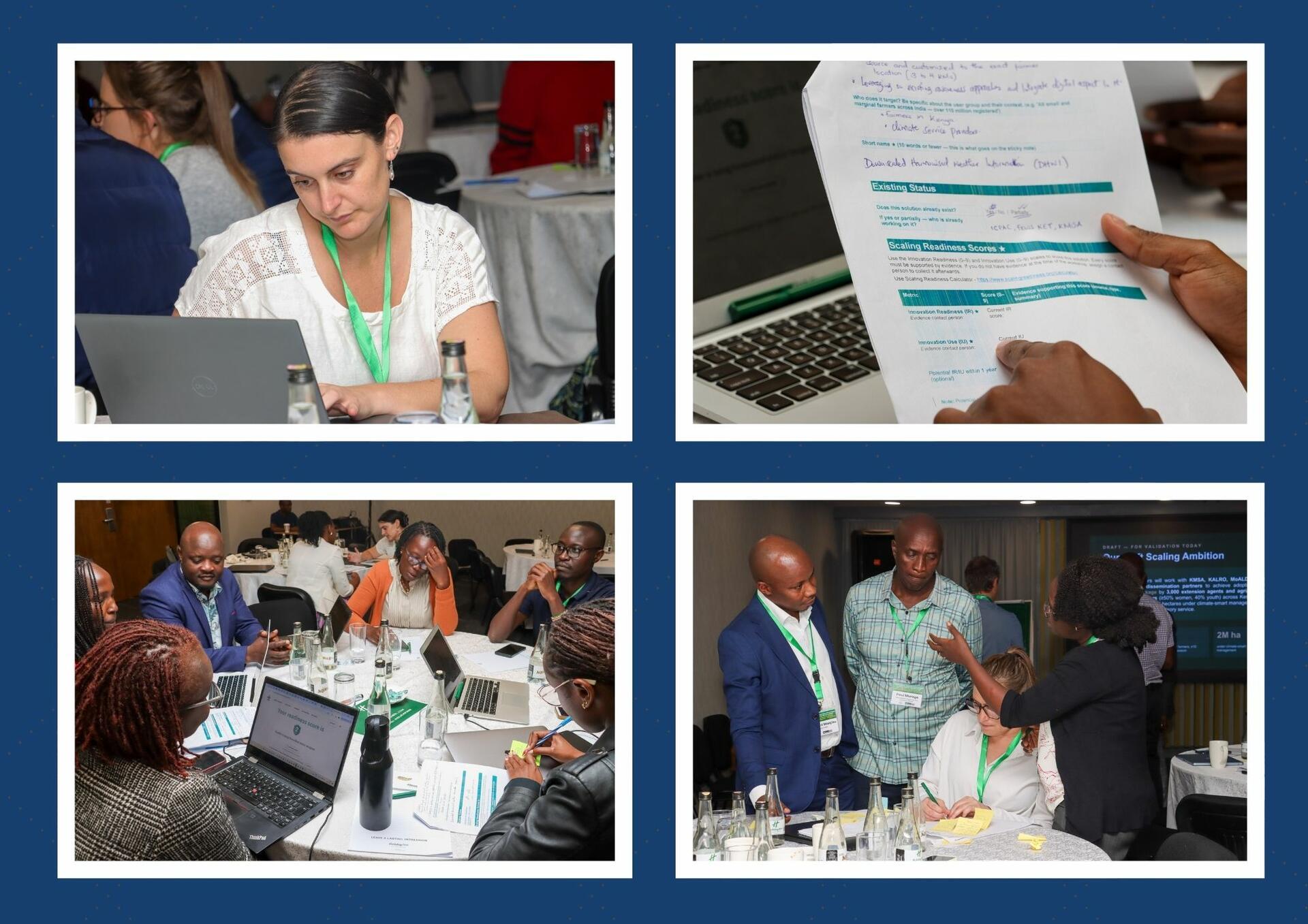
Above left, Emma Davies, in subsequent photos, participants using the scaling readiness calculator to establish their innovation readiness level. Photo: CIAT/Esther Nzuki
Perhaps the workshop's greatest achievement was creating a shared understanding that scaling Integrated Digital Climate Advisory Services is ultimately a systems challenge. Technology remains essential, but it can only deliver impact when supported by trusted institutions, coordinated partnerships, strong evidence, inclusive design and sustained investment.
As Kenya continues advancing Integrated Digital Climate Advisory Services, the IPSR process offers more than a methodology. It provides a practical pathway for aligning innovations, strengthening the enabling environment and ensuring that climate information translates into better decisions for farmers.
Because in the end, scaling climate advice begins long before the technology reaches the farmer. It begins with building trusted partnerships, stronger institutions developing viable minimum standards that can be used across multiple institutions and the systems that allow innovation to endure. When those foundations are in place, climate information becomes more than a forecast. It becomes knowledge that farmers can trust, use and act upon to strengthen their resilience and livelihoods.