Blog AgroClimate Advisory Committees: The local engine of climate action
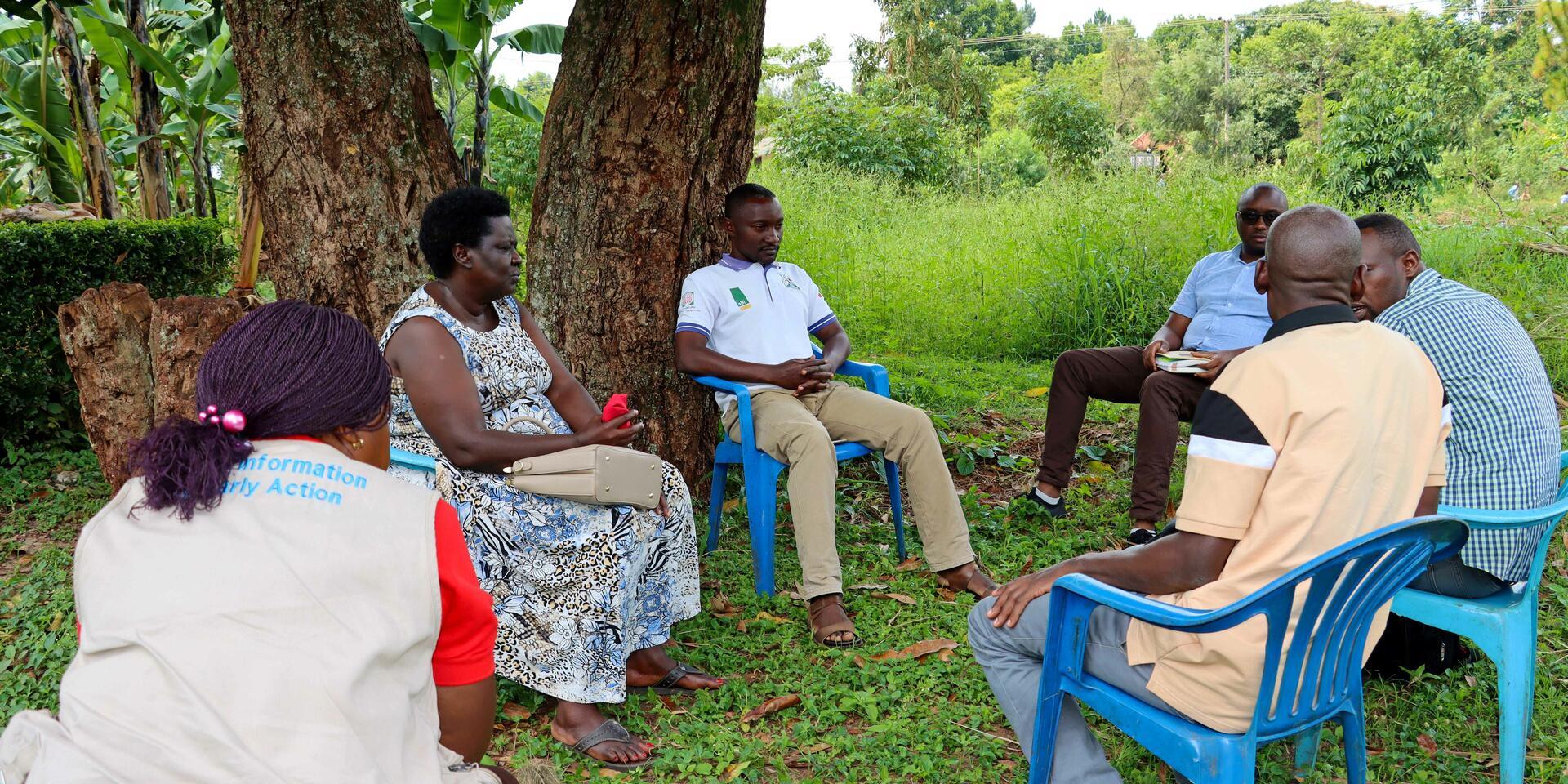

Uganda’s AgroClimate Advisory Committees (AACs), supported by the ECREA project led by the Alliance of Bioversity International and CIAT, brings scientists, extension officers, media and farmers together to interpret climate forecasts and deliver practical advisories to bean farmers across several districts.
Across Uganda’s bean growing districts, the transformation in the use of climate services is not happening by chance. It is being driven by structured local platforms that connect science to farmers. At the center of this effort are the AgroClimate Advisory Committees (AACs), established and strengthened through the Enhancing Climate Change Resilience in East Africa (ECREA) project led by the Alliance of Bioversity International and CIAT in collaboration with national partners.
These committees were designed to bridge the gap between climate information producers and end users, ensuring that climate and weather information is interpreted, contextualized, and translated into actionable guidance at the district level.
These committees were established to bridge the gap between climate information producers and end users. In districts such as Hoima, Kikuube, Nakaseke, Nakasongola, Kisoro, Lwengo, Rakai and Rukiga, AACs bring together extension officers, NARO researchers, environmental officers, media representatives, NGO actors and farmer leaders. The structure ensures that technical expertise and local realities meet in the same space.
Barong Vincent, an extension officer and Vice Chairperson of the Hoima AgroClimate Advisory Committee, explains how the committee functions:
“We have the chairperson, the vice chair, the secretary, researchers, environmental officers, media personalities, and farmer representatives.”
This composition is deliberate. It reflects an understanding that climate advisories must move across institutional boundaries before they reach farmers. It also reflects a commitment to gender and social inclusion. In Hoima, Kisoro and Rukiga the committees are chaired by women, demonstrating intentional efforts to ensure that women are not only recipients of climate information but leaders in shaping how it is interpreted and shared. By embedding diverse representation within its structure, the AAC model strengthens both technical rigor and social legitimacy ensuring that advisories reflect the realities of different community members.
When forecasts are released by the Department of Meteorological Services, they are not simply forwarded. They are interpreted. Committee members review seasonal outlooks, assess implications for bean production, and translate technical projections into practical guidance. National Agricultural Research Organisation (NARO) researchers provide agronomic backstopping. Extension officers contextualize advice for local farming systems. Media partners prepare messages for wider dissemination.
Leonard, a community-based facilitator and Chairperson of the AAC in Hoima District, describes this process:
“Whenever information is released, meetings are organized so that we can know how the forecast is reading and how it is interpreted, then it is taken down to the farmers.”
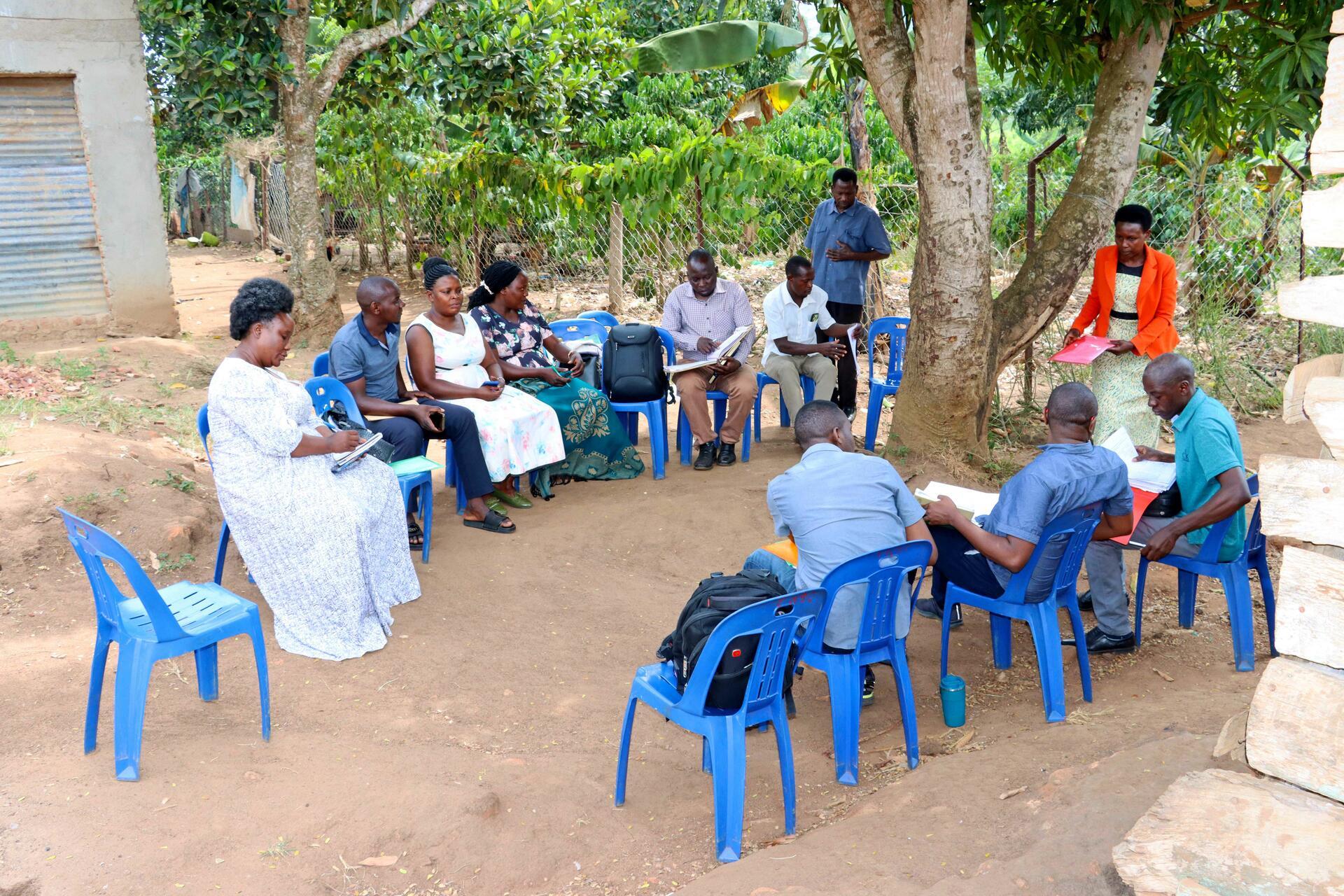
AAC meeting underway where members discuss the interpretation of climate forecasts and the development of localized agricultural advisories for farmers in their district.
The strength of the AAC model lies in this interpretation layer. Forecasts are discussed, questioned, and converted into location specific advisories before they are shared.
Dissemination then follows multiple channels. WhatsApp groups allow rapid circulation among trainers, extension agents and farmer leaders. Information spreads quickly because individuals belong to several groups. Radio remains one of the most powerful platforms. Johnson Kanyesige, radio presenter at Spice FM Hoima, integrates climate information into weekly farmers’ programs and daily updates.
“If I get the information and share it on radio, one mention can cover many farmers without calling them for a meeting.”

UNMA meteorological experts and the ECREA project team during a live weather broadcast at Uganda Broadcasting Corporation (UBC).
Through this multi-channel approach, advisories reach farmers in local languages and in formats they trust.
The AAC model has also demonstrated its value during challenging seasons. When rainfall patterns shift unexpectedly, committees adjust advisories accordingly. This responsiveness reinforces credibility. Farmers see that the guidance reflects current conditions rather than static assumptions.
The committees have not operated without challenges. Limited facilitation funds, long travel distances, and the need for more localized real time data remain constraints. In some districts, maintaining momentum requires renewed engagement and clarification of roles. Yet despite these challenges, AACs continue to function because they are embedded within district structures and supported by institutional partners.
In Rakai and Kisoro, for example, the chairpersons of the AAC are the District agricultural extension officers and plan to use the district extension budgets to ensure their work is sustained.
The ECREA project played a catalytic role in establishing and strengthening these committees. By convening stakeholders, building capacity and formalizing advisory interpretation processes, the project has transformed what might have been informal exchanges into structured local governance platforms.
The AgroClimate Advisory Committees are more than dissemination bodies. They are local accountability mechanisms. They ensure that climate science is not only generated but translated, debated and owned within communities. In doing so, they anchor climate services within local systems where resilience ultimately takes shape.
The team

Desire Kagabo
Project Leader
Livingstone Byandaga
Research Specialist
Mvuyibwami Patrick
Senior Research Associate