Blog Beyond the Roadmaps: What It Will Take to Truly Transform Food Systems in Latin America and the Caribbean
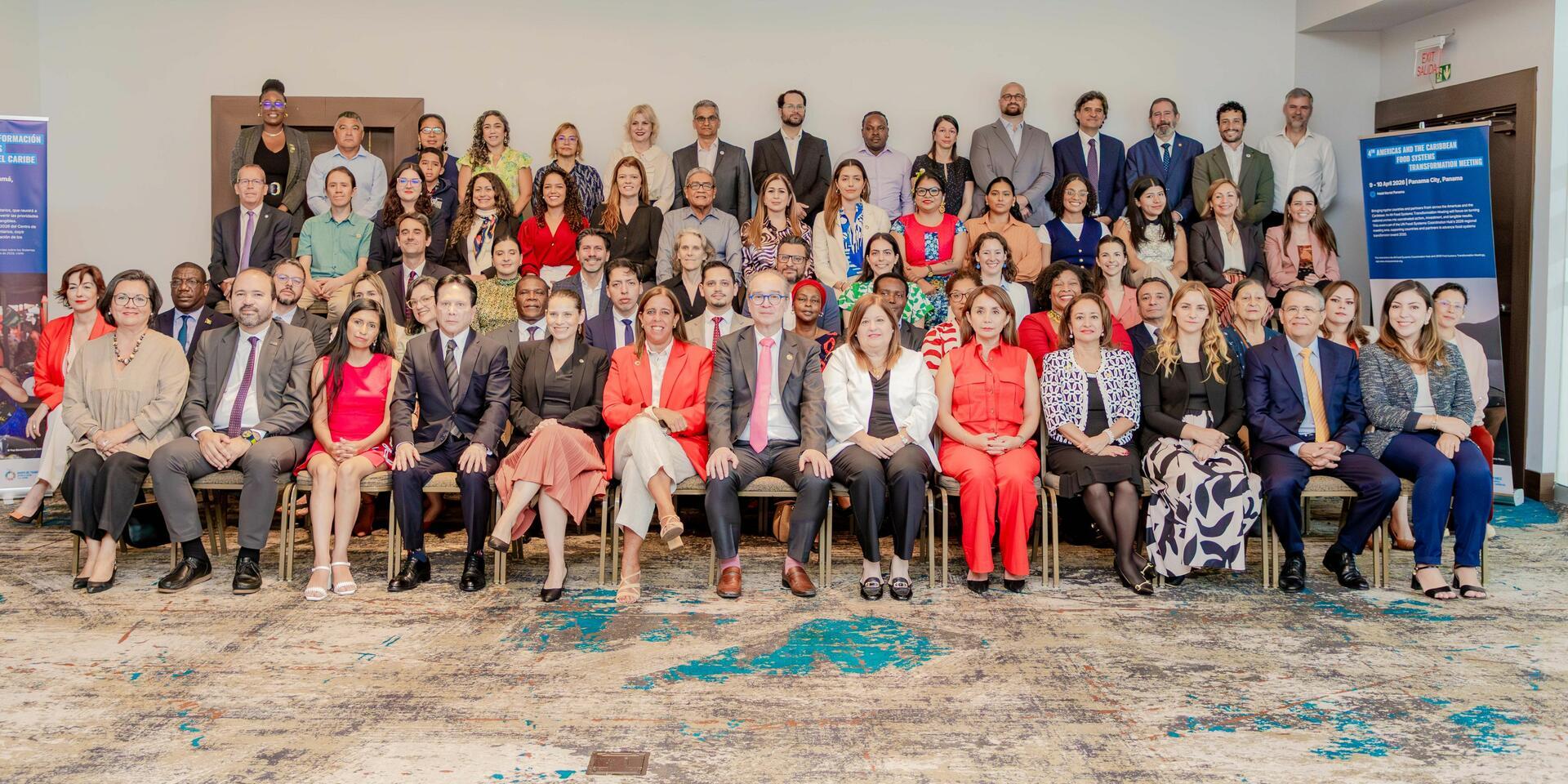

In early April, policymakers, researchers, and practitioners from across Latin America and the Caribbean gathered in Panama for the follow-up to the United Nations Food Systems Summit. The mood was, in many ways, encouraging: countries are moving forward.
Across the region, national “food systems transformation roadmaps” are no longer just ideas—they are being developed, updated, and, in some cases, implemented. Governments are beginning to connect these roadmaps to public policies, national adaptation plans, and nutrition strategies. The language of food systems is taking hold.
But beneath this progress lies a more complicated reality.
Progress is real—but so are the blind spots
A consistent theme across countries was the difficulty of moving from vision to action. How do you translate a national roadmap into real change on the ground at the local level? How do you coordinate across ministries that still operate in silos? How do you make decisions without adequate data to understand what is changing—or what is not?
These challenges are not new. But what stood out is how universal they remain.
At the same time, some important gaps persist in how food systems are being understood.
Despite growing recognition that food systems are about much more than agriculture, many conversations remain heavily focused on production, rural communities, and food insecurity. These are critical issues—but they are only part of the picture.
There is far less attention to diets, health, and the realities of urban populations where most food insecure people in the region reside today. Even less to the everyday food system actors who feed us: small stores, food vendors, market traders, and small food businesses. As one participant noted, “we undersell the sector” by equating food systems with agriculture—when in fact, food systems involve everyone, every day.
What (and who) is missing
Some of the most compelling moments of the meeting pointed to what is missing from current approaches.
UN Women highlighted the central role of inequality—particularly gender inequality—in shaping outcomes for food insecurity and nutrition. Without addressing these structural gaps, transformation will remain out of reach.
The smaller actors in the “midstream” of the food system—processing, storage, transport, markets, and vendors—were repeatedly identified as critical, but underfinanced. Meanwhile, the corporate private sector was largely absent from the conversation, despite its central role in shaping diets and food environments.
Perhaps most strikingly, consumers themselves—especially vulnerable consumers—were not part of the conversation.
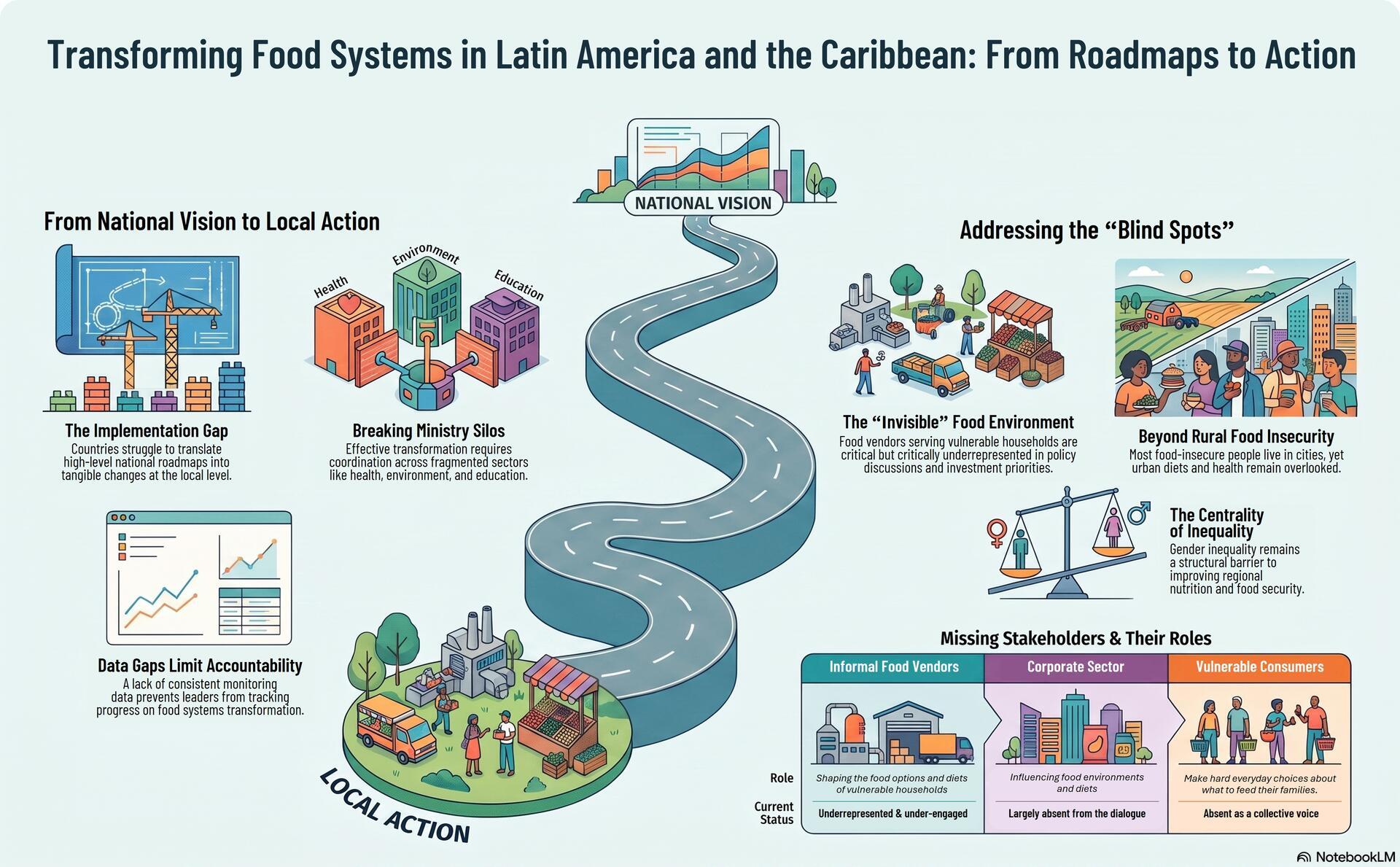
Image credit: AI-generated with NotebookLM and adapted by the author.
A systems approach requires a shift in mindset
If there was one message that resonated across discussions, it is this: food systems are interconnected, nested, and deeply embedded in our societies. As the World Food Programme emphasized, they cannot be addressed at one level alone—local, national, regional, and global efforts must move together.
But adopting a “food systems approach” is not just about adding new language to existing strategies. It requires a fundamental shift in how we think—and act.
It means recognizing that the system does not only fail farmers. It also fails vendors operating in informal markets, and ultimately, it fails all of us as consumers—through the quality, affordability, and safety of the food we eat.
It means confronting the reality that while we have extensive data on undernutrition, we still lack the evidence needed to effectively address obesity and diet-related diseases—now among the region’s most pressing challenges.
And it means acknowledging that transformation is not only technical, but also social and cultural. As one initiative highlighted, shifting food systems also requires shifts in values, behaviors, and norms.
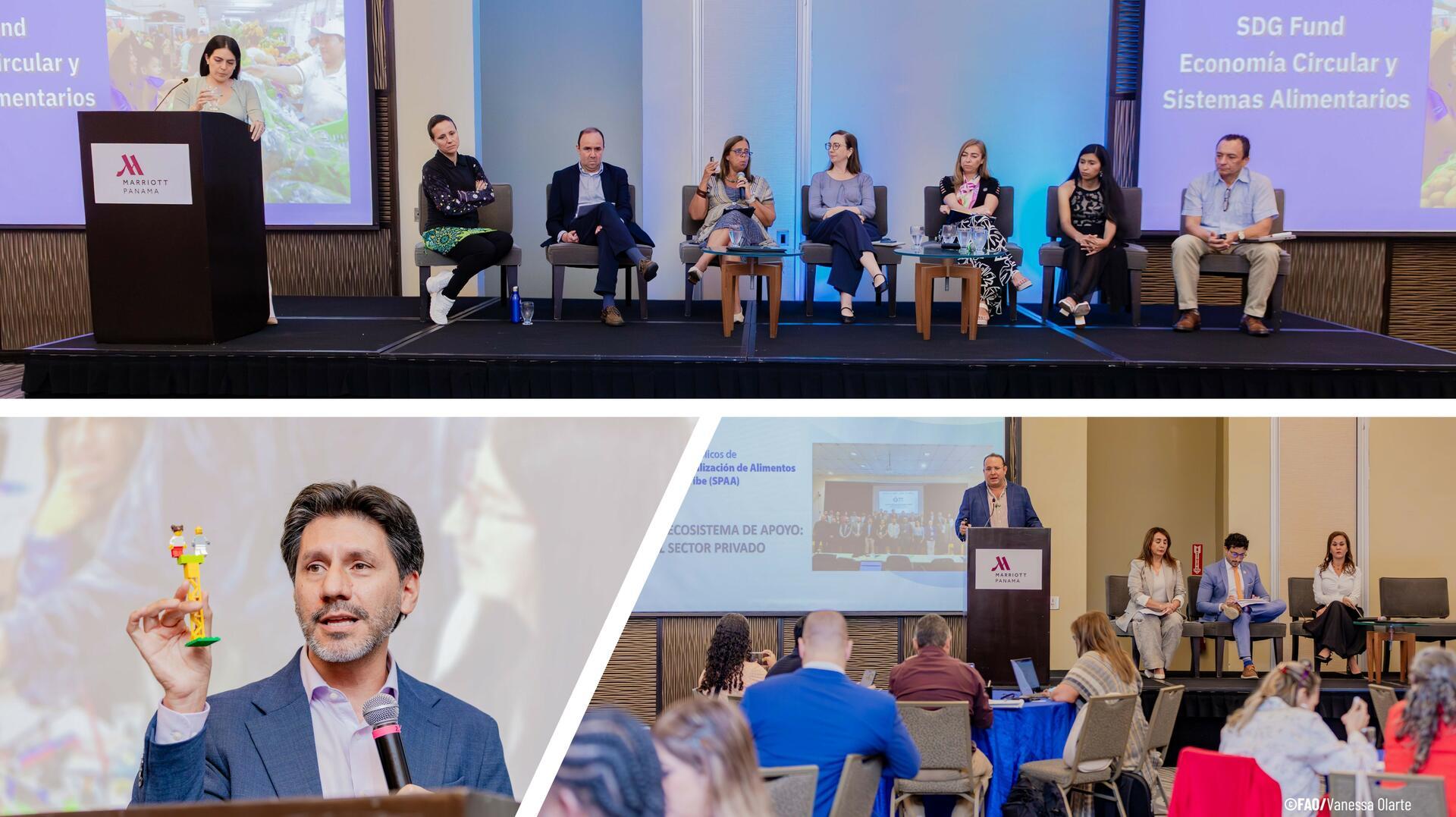
From ambition to action
From our perspective at the Alliance of Bioversity International and CIAT, this meeting offered a valuable window into how countries are navigating this complexity—both the progress being made and the barriers that remain.
The next phase is clear.
If we are serious about transforming food systems, we must engage the whole population as consumers—especially the most vulnerable. We must invest not only in production, but in markets, vendors, and food environments. We must generate better data, strengthen coordination, and bring the private sector meaningfully into the conversation.
Above all, we must move beyond business as usual.
Because food systems are not just about how food is produced. Food systems shape our everyday routines. The food we eat shapes how we feel, how we learn, how we work, and how we thrive.
Transforming food systems means transforming much more than agriculture.