Blog From paper to practice: How a simple idea is transforming food systems across the Mekong

On March 18, 2026, researchers from the Alliance of Bioversity International and CIAT took the stage at the Asian Development Bank's Asia and Pacific Food Systems Forum in Manila to make a pointed argument to national policymakers and development finance officials: the world does not have a policy problem. It has an implementation problem.
Imagine you are a health official in Son La, a mountainous province in northern Vietnam. Your job is to improve nutrition. Down the corridor, an agriculture colleague is helping farmers grow more diverse vegetables. A few floors up, someone from the education department is running school feeding programs. You have never met. Your budgets are separate. Your targets are different. And your work is happening in entirely different villages.
This is not hypothetical. When the team sat down with provincial officials in Son La, they found 45 ongoing activities all touching on food systems but with few comprehensive exchanges across sectors.
The result? Scarce public resources scattered across the landscape, with limited ability to connect the dots between better farming, healthier diets, and stronger communities.
The insight that changed everything
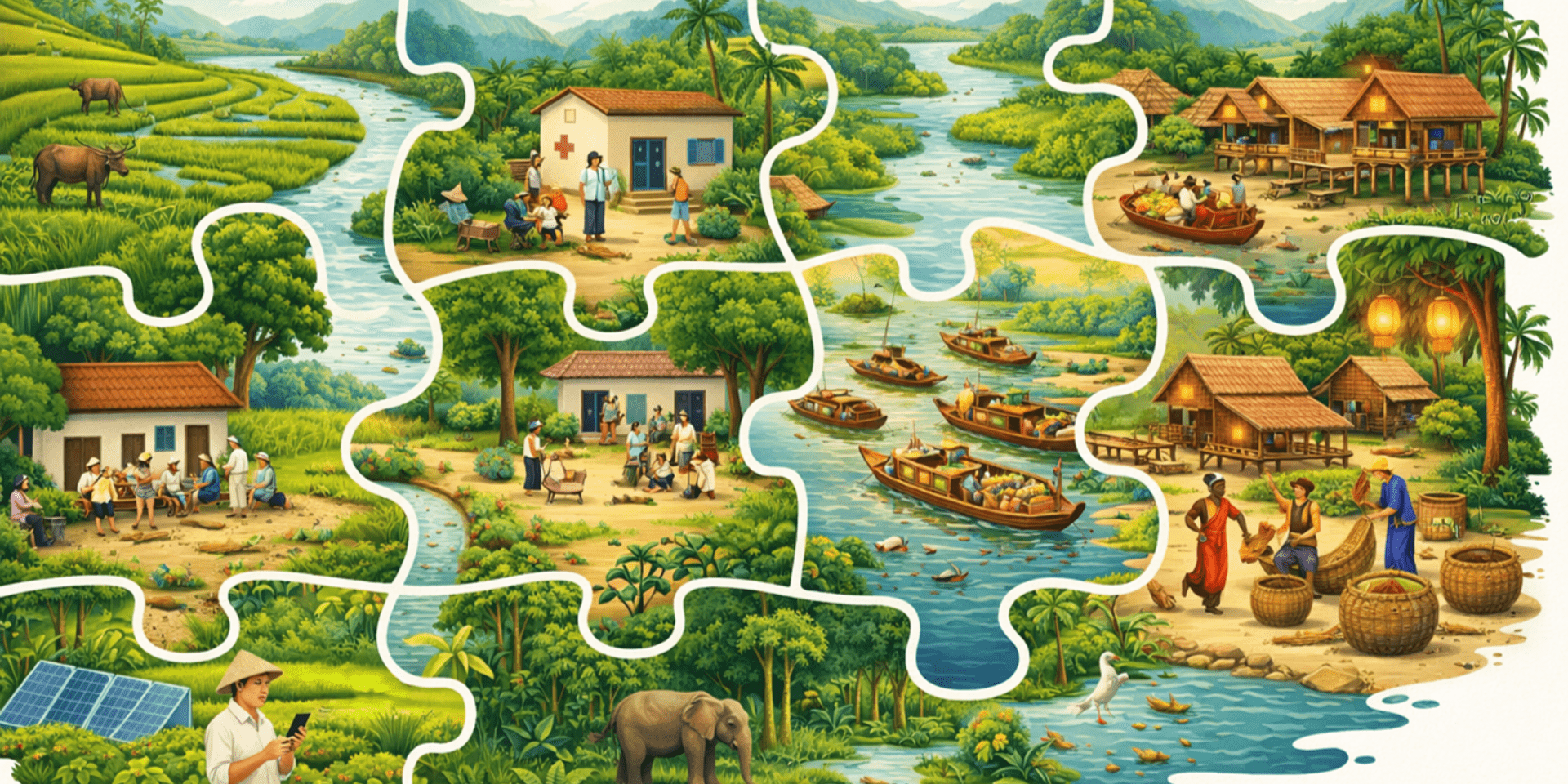
The team's response was deceptively simple: get the right people in the same room, give them a shared picture of their food system, and help them see how their individual work fits a larger whole.
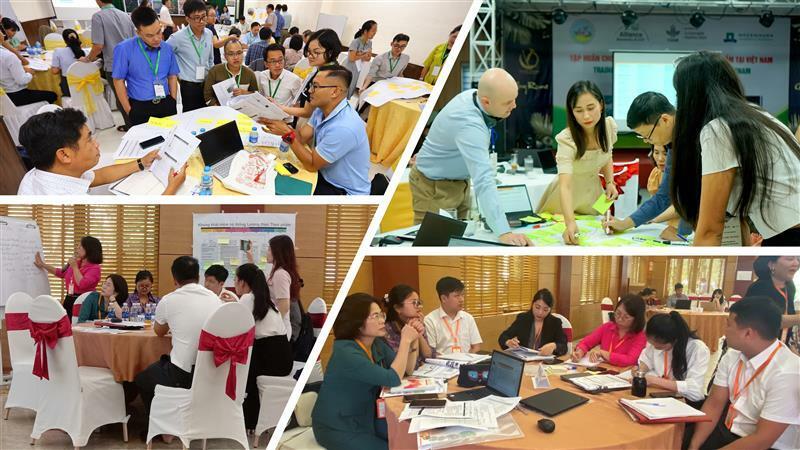
In Son La, that meant bringing together technical staff from seven different government sectors — agriculture, health, education, trade and more — into a Provincial Working Group. These were dedicated, skilled professionals. But like most of us, they were trained to deliver sector targets, not to see systems.
What happened next surprised even the researchers. Once officials could map their province's food system together — tracing how agricultural production connects to market access, dietary behavior, and health outcomes — something shifted. They began to see that a farmer growing more vegetables wasn't just an agriculture story. It was a nutrition story. A health story. A community resilience story.
A structured model that governments can own
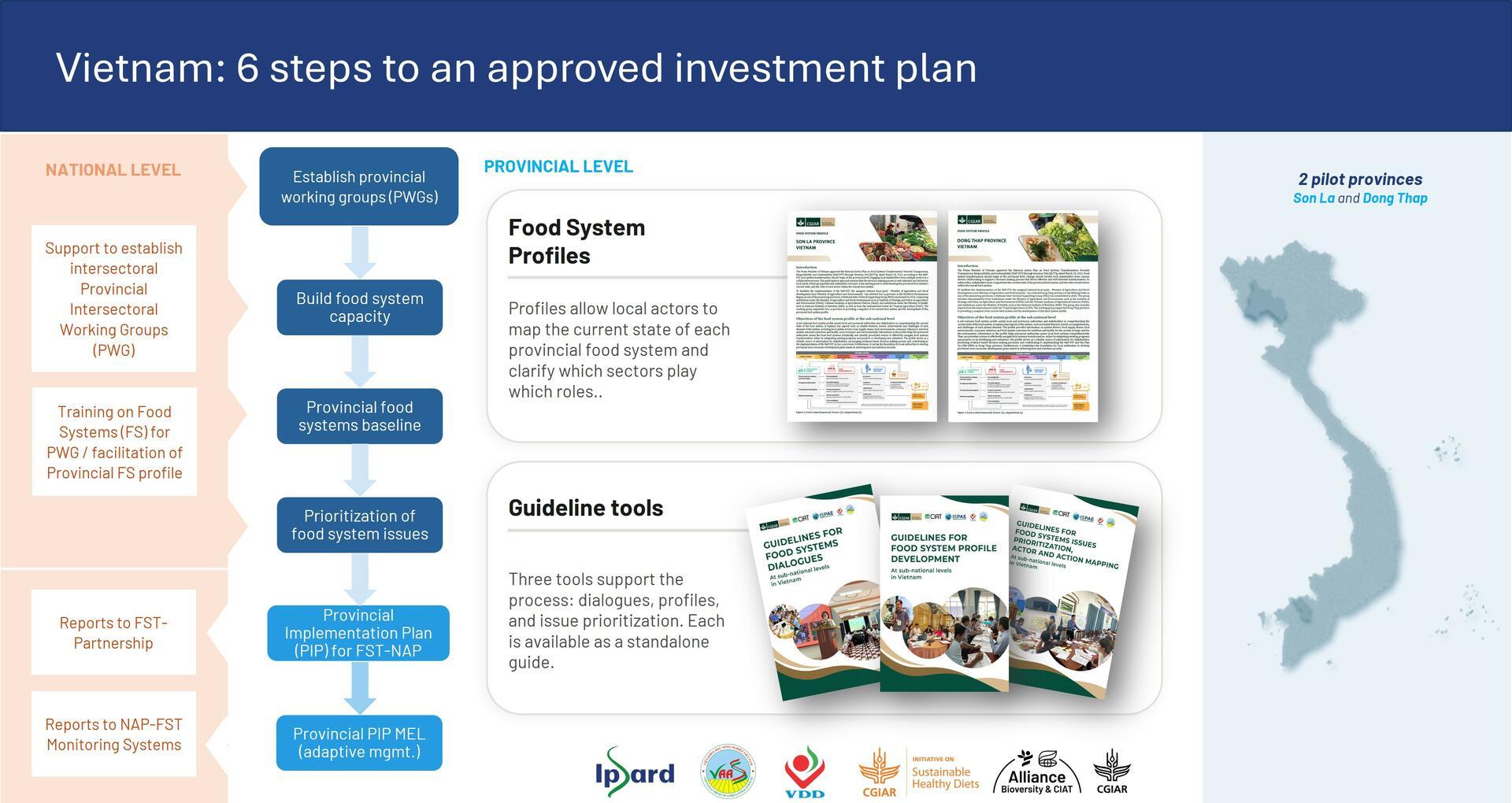
Over two pilot provinces in Vietnam — Son La and Dong Thap — the team developed and refined a six-step process: from establishing intersectoral working groups, to building food system profiles, to prioritizing issues and backstopping the co-development of the Provincial Implementation Plan and its investment plan to accelerate the FST implementation at local context.
The tools are practical and participatory with key actor buy-in and leadership. The goal is not a research project that lives in a report. It is a process that connects the existing work of provincial officials to national targets — and gives both levels a shared language for fostering food system transformation.
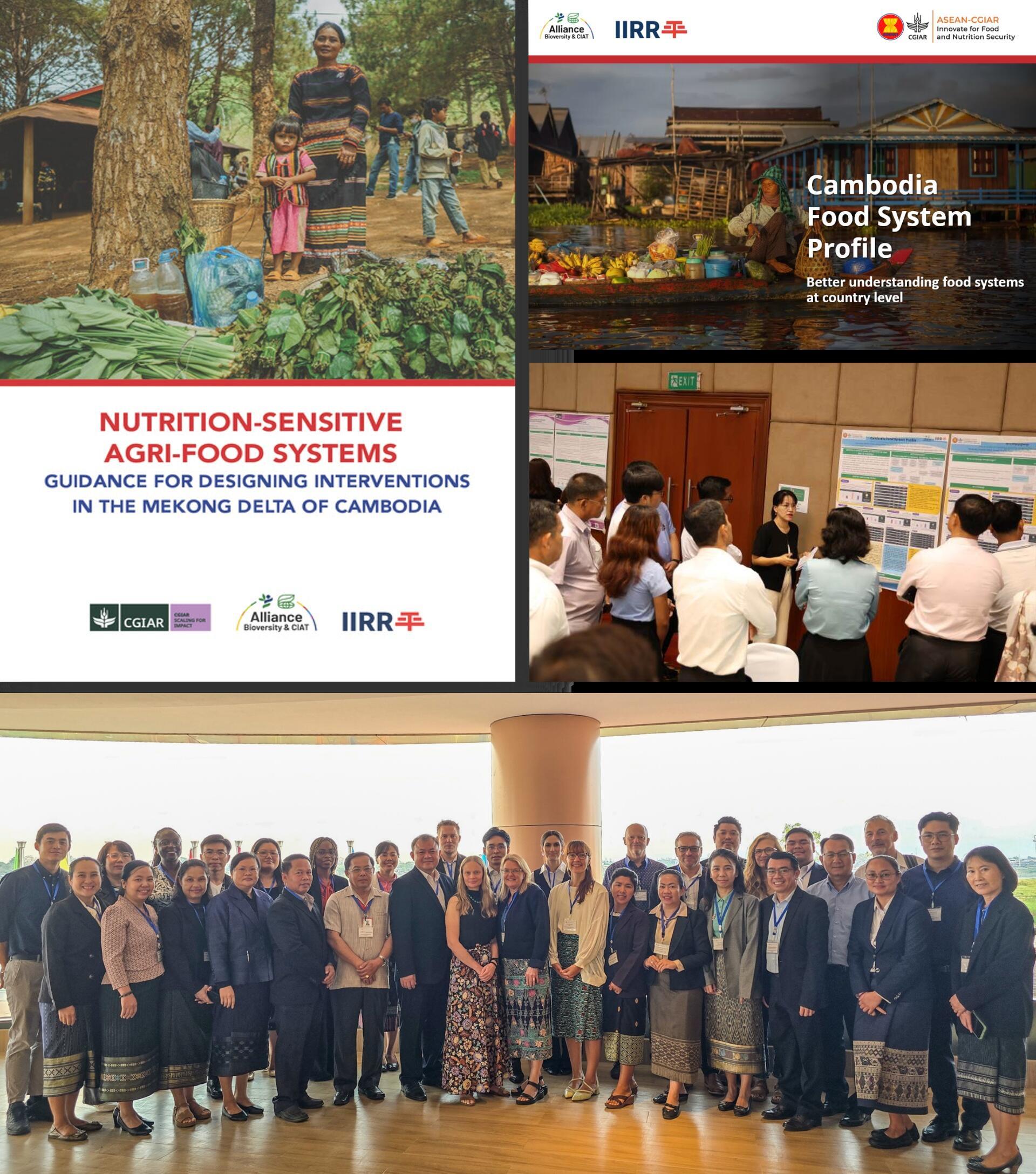
The model is now expanding. In Cambodia, the focus is nutrition-sensitive food systems. In Lao PDR, the team is helping reviewing and exploring the adaptation of global Food System Countdown Initiative indicators (FSCI) to national context. The approach is replicable — but only where the enabling conditions exist: the knowledge, the skills, the resources, and crucially, the political will.
Why this matters beyond the Mekong
Across the world, governments are producing ambitious food system strategies. Many are excellent on paper. Far fewer survive contact with reality at the community level. The gap between a well-designed national action plan and real change in a village is not filled by better policy alone. It is filled by the painstaking, unglamorous work of alignment — of helping the health official, the agriculture extension worker, and the school feeding coordinator, and other food systems actors find each other and work toward a shared goal.
In Son La, 45 scattered projects are becoming a system with more opportunities on investment alignment or partnership under new national target programs as well as public-private partnership. That is what transformation looks like in practice.

We would like to thank all funders who supported this research through their contributions to the CGIAR Trust Fund.