Impact story If the science existed, why did it take so long to reach farmers?
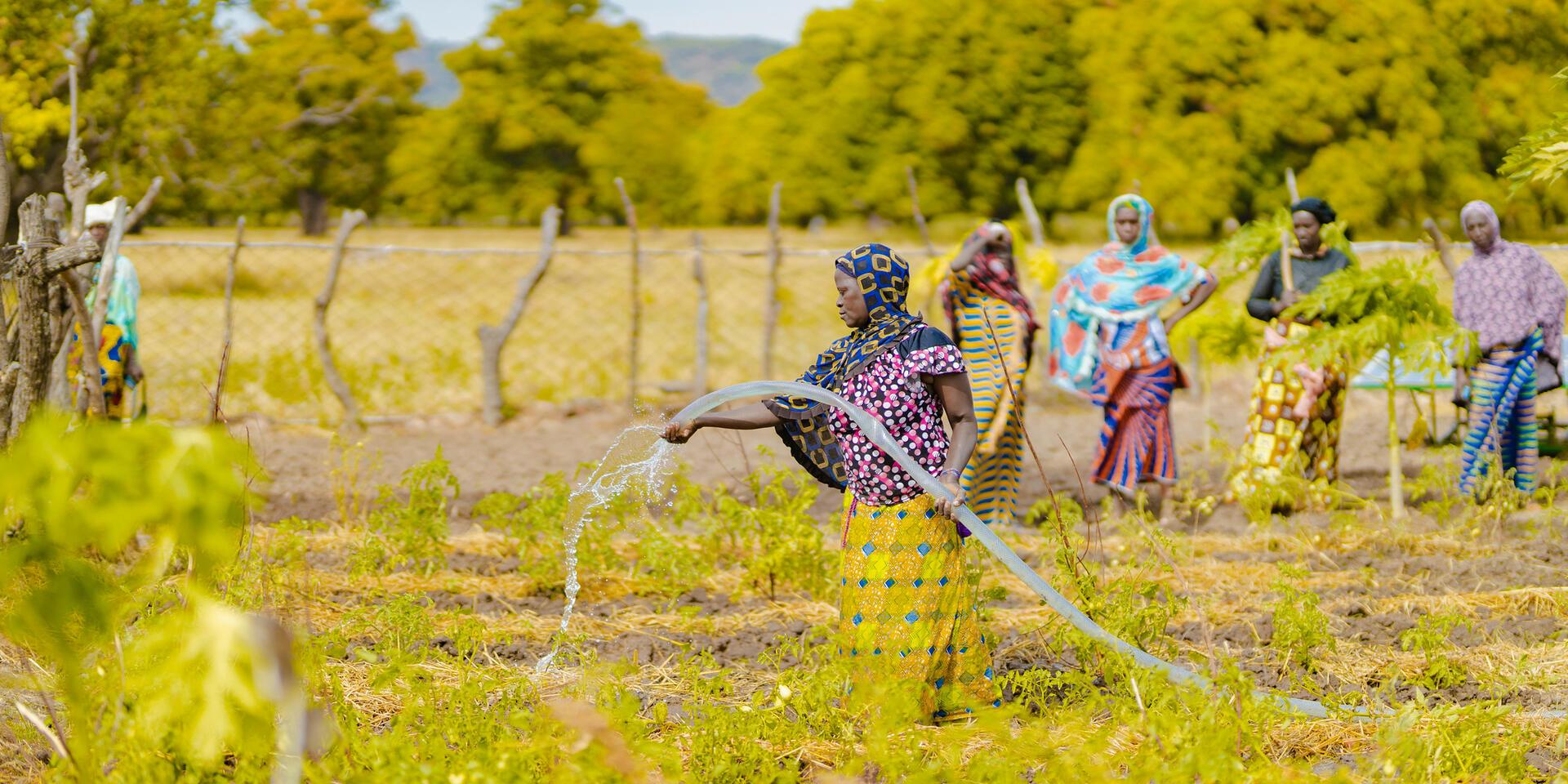

Between 2021 and 2025, AICCRA (Accelerating Impacts of CGIAR Climate Research for Africa) worked across six African countries and two regional programs to bridge the gap between climate science and farmers by strengthening institutions, partnerships, and systems that enable climate-smart agriculture at scale.
Africa is not short of climate science because the pipeline of proven innovations is long, like the drought-tolerant varieties, digital advisory tools, seasonal forecasts, and soil management practices among others. Yet for decades, the gap between what research produces and what farmers use has remained stubbornly wide. More pilots, more workshops, more dissemination campaigns. And still, at the end of most projects, the adoption numbers peak and quietly slide.
The standard explanation blames the last mile: poor extension coverage, low connectivity, and limited farmer awareness. Fix the delivery, the logic goes, and the science will flow.
AICCRA was built on a different diagnosis. As Wanjiru Kamau-Rutenberg, Managing Director for Africa at the Alliance, put it:
"A farmer does not wake up asking for 'accelerated impacts of CGIAR climate research.' A farmer asks: Will the rains come? What should I plant? Can I trust this advice?"

Wanjiru Kamau-Rutenberg
Managing Director, Africa, and Trustee, Bioversity International USAThat is the human question this work set out to answer. And the barrier standing between science and that answer was never the last mile. It was the missing architecture connecting them: institutions that cannot coordinate across mandates, climate data locked away from the extension systems that need it, innovations designed to prove themselves in pilots rather than survive integration into national programs. Africa had the science and what it lacked was the system to carry it.
Between 2021 and 2025, the Alliance led AICCRA in building that system, across six countries and two regional programs, through 309 institutional partnerships, reaching nearly 12 million beneficiaries. The full record of what changed, and where, lives in AICCRA's legacy stories. But the stories only become fully legible when you understand the design logic underneath them.
Institutional partnerships
Beneficiaries
The architecture
In Senegal, one million farmers and pastoralists now receive actionable climate information through a system owned and operated by ANACIM, the country's meteorological agency. That is not a delivery achievement. It is an institutional one: a national data hub, a multi-disciplinary advisory network, a pastoral Community of Practice embedded in the Directorate of Livestock, and a training curriculum now part of university degree programs. When AICCRA closes, the system keeps running.
The same logic played out the other countries. In Mali, 456,000 farmers adopted climate-smart practices and the RiceAdvice tool is now mainstreamed by the Niger Office, a government body, not a project partner. In Ghana, 1.67 million people were reached and a national early warning system for pests and diseases is being integrated into the One-Health Policy. In Ethiopia, national institutions led throughout: a Ministry-governed AgData Hub, advisories delivered in five local languages, climate education embedded across universities. In Kenya, 750,000 people were reached and cross-government training curriculum now lives inside four university degree programs, while 6,000 pastoralists generate real-time rangeland data through citizen science networks that belong to them.
In Zambia, three million people were reached, an agribusiness accelerator working with 19 SMEs unlocked USD 1.23 million in private investment, and a National Framework for Weather, Water and Climate Services is now operational.
At the regional level, East and Southern Africa saw 34 institutions across 14 countries trained on climate decision-support tools and a regional CSA Scaling Strategy endorsed through ASARECA. Across West Africa, AGRHYMET transitioned to WMO-standard probabilistic seasonal forecasting endorsed by 17 countries, and 3,400 university lecturers across 37 countries are now equipped to teach climate-smart agriculture.
Two dimensions ran through all of it. On gender and social inclusion, over one million women and young people adopted innovations co-designed around their actual constraints, labor, time, language, finance, with 40-99% of women in three countries reporting increased household and community decision-making power. On investment and scaling, Climate-Smart Agriculture Investment Plans in Kenya, Ethiopia, and Senegal translated field evidence into portfolios governments and climate financiers can act on, including a USD 35 million Green Climate Fund concept note in Kenya.
Senegal
Mali
Ghana
Kenya
Zambia
East and Southern Africa
West Africa
Gender and social inclusion
Investment and scaling (USD)
What five years of evidence confirms
Across eight geographies, different crops, different climates, different governance environments, the same principles produced results with uncommon consistency. Bundled solutions, climate information paired with improved practices, finance access, and market linkages, outperformed single-technology approaches wherever tested. Embedding innovations in national institutions outlasted project-based delivery. Gender-responsive design improved adoption outcomes. National ownership, genuinely built rather than assumed, generated momentum that kept scaling after AICCRA's direct involvement ended.
None of this was inevitable. It was the result of a deliberate methodology: designing for systems change rather than technology transfer; building the connective architecture between science and practice; and measuring success not by project reach but by whether institutions kept moving without the project.
Africa's climate adaptation challenge is a systems gap and AICCRA's legacy therefore, is proof that the gap can be closed and a practical record of how. As the program transitions into its next phase through AICCRA-FSRP4, the systems and partnerships built over five years are the foundation on which that work begins, and the trust placed in African institutions to lead the next phase.