Research Articles Agricultural resilience in Central America: A key tool for prioritization and action against climate change

CRS and the Alliance developed TOR2, a tool to guide climate-resilient agriculture in Central America. Launched in 2024, it helps prioritize crops and actions in areas most affected by climate change, supporting thousands of farmers.
Central America, particularly the dry corridor, is facing various threats from climate change. Water scarcity and unpredictable rainfall patterns are jeopardizing agriculture, rural livelihoods, and the sustainability of food systems. In response, Catholic Relief Services (CRS) has been working for over a decade through its Water and Soil for Agriculture (ASA) program, in collaboration with local and national partners, to improve crop yields and rural incomes. These efforts focus on restoring soil health and protecting water resources to build more climate resilient agricultural systems.
One of the early collaborative efforts between CRS and the Alliance of Bioversity International and CIAT was the TORTILLAS I project. This initiative used crop and climate modeling to assess the impact of climate change on maize and beans. A major lesson from this work was the critical value of spatial data in guiding local decision making and the need for targeted interventions in priority areas to improve farmer livelihoods.
Building on this foundation, and recognizing the need to expand the crop focus beyond maize and beans, a second phase was launched: "Tortillas fuera del Comal" (Tortillas of the Roster). This new initiative assessed 28 additional crops, significantly broadening the analytical base to help guide climate adaptation and agricultural transformation across Central America.
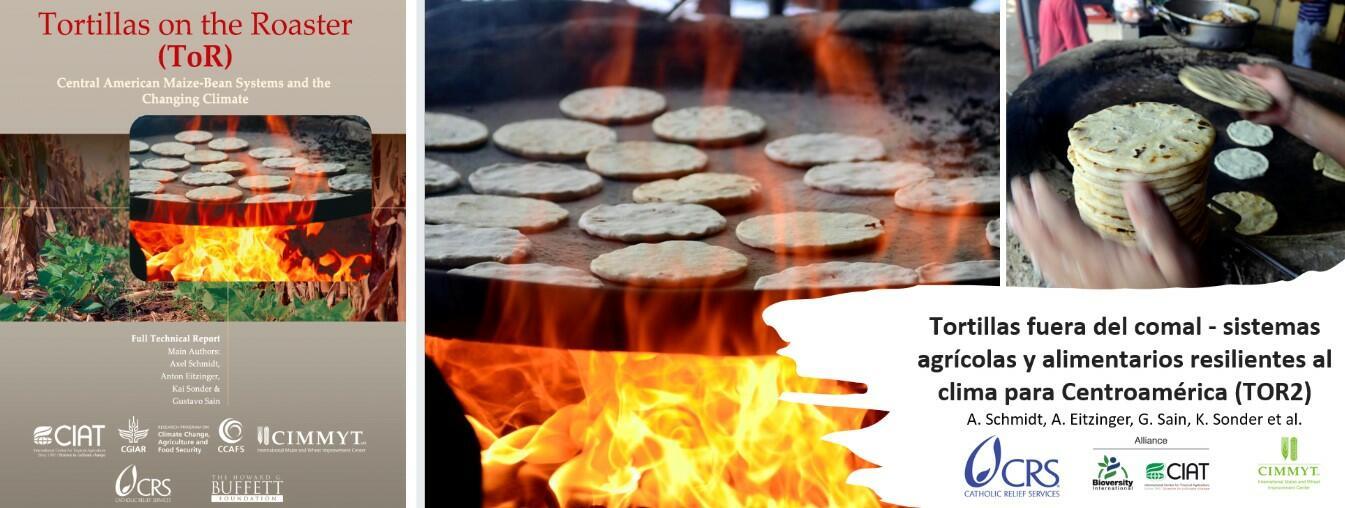
Method, Data, and Content
Over the past two years, researchers from the Alliance of Bioversity International CIAT, along with CRS experts, developed a tool designed to provide spatial information on the future climate adaptation prospects for a wide range of crops in Central America, in response to climate variables such as precipitation and temperature. This tool includes:
- A portfolio of 28 agro-foods and commercial crops, such as potato, cassava and sugarcane
- Climate change scenarios for 2030 and 2050 under two global scenarios:
- - SSP-2-4.5: Moderate emissions, intermediate climate action
- SSP-5-8.5: High emissions, significant increase in greenhouse gases
- Comparative analysis of climate adaptation levels by agricultural systems, considering locations, and offering evidence-based guidance for research, governance, and policy prioritizion.
- Geographic scope covering El Salvador, Guatemala, Nicaragua, Honduras, and southern Mexico, with results downscaled to 75 departments and 1,075 municipalities.
The Tool "Climate-Resilient Agricultural and Food Systems for Central America (TOR2)"
The output of this work are available as an open access platform. This interactive tool enables users to explore crop suitability by country, department, municipality, climate scenario, and year, offering a powerful resource for technical personnel, policy makers and local institutions.
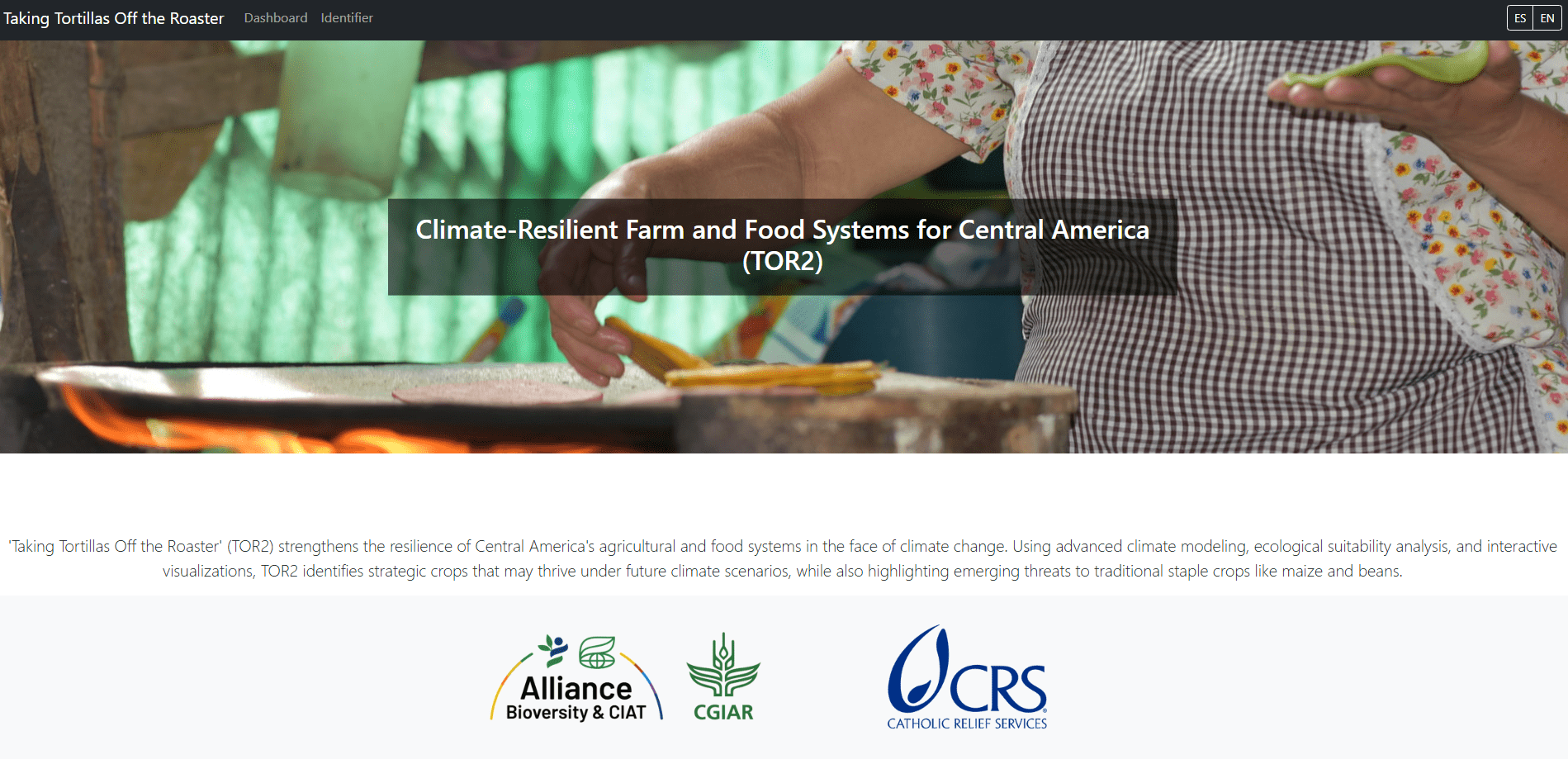
Figure 2. Page of the Climate-Resilient Agricultural and Food Systems Tool for Central America (TOR2)
The platform is divided into two sections:
- Panel (red square): presents aggregated data on crop suitability at national and subnational levels, including suitability changes over time and a comparative advantage analysis
- Identifier (yellow box): A dynamic map where users can query specific coordinates to assess current and future crop suitability based on customized preferences
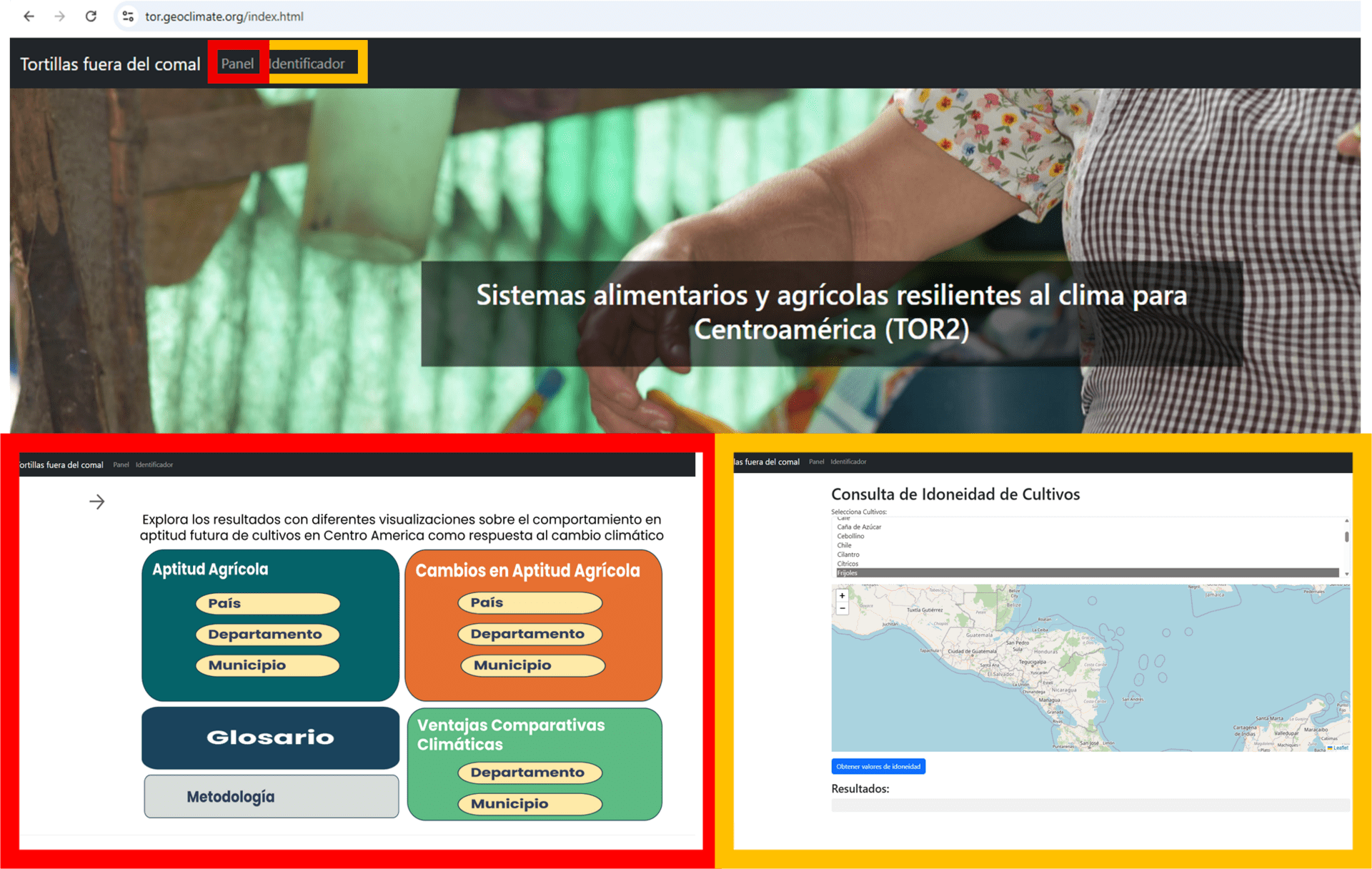
Figure 3. Prioritization Tool
Supporting Action Across the Region
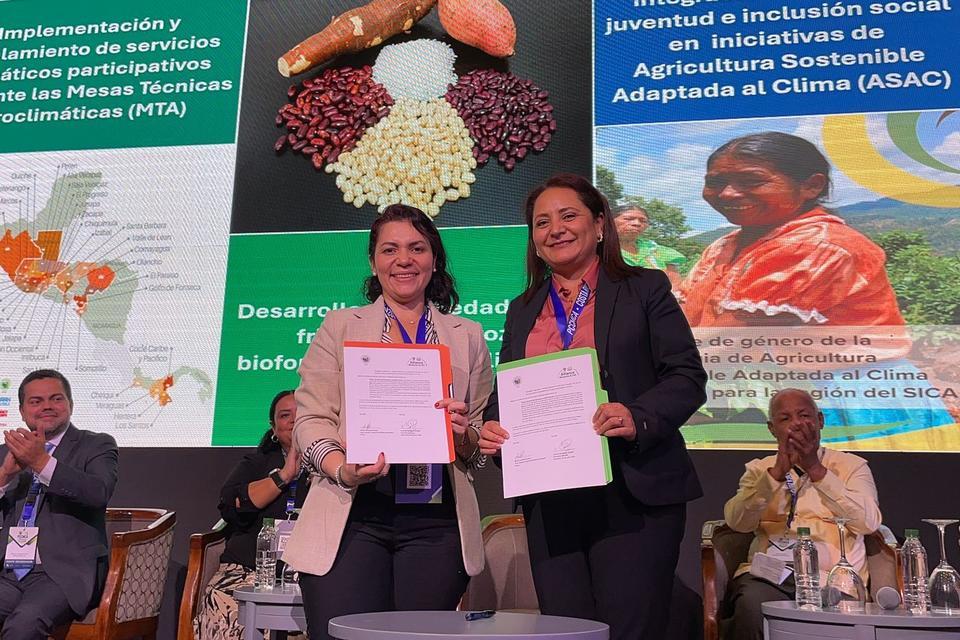
This tool is already being used to strengthen agricultural resilience with support of thousands of farming communities and organizations across Central America. It was officially presented by Carlos Eduardo Gonzalez, Senior Researcher from the PISA4 Impact and Climate Action team, and Axel Schmidt, Director of Research at CRS, during the 10th anniversary event of the ASA program in Antigua, Guatemala. The event marked a key moment for knowledge sharing and showcased TOR2’s value as a decision support tool to help agricultural communities respond more effectively to growing risks posed by climate change. The tool was well-received by partners and stakeholders, highlighting its potential to guide priority actions for adaptation and investment.
Looking ahead
With the support received so far, the study will expand in scope under the CGIAR’s Policy Innovation scientific program. The next steps planned include:
- Adding more countries to the analysis
- Incorporating biofortified crops (maize, rice and beans) into the portfolio
- Launching a dedicated website to improve user navigation and accessibility
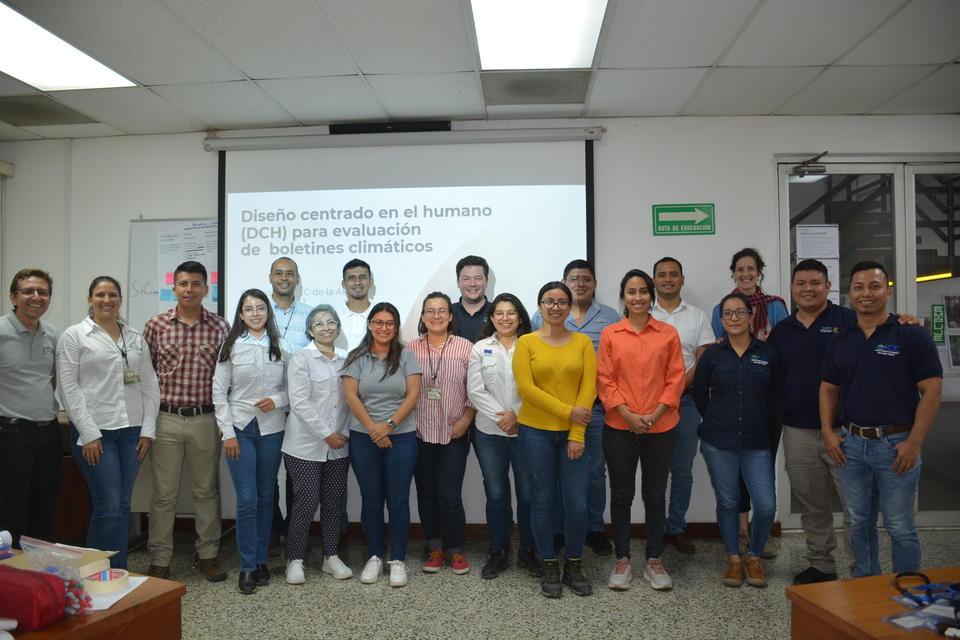
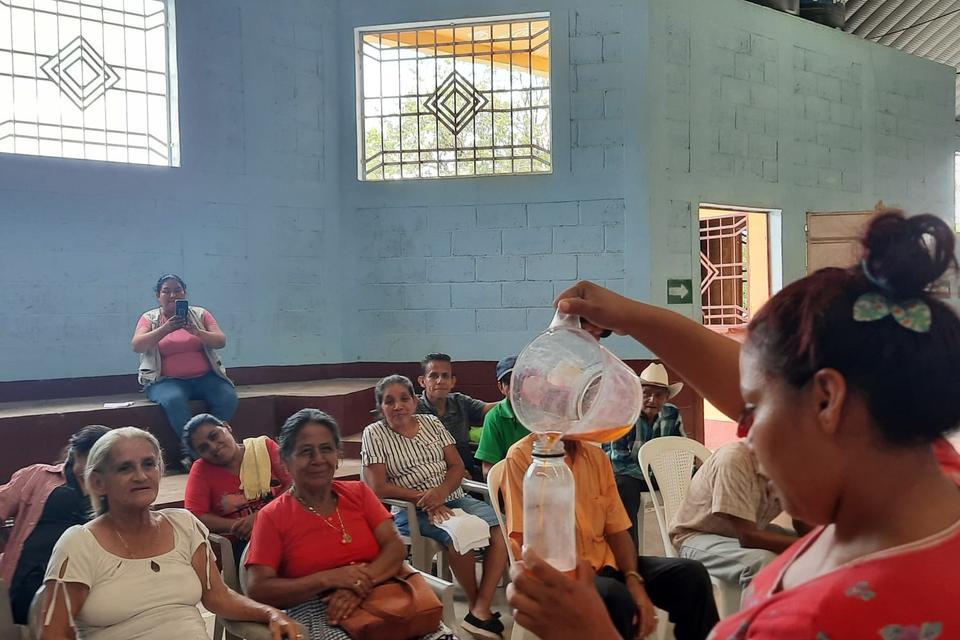
- Organizing training sessions, seminars, and outreach activities to promote adoption and use of the tool
The Team

Anton Eitzinger
Thematic Lead Digital Tools, Climate Action
Carlos Eduardo Gonzalez Rodriguez
Senior Research Associate
Johana Marcela Castillo Rivera
Research Associate

Keep exploring