Press and News Turning climate data into action for resilient Africa's dryland communities

In Africa’s drylands, every season brings uncertainty. Combining satellite data, machine learning, and indigenous knowledge, an early warning system is helping communities anticipate droughts, protect livestock, and reduce conflicts over scarce resources. By linking science with local action and empowering communities, the work of the Alliance scientist Sintayehu Alemayehu is transforming how pastoralists and smallholder farmers manage climate risks, turning vulnerability into resilience and ensuring that climate solutions reach those who need them most.
For Sintayehu Alemayehu, the challenges of climate change are not abstract statistics; they are the lived realities he witnessed growing up in Ethiopia, where a single drought could unravel entire communities. “Agriculture is not just a livelihood but a way of life,” he reflects, recalling how fragile rural livelihoods, particularly among pastoralists, inspired his lifelong commitment to climate resilience. That early awareness, combined with an academic journey spanning Ethiopia and the United States, laid the foundation for a career dedicated to translating climate science into actionable solutions that protect lives and livelihoods.
Today, as a Climate Resilience and Adaptation Scientist and Research Team Leader, Sintayehu leads regional projects across East Africa focused on building resilient food and pastoral systems. His work sits at the intersection of agriculture, development, environment, and society, bridging innovative climate monitoring and early warning systems with the day-to-day realities of smallholders and pastoral communities. From developing digital early warning systems to fostering community-based decision-making, his initiatives reflect a commitment to ensuring that climate information is timely, trusted, and actionable.
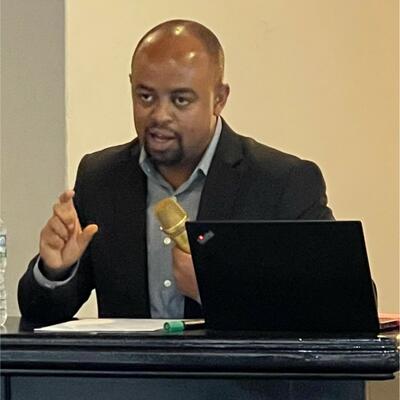

Central among his current initiatives is the User-Centered Water and Pasture Monitoring and Early Warning System, a project designed to track rangeland conditions and water availability while integrating community feedback and local knowledge. By combining satellite data, machine learning analytics, and real-time community input, the system produces accessible dashboards, SMS alerts, and community boards, helping pastoralists and local authorities anticipate drought conditions and plan interventions before crises escalate. This user-centered approach ensures that scientific insights are directly relevant to the decisions communities must make, from relocating livestock to coordinating water trucking and emergency feed.
The impact of these efforts is evident. During the 2024 drought in Borana, Ethiopia, early alerts from the system allowed communities to implement pre-emptive measures, significantly reducing livestock mortality and easing resource-related tensions.
“Science is powerful when it informs decisions that save livelihoods,” Sintayehu notes. “It’s about turning knowledge into action.” By bridging the gap between data and local practice, the project demonstrates how innovation can be co-created, practical, and lifesaving.
Equally important to Sintayehu is the integration of scientific evidence with indigenous knowledge. In Borana, the team works with Aba Gada leaders, who use traditional indicators, such as animal behavior or flowering patterns, to anticipate drought. When satellite data confirmed these trends, both systems gained credibility, reinforcing trust and community ownership.
“Science provides accuracy, but local knowledge brings context and trust,” he says. “When they come together, the results are both credible and enduring.”
In addition to data and local knowledge, Sintayehu emphasizes inclusive innovation. Digital advisories, community information centers, and Pastoralist Communities of Practice ensure that climate information reaches women, youth, and marginalized groups. Trained as “climate information champions,” these local actors interpret messages in relevant languages, helping communities make informed decisions. By combining technology with relationships, trust, and local expertise, the project creates a resilient, community-led system.
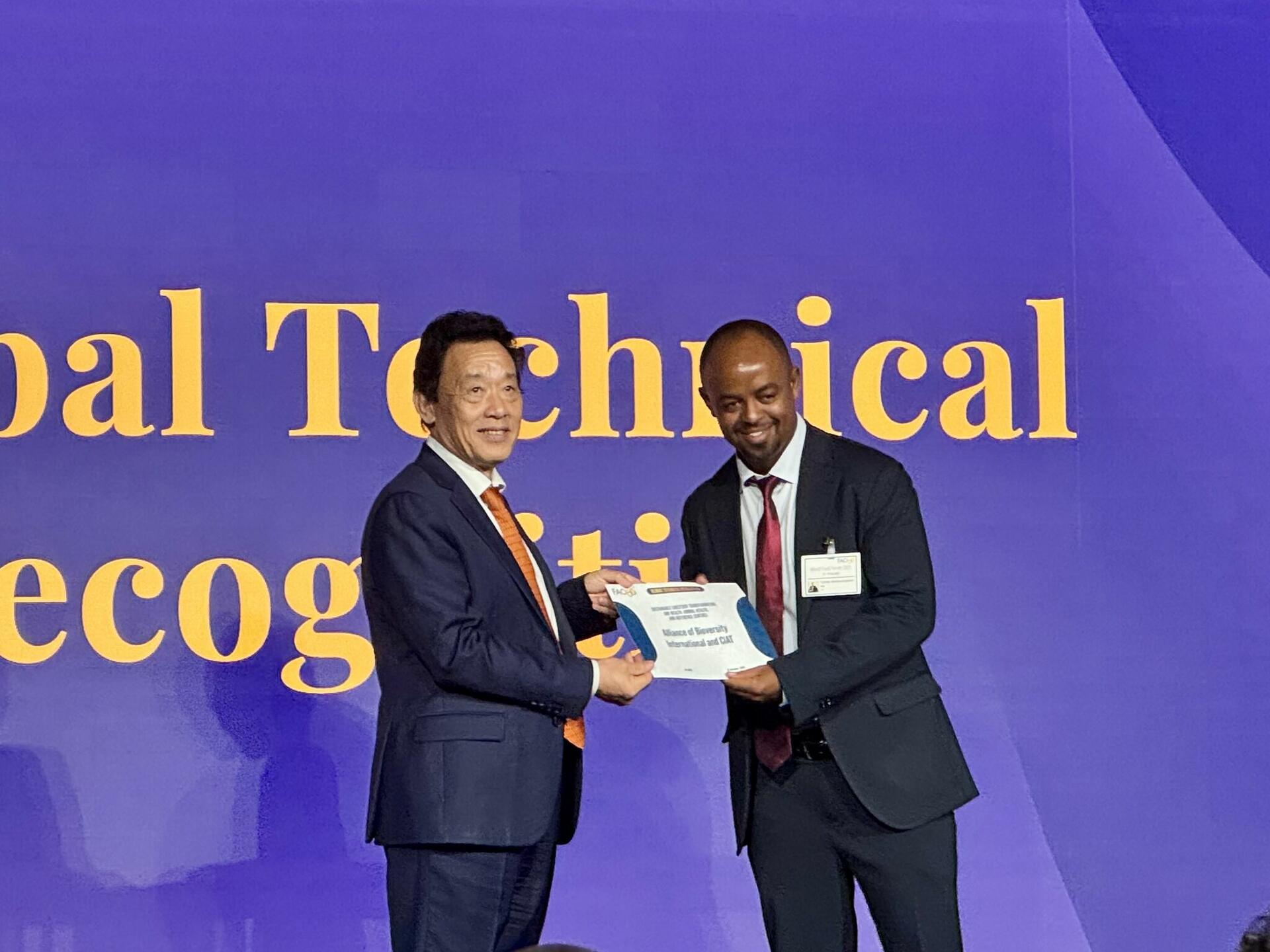
“This global recognition at FAO Headquarters is truly a collective achievement, since it reflects the journey we’ve taken together with pastoral communities, government partners, and colleagues who believed that science should serve people first,” he says.
The award demonstrates how locally grounded climate solutions, like the Water and Pasture Monitoring and Forecasting System, not only safeguard livelihoods but also prevent climate-driven conflicts and reduce forced migration by providing communities with timely, actionable information on water and pasture availability. Built through years of co-creation with herders, extension workers, and local leaders, the system transforms complex climate data into practical decisions, reinforcing that local innovation, when combined with science and strong partnerships, can inspire change far beyond borders.
Looking ahead to COP30 in Belem, Sintayehu emphasizes that climate action must move beyond promises to tangible implementation.
“If we are serious about impact, we must shift from small projects to national platforms and invest in anticipatory action, not just response,” he explains. “Scientists need support from governments, financiers, and private innovators to turn data into services like early warning systems and anticipatory financing. Most importantly, we must empower local institutions and communities, because real resilience starts where climate risks are lived every day.”
For Sintayehu, this vision reflects the ultimate goal of his work: ensuring that climate science turns into practical solutions that strengthen the resilience of farmers and pastoralists across the Global South, creating systems that are scalable and locally owned.
From witnessing the devastating effects of drought in his youth to leading regional projects that transform how communities prepare for climate risks, Sintayehu’s work reflects a vision of climate resilience that is practical, inclusive, and locally led. Through his leadership, science becomes more than observation as it becomes a tool for safeguarding livelihoods, reducing conflict, and building sustainable futures for Africa’s drylands.