Blog What happens when a seed company disappears? Lessons from Western Kenya
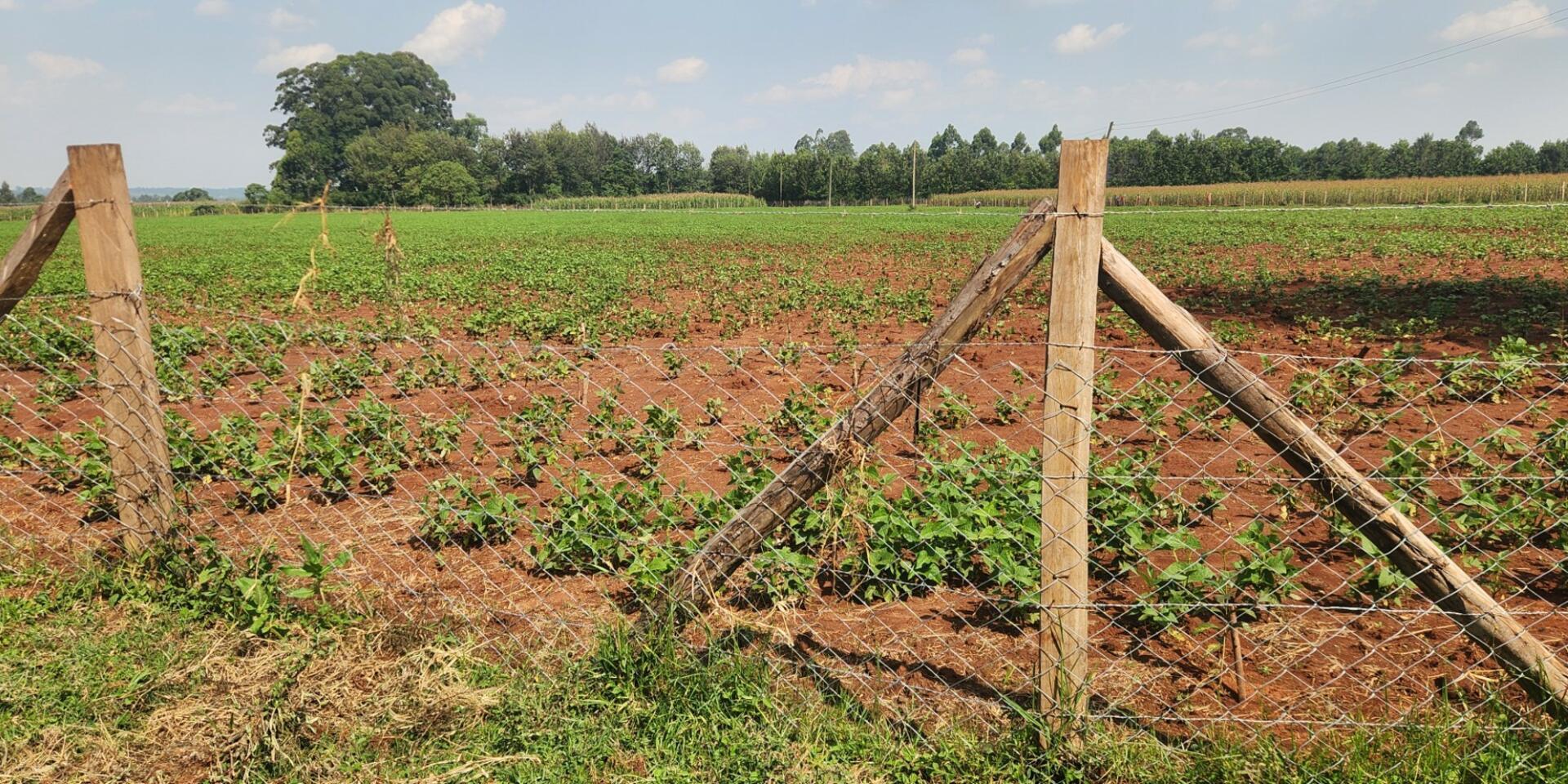

After Bubayi Seed Company shut down, farmers, aggregators and seed producers in Western Kenya felt the effects. A field visit by Alliance and KALRO researchers reveals what its closure says about the resilience of bean seed systems.
When Bubayi Seed Company shut down, more than 300 contracted bean out growers in Western Kenya lost their main buyer overnight. A young farmer in Trans Nzoia who built his best seasons around Bubayi's contracts is now without that market. An aggregator in Kitale who once moved 250 metric tonnes of rejected low quality unprocessed seed but good quality grain a year is scrambling to source grain from as far as Uganda. And a public seed producer with the infrastructure to fill the gap is instead sitting on unsold stock as its germination rates quietly decline.
None of this made headlines but Bubayi’s disappearance exposed something that is easy to overlook when agricultural innovation is measured by the number of varieties developed or released: a variety is only useful if the system around it can move it from a breeding programme to a farmer’s field.
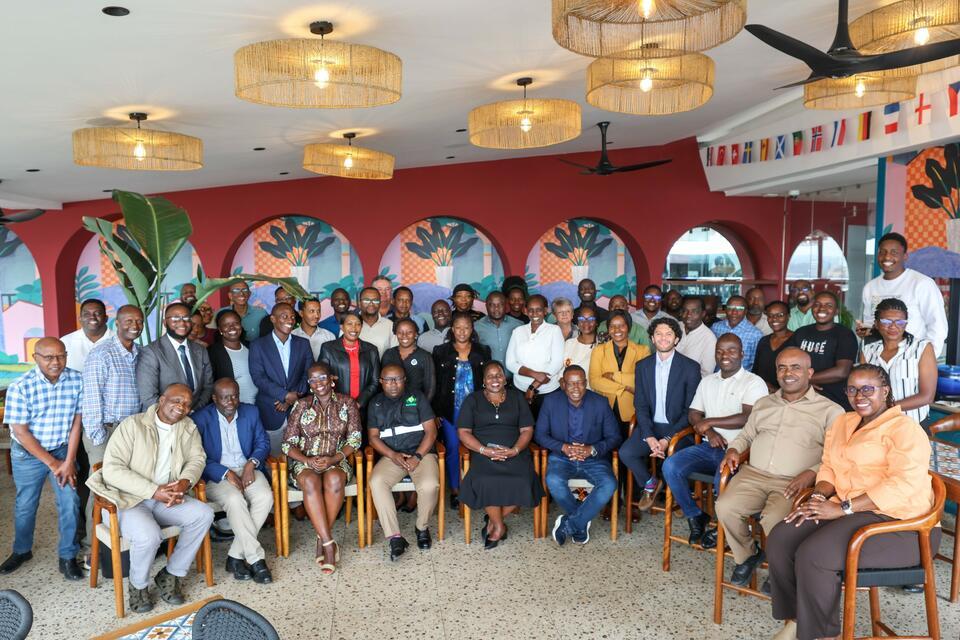
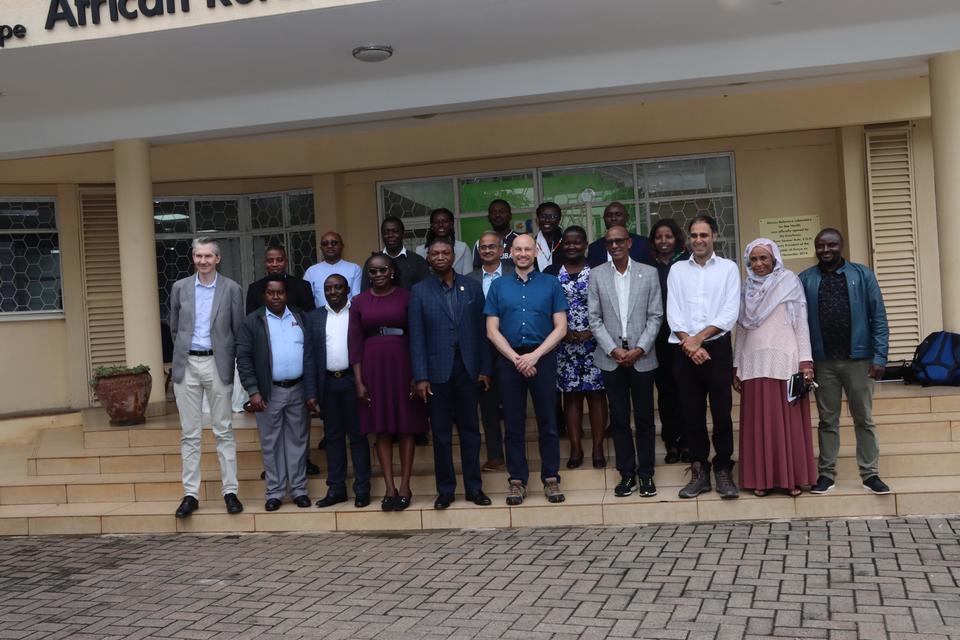
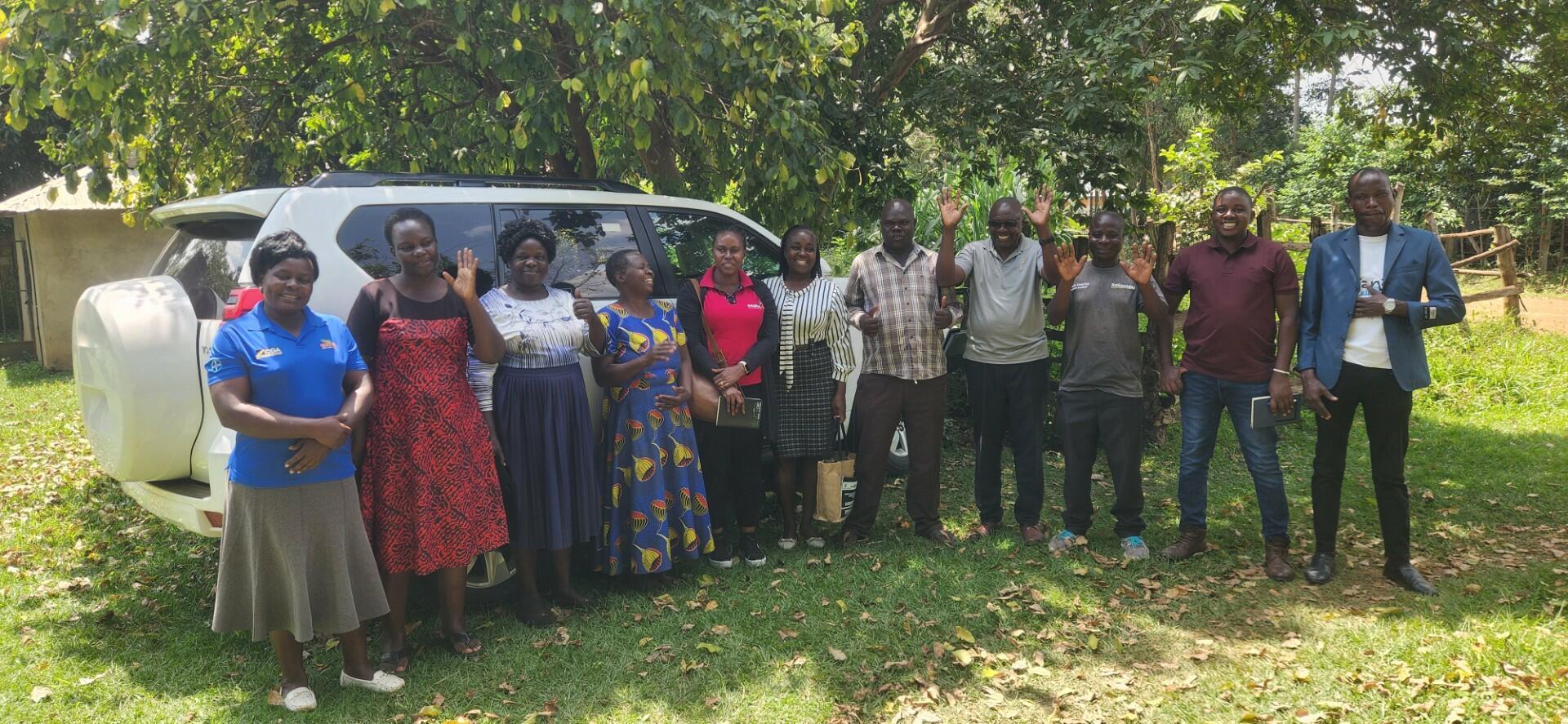
A recent field visit across Bungoma and Trans Nzoia counties, led by Clare Mukankusi a breeder at the Alliance of Bioversity International and CIAT together with the KALRO Kakamega bean breeding team, followed different parts of the bean seed value chain, from farmer groups and aggregators to a public seed producer and breeding programme, to understand where the system is holding and where it is struggling.
When the buyer disappears, the effects travel
Bubayi Seed Company had built one of the region’s most extensive bean seed networks, contracting more than 300 out growers and providing training, field supervision and, critically, a guaranteed market with predictable payment schedules. For the farmers who depended on those contracts, the company’s closure was therefore more than the loss of a commercial partner. It removed a structure around which they had organized their production and made it harder to know where their seed would go next.
For one young farmer in Trans Nzoia, Bubayi’s contracts had helped make some of his best seasons possible. The stability gave him the confidence to expand his farming ambitions, including moving into coffee. With that market now gone, he is having to reconsider where beans fit into his plans. Further down the chain, an aggregator in Kitale who had once bought roughly 250 metric tonnes of bean grain rejected from certification each year was left without her main source and is now sourcing grain from as far away as Uganda.
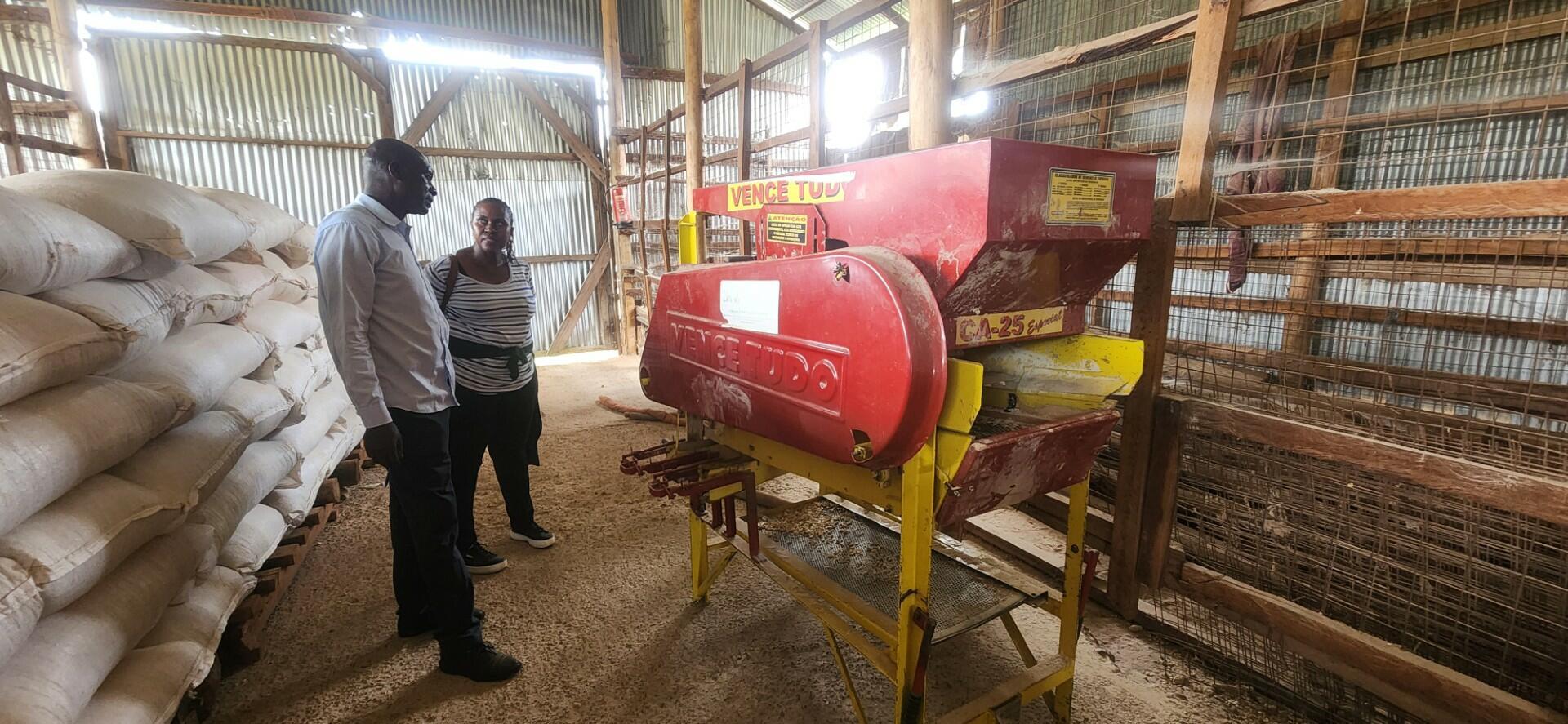
At Agricultural Development Corporation (ADC) Kitale, the public seed producer, the disruption looks different but points to the same underlying problem. The technical capacity to produce bean seed is there; finding a reliable market for it is harder. The institution’s KK Red Bean 16, commonly known as Malkia, sold out completely after its first release in 2022. But a 2024 batch of 30 metric tones saw about a third remain unsold long enough for germination rates to fall to around 50%. A KES 10 million unpaid invoice from a major buyer further constrained the institution’s ability to invest in the next production cycle.
The experience makes clear that the vulnerability exposed by Bubayi’s closure is not simply about the disappearance of a company. It is about what happens when a relationship that connects different parts of the value chain disappears with it. Farmers lose a buyer, aggregators lose a source of grain, seed producers lose a route to market, and the effects can travel in both directions, from the farm to the seed producer and back again.
A seed system is more than a bag of seed
The field visit also showed that the region already has some of the structures needed to strengthen its seed system. In Bungoma, Bumula Farmers Hub brings together thousands of farmers through an umbrella organization with dedicated committees for finance, aggregation and marketing. The hub has already demonstrated its ability to organize production and connect farmers to institutional buyers, including the World Food Programme.
Yet its bean production remains largely informal, with farmers often planting grain purchased from local markets rather than certified seed, creating the potential for lower yields and greater exposure to disease. The contrast reveals the organizational capacity to coordinate farmers and reach markets exists, but it has not yet translated into a strong bean seed system.That gap matters because farmers weigh breeding performance against what they can access, afford and, perhaps most importantly, what they believe they will be able to sell. That became particularly clear in Kitale, where one of the most useful sources of information about the bean market came not from a formal market survey, but from an aggregator who has spent years buying and selling grain.
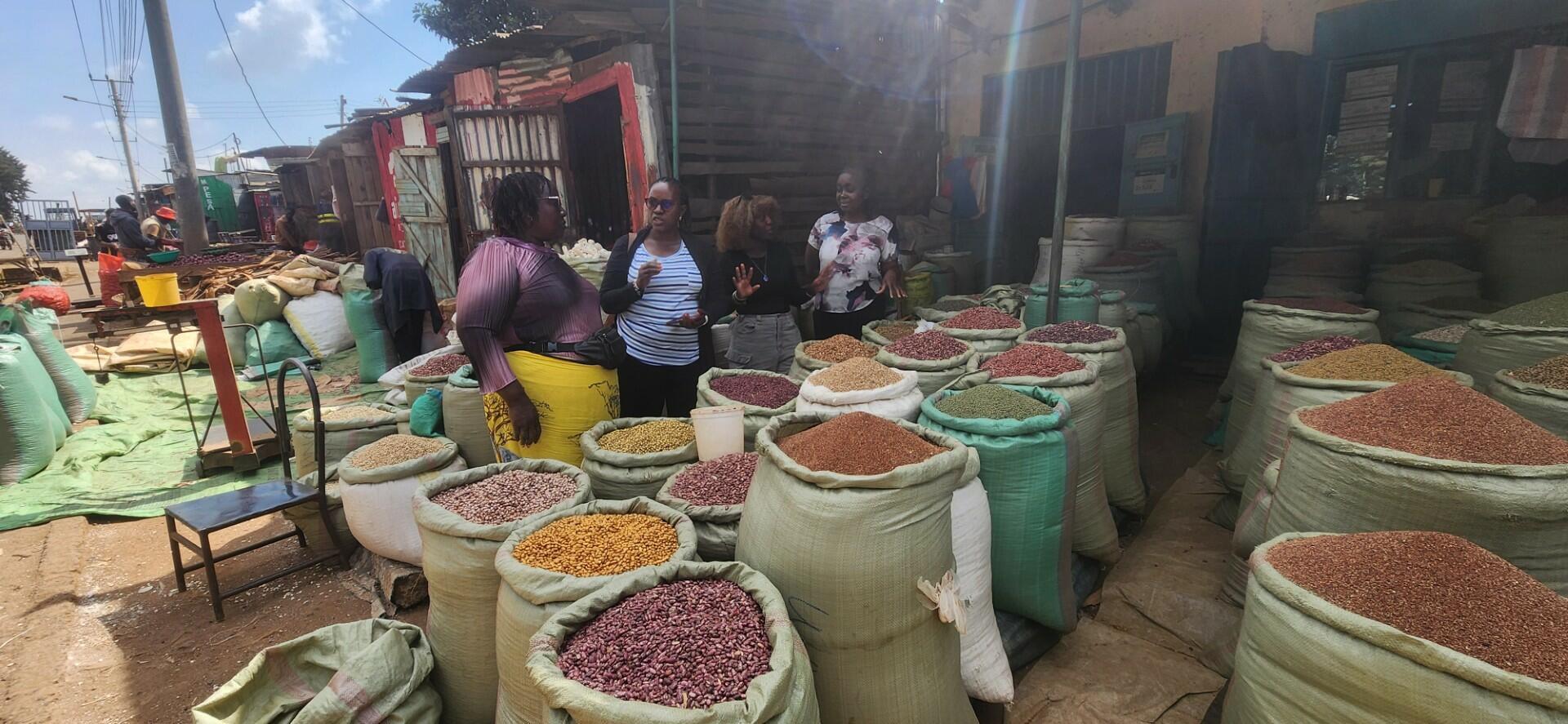
Mrs. Nancy had purchased roughly 250 metric tonnes of KK8 grain rejected from certification over Bubayi’s final years.
Her experience provides a window into consumer preferences that breeding programmes cannot afford to ignore. Red mottled beans are the most sought after, followed by red and then yellow varieties, while older stored grain can sometimes command a premium because feedback from consumers suggest that it cooks faster. These details may seem small, but they can determine whether farmers adopt a variety, whether aggregators are willing to buy it and whether seed producers have a market for multiplying it.
For breeding programmes, this kind of information matters because agricultural performance is only part of the adoption equation. A variety can offer disease resistance, better nutrition or higher yields, but farmers and consumers still have preferences that shape what succeeds in the market. A breeder may be able to develop a line that performs exceptionally well under disease pressure, but if farmers cannot access its seed or consumers do not want the resulting grain, the pathway from research to impact becomes much harder.
The variety is ready, but is the system?
At KALRO Kakamega, the breeding pipeline is moving forward, with researchers evaluating 49 advanced bean lines for resistance to multiple diseases under the Kirkhouse Trust project. 4 rapid cooking, iron and zinc biofortified lines are ready for National Performance Trials, while about 2 metric tones of KK Rosecoco 33 seed have been produced for the coming short rains.
These developments represent years of breeding work aimed at giving farmers varieties that can better withstand disease while responding to nutritional and consumer needs. But the experience following Bubayi’s closure shows why breeding cannot be considered the end point of innovation.
For a bean variety to move from a breeding programme to a farmer’s field, several things have to work:
- A variety still has to be multiplied, marketed, financed, distributed, and bought.
- Seed producers need working capital and reliable payment.
- Aggregators need dependable sources of grain.
- Farmers need access to affordable quality seed and confidence that there will be a market for what they produce.
When those connections are weak, even a well-performing variety can remain in storage rather than reach the fields where it was intended to make a difference.
The lesson reaches beyond one company or one region because agricultural innovations can spend years moving through research pipelines, only to encounter a very different set of constraints when they reach the market.
A seed system is not an abstract chain but a network of relationships between breeders, producers, aggregators, buyers and farmers. When one link disappears, the effects can travel through all the others, influencing what gets multiplied, what gets bought and ultimately what a farmer decides to plant.
“Agricultural transformation happens when innovation reaches the farmer and value reaches the market. The journey from breeding to impact is powered by quality seed, empowered farmers, and strong market linkages.” Shamir Misango, Research Scientist at KALRO
For the Alliance, KALRO and PABRA, this is shaping the next phase of the CGIAR Scaling for Impact (S4I) Program: looking beyond the development of better beans to the market infrastructure that allows those beans to move through the system. That means paying attention not only to breeding, but also to working capital, distribution networks, aggregation and demand forecasting, the less visible pieces that determine whether an innovation can travel. The aim is not simply to develop varieties that work in the field, but to understand what needs to happen around those varieties for farmers and consumers to actually use them.