Research Articles Connecting Climate, Community and Peace through Holistic Thinking: Insights from Dr. Mary Ngaiwi

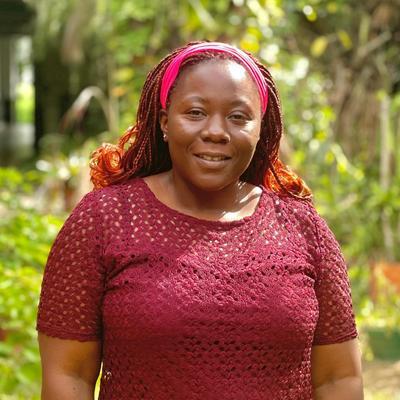
As the lead author of methodologies for quantifying greenhouse gas emissions in food systems: a comprehensive review, Dr. Mary Ngaiwi is redefining how we understand and measure climate impact. But her work goes far beyond numbers. As a socio-environmental economist, Mary bridges science and society, linking climate accounting, sustainable agriculture and peacebuilding in innovative ways.
In this conversation, Mary shares the roots of her multidisciplinary path, her latest research on zero deforestation and the future she envisions where climate action and peace grow from the ground up.
Your most recent paper takes a bold step toward rethinking climate accountability. Can you tell us what inspired it and why it matters now?
Mary: The paper challenges the way we measure and report greenhouse gas emissions. When we look at climate data today, the numbers often differ dramatically from one study to another, sometimes by as much as twofold. That gap has real implications because policymakers and investor base decisions on these figures. Our research, therefore, asks a simple but crucial question: how can we ensure that the data we use to combat climate change is accurate, consistent and inclusive of all emissions sources?
We approached this through a holistic lens, looking across the entire food system, from production to consumption to reveal where emissions are underestimated or overlooked. The goal is not only to standardize accounting methods but also to bridge science and policy so that climate actions reflect the full reality of our food systems.
Your study highlights major inconsistencies between datasets. Why is that such a problem for climate policy?
Mary: Because those inconsistencies translate directly into uncertainty. Imagine two national inventories for the same country reporting land-use emissions that differ by 50 or even 100 percent. Which one should policymakers trust? Which one should inform a Nationally Determined Contribution (NDC) or a carbon finance mechanism?
Without harmonized accounting, countries risk overestimating or underestimating their mitigation potential.
How can countries move toward more integrated accounting systems?
Mary: The starting point is coordination. Many countries have MRV robust systems for agriculture or forestry data, but they are managed separately by different institutions using different definitions and timeframes. Establishing a unified national framework therefore depends on effective collaboration across institutions to harmonize data and processes.
We also need interoperable digital platforms that allow data sharing and cross-validation. But technology alone is not enough. Building trust among institutions, clarifying mandates and investing in human capacity are equally critical. Holistic accounting is as much a governance challenge as a technical one.
At the Alliance we are moving forward on this: In Colombia, The Zero Deforestation MRV Protocol is a technical tool that serves as a bridge between productive monitoring, traceability in agricultural supply chains, and the conservation of the country’s strategic ecosystems. While in Africa, A new MRV system helps farmers track sustainable practices and emissions, laying the groundwork to access climate finance and improve soil health, productivity, and resilience to climate change.
How did your research career lead you to focus on this intersection of science, data and policy?
Mary: My career has always been guided by a desire to connect what happens in research with what happens on the ground. I began as a biologist fascinated by ecosystems, but over time, I realized that science alone doesn’t change lives unless it speaks to policy and people. Economics then helped me quantify what I was seeing, while policy gave that knowledge direction. Today my work sits at that intersection, where evidence informs action and science becomes a tool for transformation rather than just observation.
You’ve also worked on projects linking environmental data with peacebuilding. How do those worlds intersect?
Mary: They intersect more than people think. In post-conflict regions, land and natural resources are often central to both the causes of conflict and the prospects for peace. When environmental recovery efforts ignore local perceptions or exclude communities from decision-making, they risk reigniting tensions.
By integrating social and environmental data we can design interventions that promote both ecological and social resilience.
What are you working on now?
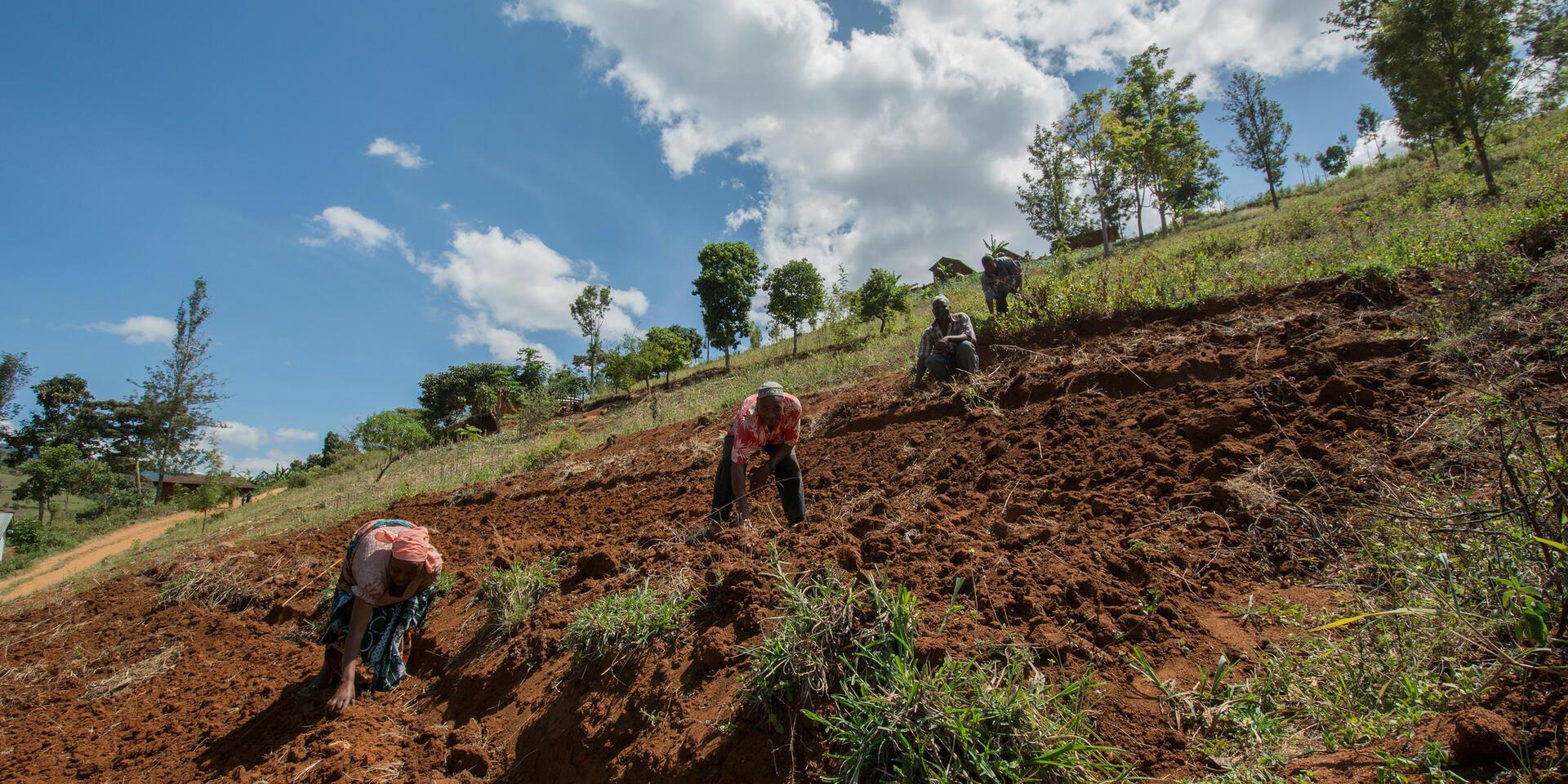
Mary: Right now, together with the Low Emission Landscape (LEL) research team, we are conceptualizing a project in Zambia that reimagines zero deforestation by putting sustainable land uses at the center of the solution. We’re exploring how sustainable farming can reduce forest pressure while improving livelihoods. My focus is on adoption, understanding how practices take root and become part of daily life. This connects to LEL’s broader research on how sustainable agriculture strengthens social bonds, fosters resilience and ultimately contributes to peacebuilding in communities facing both environmental and social challenges.
You speak about breaking silos. Why is that so important now?
Mary: Because the climate crisis does not respect boundaries. Emissions, land degradation and biodiversity loss are connected problems, but our institutions, funding and research are still organized in isolated compartments. Breaking silos means creating genuine collaboration between climate scientists, agronomists, economists and peacebuilders.
It also means valuing local and traditional knowledge alongside technical expertise. The most transformative innovations often happen when these worlds meet.