From the Field Restoring Ethiopia’s timber economy with multi-age Juniperus procera forests
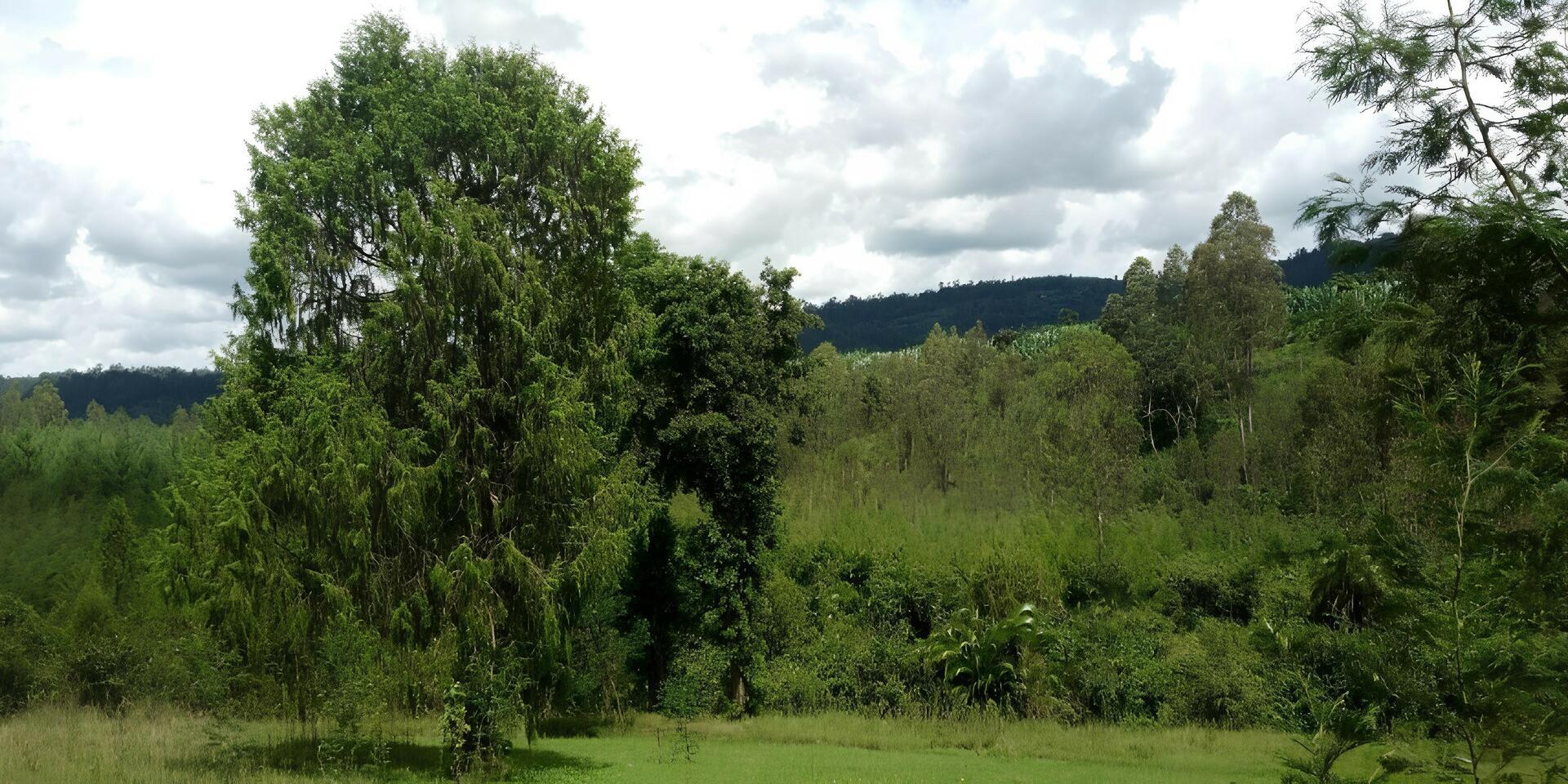

Across the Ethiopian highlands, one tree has quietly supported livelihoods, culture, and architecture for centuries: Juniperus procera. Renowned for its durable and termite-resistant wood, this indigenous species has been used to construct homes, churches, doors, and beams—many of which still stand today as a testament to its exceptional quality.
Yet despite its value, the forests that once supplied this timber are rapidly disappearing. Today, Ethiopia faces a critical challenge: how to meet growing timber demand without further degrading its remaining natural forests.
A valuable but declining resource
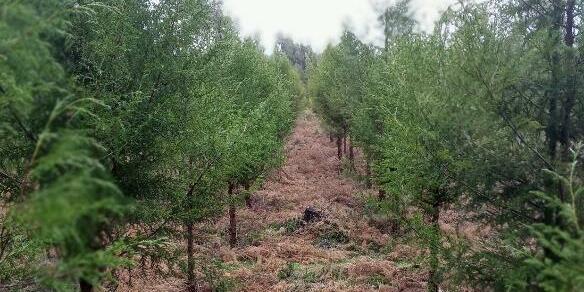
Figure 1. A young juniper stand (5 years old) at the Holeta Research Station, West Shewa Zone, Ethiopia.
Historically, Juniperus procera forests covered about 200,000 hectares across the Ethiopian highlands—the largest juniper ecosystem in Africa (Sterk et al., 2010). These forests supported biodiversity, protected watersheds, and provided a reliable source of timber. Scientific studies show that junipers have strong growth potential, reaching heights of up to 45 meters and producing substantial wood volume under favorable conditions (Pohjonen and Pukkala, 1992). However, decades of deforestation, grazing pressure, and uncontrolled harvesting have left juniper distribution fragmented and degraded.
In many areas, mature trees are selectively removed without plans for regeneration. Livestock grazing further prevents young seedlings from being established. As a result, natural regeneration is declining, and in some regions, Juniperus procera is gradually disappearing.
The problem isn’t policy. It’s practice
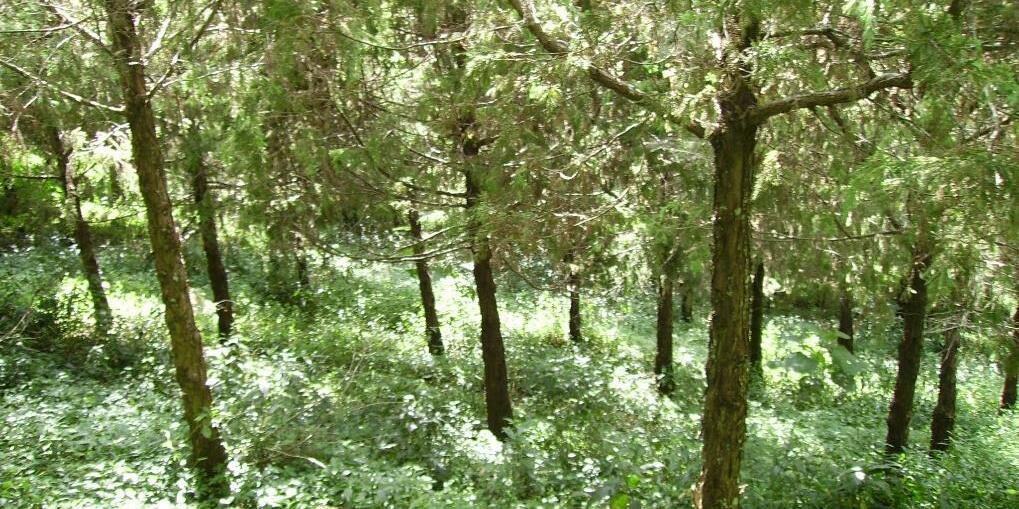
Figure 2. An 18‑year‑old juniper stand at the Jibili Research Station, Awi Zone, Ethiopia.
Ethiopia already has a policy framework that allows for sustainable forest use. Forests can be classified as productive, protected, or preserved, with “productive forests” intended to supply timber from selected species including juniper while maintaining ecological integrity.
The real challenge lies in implementation. Key tools—such as forest inventories, growth data, and harvest planning—are often missing, leading to unregulated and unsustainable extraction. Without scientific management, timber harvesting becomes opportunistic, removing the best trees and leaving degraded stands behind.
Participatory forest management: A missed opportunity
Participatory Forest Management (PFM) has been widely promoted in Ethiopia, empowering communities to manage and protect forests. In many cases, it has successfully reduced deforestation by empowering local communities to become a stewardship for their local forest resources. However, integration of timber production into these systems is rarely practiced. Communities often protect forests but receive limited economic benefits, while illegal timber markets continue to operate elsewhere. This represents a missed opportunity. With proper technical support, PFM groups could:
- Harvest timber sustainably in controlled amounts
- Process and sell wood legally
- Generate income to support their livelihood while maintaining forest sustainably.
Integrating timber production into PFM could align conservation with livelihoods—making forests both protected and productive.
What science tells us about sustainable harvesting
Research provides clear guidance on how to manage Juniperus procera sustainably while still generating income for local communities. Tree-ring analysis shows that the species forms distinct annual growth rings, allowing accurate measurement of its growth rates. These studies indicate that trees between 10 and 40 cm diameter at breast height (DBH) play a critical role in maintaining forest populations (Couralet et al., 2005). This size class represents the future timber stock and the main reproductive cohort of the forest. Removing too many trees from this group undermines regeneration and long-term productivity. Instead, sustainable systems should prioritize harvesting mature trees and retain most younger and intermediate trees that will form the next generation. It is also recommended to apply selective thinning to improve stand quality and generate income by supplying small poles and fence posts—products already in high demand.
A study from Chilimo Forest (Legese, 2023) demonstrates this potential. Using a minimum harvesting diameter of 40 cm and a 15-year cutting cycle, only about 9% of trees are removed per cycle, while 91% remain, maintaining ecological stability. Such conservative system, Ethiopia’s natural juniper forests can support both ecological sustainability and local forest-based economies, producing steady yield of timber, approximately 22 m³ of timber per hectare per cycle, equivalent to about 1.4 m³ per hectare per year, without compromising ecological stability.
From extraction to cultivation: The multi-age forest approach
Relying solely on natural forests is not enough. A more sustainable and resilient solution is to combine natural forest management with the development of multi-age forest systems. A resilient landscape combines sustainably managed natural stands with deliberately established multi-age plantations and enrichment plantings.
Unlike single-age plantations, multi-age forests contain trees of different ages. New stands are planted regularly, while older ones are harvested over time. This creates a mosaic of forest stages across the landscape.
This approach offers several advantages:
- Continuous timber supply
- Reduced ecological disturbance
- Greater resilience to climate change, pests, and diseases
- Enhanced biodiversity
Multi-age systems can be developed both within natural forests (through selective harvesting and regeneration) and outside them (through plantations).
Lessons from abroad
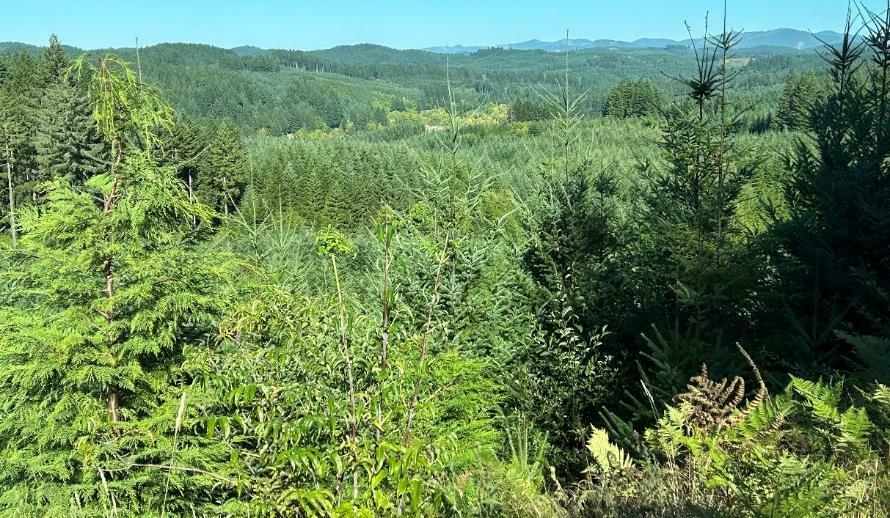
Figure 2. Partial view of Starker Forest’s multi-aged compartments.
Private and community forestry in places like Oregon (USA) offers a useful operational model. For example, Starker Forests manages Douglas‑fir plantations planted at roughly 3 × 3 m spacing and applies a sequence of thinning’s and harvests through the rotation: pre‑commercial thinning at ≈13 years, commercial thinning at ≈25 years, a second commercial thinning at ≈45 years, and final harvest later in the rotation.
These staged interventions create multi‑aged compartments across the landscape, maintain continuous production,While ecological conditions differ, the underlying principles—measurement, planning, and regulated harvesting—are directly applicable to Ethiopia.
Designing multi-age juniper forests in Ethiopia
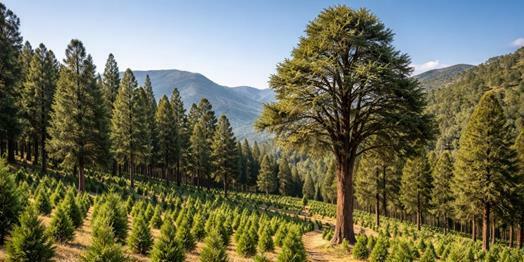
Figure 3. Design of multi-age Juniper procera production system. (AI-generated picture)
Key actions include:
- Forest inventory and planning to assess resources and guide decisions
- Selective harvesting systems based on diameter limits and cutting cycles
- Plantation development in suitable highland areas
- Staggered planting schedules to create age-diverse landscapes
- Community participation through strengthened PFM systems
Juniper can be planted at spacings of 2.5 × 2.5 m to 3 × 3 m, with new stands established periodically to ensure long-term supply.
A long-term investment with lasting benefits
Developing multi-age Juniperus procera forests requires patience. The species grows relatively slowly, and significant returns may take decades. In general, forestry is inherently a long-term investment. Once established, a well-managed system can produce timber indefinitely—while also delivering broader ecosystem benefits including:
- Reduced pressure on natural forests
- Improved rural livelihoods
- Job creation
- Enhanced ecosystem resilience
A path forward
Ethiopia stands at a crossroads. Continuing along the current path of uncontrolled extraction will further degrade forests and undermine future timber supply. Alternatively, developing science-based management and multi-age forest systems helps the country to restore a sustainable timber economy—one that balances production with conservation. Such a transition would not only secure the future of Juniperus procera but also ensure that this iconic tree continues to support communities, ecosystems, and cultural heritage for generations to come.
References
- Couralet, C., Sass-Klaassen, U., Sterck, F., Bekele, T. and Zuidema, P.A., 2005. Combining dendrochronology and matrix modelling in demographic studies: an evaluation for Juniperus procera in Ethiopia. Forest ecology and management, 216(1-3), pp.317-330.
- Legese, M.T., 2023. Decision support tools for the management in a dry afromontane forest in Ethiopia
- Pohjonen, V. and Pukkala, T., 1992. Juniperus procera Hocht. ex. Endl. in Ethiopian forestry. Forest Ecology and Management, 49(1-2), pp.75-85
- Sterck, F.J., Couralet, C., Nangendo, G., Wassie, A., Sahle, Y., Sass-Klaassen, U., Markesteijn, L., Bekele, T. and Bongers, F., 2010. Juniperus procera (Cupressaceae) in Afromontane Forests in Ethiopia: from tree growth and population dynamics to sustainable forest use. Degraded Forests in Eastern Africa, pp.291-303.
The Alliance team

Mengistu Dejene Kassahun
Scientist-II