Blog GLI contributed to the regeneration of local plant species: The case for restoring biodiversity in Ethiopia
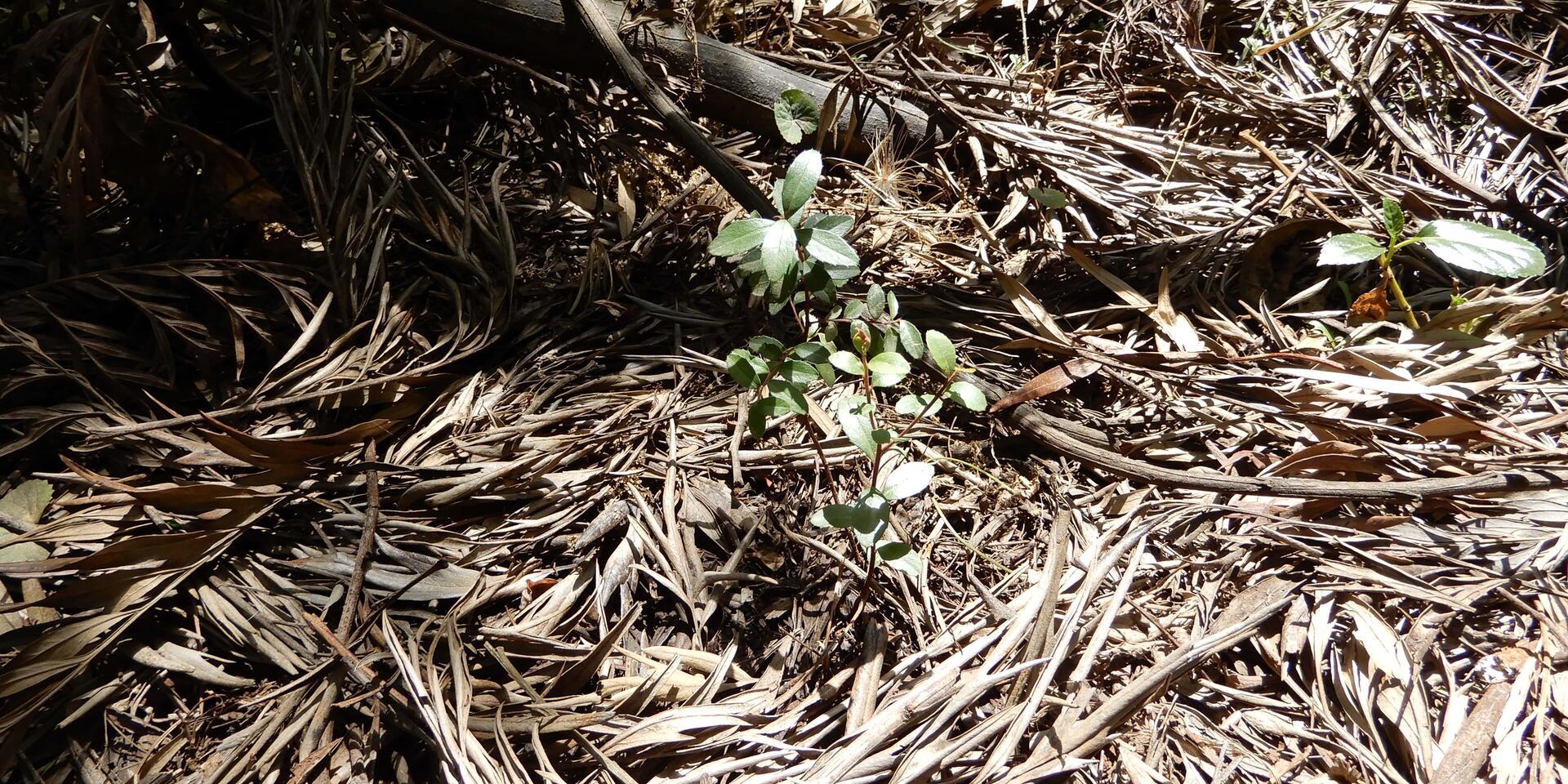

Ethiopia’s Green Legacy Initiative (GLI) aims to reverse land degradation, expand green cover and restore biodiversity. Though criticized in favor of a few exotic species (Grevillea robusta, Vachellia deccurens, Pinus patula, and Cupressus lusitanica), our findings suggest that these plantations effectively support the regeneration of native species in GLI sites.
This underscores GLI’s potential in biodiversity restoration, climate resilience, environmental health and socio-economic gains. However, challenges—open grazing, seedling loss, technical gaps, low community participation and weak law enforcement—threaten sustainability. Urgent action is needed to address these issues and scale successes regionally.
Biodiversity has declined alarmingly in recent years, mainly due to anthropogenic impacts: land-use changes (deforestation, intensive monoculture, urbanization), overexploitation, climate change, pollution, and invasive species (Muluneh, 2021; Keck et al., 2025). This loss includes declines in species numbers, genetic variability, and biological communities. Reduced species variety disturbs ecosystem services. Human activity and natural hazards have worsened local climate, soil fertility, water resources, and wildlife habitats.
Ecosystem degradation triggered economic and political shocks in Ethiopia, prompting the 2011 Climate-Resilient Green Economy (CRGE) strategy and the 2019 Green Legacy Initiative (GLI). These aimed to ensure growth via climate-resilient, net-zero carbon pathways. Over six years, 40+ billion seedlings were planted (ENA, 2024) with an 85% survival rate (FBC, 2023), resulting in 34+ billion surviving plants across various landscapes, including degraded lands. According to data from Ag Datahub, Ethiopia, over 327,260.6ha at 9732 sites have been covered. Besides plantations, protected areas fostered natural regeneration, increasing forest cover to 23% by 2024 (FBC, 2024, ENA, 2024). Planting occurred on degraded lands, farms/homesteads (agroforestry), and forest buffer zones.
GLI sites in the Oromia and central Ethiopia regions were sampled from the GCBC 'Deploying Diversity for Resilience and Livelihood' project study sites to assess the extent of plant regeneration in GLI intervention sites. Three GLI sites in Gurage zone, central Ethiopia and two in Jimma zone, Oromia were studied—previously bare lands now greened due to Meles parks and GLI. Plant diversity (planted and regenerated) was recorded in 400 m² (20×20 m) plots.
Regenerated species far exceeded planted ones.
At the Yekotegn GLI site at the Koter kebele of the Mhurna Aklil district of the Gurage zone, 24 native species regenerated under two GLI planted species: Grevillea robusta and Vachellia deccurens—a 12:2 ratio. At Gahrad GLI, Enor district (same zone), 15 local species regenerated under three planted species (Vachellia deccurens, Vachellia melanoxylon, Juniperus procera)—a 5:1 ratio. At the Yisray GLI site, Ezsia district, a four-year-old plantation with four exotic species (Pinus patula, Grevillea robusta, Casuarina cunninghamiana, Vachellia deccurens) supported 15 native species (3 trees, 7 herbs, 3 shrubs, 2 lianas) to regenerate, which are now in good condition.
Assessment in Jimma Zone (Oromia) confirmed similar regeneration patterns as in Gurage Zone. Regenerated species greatly outnumbered planted ones. At Wacho-Medha Mountain (Kilole kebele, Gomma district), planting of Pinus patula, Grevillea robusta, and Persea americana (fruit tree) through GLI intervention led to the regeneration of 29 local species (11 trees, 10 shrubs, 7 herbs, 3 lianas) – a 10:1 ratio. At Gebene Abo kebele in the same district, a completely bare grazing land was planted with five species: Jatropha curcas (as a live fence), Podocarpus falcatus, Grevillea robusta, Vachellia abyssinica, and Coffee arabica (economically important crop) during the first year of GLI intervention. Over six years, a total of 233 local plant species were regenerated. Abundance of the regenerated plants ranged from single plant (Lantana camara, Gymnema sylvestre (a medicinal plant), Bersama abyssinica, Passiflora edulis (passion fruit)) to 50 plus individual plants (Euphorbia trucali – a medicinal plant and Hypoestes forskaolii – an important bee forage plant).
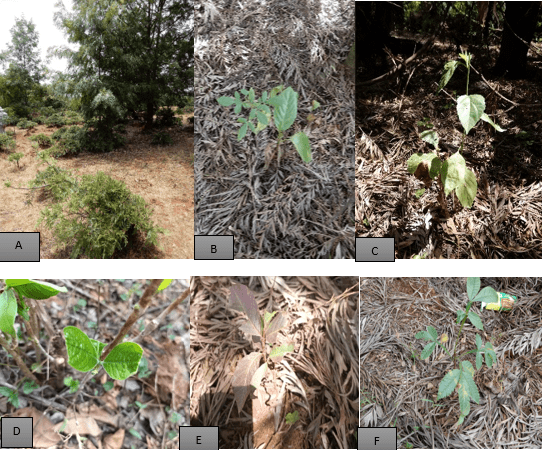
Figure 1. GLI-assisted restored land (A) assisted regeneration of different local plant species (B – F): an example. Credit: Dejene K. Mengistu
GLI intervention and implications for plant regeneration
GLI has faced criticism for prioritizing a few exotic species (Grevillea robusta, Vachellia deccurens, Pinus patula, and Cupressus lusitanica), with limited focus on natives. However, our study shows that planting—even few of these exotic species—on bare lands supports the regeneration of diverse native species across families. Regeneration-to-planting ratios ranged from 4:1 at Gebene Abo to 10:1 at Wacho-Medha Mountain (Kilole kebele, Jimma Zone), averaging 4–5× greater native diversity than planted. More local plant species have regenerated under the planted N-fixing leguminous tree species such as Grevillea robusta and Vachellia deccurens plantation than Cupressus lusitanica and Pinus patula plantations.
This regeneration highlights GLI’s potential in landscape and biodiversity restoration, climate change adaptation/mitigation, environmental health and socio-economic benefits. FGDs and KIIs at study sites show community recognition of GLI’s impact on local climate, ecosystem services and farm productivity, including increased pollinator presence (e.g., honeybees, butterflies). Regenerated species offer food (wild fruits/vegetables), medicine, pollinator support, erosion control and improved soil fertility.
Challenges that require further attention:
Despite this success, several challenges persist. Key issues must be addressed to achieve GLI goals fully.
1. Open Grazing: GLI sites face livestock encroachment, evident from dung, trampling and animals on-site in Jimma Zone. This harms seedlings and reduces survival rates.

Free grazing in GLI plantations resulted in the drying of planted seedlings in Jimma Zone, Ethiopia. Credit: Hailu Terefe
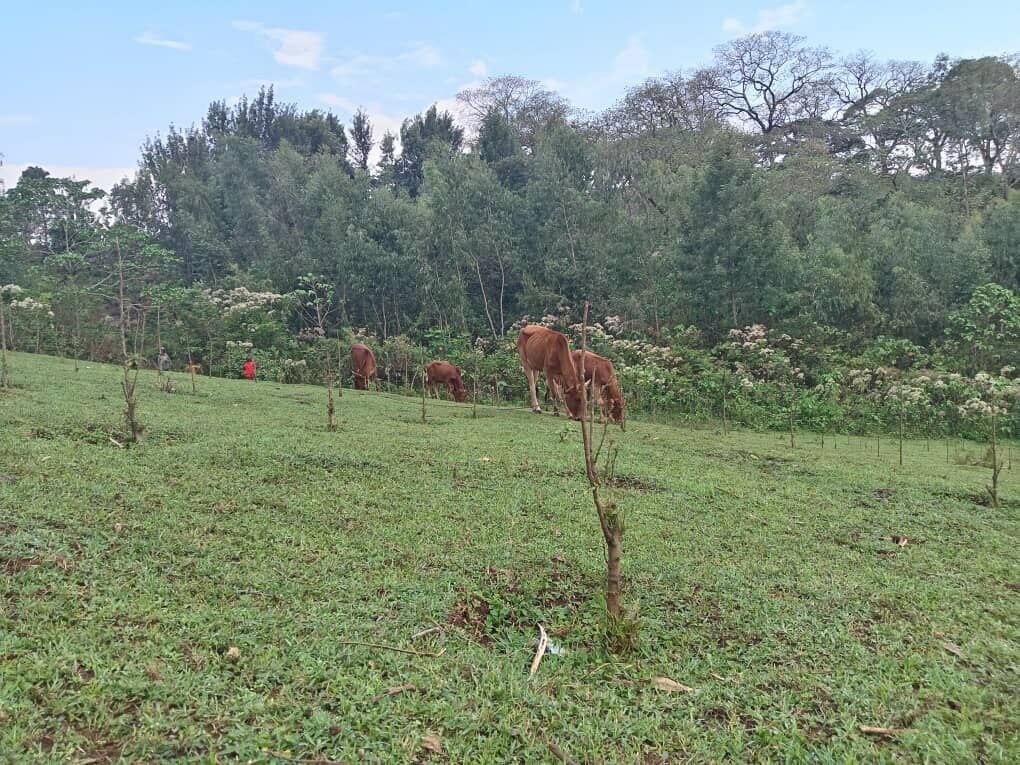
2. Seedling Mortality: Dead seedlings are common across GLI sites due to poor management—lack of irrigation and protection. Drying occurred on mountains, farmsteads and roadsides, linked to drought or human/animal interference. A low survival rate (as low as 55% in regions like Tigray) attributed to poor implementation (e.g., soil prep, watering), climate stress, governance gaps, and weak follow-up (Berhe et al., 2024).
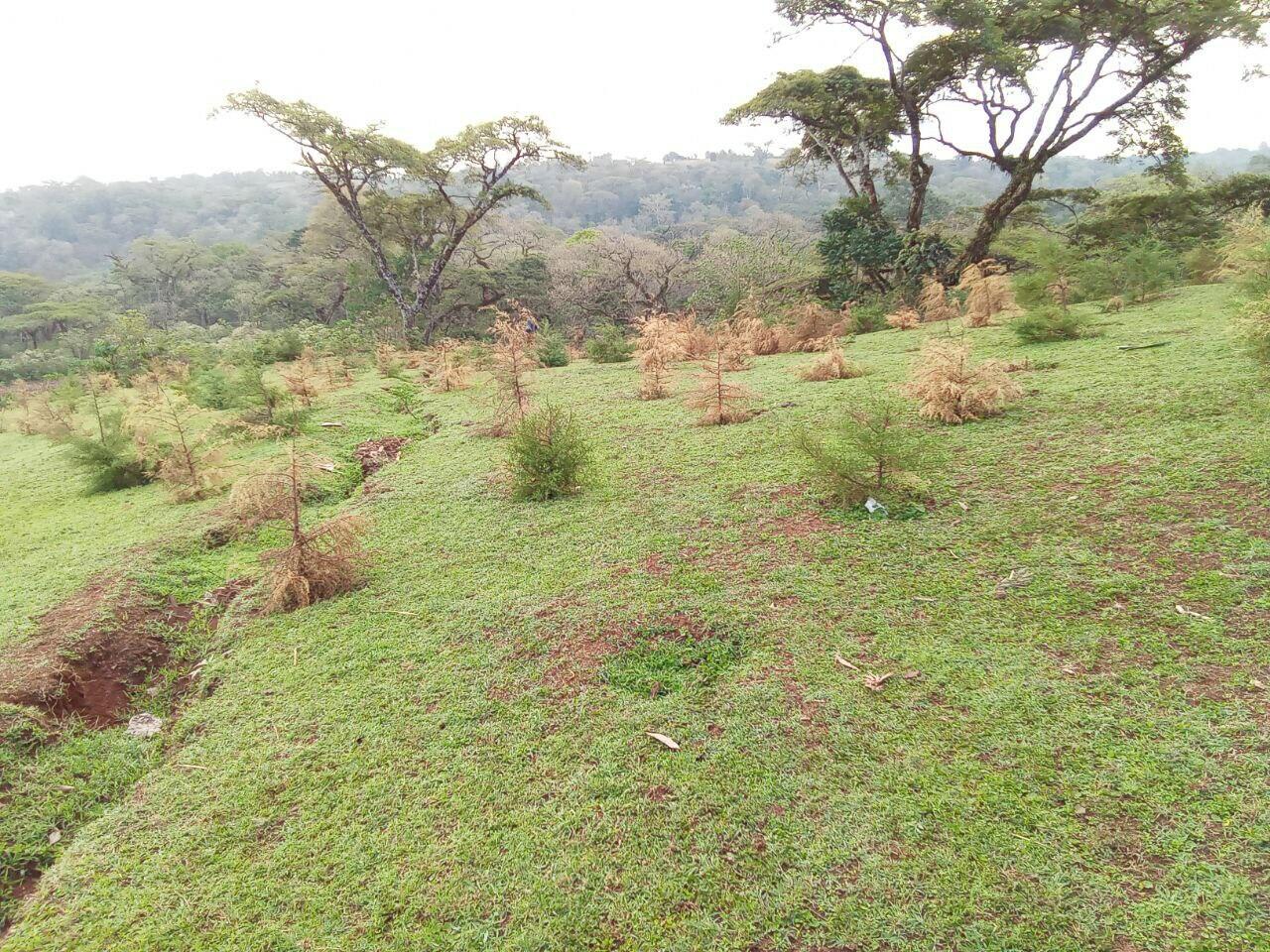
Figure 3. Improper management (lack of supplementary irrigation) and extended dry periods resulted in the death of planted seedlings in GLI sites in Omo beko Kebele, Gomma district of Jimma Zone. Credit: Hailu Terefe
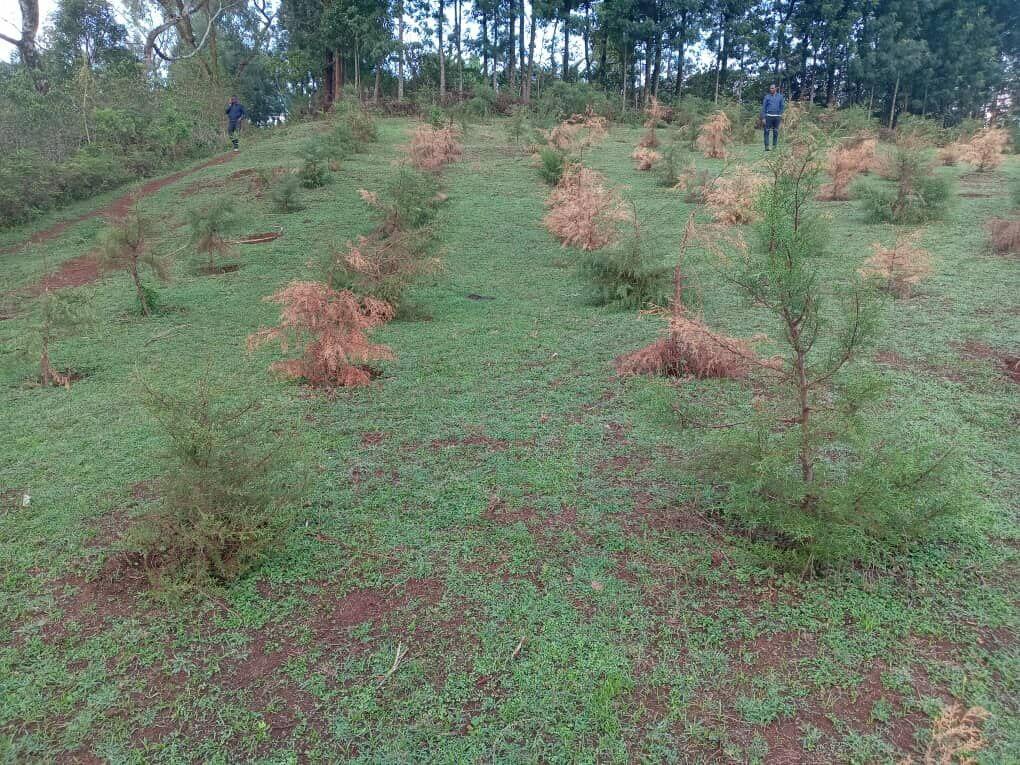
3. Personnel and Participation Issues: Improper personnel mobilization—due to the initiative’s scale—has contributed to management gaps. Illegal tree cutting and grazing are partly due to the top–down enforcement model, excluding communities from early decision-making. This weakens long-term sustainability. Ensuring community participation in planning, site selection and seedling management, with expert support, is vital for future success.
4. Inconsistent Law Enforcement Across Regions: Regional differences affect the protection of planted areas. In Oromia, weak law enforcement has led to unsustainable practices and poor seedling survival. In contrast, central Ethiopia (e.g. Gurage zone) benefits from strong local laws. For instance, in Yadotgeg forest (Ezsia district), strict community bylaws prevent even the removal of fallen trees. The forest’s name symbolically reinforces its sanctity. Expanding such community-led bylaws and stronger governance elsewhere is essential to protect GLI’s gains.
Acknowledgement
The authors thank the Department for Environment, Food and Rural Affairs (DEFRA) of the UK and its program Global Centre on Biodiversity for Climate (GCBC) for funding this work as part of the project “Deploying Diversity for Resilience and Livelihood” through funding agreement G01-007769. We also extend our appreciation to experts and farmers in the Gurage and Jimma Zones for sharing their indigenous knowledge during the study.