Blog Building climate services together: Partnerships strengthening climate resilience in Kenya

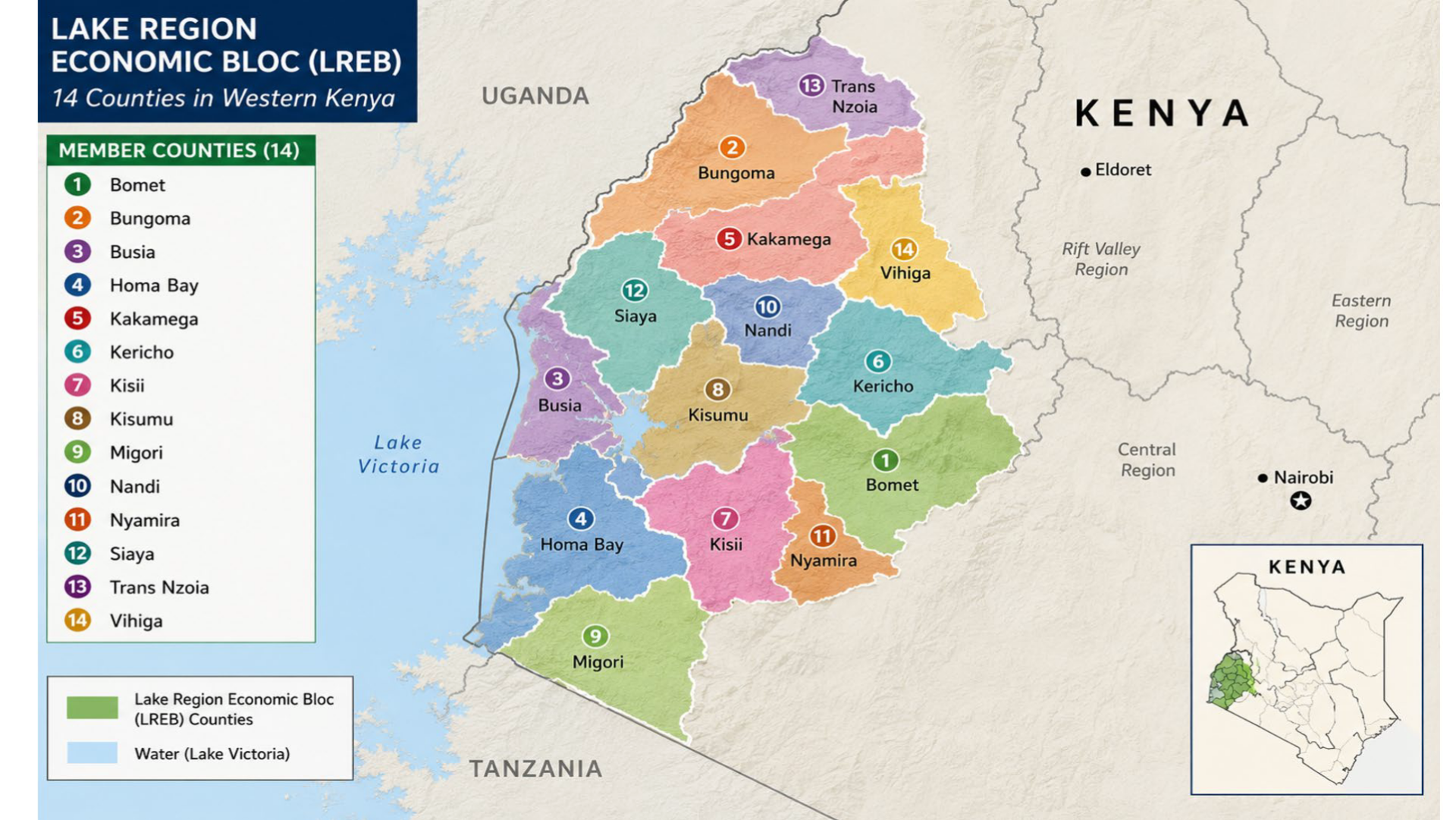
Recently, the Alliance, KMD, FAO, FEWS NET, IMTR and 14 LREB counties trained 56 master trainers in Kenya to cascade digital climate advisory services to about 1,200 extension officers and strengthen farmers’ climate resilience.
No single institution can deliver a climate service on its own. A forecast becomes a service only when it changes what a farmer does and the distance between a seasonal outlook issued in Nairobi and a planting decision made on a smallholding in the Lake Region is crossed by many hands. Kenya's Integrated Digital Climate Advisory Services (DCAS), delivered under the Scaling for Impact (S4I) initiative of CGIAR, shows how partnership closes that distance: not by any one organisation doing more, but by several institutions connecting what each already does best into a single working system.
Producing accurate forecasts is only the first link in that system. Turning forecasts into decisions requires meteorologists, agricultural researchers, training institutions, county governments, extension officers and development partners to operate as one chain covering climate observation and forecasting, interpretation, advisory development, delivery through the channels farmers actually use, and feedback that improves the next cycle. A climate service is only as strong as its weakest handoff, and it is precisely those handoffs that partnership exists to hold.
Bringing the whole chain into one room
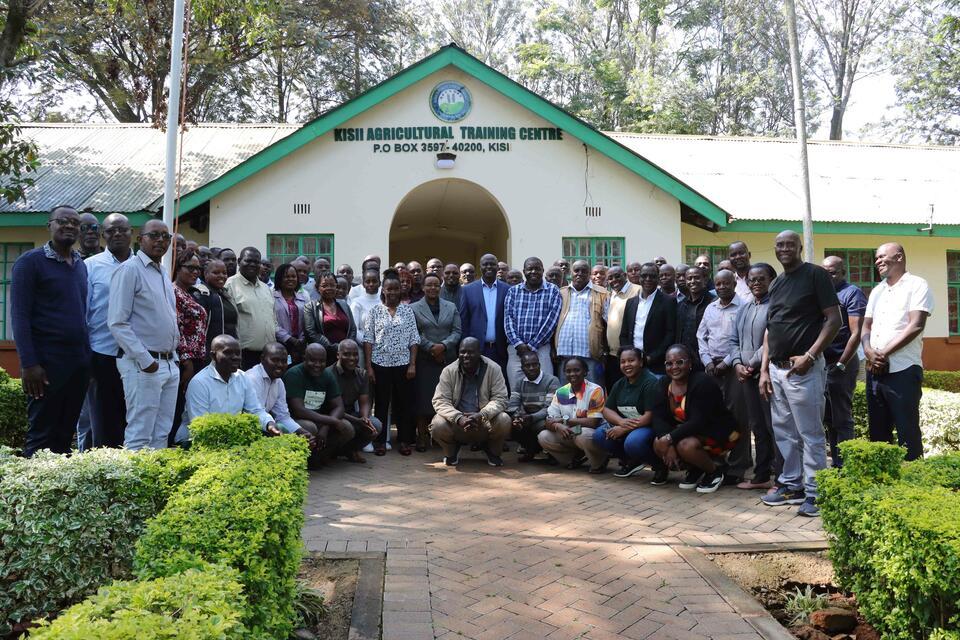
That collaborative approach was on display during the recent Training of Trainers on Integrated Digital Climate Advisory Services, implemented under the FAO Green Climate Fund (GCF) TUNZA Project. The workshop brought together 56 master trainers from the 14 counties of Kenya's Lake Region Economic Bloc (LREB), including County Directors of Agriculture, County Directors of Meteorological Services and extension officers. Equipped with new knowledge and practical tools, these trainers will now lead cascade DCAS trainings expected to reach approximately 1,200 frontline extension officers across the region.
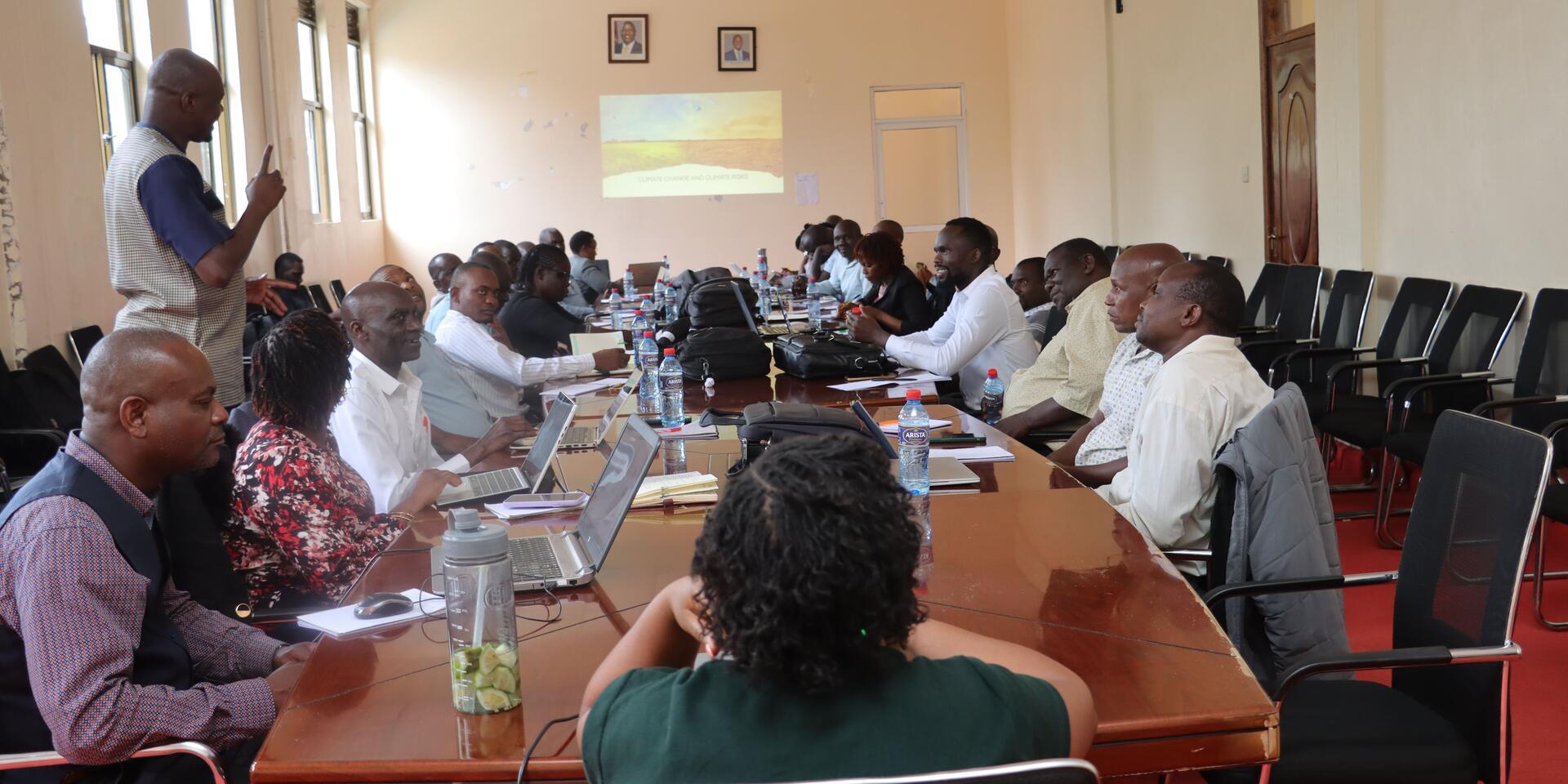
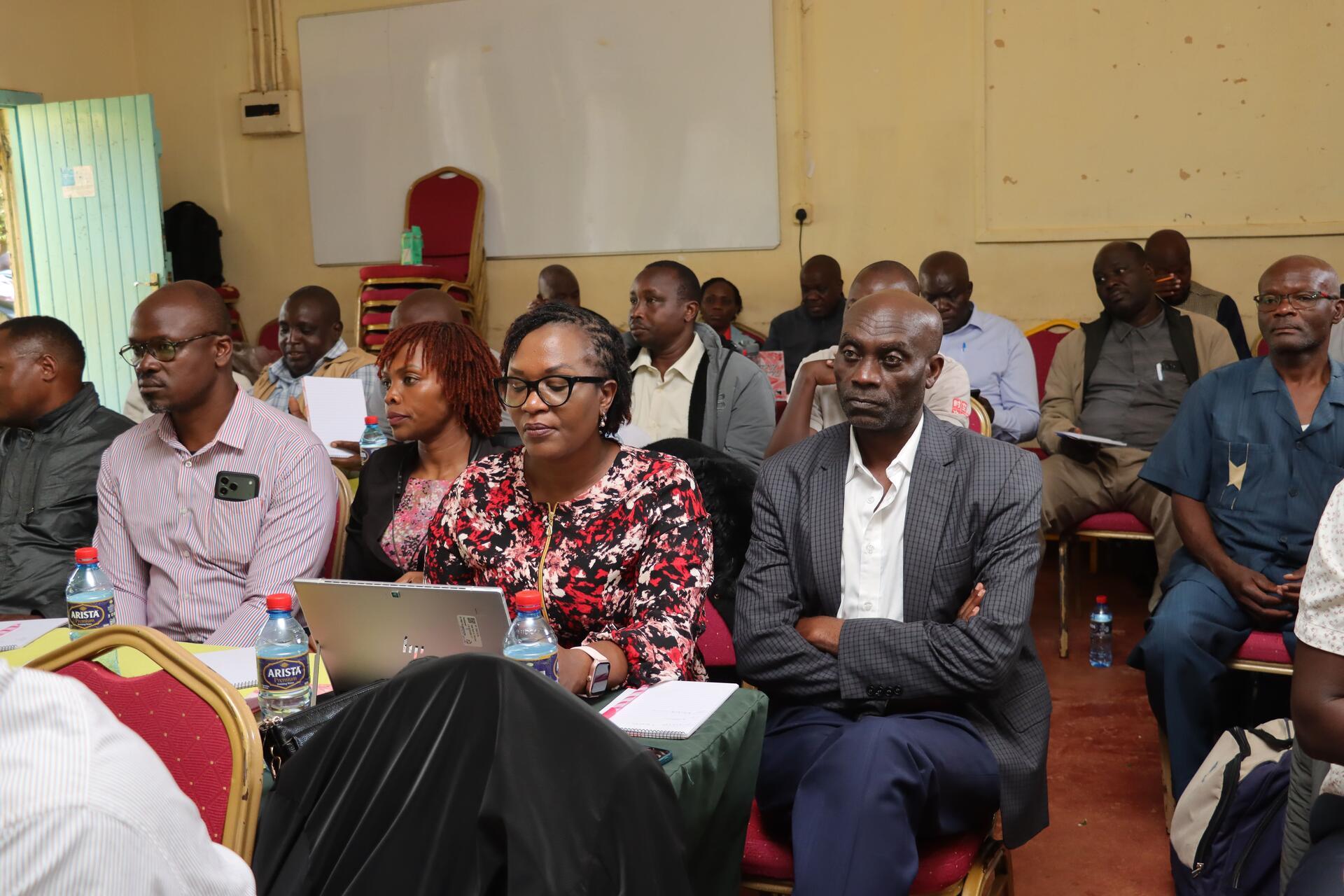
The significance of the workshop lay as much in who was in the room as in what was taught. Forecast producers, agricultural researchers, risk analysts, trainers, county decision makers and frontline advisers were brought together at the same table, the same people who, in practice, must hand information to one another season after season. Training them together, rather than separately, meant that each group learned not only its own role but the role of the person it passes information to next.
Each partner leverages a different asset
What makes this more than a coalition of goodwill is that every institution contributes a different kind of asset, and no partner can substitute for another's.
The Kenya Meteorological Department (KMD) contributes authoritative science. Through county-level downscaling, seasonal outlooks and shorter-term forecasts, KMD ensures that the information entering the system is scientifically robust and locally relevant and, as Kenya's official source, carries the credibility that advisories depend on.
The Alliance of Bioversity International and CIAT contributes applied agricultural research and the Digital Climate Advisory Services framework itself. Rather than treating climate information generation, advisory development and dissemination as separate activities, the framework links them through coordinated workflows, digital platforms and continuous feedback mechanisms, moving the system from data to decisions more efficiently while ensuring that farmers' experiences continue to improve future advisories.
FEWS NET contributes climate risk and food security analysis, situating each season within a wider picture of hazard and vulnerability so that advisories respond to the realities of farming systems rather than generic weather conditions.
The Institute for Meteorological Training and Research (IMTR), as the training and research arm of KMD, contributes training infrastructure and the standards by which meteorological instruction is delivered and certified, ensuring that probabilistic climate information is explained consistently across every county rather than idiosyncratically.
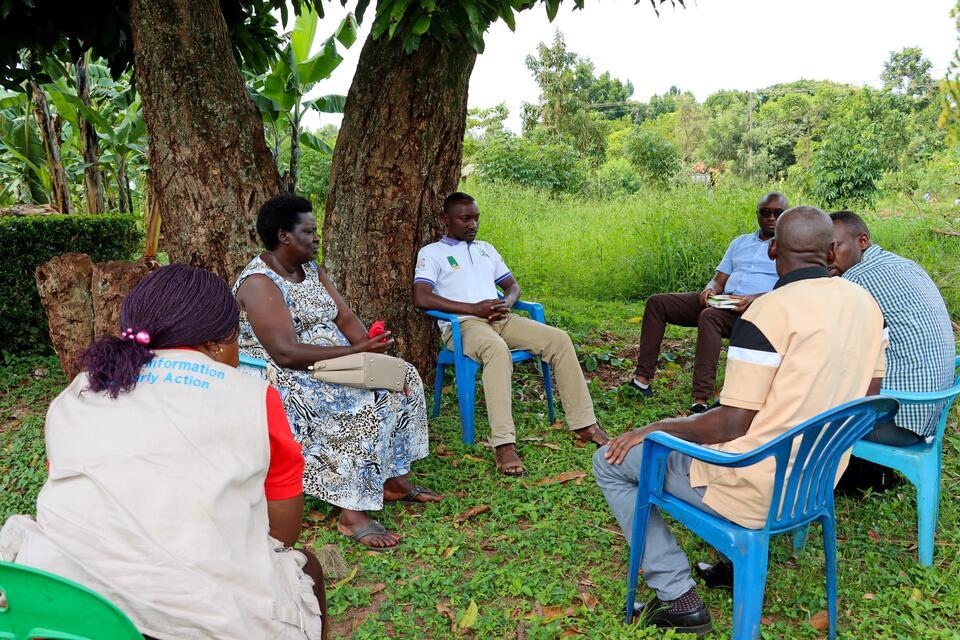
FAO, through the GCF-funded TUNZA Project, contributes implementation resources and delivery platforms. Farmer Field Schools serve as practical spaces where extension officers and farmers engage with climate information, discuss advisories and learn together. The project also supports county-level rollout, ensuring that training translates into sustained implementation rather than remaining a one-off event.
County governments contribute policy authority and reach. Under devolution, agriculture is a county function, and County Directors of Agriculture and County Directors of Meteorological Services hold both the mandate and the extension networks through which advisories travel the final distance to farmers. The participation of Kisii County leadership at the opening of the Training of Trainers underscored that commitment. By bringing together county decision makers, technical officers and national institutions from the outset, the initiative is strengthening county ownership of Digital Climate Advisory Services and creating an enabling policy environment for implementation that extends well beyond the life of the project.
Extension officers contribute the practical knowledge of local production systems that keeps advisories realistic, and the trust of the farming communities they serve.
Pooled, these assets, science, technical expertise, financial and institutional resources, and policy authority, form a value chain that none of the partners could assemble alone.
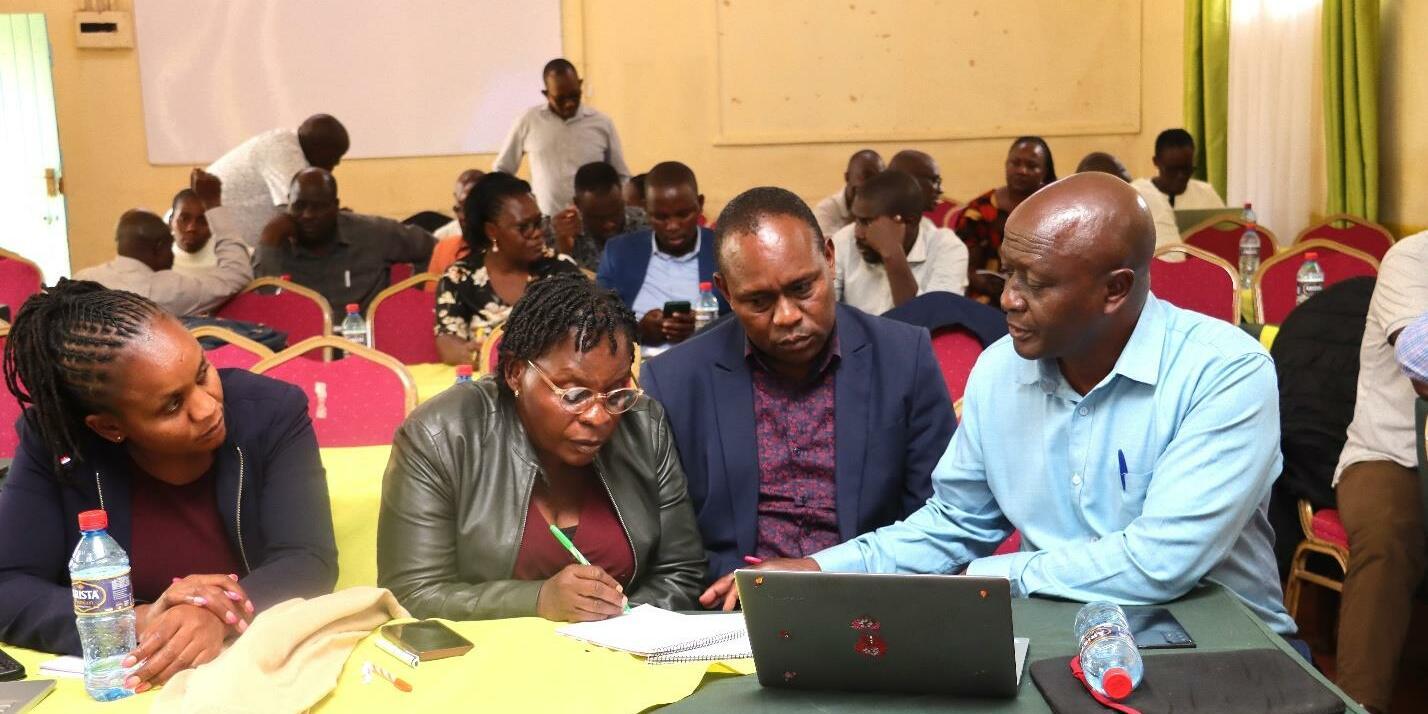
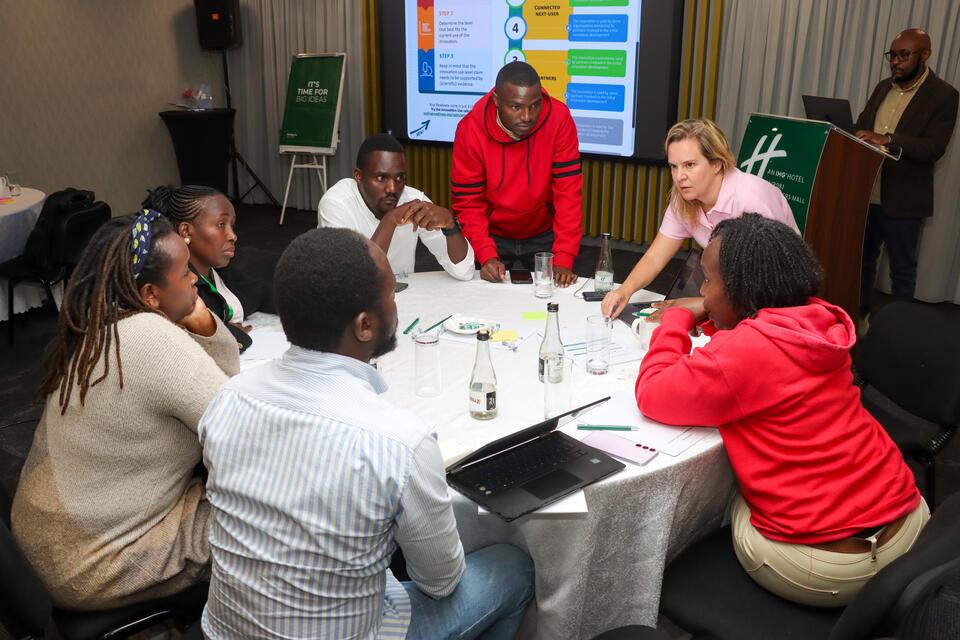
Group discussions provided an opportunity for participants to share and refine localized climate advisories through peer learning and discussion.
Co-production turned a partnership into a system
Nowhere is that pooling more visible than in the training manual, and co-production is not only how the manual was made, it is what the manual now institutionalises.
The manual was developed by the Alliance of Bioversity International and CIAT together with the Kenya Meteorological Department (KMD), in collaboration with FAO TUNZA, FEWS NET and the Institute for Meteorological Training and Research (IMTR), with each partner entering at the point in the climate information chain where its mandate is strongest. KMD anchored the manual in official seasonal forecasts and downscaled climate data, ensuring that the advice extension officers carry to farmers originates from Kenya's authoritative source. IMTR shaped how forecast interpretation is taught, aligning the content with established meteorological training standards. FEWS NET supplied the risk and food security framing that gives a forecast its context. FAO TUNZA brought community-level engagement, ensuring the material speaks to the realities of the households that will act on it. The Alliance translated all of this into tested agronomic options, variety choice, planting windows, input decisions, at the scale on which farmers actually decide.
Because the content was drafted jointly rather than passed sequentially between institutions, the partners had to agree on a single pathway, from forecast to interpretation to agronomic option to farmer decision, and write to it. The effect extends well beyond the document. A seasonal forecast issued by KMD now reaches farmers carrying IMTR-standard interpretation, FEWS NET risk framing and Alliance-tested agronomic options in one consistent form that every partner recognises and every trained extension officer can deliver. The links that had previously been weakest, forecast producer to interpreter, and interpreter to frontline adviser, are now documented and shared. Co-production therefore did more than improve a manual: it converted parallel institutional efforts into a connected system that turns climate science into advice farmers can act on.
The chain in operation
That system is visible in how a single season now unfolds. KMD issues a downscaled seasonal outlook for the county. County Directors of Meteorological Services then sit with agricultural extension officers and other stakeholders in Participatory Scenario Planning (PSP) processes, where the forecast is interpreted against local production systems and FEWS NET risk analysis, and converted into specific advisories. Extension officers carry those advisories into Farmer Field Schools and through digital channels, using the shared interpretation methods the manual sets out. Farmers' responses and outcomes then travel back through the same network, informing the next round of advisories.
Each of those steps was happening before. What the partnership has changed is that they now connect, deliberately, consistently and in a form every institution recognises.
From project activity to institutional practice
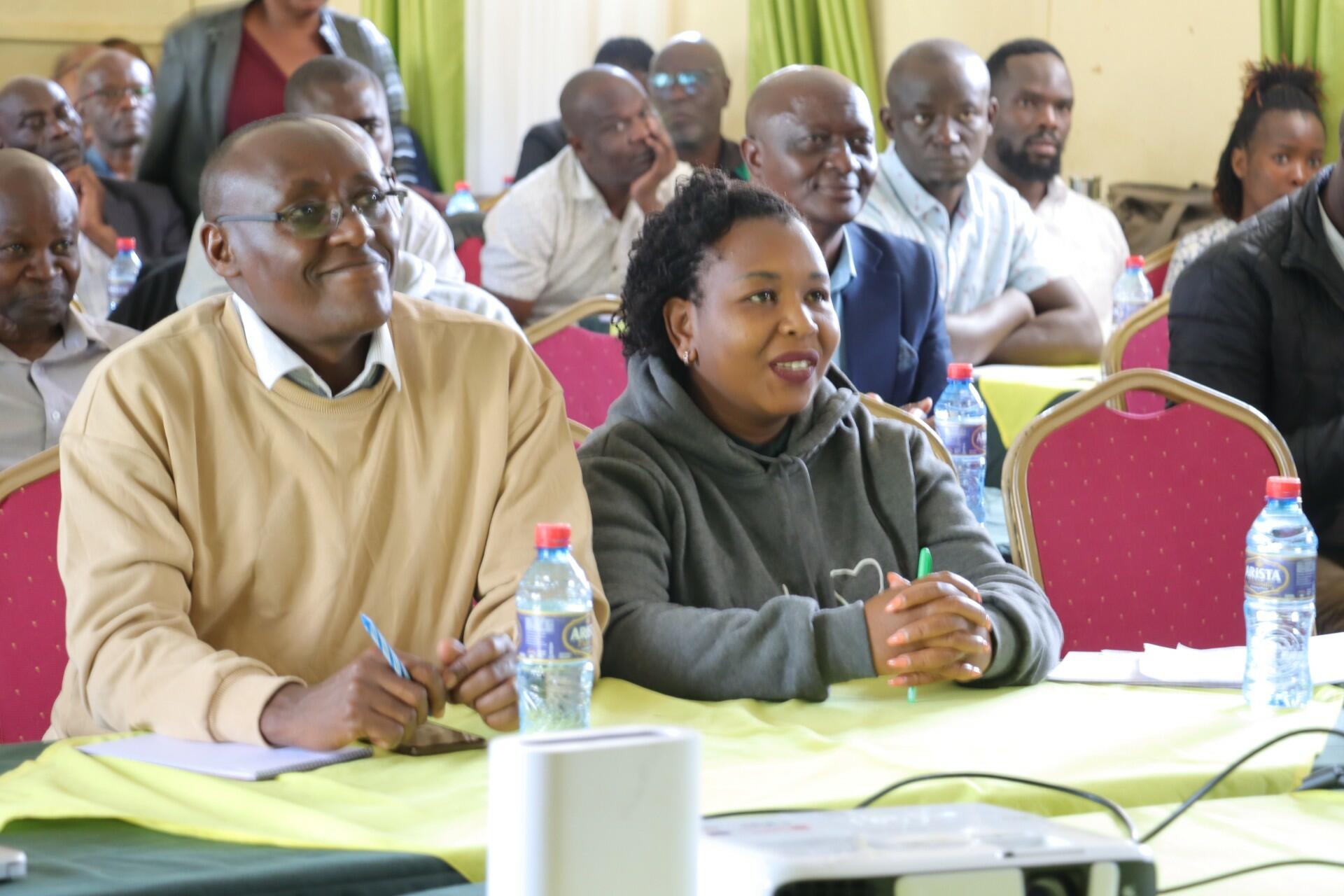
One of the strongest indicators of the partnership's long-term value emerged during post-workshop planning discussions, when representatives from the Institute for Meteorological Training and Research expressed their intention to adopt the co-developed training materials for future institutional use. This signals an important shift from project-based capacity building toward institutional ownership: materials created for one training programme becoming part of how Kenya's national meteorological training institution teaches climate services.
The partners also agreed to establish mechanisms for collecting structured feedback during county-level rollout, allowing training materials and advisory processes to evolve with field experience. That commitment reflects a shared understanding that effective climate services are not static products but adaptive systems, improving through collaboration, learning and use.
Conclusion
As Kenya continues to strengthen climate resilience, partnerships like this one demonstrate that lasting impact comes not from isolated interventions but from institutions working together around a shared purpose. By combining scientific authority, agricultural expertise, implementation resources and policy leadership, and by co-producing the tools that carry information between them, the partnership has built more than a training programme. It has strengthened the system that allows climate science to become practical action, helping farming communities make better decisions, manage climate risks and build resilience for the future.
The team
Desire Kagabo
Project Leader
Majambo Gamoyo
Postdoctoral Fellow