Press and News Kisumu County and the Alliance join forces to advance resilient food systems and multi-functional landscapes

The Alliance of Bioversity International and CIAT and the County Government of Kisumu have formalized a strategic partnership to advance climate-resilient agriculture, sustainable food systems, and biodiversity conservation in Kenya. The Memorandum of Understanding (MoU) focuses on scaling innovative solutions—such as community seed banks, landscape restoration, and resilient crop systems—to address climate change, land degradation, and food insecurity. By combining scientific expertise with county leadership, the collaboration aims to strengthen farmer livelihoods, enhance seed systems, and drive sustainable development across Kisumu County.
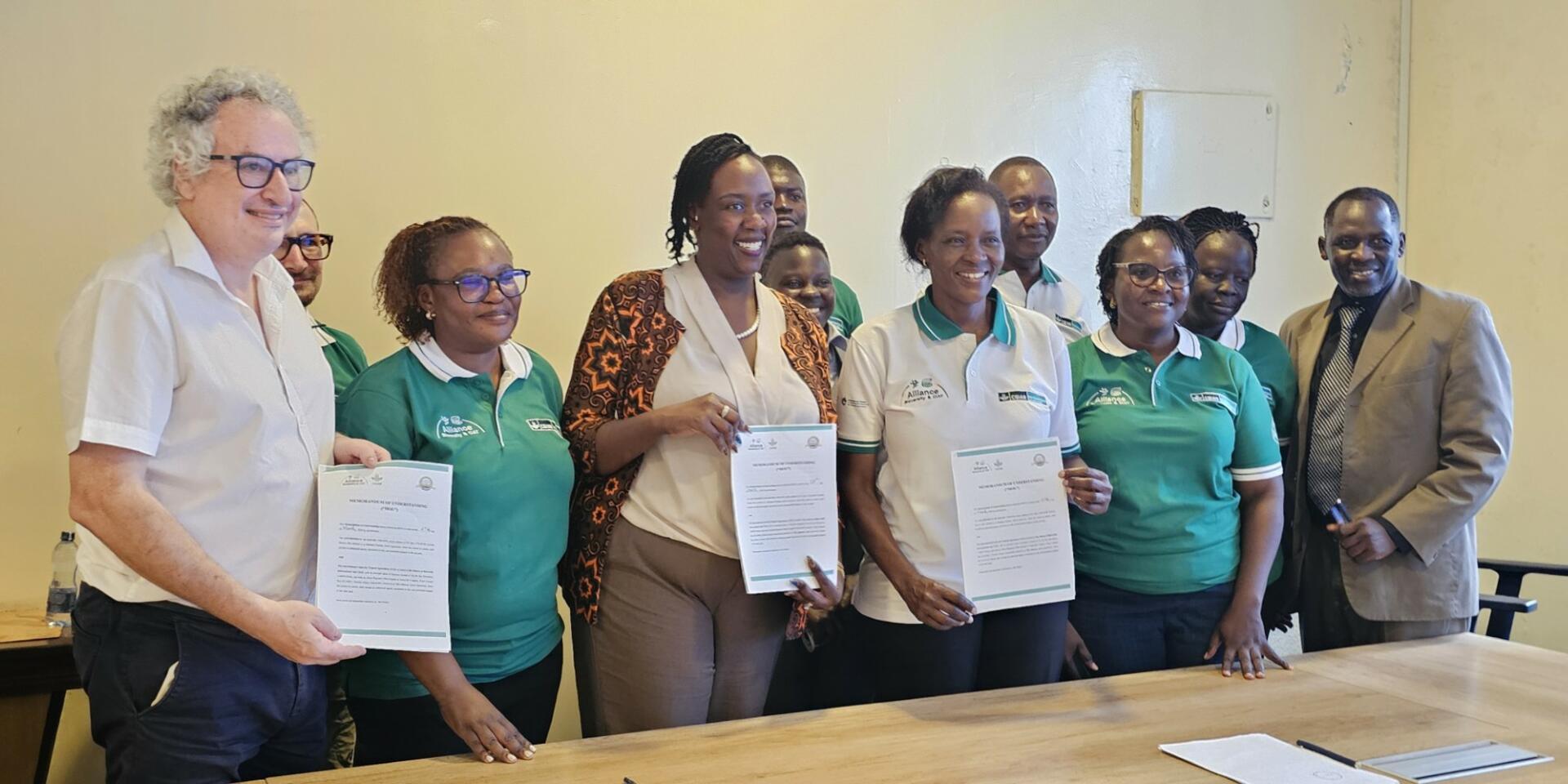
On March 27th, 2026, the County Government of Kisumu and the Alliance of Bioversity International and CIAT formalized a new partnership through a Memorandum of Understanding (MoU) aimed at strengthening research, institutional development, capacity development, and the scaling of innovations that improve livelihoods and support sustainable development in the county.
The collaboration signed through the Department of Water, Environment, Climate Change and Natural Resources brings together county government leadership and science-based solutions to address some of the most pressing challenges facing food systems today, including climate change, biodiversity loss, land degradation, malnutrition, and weak seed systems.
The MoU was signed by Judith Oluoch- County Executive Committee Member (CECM) for Water Environment, Climate change and Natural Resources and Dr. Wanjiru Kamau-Rutenberg, the Alliance Africa Managing Director and Dr. Carlo Fadda- Director for Biodiversity for Food and Agriculture.
It is a shared commitment to work together through ongoing initiatives at the Alliance such as the CGIAR’s Multi-Functional Landscapes program, the FAO- treaty’s Benefit Sharing Project on Enabling and Scaling Seed Systems for Climate Change Adaptation, and the Biodiversity for Resilient Ecosystems in Agricultural Landscapes" (B-REAL) project all of which supports integrated, landscape-level action to restore degraded land, strengthen climate-resilient seed systems, improve agricultural productivity, promote value addition, and connect farmers to markets in ways that benefit both livelihoods and ecosystems. These efforts will support Kisumu County in key priority areas including land use planning, forest restoration, restoration of degraded lands and soils, improving agricultural productivity through robust seed systems, value addition, and strengthening farmers’ access to markets. The partnership is designed to be cross-sectoral, with collaboration spanning several county departments, including Department of Agriculture, fisheries, Livestock development and Irrigation, Department of Lands, Physical Planning, Housing and Urban Development, Department of Trade, Tourism, Industry and Cooperatives, and the Department of Sports, Culture, Gender and Youth services.
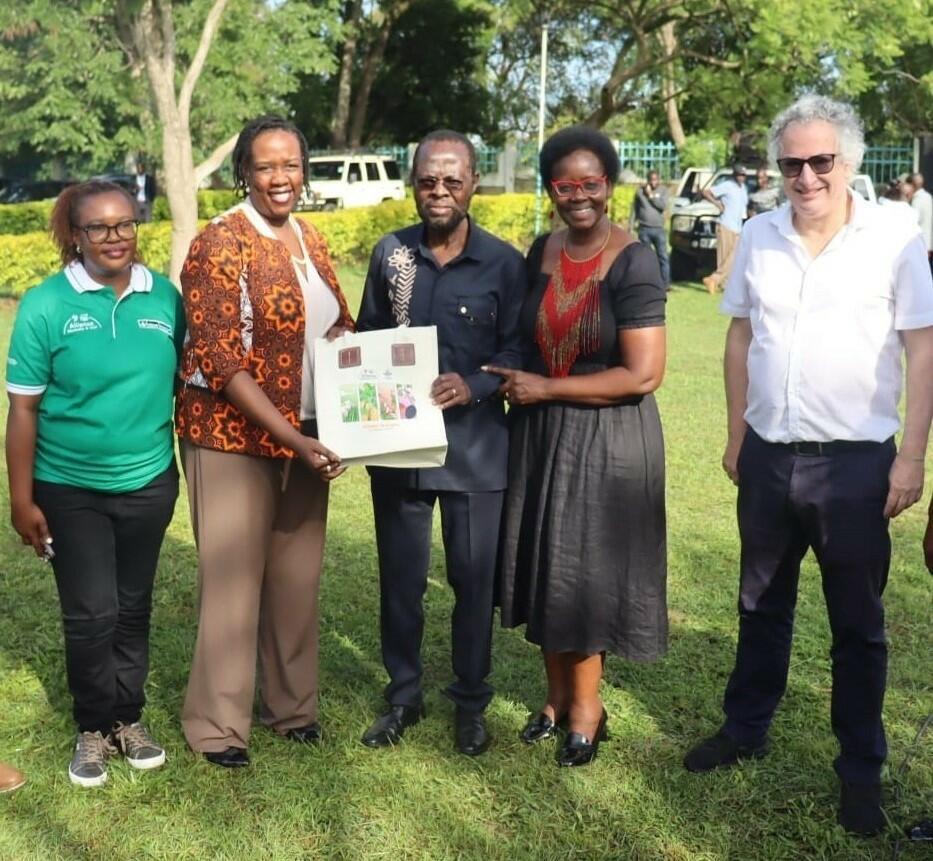
Left-Right - Dr. Gloria Otieno, Dr. Wanjiru Kamau-Rutenberg, Kisumu County Governor Prof. Anyang' Nyong'o, Kisumu First Lady Dorothy Nyong'o, and Dr. Carlo Fadda shortly before signing of the MOU.
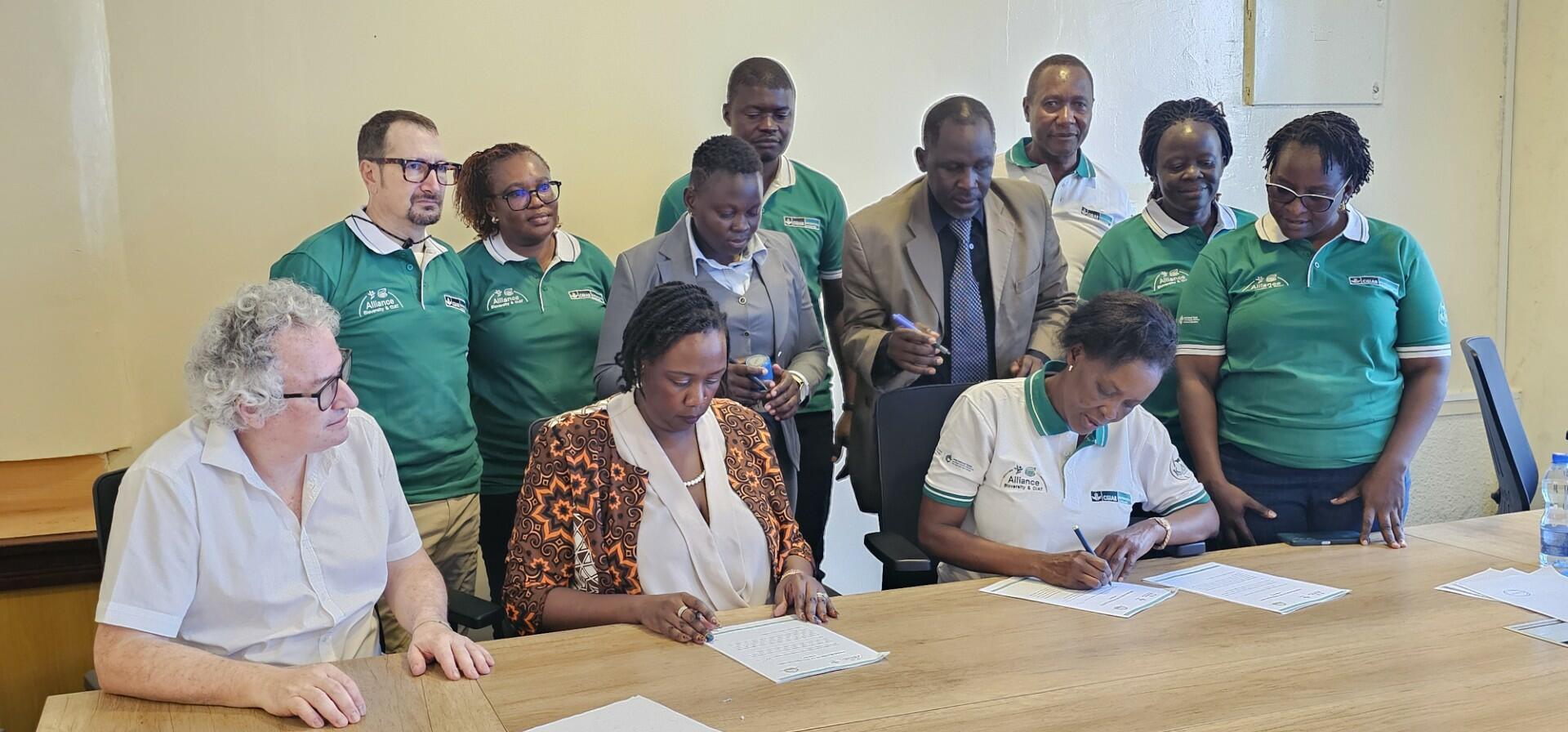
Seated right - Kisumu County CECM for Water Environment, Climate change and Natural Resources Judith Oluoch, The Alliance Africa MD Dr. Wanjuru Kamau-Rutenberg, and Director, Bioversity for Food and Agriculture at The Alliance, Dr. Carlo Fadda during the signing of the MOU. Other representatives from both The Alliance and the County Government of Kisumu are looking on.
Scaling of community seed banks
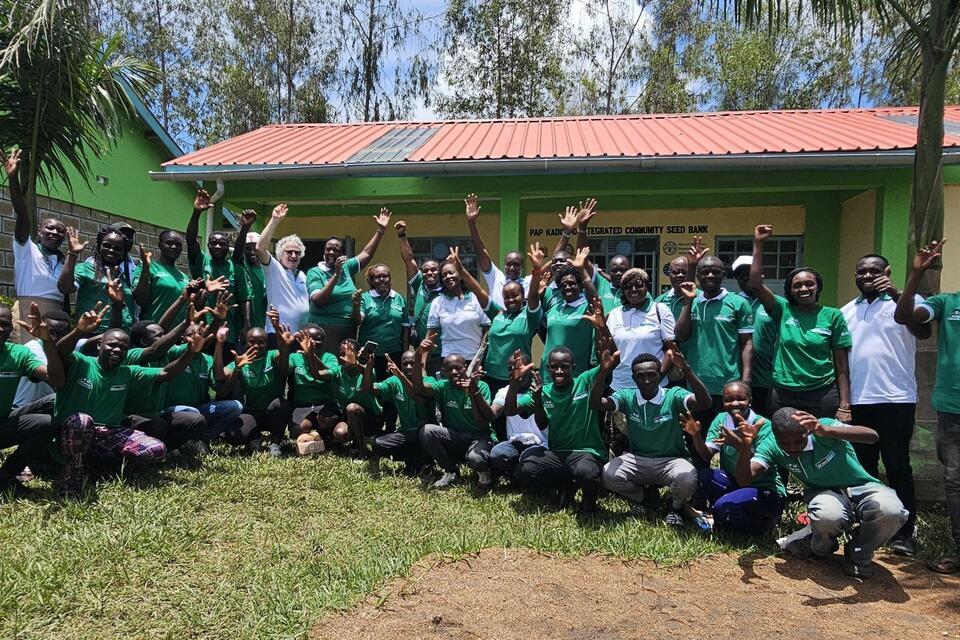
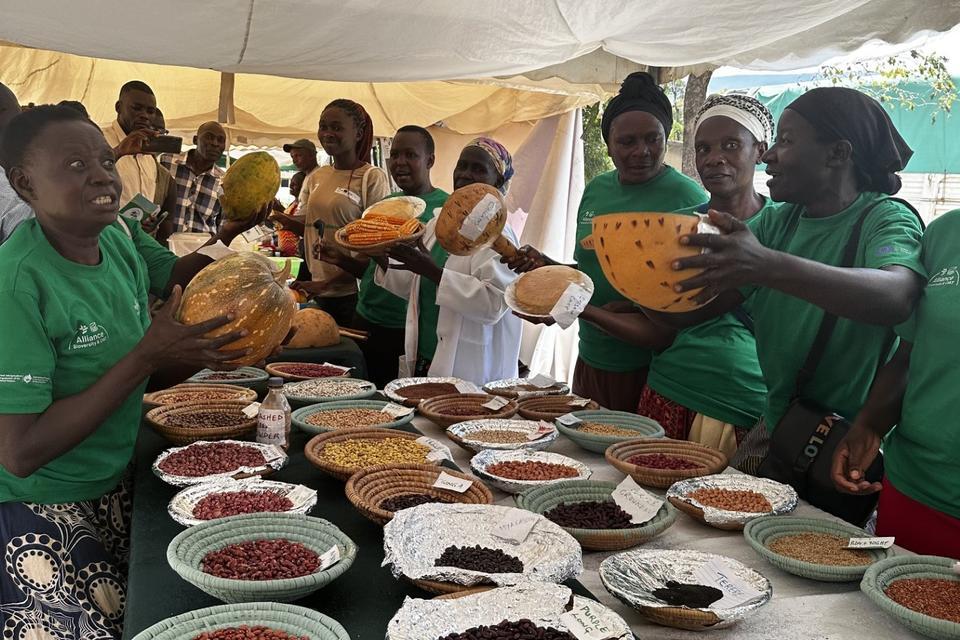
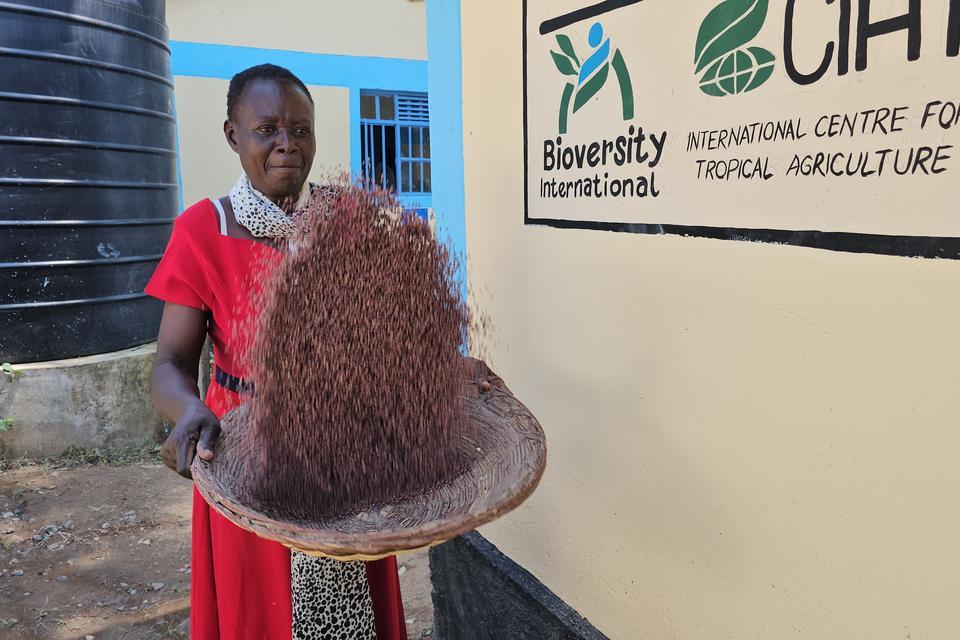
One of the most significant areas of collaboration is the scaling of community seed banks for climate change adaptation and resilience which has seen the establishment of the Seme Integrated Community Seedbank on the 27th of March 2026. Through the B-REAL and the CGIAR’s Multi-functional Landscapes programs, the Alliance is also supporting the introduction of 20 to 30 new varieties of resilient Vision for Adapted Crops, also referred to as neglected and underutilized species, into community seed banks, and farming systems. The partnership also aims to establish more community seed banks in Kisumu County, with a target of reaching more than 1,000,000 farmers by improving access to quality, resilient seed of adapted crops. Beyond seed access, the MoU emphasizes the need to develop viable business models for community seed banks so that they can be sustained and scaled through the County Integrated Development Program.
Towards a more resilient future
The MoU also places strong emphasis on land use planning and restoration. The Alliance intends to work with Kisumu County to identify degraded lands and co-design restoration plans using tree diversity, crop diversity, and soil restoration approaches. This includes restoring degraded soils with organic inputs, increasing genetic diversity in farmers’ fields, and using tree-based approaches for reforestation and landscape recovery. These actions are aligned with Kisumu County’s spatial development priorities and broader county planning frameworks. Together, the two institutions aim to develop practical land use plans for farms, degraded lands, and forests.
Another important pillar of the partnership is the development of aggregated farms in Jimo East and Agoro East in Nyakach. Since 2022, under CGIAR’s Nature Positive initiative, the Alliance has supported smallholder farmers to aggregate land in order to improve efficiency, strengthen access to resources, and enhance market opportunities. In Agoro East, 83 farmers have aggregated 52.31 acres of land, while in Jimo East, 45 farmers have aggregated 22 acres. The Alliance is providing technical support to help design these nature-positive farms around mixed and intercropped systems that combine climate-resilient crops with practices that improve soils and environmental health. In parallel, soil health and biodiversity work is being carried out to analyze soils and develop regeneration protocols that could be scaled across the county.
The MoU further recognizes that stronger farmer organizations are essential for long-term transformation.
The Alliance and the Ministry of Cooperatives of Kisumu County have already collaborated to support farmers in Agoro East and Jimo East to establish cooperatives. In 2024, the county and the Alliance trained farmers on cooperative formation and supported the registration of two cooperatives. Building on this progress, the partnership now aims to develop business models for both aggregated farms and community seed banks, with potential for scaling within Kisumu and beyond. The MoU also envisions additional training in value addition, marketing, financial management, group dynamics, and cooperative legal obligations.
Policy development is another major area of cooperation. The MoU aligns with Kisumu County’s policy priorities, including implementation of the Kisumu County Integrated Climate Change Action Plan, which promotes the use of diverse and resilient crops such as sorghum, millet, and cassava for climate adaptation. The Alliance is also working with the county to develop an Agroecology strategy for Kisumu in line with Kenya’s National Agroecology Strategy for Food System Transformation (2024), as well as implementation of the county food systems strategy, which promotes diversified diets and value chain approaches, including vegetable production systems that improve productivity and reduce costs.
This partnership signals a bold and practical step toward a more resilient future for Kisumu County. It reflects a shared vision in which farmers have better access to resilient crops, degraded landscapes are restored, local enterprises are strengthened, and county-level policies are backed by research and innovation.
The team

Wanjiru Kamau-Rutenberg
Managing Director, Africa, and Trustee, Bioversity International USA
Carlo Fadda
Director, Agrobiodiversity