Blog Enhancing sustainability of community seed banks through value addition
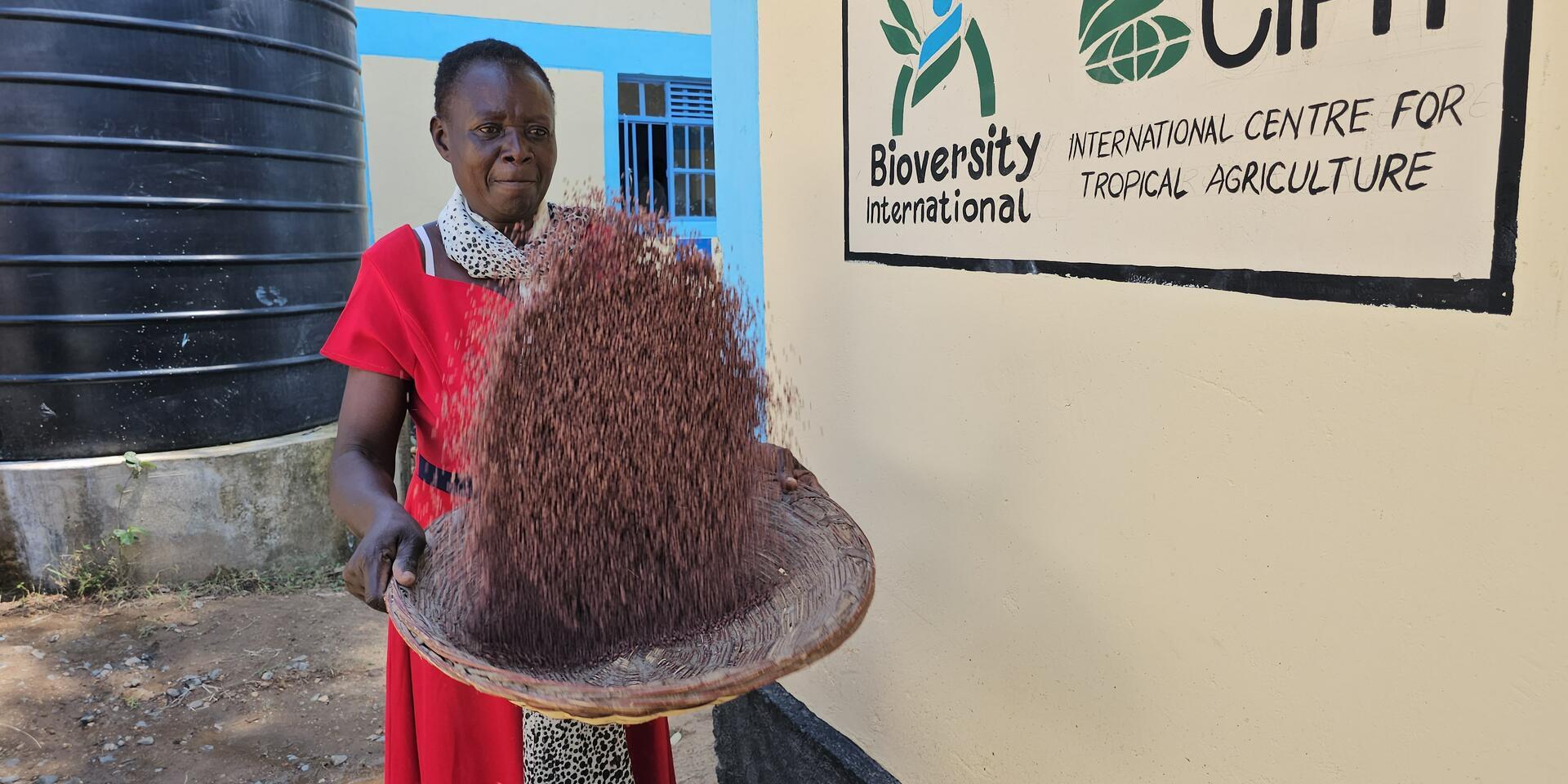

This blog highlights interventions taken by the Alliance and other partners in improving sustainability of community seed banks that the Alliance of Bioversity International and CIAT has established in the last five years in Western Kenya.
Community seed banks (CSBs) play a crucial role in conserving agricultural biodiversity, particularly in Africa where traditional seed varieties are at risk of being lost. CSBs have become pivotal in providing access to seeds for many smallholder farmers. They ensure that farmers have easy and affordable access to seeds that are well-adapted to local environmental conditions and cultural practices. This local availability enhances food and nutrition security and promotes agrobiodiversity.
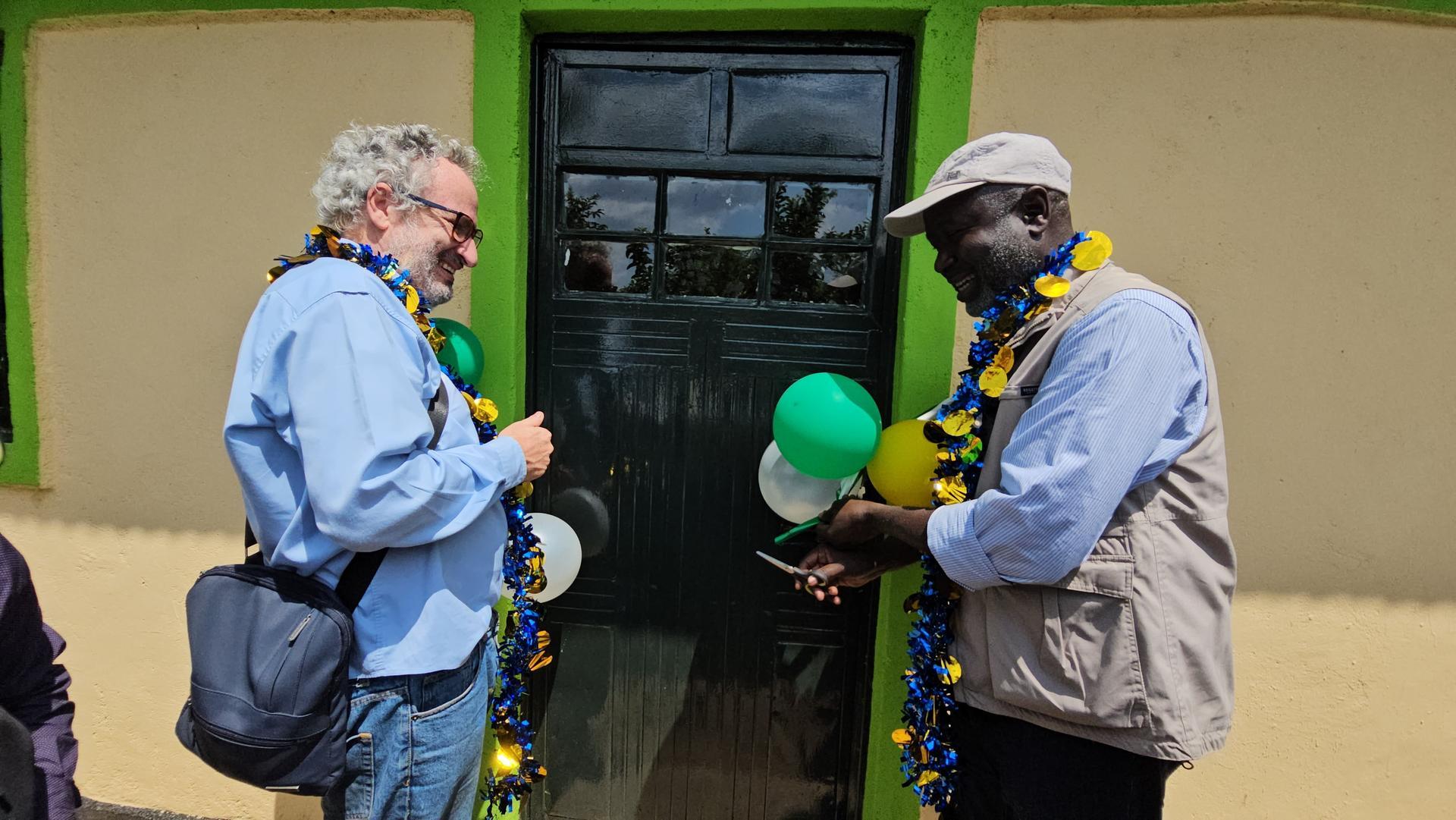
Dr. Carlo Fadda (left) and Dr. Abdoul Aziz during official opening of a processing unit in Vihiga. Credit: Rachel Kibui
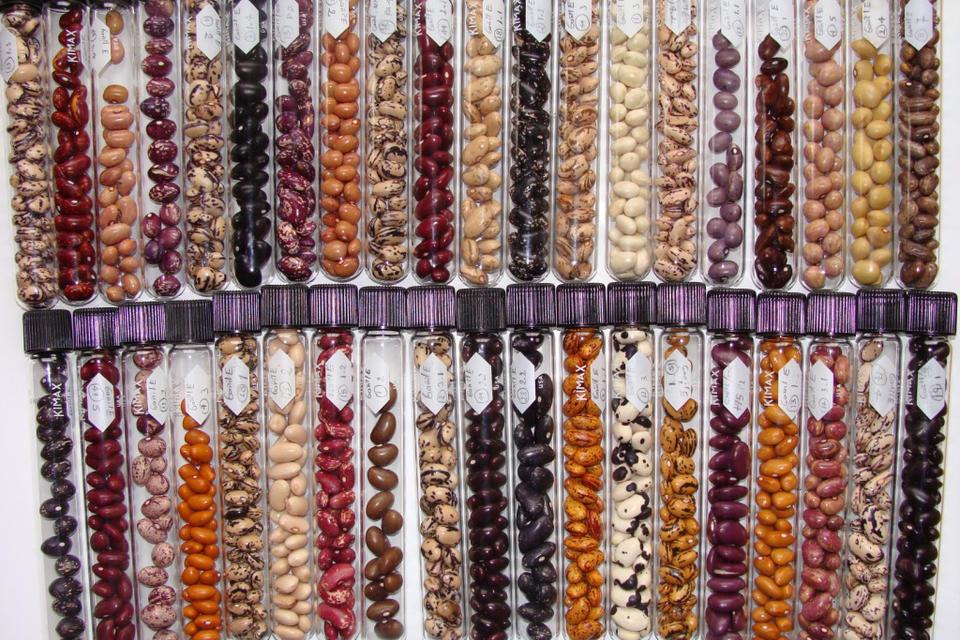
In the past five years, the Alliance has collaborated with international and national partners (including the International Treaty for Plant Genetic resources for Food and Agriculture), established three new community seed banks in western Kenya. The Nyando CSB, located in Kisumu county, was established in 2018; Vihiga Nutrition and Community seed bank was established in 2020; and Kabudi – Agoro Women’s seed bank was established in 2021. Together, they have served over 10,000 smallholder farmers in the region with over 88 genotypes of bean, cassava, cow pea, finger millet, green gram, groundnut, maize, pigeon pea, sorghum, sweet potato and traditional leafy vegetables.
Despite this remarkable result, the CSBs still face numerous challenges that hinder their sustainability. They have struggled to develop viable business models that enable them to generate income while fulfilling their conservation goals. They often operate with limited financial resources, which can impede their ability to invest in infrastructure, equipment, and necessary training programs for sustainable operations. They rely heavily on external funding, which may not be stable or sufficient to cover ongoing operational costs. They also lack access to modern seed processing and storage technology, which has negatively impacted seed quality. Insufficient infrastructure, such as inadequate storage facilities, has led to seed deterioration and loss, compromising the viability of stored genetic resources.
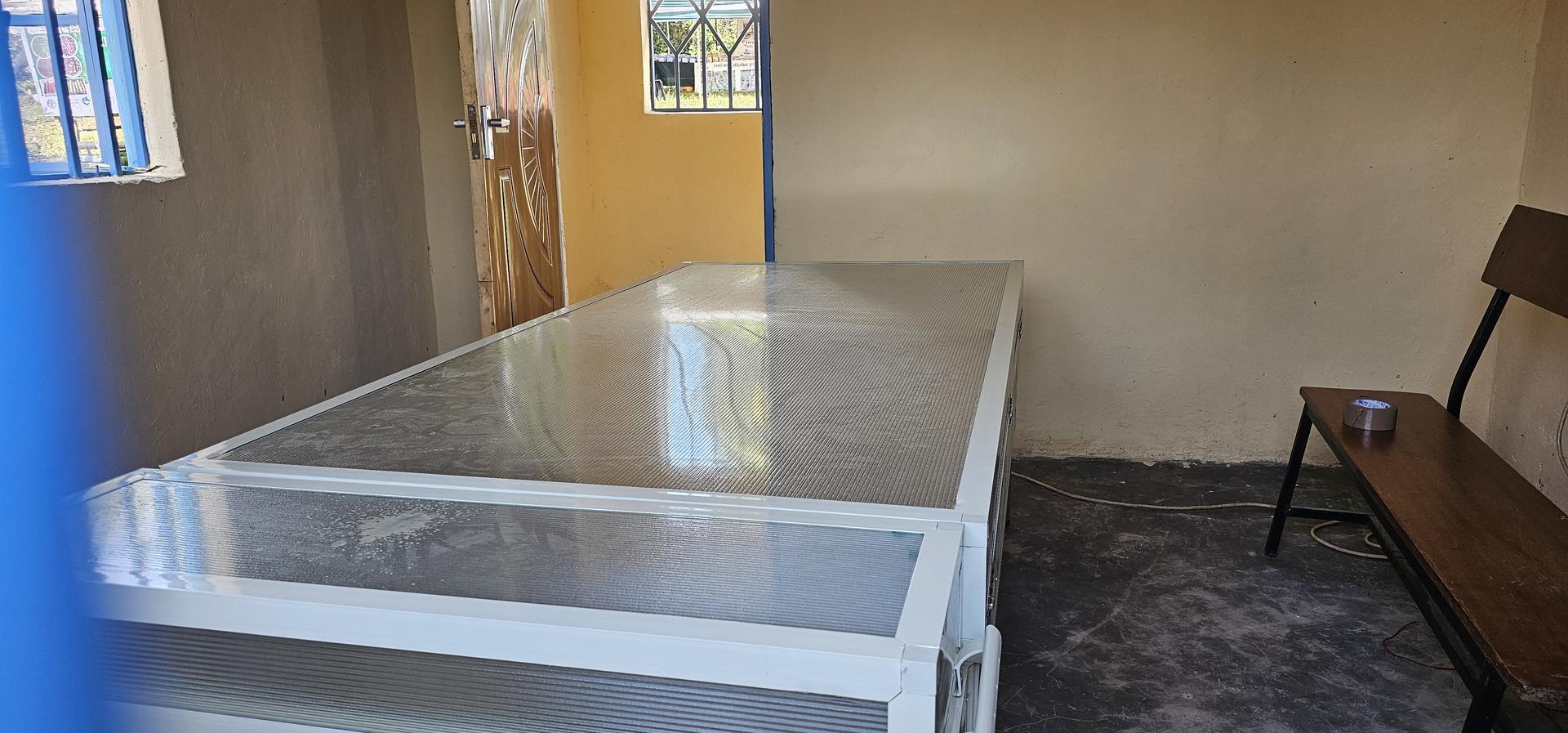
A solar drier was among the equipment handed over. It can be used to dry seeds, vegetables, grains, cassava among other produce. Credit: Rachel Kibui
Upgrading seed banks with equipment to promote value addition
For the community seed banks to thrive and sustain their operations, it is essential to incorporate value addition strategies that enhance their economic viability and community impact. To make this happen, the Alliance of Bioversity International and CIAT - in collaboration with the International Center for Agriculture in the Dry Areas (ICARDA), under the CGIAR’s Nature Positive Initiative and with co-funding from the Netherlands Ministry of Agriculture, Fisheries, Food Security and Nature, and the International Treaty for Plant Genetic Resources for Food and Agriculture - has supported three community seed banks in western Kenya in three crucial areas:
- The construction of a processing unit for value addition of seed and grain;
- The acquisition of value adding equipment, including a thresher, seed cleaner, solar dryer and roller mill;
- Training and capacity development on various aspects of seed cleaning, seed processing and seed storage;
- Training and capacity development on value addition, currently going on at the Kenya Industrial Development and Research Institute in Kisumu.
The launch of the processing facilities took place on 9-11 September 2024, where the communities were handed the brand-new processing facilities and equipment. The event was graced by officials from Kenya Agricultural Research Organization (KALRO); ICARDA; and the Ministers of Agriculture from the county governments of Vihiga and Kisumu.
The launching was preceded by a two-day training on seed processing and storage conducted by Dr. Abdul Azziz Niane and Dr. Seid Kemal from ICARDA. Video Credit: Rachel Kibui
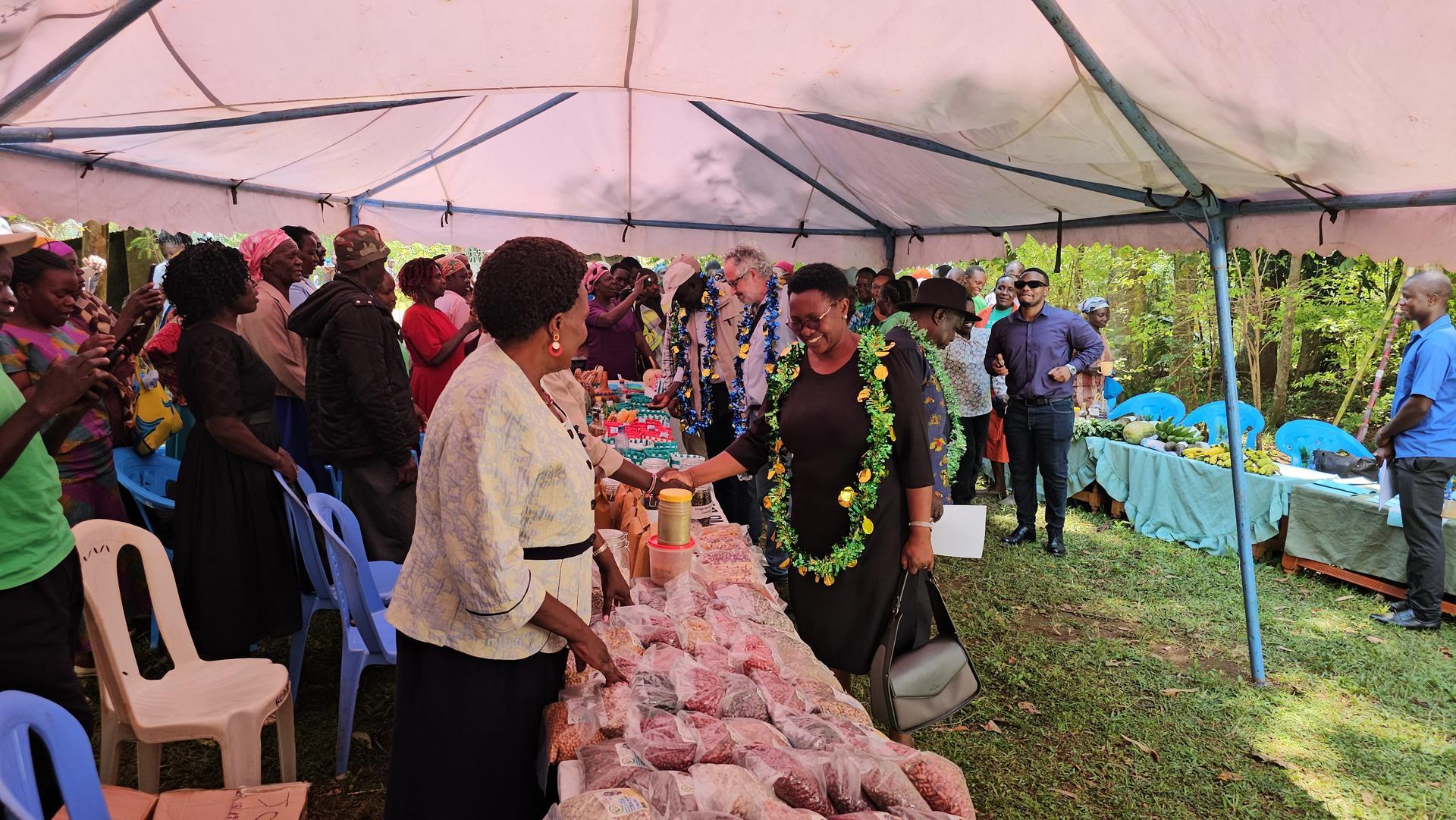
Farmers showcasing diversity during a mini seedfair. Credit: Rachel Kibui
Promoting value chains of CSBs and conservation through use
By empowering CSBs through value addition, we can ensure their long-term sustainability and promote food security in local communities. Value addition involves transforming raw agricultural products into more marketable forms, which can significantly increase their economic value. For community seed banks, this can mean not only preserving and distributing seeds but also enhancing the overall quality. Investing in seed cleaning machines, seed packaging facilities, and storage solutions can improve the quality of seeds and extend their shelf life.
The farmers are working towards production of value-added products such as composite flours from sorghum, finger millet, local yellow maize, amaranth, dried pumpkins and dried sweet potatoes. Another product is dried African leafy vegetables offering farmers multiple avenues for income generation.
In conclusion, empowering community seed banks through value addition is a vital strategy for ensuring their sustainability and enhancing local food security. By investing in value-added equipment, providing training, and fostering collaboration, we can enable these essential institutions to thrive. As they grow stronger, community seed banks will not only conserve agricultural diversity but also contribute significantly to the economic resilience of rural communities.
The Team
Carlo Fadda
Director, Agrobiodiversity
Ronnie Vernooy
Senior Scientist, Genetic Resources and Seed Policies
Gloria Otieno
Scientist II Abdoul Aziz Niane
Regional Coordinator APRP