Blog From global roadmaps to local action: What we learned from the FSDS Policy Lab

Food systems transformation cannot happen only at the national level. It needs to be translated into local realities‒where food is produced, sold, cooked, and consumed‒with the people and institutions who understand those realities best.
This was the starting point of the Food Systems Transformation Decision Supporting Policy Lab, held during ANH Academy on June 24, 2026. The Lab brought together 85 live participants, with 314 people registered from at least 63 countries, showing strong global interest in practical ways to move food systems work from national commitments to local implementation.
Why the local level matters
Food systems, its plates and diets look very different from one place to another. A mountainous province, a coastal municipality, a rural region, or a large city may face completely different challenges around production, markets, diets, climate, infrastructure, and governance.
These differences also shape what ends up on people's plates. The availability and affordability of nutritious foods, access to markets, and local food environments all influence people's ability to eat well. Understanding these conditions at the local level is essential for identifying solutions that can improve diets and nutrition.
That is why the Lab introduced the Food Systems Transformation Decision Supporting process, or FSDS, as a practical way to help local actors understand their food systems, identify priorities, and move toward action.
The process is not only about producing a report or a profile. It is about creating spaces where people who do not usually work together can sit around the same table, look at evidence, discuss what is happening in their territory, and agree on what needs to change.
As Osana Bonilla-Findji, scientist at the Alliance, summarized during the closing: “Food systems transformation that does not engage the subnational level as a primary site of governance, design and implementation is unlikely to achieve any durable and equitable outcome”

Osana Bonilla-Findji
Senior Scientist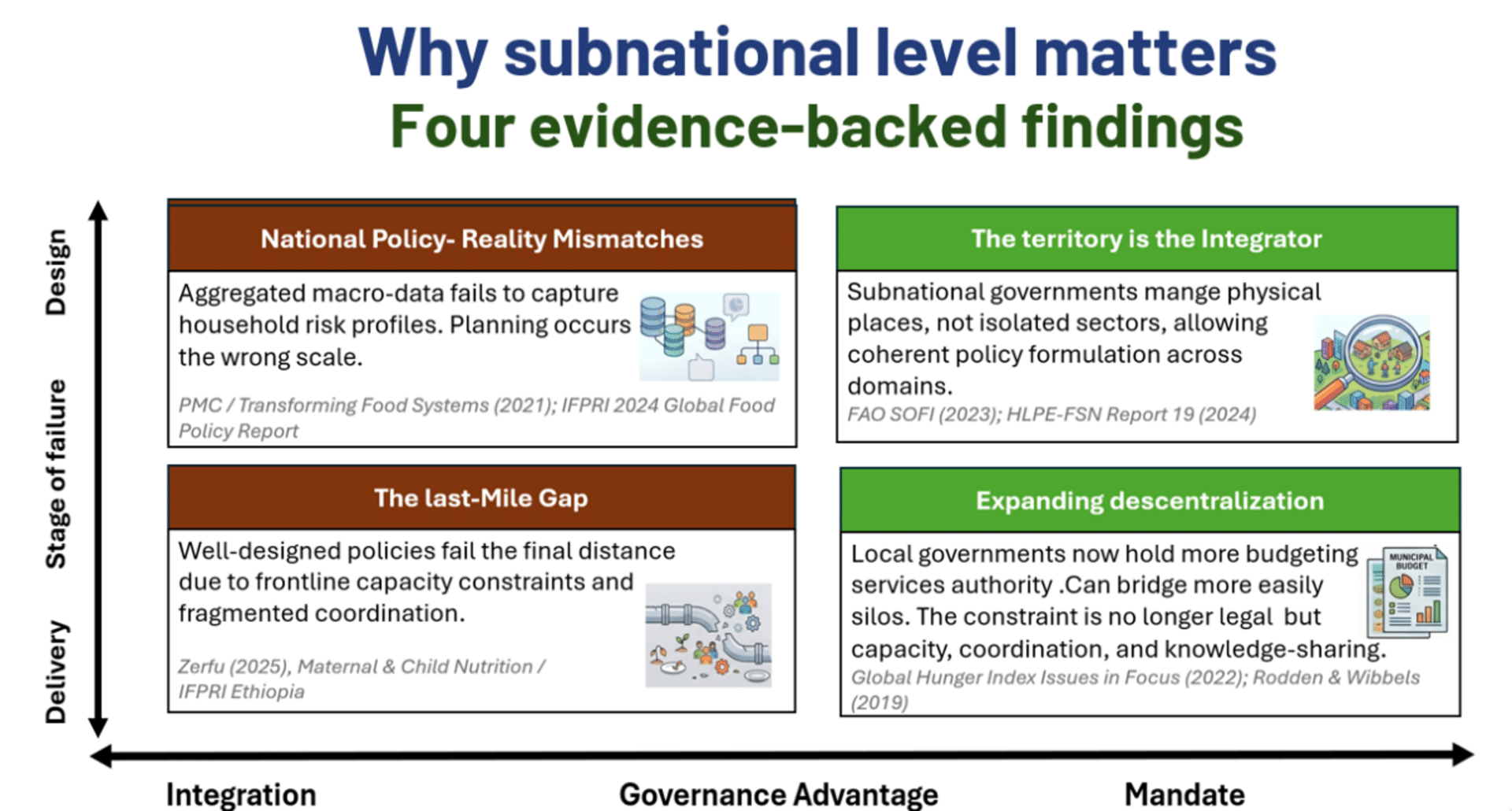
What the Lab looked like
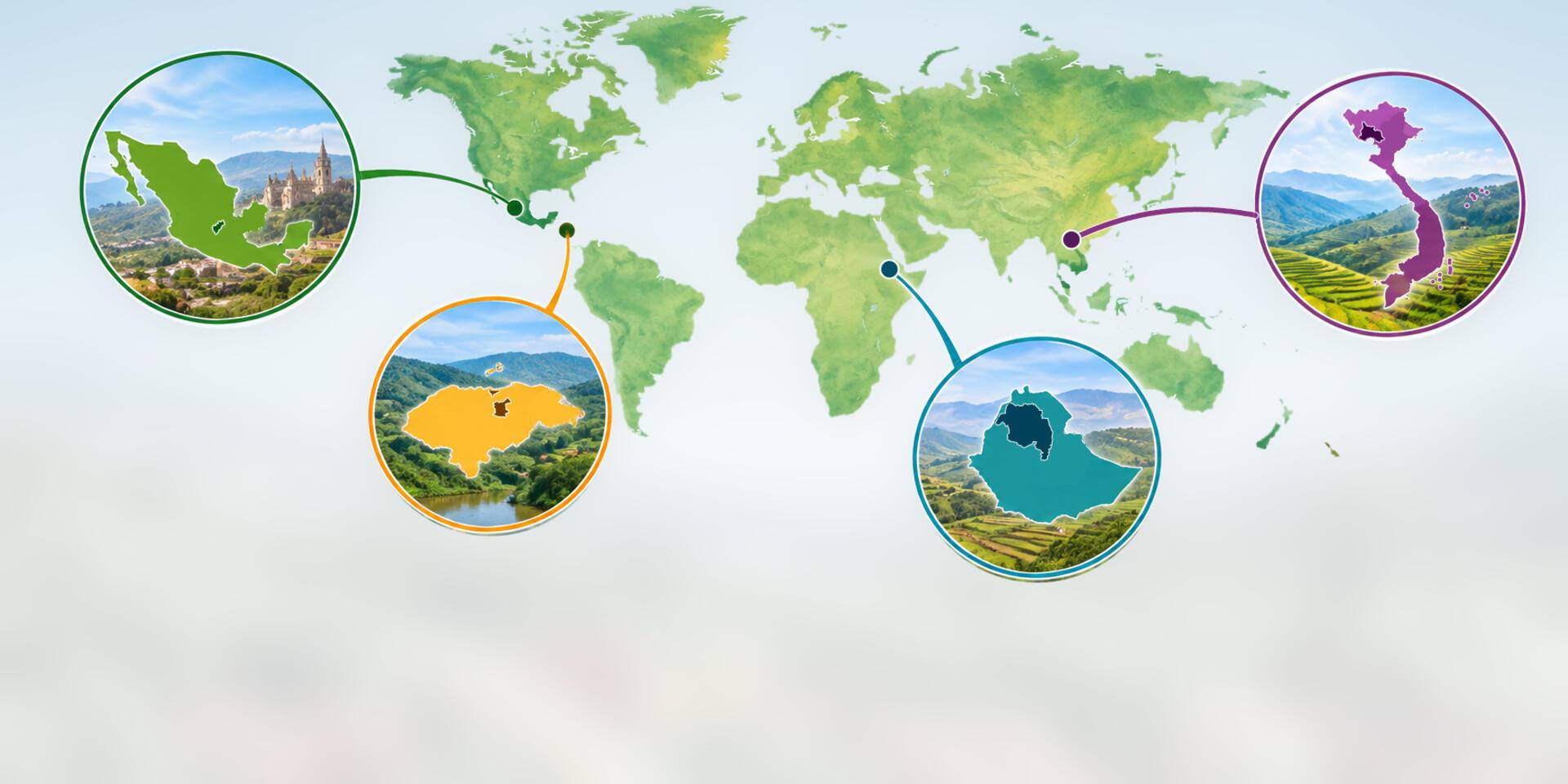
The two-hour virtual Lab combined short presentations, country examples, partner reflections, breakout discussions, and final takeaways. Participants heard from teams working in Vietnam, Ethiopia, Honduras, and Mexico, each showing a different way of adapting the FSDS process to local contexts.
The session also included interactive exercises where participants were exposed to some of the steps involved in the FSDS process to discuss and collectively prioritize food system challenges and indicators. Some groups talked about food security, food supply, undernutrition, school feeding, food loss and waste, safe water, dietary diversity, women’s participation, and food safety.
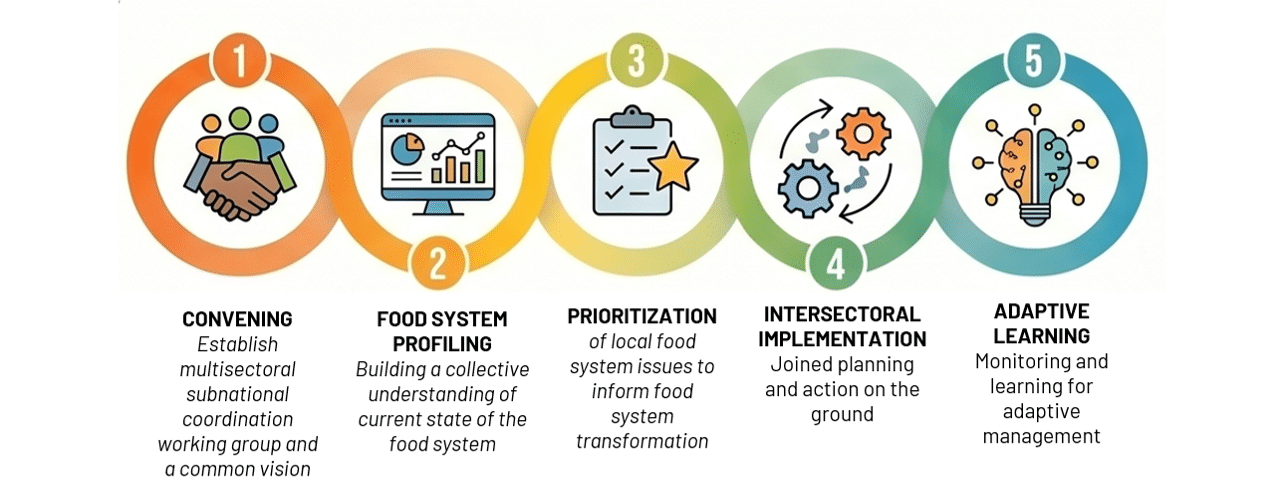
The point was not to finish a perfect exercise. It was to experience how difficult, and useful, it can be to agree on priorities when different actors bring different perspectives.
As part of CGIAR’s Better Diets and Nutrition (BDN) Science Program, the Lab also explored how local food systems transformation can contribute to healthier, more diverse, affordable, and sustainable diets. After all, improving nutrition requires looking beyond what people eat to understand the conditions that shape their food choices, from production and markets to food environments and local policies.
Vietnam: connecting national plans with provincial action
The Vietnam case focused on Son La Province, a mountainous territory with a high ethnic minority population and diverse agri-food products such as coffee, tea, fruits, and livestock.
Vietnam showed how the FSDS process can move from coordination to concrete planning. A provincial working group was established with representatives from eight provincial departments and agencies; more than 90 participants were trained, and more than 45 projects and programs were mapped with national plan tasks. This process contributed to the approval of a Provincial Implementation Plan in July 2025, outlining context-specific goals and tasks and establishing foundations for further coordinated actions.
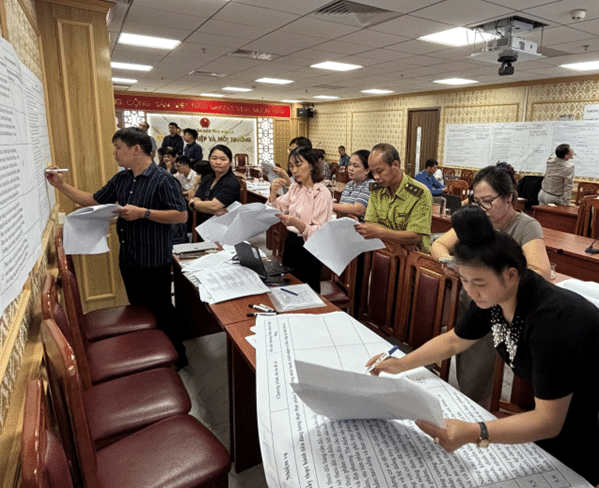
Provincial Implementation Plan in July 2025, outlining context-specific goals and tasks and establishing foundations for further coordinated actions.
For Dr. Dao The Anh, National Food System Convenor for Vietnam, the key message was clear: “The national action plan exists, but if you don’t have action… the national food system cannot be transformed.”
Vietnam’s experience showed that local action needs both political anchoring and participation. It is not enough to have local initiatives, and it is not enough to have national plans. The two need to connect.
To explore the food system profiles and related materials developed in Son La Providence, click here. Also available a learning note about the FSDS process in Son La, click here.
Ethiopia: making data useful for regional planning
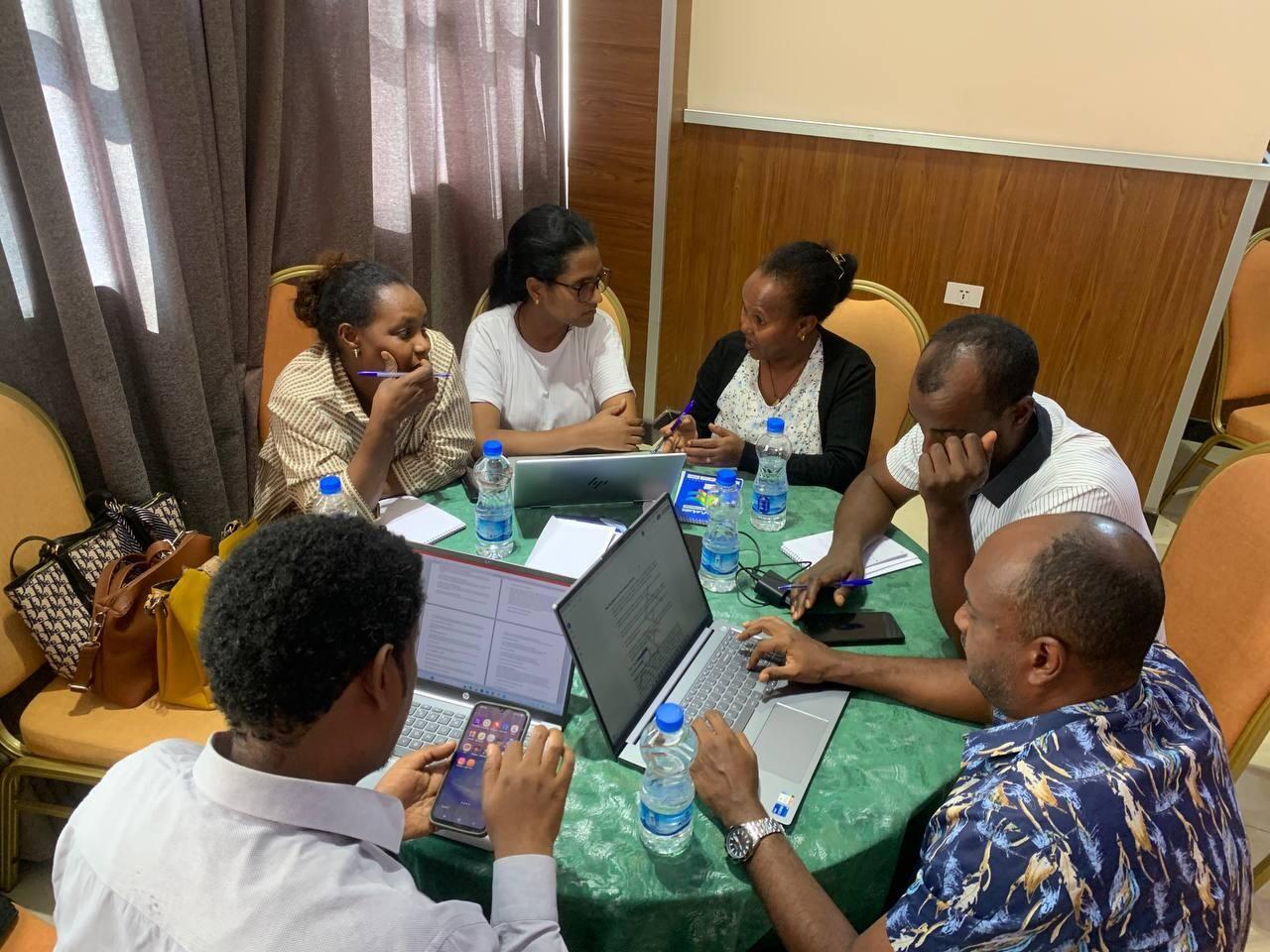
The Ethiopia case focused on Amhara Region, a territory with highland and lowland agroecological zones, mixed crop-livestock systems, nutrition challenges, and fragmented market access.
The team developed a regional food systems profile and a guideline for developing similar profiles in other Ethiopian regions. The process included desk review, consultations, workshops, data validation, and approval by stakeholders and authorities.
One of the strongest messages from Ethiopia was about data. Dr. Endale Amare, from the Ethiopia Public Health Institute, noted that “getting high-quality data was a serious challenge.” He also highlighted a lesson that applies far beyond Ethiopia: “If we don’t document, we cannot monitor, we cannot evaluate.”
The Ethiopia case showed that food system profiling can do more than organize existing information. It can also reveal what is missing, where documentation is weak, and what needs to improve so that regions can track progress over time.
To learn more about the Amhara food system profile and the subnational profiling guideline developed in Amhara, click here.
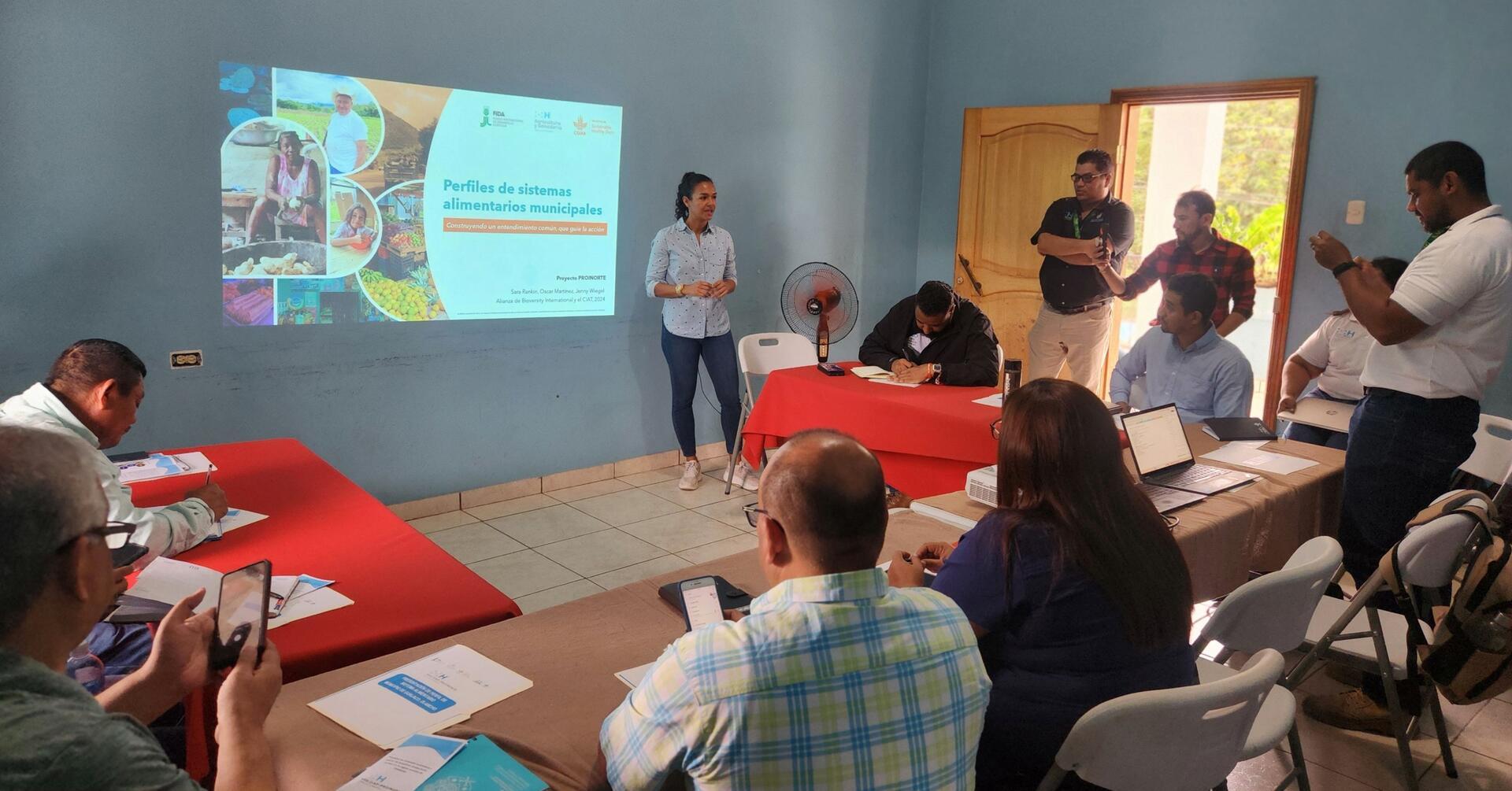
Honduras: building a common language at municipal level
In Honduras, the process was adapted to the municipal scale through a regional value chain strengthening project led by the Secretariat of Agriculture, with technical support from the Alliance of Bioversity International and CIAT.
The first pilots were developed in Gualaco and Balfate, two municipalities with very different rural, coastal, climate, livelihood, and market realities. The process combined available data with the knowledge of producers, health workers, local authorities, teachers, community leaders, and other actors.
The result was not only two municipal food systems profiles. The process created a space for people who do not normally work together to validate information, correct gaps, discuss how the local food system has changed, and identify priorities for action. These first two profiles later guided the development of 20 additional municipal profiles, reaching 22 profiles across Honduras.
The Honduran experience was also supported by a specific methodology for building municipal food system profiles, developed by Sara Rankin, Jenny Wiegel, and Oscar Martínez. The methodology provides a clear, transparent, and reproducible protocol to adapt national food system profiling approaches to the municipal level, combining existing secondary data with information from local actors. It emphasizes that profiles are not only data products: they are built with public and private food system stakeholders, who help identify information, validate findings, interpret results, and use them to inform local decisions and action.
Mr. Carlos Rodríguez, from the Food and Nutrition Security Technical Unit of the Secretariat of Agriculture, explained why the government became involved: “Our country has a big lack of information in food security and food systems.”
He also described the first profile presentation in Gualaco as an important moment because farmers, milk producers, food sellers, health staff, teachers, and local government officials all showed up. For him, this was a sign that “we started something good.”
To access the municipal food system profiles developed in Honduras, click here: Gualaco, Balfate.
Mexico: adapting the method for Querétaro context
The Mexico reflection showed that this type of process is useful even in places where more official data are available.
Dr. Nidya Velasco Roldán, from the Tecnológico de Monterrey, explained that her team was drawn to the methodology because of its participatory approach, its use of both quantitative and qualitative information, and its focus on local realities. The team is adapting the method in Morelos, El Limón in Jalisco, and Amealco in Querétaro.
Her reflection added an important point: data alone is not enough. Even when data exists, communities and local actors need to be heard. Their experiences help explain what numbers cannot show.
What participants took away
By the end of the Lab, one message stood out across all cases: food system profiles are useful, but the process of building them may be even more valuable.
The Lab’s final takeaways emphasized that the FSDS process is sequential, that each step builds on the previous one, and that isolated activities are not enough. Multi-stakeholder engagement helps break institutional silos; capacity building must come before implementation; local context shapes priorities; and mapping existing resources can reveal funding gaps and support investment planning.
The discussions also highlighted why nutrition needs to be part of food systems planning from the start. Issues such as dietary diversity, food safety, school feeding, and access to nutritious foods cannot be addressed by the health sector alone. They require coordinated action across agriculture, markets, education, health, and local government.
In simpler terms: transformation takes more than a good plan. It takes people learning to see the system together.
A final reflection
The experiences from Vietnam, Ethiopia, Honduras, and Mexico showed that there is no single path to transforming food systems. Each territory has different challenges, resources, institutions, and priorities. But they also showed something in common: meaningful change starts when people come together, understand their food systems, and use evidence to identify where action is most needed.
And ultimately, food systems transformation should also be about improving what ends up on people's plates. Can families access and afford diverse, nutritious, and safe foods? Are local markets and food environments supporting healthier choices? Are policies helping make healthy diets more accessible, equitable, and sustainable?
These are the kinds of questions that CGIAR's Better Diets and Nutrition program seeks to address. By connecting evidence, local knowledge, and collective action, the FSDS approach can help ensure that food systems transformation is not only about better planning and governance, but also about creating the conditions for better diets, improved nutrition, and healthier lives.
The lab is recorded and is freely available here:
Team
Ramya Ambikapathi
Scientist II
Jenny Wiegel
Americas Lead, Food Environment and Consumer Behavior
Sara Rankin-Cortázar
Senior Research Associate
Ermias Tesfaye Teferi
Postdoctoral Fellow
Quoc Nguyen
Senior Research Associate
Tuyen Huynh
Team Lead, Food Environment and Consumer Behavior, AsiaAre you interested in doing this in your country, province/state, or city?
Get in touch with us:
LAC Team
Ramya Ambikapathi: [email protected]
Jenny Wiegel: [email protected]
Sara Rankin: [email protected]
Ethiopia team:
Ermias Tesfaye: [email protected]
Vietnam team:
Quoc Minh Nguyen: [email protected]
Tuyen Huynh: [email protected]

We would like to thank all funders who supported this research through their contributions to the CGIAR Trust Fund.