
Research Articles Forests and food security in the Amazon: What a new study compels us to examine more closely
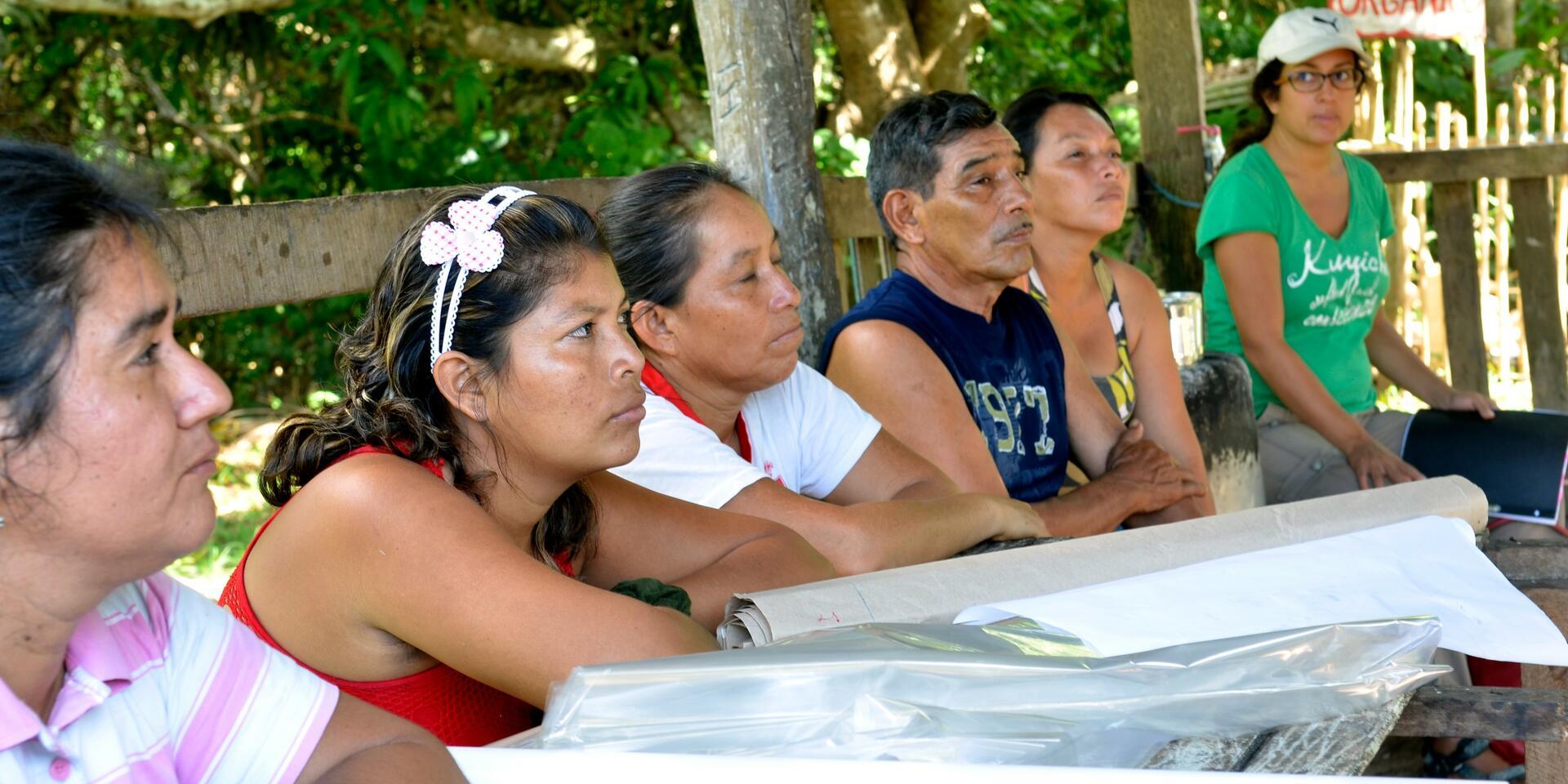

In the Amazon, the word "food" almost never refers only to food. Sometimes it's a fish that arrives when the river rises and overflows. Sometimes it's a cassava that is saved from flooding. Sometimes it's a bunch of plantain that holds out for a few more weeks, or a long walk to find what the bush still offers. And, increasingly, “food” is also a price: what rice costs at the store, how much oil goes for when transport is delayed, what can be bought when cash falls short.
That mix – forest, river, chagra, and market – is difficult to capture in a single figure. This is why, when we talk about food security, simply saying there “is” or “is not” enough falls short. Food security has multiple dimensions: the availability of food, the ability to access it, its nutritional utilization, and the stability of all these factors over time, even as seasons shift. This is what makes measuring it so complex – and so urgent.
A study led by Alliance researchers and published in Food Security addresses that complexity with a question as simple as it is pressing: does living closer to the forest make a household more secure in the face of food uncertainty? The team's short answer is "yes, but not always in the same way." The full answer is more interesting: the effect depends on the quality of the forest, the food culture, and whether it is rainy or dry season. And they say so with data from Indigenous and mestizo households in two places where the forest still sets the pace of life: La Pedrera (Amazonas, Colombia) and Ucayali (Peru).
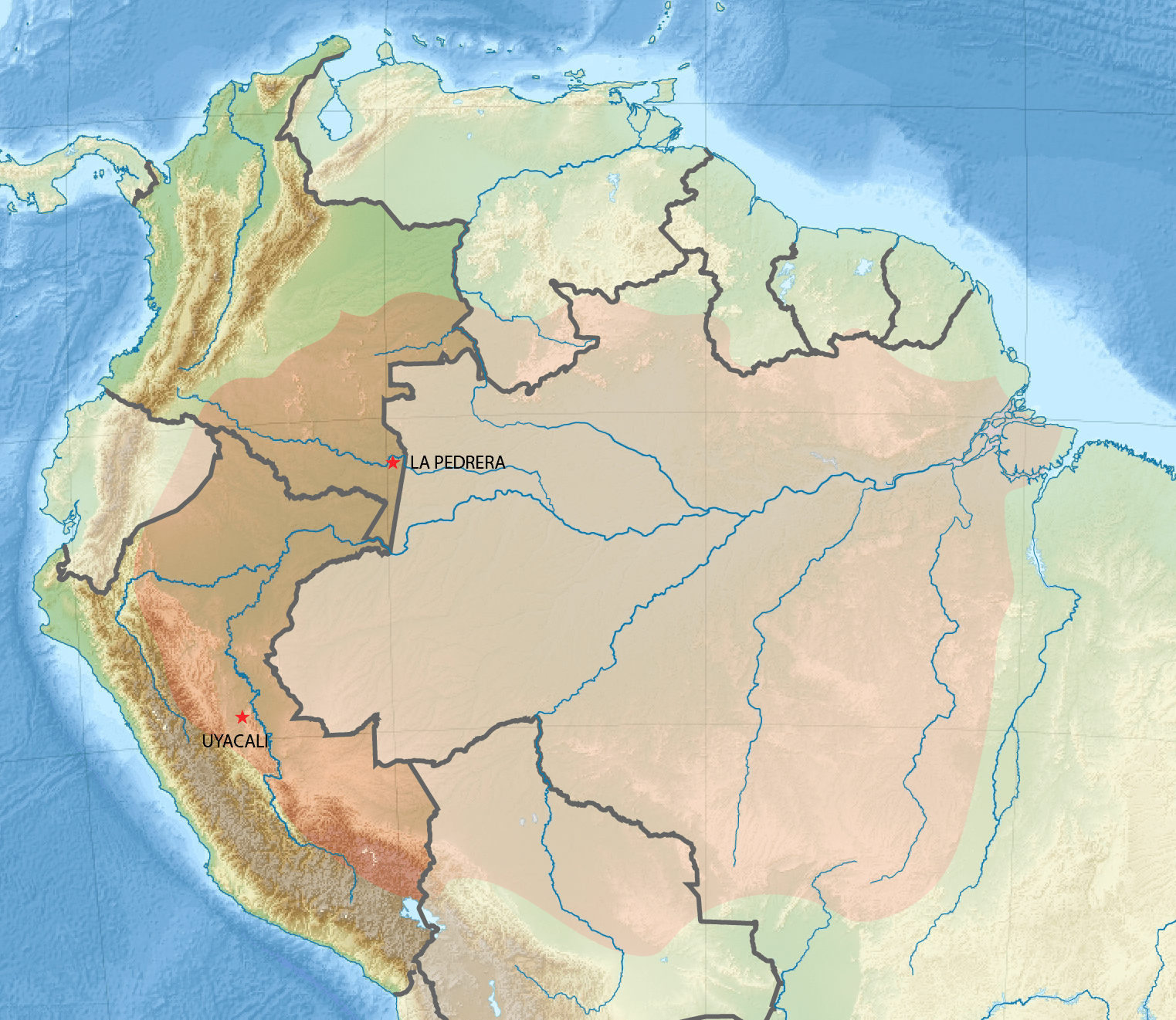
Location of the two study areas in Colombia and Peru. In red shading, the Amazon biome. Source: Wikimedia Commons
The story of this research could begin with a map (and indeed it does), but at its core, it begins with something more everyday: time. The time it takes to get to the forest, come back with something useful, process it, cook it. The time that stretches when it rains and the roads turn muddy, or when the river's current forces a detour. That time, which for the families is part of life, for the research became a key piece: a way of approaching "access to the forest" without confusing it with other things, such as household wealth or previous decisions about where to live. In technical terms, the study uses average travel time to the forest as a statistical strategy to better isolate the effect of the forest on food security; in human terms, it uses time as a real boundary between having and not having.
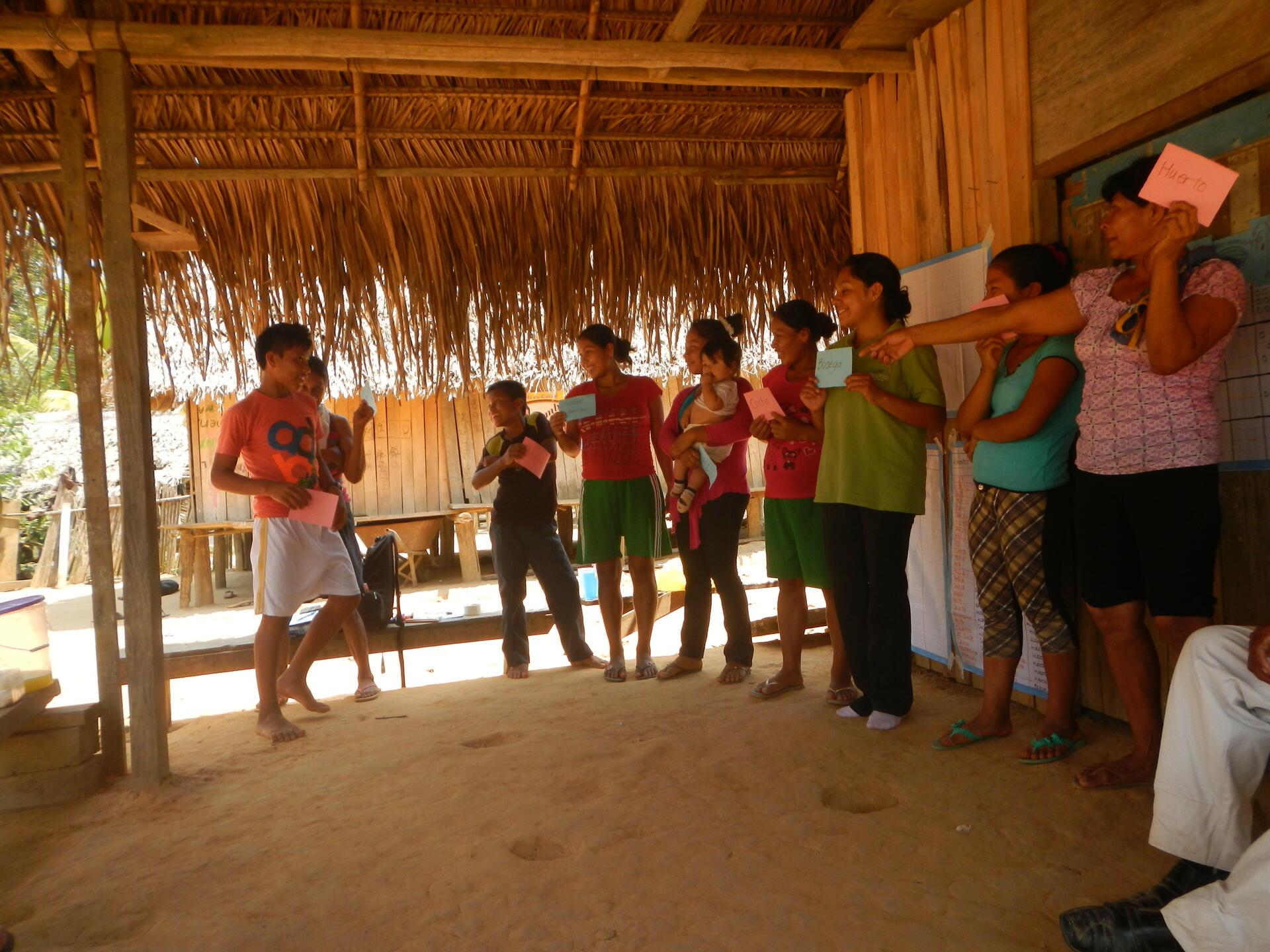
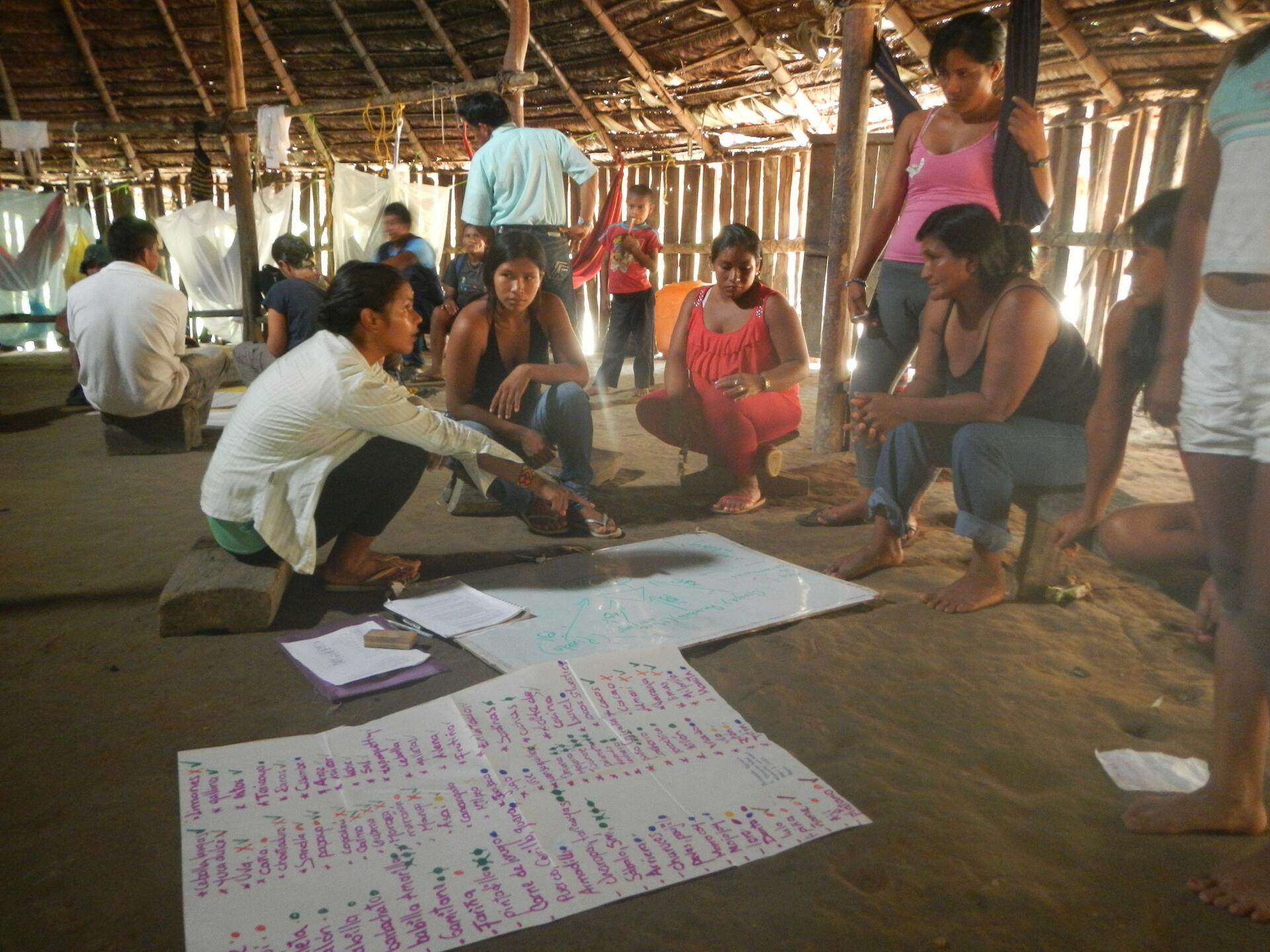
The team was not satisfied with just one picture of the problem. It measured twice, in two seasons, because the Amazon changes. Using household surveys in both the dry and rainy seasons, the team constructed an index with four dimensions of food security: availability, access, utilization, and stability. In La Pedrera, the work covered a huge fraction of the territory: about 60–70% of the estimated households. In Ucayali, the study covered nine communities, combining three Shipibo-Conibo Indigenous communities and six mestizo communities, enough to see patterns as well as differences.
So far it might sound like "just another study" on forest and well-being. But what makes it novel is the way it confronts three problems typical of such questions. First, seasonality: many analyses rely on an annual or cross-sectional measurement that flattens reality. Second, endogeneity: if a household is better off, is it because it chose to live closer to the forest, or does proximity to the forest make it better off? Third, cultural and territorial heterogeneity: assuming that "the Amazon" is one thing is often the quickest shortcut to the wrong conclusions. This article seeks to avoid those shortcuts.
What the study finds is a story of contrasts: In La Pedrera, where forest is still dominant and degradation is less, Indigenous households living near less degraded forest show greater food security. It is not a romanticism of the "provider forest", it is a concrete combination: traditional practices that are still in force, biodiversity that sustains a wide basket of food, and a relationship with the territory in which the forest is not only a green background but a living pantry, a learning space, and a support system. There, being close to the forest does seem to function as food "insurance", especially when access to the market is limited.
In Ucayali, the plot changes. Proximity to the forest helps less, and also does so unequally. In mestizo communities, more integrated into the market, diet and access to food depend to a greater extent on purchases, transportation, and prices. This does not mean that the forest does not matter: it means that it competes with other factors that weigh more heavily on a day-to-day basis. Among the Shipibo-Conibo, the forest and the river continue to support an important part of the diet and food diversity, but even so, the effect does not mirror what is observed in La Pedrera. The study shows that it is not enough to say "more forest = better"; one must ask "what forest?", "for whom?", "in what season?", "in what local economy?"
And here appears one of the most useful findings of the article: the quality of the forest weighs as much as the distance. Being close to a degraded forest (with less diversity or less abundance) does not offer the same benefits. Put without technicalities: living next to a full library is not the same as living next to an empty library. Proximity alone does not guarantee food security; ecological integrity amplifies or reduces what the forest can provide.
Seasonality also reshapes the picture. In floods and rains, opportunities and risks change: fishing, gathering, mobility, and travel times all change. In dry season, other things change: access, availability, effort. The study confirms that the contribution of the forest to food security is not uniform between rains and drought, and this has a direct implication for public policies and programs: measuring only once can hide temporary vulnerabilities that, for families, are the most painful.
Why does all of this matter now? Because the regional context does not wait. The article itself recalls that Ucayali has experienced accelerated transformations due to deforestation, and mentions that, between 2001 and 2018, Peru lost about 2.2 million hectares of Amazonian forest, with Ucayali among the most affected areas, under pressures such as palm and cocoa expansion. When the forest is reduced or degraded, it is not only "nature" that is lost: a layer of food security is also eroded – one that, in many households, becomes most critical precisely when other sources fail.
The value of the study, then, is not just in demonstrating that the forest can improve food security. It is in showing that this improvement is not automatic, that it depends on concrete social and ecological conditions, and that this is why simplistic solutions often fail. Conserving forests without looking at food culture may prove insufficient. Improving access to markets without taking care of the ecological base may replace diversity with cheap and price-vulnerable calories. And planning without seasonality can design programs that arrive late or arrive when the window of opportunity has passed.
The work stems from the ASSETS project, funded by the Ecosystem Services for Poverty Alleviation (ESPA) research programme initiative in the United Kingdom, and brings something that is sometimes missing from the debates: evidence capable of dialoguing with real management decisions, connectivity, and intervention design. Even its way of measuring "access" to the forest speaks directly to what a land planner or a local authority understands: infrastructure, distances, accessibility, and natural barriers.
If one had to leave with a final image, it might not be a graph or a table, but rather that of an invisible balance: on one side, the forest as a direct source of food and stability; on the other, the market as a promise of variety and access... but also as exposure to risk. The balance is not the same in La Pedrera as in Ucayali, nor between Indigenous and mestizo households. That is the most human lesson of the study: food security is not an average; it is a situated experience.
This kind of evidence can be scaled up and help more communities if it becomes practical: monitor food security seasonally, incorporate forest quality (not just cover), design "pro-forest and pro-diet" programs that strengthen the local without isolating it from the market, and evaluate how roads, ports, and connectivity change diet, not just income. It is not about idealizing the forest or demonizing the market; it is about understanding, with precision and cultural respect, when one protects the other... and when it displaces it.
The team

Alexander Buritica
Postdoctoral Fellow
Martha Vanegas
Senior Research Associate
Andres David Espada
Research Associate
Mary Ngaiwi
Research Specialist
Debbie Pierce
Research Associate
Marcela Quintero
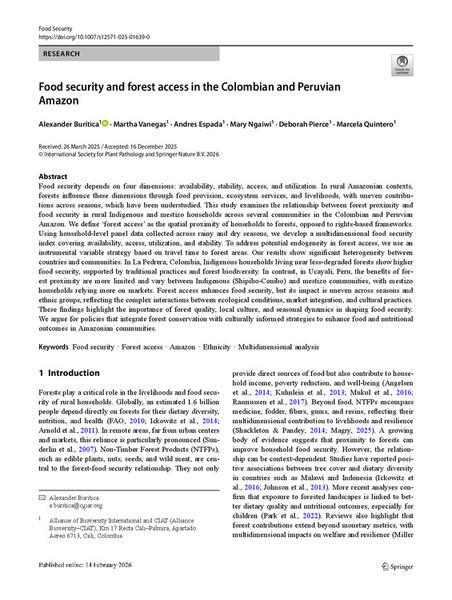
Associate Director General, Research Strategy, and InnovationRead the article in Springer Nature: Food security and forest access in the Colombian and Peruvian Amazon. Food Security, published February 14, 2026.
_(-mini_map).svg)