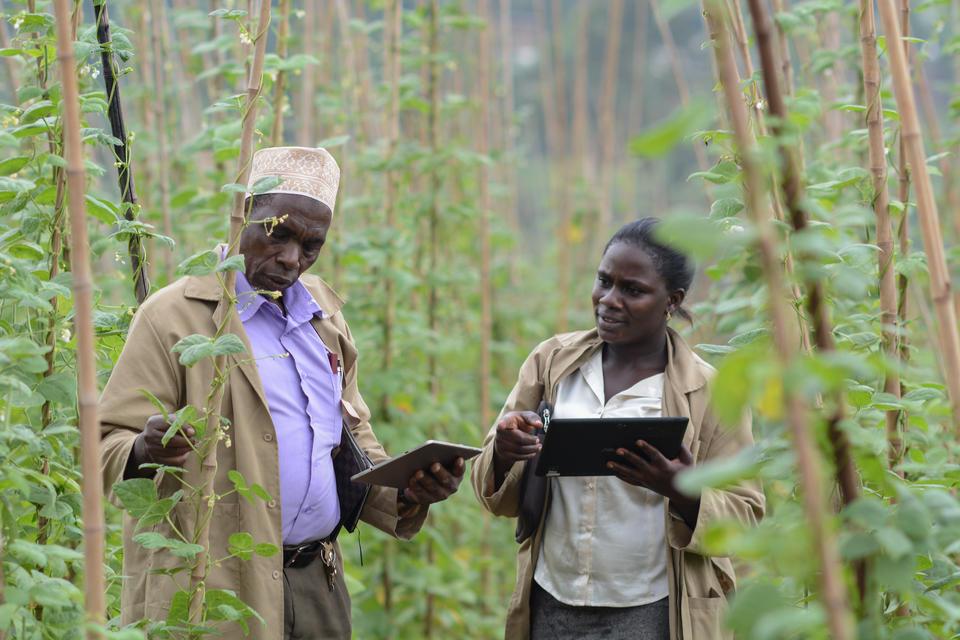
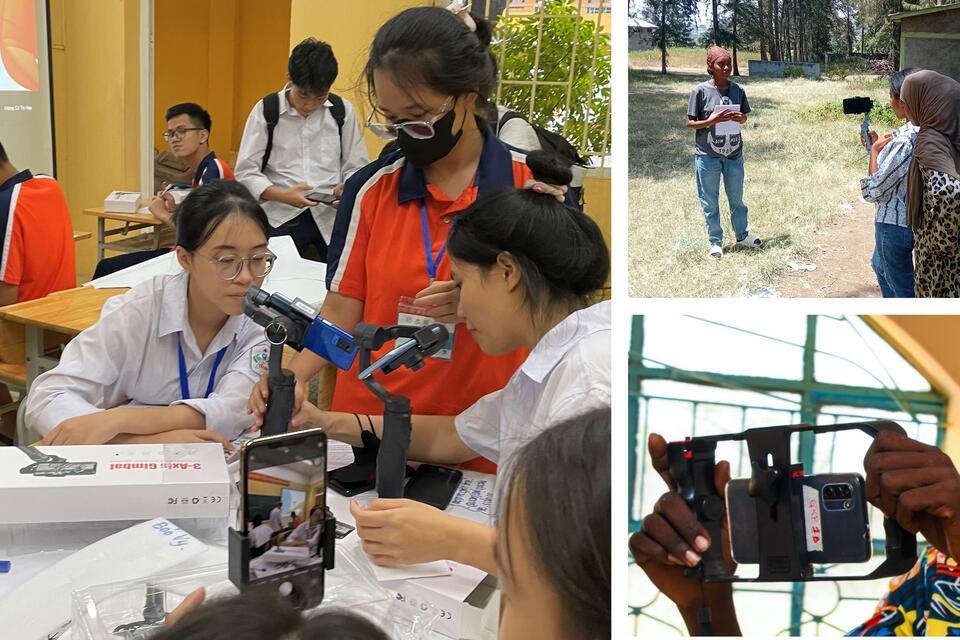
Blog Digital pathways to healthier diets: How Uganda’s agri-food MSMEs are reshaping food systems
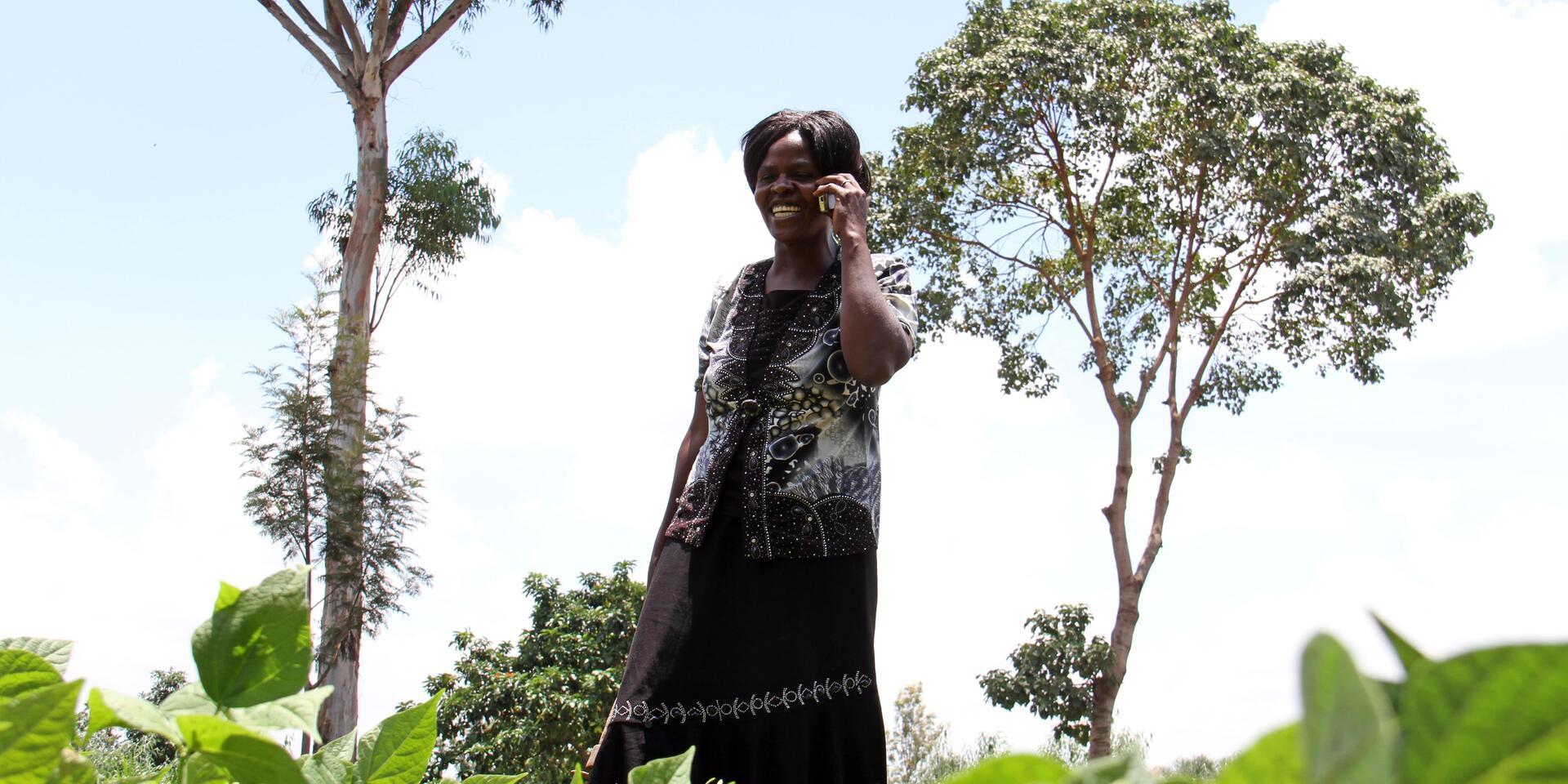

Micro, small, and medium enterprises (MSMEs) are emerging as powerful drivers of food systems transformation in Uganda. Through digital innovation, these enterprises are addressing persistent bottlenecks in agricultural value chains, making it easier for farmers to access quality inputs, receive expert advice, and deliver nutritious foods to markets efficiently. (see the EzyAgric example).
A 2022 scoping study by the Alliance of Bioversity International and CIAT, under the CGIAR Re-thinking Food Markets Initiative (work that is currently under the CGIAR Science Program on Better Diets and Nutrition), documented nearly 30 digital innovations led by MSMEs. These tools support a wide spectrum of agri-food functions from pre-planting to postharvest, with clear opportunities to improve the availability, accessibility and quality of foods to consumers.
Key messages:
- Tech That Feeds Better: Digital innovations help preserve and deliver nutritious foods like vegetables, legumes, fruits, and animal products, making healthy diets more accessible.
- When Women Thrive, Nutrition Wins: MSMEs with strong female participation empower women and improve household nutrition, recognizing women’s vital role in food systems.
- Not Just Digital—Nutritional: Uganda’s MSME-led digital solutions aren’t just improving efficiency—they’re building pathways to healthier, more resilient diets.
- Smart Tech, Smarter Nutrition: Investing in digital tools for MSMEs is more than economic growth—it’s sound nutrition policy for stronger, healthier communities.
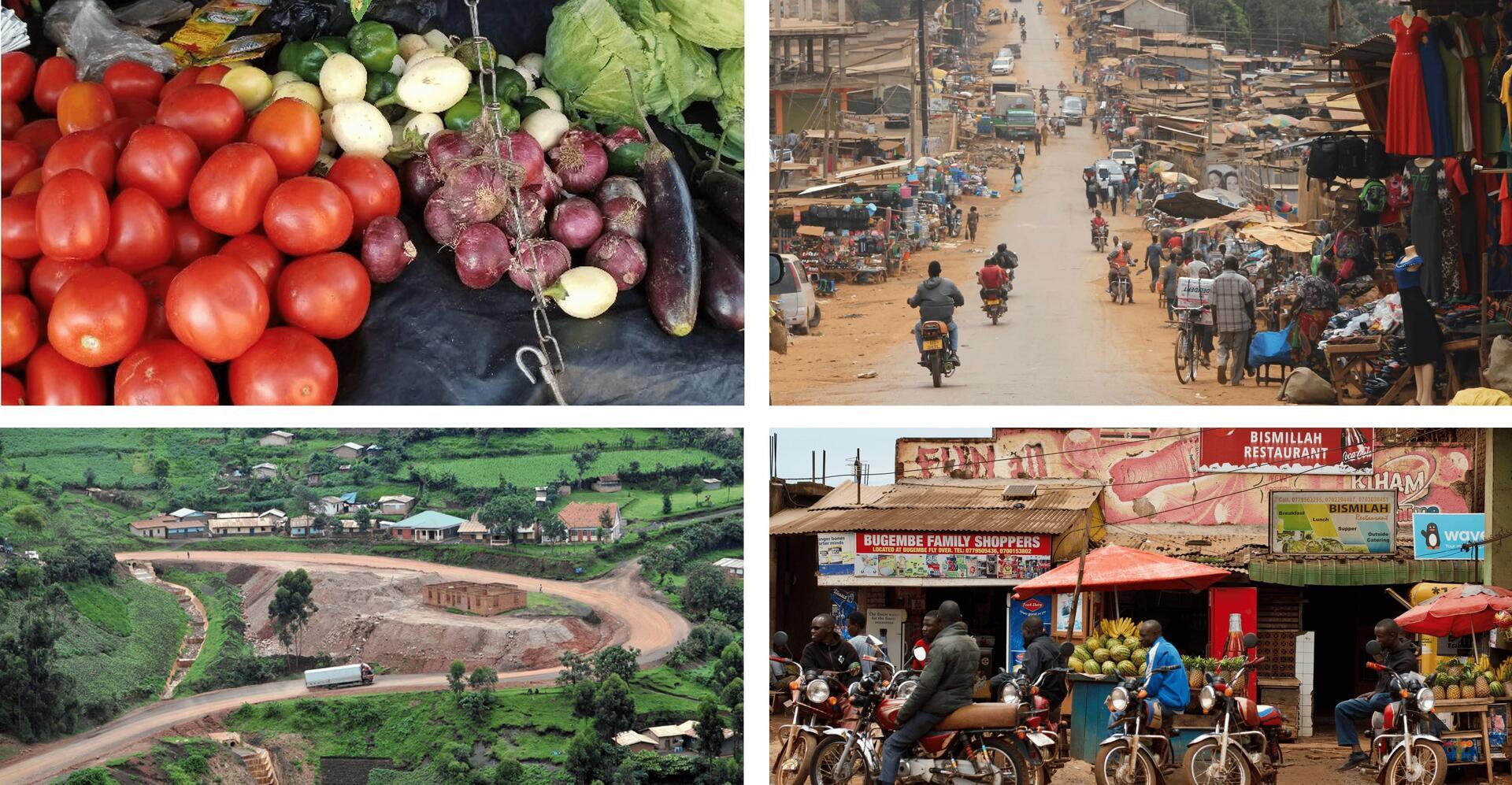
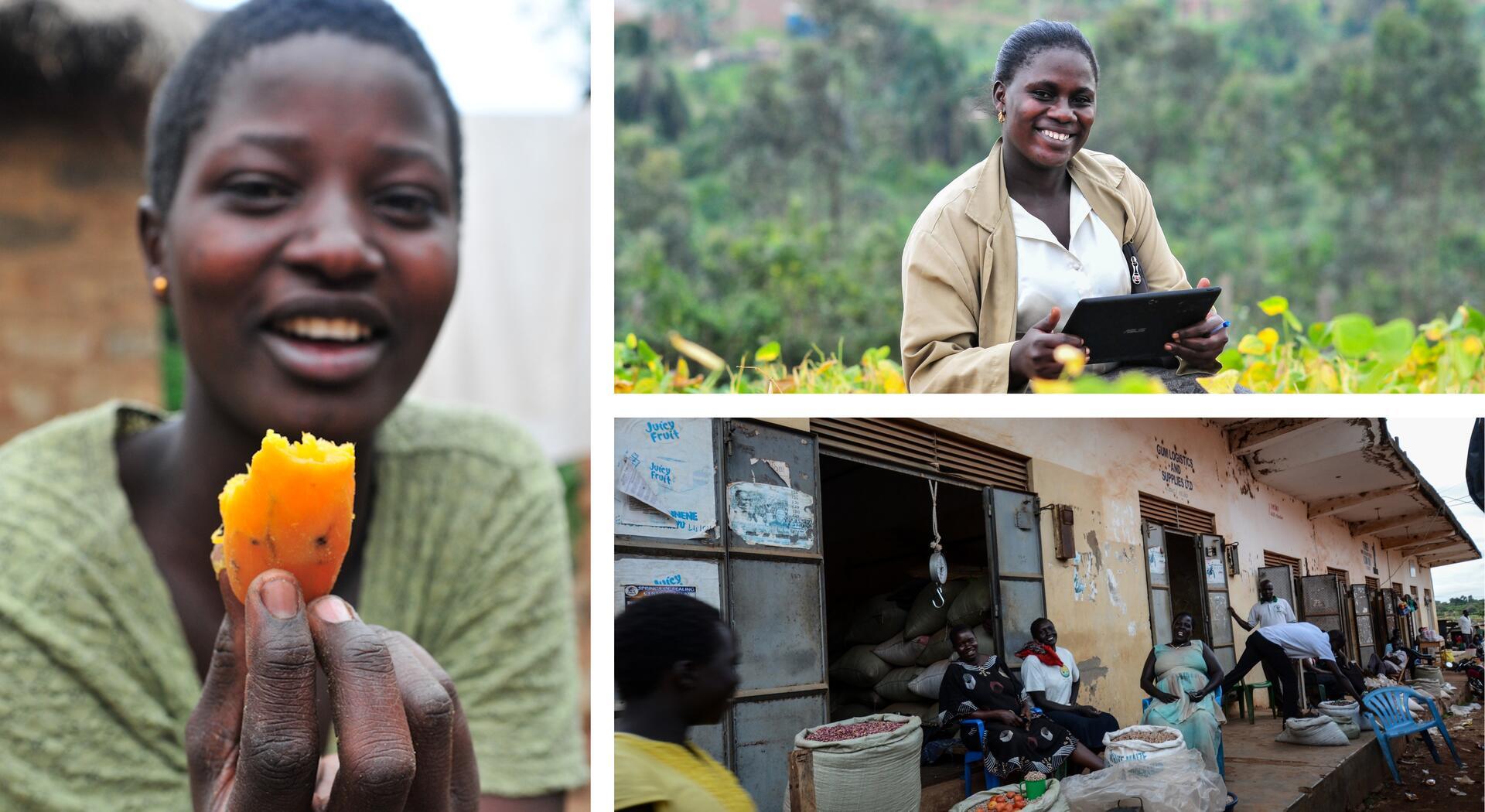
Photos: Top left: Bioversity International; Top right: Antoine Pluss/Unsplash; Bottom left: Neil Palmer/CIAT; Bottom right: Kayla Farmer/Unsplash.
Solving real problems, digitally
The scoping study identified various MSMEs in Uganda that are working at different points of the food system, contributing to improving access, availability, quality and affordability of nutritious foods:
- EzyAgric (Akorion Ltd) empowers farmers to purchase certified seeds and organic fertilizers, and receive mobile-based extension services, thus ensuring better yields and safer food.
- Agro Supply (U) Ltd uses a digital layaway model (via scratch cards) to help farmers gradually save for inputs. This promotes consistent supply of vegetables and legumes to consumers, which is key to dietary diversity.
- City Coolers operates mobile refrigeration units to reduce spoilage of perishable, nutrient-rich foods such as tomatoes, leafy greens and fish, preserving both value and nutritional quality.
- Hamwe East Africa coordinates commodity transport and commodity aggregation through a digital platform, reducing food loss and ensuring timely market access for fresh produce.
- M-Omulimisa delivers advisory services and input loans via SMS, enhancing both knowledge and affordability for farmers growing nutrient-dense crops.
These innovations directly contribute to healthier diets by ensuring that fruits, vegetables, legumes and animal-source foods - which are often the first to spoil - are preserved, aggregated and delivered more effectively to consumers.
Beyond technology: Inclusive nutrition gains
Many MSMEs operate in value chains with high female participation, such as legumes, leafy vegetables and poultry. Some enterprises are taking further steps to enhance equity, such as:
- Employing women in delivery and tech roles: For example, Hamwe East Africa Limited uses female digital agents to collect farm-level data using mobile apps. These agents play a key role in profiling farmers and enabling their access to value chain finance through digital farming statements.
- Collecting sex-disaggregated data: For example, EzyAgric collects sex-disaggregated farmer data as part of its digital profiling system, enabling more tailored service delivery and supporting gender-responsive programming.
- Partnering with women’s farming groups: For example, aXiom Zorn Foundation and Agro Supply (U) Limited engage with partners that promote gender inclusion, creating entry points to reach and strengthen women’s farming groups through collaborative community-based approaches.
These practices promote women’s empowerment, and since women are often primary caregivers and food preparers, this also leads to better household nutrition outcomes. Additionally, emerging services are exploring nutrition-sensitive tagging—using digital tools to label foods with information about iron content, vitamin sources, or suitability for infant and maternal diets.
Photos: Left: Neil Palmer/CIAT; Top & bottom right: Georgina Smith/CIAT.
The opportunity ahead
The MSME-driven digital ecosystem in Uganda is not just improving efficiency, it is creating new pathways to better diets. With the right investment and partnerships, these platforms can:
- Scale access to affordable, safe, and nutrient-rich foods,
- Enable nutrition-aware procurement in schools, health centers, and institutions, and
- Offer consumer-facing tools that encourage healthier food choices in markets.
This aligns directly with the CGIAR Better Diets and Nutrition (BDN) Program, which seeks to make healthy diets more available, affordable and desirable across food systems.
Conclusion: Empowering MSMEs with digital tools is not only smart economics, it’s smart nutrition policy.

We would like to thank all funders who supported this research through their contributions to the CGIAR Trust Fund.
The Team

Enoch Kikulwe
Senior Scientist
Eliud Abucheli Birachi
Project Leader, Country Representative for Rwanda
Christine Chege
Agri-Nutrition and Food Systems ScientistKeep exploring