Press and News Behind the climate assessment: Meet the Alliance scientists who are shaping the IPCC's latest report
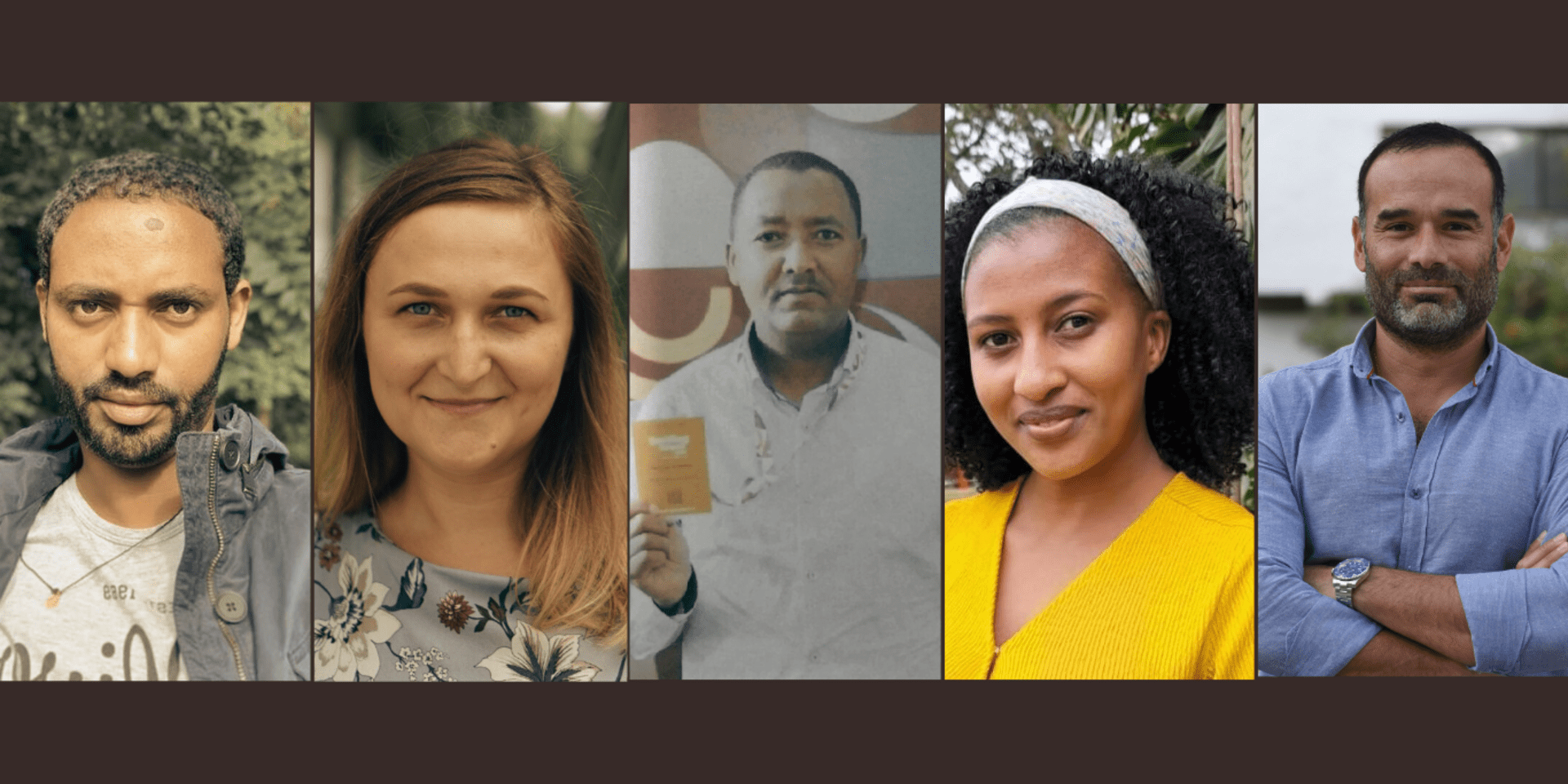

In a major recognition of their expertise, five scientists from the Alliance of Bioversity International and CIAT have been selected to co-write the Intergovernmental Panel on Climate Change’s (IPCC) Seventh Assessment Report: the world’s most influential guide on climate science and policy.
For scientists, joining the IPCC is a rare opportunity. Every few years, thousands of researchers are nominated, but only a select few are invited to serve as Lead Authors, responsible for distilling the latest scientific evidence from across the world into findings that can steer international policy. The reports shape everything from the Paris Agreement to national climate strategies, influencing how governments, banks and communities plan for an uncertain future.
This year’s AR7 cycle marks a milestone for the Alliance, as five of its scientists, representing expertise from Africa, Asia and Latin America, have been selected as Lead Authors. This significant achievement also reflects the Alliance’s reputation as a center of excellence in climate research, innovation and action. Their participation demonstrates how the Alliance connects local realities across the world with global scientific assessments and policy dialogues. By bringing field-based evidence on agriculture, food systems and land use into the IPCC process, these scientists ensure that the voices of the farmers, communities and ecosystems most vulnerable to climate change are represented at the highest levels of international decision-making.
Who they are
Dr. Mastawesha Misganaw Engdaw is a Postdoctoral Fellow at the Alliance whose research focuses on high-risk climate extremes, attribution of climate and hydrological extreme events, and the impacts of climate change, including loss and damage. He is a Lead Author for the IPCC’s Seventh Assessment Report (Chapter 3: Changes in Regional Climate and Extremes, and Their Causes), ensuring that evidence from regional climate science informs global assessments and policy.
“I expect the new report to provide deeper insights into recent advances in our understanding of large-scale earth system changes, regional climate changes, and the increasing frequency, intensity, duration, and spatial extent of climate extremes. Beyond this, there is now substantial evidence on the contribution of anthropogenic climate change not only to the extremes themselves but also to the consequent impacts. The scientific understanding of climate risk is advancing rapidly, both in depth and scope. Policymakers may anticipate that AR7 will provide critical evidence calling for more effective, equitable, and urgent policy responses. Stronger integration of science into decision-making, more inclusive adaptation strategies, and ambitious mitigation and climate finance commitments will be pivotal in safeguarding vulnerable communities and ensuring a sustainable future.” Mastawesha Misganaw Engdaw
Mastawesha Misganaw Engdaw
Postdoctoral FellowDr. Tadesse Terefe Zeleke is a research project coordinator for climate change and water resource management at the Alliance. His work focuses on improving seasonal and sub-seasonal forecasts for farmers and pastoralists, and on strengthening the quality of climate information for users. As a Lead Author of the IPCC’s Seventh Assessment Report (Working Group II, Chapter 7: Africa), his expertise ensures that regional realities of climate risk and agricultural vulnerability inform global adaptation pathways.
“I expect the report to deliver more realistic and higher-resolution climate projections, clearly outlining sector-specific impacts. Ultimately, I hope it will serve as a lifesaving, action-oriented resource that informs decision-making, strengthens resilience, and empowers users at all levels. Advances in modeling and scenario development make AR7 more comprehensive, robust, and policy-relevant than previous assessments.” Tadesse Terefe Zeleke
Tadesse Terefe Zeleke
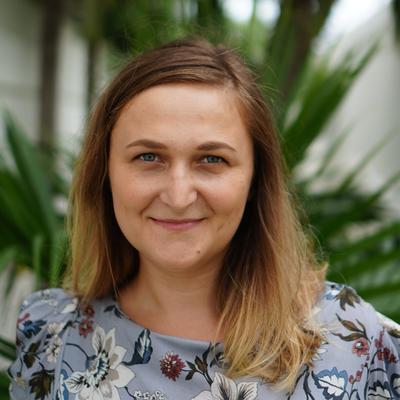
Research Project Coordinator - Climate Change and Water Resources ManagementAndreea Cristina Nowak is a Research Team Lead for Climate Action at the Alliance and a Doctoral Fellow at Wageningen University and Research. Her work focuses on measuring and tracking adaptation in agriculture, especially in Africa, using evidence synthesis and field research to generate insights on what works, for whom, and under what conditions. Her role as Lead Author for the Agriculture chapter of the IPCC’s Seventh Assessment Report (Working Group II) brings the Alliance’s expertise on climate adaptation into global assessments of how agriculture responds to climate change.
I believe AR7 will, and must, differ substantially from previous assessment reports. Its strength should lie in clear, compelling messages that speak to more diverse audiences (beyond policymakers), and in the integration of new evidence, tools, and ways of knowing. By embracing indigenous and local knowledge, more effective synthesis tools, and fostering deeper collaboration across working groups, AR7 can enrich scientific depth and bridge science and society more effectively.
Andreea Nowak
Research Team Lead, Climate ActionDr. Lucy Njuguna is a Postdoctoral Fellow at the Alliance, based in Nairobi. She co-leads the Adaptation Insights project, with research centered on tracking progress in climate change adaptation and strengthening data for decision-making. As a Lead Author for the IPCC’s AR7 Technical Guidelines on Impacts and Adaptation, her expertise ensures Alliance knowledge on adaptation and climate transparency informs guidance used by policymakers and practitioners worldwide.
“I hope these guidelines provide the crucial methods needed to measure the effectiveness of our climate adaptation efforts. I will strive to ensure these tools serve not just governments, but project implementors, investors, and farmers on the front lines. By leveraging groundbreaking work, such as the Adaptation Insights project's methods, we can build upon solutions already in use, particularly in Africa, and ensure our global guidelines are truly centered on the lived realities of those most impacted by climate change.” Lucy Njuguna

Lucy Njuguna
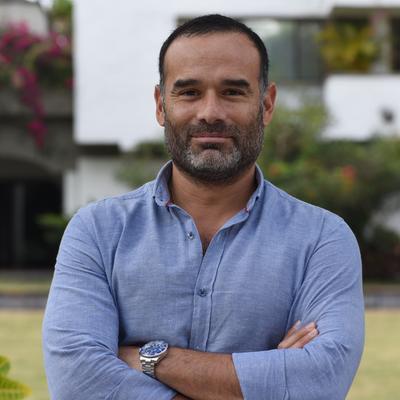
Postdoctoral FellowAugusto Castro-Nuñez leads the low-emissions research theme at the Alliance . His work focuses on scaling solutions that cut greenhouse gas emissions while advancing sustainable development, particularly in conflict-affected regions of the Global South. As a Lead Author of the IPCC’s Seventh Assessment Report (Chapter 13: AFOLU), his expertise ensures that global mitigation pathways reflect the realities of land use, forests, and rural livelihoods. Read more from Augusto
Augusto Castro-Nunez
Senior Scientist Low-Emissions Food SystemsScaling up the Alliance’s climate action
The appointment of these five scientists builds directly on the Alliance’s long-standing investment in climate action, which combines evidence-driven science with real-world solutions. The Climate Action Science Program has become one of CGIAR’s most impactful spaces, delivering outcomes that matter for farmers, policymakers, and global science alike.
In 2024, the program achieved 95 outcomes with 473 partners and deployed 93 innovations across 55 countries. These included everything from new stress-tolerant crop varieties and digital agro-climatic tools to investment frameworks that mobilize climate finance at scale. What makes this work distinctive is its reach: innovations co-developed with farmers are scaled through partnerships with governments, development agencies, and the private sector. In Latin America, more than one million farmers now benefit from tailored agro-climatic products; in Asia, more than 400,000 farmers receive actionable forecasts through their cooperatives; and in Africa, knowledge on climate-smart farming reaches over four million weekly viewers through interactive TV and radio shows. This scaling work demonstrates how science translates into practice, precisely the impact the IPCC aims to capture.
Similarly, the CSA country profiles and investment plans have contributed to shaping policy at the highest levels. These tools have guided NDCs and NAPs in more than 20 countries, unlocking $1.5 billion USD in climate finance for Africa and influencing national agricultural investment strategies. By connecting scientific analysis to concrete policy action, this work ensures that adaptation is not only discussed but funded and implemented.
In Latin America, Augusto Castro’s research links directly to the Alliance’s work on low-emission food systems and multifunctional landscapes. These projects show how climate mitigation, rural development, and peacebuilding can reinforce each other: an approach increasingly recognized by policymakers and development partners.
Together, these examples show that the Alliance’s impact goes beyond academic research. By influencing more than 10 national policies, mobilizing over $200 million USD in finance in 2024 alone, and reaching farmers directly through climate services, the Alliance has established itself as a leading voice in connecting food systems research with climate action. The presence of five Alliance scientists among IPCC authors underscores how this body of work is shaping global debates on adaptation and mitigation.
Putting real-world evidence at the heart of climate policy
The appointment of these five scientists is more than a professional accolade. It signals how research institutions in the Global South are shaping the next chapter of global climate governance. By placing field-based science (including the lived experience of farmers, forests and fragile landscapes) at the heart of AR7, the Alliance is helping ensure that climate policy reflects not only data, but reality.
As the world braces for future climate shocks, these scientists will sit at the table where global priorities are written, making sure the evidence they’ve gathered from the field speaks loudly enough to be heard.